Sunday, January 12, 2014

speaking of smug faces and unnaturally charmed political lives...,

The Shadow Campaign

WaPo |  To a greater extent than any modern politician, with the possible exception of her husband and the late Massachusetts senator Ted Kennedy, Hillary Clinton and scandal are inseparable. While first lady, she was caught up in the Rose Law Firm file flap and the White House travel office firings, about which she denied knowing anything. At the State Department there was Benghazi, the lack of candor about Benghazi, the phony Accountability Review Board (which conveniently didn’t question her) and the apparent scapegoating of four State Department employees who seemed to have no real responsibility for the death of four Americans. Unlike her first-lady excuses, she couldn’t very well say she didn’t know what was going on in her own department. The stench of fundraising scandals and the prison sentences of some of Clinton’s donors almost get lost in the torrent of excuse-mongering. If she is not one of the most dishonest pols of our time, than she must be a perpetual victim (no doubt of the “vast right-wing conspiracy”) or the most unlucky woman on the planet.

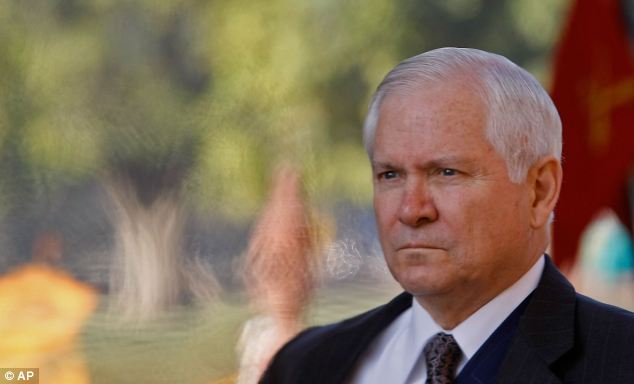
Since Clinton left office, controversy has swirled about the management of the Clinton Foundation. Now, thanks to the new memoir from former secretary of defense Robert Gates, it spins even faster.

Saturday, January 11, 2014

lip gone stay poked out til somebody lifts a nutsack and spreads some cheeks...,


firstpost | The situation as it stands now is a mere stalemate - and totally unsatisfactory from an Indian point of view.There is clearly more we need to do to set Indo-US relations on a foundation of respect and reciprocity. We cannot let the matter rest here and there are lessons to learn from it.

First, we have to go after every US diplomat who breaks our laws with the same diligence the US does even after Khobragade is back. We have to get them booked and brought to court, though we can spare them the "cavity searches." It does not matter if the offences relate to traffic violations or underpayment of Indian staff. If we do not have a US citizen facing arrest here, we cannot have a bargaining chip to get the charges against Khobragade dropped.

Second, the measures taken against US embassy staff and others - withdrawal of liquor permits, removal of the road barriers outside the Delhi embassy, etc - should remain. These were unilateral benefits we gave without any need to do so. The US does not give us any such concessions on its territory. Nor should we. Unlike what US commentators have said, this is not about compromising security since the vigil has actually been enhanced after the removal of barriers.

Third, we have to now develop our own capabilities to track US spies operating in India under the guise of diplomacy. In Pakistan, the CIA and other US spies are tracked and checked at every point. They are watched all the time. While it is true that they (the Pakistanis) have much to hide (their terror outfits, etc), if we do not do the same it will give us no leverage. The reason why the US will not help us bring David Coleman Headley to justice for his role in 26/11 is because he was a double-agent - he spied for the US and helped the jihadis. This is the price we pay for harbouring a naïve belief that US spies operating in India have nothing but our best interests at heart. We cannot be so foolish.

Four, we have to ensure that the Richard family - which was spirited away from India under the plea that Khobragade was indulging in human trafficking and her family was under threat here - continue to face trial in Indian courts. If they can keep Khobragade away from her US husband, we should ensure that the Richards can never return here - unless it is to face justice.

Five, the special entry and freedom from frisking that we offer US officials should be withdrawn. And remain so, unless there is complete reciprocity.

a matter of prestige...,


NYTimes | The incident has uncovered a gaping cultural disconnect between the world’s two largest democracies. While Americans reflexively came to the defense of a maid who the authorities said was subjected to abuse, Indians reflexively sympathized with the diplomat.

This is partly because middle- and upper-class Indians typically have their own servants, who often work long hours for far less than the $573 a month that Ms. Khobragade had promised to pay. But the bigger reason, especially compelling in an election year, is national pride. In the month that has passed since Ms. Khobragade’s arrest, she has been transformed into a symbol of India’s sovereignty, pushed around and humiliated by an arrogant superpower.

“There is always this sense, since the end of the Soviet Union, that America is too big for its britches,” said Sandip Roy, senior editor at Firstpost, a news website. “What happened to Devyani is seen in a larger, cosmic sense as that kind of unilateral thing, like, ‘I will go and invade Afghanistan, and I don’t care what anyone thinks.’ ”

The dispute was brought to a rapid finish in the last 72 hours, in what appeared to be an effort by American officials to relax tensions.

Daniel N. Arshack, Ms. Khobragade’s lawyer in New York, agreed that once negotiations with prosecutors broke down last weekend, “this week turned into a focus on diplomatic solutions.” Mr. Arshack said that his client’s husband, a college professor, and two young daughters, ages 4 and 7, who are all American citizens, had remained in New York.

The domestic worker, Sangeeta Richard, told prosecutors that she was forced to work about 94 to 109 hours a week, with limited breaks for calls and meals, according to an indictment handed up in Federal District Court in Manhattan. Last summer, it said, Ms. Richard told Ms. Khobragade she was unhappy with the work conditions and wanted to return home, but her employer refused the request and would not return her passport.

Ms. Khobragade was arrested Dec. 12 when she was dropping off her daughters at school, and charged with misrepresenting Ms. Richard’s pay to obtain a work visa for a housekeeper. Indian newspapers reported that she was strip-searched, something Indians found especially offensive, and then kept in a police holding pen with drug addicts before being released on bond. India responded with a raft of retaliatory steps, including the removal of security barriers around the embassy in New Delhi, and the case was the lead story in the Indian news media for weeks.

On Wednesday, India granted Ms. Khobragade the full immunity and privileges of a diplomat, a set of rights not accorded those posted in consulates, as she was at the time of the arrest. Though the United States appealed to India to waive that immunity, India refused, and transferred her to a new position at the Foreign Ministry in Delhi. The State Department then told her to leave the United States, which she did Thursday night.

Ms. Khobragade’s father, Uttam Khobragade, said that his daughter was under strict orders not to give interviews, but told an anecdote that suggested she left with bitter feelings — toward Ms. Richard, toward Ms. Richard’s husband and toward the United States government.

“Devyani was seen off at the airport by an official of the State Department,” he told reporters Friday morning. “He told Devyani that, ‘Madam, I am sorry, and it was wrong.’ She told the official, ‘You have lost a good friend. It is unfortunate. In return, you got a maid and a drunken driver. They are in, and we are out.’ ” 

Friday, January 10, 2014

symbolic gestures: is the cathedral a creature of moral conscience or institutional patronage?


WaPo |  For decades, the American Studies Association labored in well-deserved obscurity. No longer. It has now made a name for itself by voting to boycott Israeli universities, accusing them of denying academic and human rights to Palestinians.

Given that Israel has a profoundly democratic political system, the freest press in the Middle East, a fiercely independent judiciary and astonishing religious and racial diversity within its universities, including affirmative action for Arab students, the charge is rather strange.

Made more so when you consider the state of human rights in Israel’s neighborhood. As we speak, Syria’s government is dropping “barrel bombs” filled with nails, shrapnel and other instruments of terror on its own cities. Where is the ASA boycott of Syria?

And of Iran, which hangs political, religious and even sexual dissidents and has no academic freedom at all? Or Egypt, where Christians are being openly persecuted? Or Turkey, Saudi Arabia or, for that matter, massively repressive China and Russia?

Which makes obvious that the ASA boycott has nothing to do with human rights. It’s an exercise in radical chic, giving marginalized academics a frisson of pretend anti-colonialism, seasoned with a dose of edgy anti-Semitism.

And don’t tell me this is merely about Zionism. The ruse is transparent. Israel is the world’s only Jewish state. To apply to the state of the Jews a double standard that you apply to none other, to judge one people in a way you judge no other, to single out that one people for condemnation and isolation — is to engage in a gross act of discrimination. 

And discrimination against Jews has a name. It’s called anti-Semitism.

since my people are better than yours, your people are expendable, deal with it!


foreignpolicy | I have been reading My Promised Land, Ari Shavit's extraordinary account of the founding and growth of Israel. It is a book one reads not simply for historical instruction but for moral guidance. Shavit is an ardent Zionist who is nevertheless imbued with a sense of Israel's tragic condition. "Tragedy," as Shavit uses it, does not refer to the suffering of the Jewish people but rather to the suffering -- the unavoidable suffering -- of the Palestinian people as a result of the Zionist project. In his narrative of the brutal conquest of the Arab city of Lydda by Israeli forces in May 1948, Shavit returns again and again to the idealistic, even utopian young men who killed Arab civilians and forced the entire population into a death march in the desert. Their anguish, shame, confusion is Shavit's own; and so is their acknowledgment that it could not have been otherwise. Both conquest and expulsion "were an inevitable phase of the Zionist revolution that laid the foundation for the Zionist state." No Lydda, no Israel. 

What would it mean for an American to apply this tragic understanding to his own circumstances? In regard to the national founding, the analogy to Israel is glaringly obvious. If the American pioneers had accepted that the indigenous people they found on the continent were not simply features of the landscape but people like themselves, and thus had agreed to occupy only those spaces not already claimed by the Indians, then today's America would be confined to a narrow band along the Eastern seaboard. No Indian wars, no America. And yet, like slavery, the wars and the forced resettlement constitute a terrible reproach to the founders' belief that America was a uniquely just and noble experiment. 

But when I say that I am reading Shavit for moral guidance, I'm thinking of the American present, not just the past. The tragic sense is largely alien to Americans, and to American policymakers. Americans have an almost unique faith in the malleability of the world, and of the intrinsic appeal of their own principles (a faith which Shavit writes that Israel's settlers shared until the Palestinians first rose up against them in 1936). In Diplomacy, Henry Kissinger argued that all American presidents from the time of Woodrow Wilson (possibly excepting his own pupil, Richard Nixon) have been idealists, because the American people refuse to elect someone who speaks the tragic language of 19th century European statecraft.

zionist terrorism drove the creation of the british surveillance state


foreignpolicy | Recently declassified intelligence records reveal that at the end of the war the main priority for MI5 was the threat of terrorism emanating from the Middle East, specifically from the two main Zionist terrorist groups operating in the Mandate of Palestine, which had been placed under British control in 1921. They were called the Irgun Zevai Leumi ("National Military Organization," or the Irgun for short) and the Lehi (an acronym in Hebrew for "Freedom Fighters of Israel"), which the British also termed the "Stern Gang," after its founding leader, Avraham Stern. The Irgun and the Stern Gang believed that British policies in Palestine in the post-war years -- blocking the creation of an independent Jewish state -- legitimized the use of violence against British targets. MI5's involvement with counterterrorism, which preoccupies it down to the present day, arose in the immediate post-war years when it dealt with the Irgun and Stern Gang. 

MI5's involvement in dealing with Zionist terrorism offers a striking new interpretation of the history of the early Cold War. For the entire duration of the Cold War, the overwhelming priority for the intelligence services of Britain and other Western powers would lie with counterespionage, but as we can now see, in the crucial transition period from World War to Cold War, MI5 was instead primarily concerned with counterterrorism. 

As World War II came to a close, MI5 received a stream of intelligence reports warning that the Irgun and the Stern Gang were not just planning violence in the Mandate of Palestine, but were also plotting to launch attacks inside Britain. In April 1945 an urgent cable from MI5's outfit in the Middle East, SIME, warned that Victory in Europe (VE-Day) would be a D-Day for Jewish terrorists in the Middle East. Then, in the spring and summer of 1946, coinciding with a sharp escalation of anti-British violence in Palestine, MI5 received apparently reliable reports from SIME that the Irgun and the Stern Gang were planning to send five terrorist "cells" to London, "to work on IRA lines." To use their own words, the terrorists intended to "beat the dog in his own kennel." The SIME reports were derived from the interrogation of captured Irgun and Stern Gang fighters, from local police agents in Palestine, and from liaisons with official Zionist political groups like the Jewish Agency. They stated that among the targets for assassination were Britain's foreign secretary, Ernest Bevin, who was regarded as the main obstacle to the establishment of a Jewish state in the Middle East, and the prime minister himself. MI5's new director-general, Sir Percy Sillitoe, was so alarmed that in August 1946 he personally briefed the prime minister on the situation, warning him that an assassination campaign in Britain had to be considered a real possibility, and that his own name was known to be on a Stern Gang hit list.

Thursday, January 09, 2014

new delhi better stop flinging feces and shell out for a competent attorney instead...,


timesofindia | In a major setback to Indian diplomat Devyani Khobragade, a federal judge has rejected her plea to extend the January 13 deadline for a preliminary hearing on the visa fraud issue, the date by when she has to be charged.

Shortly after the issuance of the order in which the judge said "good cause" has not been demonstrated in the plea, Khobragade's laywer Daniel Arshack said he is "considering" other options.

The three-page order, by which Khobragade will have to appear in court, means the indictment against her will now have to filed before or on January 13. It was issued late yesterday.

"We are considering our options," Khobragade's lawyer Daniel Arshack told PTI when asked about the request for extending the indictment deadline being denied by the judge. He did not elaborate.

However, sources said one of the options Khobragade, 39, now has is to file another motion in court seeking extension of the indictment deadline and preliminary hearing.

In her order, magistrate judge Sarah Netburn of the US district court for the southern district of New York said adjournment of the date will not grant her the "relief she seeks" regarding plea negotiations between her and the government to resolve the visa fraud case.

been tryna tell you valodya not scurred...,


caseyresearch | In the global war for energy supremacy, Russia has won another victory over the United States.

This time, the battleground has been South Africa, where Russia's state-owned nuclear power company, Rosatom, has just signed an agreement to build eight new reactors. Once all of them are operational, South Africa's nuclear capacity will increase more than sixfold—from 1.8 gigawatts (GW) to 11.4 GW over the next 15 years.

This means that Russia will help develop the entirety of South Africa's nuclear energy sector, including financing and training.

And just as importantly, South Africa will be using Russia's nuclear fuel.

Rosatom has been busy signing these types of deals with other foreign countries as well—Finland, Turkey, Ukraine, even the United Kingdom—which guarantees that Russia will be able to keep a stranglehold on these countries' nuclear industries.

The strategy is clear: Rosatom is aiming to become the world's largest supplier of uranium in the coming years.

Remember what we said about the ongoing "Putinization" of Europe's oil and gas; how Russia is planning to leverage its control over Europe's energy to gain political and economic benefits?

The same thing is happening in uranium, except the stakes are even higher—because Putin is now looking to dominate the global nuclear market.

Russia and the former Soviet nations (colloquially called "the -stans") already control nearly half of the world's uranium supply:

from happy days to oil apocalypse as brazil clings to petrobras...,


dailyimpact | Here’s what they were saying about Brazil six years ago: it was entering a new oil bonanza, it was going to be bigger than Saudi Arabia, it was going to enjoy energy independence, all the graphs of oil production were going straight up, through the roof, to the moon, Alice. It’s oil reserves were 50 billion…no, 100 billion…wait, 240 billion barrels. (How do you sing “Happy Days are Here Again” in Portuguese?)

Sound familiar? Sound like what the same folks are saying about the United States today? Funny how they’re not singing about feliz dias in Brazil any more. How did things work out for them down there?

Not good, according to a long piece in the Washington Post yesterday. Oil production is flat or falling; Imports of gasoline, sold to the public below cost to prevent inflation (and revolution) are climbing; the state oil company, Petrobras, is debt-ridden and has lost one-third of its value on the stock market; the second-largest oil company, OGX, declared bankruptcy in October.

The euphoria was based on the “discovery” of vast new oil “reserves.” (In Portuguese, the root words from which “discovery” and “reserves” are derived also translate as “a vague hope there’s something down there.” This is also true of Arabic and English, as spoken in the oil patch.)

The newly discovered Brazilian “reserves” were under a mile and a half of water, plus two miles of rock, and another mile and a half of salt. Drilling into this oil and getting it to market would require the most expensive and difficult corporate project in the world, at an estimated cost of $237 billion. Still, as Brazil’s president declared at the time of the “discoveries,” it seemed Brazil had won the lottery.

They must have misplaced the winning ticket.

Explanations abound for the sad state of the Brazilian bonanza. A favorite: onerous government regulation of Petrobras. For example, Petrobras is required to build its drilling platforms, ships and heavy equipment in Brazil, which has created jobs but has not guaranteed that the jobs will be done well, efficiently or on time. Losses on gasoline imports have cost the company $20 billion since 2006. Brighter prospects in America have lured away flighty investors. And there is some truth to all these excuses.

But the real problem is dry wells. For all its titanic struggles, massive spending and relentless optimism, Petrobras is managing to wring a paltry 300,000 barrels of oil per day from its vast undersea “reserves.” In 2008 OGX raised more than $4 billion dollars, in Brazil’s largest ever initial public offering of stock, for drilling in the deep blue sea. It went bankrupt last year because the wells it drilled didn’t hit oil.

north america to drown in oil as mexico begins denationalizing pemex...,


bloomberg |  The flood of North American crude oil is set to become a deluge as Mexico dismantles a 75-year-old barrier to foreign investment in its oil fields

Plagued by almost a decade of slumping output that has degraded Mexico’s take from a $100-a-barrel oil market, President Enrique Pena Nieto is seeking an end to the state monopoly over one of the biggest crude resources in the Western Hemisphere. The doubling in Mexican oil output that Citigroup Inc. said may result from inviting international explorers to drill would be equivalent to adding another Nigeria to world supply, or about 2.5 million barrels a day. 

That boom would augment a supply surge from U.S. and Canadian wells that Exxon Mobil Corp. (XOM) predicts will vault North American production ahead of every OPEC member except Saudi Arabia within two years. With U.S. refineries already choking on more oil than they can process, producers from Exxon to ConocoPhillips are clamoring for repeal of the export restrictions that have outlawed most overseas sales of American crude for four decades. 

“This is going to be a huge opportunity for any kind of player” in the energy sector, said Pablo Medina, a Latin American upstream analyst at Wood Mackenzie Ltd. in Houston. “All the companies are going to have to turn their heads and start analyzing Mexico.” 

Unprecedented Output  
An influx of Mexican oil would contribute to a glut that is expected to lower the price of Brent crude, the benchmark for more than half the world’s crude that has averaged $108.62 a barrel this year, to as low as $88 a barrel in 2017, based on estimates from analysts in a Bloomberg survey. Five of the seven analysts who provided 2017 forecasts said prices would be lower than this year. 

The revolution in shale drilling that boosted U.S. oil output to a 25-year high this month will allow North America to join the ranks of the world’s crude-exporting continents by 2040, Exxon said in its annual global energy forecast on Dec. 12. Europe and the Asia-Pacific region will be the sole crude import markets by that date, the Irving, Texas-based energy producer said. 

Exxon’s forecast, compiled annually by a team of company economists, scientists and engineers, didn’t take into account any changes in Mexico, William Colton, the company’s vice president of strategic planning, said during a presentation at the Center for Strategic and International Studies in Washington on Dec. 12. 

Opening Mexico’s oilfields to foreign investment would be “a win-win if ever there was one,” said Colton, who described the move as “very good for the people of Mexico and people everywhere in the world who use energy.”

Wednesday, January 08, 2014

speaking of busted beezies in an intellectually bankrupt and utterly hypocritical Cathedral....,

Robert Gates called out Hellury's gross inconsistency on the GWOT much as Gov. Brian Schweitzer did.


dailymail | Hillary Rodham Clinton, a likely Democratic Party standard-bearer in the 2016 presidential contest, staked out her military-related positions in the 2008 race based on how they would play politically, according to a former secretary of defense who served in both the Obama and Bush administrations.

Describing a 'remarkable' exchange he witnessed, Robert Gates writes in a book due out next week that 'Hillary told the president that her opposition to the [2007] surge in Iraq had been political because she was facing him in the Iowa primary.'

Obama, too, 'conceded vaguely that [his] opposition to the Iraq surge had been political,' Gates recounts. 'To hear the two of them making these admissions, and in front of me, was as surprising as it was dismaying.'

And Gates recounts how, as the president lost faith in Gen. David Petraeus' handling of hostilities in Afghanistan, he – Gates – lost faith in Obama's commitment to accomplishing much of anything.

'As I sat there,' he recalls, 'I thought: The president doesn’t trust his commander, can’t stand [President Hamid] Karzai, doesn’t believe in his own strategy and doesn’t consider the war to be his.'

'For him, it’s all about getting out.'

serious public intellectuals address the educated masses and bring serious heat


Michelle Alexander is a civil rights attorney. She has serious vocational skills, i.e., independence and the capacity to pay the bills - when and if she says unpopular things or speaks truth to power.  She has powerfully documented unpopular history, practice, and facts that directly speak truth to power - and done so in a way that is broadly accessible to the American public.

These are minimum baseline requirements for serious public intellectuals, doing serious work for the common good.

Compare and contrast that with booboo the fool who was crying and reading a tele-prompted apology to the Romneys this past Saturday morning. When it's your job to compromise, clown, and entertain to fill up time on teevee, when you're answerable to a media boss, and when you lack legitimate skills to practice or teach a trade independent of a patron i.e., when your scholarship is in the dubious fields of gender, race, or sexual identity (subjects which don't even qualify as liberal arts humanities) and which guarantee the requirement of a patron who wants to use you as an organ of propaganda - YOU DON'T QUALIFY AS A SERIOUS PUBLIC INTELLECTUAL PERIOD. 

For damn certain nothing remotely approaching America's foremost public intellectual, and anybody pretending otherwise in public is simply exhibiting their own intellectual failings - until of course they get their ass handed to them in their own disqus comments which they then promptly and predictably close to forestall further humiliation....,

america's foremost public intellectual on the drug war...,


rawstory | “There are things,” Chomsky said, “the white liberal establishment just doesn’t want to be part of history.”

Another aspect of American history that was “blanked out” was “the criminalizing of black life.” He noted that abolition robbed the industrial class of cheap labor, and [they] needed a way to replace it. “Slaves were capital, but if you could imprisoned labor, states could utilize them — you get a disciplined, extremely cheap labor force that you don’t have to pay for.”

“Part of the whole industrial revival was based on the reinstitution of slave labor. That went on until the start of the Second World War,” he continued, “after which black men and women were able to work their way into the labor force, the war industries.”

“Then came two decades, the ’50s and the ’60s, of substantial economic growth. Also, egalitarian growth — the lower quintile did about the same as the upper quintile, and the black population was able to work its way into the society. They could work in the auto factories, make some money, buy a house. And over the course of those same 20 years the Civil Rights Movement took off.”

After correlating the rise of the Civil Rights Movement with the establishment of a black middle class, Chomsky went on to claim that it was on the issue of class that the black liberation movements stalled.

“The black movement hit a limit as soon as it turned to class issue,” he said. “There is a close class-race correlation, but as the black and increasingly Latino issues…began to reach up against the class barriers, there was a big reaction. Part of it was reinstitution of the criminalization of the black population in the late 1970s.” 

“If you take a look at the incarceration rate in the United States, around 1980 it was approximately the same as the rest of developed society. By now, it’s out of sight — it’s five-to-ten times as high as the rest of wealthy societies.” 

“It’s not based on crime,” Chomsky continued. “The device that was used to recriminalize the black population was drugs. The drug wars are fraud — a total fraud. They have nothing to do with drugs, the price of drugs doesn’t change. What the drug war has succeeded in doing is to criminalize the poor. And the poor in the United States happen to be overwhelming black and Latino.”

Chomsky then made his most explosive statement, claiming that the war on drugs is, in fact, “a race war.”

why did the correctional population start to rise in the 1980's together with the onset of neoliberalism?

bnarchives | The United States is often hailed as the world's largest 'free market'. But this 'free market' is also the world's largest penal colony. It holds over seven million adults – roughly five per cent of the labour force – in jail, in prison, on parole and on probation. Is this an anomaly, or does the 'free market' require massive state punishment? Why did the correctional population start to rise in the 1980s, together with the onset of neoliberalism? How is this increase related to the upward redistribution of income and the capitalization of power? Can soaring incarceration sustain the unprecedented power of dominant capital, or is there a reversal in the offing? The paper examines these questions by juxtaposing the ‘Rusche thesis’ with the notion of capitalism as a mode of power. The empirical analysis suggests that the Rusche thesis holds under the normal circumstances of ‘business as usual’, but breaks down during periods of systemic crisis. During the systemic crises of the 1930s and the 2000s, unemployment increased sharply, but crime and the severity of punishment, instead of rising, dropped perceptibly.

the last gasp of american democracy


truthdig |  This is our last gasp as a democracy. The state’s wholesale intrusion into our lives and obliteration of privacy are now facts. And the challenge to us—one of the final ones, I suspect—is to rise up in outrage and halt this seizure of our rights to liberty and free expression. If we do not do so we will see ourselves become a nation of captives.

The public debates about the government’s measures to prevent terrorism, the character assassination of Edward Snowden and his supporters, the assurances by the powerful that no one is abusing the massive collection and storage of our electronic communications miss the point. Any state that has the capacity to monitor all its citizenry, any state that has the ability to snuff out factual public debate through control of information, any state that has the tools to instantly shut down all dissent is totalitarian. Our corporate state may not use this power today. But it will use it if it feels threatened by a population made restive by its corruption, ineptitude and mounting repression. The moment a popular movement arises—and one will arise—that truly confronts our corporate masters, our venal system of total surveillance will be thrust into overdrive. 

The most radical evil, as Hannah Arendt pointed out, is the political system that effectively crushes its marginalized and harassed opponents and, through fear and the obliteration of privacy, incapacitates everyone else. Our system of mass surveillance is the machine by which this radical evil will be activated. If we do not immediately dismantle the security and surveillance apparatus, there will be no investigative journalism or judicial oversight to address abuse of power. There will be no organized dissent. There will be no independent thought. Criticisms, however tepid, will be treated as acts of subversion. And the security apparatus will blanket the body politic like black mold until even the banal and ridiculous become concerns of national security. 

Tuesday, January 07, 2014

walt disney: family planning


openculture | In 1951, Carl Djerassi, a chemist working in an obscure lab in Mexico City, created the first progesterone pill. Little did he know that, a decade later, 1.2 million women would be “on the Pill” in America, exercising unprecedented control over their reproductive rights. By 1967, that number would reach 12.5 million women worldwide. It was fortuitous timing, seeing that the post-war global population was starting to surge. It took 125 years (1800-1925) for the global population to move from one billion to two billion (see historical chart), but only 35 years (1925-1960) for that number to reach three billion. Non-profits like the Population Council were founded to think through emerging population questions, and by the mid-1960s, they began publishing a peer-reviewed journal called Studies in Family Planning and also working with Walt Disney to produce a 10-minute educational cartoon. You can watch Family Planning above.

walt disney: the story of menstruation


openculture | Throughout the past two years, we’ve shown you various Walt Disney propaganda films from World War II. Now it’s time to visit a very different mid-1940s Disney production – The Story of Menstruation. From 1945 to 1951, Disney produced a series of educational films to be shown in American schools. How to bathe an infant. How not to catch a cold. Why you shouldn’t drive fast. Disney covered these subjects in its educational shorts, and then eventually got to the touchy subject of biology and sexuality. If there was ever a company suited to talk about “vaginas” in the 1940s in a copacetic way, it was Disney. Hence The Story of Menstruation. The film runs 10 minutes, combining scientific facts with hygiene tips, and it was actually commissioned by the International Cello-Cotton Company, the forerunner of Kimberly-Clark, the maker of Kotex products. An estimated 105 million students watched the film in sex ed classes across the US. And, according to Tinker Belles and Evil Queens, the film remained a mainstay in schools until the 1960s. It’s now in the public domain. And you’ll find it in the Animation section of our collection of 475 Free Online Movies.

consumed: inside the belly of the beast


jman.tv | Consumerism has become the cornerstone of the post-industrial age. Yet how much do we know about it and what it is doing to us? Using theories of evolutionary psychology to underpin a bold narrative of our times, this film takes a whirlwind tour through the "weird mental illness of consumerism", showing how our insatiable appetite has driven us into "the jaws of the beast".

"By the age of 20, the average westerner has seen one million commercial messages." With this kind of exposure, it is impossible to live in the modern world without being a product of consumer society. Now psychologists, like Geoffrey Miller, are saying that it is distorting the way we interact with the world and each other: "We've all kind of gone collectively psychotic". Evolutionary theory says we are indistinct from animals and so have two primary subconscious motives: survival and attracting a mate. As modern society has taken care of our survival, "we spend more time thinking about social and sexual issues than any animal has had the luxury of doing in the history of life on Earth".

According to scientists this has led to an obsession with 'prestige' or our rank in society, something that in consumer society has become synonymous with consumption. "The principal way you're supposed to display your mental traits now is through your purchases." Manipulating our innermost impulses, capitalism has begun to not only reflect our evolutionary tendencies but also to amplify and distort them. Creating an environment in which consumption takes the place of traditional human interaction, "consumers are neglecting to develop the crucial naturally romantic traits, saying instead, 'I've got a Porsche out front'". Yet this capitalist system, which fits so neatly with our animalistic traits, is not making us happy.

One of the great conundrums is that in an age of plenty, addictions, depression and mental health issues are becoming part of everyday conversation. The obsession with our place in society has led us to, "squander this golden age on silly anxieties." In the long term the individual and psychological cost of modern culture is relatively small. The environmental cost on the other hand could ultimately destroy life, as we know it. "It's becoming increasingly clear that the kind of growth rates that we are getting around the world are not sustainable", says Tim Cooper, a professor of Sustainable Design and Consumption.

Measures taken to try and mitigate the impact of modern life, such as transition towns, recycling, alternative power and enduring design are not dealing with the root cause, only attacking symptoms. So for the moment we must endure this strange society that is making us all so unhappy. Our only hope is that it may only be a temporary illness: "I actually think runaway consumerism is a temporary historical glitch. I think we'll grow out of it." Exploring how human psychology has moulded the society that is slowly destroying the world and us, 'Consumed' takes us inside both the apocalyptic and redemptive sides of the human condition.

Monday, January 06, 2014

evolutionary psychology: "fashionable ideology" or "new foundation"?

human-nature | At the end of The Origin of Species, Charles Darwin wrote: "In the distant future I see open fields for far more important researches. Psychology will be based on a new foundation. . . Light will be thrown on the origin of man and his history."1 It took more than 100 years but, in the closing decades of the 20th century, Darwin's theory of evolution by natural selection began to be applied to minds, brains and behaviour. "Evolutionary psychology" argues that the mind is a collection of special-purpose software designed by natural selection to solve the problems of survival and reproduction that faced our ancestors -- problems such as finding food, picking suitable habitats, attracting mates, learning a language and navigating the social world.2

However, this new development is not without its critics. Alas, Poor Darwin -- a collection of essays edited by Hilary and Steven Rose -- bring these critics together to argue that evolutionary psychology is a "fashionable ideology" whose adherents are "fundamentalists" who promote "simple-minded", "socially irresponsible", "culturally pernicious" explanations of human behaviour that rest on "shaky empirical evidence, flawed premises and unexamined political presuppositions".

Many chapters in Alas, Poor Darwin repeat the accusations that evolutionary psychology is reductionist, determinist and adaptationist -- "accusations" that have been made and dealt with many times before.3 Other chapters misidentify evolutionary psychology with the theory of memes,4 or criticise versions of evolutionary psychology that no one in the field would recognise or defend.5 For these reasons, this review will not look at each chapter in detail.6 Instead, after briefly introducing evolutionary psychology, the review will look at the Roses' five main "arguments against" it, and will then consider the Roses' account of the politics of the discipline.

dennett and the darwinizing of free-will

human-nature |  It has ruefully been noted that we have lots of philosophy professors, but precious few genuine philosophers. But at least, we also have Daniel Dennett. He wrote the best book on evolution by a non-biologist (Dennett, 1995), and has been a tireless, effective, and creative advocate for incorporating natural selection into the purview of philosophers and thinkers generally. Dennett is not just a philosophy professor, but a genuine philosopher, much to our benefit. In Freedom Evolves, he takes on the question of free will and determinism, one of the oldest and most intransigent of conundrums, transporting the discussion where it belongs, into the realm of Darwinian thought.

And conundrum it is. Thus, to my mind (and I believe I write this of my own free will!), there can be no such thing as free will for the committed scientist, in his or her professional life. Thus, science itself presupposes that every phenomenon has a cause. We may speak of “spontaneous combustion” or a “spontaneous abortion” or even “spontaneous applause,” but in each of these cases, some cause is more than likely… it is essential to a sober, naturalistic worldview. “Spontaneous” is simply another way of saying: “cause unknown,” not “uncaused.” Similarly, we are unlikely to describe a stone as moving “spontaneously,” not only because it lacks any possible organs of volition, but because it is entirely subject to the laws of physics. What, then, about a jellyfish that moves “spontaneously”? A rhinoceros? A person?

At the same time, I suspect that we all - even the most hard-headed materialists - live with an unspoken hypocrisy: even as we assume determinism in our intellectual pursuits and professional lives, we actually experience our subjective lives as though free will reigns supreme. In our heart of hearts, we know that in most ways that really count (and many that don’t), we have plenty of free will, and so do those around us. Inconsistent? Yes, indeed. But like the denial of death, it is a useful inconsistency, and perhaps even one that is essential. (Nor is the free will/determinism debate unique in this regard. We might add Hume’s demonstration of the impossibility of proving causation itself, and Berkeley’s questioning of the existence of an objective world. In many ways, we are all forced to live with a degree of absurdity, if only because to acknowledge it in our daily lives is to admit yet more absurdity!)

Some philosophers and neurobiologists have sought to rescue free will - as a scientific prospect, not merely an emotional necessity - by enlisting quantum indeterminism, arguing that the physics of very small particles (or waves, or whatever) introduces room for “genuine” spontaneity. I’m not in the least persuaded by such sleight of hand, and neither, it seems, is Dennett. By what logic could free will derive from genuinely random emanations, or chaotic functions, any more than from the most rigid billiard-ball expectations of rigid determinism? As the monarch of Siam noted in The King and I, “it’s a puzzlement.” 

The difficulty goes deeper yet, penetrating the realm of personal responsibility, punishment, and praise. If, for example, to do something “of our own free will” means that it was utterly uncaused, then how can we be blamed, or praised, for it? But if caused, by previous events, neurochemical necessities, ionic perturbations of voltage differentials across cell membranes, then the same question applies.

Chipocalypse Now - I Love The Smell Of Deportations In The Morning

sky |   Donald Trump has signalled his intention to send troops to Chicago to ramp up the deportation of illegal immigrants - by posting a...