Friday, October 18, 2013

why the u.s. power grid's days are numbered..,


bloomberg | There are 3,200 utilities that make up the U.S. electrical grid, the largest machine in the world. These power companies sell $400 billion worth of electricity a year, mostly derived from burning fossil fuels in centralized stations and distributed over 2.7 million miles of power lines. Regulators set rates; utilities get guaranteed returns; investors get sure-thing dividends. It’s a model that hasn’t changed much since Thomas Edison invented the light bulb. And it’s doomed to obsolescence.

That’s the opinion of David Crane, chief executive officer of NRG Energy, a wholesale power company based in Princeton, N.J. What’s afoot is a confluence of green energy and computer technology, deregulation, cheap natural gas, and political pressure that, as Crane starkly frames it, poses “a mortal threat to the existing utility system.” He says that in about the time it has taken cell phones to supplant land lines in most U.S. homes, the grid will become increasingly irrelevant as customers move toward decentralized homegrown green energy. Rooftop solar, in particular, is turning tens of thousands of businesses and households into power producers. Such distributed generation, to use the industry’s term for power produced outside the grid, is certain to grow.

Crane, 54, a Harvard-educated father of five, drives himself to work every day in his electric Tesla Model S. He gave his college-age son an electric Nissan Leaf. He worries about the impact of warming on the earth his grandchildren will inherit. And he seems to relish his role as utility industry gadfly, framing its future in Cassandra-like terms. As Crane sees it, some utilities will get trapped in an economic death spiral as distributed generation eats into their regulated revenue stream and forces them to raise rates, thereby driving more customers off the grid. Some customers, particularly in the sunny West and high-cost Northeast, already realize that “they don’t need the power industry at all,” Crane says.

are utility companies out to destroy solar's rooftop revolution?


commondreams | Customers who install solar systems and battery arrays are finding themselves cut off from grid. In the nation's largest state, California, the major utility companies are trying to limit growth. Of rooftop solar panels, that is.

According to reporting by Bloomberg, the state's three largest utilities—Edison International, PG&E Corp. and Sempra Energy—are "putting up hurdles" to homeowners who have installed sun-powered energy systems, especially those with "battery backups wired to solar panels," in order to slow the spread of what has become a threat to their dominant business model.

“The utilities clearly see rooftop solar as the next threat,” Ben Peters, a government affairs analyst at solar company Mainstream Energy Corp., told Bloomberg. “They’re trying to limit the growth.”

According to Peters, as the business news outlet reports, the dispute between those with solar arrays and the utility giants "threatens the state’s $2 billion rooftop solar industry and indicates the depth of utilities’ concerns about consumers producing their own power.  People with rooftop panels are already buying less electricity, and adding batteries takes them closer to the day they won’t need to buy from the local grid at all."

Thursday, October 17, 2013

the far-right "christian" movement which attempted a debt default


HuffPo | If the U.S. breaches its debt ceiling this week, bringing with it the global financial panic economists predict, leaders of a little-known far-right movement called Christian Reconstructionism can claim partial responsibility. Their goal: to eradicate the U.S. government so that a theocratic Christian nation emerges to enforce biblical laws.

That's right -- laws out of the Book of Leviticus prohibiting adultery, homosexuality, and abortion, with penalties including death by stoning.

The key leader of this movement is Gary North, founder of the Institute for Christian Economics in Tyler, Texas. He's a long-time associate of Ron Paul, intellectual godfather of the Tea Party movement -- the very people responsible for Congressional deadlock over the government shutdown and debt ceiling debate.

Paul and North go way back. North served on Paul's first congressional staff in 1976, and North describes himself as Paul's "original staff economist." Earlier this year, Paul announced plans for a curriculum for home schoolers that will teach "biblical" concepts. The director of curriculum development for the program? Gary North.

In an Oct. 4 column in The Tea Party Economist, North describes government default as a "fake threat." So it can't be a surprise that the Tea Party caucus isn't taking government default seriously.

And what of the connection between this group and Republican Senator Ted Cruz of Texas, who almost singlehandedly created the government shutdown and debt ceiling crisis?

Cruz is the son of Rafael Cruz, a Texas pastor who directs Purifying Fire Ministries. According to a biography page for the True the Vote summit in April 2013, Rafael Cruz became active in politics during the 1980 presidential campaign, joining the Religious Roundtable, founded in 1979 to involve conservative Christians in politics. "The Religious Roundtable was a Judeo-Christian organization that mobilized millions of Christians all across the United States and helped elect Ronald Reagan," Cruz said. "It was a precursor of the Tea Party, even before the Moral Majority."

What to make of all of this? For the last few weeks Tea Party-leaning members of Congress have been described as "kooks" and "crazies" by the Washington establishment, liberals, moderate Republican leaders, and the media.

The name-calling might be satisfying to those who oppose the Tea Party, but it's entirely untrue. These are people who are patient, determined, deliberate, and rational.

why wait until it's sucked out of the lazy rich?


wisegeek | After a standard liposuction fat removal procedure, the lipo fat is normally sealed in a specialized biohazard container designated for medical waste. It is then burned in an incinerator designed for this purpose. While some surgeons may dispose of body fat this way on the same clinic or hospital premises, many of them outsource this job to a local medical waste disposal company. Post-liposuction waste presents a contamination risk just as other types of human biological matter removed during surgery, and it needs to be disposed with the proper procedures for handling this kind of biohazardous waste. 


Liposuction removes a layer of fat deposits from underneath the skin by vacuum aspiration. It is usually done under general or local anesthesia with a medical instrument called a cannula, and the targeted fat waste usually needs to be broken up through the surgeon's back-and-forth manipulation of the cannula. It can then travel through a tube attached to the cannula to a collection container. Individuals who choose to have liposuction generally do so as an additional resort after caloric reduction and exercise have not removed enough fat tissue from certain areas of the body.

Some plastic surgeons also use liposuction fat on a limited basis for other types of cosmetic procedures such as breast augmentation, face wrinkle filling, or lip injections; these are also known as fat transfer procedures. Good candidates for fat transfer injections are those with areas of the face or body that could be improved by being significantly filled out in volume. Due to the natural composition of human fat cells, some doctors prefer to use liposuction fat over synthetic injection fillers.

Medical researchers routinely experiment with possible uses for liposuction fat in stem cell development. Adult human fat cells contain the same basic biological material as embryonic stem cells, and this matter can sometimes be extracted with certain microscopic tools. It can then be potentially be converted to healthy stem cells that can possibly be used to repair tissue damage from injuries or other physical defects.

Liposuction fat waste also has some potential as material for biodiesel fuel. Some scientists have succeeded in liquefying post-liposuction waste so that it can be used to fuel specialized biodiesel engines, although the average volume of fuel can be somewhat smaller than the original volume of the body fat waste. This use of removed lipo fat is generally experimental and can sometimes be subject to legal restriction in certain areas.

po thang...,


A House of Representatives stenographer was dragged off the floor during the vote to end the partial government shutdown and raise the U.S. debt ceiling after a bizarre protest in which she began ranting at members. The stenographer identified as Dianne Reidy, who went to the Speaker's Chair while the vote was in progress and began yelling about God and the government. Representative Ileana Ros-Lehtinen, R-Fla., banged the gavel to restore order several times, but did not deter Reidy,

According to Ros-Lehtinen, Reidy "came up to the podium area beneath where I was standing and asked me if the microphones were on. I said that I didn't know. I assumed that perhaps I was chatting too much to the helpful parliamentarians around me. Then she suddenly faced the front and said words like 'Thus spoke the Lord.' And, 'This is not the Lord's work.'

"I hammered to get control and hush her up. She said something about the devil. It was sudden, confusing and heartbreaking. She is normally a gentle soul."

Moments later, Reidy was heard to say that America was not one nation under God because Freemasons wrote the Constitution as Capitol Police officers put her into an elevator. The disruption appeared to rattle members of Congress already jumpy after two weeks of partisan invective over the partial government shutdown and Thursday's debt ceiling deadline.

Watch the portly, bald, bearded congress critter to the right of the ranter quickly waddle out of potential harms way...., 

the struggle is real...,


zerohedge | With a stunning 41% of global wealth in the hands of a mere 0.7% of the world's population, the lower- and middle-class continue to fight amongst themselves for the scraps to maintain a decent standard of living. In the US, with the home-equity ATM now closed (and maybe EBT interrupted), those struggling to make ends meet are turning to the only "asset" they have left that is unencumbered (for now) - their body parts. 

As Bloomberg reports, since the beginning of 2011, 'hair,' 'eggs,' or 'kidney' have been among the top four autofill results for the Google search query, 'I want to sell my...;' and "the fact that people even explore it indicates that there are still a lot of people worried about their financial outlook," as hair, breast milk and eggs are doubling as ATMs for more and more cash-strapped Americans.
As one analyst noted,
“This is very much unlike every other recovery that we’ve had. It’s going to be a slow-grinding, very frustrating recovery.”
Which should come as no surprise given the massive wealth inequalities...


Wednesday, October 16, 2013

entheogens and the development of culture


psypressuk | Originally published in 2013 ‘Entheogens and the Development of Culture: The Anthropology and Neurobiology of Ecstatic Experience’ is a collection of essays edited by John A. Rush. Rush has previously authored the books ‘The Mushroom in Christian Art: The Identity of Jesus in the Development of Christianity’, ‘Failed God: Fractured Myth in a Fragile World’ and ‘The Twelve Gates: A Spiritual Passage through the Egyptian Books of the Dead’. This work has been published by North Atlantic Books.
 
As a collection, Entheogens and the Development of Culture: The Anthropology and Neurobiology of Ecstatic Experience proposes that psychoactive substances have been key components in the development of both human culture and the human brain. The fourteen essays that are included in the collection are written by a number of researchers from across various disciplines, including anthropology, mycology, classics, cultural historians, psychology and biology. While, academically and perspectively, the writers often appear to be coming from altogether totally different theoretical places, with a myriad of intentions laced within them, they do share the common goal of examining the role of psychoactive substances in the history of human culture. And, as such, provides an interesting argument when taken in its totality.

The question regarding the entheogenic effect on the development of the human brain, while bolstered to some degree by the cultural chapters, is largely formulated in Michael Winkelman’s essay Altered Consciousness and Drugs in Human Evolution. Holding the position that our brains have evolved alongside, and as a result of certain plants and altered states, by way of the serotonergic and dopaminergic systems that can be stimulated by exogenous neurotransmitters—such as those found in Psilocybe mushrooms. Winkleman writes:
“The role of drugs in the evolution of human consciousness must be understood in relationship to effects on the serotonergic system and its roles in overall brain functioning. The alterations of consciousness enhance paleomammilian brain functions and their coordination and integration with the entire brain. Enhanced serotonergic mechanisms contributed to experiences of altered consciousness in humans, embodied in visionary experiences” (Rush 45)
So, the theory goes, the evolution of human consciousness has been, in part, mediated by the exogenous neurotransmitters that humans have sought out and consumed, thereby taking a hand in their own evolution. Taking the theory at face value, for the moment, this leads Winkleman to postulate that, “this expanded associational area improved the brain’s capacity to interface with a variety of other neural mechanisms, including those involved in learning, problem-solving, and memory function” (ibid.). Here, therefore, is the window into culture. From these improved brain functions, art, society and, indeed, organization generally, could develop. However, as we shall see, the remainder of the essays are less about the role of entheogens generating the capability for culture-creation in humans, but more about the role of entheogens within culture itself. Indeed, if entheogens created the capacity for culture, culture itself embarked on a process of reintegrating entheogens from the newly evolved perspective.

Entheogen discourse is primarily driven by historical analysis, and particularly the religious use of mushrooms within human culture, and while this is also very true of this collection, a number of other substances are discussed, which are worth mentioning first. Chris Bennett and Neil McQueen, both having written extensively on drugs and the bible, offer a chapter entitled Cannabis and the Hebrew Bible, which makes use of Sula Benet’s identification of kaneh bosm—an anointing oil used as an initiatory rite—with cannabis.

stallman: how much surveillance can democracy withstand?


wired | The current level of general surveillance in society is incompatible with human rights. To recover our freedom and restore democracy, we must reduce surveillance to the point where it is possible for whistleblowers of all kinds to talk with journalists without being spotted. To do this reliably, we must reduce the surveillance capacity of the systems we use.

Using free/libre software, as I’ve advocated for 30 years, is the first step in taking control of our digital lives. We can’t trust non-free software; the NSA uses and even creates security weaknesses in non-free software so as to invade our own computers and routers. Free software gives us control of our own computers, but that won’t protect our privacy once we set foot on the internet.

Bipartisan legislation to “curtail the domestic surveillance powers” in the U.S. is being drawn up, but it relies on limiting the government’s use of our virtual dossiers. That won’t suffice to protect whistleblowers if “catching the whistleblower” is grounds for access sufficient to identify him or her. We need to go further.

Thanks to Edward Snowden’s disclosures, we know that the current level of general surveillance in society is incompatible with human rights. The repeated harassment and prosecution of dissidents, sources, and journalists provides confirmation. We need to reduce the level of general surveillance, but how far? Where exactly is the maximum tolerable level of surveillance, beyond which it becomes oppressive? That happens when surveillance interferes with the functioning of democracy: when whistleblowers (such as Snowden) are likely to be caught.

If whistleblowers don’t dare reveal crimes and lies, we lose the last shred of effective control over our government and institutions. That’s why surveillance that enables the state to find out who has talked with a reporter is too much surveillance — too much for democracy to endure.

An unnamed U.S. government official ominously told journalists in 2011 that the U.S. would not subpoena reporters because “We know who you’re talking to.” Sometimes journalists’ phone call records are subpoena’d to find this out, but Snowden has shown us that in effect they subpoena all the phone call records of everyone in the U.S., all the time.

Opposition and dissident activities need to keep secrets from states that are willing to play dirty tricks on them. The ACLU has demonstrated the U.S. government’s systematic practice of infiltrating peaceful dissident groups on the pretext that there might be terrorists among them. The point at which surveillance is too much is the point at which the state can find who spoke to a known journalist or a known dissident.

Tuesday, October 15, 2013

why western political and financial elites absolutely hate vladimir putin...,


ICH | The election of Barak Obama to the White House truly was a momentous historical event.  Not only because a majority White population had elected a Black man to the highest office in the country (this was really mainly an expression of despair and of a deep yearning for change), but because after one of the most effective PR campaigns in history, the vast majority of Americans and many, if not most, people abroad, really, truly believed that Obama would make some deep, meaningful changes.  The disillusion with Obama was as great as the hopes millions had in him.  I personally feel that history will remember Obama not only as one of the worst Presidents in history, but also, and that is more important, as the last chance for the "system" to reform itself.  That chance was missed.  And while some, in utter disgust, described Obama as "Bush light", I think that his Presidency can be better described as  "more of the same, only worse".

Having said that, there is something which, to my absolute amazement, Obama's election did achieve: the removal of (most, but not all) Neocons from (most, but not all) key positions of power and a re-orientation of (most, but not all) of US foreign policy in a more traditional "USA first" line, usually supported by the "old Anglo" interests.  Sure, the Neocons are still firmly in control of Congress and the US corporate media, but the Executive Branch is, at least for the time being, back under Anglo control (this is, of course, a generalization: Dick Cheney was neither Jewish nor Zionist, while the Henry Kissinger can hardly be described as an "Anglo").  And even though Bibi Netanyahu got more standing ovations in Congress (29) than any US President, the attack on Iran he wanted so badly did not happen.  Instead,  Hillary and Petraeus got kicked out, and Chuck Hagel and John Kerry got in.  That is hardly "change we can believe in", but at least this shows that the Likud is not controlling the White House any more.

Of course, this is far from over.  If anything the current game of chicken played between the White House and Congress over the budget with its inherent risk of a US default shows that this conflict is far from settled.

The current real power matrix in the USA and Russia

We have shown that there two unofficial parties in Russia which are locked in a deadly conflict for power, the "Eurasian Sovereignists" and "Atlantic Integrationists".  There are also two unofficial parties in the USA who are also locked in a deadly conflict for power: the Neocons and the "old Anglos imperialists".  I would argue that, at least for the time being, the "Eurasian Sovereignists" and the "old Anglos" have prevailed over their internal competitor but that the Russian "Eurasian Sovereignists" are in a far stronger position that the American "old Anglos".   There are two main reasons for that:

1)  Russia has already had its economic collapse and default and
2)  a majority of Russians fully support President Putin and his "Eurasian Sovereignist" policies.

 In contrast, the USA is on the brink of an economic collapse and the 1% clique which is running the USA is absolutely hated and despised by most Americans.

After the immense and, really, heart-breaking disillusionment with Obama, more and more Americans are becoming convinced that changing the puppet in the White House is meaningless and that what the US really needs is regime change.

The USSR and the USA - back to the future?

It is quite amazing for those who remember the Soviet Union of the late 1980 how much the US under Obama has become similar to the USSR under Brezhnev: internally it is characterized by a general sense of disgust and alienation of the people triggered by the undeniable stagnation of a system rotten to its very core. A bloated military and police state with uniforms everywhere, while more and more people live in abject poverty.  A public propaganda machine which, like in Orwell's 1984, constantly boasts of successes everywhere while everybody knows that these are all lies.  Externally, the US is hopelessly overstretched and either hated and mocked abroad.  Just as in the Soviet days, the US leaders are clearly afraid of their own people so they protect themselves by a immense and costly global network of spies and propagandists who are terrified of dissent and who see the main enemy in their own people.

Add to that a political system which far from co-opting the best of its citizens deeply alienates them while promoting the most immoral and corrupt ones into the positions of power.  A booming prison-industrial complex and a military-industrial complex which the country simply cannot afford maintaining.  A crumbling public infrastructure combined with a totally dysfunctional health care system in which only the wealthy and well-connected can get good treatment.  And above it all, a terminally sclerotic public discourse, full of ideological clichés an completely disconnected from reality.

I will never forget the words of a Pakistani Ambassador to the UN Conference on Disarmament in Geneva in 1992 who, addressing an assembly of smug western diplomats, said the following words: "you seem to believe that you won the Cold War, but did you ever consider the possibility that what has really happened is that the internal contradictions of communism caught up with communism before the internal contradictions of capitalism could catch up with capitalism?!".  Needless to say, these prophetic words were greeted by a stunned silence and soon forgotten.  But the man was, I believe, absolutely right: capitalism has now reached a crisis as deep as the one affecting the Soviet Union in the late 1980s and there is zero chance to reform or otherwise change it.  Regime change is the only possible outcome.

stop playing!


independent | American lawmakers risk causing a “massive disruption the world over” that could tip the global economy into another recession if politics gets in the way of raising the country’s debt ceiling and the ongoing government shutdown remains unresolved, Christine Lagarde, the head of the International Monetary Fund, warned on Sunday as the US Senate became the focus of talks to end the budgetary deadlock in Washington.

The stark assessment by Ms Lagarde, a former French Finance Minister, came after news that talks between the Republican Speaker of the House of Representatives, John Boehner, and President Barack Obama had broken down, putting the onus on the Senate leadership to craft a bipartisan pact to avert what experts predict would be financial catastrophe.

The US government will hit the congressionally-mandated ceiling on how much money it can borrow to fund its commitments by 17 October. If by then the $16.7 trillion (£10.4trn) limit is not raised by the legislature, the US would be forced to walk down a road usually associated with weaker economies: dishonouring its spending commitments and defaulting on its debts, an outcome that Ms Lagarde said could shatter the fragile economic recovery under way in the US and around the world.

“If there is that degree of disruption, that lack of certainty, that lack of trust in the US signature, it would mean massive disruption the world over, and we would be at risk of tipping yet again into a recession,” she told NBC.

The IMF chief also poured cold water on suggestions by some within the Republican camp, including the Kentucky Senator Rand Paul, that the government need not default if the ceiling is not raised. Mr Paul told CNN that “not raising the debt ceiling means you have to balance your budget. It doesn’t mean you have to default.”

But Ms Lagarde said there was no room to get around the limit and what it meant. “When you are the largest economy in the world, when you are the safe haven in all circumstances, as has been the case, you can’t go into that creative accounting business,” Ms Lagarde said.  Fist tap Dale.

why does the world bank richly fund those quite capable of funding themselves?


WaPo | The bank’s 30-year engagement with China began soon after the United States restored diplomatic ties with the communist nation in 1979. It is often trumpeted by bank officials as one of their more important success stories. China’s rapid development has been central to the drop in extreme poverty around the world. Bank officials, including Kim, say that they are uniquely positioned to help China with ongoing problems such as pollution and climate change — and that China’s success on those fronts is important to the world.

But as China has become more powerful and sophisticated, the bank’s role there has occupied an increasingly gray area. 

Is the World Bank there because China needs help? Or because loans to China provide a hefty profit that pays the bank’s salaries and administrative costs? Does helping China reduce its carbon use justify bank support for programs that may have damaged industries in other countries? Are Chinese contractors simply more willing than most to work in difficult parts of the world for a cheaper price?
China is the bank’s third-largest borrower, with nearly $56 billion in loans since 1980, and 107 programs underway. In the early years, that included support from the International Development Association (IDA), the branch of the bank that provides low-interest loans or grants to the poorest countries, and whose lending is subsidized by contributions from wealthier nations, including the United States.

That cut-rate lending stopped more than a decade ago when China passed the income threshold set by the bank for IDA borrowers. But some in the United States argue that China — a nuclear power with a space program and $3 trillion in cash reserves — should not get any help from an organization whose money and energy could be better directed at countries with less ability to help themselves.

Monday, October 14, 2013

what if you're more afraid of the all-seeing eye?


medialens | In our May 13 media alert we highlighted how the state, and a compliant media, relentlessly raise fears of the 'shadows and threats' that supposedly assail us. We make no apology for again citing the American writer H. L. Mencken:

'The whole aim of practical politics is to keep the populace alarmed (and hence clamorous to be led to safety) by menacing it with an endless series of hobgoblins, all of them imaginary.'

In that alert, we pointed to an edition of BBC Newsnight that was devoted to UK 'defence' spending and policy. The BBC's Gavin Esler introduced and presented the programme from the perspective of government; namely, that:

'National security is the first duty of government. We will remain a first-rate military power.'
Reflecting, and indeed boosting, state priorities is the default mode of BBC News. Last Tuesday, the flagship News at Ten on BBC1 demonstrated this perfectly when celebrity news presenter Fiona Bruce, who also has The Queen's Palaces and The Antiques Roadshow on her CV,  began with the ominous words:

'A warning from MI5: Britain's security is threatened on more fronts, in more ways than ever before.'

Bruce continued:

'recent leaks about the extent of Briton's global surveillance is damaging efforts to stop attacks on the UK. Despite MI5's warnings, some critics say the public has a right to know if it's being spied on.' 

Bruce then introduced BBC security correspondent Gordon Corera who was standing besuited outside MI5 headquarters, ready to repeat the secret service's key messages in a simulacrum of journalistic authority. He began on the approved note:

'Yes, the job of people here at MI5 is to keep the country safe from national security threats, particularly terrorist attacks.'

As ever, the professed upholding of BBC 'impartiality' translates in practice to providing the propaganda version of reality. After all, as Mencken observed, a major state function is to convince the public that the government is protecting it from threats. It would not be responsible BBC journalism to recognise that government policies put British people at risk by, for instance, launching illegal wars of aggression likely to lead to blowback – a genuine risk well understood by the state and, indeed, with the kind of horrific consequences seen in the London 7/7 bombings in 2005. As John Pilger noted recently:

'British governments are repeatedly warned, not least by the parliamentary intelligence and security committee, that foreign adventures beckon retaliation at home.' 

Corera then went on to convey the propaganda message from Andrew Parker, director-general of MI5, the UK's domestic counterintelligence and security agency. Parker had given a Whitehall speech to a 'closed audience' on how the '[security] threats had changed and how the organisation was trying to cope with them.' While neither Edward Snowden nor WikiLeaks were mentioned by name, they were implicitly the target of Parker's criticisms that revelations about surveillance were 'potentially a gift to terrorists allowing it to make it easier for them to strike at Britain.' No responsible journalist would let this pass without challenge.

we return to our regularly scheduled grousing....,


guardian | The Law Society is considering issuing new guidance to solicitors across England and Wales amid growing concern that the government's mass online surveillance operations are undermining their ability to take legal cases against the state.

Lawyers representing people who make serious complaints against the police, army or security services fear the industrial-scale collection of email and phone messages revealed by the Guardian over the past four months is threatening the confidential relationship between them and their clients, jeopardising a crucial plank of the criminal justice system.

"These are absolutely fundamental issues," said Shamik Dutta, from Bhatt Murphy lawyers in London. "The NSA revelations are having a chilling effect on the way a crucial part of the justice system operates. Individuals who are making serious allegations of wrongdoing against the state are becoming increasingly concerned about whether the information they share with their lawyers will remain confidential."

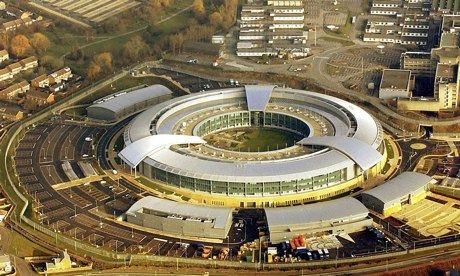
Files leaked by the whistleblower Edward Snowden show the British eavesdropping centre, GCHQ, and its American counterpart, the National Security Agency, have developed capabilities to undertake mass surveillance of the web and mobile phone networks. This is done by trawling the servers of internet companies and collecting raw data from the undersea cables that carry web traffic.
Two of the programmes, Prism and Tempora, can sweep up vast amounts of private data, which is shared between the two countries. The Guardian recently revealed how GCHQ and the NSA have also successfully cracked much of the online encryption relied upon by hundreds of millions of businesses and individuals to protect their privacy.

The Law Society expressed concern about the possible impact on lawyers' day-to-day work. "The ability of clients to consult and receive advice from lawyers with certainty of absolute confidentiality is fundamental to the rule of law and the values of our democracy," it said in a statement. "The Law Society would regard it as very serious indeed if privileged correspondence were to be intercepted. We are looking at the issue and considering whether there needs to be advice given to the profession."

A spokesperson for the Bar Council said the "enormous developments in the cyber world over the past decade" meant it was right to question whether the proper safeguards were in place. "The public need to be reassured that powers to intercept communications are properly exercised. We have long had concerns that the existing legislation fails to respect the right of individuals to consult privately with a lawyer. Any increase in the scope of the authorities' data gathering activities must be matched by the establishment of real protection for this fundamental aspect of the administration of justice."

Eric King, head of research at Privacy International, said there were real fears in the legal profession about confidentiality being breached by the security services following the NSA revelations. "We are astonishingly concerned about privileged communications being swept up as part of the mass surveillance programmes we have learned about over the past few months," he said.

"When you are talking about litigation involving major cases that challenge significant government policy, the intelligence that could be gained and the change in strategy that could be deployed by obtaining an idea of what the claimants were seeking to challenge, it could easily tip the balance decisively in what are critical cases."

Sunday, October 13, 2013

ordinary thinking a prisoner of the temporal consensus...,


a new model of the universe | The fourth dimension for us lies in the world of celestial bodies and in the world of molecules.

The fifth dimension lies in the moments of life eternally remaining where they are, and in the repetition of life itself, taken as a whole.

Life in itself is time for man. For man there is not and cannot be any other time outside the time of his life. Man is his life. His life is his time.

The way of measuring time, for all, by means of such phenomena as the apparent or real movement of the sun or the moon, is comprehensible as being convenient for practical purposes. But it is generally forgotten that this is only a formal time accepted by common agreement. Absolute time for man is his life. There can be no other time outside this time.

If I die to-day, to-morrow will not exist for me. But, as has been said before, all theories of the future life, of existence after death, of reincarnation, etc., contain one obvious mistake. They are all based on the usual understanding of time, that is, on the idea that to-morrow will exist after death. In reality it is just in this that life differs from death. Man dies because his time ends. There can be no to-morrow after death.

But all usual conceptions of the " future life " require the existence of " to-morrow ". What future life can there be, if it suddenly appears that there is no future, no " tomorrow", no time, no "after"? Spiritualists, theosophists, theologians and others who know everything about the future life, may find themselves in a very strange situation if the fact is realised that no "after" exists.

What then is possible? And what may the meaning of life as a circle be?

I have pointed out that the very curvature of the line of time implies the presence in it of yet another dimension, namely, the fifth dimension, or eternity. And if in the usual understanding the fourth dimension is extension of time, what can the fifth dimension, or eternity, be?

atwill and his thesis dissected...,


freethoughtblogs/carrier | Atwill is the one dude I get asked about most often.[*] And now apparently even Dawkins is tweeting about Atwill, thanks to his upcoming venture into England later this month to sell his weird Roman Conspiracy variety of Jesus mythicism. To get the gist you can check out his PR puff piece. Thomas Verenna has already written a deconstruction of that. Notably even Acharya S (D.M. Murdock) doesn’t buy Atwill’s thesis, declaring that she does “not concur with Atwill’s Josephus/Flavian thesis” and that “the Flavians, including Josephus, did not compose the canonical gospels as we have them.” Robert Price has similarly soundly debunked his book, even after strongly wanting to like it.

Atwill is best known as the author of Caesar’s Messiah (subtitle: “The Roman Conspiracy to Invent Jesus,” Roman meaning the Roman imperial family…yeah). In this Atwill argues “Jesus [is] the invention of a Roman emperor” and that the entire (?) New Testament was written by “the first-century historian Flavius Josephus” who left clues to his scheme by littering secret hidden coded “parallels” in his book The Jewish War. Atwill claims to prove “the Romans directed the writing of both” the JW and the NT, in order “to offer a vision of a ‘peaceful Messiah’ who would serve as an alternative to the revolutionary leaders who were rocking first-century Israel and threatening Rome,” and also (apparently) as a laughing joke on the Jews (Atwill variously admits or denies he argues the latter, but it became clear in our correspondence, which I will reproduce below…it’s weird because making fun of the Jews kind of contradicts the supposedly serious aim of persuading the Jews, yet Atwill seems to want the imperial goal to have simultaneously been both).

Notice his theory entails a massive and weirdly erudite conspiracy of truly bizarre scope and pedigree, to achieve a truly Quixotic aim that hardly makes sense coming from any half-intelligent elite of the era (even after adjusting for the Flynn effect), all to posit that the entire Christian religion was created by the Romans (and then immediately opposed by it?), who somehow got hundreds of Jews (?) to abandon their religion and join a cult that simply appeared suddenly without explanation on the Palestinian (?) book market without endorsement.

I honestly shouldn’t have to explain why this is absurd. But I’ll hit some highlights. Then I’ll reveal the reasons why I think Atwill is a total crank, and his work should be ignored, indeed everywhere warned against as among the worst of mythicism, not representative of any serious argument that Jesus didn’t exist. And that’s coming from me, someone who believes Jesus didn’t exist.

Historically, Atwill’s thesis is more or less a retooled version of the old Pisonian Conspiracy Theory, by which is not meant the actual Pisonian conspiracy (to assassinate Nero), but a wildly fictitious one in which the Piso family invented Christianity (and fabricated all its documents) through its contacts with the Flavian family, and thence Josephus (who was indeed adopted into that family after tricking his officer corps into committing suicide and then surrendering to the Romans during the War…oh, and conveniently declaring Vespasian the Messiah).

This pseudo-historical nonsense is over a century old by now, first having been proposed (so far as I know) by Bruno Bauer in Christ and the Caesars in 1877 (Christus und Caesaren). It has been revamped a dozen times since. Atwill is simply the latest iteration (or almost–there is a bonkers Rabbi still going around with an even wilder version). Atwill’s is very much like Bible Code crankery, where he looks for all kinds of multiple comparisons fallacies and sees conspiracies in all of them, rather than the inevitable coincidences (or often outright non-correspondences) that they really are. Everything confirms his thesis, because nothing could ever fail to. Classic nonfalsifiability. He just cherry picks and interprets anything to fit, any way he wants.

Saturday, October 12, 2013

the great library at Alexandria was destroyed by budget cuts, not fire...,


io9 | Though it seems fitting that the destruction of so mythic an institution as the Great Library of Alexandria must have required some cataclysmic event . . . in reality, the fortunes of the Great Library waxed and waned with those of Alexandria itself. Much of its downfall was gradual, often bureaucratic, and by comparison to our cultural imaginings, somewhat petty. For example, the Roman Emperor Marcus Aurelius Antoninus suspended the revenues of the Mouseion, abolishing the members’ stipends and expelling all foreign scholars. Alexandria was also the site of numerous persecutions and military actions, which, though few were reported to have done any great harm to the Mouseion or the Serapeum, could not help but have damaged them. At the very least, what institution could hope to attract and keep scholars of the first eminence when its city was continually the site of battle and strife?

What's interesting here is Phillips' emphasis on how the decline of the library rested as much on its reputation as a learning center as it did on the number of books in its collection. What made the Museum and its daughter branch great were its scholars. And when the Emperor abolished their stipends, and forbade foreign scholars from coming to the library, he effectively shut down operations. Those scrolls and books were nothing without people to care for them, study them, and share what they learned far and wide.

The last historical references to the library's contents meeting their final end come in stories about the events of 639 CE, when Arab troops under the rule of Caliph Omar conquered Alexandria.

Luciano Canfora has written one of the most complete histories of the library, based on primary source material — documents written by people who knew and worked in the library. In The Vanished Library, he describes what the library at Alexandria had been reduced to by the time of its ultimate destruction in 639:
The Serapeum had been destroyed in the attack on the pagan temples in 391. The last famous figure associated with the Museum had been Theon, father of the celebrated Hypatia who studied geometry and musicology and whom the Christians, convinced in their ignorance that she was a heretic, barbarously murdered in 415 . . . Naturally, the city's books had changed, too; and not only in their content. The delicate scrolls of old had gone. Their last remnants had been cast out as refuse or buried in the sand, and they had been replaced by more substantial parchment, elegantly made and bound into thick codices - and crawling with errors, for Greek was increasingly a forgotten language. The texts now consisted chiefly of patristic writings, Acts of Councils, and 'sacred literature' in general.
This was not Ptolemy's great collection, nor was it the center of scholarship in what was then the modern world. It was a broken-down remnant of its former self, neglected for centuries. The collection was mostly stocked with materials that reflected what Judeo-Christian bureaucrats would have considered important; these materials did not reflect the Greek ideal of universal knowledge that had birthed the library in the first place.

In the end, it was only this diminished version of the library that was burned on the orders of Caliph Omar when Emir Amrou Ibn el-Ass took the city.

Friday, October 11, 2013

the entheogen theory of religion and ego death


egodeath | Vertical, Timeless Determinism -  In late antiquity, consciousness was centered around the doctrine and mystic-state experience of the pre-setness of future thoughts and occurrences. The central thematic concern of religions in the Hellenistic era was Heimarmene (Martin 1987), which means fatedness, Necessity, or timeless cosmic determinism. Modern thought considers some related issues, though only in a single cognitive state. For example, Philosophical Metaphysics investigates the related issues of tenseless time, fatedness, agent movement through space and time, and controller agents (Oaklander & Smith 1995). 

The future is unchangeable and pre-set because of the static relation of control to the time dimension, and because it is largely an illusion that a person is a continuant agent who exercises power while moving through time. 
Modern science introduces clockwork determinism and thereby reduces the person to an automaton; in reaction, Copenhagenist quantum mechanics aims to provide an emancipating alternative to the hidden-variables determinism of Einstein and Bohm. However, modern conceptions of determinism and causality are limited to intellectual speculation based in the ordinary cognitive state, so they habitually tend to envision time as a sequential flow.
Transcending Determinism Requires Two Jumps - Determinism is both a praised goal and a disparaged trap to escape, due to determinism-awareness being the intermediate but not final goal of religious mental transformation. Valentinian Gnosticism affirmed cosmic determinism but also transcended it, and formulated two contrasting schemes of thinking about moral culpability (Pagels 1992). 

Simplified 2-stage initiation themes actually reflect a 3-stage progression that is centered around determinism. Mystic metaphor both endorses and disparages the realization of determinism, because determinism is only an intermediate destination on the path to salvific regeneration. The first demon or stage of egoic delusion to be cast out is the assumption of simple independent self-command and freewill. The second demon to be overcome is the mental model of cosmic determinism or fatedness, a model which is rationally coherent but raises the practical problem of control instability.

plundering the planet


cassandralegacy | Ladies and gentlemen, it is a pleasure to be here and my task today is to tell you about something that stands at the basis of everything we do: mineral resources. It it is the subject of a book that is the result of a research program sponsored by the Club of Rome and that has involved me and 16 co-authors.

For the time being we have only the German version, we are working at the English one, but that will take some time - a few months. In any case, the title should be clear to you even if you don't speak German and you can notice that we say "The Plundered Planet;" not "The Improved Planet", or "The Developed Planet". No, this is the concept: plundering. We have been acting with mineral resources as if we were pirates looting a captured galleon: grabbing everything we can, as fast as we can. 
 
Now, of course, there is a problem with the idea of plundering planet Earth. It is how long we can go on plundering. At the basic level, it is a question of common sense: we know that once we have burned oil, it is gone. We know that after we have dispersed copper in tiny bits all over we can't recover it any more. We know that diamonds are forever, perhaps, but also that once we have taken them out of a mine, then there are no more diamonds in there. Mineral resources are not infinite. 
 
So, there is this nagging question: how long can we go on mining? It is a question that started being asked in the 19th century and the answer is both easy and difficult. It is easy to say "not forever," but it is difficult to say for how long, exactly. So, what form will take depletion? How is it going to be felt on the economy. And, since we see ourselves as very smart, can we find some trick to avoid, or at least delay, the problem?
 
The first study that attempted to quantify these question was a report that was sponsored by the club of Rome back in 1972. You have surely heard about it: here is the cover of that book.
 
 
Now, you have probably also heard that this study was "wrong," that is, that it had made wrong predictions, that it was based on bad data and flawed models, and similar accusations. That was the result of a wave of criticism, a true tsunami I'd say, that engulfed the book and its authors after the study was published. The authors were accused of being not just wrong, but part of a global conspiracy aimed at enslaving humankind and exterminating the colored races (I am not kidding, that was said several times).

However, if there was such a harsh reaction to the book, it was also because it went to the core of some of the basic assumptions of our society, of our deeply held belief that, somehow, not only growth is always good, but that we can keep growing forever. But the book said that it wasn't possible. And it didn't say just that, it said that the limits to growth were to appear in a time span that was not of centuries, but just of decades. Below, you can see the main results of the 1972 study, the run that was called the "base case" (or "standard run"). The calculations were redone in 2004, finding similar results.

Thursday, October 10, 2013

roman christianity a psy-op?


covertmessiah | The origin of the Christian religion has been a subject steeped in mystery for nearly 2000 years. Who was Jesus? Is he an historical character? Who wrote the Gospels? Why are they written in Greek? Why did they have a pro-Roman and anti-semitic perspective? Why was the religion headquartered in Rome? Caesar’s Messiah: The Roman Conspiracy to Invent Jesus is a documentary based on the best‐selling religious studies book by Joseph Atwill. Atwill is one of a number of scholars today from all around the world, who are questioning the historic facts behind these mysterious origins of Christianity. When examining the actual history of this era, many of the answers provided by the Church do not hold up to rigorous scrutiny. No doubt, Christianity has done a lot of good for the world, but a lot of bad has come from its most dogmatic believers, who create wars, hatred, and other harm under the disguise of religion. In studying how Christianity emerged, the seven controversial Bible scholars featured in this film agree that it was used as a political tool to control the masses of the day, and is still being used this way today. For example, support for the wars in the Middle East is preached to Evangelical Christians as a way to speed up the coming of the End of Days. Maybe we need to expand the possible answers about how Christianity originated, and deeper questions need to be asked. Maybe we need to examine what political motives were behind the formation of the Christian religion?

The documentary begins with a brief history of the political and religious climate of Judea in the first century CE – the era during which Christianity emerged. Judea was occupied by the Roman Empire, which required them to worship Caesar as a god. The Jews found this blasphemous, and they waged constant rebellions against the Empire. Their religious scriptures prophesied that a militaristic warrior Messiah would defeat the Romans and lead the Jews to liberation. A string of numerous Messiahs presented themselves to lead the people in war against Rome, only to be defeated and crucified – a customary Roman punishment for insurgents of the day. However, the Roman government was growing weaker from over a century of increasingly corrupt rule by the Julio‐Claudian dynasty — the last emperor of this lineage being Nero, who was bankrupting the Empire with his self‐indulgence. In their greatest victory, the messianic Jews finally succeeded in burning Rome and driving the Romans out of Judea. This caused Nero to call upon his best military men, the Flavians – Vespasian and his son Titus — to crush the rebellion for good. The Flavians succeeded not only in destroying the Jewish towns of Galilee and their temple in Jerusalem, but after Nero was deposed and committed suicide, they seized the throne through a military coup and took over reign of the Roman Empire itself. Under the Flavians, the Empire flourished, and many great monuments were built including the famous Coliseum. In order to pacify the Jewish rebellion, they captured and burned all the Jews’ scriptures. It is around this time that a new literature emerged with the story of a very different Jewish Messiah – one who preached “give to Caesar what is Caesar’s”, “turn the other cheek”, and “love your enemy”.

Kenneth Humphreys on the historicity of Jesus: "[It's] a dilemma for those who believe in him. Because on the one hand he supposedly overturned the world, it turned the world upside-down and triggered off this massive movement, but on the other hand he leaves no trace in historical record."
The second half of the documentary focuses on the documents the Flavians left behind which prove their authorship of the Gospels. The Bible scholars deconstruct the Gospels and the character Jesus, showing that they are based on archetypes found in the ancient pagan mystery schools and in earlier Jewish literature. Much of the teachings of Christianity are traced back to the writings of Philo of Alexandria — who was combining Jewish scripture with Greek pagan beliefs — and Stoicism, a philosophy promoted by the Flavians. When the Flavians seized control of the Roman Empire, they needed to legitimise their rule, so they had their Jewish court historian Josephus (originally Yosef ben Matityahu who adopted the name Titus Flavius Josephus) create a large body of work which became the only official history we have of the Jewish-Roman War. Fist tap Dale.

how new religions are made

religiondispatches | What inspired you to write Chosen People? What sparked your interest?
When I was in college I was interested in the similarities between Jewish and Black nationalisms, and began to learn Jewish and African American histories at Stanford University with Clayborne Carson, George Fredrickson, Sylvia Wynter, Mark Mancall, Arnie Eisen, and Tudor Parfitt.

A chance encounter led me to visit the Original Hebrew Israelites of Dimona, Israel, and the experience was so powerful that I set out to study the antecedents of Black Israelite movements. At that time, Shlomo Levy, a Columbia University graduate student who was himself the son of one of the leading figures of the New York Israelite community, had begun to work with the Schomburg Center of the New York Public Library to collect papers from a dozen or so Black Israelite synagogues. I wrote an honors thesis on a small part of that collection, and then returned in graduate school to use the rest.

Working towards my doctorate at UCLA I was fortunate enough to study Black Atlantic religions with Donald Cosentino, and African American and West Indian histories with Brenda Stevenson, Gary Nash, and Bobby Hill. I was also inspired by seminars I took with Carlo Ginzburg, Peg Jacob, Lynn Hunt, Henry Yu, and others. I wanted to thickly describe African American Judaism from microhistorical, Black Atlantic, and African American Studies perspectives.

The question of "authenticity" that had dominated the accounts of so many white Jews was of little interest to me. What had gone missing in the limited literature on the topics was an attempt to tell the story of Black Israelites as an instance of African American history (in the hemispheric sense, including the West Indies), and an attempt to write Black Israelites into the larger stories of American religion and of Black Atlantic religions.

You describe a variety of fascinating (and largely unknown) figures in American religious history. Which one of them fascinated you the most?
Prophet William Saunders Crowdy stars in two chapters and is a largely unknown but remarkable figure who deserves to be on a postage stamp for the impact he had on U.S. religion and culture. But without a doubt, I was most fascinated by Rabbi Wentworth Arthur Matthew. That is because I had access to sources at the Schomburg and in newspapers over half a century that allowed me to clearly see Rabbi Matthew's religious evolution, and his polycultural bricolage of his own Israelite tradition combining Holiness-based Israelite churches, Judaism, conjuring, West Indian festivals, Central European occult practices, and freemasonry. Although Matthew tried his best to hide this religious bricolage, his papers offer a rare opportunity to see how new religions are made.

Is there anything you had to leave out?
Tons. I came to see Black Israelites as being very closely related to Black Muslims. Not only was there overlap between the groups' memberships, but it was not uncommon for groups to blend elements of both Judaism and Islam in the 1920s, as in the 1970s.

I think African American adoption of both religions are variants of Black thought about "the East," and deserve to be thought of as Black forms of Orientalism—not in a pejorative sense, but in an affirmative and romantic sense. So at one point the book was at least twice as long, before I decided that the Islam/Orientalism piece needed to be a book of its own.

Even then, the Black Israelites book continued for five more chapters concerning interactions and race relations between white and Black Jews during the Civil Rights and Black Power eras. Thankfully, Oxford University Press' readers reined me in, and I was left with the much more compact, and much more readable text as it stands today, which focuses on the period from the nineteenth century to the 1930s.

Chipocalypse Now - I Love The Smell Of Deportations In The Morning

sky |   Donald Trump has signalled his intention to send troops to Chicago to ramp up the deportation of illegal immigrants - by posting a...