Sunday, January 25, 2009

redrawing the european energy map

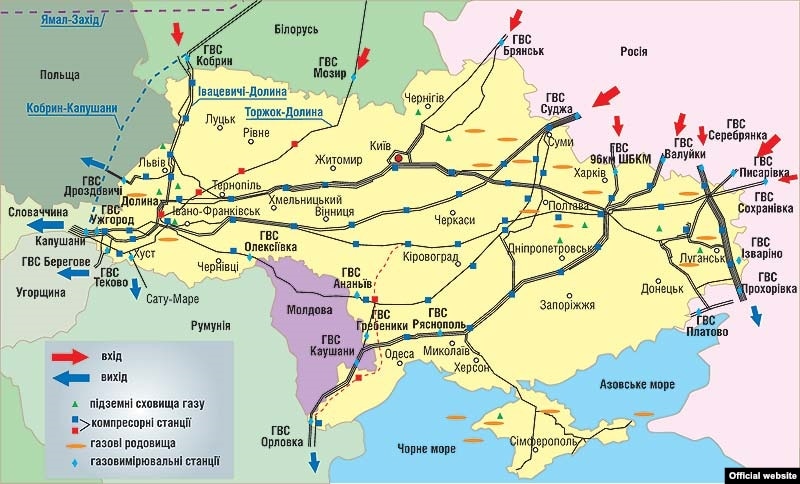
Radio Free Europe | There is no quick way for the European Union to penalize Russia and Ukraine for the gas dispute that led to a frosty two-week cutoff in natural-gas supplies this month. So, for the time being, the EU continues to receive one-quarter of its gas supplies from Russia -- and four-fifths of that via pipelines in Ukraine -- just as it did before the feud began.

But the 27-member bloc has already signaled that it will neither forgive nor forget, with EU officials exploring new energy alternatives that circumvent Ukraine, or Russia altogether.

In that sense, says Federico Bordonaro, an energy-security analyst with the Italian-based group equilibre.net, both Moscow and Kyiv lost something in the dispute. Moreover, with other transit countries like Belarus at the ready, one party's loss could well prove another's gain.

He says officials in Minsk are eager to "enhance the role" of the Yamal-Europe pipeline, a major route that stretches from western Siberia to Europe through Belarus, and adds that a second leg "could be carried out in a year or 18 months from now."

"It remains to be seen if everyone agrees with that," Bordonaro says, "but it's important to note that Belarus is trying to get some benefit from the Ukraine-Russia row in order to try and enhance its role as a key transit country, which could actually put it in competition with Ukraine."

Belarus has proven to be a difficult transit partner in its own right. During a pricing dispute in January 2007, Russia briefly suspended oil shipments through Belarus's Druzhba pipeline amid claims that Minsk was siphoning off shipments destined for Europe.

That row was quickly resolved, but for Russia, the ultimate goal remains a pipeline that runs directly to Europe uninterrupted by potentially quarrelsome post-Soviet neighbors.

it's a thin line.....,

Reuters | Russian President Dmitry Medvedev will try to persuade gas producer Uzbekistan that it should ignore the overtures of European suitors hunting for alternatives to Russian energy supplies.

Two weeks of fuel shortages caused by a row between Russia and Ukraine have galvanized European efforts to tap into non-Russian energy and Central Asian states are being courted.

Both Uzbekistan and its gas producing neighbor Turkmenistan pump all their exported gas via Russia, but are showing signs that they are open to new alliances -- a change that could threaten Russia's control over the region's energy.

"Uzbekistan, like its neighbors, is trying to diversify its relations," said Azhdar Kurtov of Russia's Strategic Research Institute. "That is noticeable ... in the gas sector."

Medvedev will meet Uzbek President Islam Karimov on Thursday at the start of a two-day visit, his first to the former Soviet republic since he was elected president last year.

Europe depends on Russia for a quarter of its gas and anxiety over the reliability of those supplies was increased by the Russia-Ukraine dispute, which disrupted flows to about 20 states in the European Union.

"It is unwise for one member state to rely on one country for its energy supplies. This was not secure," European Commission President Jose Manuel Barroso said this week.

"We have to stop simply talking about energy security in Europe, and start doing something about it,"

Peak Water?

Times Online | A swelling global population, changing diets and mankind's expanding “water footprint” could be bringing an end to the era of cheap water.

The warnings, in an annual report by the Pacific Institute in California, come as ecologists have begun adopting the term “peak ecological water” — the point where, like the concept of “peak oil”, the world has to confront a natural limit on something once considered virtually infinite.

The world is in danger of running out of “sustainably managed water”, according to Peter Gleick, the president of the Pacific Institute and a leading authority on global freshwater resources. Humans — via agriculture, industry and other demands - use about half of the world's renewable and accessible fresh water. But even at those levels, billions of people live without the most basic water services, Dr Gleick said.

A key element to tackling the crisis, say experts, is to increase the public understanding of the individual water content of everyday items.

A glass of orange juice, for example, needs 850 litres of fresh water to produce, according to the Pacific Institute and the Water Footprint Network, while the manufacture of a kilogram of microchips — requiring constant cleaning to remove chemicals — needs about 16,000 litres. A hamburger comes in at 2,400 litres of fresh water, depending on the origin and type of meat used.

The water will be returned in various forms to the system, although not necessarily in a location or at a quality that can be effectively reused.

There are concerns that water will increasingly be the cause of violence and even war.

Saturday, January 24, 2009

european leaders fear civil unrest

Ottowa Citizen | The latest spate of grim economic news here Thursday included a plunge in consumer spending in France, tumbling factory orders in the United Kingdom, predictions of an even deeper recession this year in Germany, and continued concern about the impact of billion-dollar bailouts of the continent's troubled banking system.

Politicians are warily eyeing the public mood that led earlier this week to riot police being forced to rescue Iceland Prime Minister Geir Haarde, whose limousine was pelted by eggs and drink cans hurled by protesters.

Iceland's government will almost certainly fall in coming days, London School of Economics professor Robert Wade told Canwest News Service Thursday.

"The situation is very tense and very unstable," said Wade, who has just returned from a visit to Iceland where he spoke to about 1,000 people about the crisis.

Thousands of protesters have participated in sometimes-violent street demonstrations in Bulgaria, Hungary, Latvia, Lithuania and Greece in recent weeks.

French President Nicolas Sarkozy has warned that Europe could face the kind of demonstrations that paralyzed several capitals in the spring of 1968.


But one analyst said Thursday that the comparison could be an understatement.

"I think fears have moved beyond chic academic protests a la May 1968 in Paris," said Fredrik Erixon of the Brussels-based European Centre for International Political Economy.

A more apt comparison for Iceland and some of the Baltic countries could be the French Revolution of 1789, he warned.

fist tap to RC

Friday, January 23, 2009

lovelock - last chance...,

New Scientist | Your work on atmospheric chlorofluorocarbons led eventually to a global CFC ban that saved us from ozone-layer depletion. Do we have time to do a similar thing with carbon emissions to save ourselves from climate change?

Not a hope in hell. Most of the "green" stuff is verging on a gigantic scam. Carbon trading, with its huge government subsidies, is just what finance and industry wanted. It's not going to do a damn thing about climate change, but it'll make a lot of money for a lot of people and postpone the moment of reckoning. I am not against renewable energy, but to spoil all the decent countryside in the UK with wind farms is driving me mad. It's absolutely unnecessary, and it takes 2500 square kilometres to produce a gigawatt - that's an awful lot of countryside.

So are we doomed?

There is one way we could save ourselves and that is through the massive burial of charcoal. It would mean farmers turning all their agricultural waste - which contains carbon that the plants have spent the summer sequestering - into non-biodegradable charcoal, and burying it in the soil. Then you can start shifting really hefty quantities of carbon out of the system and pull the CO2 down quite fast.

Would it make enough of a difference?

Yes. The biosphere pumps out 550 gigatonnes of carbon yearly; we put in only 30 gigatonnes. Ninety-nine per cent of the carbon that is fixed by plants is released back into the atmosphere within a year or so by consumers like bacteria, nematodes and worms. What we can do is cheat those consumers by getting farmers to burn their crop waste at very low oxygen levels to turn it into charcoal, which the farmer then ploughs into the field. A little CO2 is released but the bulk of it gets converted to carbon. You get a few per cent of biofuel as a by-product of the combustion process, which the farmer can sell. This scheme would need no subsidy: the farmer would make a profit. This is the one thing we can do that will make a difference, but I bet they won't do it.

holographic space-time

New Scientist | DRIVING through the countryside south of Hanover, it would be easy to miss the GEO600 experiment. From the outside, it doesn't look much: in the corner of a field stands an assortment of boxy temporary buildings, from which two long trenches emerge, at a right angle to each other, covered with corrugated iron. Underneath the metal sheets, however, lies a detector that stretches for 600 metres.

For the past seven years, this German set-up has been looking for gravitational waves - ripples in space-time thrown off by super-dense astronomical objects such as neutron stars and black holes. GEO600 has not detected any gravitational waves so far, but it might inadvertently have made the most important discovery in physics for half a century.

For many months, the GEO600 team-members had been scratching their heads over inexplicable noise that is plaguing their giant detector. Then, out of the blue, a researcher approached them with an explanation. In fact, he had even predicted the noise before he knew they were detecting it. According to Craig Hogan, a physicist at the Fermilab particle physics lab in Batavia, Illinois, GEO600 has stumbled upon the fundamental limit of space-time - the point where space-time stops behaving like the smooth continuum Einstein described and instead dissolves into "grains", just as a newspaper photograph dissolves into dots as you zoom in. "It looks like GEO600 is being buffeted by the microscopic quantum convulsions of space-time," says Hogan.

If this doesn't blow your socks off, then Hogan, who has just been appointed director of Fermilab's Center for Particle Astrophysics, has an even bigger shock in store: "If the GEO600 result is what I suspect it is, then we are all living in a giant cosmic hologram."

Thursday, January 22, 2009

new world order or chaos?

Independent | Not since the inauguration of president John F Kennedy half a century ago has a new administration come into office with such a reservoir of expectations. It is unprecedented that all the principal actors on the world stage are avowing their desire to undertake the transformations imposed on them by the world crisis in collaboration with the United States.

The extraordinary impact of the President-elect on the imagination of humanity is an important element in shaping a new world order. But it defines an opportunity, not a policy. The ultimate challenge is to shape the common concern of most countries and all major ones regarding the economic crisis, together with a common fear of jihadist terrorism, into a strategy reinforced by the realisation that the new issues like proliferation, energy and climate change permit no national or regional solution.

The financial and political crises are, in fact, closely related partly because, during the period of economic exuberance, a gap had opened up between the economic and the political organisation of the world. The economic world has been globalised. Its institutions have a global reach and have operated by maxims that assumed a self-regulating global market. The financial collapse exposed the mirage. It made evident the absence of global institutions to cushion the shock and to reverse the trend. Inevitably, when the affected publics turned to their political institutions, these were driven principally by domestic politics, not considerations of world order. Every major country has attempted to solve its immediate problems essentially on its own and to defer common action to a later, less crisis-driven point.

So-called rescue packages have emerged on a piecemeal national basis, generally by substituting seemingly unlimited governmental credit for the domestic credit that produced the debacle in the first place, so far without achieving more than stemming incipient panic. International order will not come about either in the political or economic field until there emerge general rules toward which countries can orient themselves.

In the end, the political and economic systems can be harmonised in only one of two ways: by creating an international political regulatory system with the same reach as that of the economic world; or by shrinking the economic units to a size manageable by existing political structures, which is likely to lead to a new mercantilism, perhaps of regional units. A new Bretton Woods kind of global agreement is by far the preferable outcome.

ebola outbreak has experts rooting

Nature | When the Ebola Reston virus was discovered in pigs in the Philippines last year, it marked the virus's first known foray outside primates, and raised fears of a potential threat to human health.

Last week, a joint mission of 22 international health and veterinary experts returned from investigating the outbreak with more questions than answers about the virus's pathology and epidemiology.

The Ebola Reston virus was first discovered, in 1989, in crab-eating macaques imported to the United States from the Philippines. Since then, the virus has killed most infected monkeys, yet had no effect on the 25 people that it infected — unlike three of the four other strains of Ebola, which kill between 25% and 90% of the humans they infect.

Because few people come into close contact with primates in the Philippines, the risk of catching Ebola Reston in this way is relatively low. By contrast, the appearance of the virus in an important livestock species was unexpected and worrying, says Pierre Rollin, an Ebola expert at the US Centers for Disease Control and Prevention (CDC) in Atlanta, Georgia, who was part of the mission to the Philippines. "We never thought that pigs could be infected," he says.

Once inside the pig, it may be possible for the virus to mutate into a version that is deadly to humans, as the avian influenza virus is thought to have done. "And we still don't know what it might do to someone who is immunocompromised by HIV or by drugs," Rollin adds.
Been collecting, if not connecting, these dots for a minute now. What is it with the low-level pandemic vibe in the zeitgeist? Must be that Agro-Defense facility in the works just up the road a stretch in Manhattan KS....,

academia.edu

Comes now a novelty in search of a purpose.

Academia.edu does two things:

* It displays academics around the world in a tree format, according to what university/department they are affiliated with.

* It enables an academic to have an easy-to-maintain academic webpage. A sample page on Academia.edu is here:

http://oxford.academia.edu/RichardPrice


Some very exciting research in the field of social networks psychology, could revolutionize the way academics approach their work. A recent study, by Dr. Nicholas Christakis of Harvard Medical School, and James Fowler of the University of California, San Diego, reports on the social network effect factors involved with behavior change. The social network effect is at work not just in the halting of negative behaviors, such as smoking or unhealthy weight gain, but also in the spreading of positive life changes, as well. Remains to be seen what the objective of academia.edu is besides generating page views, metadata, and the advertising and marketing value that that metadata will comprise.

Wednesday, January 21, 2009

thorium cycle

Oil Drum | Excitement has recently been rising about the possibility of using thorium as a low-carbon way of generating vast amounts of electricity. The use of thorium as a nuclear fuel was extensively studied by Oak Ridge National Laboratory between 1950 and 1976, but was dropped, because unlike uranium-fueled Light Water Reactors (LWRs), it could not generate weapons' grade plutonium. Research on the possible use of thorium as a nuclear fuel has continued around the world since then. Famed Climate Scientist James Hanson, recently spoke of thorium's great promise in material that he submitted to President Elect Obama:

The Liquid-Fluoride Thorium Reactor (LFTR) is a thorium reactor concept that uses a chemically-stable fluoride salt for the medium in which nuclear reactions take place. This fuel form yields flexibility of operation and eliminates the need to fabricate fuel elements. This feature solves most concerns that have prevented thorium from being used in solid-fueled reactors. The fluid fuel in LFTR is also easy to process and to separate useful fission products, both stable and radioactive. LFTR also has the potential to destroy existing nuclear waste.

(The) LFTR(s) operate at low pressure and high temperatures, unlike today’s LWRs. Operation at low pressures alleviates much of the accident risk with LWR. Higher temperatures enable more of the reactor heat to be converted to electricity (50% in LFTR vs 35% in LWR). (The) LFTR (has) the potential to be air-cooled and to use waste heat for desalinating water.

LFTR(s) are 100-300 times more fuel efficient than LWRs. In addition to solving the nuclear waste problem, they can operate for several centuries using only uranium and thorium that has already been mined. Thus they eliminate the criticism that mining for nuclear fuel will use fossil fuels and add to the greenhouse effect.

wealthy men give women more orgasms

Times Online | Scientists have found that the pleasure women get from making love is directly linked to the size of their partner’s bank balance.

They found that the wealthier a man is, the more frequently his partner has orgasms.

“Women’s orgasm frequency increases with the income of their partner,” said Dr Thomas Pollet, the Newcastle University psychologist behind the research.

He believes the phenomenon is an “evolutionary adaptation” that is hard-wired into women, driving them to select men on the basis of their perceived quality. The study is certain to prove controversial, suggesting that women are inherently programmed to be gold-diggers.

However, it fits into a wider body of research known as evolutionary psychology which suggests that both men and women are genetically predisposed to ruthlessly exploit each other to achieve the best chances of survival for their genes.

The female orgasm is the focus of much research because it appears to have no reproductive purpose. Women can become pregnant whatever their pleasure levels.

Pollet, and Professor Daniel Nettle, his co-author, believed, however, that the female orgasm is an evolutionary adaptation that drives women to choose and retain high-quality partners.

British banks are 'technically insolvent'

More in from the RC-Net:
Independent | Britains biggest banks are "technically insolvent", Royal Bank of Scotland said yesterday, as the global banking industry was rocked by another day of turmoil, including the announcement of $23bn (£16bn) of new losses from Merrill Lynch and Citigroup, the giant US institutions.

Analysts working for RBS, one of several British banks to have received emergency funding from the UK Government last year, told the City that "the domestic UK banks are technically insolvent on a fully marked-to-market basis".

The warning does not mean British banks are about to go bust, because the assessment is purely theoretical, and RBS said the position was "not unusual at this stage in the economic cycle".

However, it will add to pressure on the Government to provide more support for the country's banks. Treasury officials are now set to spend this weekend in talks about a fresh round of measures, which could be unveiled as early as next week, to free up lending to households and major corporations hit by the credit crunch.

Is plague still a killer?

BBC News | Reports that "black death" has swept through an al-Qaeda camp in north Africa, killing dozens of trainees, are unproven, but the story highlights how plague has never been wiped out.

One of the "oldest identifiable diseases known to man", according to the World Health Organization (WHO), plague tends to be associated in the developed world with the Middle Ages.

The most notorious pandemic, during the 14th Century, wiped out about a third of the population of Europe.

Caused by the bacterium Yersinia pestis, plague is primarily a disease of wild rodents that is spread by their fleas. It can be transmitted to humans by flea bites or contact with animals infected with the bacterium.

"There are diseases circulating like this in the world's rodents, and in many cases having very little impact on them," says Mike Begon, professor of ecology at the University of Liverpool.

"You could only get rid of plague if you got rid of all the rodents, and you are never going to do that." But Professor Begon adds: "When diseases can jump the species barrier to infect humans they can have a devastating effect."

As well as the medieval pandemic which led to the name "black death", because of victims' blackened skin, there have been two other worldwide outbreaks in the 6th Century and as recently as the second half of the 19th Century.

WHO still reports between 1,000 and 3,000 cases of plague every year; its figures show 182 deaths from the disease in 2003.

The organisation says plague remains endemic - present in a community at all times, but occurring in low frequency - in many countries in Africa, in the former Soviet Union, the Americas - including parts of the US - and Asia.

Tuesday, January 20, 2009

Monetary union European depression

Telegraph | Events are moving fast in Europe. The worst riots since the fall of Communism have swept the Baltics and the south Balkans. An incipient crisis is taking shape in the Club Med bond markets. S&P has cut Greek debt to near junk. Spanish, Portuguese, and Irish bonds are on negative watch.

Dublin has nationalised Anglo Irish Bank with its half-built folly on North Wall Quay and €73bn (£65bn) of liabilities, moving a step nearer the line where markets probe the solvency of the Irish state.

A great ring of EU states stretching from Eastern Europe down across Mare Nostrum to the Celtic fringe are either in a 1930s depression already or soon will be. Greece's social fabric is unravelling before the pain begins, which bodes ill.

Each is a victim of ill-judged economic policies foisted upon them by elites in thrall to Europe's monetary project – either in EMU or preparing to join – and each is trapped.

Black Death 'kills al-Qaeda operatives in Algeria'

Telegraph | The Black Death has reportedly killed at least 40 al-Qaeda operatives in North Africa. The disease, which struck Europe in the Middle Ages killing more than 25 million people, has swept through a training camp for insurgents in Algeria.

The arrival of the plague was discovered when security forces found the body of a dead terrorist by a roadside, the Sun reports.

The victim belonged to the large al-Qaeda network AQLIM (al-Qaeda in the Land of the Islamic Maghreb).

A security source told the paper: "This is the deadliest weapon yet in the war against terror. Most of the terrorists do not have the basic medical supplies needed to treat the disease.

"It spreads It spreads quickly and kills within hours. This will be really worrying al-Qaeda."

Black Death comes in various forms and was one of the deadliest pandemics in human history when it struck in the 1340s killing 75 million people across North Africa, Asia and Europe.

The new epidemic began in the cave hideouts of AQLIM in Tizi Ouzou province, 150km east of the capital Algiers, the Sun reports.

The group, led by wanted terror figure Abdelmalek Droudkal, was forced to turn its shelters in the Yakouren forest into mass graves and flee.
Contrary to popular opinion, the Black Death was not caused by bubonic plague. Bubonic plague - a bacterial infection - has an incubation period of about 6 days, while the demographic records of the period clearly show that the Black Death - almost certainly a hitherto undocumented viral hemorrhagic fever - had a far longer incubation period. Disease transmission for the Black Death had to be person to person rather than via rat fleas or the experience with quarantine would have been ineffective. In addition, plague locations such as Britain were outside the geographic range of the black rat believed to be the carrier.

Bubonic plague is curable with antibiotics, whereas viral hemorrhagic fever (similar to Ebola and Marburg but with droplet transmission) is not, and has an extraordinarily high mortality rate. Interestingly, there is a genetic form of resistance that appears to have developed in Europe as a result of endemic exposure to the Black Death over hundreds of years.

The Return of the Black Death by Susan Scott and Christopher Duncan

Monday, January 19, 2009

deep state designated successor...,

AFP |US Defense Secretary Robert Gates will sit out Barack Obama's inauguration at an undisclosed location as the "designated successor" in the event of a catastrophe, the White House announced Monday.

While the eyes of the world are glued Tuesday to Obama's historic swearing-in, attended by outgoing US President George W. Bush and both outgoing and incoming senior aides, Gates will stay away, said spokeswoman Dana Perino.

"In order to ensure continuity of government, Defense Secretary Robert Gates has been designated by the outgoing administration, with the concurrence of the incoming administration, to serve as the designated successor during Inauguration Day, Tuesday, January 20th," Perino said.

It is common practice for one senior US official to sit out major events, like the annual State of the Union speech, to ensure that the US government has clear leadership in the event of a disaster or terrorist attack.

Brain Mechanisms Of Social Conformity

Science Daily | Many studies have demonstrated the profound effect of group opinion on individual judgments, and there is no doubt that we look to the behavior and judgment of others for information about what will be considered expected and acceptable behavior.

"We often change our decisions and judgments to conform with normative group behavior," says lead study author Dr. Vasily Klucharev from the F.C. Donders Center for Cognitive Neuroimaging in The Netherlands. "However, the neural mechanisms of social conformity remain unclear."

Dr. Klucharev and colleagues hypothesized that social conformity might be based on reinforcement learning and that a conflict with group opinion could trigger a "prediction error" signal. A prediction error, first identified in reinforcement learning models, is a difference between expected and obtained outcomes that is thought to signal the need for a behavioral adjustment.

The researchers used functional magnetic resonance imaging to examine brain activity in subjects whose initial judgments of facial attractiveness were open to influence by group opinion. Specifically, they examined the rostral cingulate zone (RCZ) and the nucleus accumbens (NAc). The RCZ is thought to play a role in monitoring behavioral outcomes, and the NAc has been implicated in the anticipation and processing of rewards as well as social learning.

The study authors found that a conflict with the group opinion triggered a long-term conforming adjustment of an individual's own rating and that conflict with the group elicited a neuronal response in the RCZ and NAc similar to a prediction error signal. Further, the magnitude of the individual conflict-related signal in the NAc correlated with differences in conforming behavior across subjects.

"The present study explains why we often automatically adjust our opinion in line with the majority opinion," says Dr. Klucharev. "Our results also show that social conformity is based on mechanisms that comply with reinforcement learning and is reinforced by the neural error-monitoring activity which signals what is probably the most fundamental social mistake—that of being too different from others."

Voodoo Correlations in Social Neuroscience

The newly emerging field of Social Neuroscience has drawn much attention in recent years, with high-profile studies frequently reporting extremely high (e.g., >.8) correlations between behavioral and self-report measures of personality or emotion and measures of brain activation obtained using fMRI. We show that these correlations often exceed what is statistically possible assuming the (evidently rather limited) reliability of both fMRI and personality/emotion measures. The implausibly high correlations are all the more puzzling because social-neuroscience method sections rarely contain sufficient detail to ascertain how these correlations were obtained.

We surveyed authors of 54 articles that reported findings of this kind to determine the details of their analyses. More than half acknowledged using a strategy that computes separate correlations for individual voxels, and reports means of just the subset of voxels exceeding chosen thresholds. We show how this non-independent analysis grossly inflates correlations, while yielding reassuring-looking scattergrams. This analysis technique was used to obtain the vast majority of the implausibly high correlations in our survey sample. In addition, we argue that other analysis problems likely created entirely spurious correlations in some cases.

We outline how the data from these studies could be reanalyzed with unbiased methods to provide the field with accurate estimates of the correlations in question. We urge authors to perform such reanalyses and to correct the scientific record. Full Monty available for download here.

Sunday, January 18, 2009

Can Economists Be Trusted?

NYTimes | In last week’s post I argued that the analytic structure through which economists behold the world is based on certain quasi-religious beliefs on the rationality of human beings and the efficiency of markets. These beliefs can blind economists to the foibles of the real world.

Matters are worse when, wittingly or unwittingly, economists infuse their analysis with their own (or a political client’s) preferred ideology.[...]

In the first lecture of my freshman economics course at Princeton titled “The Art of Siffing Among Seasoned Adults,” I demonstrate how seasoned adults routinely structure information felicitously (i.e., “sif”) to further their own agenda, and I point out that economists can be among the most skillful practitioners of this art.

“If at the end of this course you still trust me,” I warn them, “I have failed in my mission. When economists advise on public policy, the operative mantra is Caveat Emptor!”

I am sad to teach it, but consider it fair and full disclosure.

Family Planning — A Special and Urgent Concern

Rev. Martin Luther King Jr. | Recently, the press has been filled with reports of sightings of flying saucers. While we need not give credence to these stories, they allow our imagination to speculate on how visitors from outer space would judge us. I am afraid they would be stupefied at our conduct. They would observe that for death planning we spend billions to create engines and strategies for war. They would also observe that we spend millions to prevent death by disease and other causes. Finally they would observe that we spend paltry sums for population planning, even though its spontaneous growth is an urgent threat to life on our planet. Our visitors from outer space could be forgiven if they reported home that our planet is inhabited by a race of insane men whose future is bleak and uncertain.

There is no human circumstance more tragic than the persisting existence of a harmful condition for which a remedy is readily available. Family planning, to relate population to world resources, is possible, practical and necessary. Unlike plagues of the dark ages or contemporary diseases we do not yet understand, the modern plague of overpopulation is soluble by means we have discovered and with resources we possess.

What is lacking is not sufficient knowledge of the solution but universal consciousness of the gravity of the problem and education of the billions who are its victims.

It is easier for a Negro to understand a social paradox because he has lived so long with evils that could be eradicated but were perpetuated by indifference or ignorance. The Negro finally had to devise unique methods to deal with his problem, and perhaps the measure of success he is realizing can be an inspiration to others coping with tenacious social problems.

In our struggle for equality we were confronted with the reality that many millions of people were essentially ignorant of our conditions or refused to face unpleasant truths. The hard-core bigot was merely one of our adversaries. The millions who were blind to our plight had to be compelled to face the social evil their indifference permitted to flourish.

After centuries of relative silence and enforced acceptance, we adapted a technique of exposing the problem by direct and dramatic methods. We had confidence that when we awakened the nation to the immorality and evil of inequality, there would be an upsurge of conscience followed by remedial action.

We knew that there were solutions and that the majority of the nation were ready for them. Yet we also knew that the existence of solutions would not automatically operate to alter conditions. We had to organize, not only arguments, but people in the millions for action. Finally we had to be prepared to accept all the consequences involved in dramatizing our grievances in the unique style we had devised.

Chipocalypse Now - I Love The Smell Of Deportations In The Morning

sky |   Donald Trump has signalled his intention to send troops to Chicago to ramp up the deportation of illegal immigrants - by posting a...