Monday, November 23, 2009

mandelbulb

national garage sale crashes....,

FT | Ebay became a victim of its own success at the weekend after a surge in the number of items for sale caused the world’s largest online auction site to crash.

Millions of shoppers were first unable to search for items on the website on Saturday, during the crucial run-up to Christmas, after a computer system failure.

Ebay said there had been a huge rise in the number of items listed for sale on its site in the run-up to the holiday season this year. It currently has more than 200m live listings, 33 per cent more than at this time last year.

On Sunday, the company’s website still said it was working to resolve the technical problems, which had first been noticed at about 11am Pacific Standard Time on Saturday.

It will be one of the worst outages suffered by the company in recent years. Ebay could be left with a hefty bill to compensate sellers for losses caused by the outage.

Sunday, November 22, 2009

if you don't agree...,

is there such a thing as agro-imperialism?

NYTimes | In a series of meetings, Saudi government officials, bankers and agribusiness executives told an institute delegation led by Zeigler that they intended to spend billions of dollars to establish plantations to produce rice and other staple crops in African nations like Mali, Senegal, Sudan and Ethiopia. “They laid out this incredible plan,” Zeigler recalled. He was flabbergasted, not only by the scale of the projects but also by the audacity of their setting. Africa, the world’s most famished continent, can’t currently feed itself, let alone foreign markets.

The American scientist was catching a glimpse of an emerging test of the world’s food resources, one that has begun to take shape over the last year, largely outside the bounds of international scrutiny. A variety of factors — some transitory, like the spike in food prices, and others intractable, like global population growth and water scarcity — have created a market for farmland, as rich but resource-deprived nations in the Middle East, Asia and elsewhere seek to outsource their food production to places where fields are cheap and abundant. Because much of the world’s arable land is already in use — almost 90 percent, according to one estimate, if you take out forests and fragile ecosystems — the search has led to the countries least touched by development, in Africa. According to a recent study by the World Bank and the United Nations Food and Agriculture Organization, one of the earth’s last large reserves of underused land is the billion-acre Guinea Savannah zone, a crescent-shaped swath that runs east across Africa all the way to Ethiopia, and southward to Congo and Angola.

Foreign investors — some of them representing governments, some of them private interests — are promising to construct infrastructure, bring new technologies, create jobs and boost the productivity of underused land so that it not only feeds overseas markets but also feeds more Africans. (More than a third of the continent’s population is malnourished.) They’ve found that impoverished governments are often only too welcoming, offering land at giveaway prices. A few transactions have received significant publicity, like Kenya’s deal to lease nearly 100,000 acres to the Qatari government in return for financing a new port, or South Korea’s agreement to develop almost 400 square miles in Tanzania. But many other land deals, of near-unprecedented size, have been sealed with little fanfare.

Investors who are taking part in the land rush say they are confronting a primal fear, a situation in which food is unavailable at any price. Over the 30 years between the mid-1970s and the middle of this decade, grain supplies soared and prices fell by about half, a steady trend that led many experts to believe that there was no limit to humanity’s capacity to feed itself. But in 2006, the situation reversed, in concert with a wider commodities boom. Food prices increased slightly that year, rose by a quarter in 2007 and skyrocketed in 2008. Surplus-producing countries like Argentina and Vietnam, worried about feeding their own populations, placed restrictions on exports. American consumers, if they noticed the food crisis at all, saw it in modestly inflated supermarket bills, especially for meat and dairy products. But to many countries — not just in the Middle East but also import-dependent nations like South Korea and Japan — the specter of hyperinflation and hoarding presented an existential threat.

“When some governments stop exporting rice or wheat, it becomes a real, serious problem for people that don’t have full self-sufficiency,” said Al Arabi Mohammed Hamdi, an economic adviser to the Arab Authority for Agricultural Investment and Development. Sitting in his office in Dubai, overlooking the cargo-laden wooden boats moored along the city’s creek, Hamdi told me his view, that the only way to assure food security is to control the means of production.

is humanity sustainable?

Royal Society | The principles and tenets of management require action to avoid sustained abnormal/pathological conditions. For the sustainability of interactive systems, each system should fall within its normal range of natural variation. This applies to individuals (as for fevers and hypertension, in medicine), populations (e.g. outbreaks of crop pests in agriculture), species (e.g. the rarity of endangerment in conservation) and ecosystems (e.g. abnormally low productivity or diversity in ‘ecosystem-based management’).

In this paper, we report tests of the hypothesis that the human species is ecologically normal. We reject the hypothesis for almost all of the cases we tested. Our species rarely falls within statistical confidence limits that envelop the central tendencies in variation among other species. For example, our population size, CO2 production, energy use, biomass consumption and geographical range size differ from those of other species by orders of magnitude. We argue that other measures should be tested in a similar fashion to assess the prevalence of such differences and their practical implications.

Keywords: pathology; sustainability; species; management; humans

how to prepare for potential global collapse..,

Telegraph | Société Générale has advised clients to be ready for a possible "global economic collapse" over the next two years, mapping a strategy of defensive investments to avoid wealth destruction.

Explosion of debt: Japan's public debt could reach as much as 270pc of GDP in the next two years. In a report entitled "Worst-case debt scenario", the bank's asset team said state rescue packages over the last year have merely transferred private liabilities onto sagging sovereign shoulders, creating a fresh set of problems.

Overall debt is still far too high in almost all rich economies as a share of GDP (350pc in the US), whether public or private. It must be reduced by the hard slog of "deleveraging", for years. "As yet, nobody can say with any certainty whether we have in fact escaped the prospect of a global economic collapse," said the 68-page report, headed by asset chief Daniel Fermon. It is an exploration of the dangers, not a forecast.

Under the French bank's "Bear Case" scenario (the gloomiest of three possible outcomes), the dollar would slide further and global equities would retest the March lows. Property prices would tumble again. Oil would fall back to $50 in 2010.

Governments have already shot their fiscal bolts. Even without fresh spending, public debt would explode within two years to 105pc of GDP in the UK, 125pc in the US and the eurozone, and 270pc in Japan. Worldwide state debt would reach $45 trillion, up two-and-a-half times in a decade.

(UK figures look low because debt started from a low base. Mr Ferman said the UK would converge with Europe at 130pc of GDP by 2015 under the bear case).

The underlying debt burden is greater than it was after the Second World War, when nominal levels looked similar. Ageing populations will make it harder to erode debt through growth. "High public debt looks entirely unsustainable in the long run. We have almost reached a point of no return for government debt," it said.

Inflating debt away might be seen by some governments as a lesser of evils.

If so, gold would go "up, and up, and up" as the only safe haven from fiat paper money. Private debt is also crippling. Even if the US savings rate stabilises at 7pc, and all of it is used to pay down debt, it will still take nine years for households to reduce debt/income ratios to the safe levels of the 1980s.

Saturday, November 21, 2009

might as well face it, we're...,


WashingtonBlog | Leading political journalist John T. Flynn wrote in 1944:
Militarism is the one great glamorous public-works project upon which a variety of elements in the community can be brought into agreement.
But Flynn warned that:
Inevitably, having surrendered to militarism as an economic device, we will do what other countries have done: we will keep alive the fears of our people of the aggressive ambitions of other countries and we will ourselves embark upon imperialistic enterprises of our own.
Indeed, the creator of the theory of military Keynesianism himself warned that those who followed such thinking would fearmonger, appeal to patriotism and get us into wars in order to promote this kind of economic "stimulus". As The Independent wrote in 2004:
Military-fuelled growth, or military Keynesianism as it is now known in academic circles, was first theorised by the Polish economist Michal Kalecki in 1943. Kalecki argued that capitalists and their political champions tended to bridle against classic Keynesianism; achieving full employment through public spending made them nervous because it risked over-empowering the working class and the unions.

The military was a much more desirable investment from their point of view, although justifying such a diversion of public funds required a certain degree of political repression, best achieved through appeals to patriotism and fear-mongering about an enemy threat - and, inexorably, an actual war.
At the time, Kalecki's best example of military Keynesianism was Nazi Germany. But the concept does not just operate under fascist dictatorships. Indeed, it has been taken up with enthusiasm by the neo-liberal right wing in the United States.

I disagree that this is a partisan issue. The Independent piece portrays the "neo-liberal right" as special warmongers; I don't believe there is much difference with the "neo-liberal left", or "neo-conservative right", or whatever. Indeed, political labels are fairly meaningless. What is important is the actions one takes, not his rhetoric about his actions.

the corporatist agenda 70 years ago....,


futurama - the american scheme of living

Wikipedia | The Futurama was an exhibit/ride at the 1939-40 New York World's Fair held in the United States, designed by Norman Bel Geddes that tried to show the world 20 years into the future (1959-1960), including automated highways and vast suburbs. The exhibit was sponsored by General Motors. Compared to other "visions of the future", Bel Geddes' was rather achievable - the most advanced technology posited was the automated highway system, of which GM did indeed build a working prototype by 1960.

The Futurama is widely held to have first introduced the general American public to the concept of a network of superhighways connecting the nation. Bel Geddes expounded upon his design in his book Magic Motorways.

An updated version, Futurama II, appeared at the 1964/1965 New York World's Fair. The 1964 version depicted life 60 years into the future, this time 2024. Scenes showed a lunar base of operation, an Antarctic "Weather Central" climate forecasting center, underseas exploration and "Hotel Atlantis" for underseas vacationing, desert irrigation, and land reclamation, building roads in the jungle and a City of the Future. Visitors rode through the dioramas in 3-abreast chairs on a ride train. The Futurama exhibit was again sponsored by General Motors and proved to be the most popular exhibit at the World's Fair with more than 26 million persons attending the show in the two 6-month seasons the Fair was open. Waiting lines were often two hours long and longer.

Friday, November 20, 2009

getting the official story right...,

WaPo | How did we get to a point where outbreaks treated with the utmost seriousness by the World Health Organization -- swine flu has been officially declared a "pandemic" -- receive vastly different levels of respect in different countries, different cities and even among different social groups within them? Some seem convinced that the current flu epidemic is a modern version of the Black Death. Others -- including a number of elected politicians and health bureaucrats -- suspect a hoax perpetrated by Swiss drug companies. Although the wide variety of reactions has been present since the virus first appeared in the spring, the subsequent failure to come to any global consensus about how swine flu should be treated is producing as many medical reactions as there are national governments.

Look at Ukraine, for example, where public awareness went from "zero" this summer to "panic" this autumn. Late last month, politicians began to speak of mass illness and mass death. The government quarantined several provinces, shut down parliament and banned mass gatherings. When the dust began to settle last week, it appeared that, yes, there had been a small outbreak of swine flu, but also that, no, most of the people who got sick didn't have the H1N1 virus. Swine flu death rates in Ukraine are no higher than those for flu or pneumonia in other years.

None of this has stopped the flu panic from spreading westward faster than the virus itself -- though, again, all of Ukraine's neighbors have behaved differently. Slovakia closed most of its border crossings with Ukraine. Hungary did not close its borders but launched a campaign for mass vaccination. Poland did neither and has so far bought no vaccine, on the grounds that swine flu is actually more benign than ordinary flu and that the vaccine might therefore do more harm than good.

Each of these countries has produced different medical explanations for its actions, and each medical explanation is widely perceived to be a cover for political machinations, at least by the opponents of the relevant government. In Ukraine, a second wave of rumors has it that the flu panic was spread by one or more presidential candidates (elections are scheduled for January), seeking to gain an advantage; the current president has accused the prime minister, who is seeking the presidency, of spending more on her election campaign than on flu response. In Hungary, widespread distrust of a very unpopular government has led to mass refusal to use the expensively purchased vaccine. In Poland, some accuse the health ministry of plain stinginess.

The politicization of disease response is not unique to Eastern Europe; nor are arguments about who gets which treatment. In the United States, an outcry followed the news that employees of Goldman Sachs and Citigroup got their vaccines before others; a similar scandal erupted in Germany when it emerged that two kinds of vaccine are available -- and that the one perceived as "safer" is going to government officials and the military. Few of the world's democracies will avoid a partisan debate over disease response this flu season, while few of the world's autocracies will avoid wild rumors.

h1n1 can be killed by acidic ozone water

Physorg | Scientists have found that acidic ozone water can deactivate H1N1 viruses very effectively, offering a promising disinfectant for the millions of people trying to avoid the disease. Acidic ozone water (AOW) is made from regular tap water mixed with a small amount of acid such as hydrochloric acid, along with an ozonized gas that can be produced in the lab. After deactivating the virus, the substance eventually decays into plain water, leaving no residue or harmful materials in the environment.

Scientists Han Uhm of Ajou University in Korea, along with Kwang Lee and Baik Seong of Yonsei University in Korea, have published the results of their study on the H1N1 disinfectant in a recent issue of Applied Physics Letters. Besides being environmentally benign, AOW also has the advantage that it may cost significantly less to prepare compared with chemical disinfectants.

During the past several months, H1N1 has infected thousands of people worldwide and has proven to be a highly contagious disease. Attempts to combat the disease have included preventative vaccines and the use of disinfectants to prevent the spread of the disease. However, most of these disinfectants have chemicals that can harm the environment.

In the current study, the researchers found that they could make neutral water acidic by mixing a very small amount of hydrochloric acid into the water. Adding just 22 grams of hydrochloric acid to one ton of neutral water can change the pH value of the water from 7 to 4. As the scientists explain, the negative chlorine ions have a sterilizing effect on viruses, and a strong acidity in general also has a sterilizing effect.

Although acidic water itself can partially inactivate the H1N1 virus, the scientists also added an ozone gas concentration of more than 10 mg/liter to the water to enhance the sterilization effect. All the viruses were killed after five minutes of mixing the acidic ozone water with about 430,000 viruses in the environment.

When observing the number of viruses killed in a given time, the researchers found that the acidic ozone water had a synergic effect, outperforming the sum of the individual effects of acidic water and ozone water. Part of the reason for the enhanced sterilization is that, while ozone decays over time due to impurities, the acidification of water slows the decay, prolonging the time of disinfection.

RBD225G present in all fatal ukraine cases at GISAID

Recombinomics | The patient data associated with the 10 Ukraine isolates sequenced by Mill Hill and deposited at GISAID has been updated with demographic information, suggesting that the samples were from 10 individuals and four of the samples were from deceased patients. These are the same four samples that have D225G (see list below). This association suggests that swine H1N1 with D225G is more aggressive and is cause for concern.

As noted earlier, D225G has been appended onto multiple genetic backgrounds via recombination, and the data from Ukraine adds further support. Samples from Ternopil and Khmelnitsky (see updated map) have a regional marker that is found in swine but no other human isolates. This marker is on all 6 Termopil isolates, indicating it was an early acquisition, but only the two fatal cases have D225G indicating it was appended onto the Ternopil genetic background. However, it is also found in the two fatal cases from Lviv, which do not have the regional marker. Similarly, earlier isolates with D225G represent distinct genetic backgrounds with D225G.

It was the jumping of D225G that allowed for prediction of the marker in Ukraine prior to release of the sequences by Mill Hill. This type of jumping has been described in detail for H5N1 and seasonal H1N1. This type of jumping via recombination and identification of markers that make frequent jumps are the underlying concepts that allow for the D225G prediction.

However, it is likely that D225G jumps will continue and the lethal marker will spread via Ukraine-like viruses, as well as virus that acquire D225G by recombination. Moreover, the absence of D225G in the nasal washes may signal mixtures of H1N1, with wild type dominating in the upper respiratory tract, and versions with D225G being expressed at highest levels in the lung, leading to false negatives in nasopharyngeal swabs, and cytokine storms in lung tissues where the aggressive virus with D225G is at high concentrations.

Thursday, November 19, 2009

visit chernobyl

MigNews | Chernobyl Nuclear Power Plant is named the most exotic place for tourism on the Earth, according to the magazine Forbes, which published the list of super-extravagant tourist places, where you can either relax and see what is no longer anywhere in the world.

"23 years after the nuclear disaster at Chernobyl nuclear power plant a few companies offer tours here, - writes Forbes. - Customers are going to see the exploded reactor, the dead city Pripyat and red woods where pines have acquired an orange color due to radiation."

Actually, it is the characteristics of 30 km zone, where trips cost for foreigners US $70-170. Despite such advertising, the number of our clients has not been increased in our tour agencies, the newspaper Segodnya reports. According to the representative of pripyat.com, who carries tourists to the exclusion zone, because of the crisis and the situation with the swine influenza in Ukraine the number of customers decreased. Previously mainly Russians and Poles visited the Nuclear power plant. Foreigners are mostly impressed by the abandoned villages.

For those who prefer a less extreme vacation, Forbes offers a trip to the Galapagos Islands or the coldest place on earth - Antarctica. The head of the agency Gap Adventures Bruce Type claimed, now these two trends are becoming more popular. Among the original tour directions are the capital of North Korea (but only a few people may go there), the trees "Blood of the Dragon" on the Yemeni island of Socotra, the monastery Takstang in the last kingdom in Asia - Bhutan, and Tuva (Russia), where throat singing exists.

potentially energy self-reliant states

Notice anything strange about the confederate states of America?
Click on the image to download the full report.

energy shortage

Wednesday, November 18, 2009

curanderismo...,

"Heaven Earth" from Harald Scherz on Vimeo.

SHAMANS, CURANDEROS, AYAHUASCA and TOURISM

SHAMANISM is a complex transcultural phenomena, a psycho-spiritual system and conglomerate of socio-cultural practices, found around the world. The word "shaman" derives from tungusic language and means "one who knows".

Traditionally the role of the shaman is of great importance to many oral cultures. In various cultures shamans have numerous functions within a cultural system, reaching from religious, political, medical, social to economical fields of actions. Shamans are intermediators between the physical and spiritual world.

Shamans transcend between the "world of the ancestors" and the "world of the living" or between "Heaven" and "Earth". Thereby the shaman brings back information, he gained during his journey into the 'spirit world'. In shamanism, understanding of the natural environment is characterized by the idea of animated nature and the assumption of a "subjectivity" of all living creatures. This socio-ecological concept includes trees, plants and animals. In some ethnolinguistic groups, the shaman organizes the management of available ressources.

In the last decades the West has discovered "Shamanism", mostly through scientific, popular and New Age media. A rise in the interest of western recipients, willingly to participate in 'shamanic' suances has increased.

Tuesday, November 17, 2009

hunger, a growing problem in america?

WaPo | The nation's economic crisis has catapulted the number of Americans who lack enough food to the highest level since the government has been keeping track, according to a new federal report, which shows that nearly 50 million people -- including almost one child in four -- struggled last year to get enough to eat.

The USDA's 2008 report (pdf)

At a time when rising poverty, widespread unemployment and other effects of the recession have been well documented, the report released Monday by the U.S. Department of Agriculture provides the government's first detailed portrait of the toll that the faltering economy has taken on Americans' access to food.

The magnitude of the increase in food shortages -- and, in some cases, outright hunger -- identified in the report startled even the nation's leading anti-poverty advocates, who have grown accustomed to longer lines lately at food banks and soup kitchens. The findings also intensify pressure on the White House to fulfill a pledge to stamp out childhood hunger made by President Obama, who called the report "unsettling."

The data show that dependable access to adequate food has especially deteriorated among families with children. In 2008, nearly 17 million children, or 22.5 percent, lived in households in which food at times was scarce -- 4 million children more than the year before. And the number of youngsters who sometimes were outright hungry rose from nearly 700,000 to almost 1.1 million.

Among Americans of all ages, more than 16 percent -- or 49 million people -- sometimes ran short of nutritious food, compared with about 12 percent the year before. The deterioration in access to food during 2008 among both children and adults far eclipses that of any other single year in the report's history.

Around the Washington area, the data show, the extent of food shortages varies significantly. In the past three years, an average of 12.4 percent of households in the District had at least some problems getting enough food, slightly worse than the national average. In Maryland, the average was 9.6 percent, and in Virginia it was 8.6 percent.

The local and national findings are from a snapshot of food in the United States that the Agriculture Department has issued every year since 1995, based on Census Bureau surveys. It documents Americans who lack a dependable supply of adequate food -- people living with some amount of "food insecurity" in the lexicon of experts -- and those whose food shortages are so severe that they are hungry. The new report is based on a survey conducted in December.

Several independent advocates and policy experts on hunger said that they had been bracing for the latest report to show deepening shortages, but that they were nevertheless astonished by how much the problem has worsened. "This is unthinkable. It's like we are living in a Third World country," said Vicki Escarra, president of Feeding America, the largest organization representing food banks and other emergency food sources.

In a briefing for reporters, Agriculture Secretary Tom Vilsack said, "These numbers are a wake-up call . . . for us to get very serious about food security and hunger, about nutrition and food safety in this country."

Vilsack attributed the marked worsening in Americans' access to food primarily to the rise in unemployment, which now exceeds 10 percent, and in people who are underemployed. He acknowledged that "there could be additional increases" in the 2009 figures, due out a year from now, although he said it is not yet clear how much the problem might be eased by the measures the administration and Congress have taken this year to stimulate the economy.

The report's main author at USDA, Mark Nord, noted that other recent research by the agency has found that most families in which food is scarce contain at least one adult with a full-time job, suggesting that the problem lies at least partly in wages, not entirely an absence of work.

china biggest risk to world economy?

Telegraph | President Obama said before going to China this week that Asia can no longer live by shipping goods to Americans already in debt to their ears.

"The inherent problems of the international economic system have not been fully addressed," said China's president Hu Jintao. Indeed not. China is still exporting overcapacity to the rest of us on a grand scale, with deflationary consequences.

While some fret about liquidity-driven inflation, Justin Lin, World Bank chief economist, said the greater danger is that record levels of idle plant almost everywhere will feed a downward spiral of job cuts and corporate busts. "I'm more worried about deflation," he said.

By holding the yuan to 6.83 to the dollar to boost exports, Beijing is dumping its unemployment abroad – "stealing American jobs", says Nobel laureate Paul Krugman. As long as China does it, other tigers must do it too.

Western capitalists are complicit, of course. They rent cheap workers and cheap plant in Guangdong, then lobby Capitol Hill to prevent Congress doing anything about it. This is labour arbitrage.

At some point, American workers will rebel. US unemployment is already 17.5pc under the broad "U6" gauge followed by Barack Obama. Realty Track said that 332,000 properties were foreclosed in October alone. More Americans have lost their homes this year than during the entire decade of the Great Depression. A backlog of 7m homes is awaiting likely seizure by lenders. If you are not paying attention to this political time-bomb, perhaps you should.

President Obama said before going to China this week that Asia can no longer live by shipping goods to Americans already in debt to their ears. "We have reached one of those rare inflection points in history where we have the opportunity to take a different path," he said. Failure to take that path will "put enormous strains" on America's ties to China. Is that a threat?

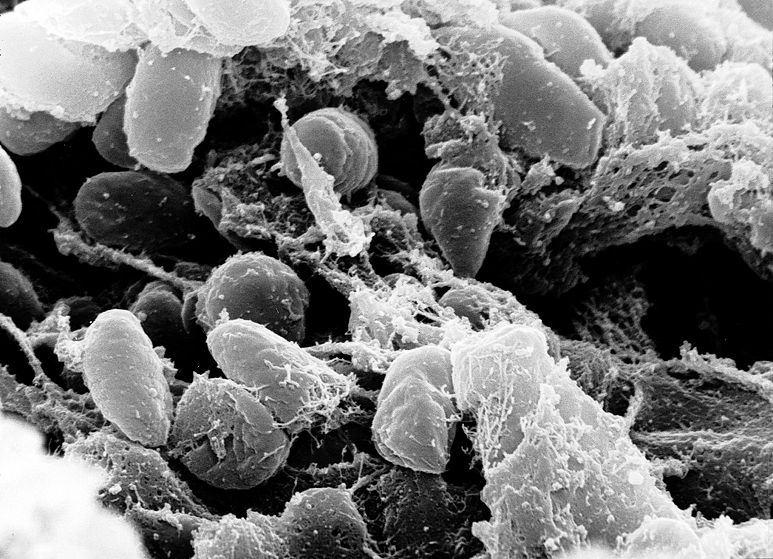
yersinia pestis


USPTO | United States Patent 7,572,449 Hill , et al. August 11, 2009
------------------------------------------------------------------------------------------------
Vaccine against Yersinia comprising one or two antibodies, one specific for Yersinia pestis F1-antigen and the other one for Yersinia pestis V-antigen

Abstract
The use of (i) an antibody specific for Yersinia pestis F1-antigen, or a binding fragment thereof, or (ii) an antibody specific for Yersinia pestis V-antigen, or a binding fragment thereof, or a combination of (i) and (ii), in the production of a medicament for the treatment of infection by Yersinia pestis. It has been found that such treatments are effective therapies for Yersinia pestis infection. In addition, the combination produces a synergistic effect when used prophylactically.

Yersinia pestis (formerly Pasteurella pestis) is a Gram-negative rod-shaped bacterium belonging to the family Enterobacteriaceae. It is a facultative anaerobe that can infect humans and other animals.

Human Y. pestis infection takes three main forms: pneumonic, septicemic, and the notorious bubonic plagues.[1] All three forms have been responsible for high mortality rates in epidemics throughout human history, including the Black Death (a bubonic plague) that accounted for the death of at least one-third of the European population in 1347 to 1353.

In September 2009 the death of a molecular genetics professor at the University of Chicago was linked to his work on a weakened strain of Y. pestis.[2].

Y. pestis has gained attention as a possible biological warfare agent and the CDC has classified it as a category A pathogen requiring preparation for a possible terrorist attack.

Monday, November 16, 2009

the enemy within

EnlightenNext | From the beginning of our research for this issue, the idea of speaking with an Orthodox elder about the ego had been an intriguing one. For although it is a tradition in which none of us could claim expertise, we were aware that when it comes to defining the enemy of the spiritual path, the Orthodox Christians are perhaps in a class by themselves. To this ancient mystical branch of Christianity, which split from the Catholic Church in 1054, the total purification of the human personality from egotism, selfishness and anything else that obstructs its capacity to reflect the light of God is and always has been the first and final aim of spiritual life. In sacred books with names like The Ladder of Divine Ascent and The Philokalia (literally "love of the beautiful and good"), Orthodox elders from as early as the third century write with passion and precision about the fullblooded "spiritual combat" the sincere aspirant must be willing to engage in if he or she is to have any hope of defeating the "demons" within that relentlessly attack with ever new and creative tactics. In one of countless such passages in The Philokalia, the fourth-century desert monk St. John Cassian writes, "[The ego] is difficult to fight against, because it has many forms and appears in all our activities . . . When it cannot seduce a man with extravagant clothes, it tries to tempt him by means of shabby ones. When it cannot flatter him with honor, it inflates him by causing him to endure what seems to be dishonor. When it cannot persuade him to feel proud of his display of eloquence, it entices him through silence into thinking he has achieved stillness. . . . In short, every task, every activity, gives this malicious demon a chance for battle."

While the word "ego" itself only appears in more contemporary translations and commentaries, throughout even the most ancient Orthodox texts, there are countless references to the hazards of self-love, self-esteem and the "most sinister of demons"—pride. Considered by Christians to be the sin that not only brought Lucifer, God's highest angel, tumbling to a fiery fate but that also led Adam and Eve to be exiled from paradise on earth, pride is referred to variously as "the mother of all woes" and "the first offspring of the devil." It is also universally regarded as the most destructive and powerful adversary on the spiritual path. As St. John Cassian writes, "Just as a deadly plague destroys not just one member of the body, but the whole of it, so pride corrupts the whole soul, not just part of it. . . . when the vice of pride has become master of our wretched soul, it acts like some harsh tyrant who has gained control of a great city, and destroys it completely, razing it to its foundations."

Chipocalypse Now - I Love The Smell Of Deportations In The Morning

sky |   Donald Trump has signalled his intention to send troops to Chicago to ramp up the deportation of illegal immigrants - by posting a...