Tuesday, October 28, 2008

Iran as Political Reality

The distinction between the apocalyptic rhetoric Israeli leaders use publicly in relation to Iran, and the more pragmatic view they hold among themselves on how to deal with Tehran and its nuclear program, has long been clear to anyone paying very close attention. In short, it’s clear that many of Israel’s key leaders don’t believe Iran is a suicidal ideologically-crazed regime that would risk destroying itself in order to destroy Israel, and therefore that even a nuclear-armed Iran would not be an “existential threat” to Israel, although clearly it would present a major strategic challenge by fundamentally reordering the balance of military force in the region. And of late, some of them have begun a gingerly but very clear retreat from the idea that Israel will have to bomb Iran’s nuclear facilities if no one else does — President Shimon Peres has said as much, publicly, and outgoing Prime Minister Ehud Olmert has echoed that position. I asked Rootless Cosmopolitan’s favorite Iran expert, Dr. Trita Parsi, to weigh in on the basis of his extensive research and interviews with many of the key decision-makers on the Israeli and Iranian sides. Trita’s book Treacherous Alliance — The Secret Dealings of Israel, Iran and the U.S. is a must-read for anyone seeking to understand the Israeli-Iranian relationship, and why there’s plenty of room for pragmatic coexistence.

On the eve of his departure from political life, outgoing Israeli Prime Minister Olmert delivered a stinging parting shot – putting under question not only the wisdom of holding on to Palestinian land, but also the feasibility of an Israeli military strike against Iran’s nuclear facilities.

“We have to make a decision, one that goes against all our instincts, against our collective memory,” he told the Israeli daily Yedioth Ahronoth. Recognizing that no other Israeli leader ever had uttered these words publicly, Olmert went on to declare that “Israel must withdraw from almost all, if not all” of the West Bank to achieve peace.

On Iran, Olmert argued that Israel had lost its “sense of proportion” when stating that it would deal with Iran militarily. “What we can do with the Palestinians, the Syrians and the Lebanese, we cannot do with the Iranians,” Olmert said, in stark contradiction to his own earlier warnings on Iran as well as the rhetoric of many of his hawkish cabinet members. “Let’s be more modest, and act within the bounds of our realistic capabilities,” he cautioned.

Israel Gets Real on Iran by Dr. Trita Parsi in The Atlantic Free Press.

Iran as Political Theater

While we must never rely on anyone else to do for us what we must do for ourselves in national security, there are multiple threats today that we cannot resolve without the cooperation of others. In fact, when it comes to preventing the worst weapons from falling into the worst hands or defeating apocalyptic terror groups or coping with global health challenges or stopping global warming or avoiding an international depression, we cannot do everything on our own. We need others internationally to accept our objectives and be prepared to join their means to ours.

When I was with Obama in Berlin and more than 200,000 people turned out in the heart of Europe to wave American flags, this was an extraordinary development. It reminded us that an American leader who is admired can lead not only our country but also make it easier for others to follow our lead. And, when I look at the Middle East -- where we face our greatest threats today -- we need others to follow our lead in stopping Iran from going nuclear and discrediting radical Islamists.
Ambassador Dennis Ross, Mark Aronchick, and Rabbi Neil Cooper of Temple Beth Hillel-Beth El, when Ross spoke to over 1000 community members and endorsed Senator Barack Obama. (Photo: Bonnie Squires)

Today, we are in trouble in the Middle East. Everywhere we look -- whether in the Gulf, Iraq, Lebanon or Gaza and the West Bank -- we see Iran challenging American interests and allies. Iran uses coercion and intimidation -- using groups like Hezbollah and Hamas -- to weaken existing regimes and to employ terror. It is Iran that arms these groups and threatens Israel on a daily basis.

Dennis Ross Why I support Barack Obama in The Philadelphia Jewish Voice.

Obamageddon

UK Guardian | With polls showing Barack Obama pulling ahead of John McCain in the US presidential race, the Republican party's hard-right evangelical allies are starting to panic. As the political elites in the movement freak out, they're sowing the seeds of grassroots anxiety that God will punish America for electing Obama.

Theodicy lies at the heart of the evangelical right's political strategy: Christians must perpetually engage in spiritual warfare with Satan, and take dominion over governmental and legal institutions. God will be pleased then; but if these Christian soldiers fail to vanquish Satan, God won't be happy at all. Chaos ensues: socialism, Bible burning, abortions in public schools, boy scouts forced into homosexuality!

Religious-right honchos are girding the troops for political apocalypse. Townhall magazine, owned by Salem Communications, one of the largest Christian broadcasters in the country, ran a September feature, "Obamageddon: Could We Survive a Barack Presidency?" This month evangelical publishing giant Stephen Strang, whose magazine Charisma endorsed McCain, predicted that "life as we know it will end if Obama is elected." Last week, the political arm of James Dobson's Focus on the Family sent out a "Letter from 2012 in Obama's America", a 16-page (pdf) parade of horribles, and talk radio show host Janet Porter imagined that Christians will be imprisoned with Obama in the Oval Office.

Six-Legged Soldiers

Excerpt from Six-Legged Soldiers at the Scientist; Insects have been converted into weapons of war and tools of terror for millennia. A new book asks: Are we ready for the next wave?

Dusk descends on a sweltering New Orleans. A naked man lies moaning in an apartment a few blocks from Canal Street. His jaundiced body is mottled with bruises where vessels have hemorrhaged. The pillow and bedside are caked with blood that he has vomited. The man's breathing is labored as he drowns in his own fluids.

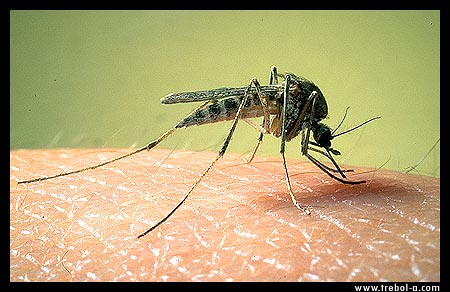
The window of the room is shut tightly, letting in no breath of air - and letting out none of the thousands of mosquitoes that cover the walls and the man's body. Aedes aegypti is not the most common species along the Gulf Coast, but anyone with a course in medical entomology could build a simple trap and conscript a bloodthirsty army.

Across the hall, another man cracks his door and peers out. Seeing nobody in the hallway, he emerges wearing beekeepers' garb. After slipping into the sickroom, he watches as a convulsion wracks the martyr's body. The insects rise in a ravenous cloud, droning their annoyance at having their meal disturbed.

Taking advantage of the moment, the garbed man crosses the room and opens the window... ...Sensing the air currents, a cloud of mosquitoes pours through the window, carrying a payload of yellow fever. The city's tropical heat, stagnant waters, crumbling infrastructure, decrepit health care system, and haggard people - nearly a quarter million resolute souls after Katrina - will provide an ideal setting for an epidemic. The man pulls a cell phone from his pocket and reads the coded text messages from his associates in Houston and Miami. He smiles, brushes a mosquito from the key pad, and dials the news desk at CNN.

Monday, October 27, 2008

Gun Sales Thriving In Uncertain Times

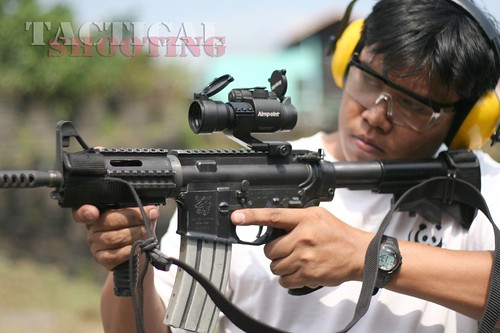
Washington Post | Americans have cut back on buying cars, furniture and clothes in a tough economy, but there's one consumer item that's still enjoying healthy sales: guns. Purchases of firearms and ammunition have risen 8 to 10 percent this year, according to state and federal data. Several variables drive sales, but many dealers, buyers and experts attribute the increase in part to concerns about the economy and fears that if Sen. Barack Obama of Illinois wins the presidency, he will join with fellow Democrats in Congress to enact new gun controls. Obama has said that he believes in an individual right to bear arms but that he also supports "common-sense safety measures."

"Even though [Obama] has a lot going for him, he's not very pro-gun," said Paul Pluff, a spokesman for Massachusetts-based Smith & Wesson, which has reported higher sales. Gun enthusiasts are "going to go out and get [firearms] while they still can."

Gun purchases have also been climbing because of the worsening economy, which fuels fears of crime and civil disorder, industry sources and specialists said.

"Generally, we know that hard economic times always result in firearm sales," said James M. Purtilo of Silver Spring, who publishes the Tripwire Newsletter.

Gary Kleck, a researcher at Florida State University's College of Criminology and Criminal Justice whose work was cited in the District's recent Supreme Court gun-control case, said that although there are no scientific studies linking gun sales and economic conditions, people often buy firearms during periods of uncertainty. People often buy weapons because of concerns about personal safety or government actions to limit access to firearms, causing spikes in sales, Kleck said.

Wealth gap creating a social time bomb

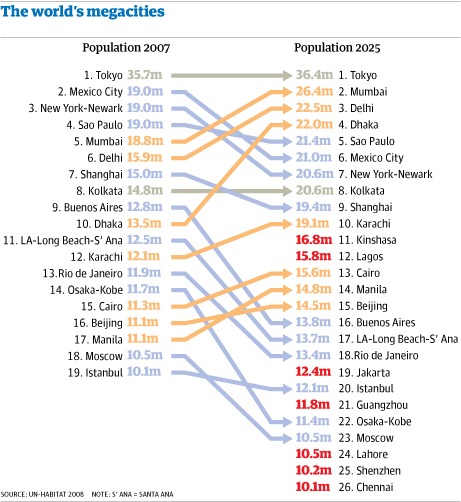
UK Guardian | Growing inequality in US cities could lead to widespread social unrest and increased mortality, says a new United Nations report on the urban environment.

In a survey of 120 major cities, New York was found to be the ninth most unequal in the world and Atlanta, New Orleans, Washington, and Miami had similar inequality levels to those of Nairobi, Kenya Abidjan and Ivory Coast. Many were above an internationally recognised acceptable "alert" line used to warn governments.

"High levels of inequality can lead to negative social, economic and political consequences that have a destabilising effect on societies," said the report. "[They] create social and political fractures that can develop into social unrest and insecurity."

According to the annual State of the World's cities report from UN-Habitat, race is one of the most important factors determining levels of inequality in the US and Canada.

"In western New York state nearly 40% of the black, Hispanic and mixed-race households earned less than $15,000 compared with 15% of white households. The life expectancy of African-Americans in the US is about the same as that of people living in China and some states of India, despite the fact that the US is far richer than the other two countries," it said.

Disparities of wealth were measured on the "Gini co-efficient", an internationally recognised measure usually only applied to the wealth of countries. The higher the level, the more wealth is concentrated in the hands of fewer people.

"It is clear that social tension comes from inequality. The trickle down theory [that wealth starts with the rich] has not delivered. Inequality is not good for anybody," said Anna Tibaijuka, head of UN-Habitat, in London yesterday.

The report found that India was becoming more unequal as a direct result of economic liberalisation and globalisation, and that the most unequal cities were in South Africa and Namibia and Latin America. "The cumulative effect of unequal distribution [of wealth] has been a deep and lasting division between rich and poor. Trade liberalisation did not bring about the expected benefits."

Europe on the brink of currency crisis meltdown

UK Telegraph | The financial crisis spreading like wildfire across the former Soviet bloc threatens to set off a second and more dangerous banking crisis in Western Europe, tipping the whole Continent into a fully-fledged economic slump.

Currency pegs are being tested to destruction on the fringes of Europe’s monetary union in a traumatic upheaval that recalls the collapse of the Exchange Rate Mechanism in 1992.

“This is the biggest currency crisis the world has ever seen,” said Neil Mellor, a strategist at Bank of New York Mellon.

Experts fear the mayhem may soon trigger a chain reaction within the eurozone itself. The risk is a surge in capital flight from Austria – the country, as it happens, that set off the global banking collapse of May 1931 when Credit-Anstalt went down – and from a string of Club Med countries that rely on foreign funding to cover huge current account deficits.

The latest data from the Bank for International Settlements shows that Western European banks hold almost all the exposure to the emerging market bubble, now busting with spectacular effect.

They account for three-quarters of the total $4.7 trillion £2.96 trillion) in cross-border bank loans to Eastern Europe, Latin America and emerging Asia extended during the global credit boom – a sum that vastly exceeds the scale of both the US sub-prime and Alt-A debacles.

Europe has already had its first foretaste of what this may mean. Iceland’s demise has left them nursing likely losses of $74bn (£47bn). The Germans have lost $22bn.

Stephen Jen, currency chief at Morgan Stanley, says the emerging market crash is a vastly underestimated risk. It threatens to become “the second epicentre of the global financial crisis”, this time unfolding in Europe rather than America.

Eastern Europe Adrift

The Economist | WILL an ex-communist country be the next Iceland? The dramatic collapse of that country’s economy, endangering savings from hapless depositors in Britain and elsewhere, has highlighted other risky but obscure corners of the world’s financial system. The stability of the Ukrainian hryvnia, the implications of the Latvian property crash and Hungarians’ troubling penchant for loans in Swiss francs are among the exotic topics now crowding policymakers’ desks.

Countries such as the ex-communist ones in eastern Europe are particularly at risk during periods of financial turmoil. First, because the counterpart of soaring foreign investment has been gaping current-account deficits (Latvia’s, for example, peaked at 26% of GDP in the third quarter of last year). Second, their central banks and governments are unlikely to be able to muster the financial firepower now being deployed in the big economies of the West. Already a couple of banks have toppled; stockmarkets have plunged, wiping out years of savings and hitting balance-sheets. The price of credit-default swaps—the market’s estimation of a borrower’s creditworthiness—ranges from the reassuring to the alarming (see map). As worries intensified, Hungary’s central bank on October 22nd raised interest rates from 8.5% to 11.5%.

For countries that have benefited from big flows of outside money, delivered by a highly leveraged global financial system, the mix of problems looks scary. Those big current-account deficits in every country save Russia suggest they may be living beyond their means. Some (but not all) have public or private sectors with big foreign debts; these may be hard to refinance. Some (again, not always the same ones) have wobbly banks and large state deficits. At best, the region is in for more nasty shocks that will need external support from lenders such as the IMF. At worst, some countries face debt restructuring, currency collapse and depression; that raises the spectre of political upheaval, too.

Sunday, October 26, 2008

The Anglo-American Establishment

The Rhodes Scholarships, established by the terms of Cecil Rhodes's seventh will, are known to everyone. What is not so widely known is that Rhodes in five previous wills left his fortune to form a secret society, which was to devote itself to the preservation and expansion of the British Empire. And what does not seem to be known to anyone is that this secret society was created by Rhodes and his principal trustee, Lord Milner, and continues to exist to this day. To be sure, this secret society is not a childish thing like the Ku Klux Klan, and it does not have any secret robes, secret handclasps, or secret passwords. It does not need any of these, since its members know each other intimately. It probably has no oaths of secrecy nor any formal procedure of initiation. It does, however, exist and holds secret meetings, over which the senior member present presides. At various times since 1891, these meetings have been presided over by Rhodes, Lord Milner, Lord Selborne, Sir Patrick Duncan, Field Marshal Jan Smuts, Lord Lothian, and Lord Brand. They have been held in all the British Dominions, starting in South Africa about 1903; in various places in London, chiefly 175 Piccadilly; at various colleges at Oxford, chiefly All Souls; and at many English country houses such as Tring Park, Blickling Hall, Cliveden, and others.

This society has been known at various times as Milner's Kindergarten, as the Round Table Group, as the Rhodes crowd, as The Times crowd, as the All Souls group, and as the Cliveden set. All of these terms are unsatisfactory, for one reason or another, and I have chosen to call it the Milner Group. Those persons who have used the other terms, or heard them used, have not generally been aware that all these various terms referred to the same Group.

From the preface to The Anglo-American Establishment (1981).

Tragedy and Hope

There does exist, and has existed for a generation, an international Anglophile network which operates, to some extent, in the way the radical Right believes the Communists act. In fact, this network, which we may identify as the Round Table Groups, has no aversion to cooperating with the Communists, or any other groups, and frequently does so. I know of the operations of this network because I have studied it for twenty years and was permitted for two years, in the early 1960's, to examine its papers and secret records. I have no aversion to it or to most of its aims and have, for much of my life, been close to it and to many of its instruments. I have objected, both in the past and recently, to a few of its policies (notably to its belief that England was an Atlantic rather than a European Power and must be allied, or even federated, with the United States and must remain isolated from Europe), but in general my chief difference of opinion is that it wishes to remain unknown, and I believe its role in history is significant enough to be known. [Pg. 950.]

The argument that the two parties should represent opposed ideals and policies, one, perhaps, of the Right and the other of the Left, is a foolish idea acceptable only to the doctrinaire and academic thinkers. Instead, the two parties should be almost identical, so that the American people can "throw the rascals out" at any election without leading to any profound or extreme shifts in policy. [Pg. 1247-1248.]

Both from Tragedy and Hope (1966).

Carroll Quigley

"As a teenager I heard John Kennedy's summons to citizenship. And as a student at Georgetown, I heard the call clarified by a professor I had named Carroll Quigley, who said America was the greatest country in the history of the world because our people have always believed in two great ideas: first, that tomorrow can be better than today, and second, that each of us has a personal moral responsibility to make it so."

When Bill Clinton spoke these stirring words to millions of Americans during his 1992 acceptance address before the Democratic National Convention upon receiving his party's nomination for President of the United States, the vast multitude of his television audience paused for a micro-second to reflect: Who is Carroll Quigley and why did he have such a dramatic effect on this young man before us who may become our country's leader?

Carroll Quigley was a legendary professor of history at the Foreign Service School of Georgetown University, and a former instructor at Princeton and Harvard.

He was a lecturer at the Industrial College of the Armed Forces, the Brookings Institution, the U. S. Naval Weapons Laboratory, the Foreign Service Institute of the State Department, and the Naval College.

Quigley was a closely connected elite "insider" to the American Establishment, with impeccable credentials and trappings of respectability.

But Carroll Quigley's most notable achievement was the authorship of one of the most important books of the 20th Century: Tragedy and Hope – A History of the World in Our Time.

No one can truly be cognizant of the intricate evolution of networks of power and influence which have played a crucial role in determining who and what we are as a civilization without being familiar with the contents of this 1,348-page tome.

It is the "Ur-text" of Establishment Studies, earning Quigley the epithet of "the professor who knew too much" in a Washington Post article published shortly after his 1977 death.

In Tragedy and Hope, as well as the posthumous The Anglo-American Establishment: From Rhodes to Cliveden, Quigley traces this network, in both its overt and covert manifestations, back to British racial imperialist and financial magnate Cecil Rhodes and his secret wills, outlining the clandestine master plan through seven decades of intrigue, spanning two world wars, to the assassination of John Kennedy.

Through an elaborate structure of banks, foundations, trusts, public-policy research groups, and publishing concerns (in addition to the prestigious scholarship program at Oxford), the initiates of what are described as the Round Table groups (and its offshoots such as the Royal Institute of International Affairs and the Council on Foreign Relations) came to dominate the political and financial affairs of the world.

For the ambitious young man from Hope, Arkansas, his mentor's visionary observations would provide the blueprint of how the world really worked as he made his ascendancy via Oxford through the elite corridors of power to the Oval Office.

YouTube Potpourri: The Legacy of Carroll Quigley at LewRockwell.com

Meet the World's New Reserve Currency: The Chinese Yuan

The Bush administration has called for an economic summit to be held by the 20 largest economies sometime after the presidential elections. US and EU officials are hoping to stitch together another Bretton Woods wherein control of the global economic system was delivered to those same nations. It's likely, however, that the outcome will turn out considerably different than anticipated. Already, under China's leadership, 12 Asian nations have agreed to set up an 80-billion-dollar fund to protect their economies from currency-runs, capital flight or other financial disruptions. China has the world's largest reserves at $1.9 trillion followed by Japan at more than $1 trillion. Clearly the two richest nations will set the agenda and play a central role in deciding how best to deal with the global recession.

The November summit in Washington could produce some unwelcome surprises which were hinted at by Thailand's Deputy Prime Minister, Olarn Chaipravat, who told Bloomberg News:
"The message of this initiative is for China to consider whether or not China would open up its banking system and allow the strongest currency in the world, which is the Chinese yuan, to be the rightful and anointed convertible currency of the world."
Surely, the present financial malaise which has its roots in Wall Street and at the Federal Reserve, has demonstrated that the dollar must be replaced as the world's "reserve currency" and that America must be deposed as the de facto steward of the global economic system. Leadership implies responsibility and the US must be held to account for its failings. It's time for a change. Full Monty at Information Clearinghouse.

The Whole System is Contracting

Counter Punch Weekend | The US Treasury and Federal Reserve are now underwriting the entire financial system. The free market has been abandoned altogether. Everything from commercial paper to money markets is now backed by the "full faith and credit of the United States". Without that explicit government guarantee, the credit markets would still be frozen and the system would crash. But government guarantees do not address the real problem, which is toxic assets that must be accounted for and written down. All it does is take hundreds of billions of dollars in mortgage-backed garbage onto the nation's balance sheet and undermine the creditworthiness of the United States. Eventually, foreign central banks will see the folly of this maneuver and refuse to buy more US debt. When that happens, there will be a run on the dollar and a major dislocation in the bond market. Then, the financial system will grind to a standstill once again.

According to Fitch Ratings, the "crisis will cut growth in credit this year by 50 percent as financial firms reduce leverage, investors' appetite for risk declines, and the worldwide economy slows." When credit is less available, there's less business activity and the economy slows. Unemployment goes up and quarterly earnings go down. It's a vicious circle that starts with speculation and ends in panic. The financial system has to reestablish its equilibrium by purging the excessive credit that developed through low interest rates and lax lending standards. Financial institutions everywhere are in the process of deleveraging which is putting downward pressure on the main stock indexes and creating turmoil in the currency markets.

Saturday, October 25, 2008

World Order?

Washington Post | In France, President Nicolas Sarkozy has loudly proclaimed the need to increase regulation and oversight of financial markets, vowing on Thursday to "refound the global financial system" as part of "an intellectual and moral revolution."

In Britain, Prime Minister Gordon Brown -- who has set up an economic "war room" at 10 Downing Street -- moved ahead of the United States to inject cash into private banks and is leading calls for global accounting standards and stronger oversight of international banking.

President Bush, by comparison, has been more wary in his public remarks as the crisis on Wall Street has grown into a global panic. The departing U.S. president has agreed to hold a global economic summit in Washington on Nov. 15 but has stopped short of endorsing the kind of far-reaching international proposals put forward by Brown, Sarkozy and others.

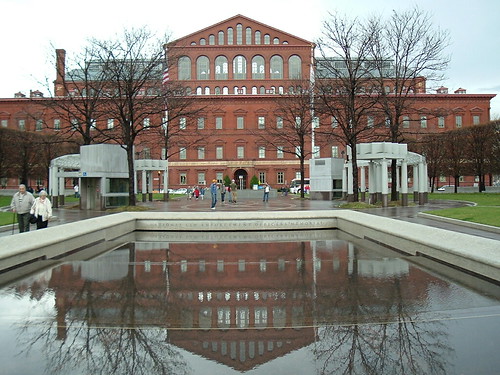
The economic summit next month will be held at the National Building Museum in Washington and will include leaders of the Group of 20 major industrialized nations and emerging markets, including China and India. The White House said three top officials will lead U.S. preparations for the meeting: Dan Price, assistant to the president for international economic affairs; undersecretary of state Reuben Jeffery; and Treasury undersecretary David McCormick.

Charles Freeman, a former Bush administration trade official now at the Center for International and Strategic Studies, said that Brown and other foreign leaders also see the crisis as an opportunity to challenge the United States' role as the leader of world's financial system.


"Sarkozy and Brown and others are attacking a U.S.-led order," Freeman said. "They're saying, 'We have to revamp this thing, and the U.S. is the problem.'"

In New York yesterday, the United Nations convened a meeting of its board of chief executives, including the heads of the International Monetary Fund and the World Bank, to coordinate a strategy for containing the crisis.
ad_icon

U.N. Secretary General Ban Ki-moon urged the IMF and major central banks to set up "substantial standby lines of credit" that can be used to shore up banks in the developing world. A team of economists advising Ban have said that between $500 billion and $1 trillion is required to stabilize these banks.

"We do not yet know whether our efforts to stabilize the financial system will succeed," Ban said. "Too often, in recent weeks, financial leaders have been criticized for being too slow to recognize problems, for doing too little too late. We must act now to prevent today's crisis from becoming worse tomorrow.

Iran's Oil Price Vulnerability

BBC News | For every dollar on the price of a barrel of oil, Iran earns approximately a billion dollars a year. In the past few weeks and months, the price of Iranian oil has dropped between $50 and $60 a barrel.

The head of the Central Bank of Iran has warned that revenues could be cut by $54bn, effectively halving the country's income from oil, which accounts for the vast majority of both its export earnings and government revenue.

Petropars, a subsidiary of the National Iranian Oil Company (NOIC), has even warned that it could go into bankruptcy.

As the effect of those lower oil prices works through, Iran will face a growing budget deficit. The International Monetary Fund said in August that Iran would face unsustainable deficits should prices for its oil fall below $75 a barrel.

Mr Ahmadinejad will have the choice of cutting spending or printing more money. But with inflation already over 25% and unemployment around 10%, neither is an attractive option.

As Iran confronts the world over its controversial nuclear programme, high oil prices have been the insurance policy.

When oil was nudging $150 a barrel, it knew the world did not dare risk pushing prices even higher by imposing tough new sanctions, let alone military confrontation. That all looks very different now.

The strongest tool in the armoury of the US and Europe may be to impose an embargo on petrol sales to Iran.

If Russia blocks agreement at the UN Security Council, they could act unilaterally, or multilaterally.

Amazingly, this oil rich country is heavily dependent on petrol imports because of a lack of refinery capacity.

Iranians love their cars and any restriction on their freedom to drive will not make them happy. Low oil prices make this a distinct possibility.

At the very least, the global credit crunch means there is simply not the money in the global economy for the sort of multi-billion dollar investment that Iran needs for its oil and gas fields.

Economic Warfare?

Washington Post | Both of Russia's stock exchanges plunged about 14 percent Friday, extending a 10-week losing streak and pushing the main indexes down some 75 percent below their May highs. Regulators suspended trading in response, a measure they have adopted more than a dozen times in recent weeks, prompting one analyst to compare the exchanges to a cuckoo clock.

But the country's state-controlled television stations barely mentioned the drop or the suspension of trading. Instead, the evening newscasts have focused on the soothing statements of Prime Minister Vladimir Putin, his successor as president, Dmitry Medvedev, and their allies. The Kremlin is worried about the possibility of a run on bank deposits or a rush to convert rubles into dollars. Either could derail its strategy of using the nation's huge foreign exchange reserves to bolster the financial system. The government is especially concerned about the pressure on the ruble, which has intensified because of the falling price of oil. Despite new limits on currency speculation, the ruble weakened Friday to its lowest level against the dollar since 2006.

Though some economists have urged the government to devalue the ruble to boost exports, the Kremlin has instead been burning through its reserves -- the total fell by another $15 billion in the week ending Oct. 17 -- to support the currency.

Devaluation would make it more difficult for Russian firms to pay back the nearly $500 billion they owe in foreign debt. It would also bring back memories of the 1998 crisis and undermine the Kremlin's message that the Russian economy remains healthy.

Polls continue to show strong public faith in the ruble, with more than 50 percent of respondents saying it is the most secure currency for their savings. Confidence in the banks appears shakier, with 40 percent of depositors saying they are worried about losing their savings.

"My parents put all their savings in the bank, and we're worried there will be a default," said Dmitrina Rudik, 61, a retired government worker who was pushing her grandson in a stroller in a park. "At the same time, prices of food are getting higher and higher."

Sick Man of Eurasia?

NYTimes | Russia is in the midst of a genuine demographic disaster from which its rulers have no obvious exit strategy. Although the Russia’s fortunes (and the Kremlin’s ambitions) have waxed on a decade of windfall profits from oil and gas, the human foundations of the Russian nation — the ultimate sources of the country’s wealth and power — are in increasingly parlous straits.

Despite net immigration since the end of Communism, the Russian Federation’s population is nearly seven million people smaller today than at the start of 1992. In the post-Soviet era, Russia has seen three deaths for every two births. Despite a “baby bonus” scheme unveiled by the Kremlin two years ago and a small rise in the birth rate, deaths outnumbered births in Russia by over 250,000 in the first half of 2008.

If projections by the United Nations Population Division come to pass, Russia’s population will fall by 10 million more from now to 2020. Those same projections envision Russian life expectancy lagging ever further behind global averages by 2020 to 2025, in this view, overall life expectancy in Russia would actually be a year lower than average for the world’s less-developed countries — with the men’s expectancy nearly five years below the third world mean.

Demography may not be destiny, of course. But this is not a portrait of a successfully and rapidly developing economy — much less an emerging economic superpower.

Friday, October 24, 2008

Pawns in the Pawnshop....,

New York Times |The tribal militias, known as lashkars, have quickly become a crucial tool of Pakistan’s strategy in the tribal belt, where the army has been fighting the Taliban for more than two months in what army generals acknowledge is a tougher and more protracted slog than they had anticipated. And, indeed, the lashkars’ early efforts have been far from promising.

Even in the best of times, there are basic unwritten rules about the tribal militia in Pakistan that limit their impact.

The Pakistani military, for example, can lend moral support but cannot initiate a tribal militia, the generals said. The lashkars come with their own weapons, food and ammunition. They have their own fixed area of responsibility, and they are not permanent.

Great care is taken to make sure the lashkars do not become a threat to the military itself. “We do not want a lashkar to become an offensive force,” said one of the generals, who spoke frankly about the lashkars on the condition of anonymity. For that reason, the military was willing to lend supporting fire from artillery and helicopters but would not give the militias heavy weapons, he said.

Beyond those rules, the Pakistani Army and government have not been able to inculcate the lashkars with the needed confidence, said Khalid Aziz, a former chief secretary of the North-West Frontier Province.

Who is the World For?

More banks report threatening letters

WASHINGTON (CNN) -- The number of banks and other agencies reporting that they have received angry letters containing a powdery substance has risen to 45 in 11 states, and there could be more cases, FBI officials said Wednesday.

Wednesday's count is up from the 30 in eight states that were reported Tuesday.

The FBI, U.S. postal inspectors and state and local authorities are investigating, causing what FBI spokesman Richard Kolko called "a drain on resources" for those agencies.

"Even sending a hoax letter is a serious crime, and law enforcement will continue to work to identify and arrest those responsible," Kolko said in a statement. "The FBI and our law enforcement partners are following up on numerous leads, and if anyone has information, they are requested to contact the FBI, USPIS or local authorities."

Postal inspectors offered a reward of up to $100,000 for information leading to the conviction of those behind the hoax letters, which they said were mailed late last week.

As of Tuesday, financial institutions in New York, New Jersey, the District of Columbia, Ohio, Illinois, Colorado, Oklahoma, Georgia and Texas had been targeted by the letters. Wednesday, that list had grown to include Virginia, California and Arizona, the FBI reported.

Chipocalypse Now - I Love The Smell Of Deportations In The Morning

sky |   Donald Trump has signalled his intention to send troops to Chicago to ramp up the deportation of illegal immigrants - by posting a...