Sunday, February 14, 2010

u.k. industry task force on peak oil


PeakOilTaskForce | On 10 February 2010 at the Royal Society, six UK companies - Arup, Foster + Partners, Scottish and Southern Energy, Solarcentury, Stagecoach Group and Virgin - joined together to launch the second report of the UK Industry Task-Force on Peak Oil and Energy Security (ITPOES).

The report, titled “The Oil Crunch - a wake-up call for the UK economy”, finds that oil shortages, insecurity of supply and price volatility will destabilise economic, political and social activity within five years.

The Task-Force warns that the UK must not be caught out by the oil crunch in the same way it was with the credit crunch and states that policies to address Peak Oil must be a priority for the new government formed after the 2010 election.

Saturday, February 13, 2010

a disadvantaged class?

Essential Lists | One of the most astounding passages in the Supreme Court's mind-boggling decision in Citizens United v. Federal Election Commission -- the January decision holding that corporations have a First Amendment right to spend as much as they choose from their treasuries to support or oppose candidates for elected office -- is this:

"[T]he Government may commit a constitutional wrong when by law it identifies certain preferred speakers. By taking the right to speak from some and giving it to others, the Government deprives the disadvantaged person or class of the right to use speech to strive to establish worth, standing, and respect for the speakers voice. The First Amendment protects speech and speaker, and the ideas that flow from each."

This ode to the First Amendment is inspiring, until you recognize that the "disadvantaged class" reference is to corporations.

When it comes to speech protections, there are surely many rational ways to distinguish corporations from real, live persons. One is that corporations are not real, live persons! Another is that for-profit corporations exist for the purpose of making money, and that this monomaniacal focus distinguishes them in very important ways from humans, who care not only about making money, but building community, expressing themselves, fairness, equality, justice, protecting future generations, stewarding the planet and much more. And other consequential difference, compounding these other points of difference, is that large and even not-so-large corporations have a lot more money, and can easily mobilize resources on a scale that vastly outdistances anything that real people can do.

Thus the rather obvious conclusion that corporate money can distort elections and the political process. This is hardly speculative: large corporations dominated the political process even before Citizens United, a fact widely understood. Eighty-five percent of people in the United States believe big business has too much power in Washington.

What may not be quite so obvious is how extraordinary are the resources that corporations can mobilize as against what is now spent on elections.

Consider these juxtapositions -- (the list is impressive and footnoted w/links)

political science..,

NYTimes | Three faculty members at the University of Alabama in Huntsville were shot to death, and three other people were seriously wounded at a biology faculty meeting on Friday afternoon, university officials said.

The Associated Press reported that a biology professor, identified as Amy Bishop, was charged with murder.

According to a faculty member, the professor had applied for tenure, been turned down, and appealed the decision. She learned on Friday that she had been denied once again.

The newspaper identified Dr. Bishop as a Harvard-educated neuroscientist. According to a 2006 profile in the newspaper, Dr. Bishop invented a portable cell growth incubator with her husband, Jim Anderson. Police officials said that Mr. Anderson was being detained, but they did not call him a suspect.

Photographs of a suspect being led from the scene by the police appeared to match images of Dr. Bishop on academic and technology Web sites.

Dr. Bishop had told acquaintances recently that she was worried about getting tenure, said a business associate who met her at a business technology open house at the end of January and asked not to be named because of the close-knit nature of the science community in Huntsville.

at 500% net liability to GDP - G7 collapse inevitable

Zerohedge | For Greece, with on and off balance sheet liabilities at over 800%, it's game over. For the Eurozone, with the same ratio at about 500%, it is also game over. For the US, at 500%+, it is, you guessed it (sorry Joseph Stiglitz), game over, but since we have the printers, it will simply take a little longer. Please don't read this if you want to keep believing there is any hope left for the (developed) world.

As noted earlier on Zero Hedge, in Europe the population is a little less brainwashed by the moronic happenings on prime time TV, so while in America the destruction of the economic system, as trillions are transferred to the kleptocracy which knows fully well the end game is nigh, results in some sighs of desperation at best, in Europe the outcome will be somewhat more violent.

And in case you were wondering why all European leaders are powerless to provide a bailout proposal that actually has a snowball's chance in hell of doing something/anything to help Greece, read on. Alternatively, if you want to find out why any plan suggested on Monday will be thoroughly useless and once digested by the market will cause another major crash, read on as well.
The pressure to tighten fiscal policy from current nose-bleed levels of deficits is not just an issue for crisis hit Greece. It is an issue for virtually all economies. It is a particular issue for the US and UK with structural (cyclically adjusted) general government deficits of almost 10% of GDP (according to the OECD)! There is a ferocious debate ongoing between those who believe there needs to be a rapid reduction in these deficits to avoid some combination of insolvency/default/rapid inflation and those who believe that there should be even more fiscal stimulus. The debate is loud and opinions are tending to be polarised.

My own view on this is that obviously we should never have got into this wholly avoidable mess in the first place. But having got here, there really is no way out that does not trigger a major market-moving upheaval. Ultimately economic prosperity over the past decade has been a sham: a totally unsustainable Ponzi scheme built on a mountain of private sector debt.GDP has simply been brought forward from the future and now it's payback time. The trouble is that, as the private sector debt unwinds, there is no political appetite to allow GDP to decline to its "correct" level as this would involve a depression. So burgeoning public sector deficits and Quantitative Easing are required to maintain the fig-leaf of continued prosperity.
And here is the topic that will dominate over all pundit round table discussions in the next weeks: the entire world is insolvent, although some are more insolvent than others. Greek total net liabilities (on and off balance sheet) to GDP are 800%! EU: at 470%, the US, at over 500%. There is no way out but default.

Friday, February 12, 2010

cap ain't lied.....,


Yahoonews | Since 1941, Captain America has been one of the most popular comic book characters around. The fictional super-patriot fought Nazis during World War II, took on those who burned the American flag during the Vietnam era, and raked in hundreds of millions of dollars for Marvel Comics along the way. Now, the appearance that he is taking on the Tea Party Movement in a storyline about investigating white supremacists has forced Marvel to apologize for the comic hero.

Issue 602 of the comic features Captain America investigating a right-wing anti-government militia group called "the Watchdogs". Hoping to infiltrate the group, Captain America and his African-American sidekick The Falcon observe an anti-tax protest from a rooftop. The protestors depicted are all white and carry signs adorned with slogans almost identical to those seen today in Tea Party rallies like "tea bag libs before they tea bag you" and "stop the socialists."

The Falcon mentions that the gathering appears to be "some kind of anti-tax protest" and notes that "this whole 'hate the government' vibe isn't limited to the Watchdogs." He then tells Captain America that he doesn't think their plan will work because "I don't exactly see a black man from Harlem fitting in with a bunch of angry white folks." Captain America then explains that his plan entails sending The Falcon in among the group posing as an IRS agent under the thinking that a black government official will most certainly spark their anger.

The clear implicit attack on the Tea Party Movement was first noticed by Publius' Forum's Warner Todd Huston. When a minor uproar ensued, Marvel Comics editor-in-chief Joe Quesada spoke to Comic Book Resources and defended the issue while apologizing for the panel that seemed to tie real-life Tea Party protesters to the fictional group depicted in the book.

obamaman can..,

Fist tap Dale.

NYTimes | At a time of deepening political disaffection and intensified distress about the economy, President Obama enjoys an edge over Republicans in the battle for public support, according to the latest New York Times/CBS News poll.

While the president is showing signs of vulnerability on his handling of the economy — a majority of respondents say he has yet to offer a clear plan for creating jobs — Americans blame former President George W. Bush, Wall Street and Congress much more than they do Mr. Obama for the nation’s economic problems and the budget deficit, the poll found.

They credit Mr. Obama more than Republicans with making an effort at bipartisanship, and they back the White House’s policies on a variety of disputed issues, including allowing gay men and lesbians to serve openly in the military and repealing the Bush tax cuts for the wealthy.

The poll suggests that both parties face a toxic environment as they prepare for the elections in November. Public disapproval of Congress is at a historic high, and huge numbers of Americans think Congress is beholden to special interests. Fewer than 1 in 10 Americans say members of Congress deserve re-election.

As the party in power, Democrats face a particular risk from any wave of voter discontent; unfavorable views of the Democratic Party are as high as they have been since the Republican takeover of Congress in 1994, though Republicans continue to register an even worse showing. The percentage of Americans who approve of Mr. Obama’s job performance, 46 percent, is as low as it has been since he took office.

Still, the poll suggests that Mr. Obama and his party have an opportunity to deflect the anger and anxiety if they can frame the election not as a referendum on the president and his party, but as a choice between them and a Republican approach that yielded results under Mr. Bush that much of the nation still blames for the country’s woes. That is what the White House has been trying to do since the beginning of the year.

the tea party people are the corn pone nazis..,

Kunstler | Future historians who try to chart the unraveling of the USA's political tapestry might point to two events of the past week. The obvious first one was the Tea Party convention at Nashville. It was held not accidentally at the ridiculous Opryland Hotel and resort in the city's outer suburban asteroid belt, right next to the circumferential freeway, and next door to the defunct (1997) Opryland USA theme park, an attraction based on the cute idea that Tennessee rubes were too dumb to spell the word opera -- so the symbolism was perfect.

Behind the incoherent cargo of conflicting complaints that makes up Tea Party doctrine -- like "keeping the government's hands off our medicare!" -- stands the more basic dissolution of the Sunbelt's miracle economy, along with the pain and bewilderment of the southern peckerwood political nexus that rose out of the dust after World War Two to build the suburban nirvana of universal air-conditioning, happy motoring, Jesus tub-thumping, over-eating, and Friday night football that defined Sunbelt culture. They sense now that history is about to thrust them back into the okra patch, with the hookworms and the chiggers, as the economy whirls down the drain, and the car dealerships close up, and the idle production homebuilders succumb to methedrine addiction, and the price of Reba McEntire tickets exceeds their dwindling resources, and they are none too happy about any of that.

Of course this Sunbelt political culture has tentacles and outposts all over the USA, wherever a few generations of laboring folk enjoyed debt-fueled parabolic rises in living standards during the cheap oil decades, and now find themselves in foreclosure hell, indentured to the very WalMarts that they welcomed with open arms (and allowed to destroy their local businesses) -- and, of course, it's yet another paradox that these are the same folk who will still defend the big box masters to their deaths. The America they stand for is a weird contradictory mish-mash of Confederate nostalgia, hyper-individualism that really owes allegiance to nothing, racial enmity, religious paranoia, and potemkin patriotism -- especially involving anything in the constitution that allows them to wriggle out of obligations to the public interest at the same time that they get to push other groups of people around.

hoodwinked and bamboozled...,

the hardline..,

Thursday, February 11, 2010

the world is a ghetto....,

NYTimes | A decade ago, New York City officials were so reluctant to give out food stamps, they made people register one day and return the next just to get an application. The welfare commissioner said the program caused dependency and the poor were “better off” without it.

Now the city urges the needy to seek aid (in languages from Albanian to Yiddish). Neighborhood groups recruit clients at churches and grocery stores, with materials that all but proclaim a civic duty to apply — to “help New York farmers, grocers, and businesses.” There is even a program on Rikers Island to enroll inmates leaving the jail.

“Applying for food stamps is easier than ever,” city posters say.

The same is true nationwide. After a U-turn in the politics of poverty, food stamps, a program once scorned as “welfare,” enjoys broad new support. Following deep cuts in the 1990s, Congress reversed course to expand eligibility, cut red tape and burnish the program’s image, with a special effort to enroll the working poor. These changes, combined with soaring unemployment, have pushed enrollment to record highs, with one in eight Americans now getting aid.

“I’ve seen a remarkable shift,” said Senator Richard G. Lugar, an Indiana Republican and prominent food stamp supporter. “People now see that it’s necessary to have a strong food stamp program.”

The revival began a decade ago, after tough welfare laws chased millions of people from the cash rolls, many into low-wage jobs as fast-food workers, maids, and nursing aides. Newly sympathetic officials saw food stamps as a way to help them. For states, the program had another appeal: the benefits are federally paid.

But support also turned on chance developments, including natural disasters (which showed the program’s value in emergencies) and the rise of plastic benefit cards (which eased stigma and fraud). The program has commercial allies, in farmers and grocery stores, and it got an unexpected boost from President George W. Bush, whose food stamp administrator, Eric Bost, proved an ardent supporter.

“I assure you, food stamps is not welfare,” Mr. Bost said in a recent interview.

homeless in the blizzard

HuffPo | A blizzard warning is in effect for Baltimore, Philadelphia, Washington D.C. and New York City. With record snowfall, freezing cold temperatures, and high wind gusts expected, residents of the Northeast are urged to stay indoors and drive only if necessary. While many skeptics may be using this event to attempt to discredit the theory of global climate change, a more pressing issues faces the homeless -- where to go and how to stick out the storm.

"The vast majority of homeless people in New York City are in the shelter system," Patrick Markee, Senior Policy Analyst at Coalition for the Homeless, said. "Along with food, we give out hats and gloves and coats if we've got them. On a night like this, we urge people to get indoors and give them options to do that."

The NYC Department of Homeless Services announced back in December that its 'Code Blue' emergency procedure would be in effect throughout the winter to provide temporary shelter. Many cities, notably New York, have seen a drastic increase in homelessness since the beginning of the economic recession. NBC New York reported in October that 39,000 people sleep in NY municipal shelters every night, about 40% of them being children. "We are definitely concerned that there's a shortage of shelter beds for homeless single adults," Markee said. "We actually brought a legal challenge against the city [of New York] back in December because there was a lack of shelter beds. We are concerned that city officials have absolutely failed to prepare."

According to Markee, there are about 8,300 beds in the adult shelter system. The nonprofit groups hired by the city are doing the best they can in their street outreach efforts, he said, but there simply may not be anywhere to place the people they find.

"At the end of the day, they have to have a place to bring those people and the city's shelter system is bursting at the seams." Fist tap my man Rembom.

wait, wait, wait, wait!!! I din'mean it, I din'mean it!!!!

NYTimes | As Europe edges toward emergency guarantees to stem market panic over one of the most profligate members of the euro bloc, the country that the region turns to for leadership, Germany, is suffering from growing doubts about the European experiment it long championed.

Reluctant German leaders now find themselves forced to help Greece remain solvent, or risk watching markets attack one weak member after the next, from Portugal to Spain to Italy, threatening the stability of the euro, the European currency Germany fought so hard to create.

In a conference call with the finance ministers from the 16 countries that use the euro and the president of the European Central Bank, Jean-Claude Trichet, officials said that some action had to be taken to calm markets and take pressure off Greece. But what form that rescue would take — be it loans, loan guarantees or a promise to buy Greek government bonds — still had not been decided Wednesday night, ahead of a summit meeting involving all 27 European Union governments on Thursday.

What did appear clear was that Germany, with an assist from France, would have to take the lead. “The Germans are the only ones with deep pockets,” said Daniel Gros, director of the Center for European Policy Studies in Brussels. “If it was just Greece, they could consider letting them go down the drain, but it threatens the entire euro zone.”

Berlin has been mostly silent on the matter. That is partly to put pressure on Greece, as civil servants struck there Wednesday to oppose cutbacks that the government has promised in order to rein in its enormous budget deficit.

But a bailout will be politically awkward for Chancellor Angela Merkel’s government. It is precisely the financial millstone that opponents warned about when Germany gave up its treasured mark, a move that a majority of people here, in contrast to their political leaders, opposed at the time.

greek workers protest austerity

WaPo | Greek workers shut down schools, grounded flights and walked out of hospitals Wednesday to protest austerity measures as their prime minister headed to a crucial European Union summit with bailout speculation at a fever pitch.

E.U. leaders will wrangle Thursday over how to resolve a Greek debt crisis that has shaken the euro and underscored the interconnectedness of the global economy. U.S. and European markets rose Tuesday on hopes for a rescue plan that might take pressure off several other struggling eurozone nations, including Portugal and Spain.

But German officials said Wednesday that there was no urgent need for a bailout at the moment and that "no decision on such help" is imminent. They also said E.U. rules prohibit them from guaranteeing another country's debts.

Greece has come under intense pressure to slash spending after it revealed a massive and previously undeclared budget shortfall last year that continues to rattle financial markets and undermine the value of the euro. The country's deficit spiraled to above 12 percent of economic output -- more than four times the eurozone limit -- in 2009.

Prime Minister George Papandreou's new government has announced broad spending cuts that will freeze salaries and new hiring, cut bonuses and stipends, and increase the average retirement age by two years to 63. The government also announced new taxes, which it insists will increase the burden on the rich but safeguard the poor.

Papandreou, who was in Paris on Wednesday to meet French President Nicolas Sarkozy, insisted that Athens is not asking for a bailout.

big bodies vs. the biosphere

Truthout | In the fog of war, climate chaos and economic ruin, the import of the United Nations' COP10 biodiversity treaty conference in Nagoya in October 2010 may be easily overlooked. Given the mighty array of corporate forces now encircling this treaty's premises, that could prove a huge mistake.

Like the Copenhagen-jubilant corporate climate lobby before them, the big corporate bodies that dominate the drug, energy, agro-business and natural resource extraction arenas are aggressively organizing to keep any Nagoya agreement toothless, while the NGO community remains barely aware of their schemes or the fateful stakes.

84% of alt.energy stimulus flowed offshore

OurFuture | It turns out a Texas windmill farm developer's request last month for nearly half a billion in stimulus funds to create 2,000 jobs in China doesn't rank first on the audacity scale.

Shockingly for American taxpayers, and sadly for the staggering 10.2 percent of Americans who are unemployed, it doesn't even rank second.

That's because Washington already has doled out hundreds of millions in stimulus funds to foreign renewable energy firms. Of the $1.05 billion in clean energy grants awarded by D.C., $849 million -- 84 percent -- went to foreign wind companies, according to an analysis by Russ Choma of the Investigative Reporting Workshop. He wrote:
"The cash grants were given for the installation of 1,763 megawatts of capacity - 1,566 installed by foreign companies. Using the Renewable Energy Policy Project's own numbers, as many as 4,500 manufacturing jobs may have been created overseas."

Wednesday, February 10, 2010

coffee claques?

Guardian | Tea partyers, by the way, are basically Nixon's silent majority in a less reticent mode. What is it about tea parties that make them off-limits to Democrats? Well, for starters, everything. The Democrats control the White House, the Senate and the House of Representatives, so at least until they get massacred in the November elections, they will have a hard time portraying themselves as a persecuted minority. Democrats neither hate nor distrust the federal government and do not automatically object to higher taxes, though, just like the Tea Party types, they do hate Wall Street.

A more pertinent explanation, though, is demographics. The Democratic party, always a weird melange, is now truly the party of the rich and the poor, with millions of civil servants and intellectuals filling out the mix. Rich people don't attend tea parties, not only because they can find ways to hide income and avoid paying taxes, but because tea parties are corny. After all, Sarah Palin was there. Poor people don't go to tea parties because poor people don't go anywhere. Civil servants don't go to tea parties because they've got nice pensions – so who's complaining? And intellectuals don't go to tea ­parties because the whole iconography of populist insurgency repels them.

Since the 60s, Democrats have been reluctant to wave the flag and are uncomfortable with anything that evokes the spirit of '76. Words like "patriot" and "minuteman" unnerve them, not only because they have been co-opted by the right, but because they are used to christen nuclear weapons and vigilante groups along the Mexican border. And the ethnic monochromaticism of the Tea Party movement is equally abhorrent. Latinos and blacks are not invited to tea parties. Well, maybe as caterers.

One of the things that helped get Obama elected was that he was really cool. This made Democrats feel cool. Tea Party types are not cool. But there are an awful lot of them out there. The Democrats thus find themselves in a bind. They cannot continue to cede the public stage to the Tea Partyers. They cannot simply sit back and do nothing. Maybe they should try torchlight parades. Or coffee claques. Perhaps even fistfights. But they better try something soon. Trouble's a-brewin'.

hungry in america

NYTimes | More Americans are going hungry in hard times and are increasingly dependent on private charity, according to a new study by Feeding America, a national network of food banks. The study found that 37 million people — roughly one in eight Americans — had sought emergency food assistance from the network last year, a 46 percent increase from 2006.

As the recession and high unemployment take their toll, there are hungry families all across the country: in cities and suburbs, poor, middle class and even supposedly wealthy communities.

At a recent news conference on Long Island — seen as a place of suburban affluence — local charities shared stories of families struggling to stay afloat and being forced to choose among food, housing payments and utility bills. In many cases, it seems food was skimped on because hunger was easier to ignore than threatening letters from unpaid landlords or the gas company.

In the Long Island portion of the Feeding America study, researchers surveyed more than 600 food pantries, soup kitchens and shelters and interviewed people who had sought food at those places. The study concluded that about 280,000 Long Islanders needed help last year, a 21 percent increase from 2006. Only a small percentage of these clients were homeless or elderly. Thirty-nine percent were children under 18.

The study found that volunteers are central to the success of emergency feeding programs. On Long Island, 88 percent of food pantries and 92 percent of soup kitchens rely on volunteers. But the news conference revealed that many of the volunteers who collected and served food have become newly hungry and jobless.

It is reassuring that so many Americans are eager to help their neighbors. But it is also clear that the government safety net is failing. The Feeding America study found that about 30 percent of those seeking help from their facilities also received food stamps. This bolsters what advocates for the poor have said for years, that the food stamp program isn’t reaching everyone who is eligible. That must be fixed.

what today's republicans believe

The Atlantic | Bruce Bartlett posts this Kos/Research 2000 poll of self-identified Republicans and concludes "that between 20% and 50% of the party is either insane or mind-numbingly stupid." I always respect Bruce's view but think rather that this is a function of the GOP becoming more about identity politics and paranoia than individual freedom and hope. Any party that could treat Sarah Palin as a serious candidate for the vice-presidency has lost its mind - almost as surely as she has lost what remains of hers.

Of course, I notice the question of openly gay men and women as high school teachers. I notice this because I bet every single one of the respondents who said yes to banning such teachers revere Ronald Reagan, And yet Reagan took a strong stand against exactly that position in 1978 as governor of California. Yes, 1978 - decades before the enormous shift in public attitudes toward homosexuality that has made a new and more tolerant world today.

What you begin to realize is that on a whole host of issues, the GOP is going backward in areas of social tolerance, as they marinate in their own paranoia and purge every non-ideologue from their ranks. And as they go backward and feel, yes, left behind, their virulence and resentment intensify. It's a classic fundamentalist response to modernity.

It has a parallel in the way in which non-violent Islamists have doubled down on medievalism as they feel an overwhelming sense of their own failure to succeed in modernity. There is a profound insecurity and dysfunction in these subcultures which cannot make the transition to modern life and thereby surrender more totally to the ancient past and to hatred of those who succeed. The hatred of Obama - a clearly decent and obviously Christian man - is not about him. It's about them. It's about their resentment of a man who has integrated his own identity and made a place for himself in a pluralist world. They cannot do that - so, like Palin, they invent a world of ancient virtues and moral absolutes that they routinely fail to live up to in reality. I mean: look at Palin's family and Obama's. Whose is the more traditional? And yet Palin is allegedly the avatar of family values - and Obama is a commie subversive.

It would be funny if it weren't so sad.

politics of fear

NYTimes | An election is coming, so the Republicans are trying to scare Americans by making it appear as if the Democrats don’t care about catching or punishing terrorists.

It’s nonsense, of course, but effective. The be-very-afraid approach helped former President George W. Bush ram laws through Congress that chipped away at Americans’ rights. He used it to get re-elected in 2004. Now the Republicans are playing the fear card for the fall elections.

The most recent target is the Obama administration’s handling of the failed Christmas Day bomber, particularly its decision (an absolutely correct one) to have the F.B.I. arrest and interrogate the suspect and file federal terrorism charges rather than throw him into a military prison where the Republicans seem to expect that he would be given no rights, questioned and held without charges.

Senator Susan Collins, a Maine Republican, suggested — without any evidence — that vital intelligence was lost by that approach. Senator Mitch McConnell, the minority leader, told Politico that he wants to block financing for civilian trials of terrorism suspects so Republicans can brag about it this fall. He said “the core question is whether the attorney general of the United States ought to be in charge of the war on terror.”

As Mr. McConnell should know perfectly well, that is not the question at all, core or otherwise. The Obama administration has embraced the idea of using military tribunals for some terrorism suspects. The Christmas bombing suspect, Umar Farouk Abdulmutallab, was arrested in the United States. The American justice system does not allow people arrested in the United States for serious offenses to be detained and held without access to an attorney.

It is good that the administration is pushing back.

restructuring woes in greece

WaPo | Reversals of fortunes have come fast and hard, and nowhere more so than Greece.

This Mediterranean country dumped its own currency, the drachma, in 2001 in favor of the European Union's new currency, the euro. As a result, it gained unprecedented footing in financial markets. With Greek debt backed by the rock-solid euro, Athens raised billions from foreign pension funds and global banks at interest rates nearly as low as those offered to Germany, the fiscally conservative titan of Europe. Flush with easy money, government spending soared and the economy boomed.

But just as investors found millions of U.S. homeowners to be riskier bets than initially thought, they are now realizing that Greece -- as well as other weaker economies that use the euro -- is no Germany. Political handouts and padded employment rolls helped public-sector wages double here over the past decade. Rampant tax evasion -- at least a quarter of the economy operates under the table -- drained government coffers even as public spending soared. When the global financial crisis hit, Greece cooked the books to mask the extent of its massive budget deficit, with the fiscal emergency becoming clear only over the past few months.

Greece is now racing to push through budget cuts to stabilize its finances and convince investors of its creditworthiness before spring -- when it must refinance $25 billion in debt or risk default.

On Tuesday, hopes hinged on reports that Germany may be preparing to lead a group of European Union nations in loan guarantees to Greece and other hard-hit countries in the region. Olli Rehn, who takes over as European economic affairs commissioner Wednesday, told Bloomberg News that Greece has to "do the necessary measures" in exchange for E.U. support.

One reason the markets reacted with such enthusiasm is that Greece's problems aren't its alone. Similar fears have hit nations such as Portugal, Spain and Italy, which also benefited from historically low borrowing rates but which critics say were riskier investments than they seemed.

"There are parallels to the subprime mortgages in the U.S., especially with Greece," said Thomas Mayer, chief economist with Deutsche Bank in London. "They borrowed money on an economy with almost no manufacturing base, one that lives off tourism and agriculture. They have been living beyond their means. Even if they get short-term help from Europe, the question is still, how and when are they going to cut back?"

The answer, Mayer and others say, involves painful structural reforms that may mean significant belt-tightening for Greeks, Spaniards, Portuguese and Italians in the years ahead to justify their memberships in the eurozone. To that aim, Greece's new Socialist government is moving to increase the retirement age, cut competition for state workers and overhaul the broken tax system.

Tuesday, February 09, 2010

the worst of the pain

NYTimes | There is a great tendency in this country to refuse to see what is right in front of everybody’s eyes.

While there is now, finally, a great deal of talk among the politicians and in the news media about unemployment, there is still almost a willful refusal to focus on just who is suffering the most from joblessness and underemployment.

When it comes to employment, there are roughly three broad categories in the United States. The folks in the upper-income group are not suffering much, if at all, from the profound reversals in employment brought about by the Great Recession. Those in the middle have been hit hard. The job losses there have been severe and long-lasting. But for those in the lower-income groups, the scale of the employment crisis has been mind-boggling.

What you’re not hearing from the politicians and the talking heads is that the joblessness and underemployment in America’s low-income households rival their heights in the Great Depression of the 1930s — and in some instances are worse. The same holds true for some categories of blue-collar workers. Anyone who thinks this devastating problem is going away soon, or that the economy can be put back on track without addressing it, is deluded.

imperiali

will obama play the war card?

Creators Syndicate | Republicans already counting the seats they will pick up this fall should keep in mind Obama has a big card yet to play.

Should the president declare he has gone the last mile for a negotiated end to Iran's nuclear program and impose the "crippling" sanctions he promised in 2008, America would be on an escalator to confrontation that could lead straight to war.

And should war come, that would be the end of GOP dreams of adding three-dozen seats in the House and half a dozen in the Senate.

Harry Reid is surely aware a U.S. clash with Iran, with him at the president's side, could assure his re-election. Last week, Reid whistled through the Senate, by voice vote, a bill to put us on that escalator.

Senate bill 2799 would punish any company exporting gasoline to Iran. Though swimming in oil, Iran has a limited refining capacity and must import 40 percent of the gas to operate its cars and trucks and heat its homes.

And cutting off a country's oil or gas is a proven path to war.

In 1941, the United States froze Japan's assets, denying her the funds to pay for the U.S. oil on which she relied, forcing Tokyo either to retreat from her empire or seize the only oil in reach, in the Dutch East Indies.

The only force able to interfere with a Japanese drive into the East Indies? The U.S. Pacific fleet at Pearl Harbor.

Egypt's Gamel Abdel Nasser in 1967 threatened to close the Straits of Tiran between the Red Sea and Gulf of Aqaba to ships going to the Israeli port of Elath. That would have cut off 95 percent of Israel's oil.

Israel response: a pre-emptive war that destroyed Egypt's air force and put Israeli troops at Sharm el-Sheikh on the Straits of Tiran.

Were Reid and colleagues seeking to strengthen Obama's negotiating hand?

The opposite is true. The Senate is trying to force Obama's hand, box him in, restrict his freedom of action, by making him impose sanctions that would cut off the negotiating track and put us on a track to war — a war to deny Iran weapons that the U.S. Intelligence community said in December 2007 Iran gave up trying to acquire in 2003.

Sound familiar?

iran's two-edged bomb

NYTimes | WITH Iran having notified the United Nations nuclear watchdog agency on Monday that any day now it will begin enriching its stockpile of uranium in order to power a medical reactor, we should admit that Washington’s approach to countering the Islamic Republic is leading nowhere. What’s needed, however, may be less of a change of plan than a change in how we view the threat of a nuclear-armed Iran.

Believe it or not, there are some potential benefits to the United States should Iran build a bomb. (I’m speaking for myself here, and in no way for the Air Force.) Five possibilities come to mind.

First, Iran’s development of nuclear weapons would give the United States an opportunity to finally defeat violent Sunni-Arab terrorist groups like Al Qaeda. Here’s why: a nuclear Iran is primarily a threat to its neighbors, not the United States. Thus Washington could offer regional security — primarily, a Middle East nuclear umbrella — in exchange for economic, political and social reforms in the autocratic Arab regimes responsible for breeding the discontent that led to the attacks of Sept. 11, 2001.

Until now, the Middle East autocracies have refused to change their ways because they were protected by the wealth of their petroleum reserves. A nuclear Iran alters the regional dynamic significantly, and provides some leverage for us to demand reforms.

Second, becoming the primary provider of regional security in a nuclear Middle East would give the United States a way to break the OPEC cartel. Forcing an end to the sorts of monopolistic practices that are illegal in the United States would be the price of that nuclear shield, bringing oil prices down significantly and saving billions of dollars a year at the pump. Or, at a minimum, President Obama could trade security for increased production and a lowering of global petroleum prices.

Third, Israel has made clear that it feels threatened by Iran’s nuclear program. The Palestinians also have a reason for concern, because a nuclear strike against Israel would devastate them as well. This shared danger might serve as a catalyst for reconciliation between the two parties, leading to the peace agreement that has eluded the last five presidents. Paradoxically, any final agreement between Israelis and Palestinians would go a long way to undercutting Tehran’s animosity toward Israel, and would ease longstanding tensions in the region.

Fourth, a growth in exports of weapons systems, training and advice to our Middle Eastern allies would not only strengthen our current partnership efforts but give the American defense industry a needed shot in the arm.

With the likelihood of austere Pentagon budgets in the coming years, Boeing has been making noise about shifting out of the defense industry, which would mean lost American jobs and would also put us in a difficult position should we be threatened by a rising military power like China. A nuclear Iran could forestall such a catastrophe.

one step closer...,

WaPo | Iran's formal notification Monday to a United Nations nuclear watchdog that it will begin producing higher-grade enriched uranium marks a new and potentially dangerous turn in Tehran's confrontation with the West over its nuclear ambitions.

Iran couched its announcement in terms of a pressing need for fuel at a 41-year-old, U.S.-built research reactor that produces medical isotopes for an estimated 850,000 kidney, heart and cancer patients. But in reality it means that Iran will be a significant step closer to possessing the raw material needed to build a nuclear bomb.

Indeed, Iran does not have the expertise to build the specialized fuel rods needed for the research reactor -- only France and Argentina are expert at it -- so the main consequence of Iran's decision appears to be moving up the enrichment ladder. If Iran tried to fuel the reactor itself, absent international assistance, it would be risky to the reactor and for public safety, according to David Albright, president of the Institute for Science and International Security in Washington.

Iranian officials have acknowledged the difficulty of using homemade fuel. In an interview in December, Mohammad Ghannadi, vice president of the Atomic Energy Organization of Iran, said that while Iran could try to produce the fuel itself, "there would be technical problems. Also, we'd never make it on time to help our patients."

Meanwhile, enriching uranium under the guise of medical needs will get Tehran much closer to possessing weapons-grade material. Iran insists it has no interest in nuclear weapons. But Albright said 70 percent of the work toward reaching weapons-grade uranium took place when Iran enriched uranium gas to 3.5 percent. Enriching it further to the 19.75 percent needed for the reactor is an additional "15 to 20 percent of the way there."

Once the uranium is enriched above 20 percent, it is considered highly enriched uranium. The uranium would need to be enriched further, to 60 percent and then to 90 percent, before it could be used for a weapon. "The last two steps are not that big a deal," Albright said. They could be accomplished, he said, at a relatively small facility within months.

Monday, February 08, 2010

brand management - message control

WaPo | Six months ago, network executives were complaining that the White House was costing them tens of millions of dollars by pressing them to carry presidential news conferences in prime time.

Problem solved: President Obama hasn't held a full-scale news conference since July. Instead, he answered a dozen people's questions last week on YouTube, most of them easily finessed and -- extra bonus! -- no annoying follow-ups of the kind posed by real, live journalists.

It would be hard -- impossible, actually -- to argue that Obama hasn't been accessible to the media, not with his constant television interviews. The man has even done color commentary at a Georgetown basketball game. But the decision to bypass the White House press corps is no accident.

"It's a source of great frustration here," says Chip Reid, CBS's White House correspondent. "It's important for us to hold the president's feet to the fire."

NBC White House reporter Chuck Todd calls the situation a "shame," saying the administration is trying to control the message rather than allowing Obama to be seen "unscripted."

naked banksterism

NYTimes | If the Democratic Party has a stronghold on Wall Street, it is JPMorgan Chase. Its chief executive, Jamie Dimon, is a friend of President Obama’s from Chicago, a frequent White House guest and a big Democratic donor. Its vice chairman, William M. Daley, a former Clinton administration cabinet official and Obama transition adviser, comes from Chicago’s Democratic dynasty.

But this year Chase’s political action committee is sending the Democrats a pointed message. While it has contributed to some individual Democrats and state organizations, it has rebuffed solicitations from the national Democratic House and Senate campaign committees. Instead, it gave $30,000 to their Republican counterparts.

The shift reflects the hard political edge to the industry’s campaign to thwart Mr. Obama’s proposals for tighter financial regulations.

Just two years after Mr. Obama helped his party pull in record Wall Street contributions — $89 million from the securities and investment business, according to the nonpartisan Center for Responsive Politics — some of his biggest supporters, like Mr. Dimon, have become the industry’s chief lobbyists against his regulatory agenda.

Republicans are rushing to capitalize on what they call Wall Street’s “buyer’s remorse” with the Democrats. And industry executives and lobbyists are warning Democrats that if Mr. Obama keeps attacking Wall Street “fat cats,” they may fight back by withholding their cash.

“If the president doesn’t become a little more balanced and centrist in his approach, then he will likely lose that support,” said Kelly S. King, the chairman and chief executive of BB&T. Mr. King is a board member of the Financial Services Roundtable, which lobbies for the biggest banks, and last month he helped represent the industry at a private dinner at the Treasury Department.

“I understand the public outcry,” he continued. “We have a 17 percent real unemployment rate, people are hurting, and they want to see punishment. But the political rhetoric just incites more animosity and gets people riled up.”

branson warns of oil crunch in five years

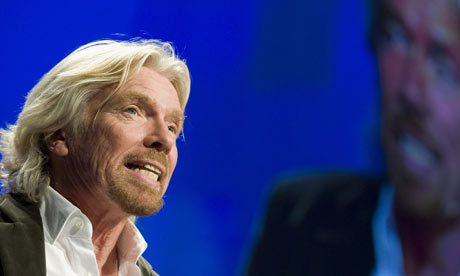
Guardian | Sir Richard Branson, founder of the Virgin Group, will say the coming crisis could be even more serious than the credit crunch. Photograph: Peter Schneider/EPA

Sir Richard Branson and fellow leading businessmen will warn ministers this week that the world is running out of oil and faces an oil crunch within five years.

The founder of the Virgin group, whose rail, airline and travel companies are sensitive to energy prices, will say that the ­coming crisis could be even more serious than the credit crunch.

"The next five years will see us face another crunch – the oil crunch. This time, we do have the chance to prepare. The challenge is to use that time well," Branson will say.

"Our message to government and businesses is clear: act," he says in a foreword to a new report on the crisis. "Don't let the oil crunch catch us out in the way that the credit crunch did."

Other British executives who will support the warning include Ian Marchant, chief executive of Scottish and Southern Energy group, and Brian Souter, chief executive of transport operator Stagecoach.

Their call for urgent government action comes amid a wider debate on the issue and follows allegations by insiders at the International Energy Agency that the organisation had deliberately underplayed the threat of so-called "peak oil" to avoid panic on the stock markets.

Sunday, February 07, 2010

she dead...,


CNN | The last member of an ancient tribe that has inhabited an Indian island chain for around 65,000 years has died, a group that campaigns for the protection of indigenous peoples has said.

Boa Sr, who was around 85 years of age, died last week in the Andaman islands, about 750 miles off India's eastern coast, Survival International said in a statement.

The London-based group, which works to protect indigenous peoples, said she was the last member of one of ten distinct Great Andamanese tribes, the Bo.

"The Bo are thought to have lived in the Andaman islands for as long as 65,000 years, making them the descendants of one of the oldest human cultures on earth," it noted.

With her passing at a hospital, India also lost one of its most endangered languages, also called Bo, linguists say.

"She was the last speaker of (the) Bo language. It pains to see how one by one we are losing speakers of Great Andamanese and (their) language is getting extinct. (It is) A very fast erosion of (the) indigenous knowledge base, that we all are helplessly witnessing," read an obituary in Boa Sr's honor posted on the Web site of the Vanishing Voices of the Great Andamanese (VOGA) project.
"Boa Sr was the only speaker of Bo and had no one to converse with in that language.
--Anvita Abbi

Project director Anvita Abbi, a professor at New Delhi's Jawaharlal Nehru University, met with Boa as recently as last year. "She was the only member who remembered the old songs," Abbi recounted in her obituary.

"Boa Sr was the only speaker of Bo and had no one to converse with in that language," Abbi told CNN. Her husband and children had already died, the linguist said.

Other than Bo, she also knew local Andaman languages, which she would use to converse, according to Abbi.

Boa Sr was believed to be the oldest of the Great Andamanese, members of ten distinct tribes. Survival International estimates there are now just 52 Great Andamanese left.

fat old sun

a childhood favorite...,

Saturday, February 06, 2010

the psychology of power

The Economist | REPORTS of politicians who have extramarital affairs while complaining about the death of family values, or who use public funding for private gain despite condemning government waste, have become so common in recent years that they hardly seem surprising anymore. Anecdotally, at least, the connection between power and hypocrisy looks obvious.

Anecdote is not science, though. And, more subtly, even if anecdote is correct, it does not answer the question of whether power tends to corrupt, as Lord Acton’s dictum has it, or whether it merely attracts the corruptible. To investigate this question Joris Lammers at Tilburg University, in the Netherlands, and Adam Galinsky at Northwestern University, in Illinois, have conducted a series of experiments which attempted to elicit states of powerfulness and powerlessness in the minds of volunteers. Having done so, as they report in Psychological Science, they tested those volunteers’ moral pliability. Lord Acton, they found, was right.

An intriguing characteristic emerged among participants in high-power states who felt they did not deserve their elevated positions. These people showed a similar tendency to that found in low-power individuals—to be harsh on themselves and less harsh on others—but the effect was considerably more dramatic. They felt that others warranted a lenient 6.0 on the morality scale when stealing a bike but assigned a highly immoral 3.9 if they took it themselves. Dr Lammers and Dr Galinsky call this reversal “hypercrisy”.

They argue, therefore, that people with power that they think is justified break rules not only because they can get away with it, but also because they feel at some intuitive level that they are entitled to take what they want. This sense of entitlement is crucial to understanding why people misbehave in high office. In its absence, abuses will be less likely. The word “privilege” translates as “private law”. If Dr Lammers and Dr Galinsky are right, the sense which some powerful people seem to have that different rules apply to them is not just a convenient smoke screen. They genuinely believe it.

What explains hypercrisy is less obvious. It is known, though, from experiments on other species that if those at the bottom of a dominance hierarchy show signs of getting uppity, those at the top react both quickly and aggressively. Hypercrisy might thus be a signal of submissiveness—one that is exaggerated in creatures that feel themselves to be in the wrong place in the hierarchy. By applying reverse privileges to themselves, they hope to escape punishment from the real dominants. Perhaps the lesson, then, is that corruption and hypocrisy are the price that societies pay for being led by alpha males (and, in some cases, alpha females). The alternative, though cleaner, is leadership by wimps.

hunger - a global justice problem?

The Atlantic | A year ago I sat in a room at the Earth Institute at Columbia surrounded by executives from big food companies. One of them, I believe from Unilever, clicked to a slide that read "The solution to global hunger is to turn malnutrition into a market opportunity." The audience—global development practitioners and academics and other executives—nodded and dutifully wrote it down in their notebooks; I shuddered. The experience stayed with me and I haven't gotten over it. Last month, I had a flashback.

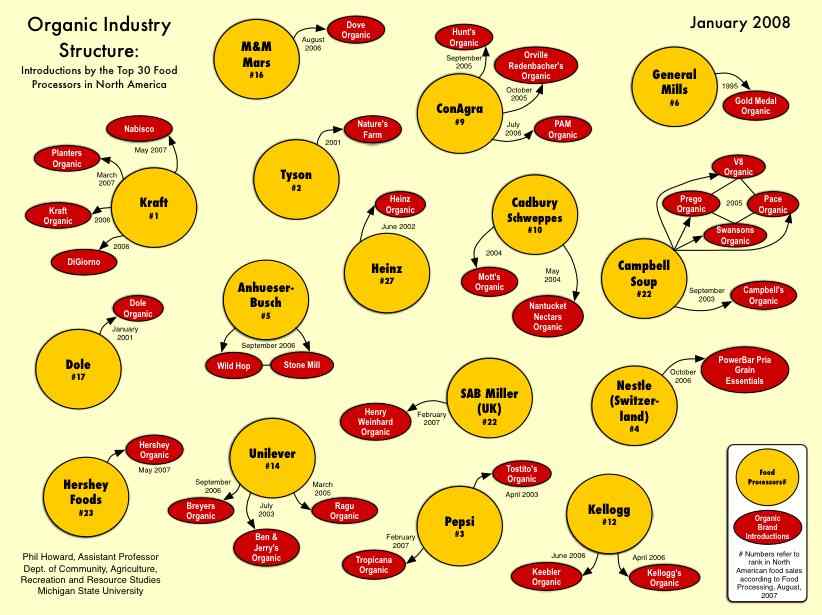
On a Tuesday evening I sat in a room on the 44th floor of a building in the financial district of lower Manhattan with representatives from General Mills, Monsanto, Dean Foods, Deutsche Bank, and the Rainforest Alliance. We were there to speak to institutional investors—the hedge fund managers, bankers, and others who invest in big food companies—about sustainability and food. In particular, we were there to talk about how sustainability and hunger issues may give these companies both exposure to risk and access to opportunity.

It was not your average sustainable food panel discussion. Reflecting back on it, three things jump out at me. The first was a false premise that is taken for fact. The false premise:

Both Deutsche Bank and Monsanto made it clear that they are basing their business strategy on answering a simple question: How will we feed the world in 2050, when the population reaches over 9 billion and global warming puts massive strains on our resources? The answer for Deutsche Bank: increase yields by investing in industrial agriculture in the developing world, with an emphasis on technology; put lots of capital into rural land to shift subsistence and local market agricultures to commodity export agriculture. The answer for Monsanto: increase yields by decreasing resource dependence using genetically modified crops.

At first glance, these answers make both Monsanto and Deutsche Bank look virtuous. But they rest on a false premise: "There will be over 9 billion people by 2050. We have less than 7 billion today, and people go hungry. We need to increase food production if we are going to feed them." Indeed, there will be over 9 billion people by 2050, and indeed, with less than 7 billion today, people still go hungry. But we don't need to increase crop yields to feed these people. In 2008, globally, we grew enough food to feed over 11 billion people. We grew 4,000 calories per day per person—roughly twice what people need to eat.

obama levy and volcker rule


FT | Paul Volcker and Barack Obama have either thrown the world into chaos or given the cause of global bank regulation new impetus – it depends on your point of view. But one thing is for certain: the twin US initiatives to derisk banks and tax them according to their size – the Volcker rule and the Obama levy as they have been dubbed – have seized the attention of bankers and regulators around the world.

The US last month first made clear that it wanted to exact a levy of 0.15 per cent on any bank balance sheet over $50bn. Then it said that banks should no longer engage in what it felt were riskier practices – investing in hedge funds, private equity or proprietary trading, the archetypal casino-style betting of bank funds for a quick profit.

As part of that second crackdown, US officials said banks would not be able to grow beyond their current share of the market.

Underpinning both initiatives is a crackdown on institutions deemed “too big to fail” – an area regulators admit had not been settled via the international supervisory authorities, such as the Financial Stability Board and the Basel Committee on Banking Supervision, until the US political intervention.

There are at least four competing ideas under discussion among regulators, politicians and bankers. These include the extension of existing regulatory initiatives; the introduction of contingency capital planning; the rewriting of rules around different capital instruments, such as bank bonds; and a full-scale adoption at the level of the Group of 20 countries of a form of the Obama levy.

Friday, February 05, 2010

dopamine receptor density correlates with social status

Physorg | People have typically viewed the benefits that accrue with social status primarily from the perspective of external rewards. A new paper in the February 1st issue of Biological Psychiatry suggests that there are internal rewards as well.

Dr. Martinez and colleagues found that increased social status and increased social support correlated with the density of dopamine D2/D3 receptors in the striatum, a region of the brain that plays a central role in reward and motivation, where dopamine plays a critical role in both of these behavioral processes.

The researchers looked at social status and social support in normal healthy volunteers who were scanned using positron emission tomography (PET), a technology that allowed them to image dopamine type 2 receptors in the brain.

This data suggests that people who achieve greater social status are more likely to be able to experience life as rewarding and stimulating because they have more targets for dopamine to act upon within the striatum.

Dr. Martinez explains their findings: "We showed that low levels of dopamine receptors were associated with low social status and that high levels of dopamine receptors were associated with higher social status. The same type of association was seen with the volunteer's reports of social support they experience from their friends, family, or significant other."

Dr. John Krystal, Editor of Biological Psychiatry commented, "These data shed interesting light into the drive to achieve social status, a basic social process. It would make sense that people who had higher levels of D2 receptors, i.e., were more highly motivated and engaged by social situations, would be high achievers and would have higher levels of social support."

These data also may have implications for understanding the vulnerability to alcohol and substance abuse, as the work of Dr. Nora Volkow, the Director of the National Institute on Drug Abuse, and colleagues suggests that low levels of D2/D3 receptors may contribute to the risk for alcoholism among individuals who have family members who abuse alcohol. The current data suggest that vulnerable individuals with low D2/D3 receptors may be vulnerable to lower social status and social supports, and these social factors have previously been suggested as contributors to the risk for alcohol and substance use.

These findings are particularly exciting because they put human neurobiology into a social context, and we humans are fundamentally social creatures. It is in these social contexts that the biological effects on behavior obtain their real meaning.

endgame

LATOC | From the early days of the industrial revolution into the early 1970s, the United States possessed the immense economic advantage of sizeable reserves of whatever the cutting-edge energy source happened to be. During what Lewis Mumford called the eotechnic era, when waterwheels were the prime mover for industry and canals were the core transportation technology, the United States prospered because it had an abundance of mill sites and internal waterways. During Mumford’s paleotechnic era, when coal and railways replaced water and canal boats, the United States once again found itself blessed with huge coal reserves, and the arrival of the neotechnic era, when petroleum and highways became the new foundation of power, the United States found that nature had supplied it with so much oil that in 1950, it produced more petroleum than all other countries combined.

That trajectory came to an abrupt end in the 1970s, when nuclear power – expected by nearly everyone to be the next step in the sequence – turned out to be hopelessly uneconomical, and renewables proved unable to take up the slack. The neotechnic age, in effect, turned out to have no successor. Since then, for most of the last thirty years, the United States has been trying to stave off the inevitable – the sharp downward readjustment of our national standard of living and international importance following the peak and decline of our petroleum production and the depletion of most of the other natural resources that once undergirded American economic and political power. We’ve tried accelerating drawdown of natural resources; we’ve tried abandoning our national infrastructure, our industries, and our agricultural hinterlands; we’ve tried building ever more baroque systems of financial gimmickry to prop up our decaying economy with wealth from overseas; over the last decade and a half, we’ve resorted to systematically inflating speculative bubbles – and now, with our backs to the wall, we’re printing money as though there’s no tomorrow.

Now it’s possible that the current US administration will be able to pull one more rabbit out of its hat, and find a new gimmick to keep things going for a while longer. I have to confess that this does not look likely to me. Monetizing the national debt, as economists call the attempt to pay a nation’s bills by means of a hyperactive printing press, is a desperation move; it’s hard to imagine any reason that it would have been chosen if there were any other option in sight.

What this means, if I’m right, is that we may have just moved into the endgame of America’s losing battle with the consequences of its own history. For many years now, people in the peak oil scene – and the wider community of those concerned about the future, to be sure – have had, or thought they had, the luxury of ample time to make plans and take action. Every so often books would be written and speeches made claiming that something had to be done right away, while there was still time, but most people took that as the rhetorical flourish it usually was, and went on with their lives in the confident expectation that the crisis was still a long ways off.

We may no longer have that option. If I read the signs correctly, America has finally reached the point where its economy is so deep into overshoot that catabolic collapse is beginning in earnest. If so, a great many of the things most of us in this country have treated as permanent fixtures are likely to go away over the years immediately before us, as the United States transforms itself into a Third World country. The changes involved won’t be sudden, and it seems unlikely that most of them will get much play in the domestic mass media; a decade from now, let’s say, when half the American workforce has no steady work, decaying suburbs have mutated into squalid shantytowns, and domestic insurgencies flare across the south and the mountain West, those who still have access to cable television will no doubt be able to watch talking heads explain how we’re all better off than we were in 2000. Fist tap Big Don.

moody's says u.s. credit rating's in the crapper

Financial Times | Moody’s Investors Service fired off a warning on Wednesday that the triple A sovereign credit rating of the US would come under pressure unless economic growth was more robust than expected or tougher actions were taken to tackle the country’s budget deficit.

In a move that follows intensifying concern among investors over the US deficit, Moody’s said the country faced a trajectory of debt growth that was “clearly continuously upward”.

Steven Hess, senior credit officer at Moody’s, said the deficits projected in the budget outlook presented by the Obama administration outlook this week did not stabilise debt levels in relation to gross domestic product.

“Unless further measures are taken to reduce the budget deficit further or the economy rebounds more vigorously than expected, the federal financial picture as presented in the projections for the next decade will at some point put pressure on the triple A government bond rating,” the rating agency added in an issuer note.

This week, the White House forecast a $1,565bn budget deficit for 2010, which represents 10.6 per cent of gross domestic product and is the highest such ratio of debt to GDP since the second world war. Fist Tap Dale.

Chipocalypse Now - I Love The Smell Of Deportations In The Morning

sky |   Donald Trump has signalled his intention to send troops to Chicago to ramp up the deportation of illegal immigrants - by posting a...