Washington Post | Pakistan's financial problems go back at least a year, with current and past administrations borrowing from the central bank to sustain generous state subsidies on gasoline and diesel. As global oil prices surged, the government of former President Pervez Musharraf curried favor with average Pakistanis by having the state absorb the shocks. Musharraf ousted a democratically elected government in 1999 and ruled until a civilian coalition was voted into office last spring, headed by Prime Minister Yousaf Raza Gillani. The government forced Musharraf from the presidency in August, electing Zardari as his replacement in September.
U.S. military and intelligence officials fear that Pakistan's increasingly precarious economy will compound an already unstable political situation and undermine military cooperation. Both al-Qaeda and the Taliban leadership are located in the rugged, economically depressed region along Pakistan's western border with Afghanistan. The Bush administration and Congress have been shaping a long-term economic and military assistance package for Pakistan, but there is no indication the United States is able to step in with a short-term financial lifeline.
Pakistan is going to the Chinese now "because you go to the guys with the money," a senior International Monetary Fund official said. "And right now, the Chinese are the ones with the money."
Securing as much as $6 billion would buy the government the breathing room it needs, analysts say, to begin a desperately needed overhaul of its budget to sustain Pakistan's battered economy in the longer term.
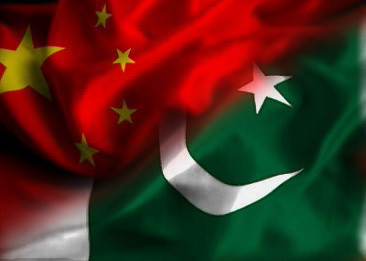
Pakistan's bid for Chinese cash underscores the potential of Beijing's $1.9 trillion in foreign reserves, the largest in the world, to boost its global influence. The government is now seeking as much as $3 billion in emergency assistance from China, as well as assistance from oil-rich Gulf countries including Saudi Arabia and the United Arab Emirates, according to a senior Pakistani official. Pakistan's central bank governor, Shashad Akhtar, is in Washington this week to review a draft plan for overhauling the country's finances with the International Monetary Fund, potentially paving the way for future aid.
Pakistan Times | Former Inter Services Intelligence (ISI) ISI Chief General (Retd.) Hameed Gul has said that Mumbai incident is an international based conspiracy to deprive Pakistan of its atomic power. Taking to a private TV channel on Friday, he said that to involve Pakistan in the incident reflected that some forces wanted to declare Pakistan a failure state as somehow it had become necessary to make Pakistan knee down in order to snatch its atomic power away.
He said that the way militants entered into the hotels and executed their plan in extremist Hindus like Bal Thakrey and Narender Modi’s area it seemed impossible without internal support adding these people had grudge with Muslims and wanted to defame them all over the world.
He said that the militants were named as Dakan Mujahedeen and it was particularly ridicules when neither their demands were brought to surface nor their target was clear. He said that India is habitual to accuse Pakistan whenever any mishap takes place as in the case of Samjhota Express but it could not prove the allegations and in Maligaon incident Indian Col. Srikanth Proat was later found guilty.
He feared that India would deploy its army on the boarders, like 2002 when a bloody incident took place on December 13, 2001 out side Indian parliament, to curb Kashmiris’ freedom movement and deprive Pakistan of its atomic assets saying it would be in-competency of the government if India gets success in its plane.
To a question, he said that US wanted to see Indian army in Afghanistan to disintegrate the country as new maps used to publish form US showing divided Pakistan in different four parts. When asked, the blockage of water and make the country knee down before IMF was a part of pre-planned trick.-SANA
FP | Modi’s BJP government is also undercutting India’s institutions in
unprecedented ways. It has made a mockery of India’s rich tradition of
civil liberties by charging activists and dissidents with crimes under
colonial-era laws. One egregious example is the case of left-wing activists detained
under the draconian Unlawful Activities (Prevention) Act for alleged
links to Maoist groups and allegedly fomenting riots. One of the
accused, lifelong Jesuit activist Rev. Stan Swamy,
died in custody last year. Furthermore, Modi and the BJP have co-opted
much of the media and important private sector actors. Journalists have
faced intimidation and harassment;
prominent nongovernmental organizations have been cut off from foreign
funding while others can receive overseas money only into accounts with a
government-owned bank.
Unfortunately, the most important lessons from the independence
movement seem to be lost on India’s contemporary leaders, as shown by
their approach to religious pluralism and democratic institutions.
Although India’s leading revolutionaries were committed to nonviolence,
tensions between Hindus and Muslims marred the independence movement.
These tensions pulled the British Raj apart, and two new countries
emerged in its place: India and Pakistan. This week also marks the
anniversary of the Partition of India, which triggered one of the
world’s worst humanitarian disasters as Hindus, Muslims, and Sikhs were
forced to flee in different directions across the new border. A few
months later, India and Pakistan went to war over the status of Jammu
and Kashmir—a disagreement that still plagues the subcontinent.
In the face of these tensions, India and Pakistan’s leaders charted
opposing courses. India’s leaders advanced a progressive and modern
vision for their new country, eschewing a national Hindu religion in
favor of a secular identity. They worked hard to minimize religious
tensions by speaking against communal strife and promoting religious
protections. When Gandhi was assassinated in 1948—for supposedly being a
supplicant to the Muslim community—his political heirs continued to
push for a liberal vision of India. Working with the opposition, they
produced a constitution that enshrined a liberal and secular democracy
that remains in force today.
On the other hand, Pakistan struggled. The country’s founder,
Muhammad Ali Jinnah, led the Muslim League that split from the Indian
National Congress. But he was rarely clear in his vision for Pakistan:
There is some evidence that he wanted a secular state,
but he also called for an Islamic republic. When Jinnah died in 1948,
he left behind a political mess. Liaquat Ali Khan, Pakistan’s first
prime minister, rejected amendments offered by the opposition in his own
founding document, which became a precursor to the country’s 1956
constitution that gave Islam its pride of place in the project of
Pakistan. By turning to communalism, Pakistan has suffered as political
actors stir religious tensions to benefit their own ends. Without
credible institutions or norms that allow political differences to be
resolved, the country has not been able to maintain political order.
Modi’s speech reflects how he and the BJP appear to embrace some of
these traits. By lionizing fringe actors from the independence
movement—including those who exacerbated religious tensions—they are
rewriting history to suit their own political agenda. They have
undermined civil liberties and shown basic disregard for political
opposition. Taking a page from Jinnah’s book, Modi has ensured that any
substantive decision must come through him. Such a system may work in
the short term, but what happens when Modi is no longer prime minister?
The contrast with then-Indian Prime Minister Jawaharlal Nehru’s epic “A Tryst With Destiny” speech,
delivered on Aug. 14, 1947, couldn’t be starker. Nehru said he sought
to “bring freedom and opportunity to the common man, to the peasants and
workers of India; to fight poverty and ignorance and disease; to build
up a prosperous, democratic, and progressive nation.” Most poignantly,
he highlighted that India’s religious pluralism was integral to the
newly founded country: “All of us, to whatever religion we may belong,
are equally the children of India, with equal rights, privileges, and
obligations.”
India’s Independence Day has traditionally provided an opportunity to
reflect on the horrors of colonialism and the dangers of religious
discord while also celebrating the vibrance of the country’s democracy.
Modi’s speech this week reflects the departure that India’s contemporary
leaders have made from these foundational values.
NYTimes | Pakistan feels as if it’s falling apart. Last fall the country barely avoided bankruptcy. The tribal areas, which border on Afghanistan, remain a vast Taliban sanctuary and redoubt. The giant province of Baluchistan, though far more accessible, is racked by a Baluchi separatist rebellion, while American officials view Quetta, Baluchistan’s capital, as Taliban HQ. American policy has arguably made the situation even worse, for the Predator-drone attacks along the border, though effective, drive the Taliban eastward, deeper into Pakistan. And the strategy has been only reinforcing hostility to the United States among ordinary Pakistanis.
Pakistan has made itself the supreme conundrum of American foreign policy. During the campaign, Obama often said that the heart of the terrorist threat was not Iraq but Afghanistan and Pakistan, and once in office he had senior policy makers undertake an array of reviews designed to coordinate policy in the region. They seem to have narrowed the target area even further, to the Pakistani frontier. “For the American people,” Obama announced on March 27, “this border region has become the most dangerous place in the world.” Some officials see Pakistan as a volcano that, should it blow, would send an inconceivable amount of poisonous ash raining down on the world around it. David Kilcullen, a key adviser to Gen. David Petraeus, the Centcom commander, recently asserted that “within one to six months we could see the collapse of the Pakistani state,” a calamity that, given the country’s size, strategic location and nuclear stockpile, would “dwarf” all other current crises.
And amid all that, Pakistan’s president appeared to be playing with fire. Zardari was setting his security forces on peaceful demonstrators, just as his authoritarian predecessor, General Musharraf, did — against members of Zardari’s own political party — several years earlier. The government crackdown, designed to prevent the marchers from reaching the capital, began on March 11. The police swept through the homes of opposition-party leaders, lawmakers, activists, “miscreants” and ordinary party workers. Many leading officials were already underground, but hundreds of arrests were made. By the 12th, the first day of the march, much of the country was glued to the television, where swarms of heavily armed policemen could be seen knocking down protesters and dragging them off to the paddy wagons. Nawaz Sharif, the leader of the main opposition party, saw the protests as the “prelude to a revolution,” while Rehman Malik, a key Zardari adviser, accused Sharif of “sedition.”
The posturing and hyperbole would have been comical if the stakes weren’t so high. Although in Pakistan, it’s true, the stakes always feel high.
miamiherald | A U.S. drone strike reportedly killed a notorious Pakistani al-Qaida operative before dawn Thursday in a tribal area bordering Afghanistan, the latest sign that the United States and Pakistan are stepping up coordinated intelligence operations despite a downturn in relations.
The apparent CIA drone strike on a compound in Miranshah, the main town in the North Waziristan tribal area, reportedly killed four militants, including Badar Mansoor, the head of a small militant outfit that carries his name.
Mansoor wasn't considered a high-value terrorist target by the FBI, but he had been listed at least since 2009 in the so-called red book of terror suspects maintained by Pakistan's Interior Ministry. He also was a close associate of Ilyas Kashmiri, the head of al-Qaida's operation in Pakistan until his death in a drone strike last year.
The attack was at least the fourth drone strike in a month and came a day after American, Afghan and Pakistani military officials met to discuss resuming cooperation on border security, which has been suspended since 24 Pakistani soldiers were killed in a friendly fire incident in November.
However, Thursday also marked the expiration of a 10-year agreement between Pakistan and the United States that provided for joint intelligence operations against al-Qaida and the Taliban. The Pakistani military has referred this and other post-2001 agreements to a nonpartisan parliamentary committee that was formed after the friendly fire incident to review Pakistan's foreign policy. The committee is expected to present recommendations to Parliament later this month.
Security analysts in Islamabad said that such pinpoint assassinations are virtually impossible unless the CIA has detailed information from its Pakistani counterpart, the military's Inter-Services Intelligence Directorate. The analysts asked not to be identified because of the sensitivity of the issue.
Pakistan's government denies complicity in the drone strikes and frequently complains about them as violations of its sovereignty. But diplomatic cables obtained by WikiLeaks laid bare in December 2010 the Pakistani government's involvement, and security analysts say that officials complain mainly about U.S. drone strikes carried out without their knowledge.
IHT - ISLAMABAD, Pakistan: Food prices have soared, making some basics, even flour, too expensive for the poorest to afford. No large-scale riots have occurred, but concern is mounting that such protests are not far off.
The new government has reduced subsidies on fuel and food, and the central bank moved on Friday to ease an intrabank liquidity crisis
President Asif Ali Zardari returned from China late Friday without a commitment for cash needed to shore up Pakistan's crumbling economy, leaving him with the politically unpopular prospect of having to ask the International Monetary Fund for help.
Pakistan was seeking the aid from China, an important ally, as it faces the possibility of defaulting on its current account payments.
With the United States and other nations preoccupied by a financial crisis, and Saudi Arabia, another traditional ally, refusing to offer concessions on oil, China was seen as the last port of call before the IMF
Accepting a rescue package from the fund would be seen as humiliating for Zardari's government, which took office this year.
An IMF-backed plan would require Pakistan's government to cut spending and raise taxes, among other measures, which could hurt the poor, officials said.
The Bush administration is concerned that Pakistan's economic meltdown will provide an opportunity for Islamic militants to capitalize on rising poverty and frustration.
The Pakistanis have not been shy about exploiting the terrorist threat to try to win financial support, a senior official at the IMF said.
But because of the dire global financial situation, and the reluctance of donor nations to provide money without strict economic reforms by Pakistan, the terrorist argument has not been fully persuasive, he said.
The stakes could not be higher: With a rapidly increasing population of more than 150 million -- larger than that of Russia -- Pakistan is also the world's only Muslim nuclear power. But since the fall of President Pervez Musharraf earlier this year, the bitter regional, social and religious disputes that have been building for decades have exploded in public. The current government of pro-American President Asif Ali Zardari is struggling to maintain any effective presence at all in the vast North-West Frontier Province, which covers one-quarter of the country.
If the government in Islamabad goes bankrupt, then the extreme Islamist forces spearheaded by the Taliban of Afghanistan, who already enjoy broad support among the Pashtun tribes of the NWFP, will have a far greater chance to turn the great cities of Pakistan, especially giant Karachi, into chaos.
As American military analyst and UPI columnist William S. Lind has warned, Fourth Generation war -- 4GW -- non-state forces like al-Qaida benefit from undermining the structures of established states and can metastasize rapidly if a state structure collapses, especially in a vast nation like Pakistan.
The Taliban and their fellow Islamists, aided by al-Qaida, already have stepped up their guerrilla operations against the Pakistani army and police.
Also, if Zardari fell, the impact on Pakistan's relations with the United States and on Washington's ability to effectively prosecute the war on terror could be dire. Currently, U.S. and NATO forces in Afghanistan -- around 50,000 in number overall -- are supplied by air along transport corridors over Pakistani territory. If a future Pakistani government should close those corridors, the already embattled U.S. and NATO forces in Afghanistan would find their situation deteriorating rapidly.
Pakistan's leaders are also understandably reluctant to put their political future and their country's fate in the hands of the International Monetary Fund, for they realize that IMF aid is usually tied to draconian conditions requiring the slashing of government spending. In a country like Pakistan, that means cutting social programs to support the poor, including subsidizing food prices.
NYTimes | The Taliban has been able to finance a military campaign inside Afghanistan largely through proceeds from the illegal drug trade and wealthy individuals from the Persian Gulf. But American officials said that when fighters needed fuel or ammunition to sustain their attacks against American troops, they would often turn to the ISI.
When the groups needed to replenish their ranks, it would be operatives from the S Wing who often slipped into radical madrasas across Pakistan to drum up recruits, the officials said.
The ISI support for militants extends beyond those operating in the tribal areas of northwest Pakistan. American officials said the spy agency had also shared intelligence with Lashkar-e-Taiba, the Pakistan-based militant group suspected in the deadly attacks in Mumbai, India, and provided protection for it.
Mr. Zardari took steps last summer to purge the ISI’s top ranks after the United States confronted Pakistan with evidence about the Indian Embassy bombing. Mr. Zardari pledged that the ISI would be “handled,” and that anyone working with militants would be dismissed.
Yet with the future of Mr. Zardari’s government uncertain in the current political turmoil and with Obama officials seeing few immediate alternatives, American officials and outside experts said that Pakistan’s military establishment appears to see little advantage in responding to the demands of civilian officials in Islamabad or Washington.
As a result, when the Haqqani fighters need to stay a step ahead of American forces stalking them on the ground and in the air, they rely on moles within the spy agency to tip them off to allied missions planned against them, American military officials said.
Reuters | The Carnegie Endowment for International Peace has put out a paper on the need to reform Pakistan’s intelligence agencies just as army chief General Ashfaq Kayani is winning much praise for playing what is seen as a decisive role in defusing the country’s latest political crisis and saving democracy.
French scholar Frederic Grare says in the paper the reform and “depoliticisation” of the agencies, in particular the military’s Inter-Services Intelligence (ISI), is imperative.
Grare says there is no magic formula to transform overnight an authoritarian regime into a full-fledged democracy but says there’s no excuse for the government to sit on its hands (”patience should not be an alibi for inaction”).
NYTimes | THE highly classified C.I.A. program to kill militants in the tribal regions of Pakistan with missiles fired from drones is the world’s worst-kept secret.
The United States has long tried to maintain plausible deniability that it is behind drone warfare in Pakistan, a country that pollsters consistently find is one of the most anti-American in the world. For reasons of its own, the Pakistani government has also sought to hide the fact that it secretly agreed to allow the United States to fly some drones out of a base in Pakistan and attack militants on its territory.
But there are good reasons for the United States, which conducted 53 such strikes in 2009 alone, and Pakistan to finally acknowledge the existence of the drone program.
First, there is the matter of Pakistani civilian casualties caused by the drones. In a poll last summer, only 9 percent of Pakistanis approved of the drone strikes. A key reason for this unpopularity is the widespread perception that the strikes overwhelmingly kill civilians.
A survey we have made of reliable press accounts indicates that since January 2009, the reported strikes have killed at least 520 people, of whom around 410 were described as militants, suggesting that the civilian death rate is about 20 percent.
It’s possible, however, that the number is even lower. An American counterterrorism official told The Times in December that the civilian fatality rate is only 5 percent, saying that “just over 20” civilians and more than 400 militants were killed in 2009. Should the American government’s claims about the small number of civilian deaths be verified, some of the Pakistani hostility toward the United States might dissipate. This would be much easier if the now-classified videotapes of drone strikes were made available to independent researchers.
Acknowledging the drone program would also help advance our efforts — and improve our profile — in the region by providing an excellent example of the deepening United States-Pakistan strategic partnership. Since January 2009, up to 85 reported drone strikes have killed militants who are responsible for the deaths of thousands of Pakistanis. A good deal of the intelligence that enables these strikes comes from the Pakistanis themselves.
Last, Pakistanis once considered any military offensive against the Taliban as fighting America’s war. But because of the cumulative weight of the Taliban’s atrocities against politicians, soldiers, police and civilians, Pakistanis now believe that battling the militants is in the country’s own interest. As a result, over the past year, the public’s support for the Pakistani Army’s efforts in the Swat Valley and South Waziristan has surged. If Pakistan came clean about its involvement with the drones, public backing for the program might similarly increase.
Of course, by acknowledging the drone strikes, the Obama administration would also have to admit that civilians are sometimes killed in these attacks. When Afghan civilians are killed by American forces, their families are often compensated by the United States. Surely, the families of Pakistani civilians killed in American drone strikes deserve the same.
ABCNews | Pakistani officials said today they're interested in studying the remains of the U.S.'s secret stealth-modified helicopter abandoned during the Navy SEAL raid of Osama bin Laden's compound, and suggested the Chinese are as well.
The U.S. has already asked the Pakistanis for the helicopter wreckage back, but one Pakistani official told ABC News the Chinese were also "very interested" in seeing the remains. Another official said, "We might let them [the Chinese] take a look."
A U.S. official said he did not know if the Pakistanis had offered a peek to the Chinese, but said he would be "shocked" if the Chinese hadn't already been given access to the damaged aircraft.
The chopper, which aviation experts believe to be a highly classified modified version of a Blackhawk helicopter, clipped a wall during the operation that took down the al Qaeda leader, the White House said. The U.S. Navy SEALs that rode in on the bird attempted to destroy it after abandoning it on the ground, but a significant portion of the tail section survived the explosion. In the days after the raid, the tail section and other pieces of debris -- including a mysterious cloth-like covering that the local children found entertaining to play with -- were photographed being hauled away from the crash site by tractor.
Aviation experts said the unusual configuration of the rear rotor, the curious hub-cap like housing around it and the general shape of the bird are all clues the helicopter was highly modified to not only be quiet, but to have as small a radar signature as possible.
The helicopter's remains have apparently become another chip in a tense, high-stakes game of diplomacy between the U.S. and Pakistan following the U.S.'s unilateral military raid of bin Laden's compound in Abbottabad, Pakistan, more than a week ago. The potential technological advancements gleaned from the bird could be a "much appreciated gift" to the Chinese, according to former White House counterterrorism advisor and ABC News consultant Richard Clarke.
"Because Pakistan gets access to Chinese missile technology and other advanced systems, Islamabad is always looking for ways to give China something in return," Clarke said.
The Chinese and Pakistani governments are known to have a close relationship. Last month Punjab Chief Minister Muhammad Shahbaz Sharif concluded a trip to Beijing, afterwards telling Pakistan's local press that China was Pakistan's "best friend."
NYTimes | Two weeks ago in Pakistan, Central Intelligence Agency sharpshooters killed eight people suspected of being militants of the Taliban and Al Qaeda, and wounded two others in a compound that was said to be used for terrorist training.
Then, the job in North Waziristan done, the C.I.A. officers could head home from the agency’s Langley, Va., headquarters, facing only the hazards of the area’s famously snarled suburban traffic.
It was only the latest strike by the agency’s covert program to kill operatives of Al Qaeda, the Taliban and their allies using Hellfire missiles fired from Predator aircraft controlled from half a world away.
The White House has authorized an expansion of the C.I.A.’s drone program in Pakistan’s lawless tribal areas, officials said this week, to parallel the president’s decision, announced Tuesday, to send 30,000 more troops to Afghanistan. American officials are talking with Pakistan about the possibility of striking in Baluchistan for the first time — a controversial move since it is outside the tribal areas — because that is where Afghan Taliban leaders are believed to hide.
By increasing covert pressure on Al Qaeda and its allies in Pakistan, while ground forces push back the Taliban’s advances in Afghanistan, American officials hope to eliminate any haven for militants in the region.
One of Washington’s worst-kept secrets, the drone program is quietly hailed by counterterrorism officials as a resounding success, eliminating key terrorists and throwing their operations into disarray. But despite close cooperation from Pakistani intelligence, the program has generated public anger in Pakistan, and some counterinsurgency experts wonder whether it does more harm than good.
ISLAMABAD, Pakistan - Pakistan's army said Tuesday that its forces have orders to open fire if U.S. troops launch another raid across the Afghan border, raising the stakes in a dispute over how to tackle militant havens in Pakistan's unruly border zone.
Pakistan's government has faced rising popular anger over a Sept. 3 ground attack by U.S. commandos into South Waziristan, a base for Taliban militants killing ever more U.S. troops in Afghanistan. Pakistan says about 15 people were killed, all of them civilians.
The new firing orders were disclosed by Pakistani army spokesman Maj. Gen. Athar Abbas in an interview Tuesday with The Associated Press.
Abbas said Pakistani field commanders have previously been tolerant about international forces crossing a short way into Pakistan because of the ill-defined and contested nature of the mountainous frontier.
"But after the (Sept. 3) incident, the orders are clear," Abbas said. "In case it happens again in this form, that there is a very significant detection, which is very definite, no ambiguity, across the border, on ground or in the air: open fire."
aljazeera | The second US drone attack in two days in Pakistan's North Waziristan region has killed four people, including a senior militant commander with links to al-Qaeda, Pakistani intelligence officials and Taliban sources said.
Badar Mansoor, leader of a faction of the Pakistani Taliban, was killed on Thursday in the strike in Miranshah, the main town in North Waziristan, near the Afghan border.
"He was living in a small rented house with his wife and children in Miranshah. He, his wife and two other members of his family died on the spot," a Pakistani Taliban commander told Reuters. He declined to be identified.
Pakistani officials painted Mansoor as al-Qaeda's chief in Pakistan.
"He died in the missile attacks overnight in Miranshah. His death is a major blow to al-Qaeda's abilities to strike in Pakistan," a senior official told the AFP news agency on condition of anonymity.
Intelligence officials said the death toll could rise because buildings next to the one targeted were also damaged and people could have been there.
On Wednesday, a US drone aircraft fired missiles at a compound in a village near Miranshah, killing 10 suspected fighters, Pakistani officials and villagers said.
The Central Intelligence Agency drone programme was apparently halted after a November NATO cross-border air attack killed 24 Pakistani soldiers, sparking fury in Pakistan.
The attacks with the unmanned aircraft in Pakistan's northwestern ethnic tribal areas along the Afghan border were resumed on January 10.
TimesOnline | The US army is training a crack unit to seal off and snatch back Pakistani nuclear weapons in the event that militants, possibly from inside the country’s security apparatus, get their hands on a nuclear device or materials that could make one.
The specialised unit would be charged with recovering the nuclear materials and securing them.
The move follows growing anti-Americanism in Pakistan’s military, a series of attacks on sensitive installations over the past two years, several of which housed nuclear facilities, and rising tension that has seen a series of official complaints by US authorities to Islamabad in the past fortnight.
“What you have in Pakistan is nuclear weapons mixed with the highest density of extremists in the world, so we have a right to be concerned,” said Rolf Mowatt-Larssen, a former CIA officer who used to run the US energy department’s intelligence unit. “There have been attacks on army bases which stored nuclear weapons and there have been breaches and infiltrations by terrorists into military facilities.”
Professor Shaun Gregory, director of the Pakistan security research unit at Bradford University, has tracked a number of attempted security breaches since 2007. “The terrorists are at the gates,” he warned.
In a counterterrorism journal, published by America’s West Point military academy, he documented three incidents. The first was an attack in November 2007 at Sargodha in Punjab, where nuclearcapable F-16 jet aircraft are thought to be stationed. The following month a suicide bomber struck at Pakistan’s nuclear airbase at Kamra in Attock district. In August 2008 a group of suicide bombers blew up the gates to a weapons complex at the Wah cantonment in Punjab, believed to be one of Pakistan’s nuclear warhead assembly plants. The attack left 63 people dead.
A further attack followed at Kamra last October. Pakistan denies that the base still has a nuclear role, but Gregory believes it does. A six-man suicide team was arrested in Sargodha last August.
Fears that militants could penetrate a nuclear facility intensified after a brazen attack on army headquarters in Rawalpindi in October when 10 gunmen wearing army uniforms got inside and laid siege for 22 hours. Last month there was an attack on the naval command centre in Islamabad.
Time | In 1971, Pakistan suffered its worst military defeat to India. The
war led to the creation of an independent Bangladesh — what had been
East Pakistan, separated from the western wing by a thousand miles of
Indian territory, and home to half the country’s population. In what
remained of Pakistan, the humiliation prompted furious questions about
the cruelties inflicted on the local Bengali-speaking population, the
intelligence failures and the abuses of power that had plunged the young
country to its lowest point.
To answer these questions, a high-powered commission was established.
It was led by the Chief Justice of the time, Hamoodur Rahman, a
distinguished Bengali jurist. He and his colleagues produced a searing
report that recommended, among other things, trials for “those who
indulged in these atrocities” and visited “acts of wanton cruelty” on
the local population. But the report was suppressed. It only emerged in
portions decades later, in 2000, in leaks to the local media. (The full
report was declassified later that year.)
The Pakistani surrender at Dhaka was seen as the moment of the
country’s greatest shame until the May 2011 raid that killed Osama bin
Laden. Navy SEALs had successfully managed to penetrate Pakistani
airspace, land in the garrisoned town of Abbottabad, kill the al-Qaeda
leader and leave barely noticed. Pakistanis were angered by a violation
of their sovereignty by an ally. And they were appalled that the world’s
most wanted man had been living among them undetected for years.
To find out what happened, Pakistan’s Parliament established another
high-powered commission. It was partly inspired by the Hamoodur Rahman
Commission that looked into the events of 1971. If it weren’t for a leak
this week, their findings might also have remained suppressed for
decades. On Monday, al-Jazeera published 336 pages of the “Abbottabad Commission” report.
Like its predecessor, it is a searing document. Shortly after it was
published, the news channel’s website was blocked in Pakistan.
NYTimes | Obama administration officials face the same intractable problems that the Bush administration did in trying to prod Pakistan toward a different course. Pakistan still deploys the overwhelming majority of its troops along the Indian border, not the border with Afghanistan, and its intelligence agencies maintain shadowy links to the Taliban even as they take American funds to fight them.
Under standard policy for covert operations, the C.I.A. strikes inside Pakistan have not been publicly acknowledged either by the Obama administration or the Bush administration. Using Predators and the more heavily armed Reaper drones, the C.I.A. has carried out more than 30 strikes since last September, according to American and Pakistani officials.
The attacks have killed a number of senior Qaeda figures, including Abu Jihad al-Masri and Usama al-Kini, who is believed to have helped plan the 1998 American Embassy bombings in East Africa and last year’s bombing of the Marriott Hotel in Islamabad.
American Special Operations troops based in Afghanistan have also carried out a number of operations into Pakistan’s tribal areas since early September, when a commando raid that killed a number of militants was publicly condemned by Pakistani officials. According to a senior American military official, the commando missions since September have been primarily to gather intelligence.
The meetings hosted by the Obama administration next week will include senior officials from both Pakistan and Afghanistan; Mrs. Clinton is to hold a rare joint meeting on Thursday with foreign ministers from the two countries. Also, Gen. Ashfaq Parvez Kayani, the Pakistani Army chief, will meet with Defense Secretary Robert M. Gates and Adm. Mike Mullen, the chairman of the Joint Chiefs of Staff. Lt. Gen Ahmed Shuja Pasha, the head of Pakistan’s military spy service, will accompany General Kayani.
NYTimes | A redrawn map of South Asia has been making the rounds among Pakistani elites. It shows their country truncated, reduced to an elongated sliver of land with the big bulk of India to the east, and an enlarged Afghanistan to the west.
That the map was first circulated as a theoretical exercise in some American neoconservative circles matters little here. It has fueled a belief among Pakistanis, including members of the armed forces, that what the United States really wants is the breakup of Pakistan, the only Muslim country with nuclear arms.
“One of the biggest fears of the Pakistani military planners is the collaboration between India and Afghanistan to destroy Pakistan,” said a senior Pakistani government official involved in strategic planning, who insisted on anonymity as per diplomatic custom. “Some people feel the United States is colluding in this.”
That notion may strike Americans as strange coming from an ally of 50 years. But as the incoming Obama administration tries to coax greater cooperation from Pakistan in the fight against militancy, it can hardly be ignored.
This is a country where years of weak governance have left ample room for conspiracy theories of every kind. But like much such thinking anywhere, what is said frequently reveals the tender spots of a nation’s psyche. Educated Pakistanis sometimes say that they are paranoid, but add that they believe they have good reason.
Pakistan, a 61-year-old country marbled by ethnic fault lines, is a collection of just four provinces, which often seem to have little in common. Virtually every one of its borders, drawn almost arbitrarily in the last gasps of the British Empire, is disputed with its neighbors, not least Pakistan’s bitter and much larger rival, India.
These facts and the insecurities that flow from them inform many of Pakistan’s disagreements with the United States, including differences over the need to rein in militancy in the form of Al Qaeda and the Taliban.
The Sun | PAKISTAN yesterday warned Britain to help stop the American "Drone Wars" that are slaughtering hundreds of its innocent civilians.
The nuclear power chillingly declared it "has the means" to retaliate unless the carnage ceases.
Pakistan's High Commissioner to Britain Wajid Shamsul Hasan told The Sun in an exclusive interview that his country's relations with America are at their lowest ebb.
He said: "Patience is definitely reaching exhaustion levels." Mr Hasan said Pakistan backs the War on Terror waged by Britain and the US.
But he urged PM David Cameron to condemn US drone attacks on al-Qaeda and Taliban training camps in the north west of his country — dubbing them as "war crimes" and "little more than state executions".
Tough-talking Mr Hasan also declared Pakistan would have no choice but to support Iran if "aggressive" Israel attacks it.
But his immediate concern is the drones known to have killed 535 civilians, including 60 children, in three years.
Pakistan claims the real death toll is more than 1,000. The unmanned aircraft blast missiles at targets, directed by a computer thousands of miles away.
The High Commissioner said: "I think time is running out until the Pakistan government can take a stand.
"They will have to at some stage take punitive actions to stop them. They have got means to take such actions to defend their own frontier and territories.
Tehran Times | It is widely believed in Pakistan that Iran-Pakistan gas pipeline project should be completed at the earliest to overcome energy crisis which Pakistan is currently facing.
The unannounced gas loadshedding in the country has put the CNG-run transport in troubled waters as well as taking toll on industry and other business activities, not to mention the hardships faced by domestic users.
People say that Iran has surplus gas and the completion of gas pipeline project is the only way out for Pakistan to overcome gas shortage.
Pakistan’s energy crisis is feared to worsen next year with the gas shortfall likely to almost double to more than two billion cubic feet a day (BCFD).
Official figures suggested that the shortage, which stood at about one BCFD this winter, would go up to 2.1 BCFD by next year.
The demand and supply estimates presented by the Interstate Gas Company — a subsidiary of the petroleum ministry — suggested that the gas shortfalls would increase by more than 300 per cent to 6.5 BCFD by 2020.
According to official estimates, domestic gas demand would increase to 6.8 BCFD in 2011, about 7.1 BCFD in 2012 and to7.6 BCFD in 2015.
The gas shortage has forced a number of industrial units to close down while delay in fulfillment of export consignments has become a matter of routine due to less supply and low pressure of natural gas.
Moreover, it has been reported that in small cities and towns of the country, the commodity continues to disappear for hours without prior intimation, thus badly affecting the domestic users as well as the public and private transport running on CNG.
AsiaTimes | In the Orient, offspring don't rebuke parents, even if the latter are at fault - especially in the post-Soviet space where Marxian formalism continues to prevail as political culture. The sort of stern public rebuke bordering on short shrift that Ashgabat administered to Moscow is extraordinary.
But then, Moscow tested Turkmen patience by trying to create confusion about Ashgabat's policy of positive "neutrality" - building energy bridges to the West alongside its thriving cooperation with Russia and China.
On Thursday, the Turkmen Foreign Ministry bluntly rejected any role for Russia in the proposed Turkmenistan-Afghanistan-Pakistan-India gas pipeline project, commonly known as TAPI. Ashgabat alleged that Moscow is spreading calumnies and expressed the hope that "future statements by Russian officials will be guided by a sense of responsibility and reality".
The reference was to a friendly and seemingly helpful statement by Russian Deputy Prime Minister Igor Sechin (who accompanied President Dmitry Medvedev to the Turkmen capital last weekend) that Russian participation in the TAPI figured in the latest Russian-Turkmen summit talks and "Gazprom may participate in this project in any capacity - builder, designer, participant, etc ... If Gazprom becomes a participant, then we will study possibilities of working in gas sales."
The Turkmen Foreign Ministry said, "Turkmenistan views such statements as an attempt to hamper the normal course of our country's cooperation in the energy sector and call into question its obligations to its partners." It added that there was "no agreement whatsoever" regarding Russian participation in the TAPI.
The TAPI presents a knot of paradoxes and the Russians who hold the pulse of the Central Asian energy scene would have sensed by now that Uncle Sam is close to untying the knot, finally, after a decade-and-a-half of sheer perseverance. The TAPI falls within the first circle of the Caspian great game. When it appears that Russia all but checkmated the United States and the European Union's plans to advance trans-Caspian energy projects bypassing Russia, a thrust appears from the south and east opening up stunning possibilities for the West.
Russia promptly began slouching toward the TAPI - which, incidentally, was originally a Soviet idea but was appropriated by the United States no sooner than the USSR disintegrated - against the backdrop of renewed interest in the project recently among regional powers amid the growing possibility that Afghan peace talks might reconcile the Taliban and that despite the Kashmir problem, Pakistan and India wouldn't mind tangoing.
The TAPI pipeline runs on a roughly 1,600-kilometer route along the ancient Silk Road from Turkmenistan's fabulous Dauletabad gas fields on the Afghan border to Herat in western Afghanistan, then onto Helmand and Kandahar, entering Pakistan's Quetta and turning east toward Multan, and ending up in Fazilka on the Indian side of Pakistan's eastern border. An updated Asian Development Bank (ADB) estimate of 2008 put the project cost for the pipeline with an output of 33 bcm annually at $7.6 billion.
The signals from Ashgabat, Kabul, Islamabad and New Delhi in recent weeks uniformly underscored that the TAPI is in the final stage of take-off. India unambiguously signed up in August. On Wednesday, the Pakistan government gave approval to the project at a cabinet meeting in Islamabad. The ADB is open to financing the project and is expected to be the project's "secretariat".
As things stand, there could be a meeting of the political leaderships of the four participating countries in December to formally kick-start the TAPI.
How to Be Happy
-
It wasn’t until my mid-thirties that I learned how to be happy. I think
part of this was simply growing older, maturity bringing sweet respite from
many of...
Art Shows
-
I took a long time off from art shows. I have two pieces in two shows this
summer.
One is at the Rockford Art Museum Midwestern Bienielle. Good old Rockfor...
Gabriel Rockhill, The Pied Piper of Stalinism
-
As interpreted from a Marxist perspective Gabriel Rockhill’s book, Who Paid
the Pipers of Western Marxism? (Monthly Review Press, 2025), is full of
interes...
Celebrating 113 years of Mama Rosa McCauley Parks
-
*February 4, 1913 -- February 4, 2026*
*Some notes: The life of the courageous activist Mama Rosa McCauley Parks*
Mama Rosa's grandfather Sylvester Ed...
Return of the Magi
-
Lately, the Holy Spirit is in the air. Emotional energy is swirling out of
the earth.I can feel it bubbling up, effervescing and evaporating around
us, s...
Covid-19 Preys Upon The Elderly And The Obese
-
sciencemag | This spring, after days of flulike symptoms and fever, a man
arrived at the emergency room at the University of Vermont Medical Center.
He ...
-
(Damn, has it been THAT long? I don't even know which prompts to use to
post this)
SeeNew
Can't get on your site because you've gone 'invite only'?
Man, ...
First Member of Chumph Cartel Goes to Jail
-
With the profligate racism of the Chumph Cartel, I don’t imagine any of
them convicted and jailed is going to do too much better than your run of
the mill ...
 Washington Post | Pakistan's financial problems go back at least a year, with current and past administrations borrowing from the central bank to sustain generous state subsidies on gasoline and diesel. As global oil prices surged, the government of former President Pervez Musharraf curried favor with average Pakistanis by having the state absorb the shocks. Musharraf ousted a democratically elected government in 1999 and ruled until a civilian coalition was voted into office last spring, headed by Prime Minister Yousaf Raza Gillani. The government forced Musharraf from the presidency in August, electing Zardari as his replacement in September.