RCP | In an interview with Syrian state TV first reported in English by NBC
News, Syrian President Bashar al-Assad gave President Trump a backhanded
compliment by calling him the "best" and "most transparent" American
president. Assad praised Trump for openly admitting that the U.S. is
engaged in military operations in the Mideast for oil interests and that the U.S. tolerates the Saudi government because they buy a lot of weapons from American defense contractors.
"All American presidents commit crimes and end up taking the Nobel Prize
and appear as a defender of human rights and the 'unique' and
'brilliant' American or Western principles," Assad said. "But all they
are is a group of criminals who only represent the interests of the
American lobbies of large corporations in weapons, oil, and others."
NYTimes | Two weeks after Tufts University became the first major university to remove the Sackler name from buildings and programs over the family’s role in the opioid epidemic,
members of the family are pushing back. A lawyer for some of the
Sacklers argued in a letter to the president of Tufts that the move was
unjustified and a violation of agreements made when the school wanted
the family’s financial help years ago.
The
letter described Tufts’s decision to remove the name as “contrary to
basic notions of fairness" and “a breach of the many binding commitments
made by the University dating back to 1980 in order to secure the
family’s support, including millions of dollars in donations for
facilities and critical medical research.”
Institutions
that have accepted financial support from the Sacklers have in recent
months faced growing cries to distance themselves from the family.
The
forceful response by Sackler family members now may be seen as a signal
to other institutions amid a flurry of announcements by major cultural
organizations that they would no longer take donations from the family.
The response also raised complicated legal questions about what room
institutions have to unilaterally remove a donor’s name long after a
gift has been accepted.
The lawyer, Robert Cordy, who represents the descendants of two of the
brothers who built Purdue Pharma, Raymond and Mortimer Sackler, wrote
that Tufts chose “to prioritize optics over a fair process.”
blackagendareport |“When the ruling class believes it is faced with existential threats, they throw bourgeois democracy out the window.”
The catastrophic defeat of Jeremy Corbyn’s Labour Party in last
week’s elections does, indeed, foreshadow what’s in store for Bernie
Sanders if the U.S. ruling class believes the self-styled socialist has a
real chance of winning the Democratic presidential nomination. Although
the Brexit dispute added deep and unique layers of complexity to the
British electoral contest, the sheer magnitude of Labour’s loss to a
discredited Conservative Party headed by the Trump-class clown Boris
Johnson, is the result of a full-court,
every-dirty-trick-and-lie-in-the-book campaign by British corporate
media, working hand-in-glove with intelligence circles, the
trans-Atlantic military industrial complex, and the pro-corporate wing
of the Labour Party (“Blairites”), itself. Sanders faces the same
demonic alignment of corporate/media-national security forces in 2020,
against an identical “Russiagate” backdrop that has, over the past three
years, revealed the fascist face of late stage capitalism on both sides
of the Atlantic.
If anything, Sanders is even more vulnerable than Corbyn, whose
grassroots supporters controlled the Labour Party machinery. The
Democratic Party is firmly in the hands of corporate servants who are
dishonor-bound to bring down the self-styled socialist by any means necessary,
to blunt the momentum of the super-majority issues he champions:
Medicare for All, Green New Deal, living wage, free higher education,
and a steep wealth tax. Together, these measures would spell the death
of the austerity “Race to the Bottom”
regime that has been imposed over the course of two generations with
the collaboration of both corporate parties. The corporate Democrats
are, therefore, fully invested in Sanders’ demise, since it is their
base that presents the greatest threat to the austerity regime -- not
Donald Trump’s race-obsessed deplorables, who threaten only Black, brown
and Arab-looking Americans.
medium | No,
I’m not talking about your cousin who drives a Mercedes, has his own
insurance business, and always picks up the tab when you go out for
beers. I’m talking about super-rich people: the Walton family, the Koch
brothers and, yes, the Trumps. I’m talking about people who continue to
make money off the backs of the poor while convincing those same people
to remain loyal no matter what. But the truth is they are never going to
share or trickle down their money to you — regardless of how white you
are, how loyal you are, or how much you support their companies or their
politicians.
When
a family like the Waltons, worth over $50 billion — that’s billion with
a “b” — are fine knowing their employees are collecting food stamps to
survive and they do nothing about it, that speaks volumes. It says loud
and clear: I don’t fucking care about you!
When
Donald Trump was willing to close down and bankrupt multiple small
businesses because he couldn’t be bothered to pay his bills, all while
living in a gilded penthouse and flying around New York City in a
helicopter, that screamed: I don’t fucking care about you!
thedrive | Tonopah Test Range Airport, located along the northern edge of the sprawling Nevada Test and Training Range,
may not get all the pop culture attention that nearby Area 51 gets, but
in many ways, it is just as fascinating. It was born out of a program
that saw American fighter pilots secretly flying captured MiGs against their fellow aviators.
Not long after that program spun-up, the remote installation was
greatly expanded to house the F-117 Nighthawk force during the early and
deeply classified part of its career. It has since housed the semi-mothballed F-117 fleet following its official retirement more than a decade ago. It was also the original home of RQ-170 Sentinel. Today, the high-security base continues to support a number of secretive programs, as well as testing at the nearby range. Now, highly unusual activity around a dozen hangars at the shadowy installation has been caught on satellite.
The
image in question was snapped at around 10:15 AM local time on December
6th, 2019 by one of Planet Labs' PlanetScope satellites that image the
vast majority of the earth daily. The three-meter resolution image shows
the front row of the southern-most 'canyon' of hangars,
which were originally built for the F-117 program, with seemingly
identical craft sitting in front or at least protruding out of the
hangars. These are also the hangars that appear to house at least one secretive aircraft,
which has been spotted peeking out in multiple prior satellite images
in the past. But the December 6th image is unique in that we could not
find a similar phenomenon after checking hundreds of similar images that
span months of time.
It appears that some program was uniquely
active that day with a small fleet that makes up the contents of those
hangars being involved.
NIH | Researchers at the National Institutes of Health have developed a new
and improved viral vector—a virus-based vehicle that delivers
therapeutic genes—for use in gene therapy for sickle cell disease. In
advanced lab tests using animal models, the new vector was up to 10
times more efficient at incorporating corrective genes into bone marrow
stem cells than the conventional vectors currently used, and it had a
carrying capacity of up to six times higher, the researchers report.
The development of the vector could make gene therapy for sickle cell
disease much more effective and pave the way for wider use of it as a
curative approach for the painful, life-threatening blood disorder.
Sickle cell disease affects about 100,000 people in the United States
and millions worldwide.
“Our new vector is an important breakthrough in the field of gene
therapy for sickle cell disease,” said study senior author John Tisdale,
M.D., chief of the Cellular and Molecular Therapeutic Branch at the
National Heart, Lung, and Blood Institute (NHLBI). “It’s the new kid on
the block and represents a substantial improvement in our ability to
produce high capacity, high efficiency vectors for treating this
devastating disorder.”
Researchers have used virus-based vehicles for years in gene therapy
experiments, where they have been very effective at delivering
therapeutic genes to bone marrow stem cells in the lab before returning
them to the body. But there’s always room for improvement in their
design in order to optimize effectiveness, Tisdale noted. He compared
the new virus-based vehicle to a new and improved car that is also far
easier and cheaper for the factory to produce.
The study was supported by the NHLBI and the National Institute of
Diabetes and Digestive and Kidney Diseases (NIDDK), both part of the
NIH. It was published online today in Nature Communications.
spectrum.mit |Ronald Raines ’80 was first drawn to chemistry and biology
as an undergraduate at MIT, where he completed a double major, studying
enzymes in a chemistry lab on the first floor of the Dreyfus Building.
Some three decades later, he is back in that same building, gesturing
excitedly at protein models arrayed in his office along with books and
travel mementos. As he discusses his research, the “Brass Rat” class
ring on his hand provides a tangible reminder of where he began. And,
it’s clear he is just as interested in chemistry and biology as he ever
was.
Raines, who joined the MIT faculty in 2017 after a long career at the
University of Wisconsin–Madison, serves as the Firmenich Professor of
Chemistry at MIT—a professorship with a distinguished 40-year history.
He leads a lab pursuing projects at the interface of both fields that
are poised to have a major impact on medicine and society.
“I’ve always liked tangibility, I’ve liked science I could touch, and
chemistry and biology are both sciences that I can touch,” Raines
explains. “I love projects that span from very fundamental science all
the way to a clinical outcome—that’s the goal.”
One such project that has occupied Raines’s lab for the past five
years started with a straightforward concept: Proteins are complex
molecules that carry out many key tasks in cells, but mutations in the
DNA blueprint used to build them may result in dysfunctional
proteins—and when these damaged proteins are involved in how cells grow
or divide, it can lead to cancer. So, Raines thought, what if you could
overcome such cancer-causing mutations by simply replacing dysfunctional
proteins with working versions?
afrodita | It was hot, the night we burned Chrome.
Out in the malls and plazas, moths were
batting themselves to death against the
neon, but in Bobby's loft the only
light came from a monitor screen and
the green and red LEDs on the face of
the matrix simulator. I knew every
chip in Bobby's simulator by heart; it
looked like your workaday Ono-Sendai
VII, the 'Cyberspace Seven,' but I'd
rebuilt it so many times that you'd
have had a hard time finding a square
millimeter of factory circuitry in all
that silicon.
We waited side by side in front of
the simulator console, watching the
time display in the screen's left
corner.
"Go for it," I said, when it was
time, but Bobby was already there,
leaning forward to drive the Russian
program into its slot with the heel of
his hand. He did it with the tight
grace of a kid slamming change into an
arcade game, sure of winning and ready
to pull down a string of free games.
A silver tide of phosphenes boiled
across my field of vision as the matrix
began to unfold in my head, a 3D
chessboard, infinite and perfectly
transparent. The Russian program
seemed to lurch as we entered the grid.
If anyone else had been jacked into
that part of the matrix, he might have
seen a surf of flickering shadow roll
out of the little yellow pyramid that
represented our computer. The program
was a mimetic weapon, designed to
absorb local color and present itself
as a crash-priority override in
whatever context it encountered.
"Congratulations," I heard Bobby
say. "We just became an Eastern
Seaboard Fission Authority inspection
probe..." That meant we were clearing
fiberoptic lines with the cybernetic
equivalent of a fire siren, but in the
simulation matrix we seemed to rush
straight for Chrome's data base. I
couldn't see it yet, but I already knew
those walls were waiting. Walls of
shadow, walls of ice.
Chrome: her pretty childface smooth
as steel, with eyes that would have
been at home on the bottom of some deep
Atlantic trench, cold grey eyes that
lived under terrible pressure. They
said she cooked her own cancers for
people who crossed her, rococo custom
variations that took years to kill you.
They said a lot of things about Chrome,
none of them at all reassuring.
gpwrite-2019 | P23.
Genetic Engineering of Human Cells for Radiotolerance Craig Westover,
Sherry Yang, Sonia Iosim, Deena Najjar, Daniel Butler, Daniela Bezdan,
Christopher E. Mason. Weill Cornell,
New York, New York, United States Space flight has been documented to
produce a number of detrimental physiological effects as a result of
cosmic radiation. Space radiation is about 100 times higher than the
average effective dose per year from natural radiation
on earth and has the ability to produce DNA double stranded breaks
leading to increased chromosomal aberrations. The harsh environmental
effects of space on organisms have also been studied on the molecular
level and as such have shed light on some of the
underlying mechanisms that give rise to space induced alterations of
cellular functions such as proliferation, differentiation, maturation,
and cell survival. Our lab was recently involved in the NASA Twin
Project where we analyzed Scott Kelly’s genome, transcriptome,
and corresponding epigenetic modifications in response to 1 year of
space flight. With this information in mind we are now moving on to
genetically engineering HEK293 cells to survive ionizing cosmic
radiation.
P28. Detecting evidence of genetic engineering
Yuchen Ge, Jitong Cai, Joel S. Bader Johns Hopkins University,
Baltimore, Maryland, United States Detecting evidence of genetic
engineering is important for biosecurity, provenance, and intellectual
property rights. The need for monitoring and detection is growing with
contemplated release of gene drive systems. We describe results of a
computational systems designed to detect engineering from DNA sequencing
of biological samples, including automated
identification of host strains, detection of foreign gene content, and
detection of watermarks. Our results demonstrate near perfect
identification of foreign gene content in blinded samples, but less
ability to detect more subtle engineering associated with
watermarks that blend in with natural variation. We describe plans for
future improvements.
cen.acs.org | In the 15 years since the Human Genome Project was declared finished in
2003, the cost of reading a whole human genome has plummeted to about
$1,000. Scientists estimate that writing a full human genome with
today’s DNA synthesis technology could cost upward of $100 million. That number was the group’s declared fundraising goal in 2016,
but it still doesn’t have centralized funding dedicated to the task.
This year, some GP-write participants suggested that patenting the
ultrasafe cell line or technologies developed along the way could
encourage financial support from investors.
“It may be essential,” said Kristin Neuman, executive director for
biotechnology licensing at the patent firm MPEG LA. “Some of the
scientists want to see everything open access. Others recognize the
importance of intellectual property protection to incentivize private
investment,” she observed. During the meeting, Neuman encouraged the
group to consider patents for cells and technology developed by the
group while still making the ultrasafe cell line available to
researchers doing basic science.
GP-write cofounder Nancy Kelley said a systematic fundraising effort
will begin soon. “A couple years ago we had a rocky beginning, and we
really needed to do some work on straightening out the message,” she
said. “I now believe we have something serious to talk about.”
Church added that more than 100 research groups involved in GP-write
have their own significant funding. “I don’t think we are underfunded at
this point; I think we just need to execute,” he said. Teams can now
begin signing up for a chromosome, or part of a chromosome, to recode or
help with technology development. “There are plenty of things for
people to do today.”
At the end of the GP-write meeting, the group’s goals seemed at once
more focused and much broader. Church said the group is not backing down
from synthesizing a full human genome and that the ultrasafe cell line
gives the consortium an immediate task with a clear payoff. But in the
end, the GP-write story may be less about completing a project and more
about uniting a multidisciplinary cohort of scientists behind something
big.
“Our goals aren’t fixed in stone yet,” Church said. “Hopefully they won’t be fixed in stone even at the finish line.”.
thedrive | Recently retired U.S. Air Force Lieutenant General Steven L. Kwast gave a
lecture last month that seems to further signal that the next major
battlefield will be outer space. While military leadership rattling the space sabers
is nothing new, Kwast’s lecture included comments that heavily hint at
the possibility that the United States military and its industry
partners may have already developed next-generation technologies that
have the potential to drastically change the aerospace field, and human
civilization, forever. Is this mere posturing or could we actually be on
the verge of making science fiction a reality?
As we’ve reported previously, there have been hints of radical new technologies under development by the military and, just as in Kwast’s speech, Chinese advances have been cited as the reason why these technologies are needed. China has been rapidly expanding its presence in space in recent years, placing a lander on the
far side of the moon in late 2018 in what some say was a push to scout
natural resources with which to develop a permanent lunar manufacturing
center. China has also been developing “mothership” aircraft
from which to rapidly and unpredictably launch spaceplanes and other
payloads into space. The country has also launched several
eyebrow-raising satellites in recent years which some analysts claim
could be used in anti-satellite warfare.
Beyond all this, they have been investing heavily in a traditional
space program that includes many facets of manned and unmanned space
technologies that rivals, and in some ways, exceeds our own.
Around the 12:00 mark in the speech, Kwast makes the somewhat bizarre
claim that the U.S. currently possesses revolutionary technologies that
could render current aerospace capabilities obsolete:
"The technology is on the engineering benches today. But most Americans
and most members of Congress have not had time to really look deeply at
what is going on here. But I’ve had the benefit of 33 years of studying
and becoming friends with these scientists. This technology can be built
today with technology that is not developmental to deliver any human
being from any place on planet Earth to any other place in less than an
hour."
Kwast’s comment is only one of several curious comments made by military leadership lately and they do seem to claim that we could be on the precipice of a great leap in transportation technology.
mega-what | The prehistoric people of north-west europe watched the rising and
setting positions of sun and moon against the horizon very closely.
They developed techniques for fitting the shape of the landscape to
celestial cycles.
Their monuments were built in places where the earth was in harmony with
heaven in a very practical way.
Lunistice positions on the horizon as measured by the Prehistoric Lunar Calendar
are an indirect pointer to the position of the nodes of the lunar orbit and thus to the time of year
at which a lunar eclipse may be expected to occur, as measured by the Prehistoric Solar Calendar.
In this schematic diagram:
The 18.6 year lunar nodal cycle is represented by the outer circle
and reads clockwise.
Each of its divisions is centred on the appropriate lunar event and
represents a period of 1.16 tropical years, about 14 months.
The annual solar cycle is represented by the inner circle and progresses anti-clockwise.
During any lunar period, visible lunar eclipses may be expected to occur only in the months centred on
the events at either end of the adjoining solar axis.
The fact that the "eclipse months" of the Prehistoric Solar Calendar overlap by a quarter-month
at each end is an important feature that allows the system to generally produce the correct answer
even though the natural cycles do not reconcile neatly.
Simple really! Observe lunistice rise / set positions to understand the time of year when eclipses can happen.
Ancient observers, having solved the problem of knowing when a
lunar eclipse might occur, would know from experience that there must
either be a total eclipse,
a partial eclipse or no visible eclipse. Could they have known which was
most likely?
Not completely impossible for, timing aside, on study of the data it
would appear that eclipses occur in semi-regular patterns of fairly
short duration.
The typical, underlying, pattern seems to be two seasons of non-visible
penumbral eclipses followed by two partials, two totals and then two
more partials to end the sequence.
Occasionally the penumbrals extend to three seasons in a row or reduce
to one.
The sequence of six visible eclipses sometimes reduces to five and may
contain one, two or three totals, though it always begins and ends with a
partial.
The main problem for a naked-eye observer with no theoretical knowledge is that not all visible eclipses can be seen,
because they will sometimes occur when the moon is below the horizon.
It must be said though that in any sustained period of observation and certainly several times in a human lifetime,
eclipses would be observed that had started before the moon rose or were not completed before it set.
Therefore it would be possible to deduce that eclipses can happen
when the moon is below the horizon.
It was an essential part of these people's methodology that one can
change the time and place of a rise or set by changing one's position on
the earth's surface and,
if desired, the same event may be observed repeatedly at different times
from different places.
So, while they could not be certain that an eclipse would actually be
visible, they probably had a good idea of what to expect and they
certainly knew when to expect it.
Their methodology could not predict every eclipse perfectly but the
overall pattern was mapped very well and it may be that their
observational experience
would have given better performance than seems immediately obvious to
us.
starmythworld | The preceding post discussed
George Orwell's powerful depiction of the fact that control over the
narrative of history is an extremely important weapon in the arsenal of
those who seek to exercise a form of tyrannical mind control over
others.
This can be demonstrated to be taking place regarding
certain important events in the recent past -- evidenced quite plainly
in the reprehensible termination of the teaching career of tenured
Professor James Tracy at Florida Atlantic University for his efforts to
examine and discuss evidence that undermines the official narrative of
certain traumatic events portrayed in the news media in the United
States.
However, as that previous post mentions, a parallel can
also be drawn to the control over the narrative of humanity's ancient
past. Those who have had the temerity over the past hundred or hundred
or so years to have discussed the abundant evidence which seems to call
into question the conventional outline of the ancient past can attest to
the often withering scorn and other forms of social and professional
approbation that is unfailingly leveled at any dissenting voices who
call into question the official narrative.
And yet, just as in Orwell's masterful 1984, there are many who (like Winston in the novel) have personally seen
evidence which completely upends the conventional narrative, and who
realize that something is seriously amiss with the official storyline.
The
volume of evidence has continued to mount over the past few decades, to
the point that it is threatening to collapse the entire edifice upon
which the conventional outline of human history has been built.
For instance, as discussed in Graham Hancock's latest work, Magicians of the Gods (which
ties together many facets spanning the arc of his many previous
explorations and books up to this point), the ancient site often
referred to by its Turkish name of Gobekli Tepe has been dated to around
11,600 years before present, based on readings of the material used to fill in around the massive and precisely-planed stone pillars (over two hundred of
which appear to have been buried at the massive site, many of them in
the range of twenty tons of rock), which means that the pillars
themselves are at least that old but may in fact be even older (20).
Many
of these massive and precisely-worked megaliths feature beautiful and
graceful artistic relief renderings of stylized animals, many or all of
which may represent astronomical constellations (a point Graham Hancock
makes in his book). Furthermore, archaeologists studying the site (which
has only been under excavation since the late 1990s) admit that, based
on their analysis, the finest stonework and artistic work appears to be
found on the oldest of the stones, a puzzling piece of information
according to the conventional theories of ancient human history.
In
fact, conventional views of history are tremendously undermined by the
discoveries at Gobekli Tepe. The development of such high and
sophisticated skill at stone working, at such a remote period, threatens
to completely upend the official narrative which continues to be so
confidently taught in schools beginning at the very earliest grades and
going through undergraduate and graduate college and university courses
(and reinforced by numerous additional "history channel"-style videos
and shows for the benefit of those who are no longer exposed to history
classes in classroom environments).
It is simply not easy to
accumulate the extremely advanced technological, artistic, and
engineering skill sets required to erect twenty-ton stone pillars on
such a massive scale, and the undeniable evidence showing such abilities
at a date that is as far back (or, indeed, much further back) in time
from ancient Egypt than ancient Egypt is far back in time from us in the
year 2016 is simply a devastating shock to the conventional timeline
that proposes very "primitive" subsistence-style wandering in the
millennia prior to the first-known civilizations (which themselves
appear to have simply "materialized out of nowhere," already possessing
incredible engineering and artistic skills, as John Anthony West
documents in his essential Serpent in the Sky).
Further,
as Graham Hancock also points out in this latest book in his corpus of
research and analysis, many of the massive pillars at Gobekli Tepe
feature human arms along their sides, with long-fingered hands folded in
such a way that the fingertips almost touch -- in a manner which is
irrefutably reminiscent of the exact same artistic details on many of
the enormous moai of Rapa Nui (Easter Island).
You can
see the arms (but not the hands -- those are hidden by the "cow tail"
grass near the ground-level, and by the soil itself) along the side of
one megalith from Gobekli Tepe in the Wikimedia image here (there
are better photographs in Graham Hancock's book). You can see the same
stylized arms with nearly-touching fingers in many images of moai
available on the web, such as the two shown below (there are even better
ones in the book Easter Island: the Mystery Solved by
Thor Heyerdahl -- an excellent book and well worth owning, although
much as I admire Thor Heyerdahl I must argue that the "mystery" of Rapa
Nui is by no means completely "solved" at this point).
cultofthebloodmoon | The Evolution of Faith - Göbeli Tepe bridges a large gap between humanity's earliest ideas
on religion in the ice age, and the major religions of the world today,
showing, for the first time, an evolution of faith that just might
cross tens of thousands of years.
Below, each section of the book has been broken up to make things
easier to manage, but only certain documents will be available for now.
The rest will be rolled out through 2019-2020, whether public or
password-protected. AVG012 - Pillar 33
contains special evidence, available now for academics to argue over
and yell at me about. Just remember, it's supposed to be a genealogy
report for everyone!
To be clear, Part One has speculation about other sites up to the end
of the ice age, but there's little to no speculation in Part Two.
Göbekli Tepe is what it is. Part Three explores the supernova after
agriculture and domestication took root, right up to the invention of
the telescope, which ended a way of thinking about the sky that could,
just maybe, have been held by the majority of humans for over a hundred
thousand years.
Part One - On The Potential for a Common Root Religion
AVG001: Introduction, and a look at some key capabilities of early humans.
AVG002:
Persistence hunting compared to lunar tracking, plus the human tendency
to link things together, like the moon to tides, water and shells,
leading to gratitude, perhaps, with the moon being a major helper while
South Africa was a desert during the last ice age, over a hundred
thousand years ago. And one interpretation of the Blombos Cave ochre
etching, dated around 70,000 BCE.
AVG003, AVG004, AVG005: Race for the Danube. The evolution of social
sky watching in Europe and some new interpretations of famous ice age
art, partly inspired by new findings from Göbekli Tepe.
AVG006, AVG007: Coming out of the ice age
(Kebaran/Natufian/Epigravettian), and the evolution of mobile art. Two
pebbles are considered as possible pocket almanacs.
Part Two - Göbekli Tepe
AVG008, AVG009: Pillar 43 as being like the welcome sign at a big theme park. Alpha and omega for one particular serpent.
AVG010, AVG011, AVG012,
AVG013: Full tour of every pillar in Enclosure D, and the incredible
evidence on Pillar 33 that makes this entire book plausible.
AVG014:
The central pillars and their potential relationship to the cult of
Cybele and other hermaphroditic gods, and sky fathers everywhere.
AVG015: Highlights from the remaining enclosures, and special snakes.
Part Three - Supernova
AVG016: Supporting evidence from other sites, circa 9000 BCE, and
further interpretations of Göbekli Tepe's cultural output as what led to
gods like Uranus, Gaia, Namma, Tiamat, Cybelle, An, and more.
AVG017: The case for the Göbekli Tepe region as the mythical Garden of Eden.
AVG018: Gorgon Generation, Jericho
AVG019: The founding of Catalhoyuk, and Memories of Göbekli Tepe
AVG020: Lepenski Vir, Seated Goddess
AVG021: Bird Feet, circa 6200 BCE
AVG022: A Beheading, circa 5800 BCE
AVG023: Founding of the first Mesopotamian cities, circa 5500 BCE.
AVG024: The Gods Must Be Crazy, circa 5000 BCE
AVG025: Ninurta Gets the Ball, 4333 BCE
AVG029: Uruk, Predynastic Egypt, etc.
AVG030: Symbols turn into writing, after 3500 BCE
AVG031: Anzu Rips the Sky
AVG032: The mysterious Asag demon, and Ninurta vs Adad vs Teshub
AVG033: Between the Primordial and Patriarchal, circa 2000 BCE
AVG034: Baal, Zoroastrianism, more birds
AVG035: El, Yahweh, Thoth
AVG036: Good News
AVG037: The Vine
AVG038: The Vine
AVG039: A Philosophical Theory-of-Everything, After 1600 CE
technologyreview |In 1886, the
British archaeologist Arthur Evans came across an ancient stone bearing a
curious set of inscriptions in an unknown language. The stone came from
the Mediterranean island of Crete, and Evans immediately traveled there
to hunt for more evidence. He quickly found numerous stones and tablets
bearing similar scripts and dated them from around 1400 BCE.
That
made the inscription one of the earliest forms of writing ever
discovered. Evans argued that its linear form was clearly derived from
rudely scratched line pictures belonging to the infancy of art, thereby
establishing its importance in the history of linguistics.
He
and others later determined that the stones and tablets were written in
two different scripts. The oldest, called Linear A, dates from between
1800 and 1400 BCE, when the island was dominated by the Bronze Age
Minoan civilization.
The other script,
Linear B, is more recent, appearing only after 1400 BCE, when the island
was conquered by Mycenaeans from the Greek mainland.
Evans
and others tried for many years to decipher the ancient scripts, but
the lost languages resisted all attempts. The problem remained unsolved
until 1953, when an amateur linguist named Michael Ventris cracked the
code for Linear B.
His
solution was built on two decisive breakthroughs. First, Ventris
conjectured that many of the repeated words in the Linear B vocabulary
were names of places on the island of Crete. That turned out to be
correct.
His
second breakthrough was to assume that the writing recorded an early
form of ancient Greek. That insight immediately allowed him to decipher
the rest of the language. In the process, Ventris showed that ancient
Greek first appeared in written form many centuries earlier than
previously thought.
Ventris’s
work was a huge achievement. But the more ancient script, Linear A, has
remained one of the great outstanding problems in linguistics to this
day.
It’s
not hard to imagine that recent advances in machine translation might
help. In just a few years, the study of linguistics has been
revolutionized by the availability of huge annotated databases, and
techniques for getting machines to learn from them. Consequently,
machine translation from one language to another has become routine. And
although it isn’t perfect, these methods have provided an entirely new
way to think about language.
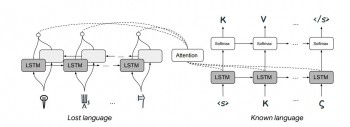
Enter
Jiaming Luo and Regina Barzilay from MIT and Yuan Cao from Google’s AI
lab in Mountain View, California. This team has developed a
machine-learning system capable of deciphering lost languages, and
they’ve demonstrated it by having it decipher Linear B—the first time
this has been done automatically. The approach they used was very
different from the standard machine translation techniques.
First
some background. The big idea behind machine translation is the
understanding that words are related to each other in similar ways,
regardless of the language involved.
cosmictusk | Any follower of Catastrophism
the last few years has enjoyed extraordinary confirmations of ancient
cosmic cataclysm and novel contributions to our way of thinking.
Dr. Sweatman has done our planet and history a tremendous favor by
writing Prehistory Decoded. By employing the hard science of
probability, he has managed to demystify the world’s very earliest and
most ‘mysterious’ art.
Prehistory Decoded begins by documenting Sweatman’s initial discovery, reported worldwide in 2017, of an empirical method for decoding the world’s first art using pattern matching and statistics.
Guess what? The code is a memorial and date stamp for our favorite
subject here: the Younger Dryas Catastrophe, and its associated Taurid meteor traumas.
Sweatman has managed to produce a synthesis explanation for the
previously indecipherable succession of artistic animal figures at Gobekeli Tepe in Turkey, Chauvet Cave in France, Lascaux Cave in France, and Çatalhöyük in Turkey, among others. Unsurprisingly to the open minded, the ancient artists are communicating using a universally handy and persistent reference set: Stars.
Or, more precisely, the appearance of constellations as adjusted over time according to earth’s precession. (Don’t you love the internet? One hyperlink and no need to explain all that!)
skepticink | It happens now and then a perfectly good scientist takes hold of a crank idea and plunges headlong into pseudoscience. Olaus Rudbeck discovered the lymphatic system and wrote hefty tomes arguing that Plato’s Atlantis was located in Uppsala,
Sweden. Velikovsky was an accredited psychiatrist. Several Young Earth
Creationists have genuine scientific degrees from respected
institutions. Anatoly Fomenko, creator of the lunatic New Chronology, is an eminent mathematician at Moscow University. Etc.
Martin Sweatman, a chemical engineer at Edinburgh University, is
earning a place on that list with his “decoding” of ancient art as a
form of astronomical notation. In a couple of peer-reviewed papers
co-authored with Dimitrios Tsikritsis and Alistair Coombs,
plus a number of blog posts and now a book, Sweatman claims statistical
validation of his claims so powerful that no other interpretation has
any chance of being correct. Any of us who quibble, according to him,
simply don’t understand science.
Now, I have quibbled quite a bit already: an initial critique of his Gobekli Tepe paper, a response to his rebuttal, a parody paper
applying his analytical method to a different database (Looney Tunes
characters) with similarly dazzling success, and some lively discussion
in the comments of both our blogs. At the risk of seeming obsessive, I’m
taking up Sweatman’s challenge to critique his second paper, which
extends his grand hypothesis forward to Catal Huyuk and backward to
Paleolithic art, as far back as 40,000 years ago. As his second paper
builds on the results from the first, however, it is necessary to cover
some old ground.
Recap: Pillar 43 at Gobekli Tepe is the cornerstone of the analysis. Sweatman interprets some of its engravings as
a constellation-map and some as solstice and equinox constellations,
the two combining to form a “date-stamp” for 10,950 BC, the presumed
date of the (highly controversial) Younger Dryas Impact. Applying a
basic probability calculation, he concludes that his assumptions have
been verified, and no other interpretation is possible.
What he actually demonstrates is how thoroughly a competent scientist
can be seduced by wishful thinking. The paper is a dense pudding of
circular reasoning, data taken out of context, and speculations that are
subsequently treated as fact, all of which are clear markers of
pseudoscience; errors and inconsistencies that Sweatman dismisses as
irrelevant; and an overall amateurism with regard to the archaeology and
iconography that is honestly beyond a joke. I’ve pointed some of these
out in previous critiques, but there are points to add, and some that
bear repeating.
phys.org | A team of researchers with the University of Edinburgh has found what
they describe as evidence of a comet striking the Earth at approximately
the same time as the onset of the Younger Dryas in carvings on an
ancient stone pillar in southern Turkey. The group has published their
findings in the journal Mediterranean Archaeology and Archaeometry.
Prior evidence based on ice cores taken from Greenland has suggested that a strike by a comet
may have led to the onset of the Younger Dryas—a period of Earth
cooling that lasted for approximately 1000 years. Other evidence also
suggests that the cooling period caused groups of people to band
together to cultivate crops, leading to the development of agriculture,
which in turn led to huge leaps in technological innovations and
societal developments, i.e. Neolithic civilization. In this new effort,
the researchers describe evidence they found on a stone pillar at
Gobekli Tepe (the oldest known temple site) that aligns with the ice core findings—that a comet struck the Earth in approximately 10,950BC.
The pillar was created by the people of Gobekli Tepe and now appears to
have served as a means of commemorating a devastating event—perhaps a
comet breaking up and its remnants crashing into the Earth, causing an
immediate environmental impact around the globe and possible loss of
life (one of the characters on the pillar was of a headless human.) The
team fed likenesses of the images carved onto the pillar (known as the
vulture stone) into a computer to determine if they might be linked with
constellations. Doing so revealed associations between characters on
the pillar and astronomical symbols in the sky for the year 10,950 BC.
The fact that the people took the time and considerable effort to create
the characters on the pillar suggests something very important must
have happened during the same time period that the Greenland ice core
suggests a comet struck, approximately 10,890BC.
We have interpreted much of the symbolism of Göbekli Tepe in terms of
astronomical events. By matching low-relief carvings on some of the
pillars at Göbekli Tepe to star asterisms we find compelling evidence
that the famous 'Vulture Stone' is a date stamp for 10950 BC ± 250 yrs,
which corresponds closely to the proposed Younger Dryas event, estimated
at 10890 BC. We also find evidence that a key function of Göbekli Tepe
was to observe meteor showers and record cometary encounters. Indeed,
the people of Göbekli Tepe appear to have had a special interest in the
Taurid meteor stream, the same meteor stream that is proposed as
responsible for the Younger-Dryas event. Is Göbekli Tepe the 'smoking
gun' for the Younger-Dryas cometary encounter, and hence for coherent
catastrophism?
dainst |Since recently there has been renewed
interest in the results of geophysical survey undertaken at Göbekli
Tepe in the years 2003, 2006, 2007, and 2012 we put together this short
overview on these works and their results – which helped to understand
the extension of the Neolithic site and its monuments even in those
parts of the tell not yet excavated.
Without a doubt, the most widely known
features of the Göbekli Tepe archaeological site are the monumental
buildings, which, due to their ‘outstanding universal value’, were
recently inscribed on the UNESCO World Heritage List.
Notably, since the very early years of excavations, one of the most
pressing questions has been whether these structures, with their
characteristic T-pillars, were restricted to certain parts of the mound
(where revealed through excavation and suggesting a unique agglomeration
of this particular building type) or whether they existed all over the tell.
Archaeological survey methods have
changed significantly over the last years. One innovation which has
dramatically changed the way field archaeologists work are ground-based
physical sensing techniques (for a short introduction into this
technology and its application see, e.g. here
[external link]). This technology provides us with images of possible
archaeological features beneath the surface without even taking a shovel
to hand. In 2003, a geophysical survey was undertaken at Göbekli Tepe
with the help of GGH – Solutions in Geoscience GmbH.
In a first step, large parts of the tell were subjected to extensive
magnetic prospection, and later selected areas were studied using
georadar and geoelectric tomography.
As already noted by
Klaus Schmidt in his 2003 field report which was published the same year
(Schmidt 2003, 5), first results already provided a better
understanding of the site and served to confirm earlier observations:
Not a repeat - it starts at a specific part of the video - so just click it.
nautil.us | What’s more, a flickering flame in the cave may have conjured
impressions of motion like a strobe light in a dark club. In low light,
human vision degrades, and that can lead to the perception of movement
even when all is still, says Susana Martinez-Conde, the director of the
Laboratory of Visual Neuroscience at the Barrow Neurological Institute
in Phoenix, Ariz. The trick may occur at two levels; one when the eye
processes a dimly lit scene, and the second when the brain makes sense
of that limited, flickering information.
Physiologically, our
eyes undergo a switch when we slip into darkness. In bright light, eyes
primarily rely on the color-sensitive cells in our retinas called cones,
but in low light the cones don’t have enough photons to work with and
cells that sense black and white gradients, called rods, take over.
That’s why in low light, colors fade, shadows become harder to
distinguish from actual objects, and the soft boundaries between things
disappear. Images straight ahead of us look out of focus, as if they
were seen in our peripheral vision. The end result for early humans who
viewed cave paintings by firelight might have been that a deer with
multiple heads, for example, resembled a single, animated beast. A few
rather sophisticated artistic techniques enhance that impression. One is
found beyond the Hall of Bulls, where the cave narrows into a long
passage called the Nave.
High on the Nave’s right wall, an early artist had used charcoal to
draw a row of five deer heads. The images are almost identical, but each
is positioned at a slightly different angle. Viewed one at a time with a
small circle of light moving right to left, the images seem to
illustrate a single deer raising and lowering its head as in a short
flipbook animation.
Marc Azéma, a Paleolithic researcher and
filmmaker at the University of Toulouse in France, has studied dozens of
examples of ancient images that were meant to imply motion and has
found two primary techniques that Paleolithic artists used to do this.
The first is juxtaposition of successive images—the technique used for
the deer head—and the second is called superimposition. Rather than
appearing in sequence, variations of an image pile on top of one another
in superimposition to lend a sense of motion. Superimposition can be
seen in caves across France and Spain, but some of the oldest examples
come from Chauvet cave in France’s Ardèche region. Burned wood and
charcoal streaks along Chauvet’s walls indicate that campfires and pine
torches lit the cave.
Claude's constitution and other matters AI
-
Ross Douthat, Is Claude Coding Us Into Irrelevance? *NYTimes*, 2.12.26.
Are the lords of artificial intelligence on the side of the human race?
That’s t...
Celebrating 113 years of Mama Rosa McCauley Parks
-
*February 4, 1913 -- February 4, 2026*
*Some notes: The life of the courageous activist Mama Rosa McCauley Parks*
Mama Rosa's grandfather Sylvester Ed...
Monsters are people too
-
Comet 3I/Atlas is on its way out on a hyberbolic course to, I don't know
where. I do know that 1I/Oumuamua is heading for the constellation Pegasus,
and ...
Remembering the Spanish Civil War
-
This year marks the 90th anniversary of the launch of the Spanish Civil
War, an epoch-defining event for the international working class, whose
close study...
Return of the Magi
-
Lately, the Holy Spirit is in the air. Emotional energy is swirling out of
the earth.I can feel it bubbling up, effervescing and evaporating around
us, s...
Covid-19 Preys Upon The Elderly And The Obese
-
sciencemag | This spring, after days of flulike symptoms and fever, a man
arrived at the emergency room at the University of Vermont Medical Center.
He ...
-
(Damn, has it been THAT long? I don't even know which prompts to use to
post this)
SeeNew
Can't get on your site because you've gone 'invite only'?
Man, ...
First Member of Chumph Cartel Goes to Jail
-
With the profligate racism of the Chumph Cartel, I don’t imagine any of
them convicted and jailed is going to do too much better than your run of
the mill ...