Wednesday, January 30, 2013

white power to the rescue..,

truthdig | Fliers reading “Loyal White Knights of the Ku Klux Klan Wants You to Join” appeared in the mailboxes of white families in Memphis in early January. The Ku Klux Klan also distributed pamphlets a few days ago in an Atlanta suburb. The Tennessee Legislature last year officially declared July 13 as Nathan Bedford Forrest Day to honor his birthday. There are 32 historical markers honoring Forrest in Tennessee alone and several in other Southern states. Montgomery, Ala., which I visited last fall, has a gigantic Confederate flag on the outskirts of the city, planted there by the Sons of Confederate Veterans. Confederate monuments dot Montgomery’s city center. There are three Confederate state holidays in Alabama, including Martin Luther King/Robert E. Lee Day. Alabama, Florida, Georgia and Mississippi also honor Lee’s birthday. Jefferson Davis’ birthday is a state holiday in Alabama and Florida. And re-enactments of Confederate victories in the Civil War crowd Southern calendars.

The steady rise of ethnic nationalism over the past decade, the replacing of history with mendacious and sanitized versions of lost glory, is part of the moral decay that infects a dying culture. It is a frightening attempt, by those who are desperate and trapped, to escape through invented history their despair, impoverishment and hopelessness. It breeds intolerance and eventually violence. Violence becomes in this perverted belief system a cleansing agent, a way to restore a lost world. There are ample historical records that disprove the myths espoused by the neo-Confederates, who insist the Civil War was not about slavery but states’ rights and the protection of traditional Christianity. But these records are useless in puncturing their self-delusion, just as documentary evidence does nothing to blunt the self-delusion of Holocaust deniers.

Those who retreat into fantasy cannot be engaged in rational discussion, for fantasy is all that is left of their tattered self-esteem. When their myths are attacked as untrue it triggers not a discussion of facts and evidence but a ferocious emotional backlash. The challenge of the myth threatens what is left of hope. And as the economy unravels, as the future looks bleaker and bleaker, this terrifying myth gains potency. 

Tuesday, January 29, 2013

when trees die, people die...,

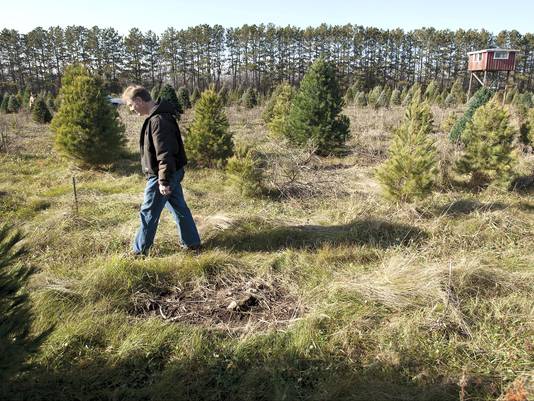
theatlantic | The blight was first detected in June 2002, when the trees in Canton, Michigan, got sick. The culprit, the emerald ash borer, had arrived from overseas, and it rapidly spread -- a literal bug -- across state and national lines to Ohio, Minnesota, Ontario. It popped up in more distant, seemingly random locations as infested trees were unwittingly shipped beyond the Midwest.

Within four years of first becoming infested, the ash trees die -- over 100 million since the plague began. In some cases, their death has an immediate impact, as they fall on cars, houses, and people. In the long term, their disappearance means parks and neighborhoods, once tree-lined, are now bare.

Something else, less readily apparent, may have happened as well. When the U.S. Forest Service looked at mortality rates in counties affected by the emerald ash borer, they found increased mortality rates. Specifically, more people were dying of cardiovascular and lower respiratory tract illness -- the first and third most common causes of death in the U.S. As the infestation took over in each of these places, the connection to poor health strengthened.

The "relationship between trees and human health," as they put it, is convincingly strong. They controlled for as many other demographic factors as possible. And yet, they are unable to satisfactorily explain why this might be so.

In a literal sense, of course, the absence of trees would mean the near absence of oxygen -- on the most basic level, we cannot survive without them. We know, too, that trees act as a natural filter, cleaning the air from pollutants, with measurable effects in urban areas. The Forest Service put a 3.8 billion dollar value on the air pollution annually removed by urban trees. In Washington D.C., trees remove nitrogen dioxide to an extent equivalent to taking 274,000 cars off the traffic-packed beltway, saving an estimated $51 million in annual pollution-related health care costs.

 But a line of modern thought suggests that trees and other elements of natural environments might affect our health in more nuanced ways as well. Roger Ulrich demonstrated the power of having a connection with nature, however tenous, in his classic 1984 study with patients recovering from gall bladder removal surgery in a suburban Pennsylvania hospital. He manipulated the view from the convalescents' windows so that half were able to gaze at nature while the others saw only a brick wall. Those with trees outside their window recovered faster, and requested fewer pain medications, than those with a "built" view. They even had slightly fewer surgical complications.

drought is killing trees across the midwest

usatoday | Hundreds of thousands of trees died in the historic drought of 2012, and many more will succumb in the next few years, scientists say.

"This is just beginning," says Janna Beckerman, a plant pathologist at Indiana's Purdue University. "I suspect we'll see trees still dying for the next two or three years."

Indiana's white cedar and Florida cypress trees began dying in late summer, she says, and Alberta and Colorado blue spruce are succumbing now.

Trees affected by a 2010-11 drought still are dying across Louisiana, says Keith Hawkins, a Louisiana State University AgCenter forester. Some trees "reached a threshold from which they can't recover — especially older, larger trees," he says.

About 301 million trees died in rural Texas because of that drought, the Texas A&M Forest Service says.
Tree deaths are dismaying some communities:
  • Brookings, S.D., has lost about 300 trees to drought, says Peter Colson, director of the city's Department of Parks, Recreation and Forestry. "It's expensive," he says. "The trees we plant run $35 to $200 a pop." The city cut back on tree planting last fall because "we didn't have the manpower or equipment to water hundreds of trees," Colson says.
  • More than half the 88 big trees marked for removal in McPherson, Kan., last year "died just from drought," says city parks superintendent Paul Katzer. "We'll lose another 100 to 150 trees just from drought this year." For the first time, the city is siphoning water from two lakes to water trees this winter, he says.
  • Brett O'Brien, natural resources supervisor for the Columbia, Mo., Parks and Recreation Department, says "a significant number" of that city's trees died because of dry conditions. "We lost a lot of Norway spruce and white pines, and some of the oaks, too," he says.
O'Brien is hesitant to plant new trees because "we have not really left the drought yet," he says. When he does replant, he's considering less vulnerable species such as the Kentucky coffeetree.

cities change temperatures for thousands of miles

ucar | Even if you live more than 1,000 miles from the nearest large city, it could be affecting your weather. In a new study that shows the extent to which human activities are influencing the atmosphere, scientists have concluded that the heat generated by everyday activities in metropolitan areas alters the character of the jet stream and other major atmospheric systems. This affects temperatures across thousands of miles, significantly warming some areas and cooling others, according to the study this week in Nature Climate Change.

The extra “waste heat” generated from buildings, cars, and other sources in major Northern Hemisphere urban areas causes winter warming across large areas of northern North America and northern Asia. Temperatures in some remote areas increase by as much as 1 degree Celsius (1.8 degrees Fahrenheit), according to the research by scientists at the Scripps Institution of Oceanography; University of California, San Diego; Florida State University; and the National Center for Atmospheric Research.

At the same time, the changes to atmospheric circulation caused by the waste heat cool areas of Europe by as much as 1 degree C (1.8 degrees F), with much of the temperature decrease occurring in the fall.

The net effect on global mean temperatures is nearly negligible—an average increase worldwide of just 0.01 degrees C (about 0.02 degrees F). This is because the total human-produced waste heat is only about 0.3 percent of the heat transported across higher latitudes by atmospheric and oceanic circulations.

However, the noticeable impact on regional temperatures may explain why some regions are experiencing more winter warming than projected by climate computer models, the researchers conclude. They suggest that models be adjusted to take the influence of waste heat into account. Fist tap Dale.

does the future belong to open cities?

mondediplo | The Levant means “where the sun rises”: the eastern Mediterranean. Levant is a geographical word, free of associations with race or religion, defined not by nationality but by the sea. The great Levantine cities of Smyrna, Alexandria and Beirut were windows on the world, ports more open and cosmopolitan than inland cities like Ankara, Damascus and Cairo. From the beginning Levantine cities were international. They shared defining characteristics: geography, diplomacy, language, hybridity, trade, pleasure, modernity and vulnerability. All are present in today’s global cities.

Levantine cities were trading cities, integrated into the economic systems of Europe and Asia. Like Hong Kong or Dubai today, they were synonymous with enterprise. Smyrna exported figs and raisins; Alexandria cotton; Beirut emigrants to the Americas and Africa. People and business, not monuments, were their main attraction. Thackeray wrote that he liked Smyrna because, having no monuments to visit, it produced no “fatigue of sublimity”.

Ports bring music as well as freedom, and Smyrna created its own sound, Smyrnaika or rebetiko. It was the music of rebels, particularly appreciated by the qabadays (Turkish) or dais (Greek) — the toughs who worked, gambled and fought with each other. Rebetiko songs mixed western polyphony and eastern monophony and described the sufferings of the poor, the torments of love or the pleasures of hashish. As early as the 17th century, according to the French consul, the Chevalier d’Arvieux, Beirut was distinguished from neighbouring ports by “parties of pleasure”. It still is. Beirut has become the capital of Arab night life.
Levantine cities also brought education and modernity. Modern Turkey was born in the Levantine port of Salonika, birthplace of Mustafa Kemal. The Young Turk revolution broke out there in 1908, helped by the protection of foreign consuls and the proximity of foreign states. Latife Hanim, the wife of Mustafa Kemal and the first Turkish woman to be unveiled in public, was educated at a French school in Smyrna.

In our new global age, geography is biting back at history. Smyrna, Alexandria and Beirut are now trying to revive their cosmopolitan identities. Istanbul, by the 1970s entirely Turkish, is now a global business city again, the shopping centre of the Balkans and Black Sea. The Arab Spring shows the desire of people in Syria, Lebanon, Egypt, Libya and Tunisia to reconnect with the outside world and their Mediterranean past — break out of the prison of the nation state.

Today’s global cities — London, Paris, New York, Dubai — are new Levantine cities. (They have welcomed thousands of immigrants from Smyrna, Beirut and Alexandria.) Global cities share the same international character: increasingly different from their hinterlands, they act as educators, liberators and modernisers. Three hundred and fifty languages are spoken in London, and English is the new lingua franca.
The future belongs to cities with the energy and freedom of cosmopolitanism, rather than to inland capitals dominated by their military-industrial complex: to Beirut not Damascus; Dubai not Riyadh; New York not Washington. States are dinosaurs: cities are the future. The New York Times of 7 January 2012 called China “a thin political union composed of semi-autonomous cities.” We are all Levantines now.

Monday, January 28, 2013

is pedophilia a wetware based sexual orientation?


latimes | Like many forms of sexual deviance, pedophilia once was thought to stem from psychological influences early in life. Now, many experts view it as a sexual orientation as immutable as heterosexuality or homosexuality. It is a deep-rooted predisposition — limited almost entirely to men — that becomes clear during puberty and does not change.

The best estimates are that between 1% and 5% of men are pedophiles, meaning that they have a dominant attraction to prepubescent children.

Not all pedophiles molest children. Nor are all child molesters pedophiles. Studies show that about half of all molesters are not sexually attracted to their victims. They often have personality disorders or violent streaks, and their victims are typically family members.

By contrast, pedophiles tend to think of children as romantic partners and look beyond immediate relatives. They include chronic abusers familiar from the headlines — Catholic priests, coaches and generations of Boy Scout leaders.

Other pedophiles are "good people who are struggling," said Dr. Fred Berlin, a psychiatrist who heads the Johns Hopkins Sexual Behaviors Consultation Unit. "They're tortured souls fighting like heck not to do this. We do virtually nothing in terms of reaching out to these folks. We drive it underground."

what comes first, the brain function or the behavior?

psychologicalscience | By examining patterns of brain activity in the fusiform face area -- a brain area involved in face perception -- the researchers were able to predict the race of the person that the participant was viewing, but only for those participants with stronger, negative implicit race attitudes.

These results suggest that the ways in which Black and White faces are represented in this brain region differ for people with a stronger, implicit race bias compared to people with less or no bias. This implies that people with stronger, negative implicit race attitudes may actually perceive Black and White faces to look more different.

Tobias Brosch notes that "these results suggest it may be possible to predict differences in implicit race bias at the individual level using brain data." Elizabeth Phelps adds "although these findings may be of interest given the behavioral and societal implications of race bias, our ability to predict race bias based on brain data is relatively modest at this time."

Sunday, January 27, 2013

can black america have a decent conversation?


clutch | While perusing several of the hundreds of Django Unchained conversations happening on social media, I began to get this nagging feeling that just wouldn’t go away. It had nothing to do with the hatred hurled at Spike Lee or the brittle enthusiasm over Quentin Tarantino. It didn’t have anything to do with the film’s slant towards colorism and depiction of the White-Savior Complex as heroism — or even why the Tupac song at the end stopped right when I was getting into it.

All of that faded in light of the revelation that we — as in black descendants of slaves in America — converse as if we hate each other.

*And please skip the “Who is we?” question. If it’s not for you, the browse button is that way.*
Sambo, coon, nigger, nigga, and Uncle Tom have all been spoken with such a deep-seated hatred and resentment that I have literally recoiled from my screen at times — in disbelief, in dismay, in sadness. And it’s not just Django; any conversation that involves race spirals out of control so swiftly it’s as combustible as a lit match on gasoline. I asked myself, “Why are we using plantation language to insult one another?” “Why are all these black people fighting over a white man’s rendition of slavery, or a black woman sleeping with a white man (see: Scandal); or the infallibility (or cultural mirage) of a black president?” And the answer is simple:

Because some of us are still slaves.

Oh, the shackles aren’t there — for those of us not in the Prison Industrial Complex — but the damage has been done. And we are still divided into a contemporary version of what Ancestor Malcolm called House Negroes and Field Negroes.


sheriff, you can count on me...,


rawstory | A Wisconsin sheriff has drawn criticism from other public officials for a radio commercial telling residents not to wait for authorities to help them and to arm themselves for protection.

According to The Milwaukee Journal Sentinel, Milwaukee County Sheriff David A. Clarke Jr. can be heard in the ad saying, “With officers laid off and furloughed, simply calling 911 and waiting is no longer your best option. You could beg for mercy from a violent criminal, hide under the bed, or you can fight back.”

Clarke also encourages residents to sign up for firearms training courses, saying, “I need you in the game,” and, “We’re partners now. Can I count on you?”

Saturday, January 26, 2013

what's that africom cover story again?

antiwar | But Patrick Meehan, chairman of the US Congressional committee that drew up the report, said “While I recognize there is little evidence at this moment to suggest Boko Haram is planning attacks against the [US] homeland, lack of evidence does not mean it cannot happen.”

Washington’s interest in Africa goes back at least to 2007, when the Pentagon’s AFRICOM was formed, long before rebels in Libya or militants in Mali were a threats to exaggerate.

The dominant way of thinking in Washington is that the US should be involved in every corner of the planet, and the pressure to always “do something” is intense.

But as Micah Zenko, a senior fellow at the Council on Foreign Relations recently commented with regards to the intervention in Mali, “Some things that happen on the other 94% of the earth that isn’t the US, has nothing to do with the US, nor requires a US response.”

Friday, January 25, 2013

racism is racism...,


esquire | There is no point in mincing words. What the Virginia legislature is entertaining now in regards to its election laws is flatly fcking racist.  That it is in response to changing demographics that make Virginia a tough get for the Republicans in presidential elections now doesn't matter. That it is what we have come to expect from Republican-majority state legislatures around the country now doesn't matter. That it's naked opportunism doesn't matter.  That it may not pass doesn't matter. This is a legislature acting to devalue African American voters to the advantage of white voters. This is Jim Crow bullshit, and no politician who deals in it, and no political party that continues to support said politician, is worthy of support by decent people in the year 20-goddamn-13.

The bill would apportion electors by congressional district to the candidate who wins each of the state's 11 districts. The candidate who carries a majority of the districts would also win the two electors not tied to congressional districts. Sen. Charles W. "Bill" Carrico, R-Grayson, said the change is necessary because Virginia's populous, urbanized areas such as the Washington, D.C., suburbs and Hampton Roads can outvote rural regions such as his, rendering their will irrelevant.

Thank you, Senator "Bill," for making it plain. There are now more people in the "urbanized" areas -- and you don't need the Enigma machine to decode that baby, do you, Paul Ryan? -- than there are in the "rural" areas so, therefore, the system is unfair because white people don't win any more. It's not like we shouldn't know it when we see itm because it's not like we haven't seen this before.   Fist tap Dale.

will the next great crisis massively shift america toward conservatism?

naturalnews | There is a very good reason why people who live in cities tend to be liberal while those who live in rural areas tend to be conservative. In a city, the existence of nearby neighbors, the shared dependence on infrastructure and the close proximity of police stations automatically lends itself to a socialist mindset. On issues like guns, city people seem to be unable to imagine why anyone would "need" a rifle, for example, and because all guns scare them, they would prefer to force everyone across the country to turn them all in.

People who live in rural areas, in great contrast, have every reason to be more conservative and independent. Their local sheriff might be 30 minutes away in an emergency, meaning that self protection is truly up to you and can't simply be delegated to someone else. Self-reliance means survival. In rural living, firearms are absolutely necessary tools to protect your animals from predators, eliminate varmints that are destroying your garden, and provide real security for legitimate threats to your safety. People who live in cities tend not to be able to understand these things because they can't imagine country life.

Because cities pack so many people in such a small space, there is a commonsense basis for lots of little laws and regulations on things like noise, littering and even your car's emissions. After all, one incredibly noisy person living in an apartment can prevent a hundred people from getting to sleep, so noise ordinances make sense where people live in close proximity.

Out in the country, where the nearest house might be a quarter-mile away, noise ordinances make no sense. Regulations on every little detail of the lives of the people simply don't fly.

FACT: Today, about 80% of the U.S. population lives in cities.

Thursday, January 24, 2013

the systematic appropriation of shining manhood reaches endgame...,

guardian | Yesterday, I highlighted the extraordinary anti-war speech Martin Luther King gave in 1967, in which he said, among other things, that the US government is "the greatest purveyor of violence in the world today" and the leading exponent of "the deadly Western arrogance that has poisoned the international atmosphere for so long." The speech was devoted to arguing that America's militarism and war-fighting were degrading the soul of the nation and the citizenry and - for financial, political and cultural reasons - were making domestic progress impossible.

The US Air Force's Global Strike Command yesterday posted a truly vile bit of propaganda in which it appropriates King's image, name and words in order to claim that he would "be proud to see our Global Strike team . . . standing side-by-side ensuring the most powerful weapons in the US arsenal remain the credible bedrock of our national defense" (ellipses in original):
"The Department of Defense is a leader in equal opportunity for all patriots seeking to serve this great nation. . . The vigilant warriors in AFGSC understand they are all equal and unified in purpose to provide a safe, secure and effective deterrent force for the United States. . . .
"Dr. King would be proud to see our Global Strike team - comprised of Airmen, civilians and contractors from every race, creed, background and religion - standing side-by-side ensuring the most powerful weapons in the US arsenal remain the credible bedrock of our national defense. . . Our team must overlook our differences to ensure perfection as we maintain and operate our weapon systems. . . Maintaining our commitment to our Global Strike team, our families and our nation is a fitting tribute to Dr. King as we celebrate his legacy."
The US military - which is currently bombing Afghanistan, Pakistan, and Yemen at least, all in secret - just exploited one of the 20th Century's greatest proponents of nonviolence and most vehement opponents of US militarism as a public face for its aggression and violence in the world. While King may have preferred to see an integrated military rather than one divided by racial strife, his condemnations of US militarism were particularly harsh when it came to the way the US military taught American citizens to embrace a culture of violence ("I knew that I could never again raise my voice against the violence of the oppressed in the ghettos without having first spoken clearly to the greatest purveyor of violence in the world today - my own government").

stephen obama is candyland's greatest asset...,


democracynow | Premiering this week at the Sundance Film Festival in Utah, the new documentary "Dirty Wars: The World is a Battlefield" follows investigative reporter Jeremy Scahill to Afghanistan, Somalia and Yemen as he chases down the hidden truths behind America’s expanding covert wars. We’re joined by Scahill and the film’s director, Rick Rowley, an independent journalist with Big Noise Films. "We’re looking right now at a reality that President Obama has essentially extended the very policies that many of his supporters once opposed under President Bush," says Scahill, author of the bestseller "Blackwater: The Rise of the World’s Most Powerful Mercenary Army" and a forthcoming book named after his film. "One of the things that humbles both of us is that when you arrive in a village in Afghanistan and knock on someone’s door, you’re the first American they’ve seen since the Americans that kicked that door in and killed half their family," Rowley says. "We promised them that we would do everything we could to make their stories be heard in the U.S. ... Finally we’re able to keep those promises." [includes rush transcript]

the next war?

tomdispatch | Once upon a time, former Chinese leader Deng Xiaoping suggested that Asia’s Pacific powers and wannabes should “put aside differences and jointly develop resources.”  That was, of course, when China itself was still something of a wannabe and no one was talking about it becoming the world’s largest economy.  Now, it’s the rising power on planet Earth, achieving a more-than-century-old dream of returning to national greatness -- as well as an eye-blistering, health-endangering level of industrial and car pollution that has its own name, “airpocalypse.” Problem is the idea of regional cooperation turns out to have been the real dream and now, it seems, everyone in the Pacific basin has woken up.

“Jointly develop”?  What an ephemeral thought at a time when the urge to power up ever more cars and factories (sending yet more pollution, not to speak of greenhouse gases, into Asian and planetary skies) has merged with advances in drilling technology for “extreme energy.”  Together, they have made a series of previously unremarkable islets in the Pacific -- which just happen to have prospective oil and natural gas reserves under them -- look too valuable to resist claiming. So China, Japan, and various other Asian countries are insisting those bits of land are theirs and theirs alone.  Toss in that hideous imponderable national pride and, as TomDispatch regular Michael Klare points out today, you have the potential for one of the dumber, more destructive face-offs in recent history.  With its usual fabulous timing, the U.S., already heavily garrisoning parts of Asia, has jumped in with both feet, only exacerbating tensions in the region, while promising to bring more of its own weaponry to bear, and sell more of that weaponry to its allies.

As Klare, author of the invaluable The Race for What’s Left (just out in paperback), indicates, this couldn't be more ludicrous.  After all, China, Japan, and the U.S. are so economically intertwined that one can’t twitch without the others suffering.  In other words, any kind of conflict among them is bound to make mincemeat of their collective economic wellbeing.  In fact, last October, after a confrontation over some of those islands, angry anti-Japanese protests and calls for boycotts of Japanese goods swept China.  The uproar briefly closed Japanese plants in that country, took a bite out of Japanese car sales, and knocked down Japanese stock prices.  Japan's economy took a serious hit as well, which should surprise no one since China has recently pulled ahead of the U.S. as that country’s major export market.  All of this, until tamped down, threatened the wellbeing of the global economy, and yet it was a mere hiccup in terms of what might be coming.

What better argument could there be for self-interested cooperation in the Pacific, if only anyone in the involved countries, including ours, were actually walking the walk, instead of just intermittently talking the talk?

Wednesday, January 23, 2013

do we need technology to help us remember the future?

wired | If you want to recall moments in your life, you’ve got thousands of photos and emails to help you. Forgot the details of a news story from last month? Google’s got your back. The high tech dream of lifelogging”—capturing everything important to you—is increasingly becoming real.

But there’s one big area where our digital recall falls short: prospective memory.

Today’s tech helps mostly with retrospective or semantic memory, events or facts we’ve encountered in the past. Prospective memory is different. It’s our ability to remember to remember something—like stopping to grab the dry cleaning on the way home.

As it turns out, this is where our pain really lies.

Sure, it’s embarrassing when our retrospective memory fails, like when you space out on a colleague’s name. But failures of prospective memory can wreck your career or life: Forget to attend a crucial meeting or file a tax document on time and things go downhill from there. Microsoft researcher Abigail Sellen has studied everyday memory lapses, and she found that people didn’t complain much about forgetting the past. What really killed them was forgetting the future. Prospective memory is about getting things done.

Unfortunately, buffing your brain with memory-training tricks won’t necessarily help. Some studies have found that people who are better at remembering facts are actually worse at remembering tasks. Call it the absentminded-professor effect.

Why does prospective memory fail? Partly because it’s tricky to cue. Prospective recall is about doing task A when we’re in place B or at time C. But place B or time C on its own doesn’t always clearly indicate that you have to do something.

“The thing with prospective memory,” Sellen says, “is giving you the right trigger at the right time and place.” Fist tap Dale.

internalizing the internet...,

thescientist | Over the next 10 years, people will increasingly shape their view of themselves and their position in the world using their interactions on Facebook, online games, and other social media, rather than traditional identity-shaping features, such as religion, job, ethnicity, and age, according to a report released by the Government Office for Science's Foresight program of the United Kingdom. While the study acknowledges that the trend can have both positive and negative effects on individuals, it predicts that online identities will have an overall profound impact on society in the near future.

“This report shows that ‘identity’ is not a simple notion,” Sir John Beddington, head of the UK Government Office for Science, wrote in the foreword of the report. “People can have many different overlapping identities, which are fundamental to their individuality. Identities can exercise a powerful influence on the health and well being of communities, and the degree to which they can build up social capital.”

what the fbi doesn't want you to know about its "secret" surveillance methods...,

eff | The FBI had to rewrite the book on its domestic surveillance activities in the wake of last January’s landmark Supreme Court decision in United States v. Jones. In Jones, a unanimous court held that federal agents must get a warrant to attach a GPS device to a car to track a suspect for long periods of time. But if you want to see the two memos describing how the FBI has reacted to Jones — and the new surveillance techniques the FBI is using beyond GPS trackers — you’re out of luck. The FBI says that information is “private and confidential.”

Yes, now that the Supreme Court ruled the government must get a warrant to use its previous go-to surveillance technique, it has now apparently decided that it’s easier to just keep everything secret. The ACLU requested the memos under the Freedom of Information Act — which you can see FBI General Counsel Andrew Weissmann waving around in public here — and the FBI redacted them almost entirely.

Though the FBI won’t release the memos, we do have some information from other sources on the surveillance techniques federal agents are already using. And for the most part the FBI contends they do not need a warrant, and one wonders, given the public nature of this information, why they are officially claiming its "secret." Fist tap Arnach.

Tuesday, January 22, 2013

all wars are banker's wars...,


whatreallyhappened | The German government recently asked for the return of some of their gold bullion from the Bank of France and the New York Federal Reserve. France has said it will take 5 years to return Germany's gold. The United States has said they will need 8 years to return Germany's gold. This suggests strongly that the Bank of France and the NY Federal Reserve have used the deposited gold for other purposes, and they are scrambling to find new gold to cover the shortfall and prevent a gold run. So it is inevitable that suddenly France invades Mali, ostensibly to combat Al Qaeda, with the US joining in. Mali just happens to be one of the world's largest gold producers with gold accounting for 80% of Mali exports. War for the bankers does not get more obvious than that!

You have been raised by a public school system and media that constantly assures you that the reasons for all these wars and assassinations are many and varied. The US claims to bring democracy to the conquered lands (they haven't; the usual result of a US overthrow is the imposition of a dictatorship, such as the 1953 CIA overthrow of Iran's democratically elected government of Mohammad Mosaddegh and the imposition of the Shah, or the 1973 CIA overthrow of Chile's democratically elected government of President Salvador Allende, and the imposition of Augusto Pinochet), or to save a people from a cruel oppressor, revenge for 9-11, or that tired worn-out catch all excuse for invasion, weapons of mass destruction. Assassinations are always passed off as "crazed lone nuts" to obscure the real agenda.

The real agenda is simple. It is enslavement of the people by creation of a false sense of obligation. That obligation is false because the Private Central Banking system, by design, always creates more debt than money with which to pay that debt. Private Central Banking is not science, it is a religion; a set of arbitrary rules created to benefit the priesthood, meaning the owners of the Private Central Bank. The fraud persists, with often lethal results, because the people are tricked into believing that this is the way life is suppoed to be and no alternative exists or should be dreamt of. The same was true of two earlier systems of enslavement, Rule by Divine Right and Slavery, both systems built to trick people into obedience, and both now recognized by modern civilizatyion as illegitimate. Now we are entering a time in human history where we will recognize that rule by debt, or rule by Private Central Bankers issuing the public currency as a loan at interest, is equally illegitimate. It only works as long as people allow themselves to believe that this is the way life is supposed to be.

the colonial powers never really left...,


National Post |  Africa may have achieved independence, but the old colonial ties are still important as France’s decision to send troops to Mali to fight Islamist extremists shows. The old colonial powers in Africa may no longer be the rulers, but they still exert influence and have strong economic and political links. David McDonald, professor of the Global Development Studies at Queen’s University, says, “The French and the English were much more strategic in terms of recognizing that they wanted to maintain neo-colonial linkages with their former colonies. So it was shedding the direct authoritarian power at the barrel of a gun and replacing that with independence, but an independence that was, and is still to some extent, extremely dependent on the political and economic will of the former colonial masters.” – The National Post’s Rubab Abid and Richard Johnson look at the former colonies and former colonial powers who still dabble inside the continent they once owned.  Fist tap Dale.

Chipocalypse Now - I Love The Smell Of Deportations In The Morning

sky |   Donald Trump has signalled his intention to send troops to Chicago to ramp up the deportation of illegal immigrants - by posting a...