A few years ago, my man T3 threw himself at the Herculean task of trying to wrap his mind around the long-term American imperial plan for Africa. In context of the currently percolating Susan Rice controversy, it's imperative that we peep game on this negroe 1% who has been providing racial mimetic cover for the long term imperial plan for Africa for a very long time.
Chinese demands for energy are driving the US to pursue new
relationships in Africa. The guise of humanitarian aid must be viewed
within the context of the Defense Department’s critical role in the
advance of US-Africa relations. And, perhaps most disastrously, it must
be borne in mind that at precisely the point when Gilead Sciences (a
leader in HIV vaccination research) was making its most headway, the
chairman of its board was none other than Donald Rumsfeld (more in Part
V).
From Reuters (February 28, 2008):
LOS ANGELES, Feb 28 (Reuters) – A safety board has recommended that
certain AIDS patients taking part in a study of GlaxoSmithKline Plc’s
(GSK.L: Quote, Profile, Research) Epzicom consider switching to Gilead Sciences Inc’s (GILD.O: Quote, Profile, Research) Truvada, sending Gilead’s shares up about 4 percent on Thursday.
The National Institute of Allergy and Infectious Disease’s AIDS
Clinical Trials Group, a unit of the National Institutes of Health, is
comparing the two drugs in a head-to-head trial involving 1,858
patients.
The unit said on Thursday that an independent Data and Safety
Monitoring Board recently found that for patients with high levels of
HIV virus, treatment regimens containing Epzicom were less effective at
controlling the virus than regimens containing Truvada.
The board also found that patients with high levels of HIV virus
treated with Epzicom developed side effects such as body aches and high
cholesterol more quickly.
Glaxo said in a statement that the NIH study did not routinely
exclude patients at risk for a known reaction with Epzicom, which might
have accounted for some adverse events.
The trial recommendation applies to about half the patients being
treated with the Glaxo drug and, if translated to real world usage,
could mean a 20 percent market share gain for Gilead’s Truvada and
Atripla, Morgan Stanley analyst Sapna Srivastava said in a research note
on Thursday.
Remember Tamiflu and the avian flu virus? That was also Gilead Sciences.
The stakes in the energy game are very high. In 2006, China’s
president visited Saudi Arabia, Morocco, Nigeria and Kenya. Today, the
United States of America imports more oil from Africa than from Saudi
Arabia. The US has protected the House of Saud from all comers and
precluded other nations from breaking up the dollar-oil peg which
prevails in Saudi Arabia. No such arrangements exist on the ground in
Africa…and yet – the US is proposing to establish its first military
command. China’s strategy for African partnership centers on
infrastructure.
Beijing plans to invest $4 billion in Nigeria’s
infrastructure, including a Nigerian state-run oil refinery, a railway
line and power plants. Two Chinese telecommunication companies will
install rural telephone services financed by $200 million in loans from
Beijing.
On the eve of Hu’s visit, the China National Offshore Oil Corporation
(CNOOC) paid $2.7 billion for a 45 percent stake in a Nigerian oil
field due to start production in 2008. Last year, Nigeria agreed to
provide 30,000 barrels of oil per day for five years to China’s largest
state-owned oil company, PetroChina, in a deal worth $800 million.
Oil was also top of the agenda in Kenya on April 27-30. In Nairobi,
the Chinese president signed an agreement for licenses to allow CNOOC to
explore six possible oil blocks off the coast of Kenya. Last year,
China provided $36.5 million in aid to Kenya, mainly to upgrade its
power stations.
China’s deals with Nigeria and Kenya, as well as other African
countries, are direct challenges to the traditional domination of the
continent’s oil by American and European companies. (See Western concern at China’s growing involvement in Africa)
China’s energy diplomacy was spelled out by Yang Peidong, a foreign ministry consultant, in a recent edition of China Economic Weekly.
Beijing is now focusing on “the extension of trade and the promotion of
energy, resources and technology cooperation” as the heart of China’s
foreign policy, he wrote.
China’s strategy is to offer infrastructure projects to the
resource-rich countries in Middle East, Africa and Latin America to
facilitate, and in exchange for, the export of minerals to China. China
is now the world’s sixth largest engineering contractor, with its new
contracts up 24 percent to $39 billion last year. In some cases, China
has also financed and even armed regimes, such as in Sudan and Zimbabwe,
in order to protect its resource interests.
In comments to Reuters during Hu’s visit, former Nigerian foreign
minister Bolaji Akinyemi attempted to play down possible tensions with
Washington. “In the Middle East, the US regards China’s incursion with
alarm, but Nigeria is more virgin territory for suitors and Washington
should not be too worried,” he said.
The Bush administration, however, regards China’s moves in Africa as
far from benign. Its recently published National Security Strategy
openly states US concerns over China as “expanding trade, but acting as
if they can somehow ‘lock up’ energy supplies around the world or seek
to direct markets rather than opening them up—as if they can follow a
mercantilism borrowed from a discredited era; and … supporting
resource-rich countries without regard to their misrule at home or
misbehaviour abroad of those regimes.”
The West has not directed itself to resolving the infrastructure crisis across the continent precisely because they are architects of that crisis.
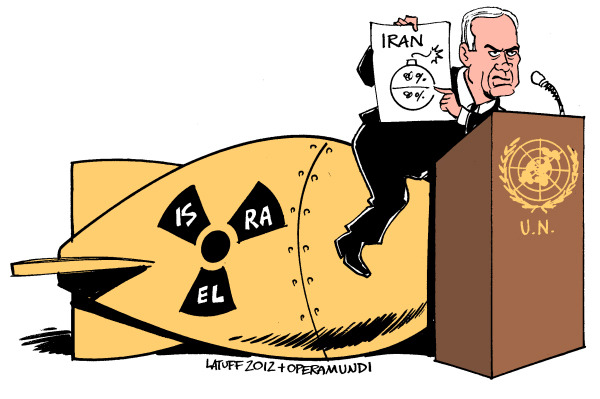
ha'aretz | "We lost Europe," said a senior Foreign Ministry official. The
erosion of Israeli support and shift to the Palestinians started a few
days ago in France. President Francois Hollande's words at a press
conference with Prime Minister Benjamin Netanyahu in Paris a month ago,
in which he expressed doubts about the Palestinian move in the UN,
disappeared as if he never spoke them.
Despite previous declarations, France announced that instead of
abstaining, it would vote in favor of recognizing Palestine as a
non-member state - an observer state without full membership in the
United Nations.
Sixteen members of the European Union have announced their support for
the Palestinian move: Spain, Cyprus, Portugal, Luxembourg, Finland,
Denmark, Austria, Malta, Ireland, Italy, Slovenia, Belgium, Sweden,
Germany and Greece all joined France in the past few days. Norway and
Switzerland, which are not members of the European Union, also announced
their support for the Palestinian request.
The UN General Assembly resolution recognizes Palestine within the 1967
borders as a non-member observer state. One hundred and thirty eight
countries voted in favor of the resolution. Israel suffered a
humiliating political defeat and found itself isolated along with the
United States, Canada, Micronesia, the Marshall Islands and, at best,
the Czech Republic and Germany. Britain, which only a few days ago led
the attempt to pressure Palestinian President Mahmoud Abbas to withdraw
his resolution, also changed its position.
The British promised they would abstain or vote against, but changed
their stance and notified Israel they are leaning toward supporting the
Palestinian request in the vote, if the Palestinians provide the British
with a number of guarantees to restart the peace negotiations without
any preconditions - as well as a Palestinian promise not to petition the
International Criminal Court in The Hague against Israel. Israel hoped
the British would not receive such guarantees - and abstain.
But the hardest blow came from Berlin. In Jerusalem, Germany was
considered a certainty to vote against the UN resolution, and the German
decision not to oppose the Palestinian bid but rather to abstain
shocked the top brass at the Foreign Ministry and Prime Minister's
office. A top German official who took part in discussions in Berlin,
however, stressed that the writing was on the wall.
The senior German official, who has requested anonymity because of the
sensitivity of the issue, told Haaretz that Germany has been trying to
help Israel on the Palestinian issue for a long time but Israel has not
taken the necessary steps to advance the peace process. "The Israelis,"
he said, "did not respond in any way to our request to make a gesture on
settlements."
guardian | It is early Sunday. The sun has barely risen above the chestnut
forest that lies somewhere near the crest of Mount Pelion, but loggers'
pick-up trucks are already streaming through the muddy slush, their
cargo bouncing in the back. Theirs are rich pickings, much in demand as
winter envelopes the villages and towns of an increasingly
poverty-stricken Greece. As they pass, they do not look up because many do not have permits to do what they have just done.
From
their new home a little further on, Yiannis Chadziathanasiou and Natasa
Rempati watch the ebb and flow of this traffic. So, too, do the
residents of Tsagarada, the picturesque hamlet where the sound of
chainsaws pierces the morning air. "Things are getting desperate," says
Chadziathanasiou, who clothed Greek celebrities before he moved to the
countryside. "You hear all the time of people illegally clearing forests
for firewood. It's horrible if you're a green like me."
In their
wellington boots and designer jeans, the couple stand out in Tsagarada.
Like most middle class Europeans raised in cities, nature is a new world
and one that does not come naturally to them. Until last year, both
enjoyed successful careers in fashion and architecture. "But then we did
our sums," said 29-year-old Rempati, whose firm had designed hospitals
and metro stations before being forced to close down. "And although we
were both earning good salaries, taking home around €3,500 a month, we
were really squeezed. There was never a euro left over. Our heating bill
alone cost €3,000 and that was before the €500 we spent on petrol and
all the new taxes. We were stressed and really anxious and didn't think
we could afford to go through another winter in Athens."
reuters | For hours the leader of the Greek journalists'
social security fund had been chairing a meeting about disastrous
losses on retirement savings caused by the country's economic collapse.
"She tried to present herself as the fund's savior and asked (members)
to double contributions to 6 percent of salaries," said one of those
present that night at the Titania hotel. Spanopoulou, 58, did not
succeed.
When she rose to leave
around midnight, enraged fund members first swore, then waded in
punching, kicking and tearing at her clothes, according to witnesses. A
bodyguard managed to bustle her out of the room, but another group
caught her just outside the hotel and gave her a second beating. She
spent the night in hospital.
It was
a brutal sign of the fury many Greeks feel at the way the country's
debt crisis has dashed hopes of a comfortable old age. Greece's pension
funds - patchily run in the first place, say unionists and some
politicians - have been savaged by austerity and the terms of the
international bailout keeping the country afloat.
Workers
and pensioners suffered losses of about 10 billion euros ($13 billion)
just in the debt restructuring of March 2012, when the value of some
Greek bonds was cut in half. That sum is equal to 4.6 percent of the
country's GDP in 2011.
Many savers blame the debacle on the Bank of Greece,
the country's central bank, which administers three-quarters of pension
funds' surplus cash. Pensioners and politicians accuse it of failing to
foresee trouble looming, or even of investing pension fund money in
government bonds that it knew to be at high risk of a 'haircut' - having
their value reduced.
A Reuters
examination of previously unpublished data from the Bank of Greece
reveals the bank invested pension fund money in 1.18 billion euros of
Greek bonds after the economic crisis began.
Prokopis
Pavlopoulos, a lawmaker in the ruling coalition's conservative New
Democracy party and former interior minister, said: "From July 2010 it
was obvious that a debt restructuring would be inevitable. While foreign
banks
were unloading their Greek government bonds, no one moved to tell Greek
pension funds to do something, that a haircut was coming."
Spanopoulou,
while deploring the violence she suffered, said: "The Bank of Greece
knew about the haircut on bonds well in advance and should have informed
(our) fund."
HuffPo | Between 2010 and 2011, California experienced a drastic 20 percent decrease in juvenile crime--bringing the underage crime rate to the lowest level since the state started keeping records in 1954.
According to a recently released study, much of that improvement can be credited to the decriminalization of marijuana.
The study, entitled "California Youth Crime Plunges to All-Time Low" and released by the San Francisco-based Center on Juvenile and Criminal Justice,
looked at the number of people under the age of 18 who were arrested in
the state over the past eight decades. The research not only found
juvenile crime to be at its lowest level ever but, in the wake of
then-Governor Arnold Schwarzenegger signing a bill reducing the
punishment for possessing a small amount of marijuana from a misdemeanor to simply an infraction, the drop in rates was particularity significant.
In that one-year period, the number of arrests for violent crimes dropped by 16 percent, homicide went down by 26 percent and drug arrests decreased by nearly 50 percent.
The category of drug arrests showed decreases in every type of crime; however, the vast majority of the drop resulted from far fewer arrests for marijuana possession. In 2010, marijuana possession accounted for 64 percent of all drug arrests, and in 2011, that number decreased to only 46 percent.
California's drop in serious youth crime has decreased faster than in the rest of the nation.
archdruid | The topic of last week’s post, the likely fate of Israel in
the twilight years of American empire, makes a good example of more than one
common theme.As I commented in that
earlier discussion, Israel is one of several American client states for whom
the end of our empire will also be the end of the line.At the same time, it also highlights a major
source of international tension that bids fair to bring in a bumper crop of
conflict in the decades before us.
The word “irredentism” doesn’t get a lot of play in the
media just now, but my readers may wish to keep it in mind; there’s every
reason to think they will hear it fairly often in the future. It’s the
conviction, on the part of a group of people, that they ought to regain
possession of some piece of real estate that their ancestors owned at some
point in the past.It’s an
understandably popular notion, and its only drawback is the awkward detail that
every corner of the planet, with the exception of Antarctica and a few barren
island chains here and there, is subject to more than one such claim. The
corner of the Middle East currently occupied by the state of Israel has a
remarkable number of irredentist claims on it, but there are parts of Europe
and Asia that could match it readily—and ofcourse it only takes one such claim on someone else’s territory to set
serious trouble in motion.
It’s common enough for Americans, if they think of
irredentism at all, to think of it as somebody else’s problem. Airily superior
articles in the New York Times and the like talk about Argentina’s claim to the
Falklands or Bolivia’s demand for its long-lost corridor to the sea, for
example, as though nothing of the sort could possibly spill out of other
countries to touch the lives of Americans. I can’t think of a better example of
this country’s selective blindness to its own history, because the
great-grandmother of irredentist crises is taking shape right here in North
America, and there’s every reason to think it will blow sky-high in the not too
distant future.
That’s the third and last of the hot button topics I want to
discuss as we close in on the end of the current sequence of posts on the end
of American empire, and yes, I’m talking about the southern border of the
United States.
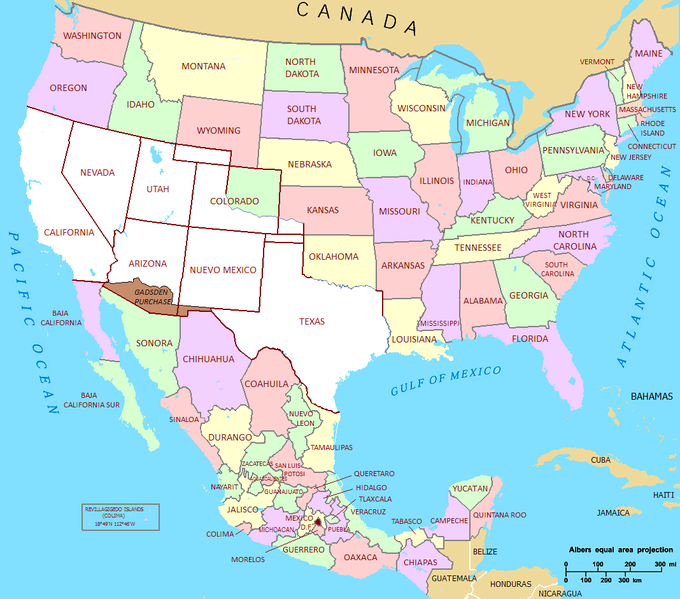
Many Americans barely remember that the southwestern quarter
of the United States used to be the northern half of Mexico. Most of them never
learned that the Mexican War, the conflict that made that happen, was a
straightforward act of piracy. (As far as I know, nobody pretended otherwise at
the time—the United States in those days had not yet fallen into the habit of
dressing up its acts of realpolitik in moralizing cant.)North of the Rio Grande, if the Mexican War
comes to mind at all, it’s usually brushed aside with bland insouciance: we
won, you lost, get over it. South of the Rio Grande? Every man, woman and child
knows all the details of that war, and they have not gotten over it. Fist tap Dale.
guardian | The United Nations general assembly voted overwhelmingly on Thursday to recognise Palestine as a state, in the face of opposition from Israel and the US.
The
193-member assembly voted 138 in favour of the plan, with only nine
against and 41 abstentions. The scale of the defeat represented a strong
and public repudiation for Israel and the US, who find themselves out
of step with the rest of the world.
Thursday's vote marked a diplomatic breakthrough for Palestinian president Mahmoud Abbas and could help his standing after weeks in which he has been sidelined by Palestinian rivals Hamas in the Gaza conflict.
Abbas,
who flew from Ramallah, on the West Bank, to New York to address the
general assembly, said: "The moment has arrived for the world to say
clearly: enough of aggression, settlements and occupation."
By this I don’t mean that we need to go through yet another
round of who-did-what-to-whom rhetoric in the shrill tones of moral absolutism
that pervade the subject these days. There’s a point to discussing ethical
issues surrounding the origins, conduct, and future of the nation-state of
Israel, to be sure, but that discussion is already happening elsewhere, or more
precisely would be happening if most of the potential participants weren’t too
busy shouting past each other.What gets
misplaced in all the noise, though, is that this is not the only discussion
worth having.
In particular, the central theme of this series of posts—the
decline and fall of America’s global empire—has aspects that are easiest to see
from the perspective of one of America’s more vulnerable client states.Those aspects are not particularly moral in
nature, and the stridently self-righteous arguments that fill most current
discussions of Israel’s fate have nothing to contribute here.For the moment, then, I’d like to set aside
squabbles about whether the nation-state of Israel as currently constituted
should survive, and ask instead whether, in the
post-American world of the not too distant future, it can
survive. That’s a much simpler question, and the answer is equally simple:no.
wikipedia | The Mexican–American War, also known as the Mexican War or the U.S.–Mexican War, was an armed conflict between the United States of America and Mexico from 1846 to 1848 in the wake of the 1845 U.S. annexation of Texas, which Mexico considered part of its territory despite the 1836 Texas Revolution.
Combat operations lasted a year and a half, from spring 1846 to fall 1847. American forces quickly occupied New Mexico and California, then invaded parts of Northeastern Mexico and Northwest Mexico; meanwhile, the Pacific Squadron conducted a blockade, and took control of several garrisons on the Pacific coast further south in Baja California. Another American army captured Mexico City, and the war ended in victory of the U.S.
The Treaty of Guadalupe Hidalgo specified the major consequence of the war: the forced Mexican Cession of the territories of Alta California and New Mexico
to the U.S. in exchange for $15 million. In addition, the United States
forgave $3.5 million of debt owed by the Mexican government to U.S.
citizens. Mexico accepted the loss of Texas and thereafter cited the Rio Grande as its national border.
American territorial expansion to the Pacific coast had been the goal of President James K. Polk, the leader of the Democratic Party.[4] However, the war was highly controversial in the U.S., with the Whig Party
and anti-slavery elements strongly opposed. Heavy American casualties
and high monetary cost were also criticized. The political aftermath of
the war raised the slavery issue in the U.S., leading to intense debates
that pointed to civil war; the Compromise of 1850 provided a brief respite.
In Mexico, terminology for the war include (primera) intervención estadounidense en México (United States' (First) Intervention in Mexico), invasión estadounidense a México (The United States' Invasion of Mexico), and guerra del 47 (The War of 1847).
realitysandwich | I recently put my foot in it. I stepped, as they say, on a hornet's nest. All hell broke loose and verbal fury was loosed upon me. Here's what happened.
Some months ago, a chap called Jan Irvin, who runs Gnostic Media, put out a request for funds to help him pursue a project concerned with unveiling a sinister Elite/CIA/NWO conspiracy. Mind you, this was not just any old sinister Elite/CIA/NWO conspiracy. This one involved, allegedly, a vast labyrinthine PSYOPS involving psychedelic mushrooms, Gordon Wasson, Aldous Huxley, The Esalen Institute, Teilhard De Chardin, 2012 eschatology, Alan Watts, Terence McKenna, and all manner of other psychedelic spokesmen and counter-culture luminaries. The gist of it is that the whole hippy psychedelic movement was stage managed by the CIA/Elite/NWO and that the malign manipulations of these ultra-powerful puppet masters stretch back further even than Albert Hofmann's infamous LSD trip bicycle ride (Irvin even thinks Hofmann's bicycle trip was a "fabrication" and "BS"). Thus, Irvin is attempting nothing less than a total rewrite of psychedelic history. Believe me, with everything being bent into an infernal conspiracy shape, it's scary bad trip stuff. Of course, one might simply dismiss all this as the lunatic fringe, yet Irvin is backed and supported by numerous fans and supporters. Indeed, he has already managed to raise 3,000 bucks to fund this latest work.
What originally got me involved were Irvin's insinuations about Gordon Wasson. Recall that Wasson was the ethnomycological scholar who published a groundbreaking article about psilocybin mushrooms in Life magazine in 1957. This article was just as significant as Aldous Huxley's 1954 book The Doors of Perception in sparking the West's interest in psychedelics. Wasson was instrumental in channeling the psilocybin mushroom's mind expanding influence from the backwaters of Mexico to the very heart of the West. If you have ever experienced "magic mushrooms," then you have Gordon Wasson to thank -- at least in part.
Now, the conventional view of Wasson is that there was indeed a connection with dodgy mischief-makers -- in this case the thin-tied, shade-wearing CIA. But this connection was minor and indirect. The conventional view, which has been well documented, is that the CIA got an agent to infiltrate one of Wasson's mushroom hunting trips to Mexico. Here is what I wrote about it in my book The Psilocybin Solution:
"In his book The Search for the ‘Manchurian Candidate,' John Marks tells us of the CIA's covert involvement with our hero Wasson. In its relentless and arguably psychotic search for ever-more effective weaponry, the CIA had, by the 1950s, initiated a massive twenty-five million dollar long-term program called MKULTRA. True to its suspicious-sounding name, Project MKULTRA involved finding chemical and biological materials for use in "mind kontrol" and other psychological unpleasantries. Despite the morally questionable nature of such an unsavory federal project, its dogmatic pursuit meant that it was soon to pick up on rumors of sacred Mexican mushrooms. After learning of Wasson's 1955 experiences with the mushroom, an unscrupulous chemist named James Moore immediately began to work undercover for the conspiratorial agency. Presumably dollars changed hands surreptitiously. At any rate, in 1956, Moore craftily wrote to Wasson informing him that he knew of a foundation willing to finance another Mexican trip in order that he and Wasson bring back some of the legendary mushrooms. Moore innocently claimed that, as a chemist, he simply wanted to study the chemical structure of the mushroom's active constituents. The foundation was the CIA-backed Geschwickter Fund for Medical Research, and they were offering a two-thousand dollar grant. Would Wasson be interested?
Understandably, Wasson took the bait, and so it came to pass that the CIA's secret quest for the sacred mushroom became Subproject 58 of the MKULTRA program, possibly representing the most crass approach to psilocybin to date. It was as if the CIA were lobbing stones at angels. Fittingly, it transpired that the double-dealing Moore was well out of his comfort zone in Mexico and loathed the entire episode. Wasson later recalled that Moore had absolutely no empathy for what was going on. Whereas Wasson was sensitive to the customs of the native Mexican Indians and respectful of their cultural beliefs about the mushroom, Moore was there merely as a CIA pawn.
Once again, all those who were in Wasson's party took part in a mushroom ceremony hosted by the shaman Maria Sabina, though it was Moore alone who had a bad experience. Despite this, Moore was still able to bring back some of the fungi to the United States in the hope of isolating the active ingredient. Thankfully, however, he was beaten in his pharmaceutical pursuit by Roger Heim, an eminent French mycologist and coworker of Wasson, who managed to grow a supply of the mushroom from spore prints that he had taken in Mexico. Heim sent his newly cultivated samples to Albert Hofmann of Sandoz Laboratories in Switzerland, and it was Hofmann, a highly distinguished chemist who had originally synthesized LSD, who, in 1958, first isolated and then named the entheogenic alkaloid within the mushroom. Psilocybin was thus officially born, a name devoid of the weaponry connotations the CIA would invariably have conferred upon the substance had they successfully isolated it first."
The thing to bear in mind is that Wasson did not know that he was being duped by the CIA. It is also worth driving home the point that all these events took place during the paranoid anti-Communist McCarthyism Cold War era of the 1950s, when the CIA had an active interest in mind control drugs for use in espionage. However, things never worked out that well for the CIA, as psilocybin cannot be used as a mind control "truth drug." As users will know, psychedelic drugs are more like de-conditioning agents that can make one challenge orthodoxy and cultural control structures. Indeed, that is probably one principal reason why psilocybin has been demonized and illegalized by the authorities. If you wish to control someone and extract information, or get them to do your dirty espionage work or whatever, then the psilocybin mushroom is not a tool for your arsenal.
gnosticmedia | This episode is a presentation given by me, my first solo show,
titled “Magic Mushrooms and the Psychedelic Revolution: Beginning a New
History” – or “The Secret History of Magic Mushrooms” and is being
released on Sunday, May 13, 2012.
Today is the 55th anniversary since the publication of the May 13, 1957, Life magazine article, Seeking the Magic Mushroom, published by Gordon
Wasson, which is what is largely considered to have launched the
psychedelic revolution.
Today we’re going to toss out the last 55 years of academic history
regarding the discovery of magic mushrooms, the beginnings of the field
of ethnomycology, and this major event in launching the psychedelic
revolution; and we’re going to start a new history – one based on truth
and verifiable facts rather than legends and myths.
Six years in the making, this episode exposes one of the largest coverups in modern academic history – something that may one day be regarded as large as the Piltdown Hoax. We’re going to reveal how the psychedelic revolution was launched by the CFR, CIA and the elite, and how R. Gordon Wasson, the so called discoverer of magic mushrooms, and the founder of the field of ethnomycology, was himself a government asset, a friend of Edward Bernays – the father of propaganda, and is one of the key figures for launching one of the largest mind control operations in history – information never before revealed until today.
And it doesn’t stop there. I’m going to provide information that shows how R. Gordon Wasson may have been one of the key players in the organization of the JFK assassination.
Gordon Wasson nominates George Keenan and John Foster Dulles to the Century Club. Foreign Affairs (CFR) letter head.
Gordon Wasson nominates George Keenan to the Century Club. Foreign Affairs (CFR) letter head.
The entire transcript of this show is posted for download on the page to this episode on the Gnostic Media website so that you can follow along. Also included in the transcript are 70 endnotes leading to the evidence presented herein.
jayhanson | The “bad news” is that “peak oil” marks the beginning of the end of capitalism and market politics because many decades of declining “net energy”
[1]
will result in many
decades of declining economic activity. And since
capitalism can’t run backwards, a new method of
distributing goods and services must be found. The “good news” is that our “market
system” isnotefficient!
Americans could be wasting something like two billion tonnes
(metric tons) of oil equivalent energy each year!!
In order to avoid anarchy, rebellion, civil war and global nuclear
conflict, Americans must force a fundamental change in our
political environment. We can keep the same social structures
and people, but we must totally eliminate corporate-special
interests from our political environment. A careful review of
the progressive assault on laissez faire constitutionalism and
neoclassical economics, from the 1880s through the 1930s,
explains how this can be done legally and without violence.
These early progressives showed how we can save our
country. All that is lacking today is the political will.
The reason that
the reforms listed on this page are so important and must be implemented as the
first in a series of many political reforms is because they are
“constitutional politics”
(politics that changes politics). The modification that I am
proposing would fundamentally alter the nature of politics in
America.
To
achieve America 2.0, we must first separate and isolate our
political system from our economic system so that
government can begin to address and solve societal
problems directly rather than indirectly by throwing money at corporate special interests. The
second step is to retire most working American citizens with an
annuity sufficient for health and happiness, as government begins
to eliminate the current enormous waste of vital resources by
delivering goods, and services like police and fire services are delivered today. This would allow
the vast majority of adults to stay at home with their families but still receive
the what they need to enjoy life—while greatly reducing natural resource consumption.
These reforms are based on the biological principle that people respond
to environmental cues; change the
cues and one also will change the
behavior. If the voting public and political decision-makers only
receive cues designed to “mitigate” (make less severe) our crisis, then all choices
they make will be aimed at mitigating that crisis. The choices made by elected officials
will be, by best calculations, “good” for the public. Corporations will become
thepublic
utilitiesthat they were
before 1860.
hopedance | People say that I am hard core about some of this stuff but I know
because I have been to Davos, and I’ve sat with Bill Clinton and I’ve
sat with Bill Gates and I’ve sat with Tony Blair and I’ve sat with Nancy
Pelosi. I’ve sat with all these people who we think are in charge, and
they don’t know what to do. Take that in: they don’t know what to do!
You think you’re scared? You think you’re terrified? They have the
Pentagon’s intelligence, they have every major corporation’s input;
Shell Oil that has done this survey and study around the peak oil
problem. You think we’ve got to get on the Internet and say, “Peak oil!”
because the system doesn’t know about it? They know, and they don’t
know what to do. And they are terrified that if they do anything they’ll
loose their positions. So they keep juggling chickens and chainsaws and
hope it works out just like most of us everyday at work. That’s real,
that’s real.
And so I’m hard on people, I try to tell a few jokes, you know, to make
it go down easier, but I’m hard on people. But I will tell you why I am
hard on people. This is real ball, this is the last chance, this is it.
I’m not telling you that; You go to places
like I go, and the Pentagon will tell you that. This is real ball and
people, for whatever reason, need sometimes a little encouragement. You
walk up to that limit of yourself and you want that limit, ‘cause that
wasn’t your limit yesterday and you go Whooo! I made it, now let me
start telling everybody else what to do. But the goal is over there and
every step hurts and every step is challenging and every step is
humbling but every step has to be taken or we’re not going to be here.
automaticearth | I’ve said this before, but just in case: I have very little
appreciation and/or patience for the field of economics and its
practitioners. Labeling it "the dismal science" does it far too much
honor in my view, since it's not a science at all. No more than
psychology is, or anthropology, or beer brewing. Nothing that can't
stand the falsifiability
test Karl Popper left us is a science. Falsifiability is the dividing
line between the real thing and a whole wide range of mere pretenders.
That said, if there's one economist today (OK, maybe a few more) who I
would be tempted to make an exception for, simply because he's made it
his goal to at least approach economics from a solid Popper-like
viewpoint, it's Steve Keen and his rigorous math. It's therefore no
coincidence that Steve is both a good friend of The Automatic Earth, and
controversial.
Since about WWII at the latest, a certain group of economists, think
Chicago, have tried their stinking best to best recognized as
scientists, an attitude that culminated in the launch of the faux Nobel
Prize in 1968. They produce serious looking formulas and graphs up the
wazoo, which the media reproduce alongside interviews replete with lofty
terminology, and the general public has fallen for the trick:
ridiculous though it may be, the field has acquired a scientific aura.
Why did and do they want this? Because trillions of dollars worth of
policies based on their ideas gain critical respectability if they can
make themselves look credible and in control. So it's no surprise that
the entire effort has been carried by the support of virtually unlimited
amounts of money from the finance industry, as well as 99% of the
ruling political classes.
That's how Milton Friedman and his Chicago School became so prominent.
Nothing to do with science, let alone falsifiability. Just money.
Credibility for sale. If you're a politician, and you manage to get make
people, your voters, believe that there's a scientific underpinning to
whatever it is you want to do economically, you got it made. And there
are plenty of rich people and institutions willing to finance that fake
science, since it serves their purposes.
This is to a large extent why we are where we are: stuck in a long,
long crisis. If you take a simple belief system, phrase its beliefs in
difficult looking formulas and graphs, and thus dress it in the veneer
of some kind of a scienctific method, you can push societies to the
brink of financial disaster, and it makes no difference whether you're
wrong 9 times out of 10. You just tell them that it's all very hard to
understand, and you set up an education system that teaches only the
models you want it to teach. This way you create the idea that things
are knowable while they are not, and all students have to do is get a
degree and be the next high-priests. Any religion that poses as a
science is dangerous, and economics more so than all others, because it
can turn entire societies into poorhouses.
cnn | If there's been one consistent thread running through the U.S.
economic story since 2008, it's been the steady drumbeat of gloom.
Outright recession or
sub-standard growth, stubbornly high unemployment and fiscal crises have
been the topics du jour when it comes to the world's biggest economy.
But now an unlikely
champion for U.S. growth under the Obama administration has emerged -- a
former adviser to a Republican Party presidential candidate and Harvard
history professor, Niall Ferguson, who says America could actually be
heading toward a new economic "golden age."
And it has nothing to do with Washington and everything to do with energy.
Ferguson, who is also an
author and commentator, believes the production of natural gas and oil
from shale formations via a process known as "fracking" -- forcing open
rocks by injecting fluid into cracks -- will be a game changer.
"This is an absolutely
huge phenomenon with massive implications for the U.S. economy, and I
think most people are still a little bit slow to appreciate just how big
this is," he said in Hong Kong this week.
readersupportednews | Luckily for the populations and societies that will be affected by the agreement, there are public research organizations and alternative media outlets campaigning against it - and they've even released several
leaks of draft agreement chapters. From these leaks, which are not
covered by mainstream corporate-controlled news outlets, we are able to
get a better understanding of what the Trans-Pacific Partnership
actually encompasses.
For example, public interest groups have been warning
that the TPP could result in millions of lost jobs. As a letter from
Congress to United States Trade Representative Ron Kirk stated, the TPP
"will create binding policies on future Congresses in numerous areas,"
including "those related to labor, patent and copyright, land use, food,
agriculture and product standards, natural resources, the environment,
professional licensing, state-owned enterprises and government
procurement policies, as well as financial, healthcare, energy,
telecommunications and other service sector regulations."
In other words, as promised, the TPP goes far beyond "trade."
Dubbed by many as "NAFTA on steroids" and a "corporate
coup," only two of the TPP's 26 chapters actually have anything to do
with trade. Most of it grants far-reaching new rights and privileges to
corporations, specifically related to intellectual property rights
(copyright and patent laws), as well as constraints on government
regulations.
The leaked documents revealed that the Obama
administration "intends to bestow radical new political powers upon
multinational corporations," as Obama and Kirk have emerged as strong
advocates "for policies that environmental activists, financial reform
advocates and labor unions have long rejected for eroding key
protections currently in domestic laws."
In other words, the already ineffective and mostly
toothless environmental, financial, and labor regulations that exist are
unacceptable to the Obama administration and the 600 corporations
aligned with the TPP who are giving him his orders.
The agreement stipulates that foreign corporations
operating in the United States would no longer be subject to domestic
U.S. laws regarding protections for the environment, finance or labor
rights, and could appeal to an "international tribunal" which would be
given the power to overrule American law and impose sanctions on the
U.S. for violating the new "rights" of corporations.
thedailysquib | In a remarkable admission by former Nixon era Secretary of State,
Henry Kissinger, reveals what is happening at the moment in the world
and particularly the Middle East. [ACCURATE SATIRE]
Speaking from his luxurious Manhattan apartment, the elder statesman,
who will be 89 in May, is all too forward with his analysis of the
current situation in the world forum of Geo-politics and economics.
“The United States is bating China and Russia, and the final nail in
the coffin will be Iran, which is, of course, the main target of Israel.
We have allowed China to increase their military strength and Russia to
recover from Sovietization, to give them a false sense of bravado, this
will create an all together faster demise for them. We’re like the
sharp shooter daring the noob to pick up the gun, and when they try,
it’s bang bang. The coming war will will be so severe that only one
superpower can win, and that’s us folks. This is why the EU is in such a
hurry to form a complete superstate because they know what is coming,
and to survive, Europe will have to be one whole cohesive state. Their
urgency tells me that they know full well that the big showdown is upon
us. O how I have dreamed of this delightful moment.”
“Control oil and you control nations; control food and you control the people.”
Mr Kissinger then added: “If you are an ordinary person, then you can
prepare yourself for war by moving to the countryside and building a
farm, but you must take guns with you, as the hordes of starving will be
roaming. Also, even though the elite will have their safe havens and
specialist shelters, they must be just as careful during the war as the
ordinary civilians, because their shelters can still be compromised.”
After pausing for a few minutes to collect his thoughts, Mr Kissinger, carried on:
“We told the military that we would have to take over seven Middle
Eastern countries for their resources and they have nearly completed
their job. We all know what I think of the military, but I have to say
they have obeyed orders superfluously this time. It is just that last
stepping stone, i.e. Iran which will really tip the balance. How long
can China and Russia stand by and watch America clean up? The great
Russian bear and Chinese sickle will be roused from their slumber and
this is when Israel will have to fight with all its might and weapons to
kill as many Arabs as it can. Hopefully if all goes well, half the
Middle East will be Israeli. Our young have been trained well for the
last decade or so on combat console games, it was interesting to see the
new Call of Duty Modern Warfare 3 game, which mirrors exactly what is
to come in the near future with its predictive programming. Our young,
in the US and West, are prepared because they have been programmed to be
good soldiers, cannon fodder, and when they will be ordered to go out
into the streets and fight those crazy Chins and Russkies, they will
obey their orders. Out of the ashes we shall build a new society, there
will only be one superpower left, and that one will be the global
government that wins. Don’t forget, the United States, has the best
weapons, we have stuff that no other nation has, and we will introduce
those weapons to the world when the time is right.”
End of interview. Our reporter is ushered out of the room by Kissinger’s minder.
columbia | The Center on Global Legal Transformation at Columbia University in New
York is launching a call for proposals by junior researchers on
governing scarce, yet essential goods. Selected proposals shall be
presented at panel sessions at a conference held in New York on 20-21
June 2013. The research project is coordinated by Prof. Katharina
Pistor, the Director of the Center on Global Legal Transformation, and
Prof. Olivier De Schutter, the United Nations Special Rapporteur on the
right to food.
A number of factors have led to dramatically increased pressure on
land and the essential resources it harbors: population growth and a
corresponding rise in demand for agricultural and other commodities;
competing uses of land between different forms of agriculture, resource
extraction, large-scale industrial projects and urban sprawl;
environmental degradation from climate change and unsustainable
practices; and trade and investment liberalization, among others. As a
result, water, food and shelter are increasingly considered scarce and
subjected to commercial pressures that make them inaccessible to many.
Private property rights regimes have traditionally been considered the
most effective institutional arrangement to allocate scarce goods and
combat what has been termed the “tragedy of the commons” – the
depletion of scarce common resources by actors who disregard the
carrying capacity of the land and bear no costs for their actions.
Individual property rights regimes lead to allocation of land to the
highest bidder, who is presumed to put the land to its most efficient
use. But conversion to private property regimes has also resulted in
widespread displacement of small holders and indigenous people and the
exclusion of many others from access to resources essential to their
livelihoods.
Two well-studied alternatives to private property rights are
collective governance by local authorities and centralized control.
However, neither fully addresses the problems of scarce, essential
goods. Collective governance is limited by a community’s ability to
manage collective action problems, but the governance issues we are
facing are those of a heterogeneous world with high social mobility
and rapidly changing social norms. Similarly, centralized control
depends on the authority and wisdom of the central decision-maker, who
may lack local knowledge and accountability. Political voice might
address problems of accountability, but how to organize voice in a
global world remains an open question.
Proposals should suggest models for governing essential, scarce
resources. They can be qualitative or quantitative; make use of
empirical data and field research or suggest a new theoretical
approach. They should address if and how the following three normative
goals
(the basis of the triangle to which the title refers) for managing scarce, essential goods can be realized:
• equity (universal access to those resources that are essential for human life);
• efficiency (in managing scarce essential goods and minimizing waste); and
• sustainability (arrangements that do not unduly interfere with future productivity or availability of essentials).
Celebrating 113 years of Mama Rosa McCauley Parks
-
*February 4, 1913 -- February 4, 2026*
*Some notes: The life of the courageous activist Mama Rosa McCauley Parks*
Mama Rosa's grandfather Sylvester Ed...
Monsters are people too
-
Comet 3I/Atlas is on its way out on a hyberbolic course to, I don't know
where. I do know that 1I/Oumuamua is heading for the constellation Pegasus,
and ...
Remembering the Spanish Civil War
-
This year marks the 90th anniversary of the launch of the Spanish Civil
War, an epoch-defining event for the international working class, whose
close study...
Return of the Magi
-
Lately, the Holy Spirit is in the air. Emotional energy is swirling out of
the earth.I can feel it bubbling up, effervescing and evaporating around
us, s...
Covid-19 Preys Upon The Elderly And The Obese
-
sciencemag | This spring, after days of flulike symptoms and fever, a man
arrived at the emergency room at the University of Vermont Medical Center.
He ...
-
(Damn, has it been THAT long? I don't even know which prompts to use to
post this)
SeeNew
Can't get on your site because you've gone 'invite only'?
Man, ...
First Member of Chumph Cartel Goes to Jail
-
With the profligate racism of the Chumph Cartel, I don’t imagine any of
them convicted and jailed is going to do too much better than your run of
the mill ...