Monday, December 19, 2011

as above, so below: the worldview of Lynn Margulis

realitysandwich | "In the arithmetic of life, One is always Many."

Lynn Margulis, biologist and Distinguished Professor of Geosciences, composed a grand and powerful view of the living and the non-living. Integrating the work of obscure Russian scientists, DNA pulled from cell organelles, computer-generated daisies, and the hindguts of termites, her vision was wider in scope and more profound in depth than any other coherent scientific world view. At the time of her death on November 22nd, 2011, it is a vision that remains misunderstood and misconstrued by many scientists.

Much of this view came from her uncanny ability to first lean forward and see the smallest inhabitants of the Earth; to hover there, and then to leap back at the speed of thought to conceptualize the entire planet. Lean forward, then stand back. This inner movement, this seeing from soil to space, marked a unique scientific endeavor.

This perspective was earned only through walking through diverse areas of study -- geology, genetics, biology, chemistry, literature, embryology, paleontology. Those fields, are sometimes separated by an untraversed distance at universities: they are housed in separate buildings which may as well be different worlds. In Margulis, they found agreement and discussion with each other; they were reconnected, just as they are intrinsically connected in nature.

This journey led her to emphasize in all her scientific work two phenomena -- the fusing of distinct beings into a single being: symbiosis; and the interaction of organisms and their environments to create relational "loops" that led to regulation of many Earth systems: Gaia Theory.

Taken separately these concepts have the ability to redefine, respectively, how we understand organisms and the environment.

Taken together, they can redefine our consciousness.

stuporstitions off the table of rational criticism?


Video - The four horsemen of the anti-apocalypse.

HuffPo | Richard Dawkins has challenged David Cameron’s assertion that the UK needs to return to Christian ideals, calling the Bible “an appalling moral compass”.

On Friday, in a speech to celebrate the 400th birthday of the King James Bible, the prime minister said the New Testament had helped give our country "a set of values and morals which make Britain what it is today,” adding that we should "actively stand up and defend" these Christian values.

However, speaking to Sky News, Dawkins, a renowned, scientist, author and atheist, said that Cameron is wrong to suggest the Christian Bible is going to “help us with our morals and our social wellbeing.”

“The Christian bible will help us with our literature,” said the author of The God Delusion. “It should therefore be taught in schools in literature classes, but it’s not going to help us with our morals, far from it.”

“The bible is a terrible moral compass, if you think about it. Of course, you can cherry pick the verses that you like, which means the verses that happen to coincide with our modern secular consensus, but then you need to have a rational for leaving out the ones that say stone people to death if they break the Sabbath, or if they commit adultery. It’s an appalling moral compass.”

The Oxford professor reasoned that the ideas within the new testament - of crucifixion, of redemption, of a scapegoat who is put to death for the sins of all mankind – makes it a terrible social guide. “The sooner we leave Christianity and all other religions behind, from a moral point of view the better,” he said.

In an open letter to Cameron in the December edition of the New Statesmen, Dawkins questioned the prime minister's faith and that of most politicians.

"If you are like several government ministers - of all three parties - to whom I have spoken, you are not really a religious believer yourself," he wrote. "Several ministers and ex-ministers of education whom I have met, both Conservative and Labour, don't believe in God but, to quote the philosopher Daniel Dennett, they do "believe in belief".

Speaking on Saturday, Dawkins continued on the offensive, charging Cameron with falling into a trap by calling the UK a Christian country, but concluding that it is in a "terrible moral state".

"It seems like a paradox," he quipped. "If we are in a state of moral collapse, I don’t think Christianity or Islam is going to help. What we need is a better moral sense, which we get from moral philosophy. It’s absolute nonsense to say we need faith in order to be good.”

On Friday, Professor Dawkins' fellow atheist campaigner Christopher Hitchens died aged 62, following a battle with cancer. Along with Dennett and neuroscientist Sam Harris, Hitchens and Dawkins became known as The Four Horsemen of the Anti-Apocalypse, a group of atheist thinkers and writers offering, as Hitchens put it, "a push back to religious tyranny".

Sunday, December 18, 2011

song presentation induces gene expression in the songbird forebrain

PNAS | We investigated the participation of genomic regulatory events in the response of the songbird brain to a natural auditory stimulus of known physiological and behavioral relevance, birdsong. Using in situ hybridization, we detected a rapid increase in forebrain mRNA levels of an immediate-early gene encoding a transcriptional regulator (ZENK; also known as zif-268, egr-1, NGFI-A, or Krox-24) following presentation of tape-recorded songs to canaries (Serinus canaria) and zebra finches (Taeniopygia guttata). ZENK induction is most marked in a forebrain region believed to participate in auditory processing and is greatest when birds hear the song of their own species. A significantly lower level of induction occurs when birds hear the song of a different species and no induction is seen after exposure to tone bursts. Cellular analysis indicates that the level of induction reflects the proportion of neurons recruited to express the gene. These results suggest a role for genomic responses in neural processes linked to song pattern recognition, discrimination, or the formation of auditory associations.

songbird genome reveals new insights...,


Video - Learning and reproducing song has direct effects on finch genome.

WUSTL | Nearly all animals make sounds instinctively, but baby songbirds learn to sing in virtually the same way human infants learn to speak: by imitating a parent.

Now, an international team of scientists (listed below), led by Washington University School of Medicine in St. Louis, has decoded the genome of a songbird — the Australian zebra finch — to reveal intriguing clues about the genetic basis and evolution of vocal learning.

An analysis of the genome, published April 1 in the journal Nature, suggests a large part of the bird’s DNA is actively engaged by hearing and singing songs. The simple melodies last only a few seconds but are rooted in tremendous genetic complexity, the scientists report.

The new work provides insights to help scientists understand how humans learn language. It also sets the stage for future studies that could help identify the genetic and molecular origins of speech disorders, such as those related to autism, stroke, stuttering and Parkinson’s disease, the researchers say.

“Now we can look deep into the genome, not just at the genes involved in vocal learning, but at the complex ways in which they are regulated,” says senior author Richard K. Wilson, PhD, director of Washington University’s Genome Center. “There are layers and layers of complexity that we’re just beginning to see. This information provides clues to how vocal learning occurs at the most basic molecular level in birds and in people.”

Among songbirds, singing is almost exclusively a male activity: Males serenade females with love songs to attract a mate. As babies, they learn to sing by listening to their fathers. At first, a young bird “babbles,” but with practice learns to closely imitate his father’s song. Once the bird has mastered the family song, he will sing it for the rest of his life and pass it on to the next generation.

Aside from humans and songbirds, other animals known to communicate by vocal learning include bats, whales, elephants, hummingbirds and parrots. Because zebra finches learn to sing in a predictable way and many of their genes are conserved in humans, they are an important model for understanding vocal learning in humans.

the genome of a songbird..,


Video - Zebra Finch pair bathing

Nature | The zebra finch is an important model organism in several fields1, with unique relevance to human neuroscience. Like other songbirds, the zebra finch communicates through learned vocalizations, an ability otherwise documented only in humans and a few other animals and lacking in the chicken—the only bird with a sequenced genome until now. Here we present a structural, functional and comparative analysis of the genome sequence of the zebra finch (Taeniopygia guttata), which is a songbird belonging to the large avian order Passeriformes. We find that the overall structures of the genomes are similar in zebra finch and chicken, but they differ in many intrachromosomal rearrangements, lineage-specific gene family expansions, the number of long-terminal-repeat-based retrotransposons, and mechanisms of sex chromosome dosage compensation. We show that song behaviour engages gene regulatory networks in the zebra finch brain, altering the expression of long non-coding RNAs, microRNAs, transcription factors and their targets. We also show evidence for rapid molecular evolution in the songbird lineage of genes that are regulated during song experience. These results indicate an active involvement of the genome in neural processes underlying vocal communication and identify potential genetic substrates for the evolution and regulation of this behaviour.

As in all songbirds, singing in the zebra finch is under the control of a discrete neural circuit that includes several dedicated centres in the forebrain termed the ‘song control nuclei’. Neurophysiological studies in these nuclei during singing have yielded some of the most illuminating examples of how vocalizations are encoded in the motor system of a vertebrate brain. In the zebra finch, these nuclei develop more fully in the male than in the female (who does not sing), and they change markedly in size and organization during the juvenile period when the male learns to sing. Analysis of the underlying cellular mechanisms of plasticity led to the unexpected discovery of neurogenesis in adult songbirds and life-long replacement of neurons. Sex steroid hormones also contribute to songbird neural plasticity, in part by influencing the survival of new neurons. Some of these effects are probably caused by oestrogen and/or testosterone synthesized within the brain itself rather than just in the gonads.

Song perception and memory also involve auditory centres that are present in both sexes, and the mere experience of hearing a song activates gene expression in these auditory centres. The gene response itself changes as a song becomes familiar over the course of a day or as the context of the experience changes. The act of singing induces gene expression in the male song control nuclei, and these patterns of gene activation also vary with the context of the experience. The function of this changing genomic activity is not yet understood, but it may support or suppress learning and help integrate information over periods of hours to days.

neurobiology of vocal communication

Duke | Dr. Jarvis' laboratory studies the neurobiology of vocal communication. Emphasis is placed on the molecular pathways involved in the perception and production of learned vocalizations. We use an integrative approach that combines behavioral, anatomical and molecular biological techniques. The main animal model used is songbirds, one of the few vertebrate groups that evolved the ability to learn their vocalizations. The generality of the discoveries is tested in other vocal learning orders, such as parrots and hummingbirds, as well as non-vocal learners, such as pigeons and non-human primates. Some of the questions require performing behavior/molecular biology experiments in freely ranging animals, such as hummingbirds in the tropical forests of Brazil. Recent results show that in songbirds, parrots and hummingbirds, perception and production of song are accompanied by anatomically distinct patterns of gene expression. All three groups were found to exhibit vocally-activated gene expression in forebrain nuclei that are in almost identical brain locations. These structures for vocal learning and production are thought to have evolved independently within the past 70 million years, since they are absent from interrelated non-vocal learning orders. One structure, Area X of the basal ganglia's striatum in songbirds, shows large differential gene activation depending on the social context in which the bird sings. These differences may reflect a semantic content of song, perhaps similar to human language. Future work will address: 1) the function of the basal ganglia in vocal communication; 2) the evolution of vocal communication; 3) the molecules responsible for the formation of vocal/auditory memories; 4) the links between electrophysiological activity and gene activation, and 5) the relationships between songbirds vocalizations and human language. The overall goal of the research is to advance our knowledge of the neural mechanisms for vocal learning as well as basic mechanisms of brain function. These goals will be further achieved by combined collaborative efforts with the laboratories of Drs. Mooney and Nowicki at Duke University, who study respectively behavior and electrophysiological aspects of vocal communication.

Saturday, December 17, 2011

open-source tactical evolution

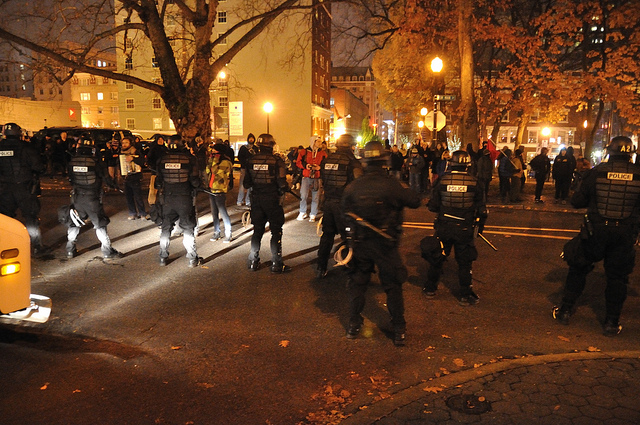
PortlandOccupier | The Portland Occupation stumbled upon a tactical innovation regarding occupying public spaces. This evolution in tactics was spontaneous, and went unreported in the media. On December 3rd, we took a park and were driven out of it by riot police; that much made the news. What the media didn’t report is that we re-took the park later that same evening, and the police realized that it would be senseless to attempt to clear it again, so they packed up their military weaponry and left. Occupy Portland has developed a tactic to keep a park when the police decide to enforce an eviction.

The tactical evolution that evolved relies on two military tactics that are thousands of years old- the tactical superiority of light infantry over heavy infantry, and the tactical superiority of the retreat over the advance.

Heavy infantry is a group of soldiers marching in a column or a phalanx that are armed with weaponry for hand to hand, close quarters combat. Heavy infantry function as a unit, not individual soldiers. Their operational strength is dependent upon maintaining the integrity of that unit. Riot police are heavy infantry. They will always form a line and advance as a unit.

Light infantry are armed with ranged weapons for assault from a distance. Light infantry operate as individuals that are free to roam at a distance and fire upon the opposition with ranged weapons. Cops firing tear gas, rubber bullets, water cannons, bean bag rounds, etc. are light infantry. They remain to the rear of the phalanx of riot cops (heavy infantry) and depend upon the riot cops maintaining a secure front and flanks to provide them a secure area of operations.

Protesters function fluidly as either light or heavy infantry. Their mass, because it is lacking in organization, functions as a phalanx, having no flanks or rear. Lack of organization gives that mass the option of moving in whichever direction it feels like, at any given time. If protesters all move to the right, the entire group and supporting officers has to shift to that flank. While the protesters can retreat quickly, the police can only advance as fast as their light infantry, supporting staff can follow and maintain a secure rear (if the mass of protesters were to run to the next block over and quickly loop around to the rear of the riot cops, the organization of the cops would be reduced to chaos). If that police cannot assemble with a front to oppose protesters, they are useless. The integrity of that tactic is compromised, and unable to maintain internal organization, the cops revert to individuals engaging in acts of brutality, which eventually winds up on the evening news and they lose the battle regardless of whether they clear the park or not.

Because of the lack of organization in a crowd of protesters, light infantry cops firing tear gas, etc. has little effect because it just serves to disorganize a group that relies upon disorganization in the first place. All it really does is disorganize the riot cops, who then resort to brutality.

The lack of weaponry on the part of the protesters grants them the luxury of opposing riot cops at close quarters, or remaining at long range in a refusal to engage the heavy infantry riot police at all. They have the advantage of the retreat, they can quickly move away, or in any direction, and the heavy infantry riot cops lack the swiftness to respond.

So far, all the occupations have, in a grave tactical error, agreed to engage the riot cops when they march in to clear parks. This has been a show of bravado that has the tactical benefits of providing media coverage of the brutal methods of police and the benefit of draining the resources of the oppressor by forcing them to incur the expense of arresting and prosecuting people for trivial offenses. Fist tap Dale.

three myths about the detention bill


Video - Jerrold Nadler and Keith Olbermann discuss NDAA.

Salon | Condemnation of President Obama is intense, and growing, as a result of his announced intent to sign into law the indefinite detention bill embedded in the 2012 National Defense Authorization Act (NDAA). These denunciations come not only from the nation’s leading civil liberties and human rights groups, but also from the pro-Obama New York Times Editorial Page, which today has a scathing Editorial describing Obama’s stance as “a complete political cave-in, one that reinforces the impression of a fumbling presidency” and lamenting that “the bill has so many other objectionable aspects that we can’t go into them all,” as well as from vocal Obama supporters such as Andrew Sullivan, who wrote yesterday that this episode is “another sign that his campaign pledge to be vigilant about civil liberties in the war on terror was a lie.” In damage control mode, White-House-allied groups are now trying to ride to the rescue with attacks on the ACLU and dismissive belittling of the bill’s dangers.

For that reason, it is very worthwhile to briefly examine — and debunk — the three principal myths being spread by supporters of this bill, and to do so very simply: by citing the relevant provisions of the bill, as well as the relevant passages of the original 2001 Authorization to Use Military Force (AUMF), so that everyone can judge for themselves what this bill actually includes (this is all above and beyond the evidence I assembled in writing about this bill yesterday):

Friday, December 16, 2011

the scandal of alabama poor cut off from water

BBC | Banks stand to lose millions of dollars in debt repayments if the biggest municipal bankruptcy in American history is allowed to proceed.

But the real victims of the financial collapse in the US state of Alabama's most populous county are its poorest residents - forced to bathe in bottled water and use portable toilets after being cut off from the mains supply.

And there is widespread anger in Jefferson County that swingeing sewerage rate hikes could have been avoided but for the greed, corruption and incompetence of local politicians, government officials and Wall Street financiers.

Tammy Lucas is the human face of a financial and political scandal that has brought one of the most deprived communities in America's south to the point of what some local people believe is collapse.

She says: "If the sewer bill gets higher, my light might get cut off and if I try to catch up the light, my water might get cut off. So we're in between. We can't make it like this."

Mrs Lucas's monthly sewerage rate bills - the amount levied by the county to flush away waste and provide water for baths and showers - has quadrupled in the past 15 years. She says it is currently running at $150 (£97) a month, which leaves little left out of her $600 social security cheque for food and electricity.

"We need to keep the water running because we're women," she says. "We need to take baths. I try to pay the sewer bill and the water bill together and then what little I got left I try to put on my lights. I got to have lights."

effective and sustainable public education for these children will revolutionize all public education

USAToday | One in 45 children in the USA — 1.6 million children — were living on the street, in homeless shelters or motels, or doubled up with other families last year, according to the National Center on Family Homelessness.

The numbers represent a 33% increase from 2007, when there were 1.2 million homeless children, according to a report the center is releasing Tuesday.

"This is an absurdly high number," says Ellen Bassuk, president of the center. "What we have new in 2010 is the effects of a man-made disaster caused by the economic recession. … We are seeing extreme budget cuts, foreclosures and a lack of affordable housing."

The report paints a bleaker picture than one by the Department of Housing and Urban Development, which nonetheless reported a 28% increase in homeless families, from 131,000 in 2007 to 168,000 in 2010.

Dennis Culhane, a University of Pennsylvania professor of social policy, says HUD's numbers are much smaller because they count only families living on the street or in emergency shelters.

"It is a narrower standard of homelessness," he says. However, Culhane says, "the bottom line is we've shown an increase in the percentage of homeless families."

The study, a state-by-state report card, looks at four years' worth of Education Department data. It assesses how homeless children fare based on factors including the state's wages, poverty and foreclosure rates, cost of housing and its programs for homeless families.

The states where homeless children fare the best are Vermont, Minnesota, Nebraska, North Dakota and Maine.

It finds the worst states for homeless children are Southern states where poverty is high, including Alabama, Mississippi and Arkansas, and states decimated by foreclosures and job losses, such as Arizona, California and Nevada.

the face of poverty in america

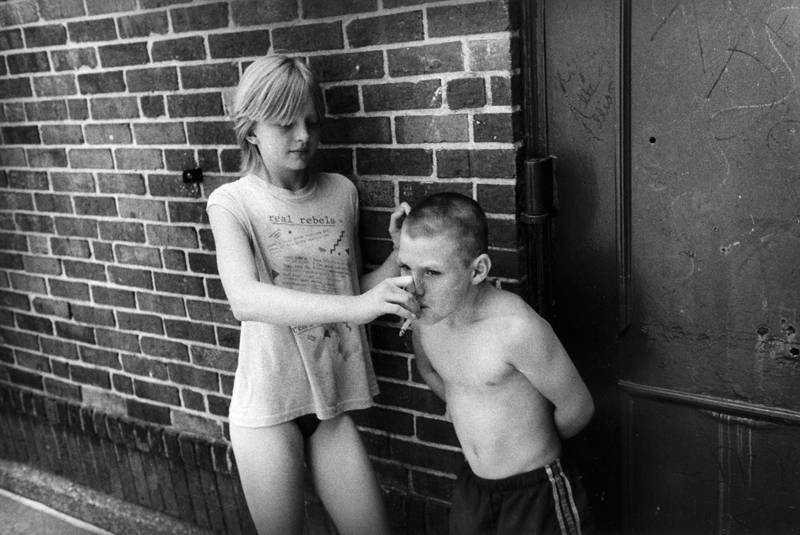
USAToday | Eleven-year-old Sarai Camacho of Donna, Texas, tears up when she tells why her mother let go the baby sitter for her and her younger sister this summer. It's the same reason her father brought the family to Indiana so he could work the melon fields for a season.

"Last December, my mom didn't get paid for one month, and we started having problems," said Sarai, at Oaktown First Christian Church, which hosted free classes for children of migrant workers. "My mom said for us to come here (to the church) so she doesn't have to give money to the baby sitter because we're running out of it."

For churches, it's become an all-too-familiar sight: working families that aren't able to make ends meet. As household resources get tapped out, churches are often the first to see the changing face of poverty — and it's often a young one.

"We're seeing younger families come in," said Ken Campbell, food coordinator for Lazarus House, a Christian ministry to help the needy in Lawrence, Mass. "They're coming forward because one member in the household got laid off or had their hours cut, and now they're just barely making it."

Across the United States, rising numbers of children are coping with the stressors of economic hardship:

•Child poverty rates reached 22 percent in 2010, up from 20.7 percent in 2009 and 16.2 percent in 2000, according to a September report from the U.S. Census Bureau. Between 2000 and 2009, the number of children living in poverty increased from 13.1 million to 15.5 million, according to the Annie E. Casey Foundation.

•The Casey Foundation also reported that 4 percent of American children had been affected by home foreclosures since 2007, and 11 percent had at least one unemployed parent in 2010.

Thursday, December 15, 2011

in response to Occupy - obama suspends habeas corpus and posse comitatus

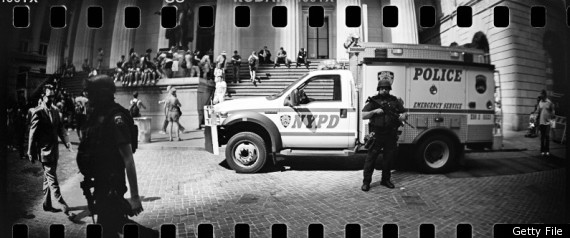
truthout | A lot has been written recently about the recent militarization of US police forces. The impression is inescapable in an atmosphere saturated with imagery of Occupy protesters being bullied by domestic police who wield militarized weaponry, clad in what used to be thought of as riot gear, but is now a de rigueur feature of official responses to things that do not resemble nor threaten to become riots. It appears this militarization comes partly courtesy unprecedented and legally dubious collaboration between civilian police and the CIA. According to The Huffington Post:
Since the Sept. 11 terrorist attacks, the New York Police Department has become one of the nation's most aggressive domestic intelligence agencies, targeting ethnic communities in ways that would run afoul of civil liberties rules if practiced by the federal government, an Associated Press investigation has found.

These operations have benefited from unprecedented help from the CIA, a partnership that has blurred the line between foreign and domestic spying.

The department has dispatched undercover officers, known as "rakers," into minority neighborhoods as part of a human mapping program, according to officials directly involved in the program. They've monitored daily life in bookstores, bars, cafes and nightclubs. Police have also used informants, known as "mosque crawlers," to monitor sermons, even when there's no evidence of wrongdoing.
So much of what cops have been training to confront for the last decade has been the threat of low-scale, low-intel urban terror plots that they have brandished that training on nonviolent civilians who constitute a PR threat to the banks, not an explosive one.

And it's not just the rank-and-file police officers either. Police forces have even brought out the terrorism experts to survey and harass Occupy Wall Street. As I reported the day of the protesters' eviction from Zuccotti Park:
In the smallest hours of the morning, with no warning or apparent provocation, hundreds of New York Police Department (NYPD) officers, some from the department's counterterrorism unit, many in riot gear, demolished thousands of dollars of private property, including a 5,000-volume library; beat and arrested a large number of peacefully protesting citizens, including credentialed journalists and democratically elected public officials; and in the process, violated not just the First and Fourth Amendments to the US Constitution, a document they are sworn to uphold, but also a court injunction.
News broke this week that City of London police distributed a letter cautioning businesses to beware of terrorism, listing Occupy LSX alongside al-Qaeda as a threat. It is outrageous to equate nonviolent, politically principled civil disobedience with violent nihilistic extremism, an injustice not least to the families of victims of actual terrorism. But the issue here goes beyond that outrage; there is actual material danger to dissidents if the occupiers-as-terrorists mythos grows too much.

As the world rises up against economic injustice, Truthout brings you the latest news and analysis, free of corporate influence. Help support this work with a tax-deductible donation today.

In passing the 2012 National Defense Authorization Act (NDAA), Congress, in the words of the American Civil Liberties Union (ACLU), has just voted to, "authorize the military to go literally anywhere in the world to imprison civilians - even American citizens in the United States itself - without charge or trial." The ACLU calls it what it is: "Prison based on suspicion alone." The vote on the Udall Amendment, which would have forbidden the indefinite detention of US civilians, was defeated by a vote of 60-38 in the Senate, including all but three of the senators from the party that's constantly pretending to be anxious over an intrusively big government.

city of london labels Occupy Movement a terrorist organization

Guardian | Police have angered Occupy London activists after listing the movement among terrorist groups in an advisory notice sent to the business community in the City.

The document issued by City of London police, headed "Terrorism/extremism update for the City of London business community", included a detailed account of recent and upcoming Occupy London activities and was sent to "trusted partners" in the area.

The document, dated 2 December, which was passed on to Occupy London's Finsbury square encampment over the weekend by a local business owner, gave an update on foreign terrorist activities including that of Farc in Columbia, al-Qaida in Pakistan and the outcome of a trial into the Minsk bombing in Belarus.

Below that, a section headed "Domestic" was dedicated wholly to the activities of the Occupy encampments and singled out anti-capitalists as a cause for concern.

"As the worldwide Occupy movement shows no sign of abating, it is likely that activists aspire to identify other locations to occupy, especially those they identify with capitalism."

The document stated that police had "received a number of hostile reconnaissance reports concerning individuals who would fit the anti-capitalist profile", and asked businesses to be vigilant for further sign of occupation activity.

It also said that the number of protesters present at the camp remained "fairly consistent" but that demonstrations originating from the camp had "decreased and lacked the support and momentum of earlier actions".

The City of London police have as yet been unwilling to reveal how many businesses were included on the mailing but their list is thought to include large multinationals and banks.

A City of London police source admitted that the "title of the document was not helpful" and denied that it labelled or intended to label the Occupy movement as equivalent to al-Qaida.

An activist from the camp called the document "vulgar" and said Occupy London had met Church of England representatives many times in the past and were meeting the Financial Services Authority, which regulates banking activity in the UK, on Monday.

A statement from the Occupy London camp said: "The reference to 'suspected activists' seems to demonstrate a disturbing loss of perspective.

"Activism is not a crime and the desire to participate in democratic decision-making should not be a cause for concern for the police in any free society.

"An institution that confuses active citizens with criminals and equates al-Qaida with efforts to re-imagine the City is an institution in grave danger of losing its way."

5 thoughts on the latest obamamandian epic FAIL..,

TheAtlantic | The White House announced Wednesday afternoon that it would not, after all, veto the pending defense bill over its controversial new terror detainee provisions. From the Associated Press:
The White House on Wednesday abandoned its threat that President Barack Obama would veto a defense bill over provisions on how to handle suspected terrorists as Congress raced to finish the legislation. Press secretary Jay Carney said last-minute changes that Obama and his national security team sought produced legislation that "does not challenge the president's ability to collect intelligence, incapacitate dangerous terrorists and protect the American people."Here are five, quick thoughts about this important moment in constitutional history.
1. This is textbook stuff. What happened this week to the 2012 National Defense Authorization Act is straight out of political science or constitutional law class; the tyranny of the majority having just imposed itself upon a minority. The two popularly-elected branches of government this week have collaborated on a new law that likely infringes upon the core constitutional rights of U.S. citizens -- the right to due process as determined by a federal civilian court judge. And it will now be up to our independent judiciary to determine whether this effort is legal or not. What a great teaching tool this story has become -- let me know, all you teachers and professors out there, if you ever build a class or course around the topic.

2. The buck has been passed. Four years from now, maybe more maybe less, when the United States Supreme Court rules on the constitutionality of the new law's detainee provisions, you will hear politicians screaming their dissent. "Activist judges," some of these elected officials will cry! "Untethered judiciary!" This will occur because the Court now has to do its best to interpret the purposely ambiguous statutory language contained in the new law. Indeed, our national lawmakers have just failed to do what federal judges everywhere prayed they would; enact clearly-worded legislation. I'm not the only one frustrated by Congress' continuing failure to do its job -- so is Justice Antonin Scalia, who wrote this screed on legislative ambiguity this past June.

3. Rolling the dice. Both sides in this fight are gambling that the federal courts will see things their way. Senators John McCain, Lindsey Graham and Joe Lieberman -- who favor military detention for U.S. terror suspects apprehended here in the States -- are hoping that federal judges, and the justices in Washington, will rule that Congress and the White House have the authority to limit individual liberties in the fashion contemplated by the new law. The White House would take that deal, of course. But it also wouldn't mind a ruling from the High Court that simply protects the rights of the executive branch to prosecute American terror suspects in federal civilian courts. On that point, the Obama Administration has been fighting with Congress (morosely and unsuccessfully) since 2009.

4. Changed faces. Seven years later, the Supreme Court is very different from the one which issued the seminal ruling in Hamdi v. Rumsfeld in June 2004. That decision, which will be front and center as the new law makes its way through the courts, limited the Bush Administration's ability to hold terror detainees indefinitely without due process. The opinion, which came from a 5-4 vote, was written by Justice Sandra Day O'Connor, who has since been replaced by Justice Samuel Alito. As the latter heads toward his fifth year on the High Court bench it is clear in many ways that he is much more conservative than was his predecessor. This means, as everyone now knows, that the center of gravity on the Court has shifted to Justice Kennedy. For the record, he voted with Justice O'Connor in Hamdi.

5. What happens now. It is going to be years before civil libertarians know for sure whether the new law is constitutionality valid. Some person out there is going to have to get arrested or apprehended on U.S. soil, be accused of being a terror suspect, and then treated in the manner contemplated by the new law. That person is going to have to challenge the terms of detention and confinement. All of this will take years. In the meantime, one or two or three more Defense Authorization bills are going to pass through the Congress, each of them giving lawmakers a chance to back away from these provisions -- or add clarity to them. We are, after all this time, still much closer to the beginning than to the end of this dirty business.

The Indefinite Detention Bill DOES Apply to American Citizens on U.S. Soil


Video - Obama signs Levins indefinite military detention bill

Washingtonsblog | Even at this 11th hour – when all of our liberties and freedom are about to go down the drain – many people still don’t understand that the indefinite detention bill passed by Congress allows indefinite detention of Americans on American soil.

The bill is confusing. As Wired noted on December 1st:
It’s confusing, because two different sections of the bill seem to contradict each other, but in the judgment of the University of Texas’ Robert Chesney — a nonpartisan authority on military detention — “U.S. citizens are included in the grant of detention authority
A retired admiral, Judge Advocate General and Dean Emeritus of the University of New Hampshire School of Law also says that it applies to American citizens on American soil.

The ACLU notes:

Don’t be confused by anyone claiming that the indefinite detention legislation does not apply to American citizens. It does. There is an exemption for American citizens from the mandatory detention requirement (section 1032 of the bill), but no exemption for American citizens from the authorization to use the military to indefinitely detain people without charge or trial (section 1031 of the bill). So, the result is that, under the bill, the military has the power to indefinitely imprison American citizens, but it does not have to use its power unless ordered to do so.

But you don’t have to believe us. Instead, read what one of the bill’s sponsors, Sen. Lindsey Graham said about it on the Senate floor: “1031, the statement of authority to detain, does apply to American citizens and it designates the world as the battlefield, including the homeland.”
Another sponsor of the bill – Senator Levin – has also repeatedly said that the bill applies to American citizens on American soil, citing the Supreme Court case of Hamdi which ruled that American citizens can be treated as enemy combatants
“The Supreme Court has recently ruled there is no bar to the United States holding one of its own citizens as an enemy combatant,” said Levin. “This is the Supreme Court speaking.“
Levin again stressed recently that the bill applies to American citizens, and said that it was president Obama who requested that it do so:

cointelpro-21

HuffPo | Since the Sept. 11 terrorist attacks, the New York Police Department has become one of the nation's most aggressive domestic intelligence agencies, targeting ethnic communities in ways that would run afoul of civil liberties rules if practiced by the federal government, an Associated Press investigation has found.

These operations have benefited from unprecedented help from the CIA, a partnership that has blurred the line between foreign and domestic spying.

The department has dispatched undercover officers, known as "rakers," into minority neighborhoods as part of a human mapping program, according to officials directly involved in the program. They've monitored daily life in bookstores, bars, cafes and nightclubs. Police have also used informants, known as "mosque crawlers," to monitor sermons, even when there's no evidence of wrongdoing.

Neither the city council, which finances the department, nor the federal government, which has given NYPD more than $1.6 billion since 9/11, is told exactly what's going on.

Many of these operations were built with help from the CIA, which is prohibited from spying on Americans but was instrumental in transforming the NYPD's intelligence unit.

A veteran CIA officer, while still on the agency's payroll, was the architect of the NYPD's intelligence programs. The CIA trained a police detective at the Farm, the agency's spy school in Virginia, then returned him to New York, where he put his new espionage skills to work inside the United States.

And just last month, the CIA sent a senior officer to work as a clandestine operative inside police headquarters.

Wednesday, December 14, 2011

Class Matters. Why Won’t We Admit It?

NYTimes | NO one seriously disputes the fact that students from disadvantaged households perform less well in school, on average, than their peers from more advantaged backgrounds. But rather than confront this fact of life head-on, our policy makers mistakenly continue to reason that, since they cannot change the backgrounds of students, they should focus on things they can control.

No Child Left Behind, President George W. Bush’s signature education law, did this by setting unrealistically high — and ultimately self-defeating — expectations for all schools. President Obama’s policies have concentrated on trying to make schools more “efficient” through means like judging teachers by their students’ test scores or encouraging competition by promoting the creation of charter schools. The proverbial story of the drunk looking for his keys under the lamppost comes to mind.

The Occupy movement has catalyzed rising anxiety over income inequality; we desperately need a similar reminder of the relationship between economic advantage and student performance.

The correlation has been abundantly documented, notably by the famous Coleman Report in 1966. New research by Sean F. Reardon of Stanford University traces the achievement gap between children from high- and low-income families over the last 50 years and finds that it now far exceeds the gap between white and black students.

Data from the National Assessment of Educational Progress show that more than 40 percent of the variation in average reading scores and 46 percent of the variation in average math scores across states is associated with variation in child poverty rates.

International research tells the same story. Results of the 2009 reading tests conducted by the Program for International Student Assessment show that, among 15-year-olds in the United States and the 13 countries whose students outperformed ours, students with lower economic and social status had far lower test scores than their more advantaged counterparts within every country. Can anyone credibly believe that the mediocre overall performance of American students on international tests is unrelated to the fact that one-fifth of American children live in poverty?

Debunking Myths about Gender and Mathematics Performance

AMS | Gender differences in mathematics participation rate, mean and high-end performance, and variance in distribution of performance have been reported on numerous occasions. The
reasons for these findings have been the subject of much debate. For example, the greater male
variability hypothesis, originally proposed by Ellis in 1894 and reiterated in 2005 by Lawrence Summers when he was president of Harvard University, states that variability in intellectual
abilities is intrinsically greater among males. If true, it could account for the fact that all Fields
medalists have been male. If gender differences in means and variances are primarily a consequence of innate, biologically determined differences between the sexes, one would expect these differences to be similar among countries regardless of their culture and to remain fairly constant across time. Such a finding would suggest that little can be done to diminish these differences. In support of this hypothesis, Machin and Pekkarinen claimed that greater male variance in mathematics performance was a “robust phenomenon”, that is, observed among fifteen-year-olds in thirty-five out of the forty countries that participated in the 2003 Programme for International Student Assessment (PISA). In addition, women’s nature might include a tendency to prefer the more nurturing fields, such as nursing and teaching young children, to the more quantitative ones, such as mathematics, physics, and engineering. If so, it might not make sense to encourage and direct any but the unusual female toward studying and seeking employment in these latter fields. This viewpoint has led some folks to propose that it may be a waste of time and money to expend resources directed toward trying to increase participation of women in these mathematics-intensive fields. Fist tap Dale.

Tuesday, December 13, 2011

conscious and subconscious awareness

Medicalxpress | What distinguishes information processing with conscious awareness from processing occurring without awareness? And, is there any role for conscious awareness in information processing, or is it just a byproduct, like the steam from the chimney of a train engine, which is significant, but has no functional role?

These questions - which have long puzzled psychologists, philosophers, and neurobiologists - were recently addressed in a study by Hebrew University of Jerusalem researchers and published by the journal Psychological Science.

The study was headed by Prof. Leon Deouell from the Hebrew University's Edmond and Lily Safra Center for Brain Sciences (ELSC) and Department of Psychology and Prof. Dominique Lamy from the Department of Psychology at Tel Aviv University, and conducted by research student Liad Mudirk of Tel Aviv University with collaboration of research student Assaf Breska from the Hebrew University.

We are not consciously aware of most of the input that hits upon our sensory systems. Yet subjectively, conscious awareness dominates our mental activity. "One of the dominant theories in cognitive sciences and psychology posits that parts of the information perceived without awareness may be processed to a certain extent," says Prof. Deouell. "Yet to bind the different parts of a complex input into something meaningful and coherent requires conscious awareness.

To test this theory, the research team ran a study in which they presented participants with pictures of natural scenes including some human action, like a picture of basketball players jumping to reach a ball.

In other tests, the same scenes were presented -- except that the central object was replaced by another, unlikely object. For example, the basketball was replaced by a watermelon.

The participants viewed the pictures through a mirror stereoscope, a simple device that allowed the research team to present the pictures to only one eye. At the same time, the other eye viewed rapidly flickering patterns of colors which drew the subjects' attention, so that the participants were not aware for many seconds that anything was presented to their other eye. This allowed the researchers to measure how long it takes normal and unusual scenes to "win the competition" against the flickering pattern and break into awareness.

"We found that participants became aware of the unusual scenes earlier than to the usual scenes," commented Deouell. "The conclusion was that even before the participants were aware of the existence of the picture, the semantic relationships between parts of the scene were interpreted."

The study shows that, counter to previous theories, integration is not the prerogative of conscious awareness but is achieved even without awareness. When and why then do we need conscious awareness?

The findings of this research suggest that when the results of the integration between parts of the input are incompatible with expectations or prior knowledge, awareness is required in order to account for the conundrum. Thus, the study expands the realm of unaware processes, yet shows that conscious awareness is not a meaningful luxury - it allows us to deal with novel and unexpected situations.

learning high-performance tasks with no conscious effort may soon be possible

Medicalxpress | In the future, a person may be able to watch a computer screen and have his or her brain patterns modified to improve physical or mental performance. Researchers say an innovative learning method that uses decoded functional magnetic resonance imaging could modify brain activities to help people recuperate from an accident or disease, learn a new language or even fly a plane.

New research published today in the journal Science suggests it may be possible to use brain technology to learn to play a piano, reduce mental stress or hit a curve ball with little or no conscious effort. It's the kind of thing seen in Hollywood's "Matrix" franchise.

Experiments conducted at Boston University (BU) and ATR Computational Neuroscience Laboratories in Kyoto, Japan, recently demonstrated that through a person's visual cortex, researchers could use decoded functional magnetic resonance imaging (fMRI) to induce brain activity patterns to match a previously known target state and thereby improve performance on visual tasks.

Think of a person watching a computer screen and having his or her brain patterns modified to match those of a high-performing athlete or modified to recuperate from an accident or disease. Though preliminary, researchers say such possibilities may exist in the future.

"Adult early visual areas are sufficiently plastic to cause visual perceptual learning," said lead author and BU neuroscientist Takeo Watanabe of the part of the brain analyzed in the study.

Neuroscientists have found that pictures gradually build up inside a person's brain, appearing first as lines, edges, shapes, colors and motion in early visual areas. The brain then fills in greater detail to make a red ball appear as a red ball, for example.

Researchers studied the early visual areas for their ability to cause improvements in visual performance and learning.

"Some previous research confirmed a correlation between improving visual performance and changes in early visual areas, while other researchers found correlations in higher visual and decision areas," said Watanabe, director of BU's Visual Science Laboratory. "However, none of these studies directly addressed the question of whether early visual areas are sufficiently plastic to cause visual perceptual learning." Until now. Fist tap Dale.

Chipocalypse Now - I Love The Smell Of Deportations In The Morning

sky |   Donald Trump has signalled his intention to send troops to Chicago to ramp up the deportation of illegal immigrants - by posting a...