Sunday, September 25, 2011

urbanized


Video - Urbanized - A documentary about the design of cities

Urbanized is currently screening at film festivals and special events in North America and Europe, ticket info here: http://urbanizedfilm.com/screenings More international events will be announced soon.

Gary Hustwit (Helvetica, Objectified) returns with the final documentary in his design film trilogy. Urbanized focuses on the design of cities, and features some of the world's foremost architects, planners, policymakers, and thinkers, including Sir Norman Foster, Rem Koolhaas, Jan Gehl, Oscar Niemeyer, Amanda Burden, Enrique PeƱalosa, Yung Ho Chang, Alejandro Aravena, Eduardo Paes, Rahul Mehrotra, Ellen Dunham-Jones, Ricky Burdett, James Corner, Michael Sorkin, Bruce Katz, Candy Chang, Edgar Pieterse, and many more, including extraordinary citizens who have changed their cities.
-
Who is allowed to shape our cities, and how do they do it? And how does the design of our cities affect our lives? By exploring a diverse range of urban design projects in dozens of cities around the world, from massive infrastructure initiatives to temporary interventions, Urbanized frames a global discussion on the future of cities. Fist tap Dale.

does being on "the pipe" enhance cognition?


Video - wanker whining about call of duty hacks

Nature | Research showing that action video games have a beneficial effect on cognitive function is seriously flawed, according to a review published this week in Frontiers in Psychology1.

Numerous studies published over the past decade have found that training on fast-paced video games such as Medal of Honor and Grand Theft Auto that require a wide focus and quick responses has broad 'transfer effects' that enhance other cognitive functions, such as visual attention. Some of the studies have been highly cited and widely publicized: one, by cognitive scientists Daphne Bavelier and Shawn Green of the University of Rochester in New York, published in Nature in 20032, has been cited more than 650 times, and was widely reported by the media as showing that video games boost visual skills.

But, say the authors of the review, that paper and the vast majority of other such studies contain basic methodological flaws and do not meet the gold standard of a properly conducted clinical trial.

"Our main focus was recent work specifically examining the effects of modern action games on college-aged participants," says Walter Boot, a psychologist at Florida State University in Tallahassee, and lead author of the review. "To our knowledge, we've captured all of these papers in our review, and all of the literature suffers from the limitations we discuss."

Video - a shooter where you can flip gravity

the limits of design...,


Video - Dialogue with the Architect

Saturday, September 24, 2011

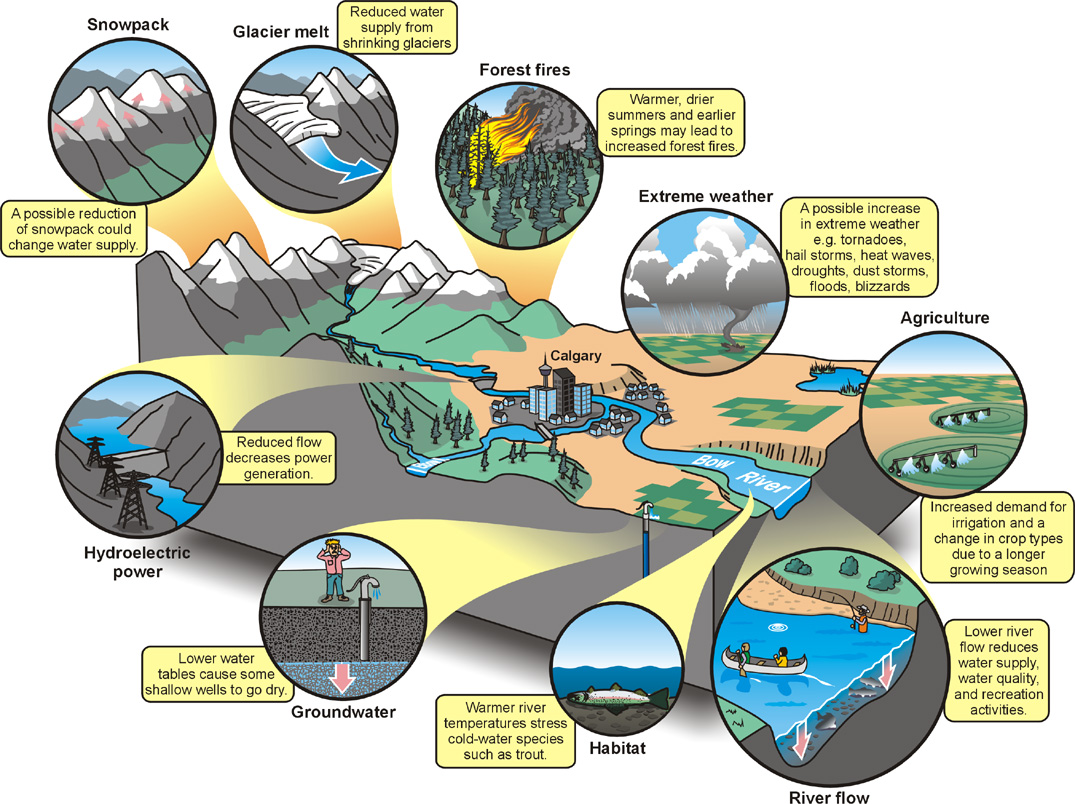
25 signs of a horrific global water crisis...,


Video - the coming global water crisis

economicollapseblog | Every single day, we are getting closer to a horrific global water crisis. This world was blessed with an awesome amount of fresh water, but because of our foolishness it is rapidly disappearing. Rivers, lakes and major underground aquifers all over the globe are drying up, and many of the fresh water sources that we still have available are so incredibly polluted that we simply cannot use them anymore. Without fresh water, we simply cannot function. Just imagine what would happen if the water got cut off in your house and you were not able to go out and buy any. Just think about it. How long would you be able to last? Well, as sources of fresh water all over the globe dry up, we are seeing drought conditions spread. We are starting to see massive "dust storms" in areas where we have never seem them before. Every single year, most of the major deserts around the world are getting bigger and the amount of usable agricultural land in most areas is becoming smaller. Whether you are aware of this or not, the truth is that we are rapidly approaching a breaking point.

If dramatic changes are not made soon, in the years ahead water shortages are going to force large groups of people to move to new areas. As the global water crisis intensifies, there will be political conflicts and potentially even wars over water. We like to think of ourselves as being so "advanced", but the reality is that we have not figured out how to live without water. When the water dries up in an area, most of the people are going to have to leave.

And yes, it will even happen in the United States too. For example, once Lake Mead dries up there is simply no way that so many people are going to be able to live in and around Las Vegas.

Right now, most of us take for granted that we will always have access to an unlimited amount of clean water.


But when you take a hard look at the data, it quickly becomes clear that everything that we have always taken for granted about water is about to dramatically change.

That following are 25 signs that a horrific global water crisis is coming. The first 12 facts are about the United States, and the last 13 are about the rest of the world.... Fist tap Big Don.

how energy drains water supplies

NYTimes | The worst single-year drought in the recorded history of Texas has caused cotton crops to wither and ranchers to sell off cattle. It may also hurt power plants, which need vast amounts of water to cool their equipment.

“We will be very concerned” if it does not rain by spring, said Kent Saathoff, an official with the Texas electric grid operator.

The worries in Texas bear out what an increasingly vocal group of researchers has been warning in recent years: that planners must pay more attention to how much water is needed in energy production.

“Water and energy are really linked,” said Henrik Larsen, a water policy expert with the DHI Group, a research and consulting firm based in Denmark. “If you save water, you save energy, and vice-versa.”

Experts call this the “water-energy nexus.” It takes huge quantities of water to produce electricity from a plant powered by nuclear energy or fossil fuels, and it also takes lots of energy to pump and process the water that irrigates fields and supplies cities.

In the United States, 4 percent of all fresh water is consumed in the energy sector, and 3 percent of all electricity used daily goes toward water and wastewater pumping, distribution, and treatment, according to Mike Hightower, a member of the technical staff at Sandia National Laboratories.

A big problem, experts say, is that water is often taken for granted.

“We simply don’t value water in the same way that we value energy,” said Mr. Larsen of DHI. He noted that whereas barrels of oil get shipped around the globe, nobody wants to ship water in the same way.

With needs for both water and energy growing worldwide and climate change threatening to roil rainfall patterns, the issue could grow more pressing.

Given the scarcity of water resources, stronger regional cooperation will be important in making sure power plants are located in the best places, according to Jakob Granit, director of the Stockholm International Water Institute, which has been trying to promote such cooperation among countries in southern Africa.

“We are not very mature on this type of cross-sector analysis,” Mr. Granit said.

The water needs of power plants are actually greater than the raw consumption numbers suggest. According to Mr. Hightower, more than 50 percent of the water withdrawn every day from rivers and lakes in the United States goes toward energy production.

Power plants discharge almost all of that water back into rivers or ponds after it has helped cool the plant (which explains the difference between 4 percent consumption and 50 percent withdrawals).

However, this means that in times of drought, when rivers or reservoirs are drying up, power plants may have trouble finding enough water, even if they end up discharging most of it.

“You don’t just pick these things up and move them,” Mr. Hightower said, referring to power plants.

The water the plants discharge is also warmer and can affect the environment downstream, Mr. Hightower said.

The water-saving technologies in power plants are improving, and there is a trend toward cooling systems in which more water is recycled, said Mr. Larsen of DHI. The potential for improvements is large: A recent paper by University of Texas academics in the journal Environmental Research Letters reports that changing the cooling technologies used by power plants in 11 Texas river basins could reduce the water they divert each year by an amount equivalent to the annual water use of at least 1.3 million people.

Hydroelectric facilities — which account for about 16 percent of global electricity production — are also vulnerable to drought, of course.

Power plants are not the only reason energy production depends on water. Extracting oil and natural gas from the ground with hydraulic fracturing techniques requires prodigious amounts of water. Fist tap Nana.

big pie in the big sky by-and-by...,

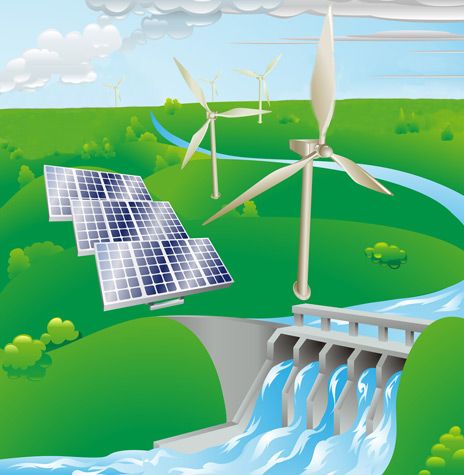
IEEE | We don’t need nuclear power, coal, or biofuels. We can get 100 percent of our energy from wind, water, and solar (WWS) power. And we can do it today—efficiently, reliably, safely, sustainably, and economically.

We can get to this WWS world by simply building a lot of new systems for the production, transmission, and use of energy. One scenario that Stanford engineering professor Mark Jacobson and I developed, projecting to 2030, includes:

  • 3.8 million wind turbines, 5 megawatts each, supplying 50 percent of the projected total global power demand
  • 49 000 solar thermal power plants, 300 MW each, supplying 20 percent
  • 40 000 solar photovoltaic (PV) power plants supplying 14 percent
  • 1.7 billion rooftop PV systems, 3 kilowatts each, supplying 6 percent
  • 5350 geothermal power plants, 100 MW each, supplying 4 percent
  • 900 hydroelectric power plants, 1300 MW each, of which 70 percent are already in place, supplying 4 percent
  • 720 000 ocean-wave devices, 0.75 MW each, supplying 1 percent
  • 490 000 tidal turbines, 1 MW each, supplying 1 percent.
We also need to greatly expand the transmission infrastructure in order to create the large supergrids that will span many regions and often several countries and even continents. And we need to expand production of battery-electric and hydrogen fuel cell vehicles, ships that run on hydrogen fuel cell and battery combinations, liquefied hydrogen aircraft, air- and ground-source heat pumps, electric resistance heating, and hydrogen for high-temperature processes.

To make a WWS world work, we also need to reduce demand. Reducing demand by improving the efficiency of devices that use power, or substituting low-energy activities and technologies for high-energy ones—for example, telecommuting instead of driving—directly reduces the pressure to produce energy.

Because a massive deployment of WWS technologies requires an upgraded and expanded transmission grid and the smart integration of the grid with battery-electric vehicles and hydrogen fuel cell vehicles—using both types of these vehicles for distributed electricity storage—governments need to carefully fund, plan, and manage a long-term, large-scale restructuring of the electricity transmission and distribution system. In much of the world, we’ll need international cooperation in planning and building supergrids that span across multiple countries, because many individual countries just aren’t big enough to permit enough geographic dispersion of generators to mitigate local variability in wind and solar intensity. The Desertec project proposes a supergrid to link Europe and North Africa, and 10 northern European countries are beginning to plan a North Sea supergrid for offshore wind power. Africa, Asia and Southeast Asia, Australia/Tasmania, China, the Middle East, North America, South America, and Russia will need supergrids as well.

Although this is an enormous undertaking, it does not need to be done overnight, and there are plenty of examples in recent history of successful large-scale infrastructure, industrial, and engineering projects. Fist tap Arnach.

Friday, September 23, 2011

much too expensive, but at least a token step in the right direction...,


Video - Energy efficient home-building decathalon

USAToday | The California house looks like a pillow but has an iPad app to control window shades and 3-D cameras to adjust lighting based on movement inside.

The University of Maryland's "WaterShed" has a waterfall designed to control humidity, and Purdue University's "InHome" has a self-watering biowall with vertically arranged plants.

For New Zealand's vacation-style house, or "Kiwi bach," students sheared sheep and "stuffed (wool) in the walls" for insulation, says team member Nick Officer.

Welcome to the 2011 Solar Decathlon, a showcase of state-of-the-art green building by 19 of the world's most innovative academic teams. The biennial competition, sponsored by the U.S. Department of Energy, opens to the public today for two weeks in Washington's West Potomac Park, near the National Mall.

The teams — 15 from the USA and one each from Canada, China, Belgium and New Zealand — are vying to see who built the most stylish, efficient and affordable solar-powered house.

Their prototypes, which the students designed and built during a two-year period, then reassembled within a week at the decathlon site, reflect rapid changes in technology.

Unlike the first decathlon in 2002 or even the last one in 2009, almost all of the houses now have smart meters or automation devices that track energy use in real time, plus triple-pane windows and LED (light emitting diode) fixtures.

"The shift has been pretty dramatic," says Fred Maxik, chief technology officer of Lighting Science Group, an LED manufacturer that donated lights to six of the homes. "Today, (LEDs) are ubiquitous."

The solar devices themselves have improved. They include a canopy of 42 bi-facial solar panels collecting sunlight from above and reflected light from below for Appalachian State University's house, and a rounded rooftop system for the University of Calgary entry.

Perhaps the biggest change this year is cost. DOE is emphasizing affordability and will subtract points for houses that cost more than $250,000. Each team accepted into the competition is given $100,000 in grants as start-up funding. DOE estimates each house's final price tag, based on a list of parts.

"It brings parity to the contest," says Richard King, decathlon director. "We don't want people buying it." In 2009, Team Germany won with an ultra-modern, cube-like house that King says cost about $800,000.

WW-III will have its own little gratifications...,

LATimes | Reporting from Beijing — At a glance, it is clear this is no run-of-the-mill farm: A 6-foot spiked fence hems the meticulously planted vegetables and security guards control a cantilevered gate that glides open only to select cars.

"It is for officials only. They produce organic vegetables, peppers, onions, beans, cauliflowers, but they don't sell to the public," said Li Xiuqin, 68, a lifelong Shunyi village resident who lives directly across the street from the farm but has never been inside. "Ordinary people can't go in there."

Until May, a sign inside the gate identified the property as the Beijing Customs Administration Vegetable Base and Country Club. The placard was removed after a Chinese reporter sneaked inside and published a story about the farm producing organic food so clean the cucumbers could be eaten directly from the vine.

Elsewhere in the world, this might be something to boast about. Not in China. Organic gardening here is a hush-hush affair in which the cleanest, safest products are largely channeled to the rich and politically connected.

Many of the nation's best food companies don't promote or advertise. They don't want the public to know that their limited supply is sent to Communist Party officials, dining halls reserved for top athletes, foreign diplomats, and others in the elite classes. The general public, meanwhile, dines on foods that are increasingly tainted or less than healthful — meats laced with steroids, fish from ponds spiked with hormones to increase growth, milk containing dangerous additives such as melamine, which allows watered-down milk to pass protein-content tests.

"The officials don't really care what the common people eat because they and their family are getting a special supply of food," said Gao Zhiyong, who worked for a state-run food company and wrote a book on the subject.

In China, the tegong, or special supply, is a holdover from the early years of Communist rule, when danwei, work units of state-owned enterprises, raised their own food and allocated it based on rank. "The leaders wanted to make sure they had enough to eat and that nobody poisoned their food," said Gao.

In the 1950s, Soviet advisors helped the Chinese set up a food procurement department under the security apparatus to supply and inspect food for the leadership, according to a biography of Mao Tse-tung written by his personal physician. Lower levels of officialdom were divided into 25 gradations of rank that determined the quantity and quality of rations.

In modern-day China, it is the degradation of the environment and a limited supply of healthful food that is fueling the parallel food system for the elite.

"We flash forward 50 years and we see the only elements of China society getting food that is reliable, safe and free of contaminants are those cadres who have access to the special food supply," said Phelim Kine of the Hong Kong office of Human Rights Watch.

predictable and richly deserved...,

Wired | Navigation-and-emergency-services company OnStar is notifying its six million account holders that it will keep a complete accounting of the speed and location of OnStar-equipped vehicles, even for drivers who discontinue monthly service.

OnStar began e-mailing customers Monday about its update to the privacy policy, which grants OnStar the right to sell that GPS-derived data in an anonymized format.

Adam Denison, a spokesman for the General Motors subsidiary, said OnStar does not currently sell customer data, but it reserves that right. He said both the new and old privacy policies allow OnStar to chronicle a vehicle’s every movement and its speed, though it’s not clear where that’s stated in the old policy.

“What’s changed [is that if] you want to cancel your OnStar service, we are going to maintain a two-way connection to your vehicle unless the customer says otherwise,” Denison said in a telephone interview.

The connection will continue, he said, to make it “easier to re-enroll” in the program, which charges plans from $19 to $29 monthly for help with navigation and emergencies. Canceling customers must opt out of the continued surveillance monitoring program, according to the privacy policy.

The privacy changes take effect in December, Denison said, adding that the policy reinforces the company’s right to sell anonymized data.

“We hear from organizations periodically requesting our information,” he said.

He said an example of how the data might be used would be for the Michigan Department of Transportation “to get a feel for traffic usage on a specific section of freeway.” The policy also allows the data to be used for marketing purposes by OnStar and vehicle manufacturers.

Collecting location and speed data via GPS might also create a treasure trove of data that could be used in criminal and civil cases. One could also imagine an eager police chief acquiring the data to issue speeding tickets en masse.

Jonathan Zdziarski, an Ohio forensics scientist, blogged about the new terms Tuesday. In a telephone interview, he said he was canceling his service and making sure he was being disconnected from OnStar’s network.

He said the new privacy policy goes too far.

“They added a bullet point allowing them to collect any data for any purpose,” he said.

8 current livestock management technologies

We talked about this just a little bit, a little while ago, but I'm always mildly gratified when authoritative others are compelled to agree;
Mashable | In 20 years our technology will reach a level of personalization that will enhance every moment of our lives. We’ll be more physically comfortable with the furniture we sit on and the products we hold; only the most relevant and personalized information from friends and family will reach us; and our movement in the digital world will be near telepathic.

I foresee several of today’s technologies as relevant to this particular vision of the future. They will evolve to not only be more powerful, but also more integrated with one other.

can anyone help me understand this in a non-conspiratorial light?


Video - 80's commercial for Primatene Mist

WebMD | The Primatene Mist inhaler is going away on Dec. 31, and prescription inhalers are the only alternative to the over-the-counter asthma drug.

Don't wait to get that prescription. The FDA warns that Primatene supplies may not last until the end of the year.

"All inhalers that might substitute require a prescription," the FDA's Andrea Leonard-Segal, MD, said at a news teleconference. "So those who use Primatene need to take action now to see a health care provider to get a replacement product." Leonard-Segal is the director of the FDA's division of nonprescription clinical evaluation.

"The clock is ticking on Primatene Mist, the only over-the-counter asthma inhaler," FDA press officer Karen Riley said at the news conference.

The problem with Primatene is that it contains chlorofluorocarbons or CFCs, which deplete the Earth's ozone layer. Environmental treaties signed by the U.S. banned products that emit CFCs. Most of these products already are gone. But medicines got a special extension.

That extension has expired for Primatene. Sales must end at the end of the year. Although the manufacturer of Primatene promises to come up with a version propelled by a safer chemical, the company has not yet done so.

This means that users of Primatene, which has epinephrine as its active ingredient, must switch to drugs based on albuterol. And a prescription is needed for albuterol-based inhalers. These include Accuneb, ProAir, Proventil, Ventolin, and Vospire.

While albuterol is a safe and effective asthma drug, it is different from epinephrine.

"I think patients will feel a difference," Leonard-Segal said.

"One person may feel a certain drug works better for them, but all FDA-approved drugs work in the populations for which they are approved," Sally Seymour, MD, deputy director for safety in the FDA's division of pulmonary, allergy, and rheumatology products, said at the news conference.

One difference users may feel is the price. A replacement cartridge of Primatene Mist sells for about $18. The albuterol inhalers sell for about $45 and up. However, patients with health insurance that covers prescriptions, and those covered by Medicare and Medicaid, may actually pay less for the drugs.

The FDA is not at all clear about how many Primatene users there are. Their best estimate is that 2 million Americans purchase 4 million Primatene units each year.

Here's the FDA's advice to Primatene Mist users:
  • See a health care professional soon to get another medicine. Primatene Mist may be harder to find on store shelves even before Dec. 31, 2011.
  • Ask your health care professional to show you how to use your new inhaler or other medicine to make sure you are using it correctly and getting the right dose.
  • Follow the directions for using and cleaning your new inhaler or other medicine to make sure you get relief of your asthma symptoms.
  • If you haven’t used up your Primatene Mist by Dec. 31, it’s safe to continue using it as long as it hasn’t expired. Check the expiration date, which can be found on the product and its packaging.

Thursday, September 22, 2011

money/status IS happiness with these humans...,


Video - 60% of the time, it works every time...,

Medicalxpress | Given the choice, would you take a good-paying job with reasonable demands on your time or a high-paying job with longer work hours, permitting only six hours of sleep? Many people opt for the cash, even when they know their decision will compromise their happiness, according to a new Cornell study.

"You might think of happiness as the ultimate goal that people pursue, but actually, people think of goals like health, family happiness, social status and sense of purpose as sometimes competing with happiness," said Alex Rees-Jones, a Cornell doctoral student in the field of economics and co-author of a paper to be published in a forthcoming issue of the journal American Economic Review. His co-authors include Cornell assistant professors of economics Dan Benjamin and Ori Heffetz, as well as University of Michigan professor Miles Kimball.

"We found that people make trade-offs between happiness and other things," Rees-Jones said. "For example, they explicitly told us in the free response sections that they would be happier one way, but their family would be happier if they took higher-paying options." They also said they were sometimes willing to choose a job that they thought would bring less happiness for themselves if they thought it would generate a greater sense of purpose, higher social status, a greater sense of control or a higher level of their family's happiness, Rees-Jones said.

The study asked more than 2,600 survey participants (including 633 Cornell students) to consider a variety of scenarios, including the choice between an $80,000 job with reasonable work hours and seven and a half hours of sleep each night, or a $140,000 job with long work hours and time for only six hours of sleep.

Subjects were then asked which option would make them happier.

"On average, there are systematic differences between what people choose and what people think would make them happier," Rees-Jones said. "For example, people are more likely to choose the higher-income/lower-sleep job even when they don't think it will make them happier."

The authors "wanted to see if people were trying to be as happy as possible," Rees-Jones said.

After the survey, subjects were asked if they thought their responses were in error. "Only 7 percent told us that they thought they were making mistakes," Rees-Jones said. "When we asked them if they would regret any cases where they had a discrepancy between choice and well-being, 23 percent said yes. In both cases the vast majority said no, it wasn't a mistake, and no, they wouldn't regret it."

"Overall, this indicates that many are willing to pursue a course that sacrifices happiness in favor of other important goals," said Rees-Jones. "These respondents seem to indicate that maximizing happiness was not perceived to be in their own best interest. However, even if happiness is only one of many goals, it was still the strongest single predictor of choice in our data."

the invisible hand of god...,


USAToday | About one in five Americans combine a view of God as actively engaged in daily workings of the world with an economic conservative view that opposes government regulation and champions the free market as a matter of faith.

"They say the invisible hand of the free market is really God at work," says sociologist Paul Froese, co-author of the Baylor Religion Survey, released today by Baylor University in Waco, Texas.

"They think the economy works because God wants it to work. It's a new religious economic idealism," with politicians "invoking God while chanting 'less government,'" he says.

"When Rick Perry or Michele Bachmann say 'God blesses us, God watches us, God helps us,' religious conservatives get the shorthand. They see 'government' as a profane object — a word that is used to signal working against God's plan for the United States. To argue against this is to argue with their religion."

Most (81%) political conservatives say there is one "ultimate truth in the world, and new economic information of cost-benefit analysis is not going to change their mind about how the economy should work," Froese says.

At the opposite pole, another one in five Americans don't see God stepping in to their daily lives and favor reducing wealth and inequality through taxation.

"So they're less likely to see God controlling the economy. Liberal economic perspectives are synonymous with the belief that there is no one 'ultimate truth,'" Froese says.

This is a distinctly American cultural finding and specific to this point in history. It was different in the past, it might be different in the future and it's different now in Western Europe, Froese says.

The survey of 1,714 U.S. adults, conducted by Gallup in fall 2010, was funded by Baylor, the National Science Foundation and the John Templeton Foundation. The margin of error is plus or minus 4 percentage points.

It finds nearly three in four Americans (73%) say "I know God has a plan for me." Within this group:

nytimes a vector for yergin denialism too...,

NYTimes | Brazil has begun building its first nuclear submarine to protect its vast, new offshore oil discoveries. Colombia’s oil production is climbing so fast that it is closing in on Algeria’s and could hit Libya’s prewar levels in a few years. ExxonMobil is striking new deals in Argentina, which recently heralded its biggest oil discovery since the 1980s.
Up and down the Americas, it is a similar story: a Chinese-built rig is preparing to drill in Cuban waters; a Canadian official has suggested that unemployed Americans could move north to help fill tens of thousands of new jobs in Canada’s expanding oil sands; and one of the hemisphere’s hottest new oil pursuits is actually in the United States, at a shale formation in North Dakota’s prairie that is producing 400,000 barrels of oil a day and is part of a broader shift that could ease American dependence on Middle Eastern oil.

For the first time in decades, the emerging prize of global energy may be the Americas, where Western oil companies are refocusing their gaze in a rush to explore clusters of coveted oil fields.

“This is an historic shift that’s occurring, recalling the time before World War II when the U.S. and its neighbors in the hemisphere were the world’s main source of oil,” said Daniel Yergin, an American oil historian. “To some degree, we’re going to see a new rebalancing, with the Western Hemisphere moving back to self-sufficiency.”

The hemisphere’s oil boom is all the more remarkable given that two of its traditional energy powerhouses, Venezuela and Mexico, have largely been left out, held in check by entrenched resource nationalism. Venezuela is now considered to have bigger oil reserves than Saudi Arabia, putting it at the top of OPEC’s rankings. If it opened up more to foreign investment, it could tip the scales further in the hemisphere’s direction.

Exactly how the Americas’ growing oil clout might rebalance energy geopolitics remains an open question. The Middle East can still influence oil prices greatly, its oil fields are generally cheaper to develop, and some countries in the region are endowed with great reserves.

Moreover, the Americas still vie for investment with other oil-rich regions, like Russia’s portion of the Arctic Ocean and West African waters. Security concerns like the abduction of oil workers could, as they have in the past, prevent Colombia from continuing to raise output. And environmental and financing questions pose persistent challenges to the rapid growth of the hemisphere’s oil production.

Still, the new oil exploits in the Americas suggest that technology may be trumping geology, especially in the region’s two largest economies, the United States and Brazil. The rock formations in Texas and North Dakota were thought to be largely fruitless propositions before contentious exploration methods involving horizontal drilling and hydraulic fracturing — the blasting of water, chemicals and sand through rock to free oil inside, known as fracking — gained momentum.

While the contamination of water supplies by fracking is a matter of fierce environmental debate, the technology is already reversing long-declining oil production in the United States, with overall output from locations where oil is contained in shale and other rocks projected to exceed two million barrels a day by 2020, according to some estimates. The United States already produces about half of its own oil needs, so the increase could help it further peel away dependence on foreign oil.

The challenges of tapping Brazil’s new offshore fields, located beneath 6,000 feet of water and salt beds formed by the evaporation of ancient oceans, are even greater. Petrobras, which has ambitions of surpassing ExxonMobil as the world’s largest publicly traded oil company, is investing more than $200 billion to meet its goals.

“Brazil will become an oil power by the end of the decade, with production in line with that of Iran,” said Pedro Cordeiro, an energy consultant here for Bain & Company, who sees the country’s oil production climbing to 5.5 million barrels a day by 2020.

Construction backlogs could slow Brazil’s offshore expansion. But resurgent industries related to the oil boom, like shipbuilding, and strategic efforts like nuclear submarine construction to defend oil wells, underscore Brazil’s plan of using its energy resources to project global power from this hemisphere.

“No other place on the planet is seeing this kind of investment,” said MĆ”rcio Mello, a former Petrobras geologist who is now the chief executive of HRT, a new oil company based here. “This decade is our chance to rise.”

africom embraces automated remote killing in a big way...,

WaPo | The Obama administration is assembling a constellation of secret drone bases for counterterrorism operations in the Horn of Africa and the Arabian Peninsula as part of a newly aggressive campaign to attack al-Qaeda affiliates in Somalia and Yemen, U.S. officials said.

One of the installations is being established in Ethi­o­pia, a U.S. ally in the fight against al-Shabab, the Somali militant group that controls much of that country. Another base is in the Seychelles, an archipelago in the Indian Ocean, where a small fleet of “hunter-killer” drones resumed operations this month after an experimental mission demonstrated that the unmanned aircraft could effectively patrol Somalia from there.

Featured comment:
"As for the drones, I approve of their use against terrorist or anyone else, who presents a direct and credible threat to the United States. With the drones, potential targets have to be scared half out their wits wondering when and where the next strike will come and whether they will be the target."

The U.S. military also has flown drones over Somalia and Yemen from bases in Djibouti, a tiny African nation at the junction of the Red Sea and the Gulf of Aden. In addition, the CIA is building a secret airstrip in the Arabian Peninsula so it can deploy armed drones over Yemen.

The rapid expansion of the undeclared drone wars is a reflection of the growing alarm with which U.S. officials view the activities of al-Qaeda affiliates in Yemen and Somalia, even as al-Qaeda’s core leadership in Pakistan has been weakened by U.S. counterterrorism operations.

The U.S. government is known to have used drones to carry out lethal attacks in at least six countries: Afghanistan, Iraq, Libya, Pakistan, Somalia and Yemen. The negotiations that preceded the establishment of the base in the Republic of Seychelles illustrate the efforts the United States is making to broaden the range of its drone weapons.

The island nation of 85,000 people has hosted a small fleet of MQ-9 Reaper drones operated by the U.S. Navy and Air Force since September 2009. U.S. and Seychellois officials have previously acknowledged the drones’ presence but have said that their primary mission was to track pirates in regional waters. But classified U.S. diplomatic cables show that the unmanned aircraft have also conducted counterterrorism missions over Somalia, about 800 miles to the northwest.

The cables, obtained by the anti-secrecy group WikiLeaks, reveal that U.S. officials asked leaders in the Seychelles to keep the counterterrorism missions secret. The Reapers are described by the military as “hunter-killer” drones because they can be equipped with Hellfire missiles and satellite-guided bombs.

To allay concerns among islanders, U.S. officials said they had no plans to arm the Reapers when the mission was announced two years ago. The cables show, however, that U.S. officials were thinking about weaponizing the drones.

our smartphones ourselves

The Atlantic | The United States is a diverse place. Across the nation, there is substantial variation in demographics, political views, and health. Add technology to the list of our differences. Cell-phone makers have not had the same level of success in every state. iPhones sell really well in Oregon and Louisiana, not as well in Idaho and Florida. Phones loaded with Google's Android operating system are doing great in California, but not as well in Michigan.

It's not always clear what's driving regional preferences, but this interactive map lets you see how your state stacks up.

For best results, select one phone operating system at a time and any pair of variables.

A guide to the map:
Phone operating-system data comes from Jumptap. They show which operating system exceeded the national average by the most in each state. There are several uncoded states for which data was not available.

For the demographic data, we show 15 to 20 states at each end of the distribution for each variable. For the curious, here are the cut-off points we used:

Race (source: US Census):
Caucasian states are those with populations that are more than 80 percent white non-hispanic.

Minority states are those with populations that are less than 64 percent white non-hispanic.  

Income (source: US Census):
Wealthiest states are those where median income is more than $55,000 per household.
Poorest states are those where median income is less than $45,000 per household.

Age (source: US Census):
Youngest states are those where the median age is 36.6 or younger.
Oldest states are those where the median age is 38.8 or older.

Weight (source: CDC):
Obese states are those where more than 30 percent of the population is obese.
Thin states are those where less than 25 percent of the population is obese.

Population density (source: US Census):
Dense states are those with more than 190 people per square mile.
Sparse states are those with fewer than 55 people per square mile.

The political breakdown shows the 2008 presidential elections results.

Wednesday, September 21, 2011

rotflmbao, uh, it really takes one to know one....,


Video - Methods of a peeper 5


Video - Methods of a peeper 6

what big don and his peeps are worried about....,

The problem with public housing is that the residents are not the owners.
The people that live in the house did not earn the house, but were loaned the property from the true owners, the taxpayers.
Because of this, the residents do not have the "pride of ownership" that comes with the hard work necessary.
In fact, the opposite happens and the residents resent their benefactors because the very house is a constant reminder that they themselves did not earn the right to live in the house.
They do not appreciate the value of the property and see no need to maintain or respect it in any way.
The result is the same whether you are talking about a studio apartment or a magnificent mansion full of priceless antiques.
If the people who live there do not feel they earned the privilege, they will make this known through their actions.
What do all these pics have in common?

They all show a basic disrespect for The White House and its furnishings!
The Resolute Desk was built from the timbers of the HMS Resolute and was a gift from Queen Victoria to President Rutherford B. Hayes.
It is considered a national treasure and icon of the presidency.
The White House belongs to the People of America and should be more revered than to use anything and everything for a foot rest! What all these shots have in common is that they continue to prove that this man has no class!
SO HERE'S A MESSAGE FROM THE PEOPLE OF AMERICA :
Mr. Obama, you are not in a hut in Kenya or Indonesia, or public housing in Chicago.
With all due respect, get your ------- feet off our desk!

WSJ embraced peak-oil denialism...,

The Grist | Daniel Yergin is to peak oil and limits to growth what Richard Lindzen, Anthony Watts, Christopher Monckton, the Heartland Institute and Exxon Mobil are to climate change. That is, Yergin's entire reason for being in the public eye is his rejection of the possible arrival of this calamity.

So of course it's perfectly logical that the Wall Street Journal, long a bastion of climate change denial, would give Yergin a stage on which to spew his unique brand of half-truths. The simple fact is that people who are invested in the status quo like hearing that everything is hunky dory and that nothing out there will ever threaten their privilege, so there will always be an audience for the Yergins of the world.

Despite all evidence to the contrary -- namely, that world supplies of oil have not budged for some time even as prices have skyrocketed -- Yergin argues in Saturday’s Wall Street Journal that more and more oil will be available until "perhaps sometime around midcentury" at which point supply will hit a "plateau."

The thing is, Yergin has been demonstrably getting it wrong about oil for years. There are countless examples, well chronicled here, but he is so wrong, so often, that it only takes about 5 minutes with Google to find an egregious example.

Here's Yergin in 2005, when oil was $60 a barrel, predicting that world oil production would grow from 85 million barrels a day to 101 million by 2010, "reliev[ing] the current pressure on supply and demand." It's 2011, and we're still only producing 89.1 million barrels a day. Meanwhile the cost of a barrel of oil is hovering around $90, and that's with a depressed world economy keeping prices in check.

So why does the WSJ publish the rantings of a repeatedly-discredited crank? Well, he runs Cambridge Energy Research Associates, which does a fine job of promoting itself, running a conference on energy, and just generally telling people what they want to hear. They peddle the exact same variety of denialism on peak oil that others peddle on climate change, and to the exact same customers -- namely, Exxon Mobil and its ilk.

inside the trillion dollar underground economy

One of my favorite spots in the whole world!!!
Alternet | The United States continues to suffer from mass unemployment. People have had to adjust their lifestyles to the new reality—fewer jobs, lower wages, mortgages to pay that are now more than their homes are worth. Millions have dropped out of the job hunt and are trying to find other ways to sustain their families.

That's where the underground economy comes in. Also called the shadow or informal economy, it's not just illegal activity like selling drugs or doing sex work. It's all sorts of work that doesn't get regulated by the government or reported to the IRS, and it's a far bigger part of the economy than most of us are aware—in 2009, economics professor Friedrich Schneider estimated that it was nearly 8 percent of the US GDP, somewhere around $1 trillion. (That makes the shadow GDP bigger than the entire GDP of Turkey or Austria.) Schneider doesn’t include illegal activities in his count-- he studies legal production of goods and services that are outside of tax and labor laws. And that shadow economy is growing as regular jobs continue to be hard to come by—Schneider estimated 5 percent in '09 alone.

The Young Women's Empowerment Project [PDF] describes the “street economy” as “... any way that girls make cash money without paying taxes or having to show identification. Sometimes this means the sex trade. But other times it means braiding hair, babysitting, selling CDs/DVDs, drugs or other skills like sewing and laundry.”

D.A. Barber explained:
“This underground economy goes beyond the homeless collecting aluminum cans or clogging day labor halls. It includes the working poor getting cash for all forms of recycling: giving plasma, selling homemade tamales outside shopping plazas, holding yard sales, doing under-the-table work for friends and family, selling stuff at pawnshops, CD, book and used clothing stores, and even getting tips from restaurants and bars--to name a few.”
That means nearly all of us have participated in some way in the underground economy.

Yet little is known or discussed about this area of our lives, even though it touches many of us as we try to make ends meet.

Chipocalypse Now - I Love The Smell Of Deportations In The Morning

sky |   Donald Trump has signalled his intention to send troops to Chicago to ramp up the deportation of illegal immigrants - by posting a...