Monday, July 25, 2011

templar gang-bangin an professional dope-slangin?


Video - Aljazeera reports on Michoacan Knights Templar methamphetamine cartel.

Aljazeera | Pictures of the latest objects seized by the police in the Mexican state of Michoacan, revealed that the mysterious 'Knights Templar" drug cartel is more bizarre than most people imagine.

There were four hooded tunics, with a red cross, a metal helmet, and a pamphlet or Templar rule book. This drug cartel claims to draw inspiration from the medieval Christian warriors who fought to protect Jerusalem and the Holy Grail.

No one knows if its founder, Servando Gomez, a school teacher, was a history entuthiast or simply read the Da Vinci Code.

The rules in the modern day 'templar bible' call for observance of 'gentleman' like behaviour and respect for women – but also state that any disclosure of knights templar activities will result in the death of the person and his whole family, and confiscation by the cartel of the snitch’s property. Watch my tv report from Michoacan.

The cartel is like a secret society.

The Mexican Templars have an initiation ritual, which apparently includes dressing up like knights from the Middle Ages, and performing blood pacts.

The cartel recruits drug users and enrolls them in the organisation's rehabilitation centers; the process is closely monitored and has a strong religious component.

The double standard is striking: the Templars can not take drugs, and yet they run one of the biggest methamphetamines traffic corridors to the United States.

A resident of Morelia, the capital of the Michoacan province, tells me the cartel that preceded the Templars, La Familia, hired 'cooks' who had learnt to manufacture meth (known as ice or crystal) in the US.

As the government regulated the sale of one of meth's core components, pseudoephedrine (found in cold medicine), the 'crystal makers' or cristaleros moved back to Mexico and now get supplies from China through ports on the Pacific coast.

The young recruits are told to be 'gentlemen', the word for 'knight' in Spanish means a 'gentleman', but they have to kill those who they judge as thieves, rapists, or kidnappers, hanging them from bridges and attaching messages to their bodies.

The government of Felipe Calderon has declared war on the cartels.

It receives substantial military aid from the US to combat these drug gangs.

The national security spokesperson says the Templars are an offshoot of La Familia and their beliefs are a mere PR campaign to gain support of Michoacan residents.

President Calderon is from Michoacan, and his sister is running for governor.

But others see the religious element as a calculated move by its founder to prevent his hit men leaking information, while giving the group an aura of mystery that could inspire fear and respect. It is hard to know

The cartel's structure, wealth, and size. It is perhaps the second most notorious Mexican cartel in terms of killing methods, the most vicious one, the 'Zetas', is a group formed by Mexican army special forces in the 90s. Fist tap Dale.

black robes brought dark ages...,

Credo in unum Deum,
Patrem omnipoténtem,
Factórem cæli et terræ,
Visibílium ómnium et invisibílium.
Et in unum Dóminum Iesum Christum,
Fílium Dei Unigénitum,
Et ex Patre natum ante ómnia sæcula.
Deum de Deo, lumen de lúmine, Deum verum de Deo vero,
Génitum, non factum, consubstantiálem Patri:
Per quem ómnia facta sunt.
Qui propter nos hómines et propter nostram salútem
Descéndit de cælis.
Et incarnátus est de Spíritu Sancto
Ex María Vírgine, et homo factus est.
Crucifíxus étiam pro nobis sub Póntio Piláto;
Passus, et sepúltus est,
Et resurréxit tértia die, secúndum Scriptúras,
Et ascéndit in cælum, sedet ad déxteram Patris.
Et íterum ventúrus est cum glória,
Iudicáre vivos et mórtuos,
Cuius regni non erit finis.
Et in Spíritum Sanctum, Dóminum et vivificántem:
Qui ex Patre Filióque procédit.
Qui cum Patre et Fílio simul adorátur et conglorificátur:
Qui locútus est per prophétas.
Et unam, sanctam, cathólicam et apostólicam Ecclésiam.
Confíteor unum baptísma in remissiónem peccatorum.
Et expecto resurrectionem mortuorum,
Et vitam ventúri sæculi. Amen.

Constantine chose Christianity, and not one of the other dying god cults chosen by his predecessors. Perhaps because his mother had been a Christian, perhaps because he was attracted to the authoritarian nature of what the early bishopricks had managed to organize. Constantine planned to use the organization of the bishopricks to help him unite and control what remained of his empire. The problem was that the bishops had been disagreeing with one another since the beginning of their hustle.

Constantine's solution? He organized the first ever pan-bishoprick conference and invited all the important bishops to Nicea to ratify a common Christian playbook. No sooner had the dogmatic bishops arrived, than they began petitioning Constantine to adopt one or another of their irrelevant little creeds in preference to the others. Constantine's solution? He burned all their inconsequential petitions, asserted a unitary creed and enforced it.

A unitary and literally magical-thinking creed was composed and imposed at Nicea via a simple carrot and stick. Those bishops who signed on to Constantine's new playbook got to stay on for months of lavish entertainment as Constantine's guests, those who refused were banished from the Roman empire as criminals. The Nicene Creed was constructed by a despotic Roman emperor, imposed on the bishopricks by force, and is still mindlessly repeated in churches all across the world today.

Bishop Eusebius arrived at the Council of Nicea in opposition to the what became the creed, and he left the Council as Constantine's right-hand man. Eusebius became Constantine's biographer and wrote The Oration which praised the evil Roman as a living saint. (When Constantine returned to Rome from Nicea, he had his wife suffocated and his son murdered) You would never know this, however, from reading Eusebius.

Eusebius also wrote the hugely influential History of the Church, which history is as accurate an account of Christian origins as The Oration is an accurate portrait of Constantine. The History of the Church is a complete fiction crafted to serve the authoritarian aims of the new Holy Roman Church. Yet this complete fabrication serves as the basis of the traditional understanding of Christian history because for centuries it was all anyone had to rely upon as a source. Why? All alternative accounts of Christian origin were banned and burned.

From the 4th century forward, the Holy Roman Church (the embodiment of the Roman empire) began violently persecuting their Gnostic and Pagan rivals completely out of existence. Armed with a New Testament that repudiated heretics and an Old Testament (Tanakh) that advocated and validated scorched earth and genocide, the Holy Roman Empire enforced Constantine's Christianity with centuries of black-robed violence. Not only did the Holy Roman Empire manage to exterminate all other religions, it even managed to destroy civilization itself, plunging Europe into many centuries of the Dark Age.

The wealth of temples was plundered and shared between the emperor and his bishopricks. Priests and priestesses were murdered, temples burned and razed. Libraries were put to the torch and nearly all the literature of antiquity was destroyed. The lights of civilization went out all across Europe and the west reverted to a brutal life of apocalyptic ignorance and superstition vaguely but resonantly preserved for us in the Grimm's Faery Tales....,

templars in the 21st century?

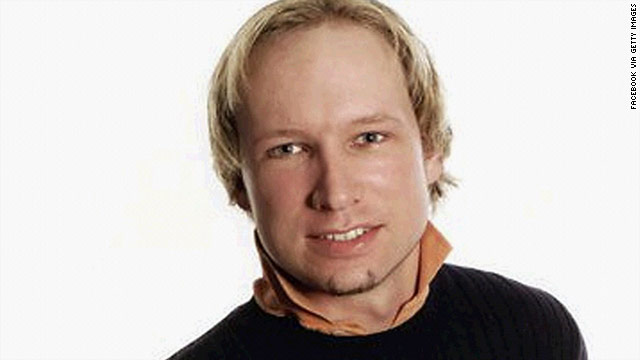
CBSNews | Breivik laid out his extreme nationalist philosophy as well as his attack methods in a 1,500-page manifesto. It also describes how he bought armor, guns, tons of fertilizer and other bomb components, stashed caches of weapons and wiped his computer hard drive — all while evading police suspicion and being nice to his neighbors.

Meanwhile, police in France raided the home of Breivik's father on Monday. Jens Breivik lives in southern France. It wasn't immediately clear whether investigators believed he might share his son's extremist views.

Breivik claims in his writing to be part of a new Knights Templar group, and he hints that there may be others waiting to execute similar attacks, though his lawyer said he insists he acted alone.

"Will attempt to initiate contact with cell 8b and 8c in late March," he writes at one point, but doesn't reference them again or explain if these are aliases.

Norwegian police declined to comment on whether they're concerned about similar attacks. European security officials said they were aware of increased Internet chatter from individuals claiming they belonged to a new Knights Templar group that Breivik describes, in fantastical terms, in the manifesto. The Knights Templar was a medieval order created to protect Christian pilgrims in the Holy Land after the First Crusade in the 11th century.

The officials said they were still investigating claims that Breivik, and other far-right individuals, attended a London meeting of the group in 2002. The two officials spoke on condition of anonymity because they were not authorized to speak about the investigation.

Sunday, July 24, 2011

too much information too fast?


Video - Russia Today interviews Stephen Lendman about Norway attacks.

SJLendman | Who gains and loses from every terror incident must also be asked, certainly not suspects charged, convicted and imprisoned. Geopolitical interests are central. This time Western and Israeli ones are key.

On July 22, New York Times writers Elisha Mala and J. David Goodman were in battle mode headlining, "At Least 80 Dead in Norway Shooting," saying:

"A lone political extremist bombed the government center here on Friday, killing 7 people....before heading to an island summer camp for young members of the governing Labor Party and killing at least 80 people."

A July 23 follow-up headlined, "Death Toll Rises to 91 in Norway Attacks," saying:

"The Norwegian police charged a 32-year-old man (Anders Behring Breivik, identified as) a Christian fundamentalist with right-wing connections, over the bombing of a government center here and a shooting attack on a nearby island that together left at least 91 people dead."

Police didn't know if he was part of a greater conspiracy. "What we do know," said police official Roger Andresen, "is that he is right-wing and a Christian fundamentalist." Oslo police chief of staff Johan Fredriksen said he wasn't surprised that a blond, blue-eyed man was involved. He likely would have made a harsher statement if a Muslim was charged, homegrown or otherwise.

Police also said very likely the two incidents were connected. No evidence proves it despite claims of explosives found on Utoya island where the shootings occurred.

An anonymous police official said that "it seems that this is not linked to any international terrorist organizations," adding it's "probably more Norway's Oklahoma City than (its) World Trade Center."

Reuters said Breivik belonged to Norway's Progress Party, the second largest in Parliament, was a member from 2004 - 2006, and in its youth party from 1997 - 2007. Progress leader Siv Jensen indicated he left the party, wanting to disassociate it from anyone charged with terror attacks.

Obama's initial reaction stoked war on terror fears, saying:

"It's a reminder that the entire international community has a stake in preventing this kind of terror from occurring, and that we have to work cooperatively together both on intelligence and in terms of prevention of these kinds of horrible attacks," implying Islamic involvement to justify America's imperial aggression.

It's much too early to know or draw conclusions about Oslo. Yesterday on Russia Today television, this writer told viewers to be wary of official accounts, especially early ones later proved false. Red flags were also mentioned, notably when accusations are made quickly, naming names, followed by arrests.

Police work takes time. Often weeks or months are needed to solve crimes. In fact, many end up unsolved in closed case files. Quick conclusions should make everyone wary.

targetting the children of liberal elites?

NYTimes | It has been a rite of passage for Norway’s liberal elite for decades: a summer camp set on a verdant Nordic isle called Utoya, where this week hundreds of young people gathered to meet government ministers, dive into election strategy sessions and maybe find a little summer romance.

But for Helen Andreassen, a 21-year-old aspiring politician, a celebration of bright futures became something horrifyingly different when she and her friends jumped from a second-story window to escape the bullets of a man who was hunting them specifically because of their politics.

They ran for their lives, she said, tumbling down the rocky heights to the sea shore, hoping the man in the police officer’s uniform would not pursue them into the water. But he kept shooting.

“He was standing just by the water, using his rifle, just taking his time, aiming and shooting,” Ms. Andreassen said. “It was a slaughter of young children."

For more than an hour, the gunman stalked the forests and steep, rocky shores of the island. There were no bridges to provide escape. Time was on his side.

The young people desperately silenced their cellphones and stripped off colorful clothing. But the shooter was methodical. After killing several people on one part of the island, he went to the other, and, dressed in his police uniform, calmly convinced the children huddled there that he meant to save them. When they emerged into the open, he fired again and again.

“He shot a boy in the back,” said Stine Renate Haaheim, 27, a member of Parliament who was also among those hiding. “I saw that some people were falling, and we turned around and ran. At that point I didn’t look back.”

The police have identified the suspect as Anders Behring Breivik, who in his writings has portrayed himself as a modern knight, charged with driving out Islam and immigrants and the political correctness that he said had been wrongly invited into Norway and was thriving there.

The campers at Utoya appeared to be the embodiment of his hatred.

fear of islam and plan for war....,

NYTimes | The Norwegian man charged Saturday with a pair of attacks in Oslo that killed at least 92 people left behind a detailed manifesto outlining his preparations and calling for a Christian war to defend Europe against the threat of Muslim domination, according to Norwegian and American officials familiar with the investigation.

As stunned Norwegians grappled with the deadliest attack in the country since World War II, a portrait began to emerge of the suspect, Anders Behring Breivik, 32. The police identified him as a right-wing fundamentalist Christian, while acquaintances described him as a gun-loving Norwegian obsessed with what he saw as the threats of multiculturalism and Muslim immigration.

“We are not sure whether he was alone or had help,” a police official, Roger Andresen, said at a televised news conference. “What we know is that he is right wing and a Christian fundamentalist.”

In the 1,500-page manifesto, posted on the Web hours before the attacks, Mr. Breivik recorded a day-by-day diary of months of planning for the attacks, and claimed to be part of a small group that intended to “seize political and military control of Western European countries and implement a cultural conservative political agenda.”

He predicted a conflagration that would kill or injure more than a million people, adding, “The time for dialogue is over. We gave peace a chance. The time for armed resistance has come.”

The manifesto was signed Andrew Berwick, an Anglicized version of his name. A former American government official briefed on the case said investigators believed the manifesto was Mr. Breivik’s work.

The manifesto, entitled “2083: A European Declaration of Independence,” equates liberalism and multiculturalism with “cultural Marxism,” which the document says is destroying European Christian civilization.

The document also describes a secret meeting in London in April 2002 to reconstitute the Knights Templar, a Crusader military order. It says the meeting was attended by nine representatives of eight European countries, evidently including Mr. Breivik, with an additional three members unable to attend, including a “European-American.”

The document does not name the attendees or say whether they were aware of Mr. Breivik’s planned attacks, though investigators presumably will now try to determine if the people exist and what their connection is to Mr. Breivik.

Thomas Hegghammer, a terrorism specialist at the Norwegian Defense Research Establishment, said the manifesto bears an eerie resemblance to those of Osama bin Laden and other Al Qaeda leaders, though from a Christian rather than a Muslim point of view. Like Mr. Breivik’s manuscript, the major Qaeda declarations have detailed accounts of the Crusades, a pronounced sense of historical grievance and calls for apocalyptic warfare to defeat the religious and cultural enemy.

Saturday, July 23, 2011

my name paul: that isht between y'all...,

Phillipians 3:5-8Though I might also have confidence in the flesh. If any other man thinketh that he hath whereof he might trust in the flesh, I more: 5 Circumcised the eighth day, of the stock of Israel, of the tribe of Benjamin, an Hebrew of the Hebrews; as touching the law, a Pharisee; 6 Concerning zeal, persecuting the church; touching the righteousness which is in the law, blameless. 7 But what things were gain to me, those I counted loss for Christ. 8 Yea doubtless, and I count all things but loss for the excellency of the knowledge of Christ Jesus my Lord: for whom I have suffered the loss of all things, and do count them but dung, that I may win Christ,
The Tanakh (a.k.a. Old Testament) has been a part of our culture for so long that we seem incapable of applying the same critical standards to this musty collection of cut and pasted literature that we would apply to any other such quaint material. After all, if we found this material today, we would we even for half a hot minute pretend that Noah and his wife had actually herded all the world's animals onto their little rickety, non-Phoenician raft? Or that Joshua had blown down the walls of a city with a magical trumpet?

We would give this material less credence than we give the Epic of Gilgamesh or the story of Beowulf, with the clear-eyed understanding that anything even remotely historical in this material is buried beneath so much silly accretion as to be ridiculous. We would certainly not be in the absurd situation in which we find ourselves in which a nuclear-armed garrison state of European refugees has laid claim to Palestine on the basis of fraudulent mythology and threatens to thrust the world into the chaos of nuclear war later this year.

Two thousand years ago a Jew born of the tribe of Benjamin, circumcised on the eighth day, a zealous Pharisee, fully righteous and down by law described the sacred texts of Judaism as isht. We know this cat as the "apostle" Paul, and although he was entirely right back in the day to describe the Tanakh as so much isht, he was wrong about them being supplanted by the entheogenic gnosis of the Christ. Instead, the coded literature of the gnostic cults of the entheogenic Christ was subverted and distorted into the wholly made-up scriptures of the Church of Rome which also adopted the Tanakh isht as its Old Testament. This fustercluck was further compounded when another later engineered scientological formation calling itself Islam based itself on much of this same old musty isht. Now, almost half of the world's population calls itself Jewish, Christian, or Moslem and this fact has left the rest of us up to our eyebrows in isht.

a right-wing christian fundamentalist

CNN | As Norway struggles to come to terms with its greatest loss of life in decades, all eyes are on the man charged in the explosion in central Oslo and the deadly shooting rampage at a youth camp.

While police have not officially named him, Norwegian television and newspaper reports have identified the suspect as 32-year-old Anders Behring Breivik, of Norwegian origin.

A picture is emerging, gleaned from official sources and social media, of a right-wing Christian fundamentalist who may have had an issue with Norway's multi-cultural society.

Norwegian and international news outlets have run photographs of a blond man with blue-green eyes and chiseled features, dressed in a preppy style.

A victim who was shot during the attack at the youth camp on Utoya island told CNN Saturday that he had seen pictures of Breivik taken from what is believed to be his Facebook page and shown on NRK and TV2. The victim said he recognized the man from the news reports as the gunman.

Breivik is a member of the Oslo Pistol Club and has three weapons registered in his name, according to leading Norwegian newspaper VG, citing Norway's official weapons register. They are a Glock pistol, a rifle and a shotgun, VG reported.

A post in Breivik's name on an online forum, Document.no, from December 2009, talks about non-Muslim teenagers being "in an especially precarious situation with regards to being harassed by Islamic youth."

"I know of many hundred occasions where non-Muslims have been robbed, beaten up and harassed by Islamic gangs," the post reads. "I had a best friend between the ages of 12-17 who was a Pakistani, so I was one of the many protected, cool 'potatoes' that had protection. But this also made me see the hypocrisy up close and personal and made me nauseous."

A Twitter account attributed to Breivik by Norwegian newspaper Aftenposten has only one message, dated July 17. "One person with a belief is equal to the force of 100,000 who has only interests," it says, adapting a quote from 19th-century British philosopher John Stuart Mill.

how the other side roles...,


Video - BBC report on right wing mass-murder atrocity in Norway.

CBSNews | A home-grown terrorist set off an explosion that ripped open buildings in the heart of Norway's government Friday, then went to a summer camp dressed as a police officer and gunned down youths as they ran and even swam for their lives, police said Friday.

As of early Saturday, police say at least 80 people were killed in a shooting spree at the youth camp of Norway's Labor Party. Police told reporters they had discovered many more victims after initially reporting the death toll at 10.

A police official said the 32-year-old ethnic Norwegian suspect arrested at the camp on Utoya island appears to have acted alone in both attacks, and that "it seems like that this is not linked to any international terrorist organizations at all." The official spoke on condition of anonymity because that information had not been officially released by Norway's police.

"It seems it's not Islamic-terror related," the official said. "This seems like a madman's work."

The official said the attack "is probably more Norway's Oklahoma City than it is Norway's World Trade Center." Domestic terrorists carried out the 1995 attack on a federal building in Oklahoma City, while foreign terrorists were responsible for the Sept. 11, 2001 attacks.

The official added, however, "it's still just hours since the incident happened. And the investigation is going on with all available resources."

TV2 Norwegian TV reported that the shooting suspect in custody has links to right wing extremism

Friday, July 22, 2011

anonymous?


"The Plan" 1 year. 3 phases. A world of change.

Share this message with everyone you can.

PHASE 1: Better yourself. Spread the message. Be the message.

*Educate yourself on the depths of the system, the functions put it place to inhibit true freedom as well as the mechanisms within the system that motivate the masses to subconsciously accept giving up those freedoms. The structures within the system that promote division within the people of the countries of this world and the injustices that are placed upon the people.

*Spread the message. Share this video and the website with everyone you can. Make your own videos, songs, art, graffiti etc... spreading the word that we are here, the movement is taking hold. Expect us.

*Learn ways that will allow you to break free from the system. Start small and implement them in your daily lives. This will be implemented as a focus of Phase 2 as well, escalating what you have learned.

*ANON hackers - begin supporting the movement. This is a calling to all of you for the aid of this movement. Low-priority targets are your engagement. Assist with the movement and spread the message of "The Plan".

The resistance is here.
Expect us.

the murdochs: power without responsibility


Video - Rupert and James kinda/sorta testify...,

The Nation | What did we learn from the Murdochs’ testimony [1]? That, at 80, Rupert Murdoch is losing his grip—or wants to appear that way. The billionaire tyrant’s saurian response to his tormentors on the parliamentary select committee showed a man who struggled with names, dates and details, and who needed to be rescued by his son James (who seemed almost pathetically eager to do so). But the picture that emerged of a father far too busy struggling (and by yesterday’s evidence, failing) to keep track of a global media empire to have any knowledge of what his underlings’ underlings were up to on one lowly British tabloid was profoundly at odds not only with Murdoch’s track record as a manager in total command of every detail of his empire, but even with portions of his own testimony yesterday. When MP Tom Keen tossed him a softball: “You’ve been kept in the dark, Rupert Murdoch,” he blasted it right back: “Nobody kept me in the dark. Anything that’s seen as a crisis comes to me.”

James Murdoch’s portrayal of the dutiful son who arrived on the scene too late to have been involved in any wrongdoing—but just in time to sign off on the multimillion-pound payoffs to a handful of hacking victims—was more convincing. Though here too it is worth noting that the legal opinion from Harbottle & Co., the high-priced London firm that News International used to handle the invasion of privacy claims, which James waved around like a doctor’s note getting out of a particularly unpleasant school trip, has been undercut by the firm’s statement yesterday [2] that its advice had been wrongly summarized, but that the firm’s request to be released from confidentiality to explain exactly how had been turned down by News International.

On the whole, the Murdoch strategy of running out the clock was successful—even before the doubtless unpleasant distraction of wiping a shaving cream pie off Murdoch senior’s face, which cost Murdoch a small portion of his majesty but also kept Tom Watson, by far the most dangerous member of the panel, from being allowed to ask a concluding set of questions. There were two small but genuine revelations: that News International continued paying the legal fees for Glenn Mulcaire, the private investigator jailed in 2007 for hacking into mobile phones belonging to members of the British royal family (and who also hacked into the voice messages of the murdered school girl Milly Dowler) long after his conviction, and that Rupert Murdoch himself never even considered resigning or in any way accepting responsibility for the illegal actions of his employees.

What happens next? There are currently at least ten separate British investigations, including an independent inquiry headed by a judge, police investigations into both phone hacking (“Operation Weeting”) and the issue of police corruption and illegal payments to police officers by Murdoch’s newspapers and other British press organizations (“Operation Elveden”), as well as an examination by the media regulator Ofcom about whether the actions of Murdoch employees on the News of the World throws into question the family’s fitness to retain control of its British broadcast operations.

An optimist might think that with so much smoke surely a barbecue is in the offing. But the adage about too many cooks is probably just as relevant. One problem facing any regulator or national legislature genuinely trying to come to grips with Murdoch is that News Corporation is a truly global company. The most recent GAO report shows the company operating 782 foreign subsidiaries—of which 182 are in such notorious tax havens as the British Virgin Islands (sixty-two), the Cayman Islands (thirty-three) and Luxembourg (four). The career of Les Hinton—or indeed James Murdoch—demonstrates the ease with which Murdoch shuffles managers from continent to continent. Tracking the flow of News Corporation assets around the world is far more difficult.

And as I’ve said before [3], News Corporation is no ordinary business enterprise. The thousands of journalists on the company’s books—and the untold number of private investigators, “blaggers” and other practitioners of journalism’s black arts paid off the books—mean that in addition to men and money, News Corp. also has global reach in amassing information, particularly the kind of titillating personal information that can put a troublesome regulator or meddlesome legislator on Page Six of the New York Post or the front page of the Sun. That’s why the most significant comment on the scandal before Nick Davies managed to get the British public to pay attention was from the anonymous MP who, when asked why Parliament kept allowing Rebekah Brooks to refuse repeated invitations to testify, replied that they felt too intimidated [4] by the threat of what might be done to them by News International journalists if they insisted. Combine that threat with a corporation whose unabashed largesse to its friends—from the £ 5 million Harper Collins paid for Margaret Thatcher’s memoirs to the $4.5 million the company offered to pay Newt Gingrich to the $1.25 million paid to Sarah Palin for Going Rogue [5]—seems to transcend business logic and you have assembled a powerful set of incentives for accommodation.

Really getting to the bottom of News Corporation would require a global effort, with global focus—and far more determination than anything shown either by Attorney General Eric Holder’s tepid assurance that the Justice Department would look at any evidence of phone hacking in the United States or David Cameron’s government, whose links with News Corporation go far beyond sharing the occasional egg nog at Christmas.

wage slaves in the warehouse


Video - Capitalism vs. Socialism - which is more productive?

DeclineoftheEmpire | In our Capitalist Utopia, wage slaves are not allowed to talk. They might say stuff like "wow, it's really hot in here" or "let's go upstairs and kill all the big guys in the suits." No cell phones either—if there's an medical emergency in the family, your phone will be confiscated.
A few days later, I had breakfast with someone who coincidentally works with the CEOs of logistics companies. Telling him about the conditions and the sterility and the mind-numbing sadness of the warehouse made him almost too bummed to eat his oatmeal.

"Somebody did studies and spreadsheets and crunched those numbers," he said, "and figured out that the cheapest way to get that job done is to treat people like that." Which is important, he explained, because "the profit margins on those contracts are razor thin." Of course. A lot of the Internet retailers' merchandise is nearly worthless—ice princess star-shaped ice cube trays, cheap sunglasses, anthropomorphic stuffed bacon toys—and is sold for nearly nothing, often with free or reduced-price shipping.

Susie told me it's pretty dispiriting to act as though her workers are as disposable as the products they're shipping. But that's just the way it is, she said. The logistics clients aren't interested in spending money on a better or more sustainable work culture. Nor do they need to. There are 100 people employed in the warehouse I visited, and Susie could fire every one of them today without costing her bosses a dime of lost profits. She has applications from hundreds of people ready to take the job.
There's your vaunted job market flexibility. This, too, will make America more competitive. Disposable workers can be fired in a New York minute for talking, or taking too many breaks, or otherwise displaying a bad attitude. Ungrateful sons of bitches. Firing these SOBs is just like taking out the trash. After all, there are hundreds of people waiting to take their place. The working wage slaves are the lucky ones.

It's a Capitalist's wet dream. Is this a great country or what? Fist tap Dale.

CIA exhales: 99 out of 101 torture cases dropped...,

Wired | This is how one of the darkest chapters in U.S. counterterrorism ends: with practically every instance of suspected CIA torture dodging criminal scrutiny. It’s one of the greatest gifts the Justice Department could have given the CIA as David Petraeus takes over the agency.

Over two years after Attorney General Eric Holder instructed a special prosecutor, John Durham, to “preliminar[ily] review” whether CIA interrogators unlawfully tortured detainees in their custody, Holder announced on Thursday afternoon that he’ll pursue criminal investigations in precisely two out of 101 cases of suspected detainee abuse. Some of them turned out not to have involved CIA officials after all. Both of the cases that move on to a criminal phase involved the “death in custody” of detainees, Holder said.

But just because there’s a further criminal inquiry doesn’t necessarily mean there will be any charges brought against CIA officials involved in those deaths. If Holder’s decision on Thursday doesn’t actually end the Justice Department’s review of torture in CIA facilities, it brings it awfully close, as outgoing CIA Director Leon Panetta noted.

“On this, my last day as Director, I welcome the news that the broader inquiries are behind us,” Panetta wrote to the CIA staff on Thursday. “We are now finally about to close this chapter of our Agency’s history.”

Thursday, July 21, 2011

oligarchy in the united states?

Cambridge | We explore the possibility that the US political system can usefully be characterized as oligarchic. Using a material-based definition drawn from Aristotle, we argue that oligarchy is not inconsistent with democracy; that oligarchs need not occupy formal office or conspire together or even engage extensively in politics in order to prevail; that great wealth can provide both the resources and the motivation to exert potent political influence. Data on the US distributions of income and wealth are used to construct several Material Power Indices, which suggest that the wealthiest Americans may exert vastly greater political influence than average citizens and that a very small group of the wealthiest (perhaps the top tenth of 1 percent) may have sufficient power to dominate policy in certain key areas. A brief review of the literature suggests possible mechanisms by which such influence could occur, through lobbying, the electoral process, opinion shaping, and the US Constitution itself.

Wednesday, July 20, 2011

compare and contrast with wikileaks...,

the hell you say?!?!?!?!


Video - Murdoch's doxie stands by her man.

WSJ | How does this year's phone hacking scandal at the now-defunct British tabloid News of the World—owned, I hardly need add, by News Corp., the Journal's parent company—compare with last year's contretemps over the release of classified information by Julian Assange's WikiLeaks and his partners at the New York Times, the Guardian and other newspapers?

At bottom, they're largely the same story.

In both cases, secret information, initially obtained by illegal means, was disseminated publicly by news organizations that believed the value of the information superseded the letter of the law, as well as the personal interests of those whom it would most directly affect. In both cases, fundamental questions about the lengths to which a news organization should go in pursuit of a scoop have been raised. In both cases, a dreadful human toll has been exacted: The British parents of murdered 13-year-old Milly Dowler, led to the false hope that their child might be alive because some of her voice mails were deleted after her abduction; Afghan citizens, fearful of Taliban reprisals after being exposed by WikiLeaks as U.S. informants.

Both, in short, are despicable instances of journalistic malpractice, for which some kind of price ought to be paid. So why is one a scandal, replete with arrests, resignations and parliamentary inquests, while the other is merely a controversy, with Mr. Assange's name mooted in some quarters for a Nobel Peace Prize?

The easy answer is that the news revealed by WikiLeaks was in the public interest, whereas what was disclosed by News of the World was merely of interest to the public. By this reckoning, if it's a great matter of state, and especially if it's a government secret, it's fair game. Not so if it's just so much tittle-tattle about essentially private affairs.

You can see the attraction of this argument—particularly if, like Mr. Assange, you are trying to fight extradition to Sweden on pending rape charges that you consider unworthy of public notice.

You can also see its attraction to anybody who claims to know what the public interest ought to be and is in a position to do something about it.

The New York Times Questions The Journal's Integrity

The Atlantic | The Players: The New York Times vs. The Wall Street Journal

The First Serve: Yesterday, David Carr of The New York Times wrote a column questioning the future of Rupert Murdoch and News Corps. "The News Corporation may be hoping that it can get back to business now that some of the responsible parties have been held to account — and that people will see the incident as an aberrant byproduct of the world of British tabloids," he wrote. "But that seems like a stretch. The damage is likely to continue to mount, perhaps because the underlying pathology is hardly restricted to those who have taken the fall."

Carr also pointed to Murdoch's strategy of burying problems: "And the money the company reportedly paid out to hacking victims is chicken feed compared with what it has spent trying to paper over the tactics of News America in a series of lawsuits filed by smaller competitors in the United States."

Fellow columnist Roger Cohen, who had previously defended Murdoch, furthered the conversation in a column that appeared on The Times's site yesterday (and appears in the International Herald Tribune, a Times company, today) which questions Murdoch's character. "Murdoch is a flawed genius whose very ruthlessness has now led him to his comeuppance," he wrote. "He knew, more viscerally than anyone, what postmodern societies wanted to satisfy their twisted appetites and he provided that material in all its gaudiness. I don’t think he created those appetites. But he sure fed them"

Meanwhile, Monday The Wall Street Journal published an editorial defending its owner and its integrity (and was met with a chorus of social media jeers--covered here). The board did not stop there and took the opportunity to lob barbs at The New York Times and The Guardian.
"We also trust that readers can see through the commercial and ideological motives of our competitor-critics. The Schadenfreude is so thick you can't cut it with a chainsaw. Especially redolent are lectures about journalistic standards from publications that give Julian Assange and WikiLeaks their moral imprimatur. They want their readers to believe, based on no evidence, that the tabloid excesses of one publication somehow tarnish thousands of other News Corp. journalists across the world."
The Return Volley: Schadenfreude? Chainsaws? Joe Nocera of the The Times responded to the WSJ's allegation of schadenfreude. "Well, yes, the schadenfreude is pretty darn thick," he writes in today's column. "Who would deny it? The whole thing reminds me a little of the ending of Ian McEwan’s wonderful novel “Solar,” in which the many awful things the central character has done in his long life suddenly come together to bury him in an avalanche of comeuppance. I’m O.K. with that."

fox news cackling over anonymous roundup


Video - RT stirs to pot over a bit of lulzsec mischief

Forbes | The international wave of alleged hacker arrests associated with the digital vigilante movement Anonymous continued Tuesday, and this time on American soil. Fox News reports more than a dozen arrests across California, Florida and New Jersey, as well as FBI interviews and searches in Long Island and Brooklyn, New York.

Those police actions follow others in England, where an Anonymous-related hacker named Ryan Cleary was arrested last month in Essex, followed by more than 45 other arrests in Spain, Italy, Switzerland, and Turkey.

U.S. law enforcement have yet to reveal exactly what hacking charges those newly-arrested American suspects will face. Update: An FBI press release states that there are 14 suspects, and that they’ll be charged with “various counts of conspiracy and intentional damage to a protected computer” related to attacks on Paypal in December following the company’s decision to cut off service to WikiLeaks.

Within the hacker community, many are watching the fate of one individual who goes by the handle “Sabu” and who is suspected of involvement in multiple operations including the attacks on HBGary and later the hacking spree perpetrated by the Anonymous spinoff group LulzSec. Sabu has claimed involvement in yesterday’s hacking of the British newspaper The Sun, and wrote on his Twitter feed that LulzSec will soon release stolen emails from the News Corp-owned tabloid.

Sabu claimed Tuesday on Twitter that he was not involved in the day’s police operations, despite several attempts by hackers in opposition to Anonymous to publicly identify him. One hacker who goes by the name th3j35t3r recently published a suspected name and Portugese address for Sabu on his blog. The LulzSec hacker responded Tuesday by taunting th3j35t3r over the arrests: “Damn, it must hurt you emotionally that I was not part of that.”

Tuesday, July 19, 2011

why we are all different (and not all religious)

epiphenom | So, on to the paper by Robert Rowthorn, which I see now has even been picked up by the Denver Post!

Just to explain a bit of the background. Rowthorn is an economist, and his paper is basically a model of what would would happen if you have a gene (strictly speaking [and for Bjørn's benefit], an allele) that predisposes for membership of a group, and if that group has high reproduction.

What he shows is that the gene spreads incredibly quickly - just 10 generations after it appears, 80% of the population have it. After 20 generations, 95% have it, and it keeps increasing until that figure reaches 100%.

Because the gene spreads, membership of the group increases. It starts off a little slower, and never quite reaches 100% (because even gene carriers can opt out in this model).

Since there is a gene for religion, and the religious (especially the ultra-conservatives) have more kids, you can easily see how this model directly relates to the real world.

And that, Dear Reader, is why 95% of the world's population are Orthodox Jews!

Oh. Alright there is clearly something wrong with the model, but that's OK. Models are usually wrong, and the fun part comes in trying to figure out why. And this model is particularly interesting because it touches on a number of popular misconceptions.

Some are specific to this model but there's also a much bigger issue underlying all this: just why is there so much variation in how religious people are, if (as some theorists will have you believe) religion is so beneficial?

But first, let's look at some specific problems with the assumptions in this model. First off, it isn't really a model of religion, despite the title of the paper. It's a model of conservatism.

Rowthorn starts from some basic assumptions. That global birthrates have fallen, but they have fallen more slowly among the most religious (and not at all among certain sects like Orthodox Jews and the Amish). That conservatism and religion are inextricably linked (and that they have a simple genetic basis). And that religion is inextricably linked to high birth rates.

A quick survey just of European history will quickly show that the last two assumptions don't hold. There have been countless examples of religious anti-conservative movements - the Protestant reformation is just the most obvious example, but there are numerous others, like the anti-slavery movement and the 12th century reformation.

Religion is invented by people, and religion can be radical and innovative - according to their needs.

man-made god(s)

LATimes | Before John Lennon imagined "living life in peace," he conjured "no heaven … / no hell below us …/ and no religion too."

No religion: What was Lennon summoning? For starters, a world without "divine" messengers, like Osama bin Laden, sparking violence. A world where mistakes, like the avoidable loss of life in Hurricane Katrina, would be rectified rather than chalked up to "God's will." Where politicians no longer compete to prove who believes more strongly in the irrational and untenable. Where critical thinking is an ideal. In short, a world that makes sense.

In recent years scientists specializing in the mind have begun to unravel religion's "DNA." They have produced robust theories, backed by empirical evidence (including "imaging" studies of the brain at work), that support the conclusion that it was humans who created God, not the other way around. And the better we understand the science, the closer we can come to "no heaven … no hell … and no religion too."

Like our physiological DNA, the psychological mechanisms behind faith evolved over the eons through natural selection. They helped our ancestors work effectively in small groups and survive and reproduce, traits developed long before recorded history, from foundations deep in our mammalian, primate and African hunter-gatherer past.

For example, we are born with a powerful need for attachment, identified as long ago as the 1940s by psychiatrist John Bowlby and expanded on by psychologist Mary Ainsworth. Individual survival was enhanced by protectors, beginning with our mothers. Attachment is reinforced physiologically through brain chemistry, and we evolved and retain neural networks completely dedicated to it. We easily expand that inborn need for protectors to authority figures of any sort, including religious leaders and, more saliently, gods. God becomes a super parent, able to protect us and care for us even when our more corporeal support systems disappear, through death or distance.

Scientists have so far identified about 20 hard-wired, evolved "adaptations" as the building blocks of religion. Like attachment, they are mechanisms that underlie human interactions: Brain-imaging studies at the National Institutes of Health showed that when test subjects were read statements about religion and asked to agree or disagree, the same brain networks that process human social behavior — our ability to negotiate relationships with others — were engaged.

Among the psychological adaptations related to religion are our need for reciprocity, our tendency to attribute unknown events to human agency, our capacity for romantic love, our fierce "out-group" hatreds and just as fierce loyalties to the in groups of kin and allies. Religion hijacks these traits. The rivalry between Sunni and Shiite Muslims, for example, or the doctrinal battles between Protestant and Catholic reflect our "groupish" tendencies.

In addition to these adaptations, humans have developed the remarkable ability to think about what goes on in other people's minds and create and rehearse complex interactions with an unseen other. In our minds we can de-couple cognition from time, place and circumstance. We consider what someone else might do in our place; we project future scenarios; we replay past events. It's an easy jump to say, conversing with the dead or to conjuring gods and praying to them.

Morality, which some see as imposed by gods or religion on savage humans, science sees as yet another adaptive strategy handed down to us by natural selection.

Yale psychology professor Paul Bloom notes that "it is often beneficial for humans to work together … which means it would have been adaptive to evaluate the niceness and nastiness of other individuals." In groundbreaking research, he and his team found that infants in their first year of life demonstrate aspects of an innate sense of right and wrong, good and bad, even fair and unfair. When shown a puppet climbing a mountain, either helped or hindered by a second puppet, the babies oriented toward the helpful puppet. They were able to make an evaluative social judgment, in a sense a moral response.

Chipocalypse Now - I Love The Smell Of Deportations In The Morning

sky |   Donald Trump has signalled his intention to send troops to Chicago to ramp up the deportation of illegal immigrants - by posting a...