Wednesday, July 13, 2011

Tuesday, July 12, 2011
hanford whistle-blower backed by watchdog agency
Video - Talk by Dr. Walter Tamosaitis, the Research and Technology Manager of Hanford's Waste Treatment Plant, who was summarily terminated from his job after he raised safety issues associated with the design and operation of this nuclear facility
LATimes | Walter Tamosaitis, once a top engineer in the nation's nuclear weapons cleanup program, has been relegated to a basement storage room equipped with cardboard-box and plywood furniture with nothing to do for the last year.
Tamosaitis' bosses sent him there when he persisted in raising concerns about risks at the Energy Department's project to deal with millions of gallons of radioactive waste near Hanford, Wash., including the potential for hydrogen gas explosions.
"Walt is killing us," said Frank Russo, Bechtel Corp.'s top manager at the project, in an email to Tamosaitis' boss urging that the engineer be brought under control.
Now, an independent government watchdog agency, the Defense Nuclear Facilities Safety Board, has backed up Tamosaitis and issued a rebuke to Energy Secretary Steven Chu, concluding that the safety culture at the $12.3-billion project is "flawed" and that significant risks exist in the plant's design.
The conclusion came after a nearly yearlong investigation, which took testimony from 45 witnesses and reviewed 30,000 documents. It confirmed that Tamosaitis had been "abruptly removed from the project" when he raised technical questions about its design, and that the actions against him had frightened other engineers.
"The board finds that expression of technical dissent affecting safety … were discouraged, if not opposed or rejected without review," safety board Chairman Peter Winokur wrote to Chu on June 9. "As of the writing of this finding, Dr. Tamosaitis sits in a basement cubicle in Richland with no meaningful work."
In a five-page response Friday, the Energy Department said it was "committed to continuous improvement and teamwork."
"We believe the plant can operate safely," Deputy Energy Secretary Daniel Poneman said in an interview. "I am not going to kid you, it is challenging technically."
Hanford is the nation's most contaminated piece of property, housing 56 million gallons of highly radioactive sludge in underground tanks that pose a long-term risk of leaking into the Columbia River.
The Energy Department wants to embed the waste into solid glass and ship it to a future dump, but so far not a single gallon has been treated. The project is more than 20 years behind the original schedule, and the cost has more than tripled.
"It's pitiful," said Tamosaitis, who was manager of research and technology for San Francisco-based URS Corp., a prime subcontractor to Bechtel Corp. in building the waste treatment plant.
Until he was removed from his job, Tamosaitis, 63, managed a technical staff of as many as 30 in-house scientists and engineers, and an external staff that numbered in the hundreds. He holds a doctorate in systems engineering. He spent 20 years working for DuPont Corp., running chemical plants all over the country, and then another 20 years in the nuclear cleanup industry.
Tamosaitis sent an email last year to a small circle of the top engineering experts in chemical mixing technology, raising concerns over the decision years ago to use an untested and potentially risky technology in the Hanford design.
The processing of the waste at Hanford requires a large number of mixing tanks up to 400,000 gallons in capacity where sludges, salts and liquids are separated into high-level and low-level radioactivity steams, using chemical processes and filters. More than two dozen key tanks at Hanford would use "pulse jet mixers," a system that engineers compare to turkey basters — liquid is sucked into a tube and then squirted out.
The system was supposed to be cheaper than mechanical agitators and less subject to failure, a crucial feature once the tanks are in operation and too radioactive to service. But no U.S. nuclear plant uses the technology, and Tamosaitis said there was significant doubt whether they could adequately keep the tanks mixed.
If tanks are not kept properly mixed, plutonium solids could settle at the bottom and go critical, he said. A poorly mixed tank could also result in large burps of explosive hydrogen gas. And finally, the solids could plug up pipes in the plant.
LATimes | Walter Tamosaitis, once a top engineer in the nation's nuclear weapons cleanup program, has been relegated to a basement storage room equipped with cardboard-box and plywood furniture with nothing to do for the last year.
Tamosaitis' bosses sent him there when he persisted in raising concerns about risks at the Energy Department's project to deal with millions of gallons of radioactive waste near Hanford, Wash., including the potential for hydrogen gas explosions.
"Walt is killing us," said Frank Russo, Bechtel Corp.'s top manager at the project, in an email to Tamosaitis' boss urging that the engineer be brought under control.
Now, an independent government watchdog agency, the Defense Nuclear Facilities Safety Board, has backed up Tamosaitis and issued a rebuke to Energy Secretary Steven Chu, concluding that the safety culture at the $12.3-billion project is "flawed" and that significant risks exist in the plant's design.
The conclusion came after a nearly yearlong investigation, which took testimony from 45 witnesses and reviewed 30,000 documents. It confirmed that Tamosaitis had been "abruptly removed from the project" when he raised technical questions about its design, and that the actions against him had frightened other engineers.
"The board finds that expression of technical dissent affecting safety … were discouraged, if not opposed or rejected without review," safety board Chairman Peter Winokur wrote to Chu on June 9. "As of the writing of this finding, Dr. Tamosaitis sits in a basement cubicle in Richland with no meaningful work."
In a five-page response Friday, the Energy Department said it was "committed to continuous improvement and teamwork."
"We believe the plant can operate safely," Deputy Energy Secretary Daniel Poneman said in an interview. "I am not going to kid you, it is challenging technically."
Hanford is the nation's most contaminated piece of property, housing 56 million gallons of highly radioactive sludge in underground tanks that pose a long-term risk of leaking into the Columbia River.
The Energy Department wants to embed the waste into solid glass and ship it to a future dump, but so far not a single gallon has been treated. The project is more than 20 years behind the original schedule, and the cost has more than tripled.
"It's pitiful," said Tamosaitis, who was manager of research and technology for San Francisco-based URS Corp., a prime subcontractor to Bechtel Corp. in building the waste treatment plant.
Until he was removed from his job, Tamosaitis, 63, managed a technical staff of as many as 30 in-house scientists and engineers, and an external staff that numbered in the hundreds. He holds a doctorate in systems engineering. He spent 20 years working for DuPont Corp., running chemical plants all over the country, and then another 20 years in the nuclear cleanup industry.
Tamosaitis sent an email last year to a small circle of the top engineering experts in chemical mixing technology, raising concerns over the decision years ago to use an untested and potentially risky technology in the Hanford design.
The processing of the waste at Hanford requires a large number of mixing tanks up to 400,000 gallons in capacity where sludges, salts and liquids are separated into high-level and low-level radioactivity steams, using chemical processes and filters. More than two dozen key tanks at Hanford would use "pulse jet mixers," a system that engineers compare to turkey basters — liquid is sucked into a tube and then squirted out.
The system was supposed to be cheaper than mechanical agitators and less subject to failure, a crucial feature once the tanks are in operation and too radioactive to service. But no U.S. nuclear plant uses the technology, and Tamosaitis said there was significant doubt whether they could adequately keep the tanks mixed.
If tanks are not kept properly mixed, plutonium solids could settle at the bottom and go critical, he said. A poorly mixed tank could also result in large burps of explosive hydrogen gas. And finally, the solids could plug up pipes in the plant.
HO-41
 Science Codex | An international research team has discovered a strain of gonorrhea resistant to all currently available antibiotics. This new strain is likely to transform a common and once easily treatable infection into a global threat to public health. The details of the discovery made by Dr. Magnus Unemo, Dr. Makoto Ohnishi, and colleagues will be presented at the 19th conference of the International Society for Sexually Transmitted Disease Research (ISSTDR) which runs July 10-13 in Quebec City, Canada.
The team of researchers successfully identified a heretofore unknown variant of the bacterium that causes gonorrhea, Neisseria gonorrhoeae. Analyzing this new strain, dubbed H041, allowed researchers to identify the genetic mutations responsible for the bacterium's extreme resistance to all cephalosporin-class antibiotics—the last remaining drugs still effective in treating gonorrhea.
"This is both an alarming and a predictable discovery," noted Dr. Unemo of the Swedish Reference Laboratory for Pathogenic Neisseria. "Since antibiotics became the standard treatment for gonorrhea in the 1940s, this bacterium has shown a remarkable capacity to develop resistance mechanisms to all drugs introduced to control it."
"While it is still too early to assess if this new strain has become widespread, the history of newly emergent resistance in the bacterium suggests that it may spread rapidly unless new drugs and effective treatment programs are developed," Dr. Unemo continued.
Gonorrhea is one of the most common sexually transmitted diseases in the world. In the U.S. alone, according to the Center for Disease Control and Prevention (CDC), the number of cases is estimated at 700,000 annually.
Gonorrhea is asymptomatic in about 50% of infected women and approximately 2-5% of men. When symptomatic, it is characterized by a burning sensation when urinating and pus discharge from the genitals. If left untreated, gonorrhea can lead to serious and irreversible health complications in both women and men.
In women, the infection can cause chronic pelvic pain and ectopic pregnancy. It can lead to infertility, mostly in women but also in men, and it increases the risk of HIV transmission. In 3-4% of cases, untreated infections spread to the skin, blood, joints, or even the heart and can cause potentially mortal lesions. Babies born of infected mothers are at high risk of developing serious blood and joint infections, and passage through the birth canal of an infected mother can cause blindness in the infant.
Monday, July 11, 2011
simple, straightforward, obvious kwestin...,
 Salon | Have the American people outlived their usefulness to the rich minority in the United States? A number of trends suggest that the answer may be yes.
In every industrial democracy since the end of World War II, there has been a social contract between the few and the many. In return for receiving a disproportionate amount of the gains from economic growth in a capitalist economy, the rich paid a disproportionate percentage of the taxes needed for public goods and a safety net for the majority.
In North America and Europe, the economic elite agreed to this bargain because they needed ordinary people as consumers and soldiers. Without mass consumption, the factories in which the rich invested would grind to a halt. Without universal conscription in the world wars, and selective conscription during the Cold War, the U.S. and its allies might have failed to defeat totalitarian empires that would have created a world order hostile to a market economy.
Globalization has eliminated the first reason for the rich to continue supporting this bargain at the nation-state level, while the privatization of the military threatens the other rationale.
The offshoring of industrial production means that many American investors and corporate managers no longer need an American workforce in order to prosper. They can enjoy their stream of profits from factories in China while shutting down factories in the U.S. And if Chinese workers have the impertinence to demand higher wages, American corporations can find low-wage labor in other countries.
This marks a historic change in the relationship between capital and labor in the U.S. The robber barons of the late 19th century generally lived near the American working class and could be threatened by strikes and frightened by the prospect of revolution. But rioting Chinese workers are not going to burn down New York City or march on the Hamptons.
What about markets? Many U.S. multinationals that have transferred production to other countries continue to depend on an American mass market. But that, too, may be changing. American consumers are tapped out, and as long as they are paying down their debts from the bubble years, private household demand for goods and services will grow slowly at best in the United States. In the long run, the fastest-growing consumer markets, like the fastest-growing labor markets, may be found in China, India and other developing countries.
This, too, marks a dramatic change. As bad as they were, the robber barons depended on the continental U.S. market for their incomes. The financier J.P. Morgan was not so much an international banker as a kind of industrial capitalist, organizing American industrial corporations that depended on predominantly domestic markets. He didn't make most of his money from investing in other countries.
In contrast, many of the highest-paid individuals on Wall Street have grown rich through activities that have little or no connection with the American economy. They can flourish even if the U.S. declines, as long as they can tap into growth in other regions of the world.
Thanks to deindustrialization, which is caused both by productivity growth and by corporate offshoring, the overwhelming majority of Americans now work in the non-traded domestic service sector. The jobs that have the greatest growth in numbers are concentrated in sectors like medical care and childcare.
Even here, the rich have options other than hiring American citizens. Wealthy liberals and wealthy conservatives agree on one thing: the need for more unskilled immigration to the U.S. This is hardly surprising, as the rich are far more dependent on immigrant servants than middle-class and working-class Americans are.
3 months in juvie for a myspace joke?
Video - featuring Linda as a first-time offending 'prison virgin', thrown into a savage female prison
Alternet | Seventeen-year-old Hillary Transue did what lots of 17-year-olds do: Got into mischief. Hillary's mischief was composing a MySpace page poking fun at the assistant principal of the high school she attended in Wilkes-Barre, Pennsylvania. Hillary was an honor student who'd never had any trouble with the law before. And her MySpace page stated clearly that the page was a joke. But despite all that, Hilary found herself charged with harassment. She stood before a judge and heard him sentence her to three months in a juvenile detention facility.
What she expected was perhaps a stern lecture. What she got was a perp walk - being led away in handcuffs as her stunned parents stood by helplessly. Hillary told The New York Times, "I felt like I had been thrown into some surreal sort of nightmare. All I wanted to know was how this could be fair and why the judge would do such a thing."
It wasn't until two years later that she found out why. In Scranton, Pennsylvania, two judges pleaded guilty to operating a kickback scheme involving juvenile offenders. The judges, Mark Ciavarella Jr. and Michael Conahan, took more than $2.6 million in kickbacks from a private prison company to send teenagers to two privately run youth detention centers. Since 2003, Ciaverella had sentenced an estimated 5,000 juveniles. Conahan was accused of setting up the contracts. Many of the youngsters shipped off to the detention centers were first-time offenders.
PA Child Care is a juvenile detention center in Pittston Township, Pennsylvania. It was opened in February 2003. It has a sister company, Western PA Child Care, in Butler County, Pennsylvania. Treatment at both facilities is provided by Mid Atlantic Youth Services. Gregory Zappala took sole ownership of the company when he purchased co-owner Robert Powell's share in June 2008.
In July 2009, Powell pled guilty to failing to report a felony and being an accessory to tax evasion conspiracy in connection with $770,000 in kickbacks he paid to Ciavarella and Conahan in exchange for facilitating the development of his facilities.
The childcare facilities have also been criticized for their costs, which ranged as high as $315 per child per day. Butler County paid Western PA Child Care about $800,000 in payments between 2005 and 2008. Butler County did not renew Western PA Child Care's contract after an extension of the contract ran out at the end of 2008.
The juvenile detention center Hillary was sent to was a private, for-profit facility run by one of the more than 50 companies operating in the five billion dollar private prison industry.
These companies have names you've probably never heard of - like Corrections Corporation of America (CCA) and GEO.
Ironically, it's the federal and state criminal justice systems that produce the private prisons phenomenon and create the opportunity for private operators to capitalize. What they are capitalizing on is America's obsession with handing out long prison sentences out of all proportion to the crimes committed.
Today, the United States has locked up more prisoners than any other country in the world - 2.3 million-plus people locked up in state and federal prisons and county jails. This has predictably resulted in a shortage of publicly owned prison beds - a shortage increasingly being filled by companies that charge so many dollars for each convict sent their way.
Alternet | Seventeen-year-old Hillary Transue did what lots of 17-year-olds do: Got into mischief. Hillary's mischief was composing a MySpace page poking fun at the assistant principal of the high school she attended in Wilkes-Barre, Pennsylvania. Hillary was an honor student who'd never had any trouble with the law before. And her MySpace page stated clearly that the page was a joke. But despite all that, Hilary found herself charged with harassment. She stood before a judge and heard him sentence her to three months in a juvenile detention facility.
What she expected was perhaps a stern lecture. What she got was a perp walk - being led away in handcuffs as her stunned parents stood by helplessly. Hillary told The New York Times, "I felt like I had been thrown into some surreal sort of nightmare. All I wanted to know was how this could be fair and why the judge would do such a thing."
It wasn't until two years later that she found out why. In Scranton, Pennsylvania, two judges pleaded guilty to operating a kickback scheme involving juvenile offenders. The judges, Mark Ciavarella Jr. and Michael Conahan, took more than $2.6 million in kickbacks from a private prison company to send teenagers to two privately run youth detention centers. Since 2003, Ciaverella had sentenced an estimated 5,000 juveniles. Conahan was accused of setting up the contracts. Many of the youngsters shipped off to the detention centers were first-time offenders.
PA Child Care is a juvenile detention center in Pittston Township, Pennsylvania. It was opened in February 2003. It has a sister company, Western PA Child Care, in Butler County, Pennsylvania. Treatment at both facilities is provided by Mid Atlantic Youth Services. Gregory Zappala took sole ownership of the company when he purchased co-owner Robert Powell's share in June 2008.
In July 2009, Powell pled guilty to failing to report a felony and being an accessory to tax evasion conspiracy in connection with $770,000 in kickbacks he paid to Ciavarella and Conahan in exchange for facilitating the development of his facilities.
The childcare facilities have also been criticized for their costs, which ranged as high as $315 per child per day. Butler County paid Western PA Child Care about $800,000 in payments between 2005 and 2008. Butler County did not renew Western PA Child Care's contract after an extension of the contract ran out at the end of 2008.
The juvenile detention center Hillary was sent to was a private, for-profit facility run by one of the more than 50 companies operating in the five billion dollar private prison industry.
These companies have names you've probably never heard of - like Corrections Corporation of America (CCA) and GEO.
Ironically, it's the federal and state criminal justice systems that produce the private prisons phenomenon and create the opportunity for private operators to capitalize. What they are capitalizing on is America's obsession with handing out long prison sentences out of all proportion to the crimes committed.
Today, the United States has locked up more prisoners than any other country in the world - 2.3 million-plus people locked up in state and federal prisons and county jails. This has predictably resulted in a shortage of publicly owned prison beds - a shortage increasingly being filled by companies that charge so many dollars for each convict sent their way.
criminal garden in oak park michigan
 Julie Bass interview about her criminal front yard gardens in OakPark
oakparkhatesveggies | once upon a time there was a really sweet family who lived in oak park, michigan.
once upon a time, long before our heroes enter the story, the city planted a tree in front of each house in their tidy new suburb.
once upon a time, in the not too distant past, the city’s tree spread it roots (as trees sometimes do) and cracked the sewer pipe of the really sweet family in question.
fast forward to when things get good: WE are that really sweet family! we fixed the damage in the flooded basement, dug up the entire front lawn, removed the roots, replaced the sewer pipe (which was damaged by the city’s tree, please remember), and were left with mountainous heaps of dirt where our front lawn used to be.
we did some reading, did some thinking, and decided to use the space from the former front lawn and turn it into a beautiful garden. we had someone make us 5 pretty wood garden beds, and we planted some seeds. we have no gnomes (although i think they are cute), no overgrown wildflowers (nothing against flowers- just not our style), no man-eating plants (although some of our neighbors make me wish we did), and nothing in any way offensive- unless you count- drum roll, please- now astonished GASP… vegetable plants!
once upon a time, long before our heroes enter the story, the city planted a tree in front of each house in their tidy new suburb.
once upon a time, in the not too distant past, the city’s tree spread it roots (as trees sometimes do) and cracked the sewer pipe of the really sweet family in question.
fast forward to when things get good: WE are that really sweet family! we fixed the damage in the flooded basement, dug up the entire front lawn, removed the roots, replaced the sewer pipe (which was damaged by the city’s tree, please remember), and were left with mountainous heaps of dirt where our front lawn used to be.
we did some reading, did some thinking, and decided to use the space from the former front lawn and turn it into a beautiful garden. we had someone make us 5 pretty wood garden beds, and we planted some seeds. we have no gnomes (although i think they are cute), no overgrown wildflowers (nothing against flowers- just not our style), no man-eating plants (although some of our neighbors make me wish we did), and nothing in any way offensive- unless you count- drum roll, please- now astonished GASP… vegetable plants!
have the swiss been talking to will allen?
Video - Growing Power movement redux.
swissinfo | As people are recognising the need for more sustainably grown produce, new ideas about agriculture are taking shape.
Swiss entrepreneurs Urban Farmers are pushing the concept of local production and have come up with a pioneering solution to many of the problems of conventional farming methods.
Urban Farmers attended the International Federation of Landscape Architects' World Congress at the end of June. The event drew around 850 participants from around the world to Zurich's Kongresshaus to discuss issues including the integration of agriculture into an urban environment.
Using an almost closed-loop aquaponics system – that combines raising aquatic animals with cultivating plants in water – to produce fish, vegetables and herbs, the firm has developed one of the most ecologically friendly ways to eat. They believe the technology can soon be commercialised.
Top retailers Migros and Coop have expressed an interest in the company’s plans and the firm has been awarded a prize by environmental organisation, WWF Switzerland.
The Swiss Farmers Association said it approved of the idea as a complement to traditional farming, but that it was hard to know how workable it was.
"The concept of urban farming sounds like a good idea to us. Actually, it is a form of Suisse agriculture and our goals in miniature: Produce locally, ecologically food for the local population and pay attention that the circulation of nutrients is closed," spokeswoman Sandra Helfenstein told swissinfo.ch.
"Unfortunately, we cannot judge the potential and the viability of a production like this in the city. Are there enough suitable places and are the consumers interested to buy this product for a higher price?"
Rooftop boxes
With acquaponics there is no waste created, no need for soil or pesticides, and it is all contained in a box designed to be set up on the rooftops of urban buildings.
No transportation is required, thereby cutting out oil consumption and greenhouse gas emissions.
WWF Switzerland sees one advantage as being that no land needs to be cultivated.
“If you can use a surface that is not otherwise being used, it’s worth a try,” spokesman Philip Gehri told Swiss public radio DRS. “It doesn’t mean though that we think cities can provide for all their food needs this way.”
The Urban Farmers box contains vegetables grown in a glasshouse on top of a tank of fish, which provide nutrients for the plants through their waste as it is taken up with the water through the roots of the plants.
"The beauty of this natural system is that it's a symbiosis of fish and plants which lives on its own," Urban Farmers CEO Roman Gaus told swissinfo.ch.
"The main reason for doing this is ecological," added Gaus.
"We think urban agriculture has a future because the current conventional agriculture is at its peak, with issues such as E-coli, CO2 and so on.”
Swiss entrepreneurs Urban Farmers are pushing the concept of local production and have come up with a pioneering solution to many of the problems of conventional farming methods.
Urban Farmers attended the International Federation of Landscape Architects' World Congress at the end of June. The event drew around 850 participants from around the world to Zurich's Kongresshaus to discuss issues including the integration of agriculture into an urban environment.
Using an almost closed-loop aquaponics system – that combines raising aquatic animals with cultivating plants in water – to produce fish, vegetables and herbs, the firm has developed one of the most ecologically friendly ways to eat. They believe the technology can soon be commercialised.
Top retailers Migros and Coop have expressed an interest in the company’s plans and the firm has been awarded a prize by environmental organisation, WWF Switzerland.
The Swiss Farmers Association said it approved of the idea as a complement to traditional farming, but that it was hard to know how workable it was.
"The concept of urban farming sounds like a good idea to us. Actually, it is a form of Suisse agriculture and our goals in miniature: Produce locally, ecologically food for the local population and pay attention that the circulation of nutrients is closed," spokeswoman Sandra Helfenstein told swissinfo.ch.
"Unfortunately, we cannot judge the potential and the viability of a production like this in the city. Are there enough suitable places and are the consumers interested to buy this product for a higher price?"
Rooftop boxes
With acquaponics there is no waste created, no need for soil or pesticides, and it is all contained in a box designed to be set up on the rooftops of urban buildings.
No transportation is required, thereby cutting out oil consumption and greenhouse gas emissions.
WWF Switzerland sees one advantage as being that no land needs to be cultivated.
“If you can use a surface that is not otherwise being used, it’s worth a try,” spokesman Philip Gehri told Swiss public radio DRS. “It doesn’t mean though that we think cities can provide for all their food needs this way.”
The Urban Farmers box contains vegetables grown in a glasshouse on top of a tank of fish, which provide nutrients for the plants through their waste as it is taken up with the water through the roots of the plants.
"The beauty of this natural system is that it's a symbiosis of fish and plants which lives on its own," Urban Farmers CEO Roman Gaus told swissinfo.ch.
"The main reason for doing this is ecological," added Gaus.
"We think urban agriculture has a future because the current conventional agriculture is at its peak, with issues such as E-coli, CO2 and so on.”
Sunday, July 10, 2011

ironic effects of anti-prejudice messages
 ScienceDaily | Organizations and programs have been set up all over the globe in the hopes of urging people to end prejudice. According to a research article, which will be published in an upcoming issue of Psychological Science, a journal of the Association for Psychological Science, such programs may actually increase prejudices.
Lisa Legault, Jennifer Gutsell and Michael Inzlicht, from the University of Toronto Scarborough, were interested in exploring how one's everyday environment influences people's motivation toward prejudice reduction.
The authors conducted two experiments which looked at the effect of two different types of motivational intervention -- a controlled form (telling people what they should do) and a more personal form (explaining why being non-prejudiced is enjoyable and personally valuable).
In experiment one; participants were randomly assigned one of two brochures to read: an autonomy brochure or a controlling brochure. These brochures discussed a new campus initiative to reduce prejudice. A third group was offered no motivational instructions to reduce prejudice. The authors found that, ironically, those who read the controlling brochure later demonstrated more prejudice than those who had not been urged to reduce prejudice. Those who read the brochure designed to support personal motivation showed less prejudice than those in the other two groups.
In experiment two, participants were randomly assigned a questionnaire, designed to stimulate personal or controlling motivation to reduce prejudice. The authors found that those who were exposed to controlling messages regarding prejudice reduction showed significantly more prejudice than those who did not receive any controlling cues.
The authors suggest that when interventions eliminate people's freedom to value diversity on their own terms, they may actually be creating hostility toward the targets of prejudice.
According to Dr. Legault, "Controlling prejudice reduction practices are tempting because they are quick and easy to implement. They tell people how they should think and behave and stress the negative consequences of failing to think and behave in desirable ways." Legault continues, "But people need to feel that they are freely choosing to be nonprejudiced, rather than having it forced upon them."
Legault stresses the need to focus less on the requirement to reduce prejudices and start focusing more on the reasons why diversity and equality are important and beneficial to both majority and minority group members.
U.S. decrees that marijuana has no accepted medical use
Video - Bob Marley I Shot the Sheriff Live at the Rainbow
LATimes | Marijuana has been approved by California, many other states and the nation's capital to treat a range of illnesses, but in a decision announced Friday the federal government ruled that it has no accepted medical use and should remain classified as a highly dangerous drug like heroin.
The decision comes almost nine years after medical marijuana supporters asked the government to reclassify cannabis to take into account a growing body of worldwide research that shows its effectiveness in treating certain diseases, such as glaucoma and multiple sclerosis.
Advocates for the medical use of the drug criticized the ruling but were elated that the Obama administration has finally acted, which allows them to appeal to the federal courts. The decision to deny the request was made by the U.S. Drug Enforcement Administration and comes less than two months after advocates asked the U.S. Court of Appeals to force the administration to respond to their petition.
"We have foiled the government's strategy of delay, and we can now go head-to-head on the merits," said Joe Elford, the chief counsel for Americans for Safe Access and the lead attorney on the lawsuit.
Elford said he was not surprised by the decision, which comes after the Obama administration announced it would not tolerate large-scale commercial marijuana cultivation. "It is clearly motivated by a political decision that is anti-marijuana," he said. He noted that studies demonstrate pot has beneficial effects, including appetite stimulation for people undergoing chemotherapy. "One of the things people say about marijuana is that it gives you the munchies and the truth is that it does, and for some people that's a very positive thing."
In a June 21 letter to the organizations that filed the petition, DEA Administrator Michele M. Leonhart said she rejected the request because marijuana "has a high potential for abuse," "has no currently accepted medical use in treatment in the United States" and "lacks accepted safety for use under medical supervision." The letter and 37 pages of supporting documents were published Friday in the Federal Register.
This is the third time that petitions to reclassify marijuana have been spurned. The first was filed in 1972 and denied 17 years later. The second was filed in 1995 and denied six years later. Both decisions were appealed, but the courts sided with the federal government.
The decision comes almost nine years after medical marijuana supporters asked the government to reclassify cannabis to take into account a growing body of worldwide research that shows its effectiveness in treating certain diseases, such as glaucoma and multiple sclerosis.
Advocates for the medical use of the drug criticized the ruling but were elated that the Obama administration has finally acted, which allows them to appeal to the federal courts. The decision to deny the request was made by the U.S. Drug Enforcement Administration and comes less than two months after advocates asked the U.S. Court of Appeals to force the administration to respond to their petition.
"We have foiled the government's strategy of delay, and we can now go head-to-head on the merits," said Joe Elford, the chief counsel for Americans for Safe Access and the lead attorney on the lawsuit.
Elford said he was not surprised by the decision, which comes after the Obama administration announced it would not tolerate large-scale commercial marijuana cultivation. "It is clearly motivated by a political decision that is anti-marijuana," he said. He noted that studies demonstrate pot has beneficial effects, including appetite stimulation for people undergoing chemotherapy. "One of the things people say about marijuana is that it gives you the munchies and the truth is that it does, and for some people that's a very positive thing."
In a June 21 letter to the organizations that filed the petition, DEA Administrator Michele M. Leonhart said she rejected the request because marijuana "has a high potential for abuse," "has no currently accepted medical use in treatment in the United States" and "lacks accepted safety for use under medical supervision." The letter and 37 pages of supporting documents were published Friday in the Federal Register.
This is the third time that petitions to reclassify marijuana have been spurned. The first was filed in 1972 and denied 17 years later. The second was filed in 1995 and denied six years later. Both decisions were appealed, but the courts sided with the federal government.
Saturday, July 09, 2011
for-profit predators waiting in the wings...,
 NPR | Charter schools are taxpayer-funded schools that are overseen by their own independent boards. Because of their independence, they are allowed to do things that traditional public schools cannot do. School administrators can experiment with things like the length of the school day and the makeup of each school's curriculum.
With that freedom, charter schools have become academic beacons for parents looking to find the best and safest schooling options for their children. But the system's lack of oversight has also created problems. In recent years, there have been investigations in states, including California, Texas, Ohio and Pennsylvania, which found charter school CEOs taking money from their own schools, putting unqualified relatives on their payrolls and engaging in other questionable activities.
On Monday's Fresh Air, Philadelphia Inquirer reporter Martha Woodall details her ongoing investigation into Philadelphia's charter school system, where 19 of the 74 charter schools operating in the city are under investigation for fraud, financial mismanagement and conflicts of interest.
Corruption And Fraud
At one school, the Philadelphia Academy Charter School, parents raised concerns in 2008 after school administrators told them that there was no money available for special education students.
"The school kept saying 'We don't have money [for these students],' " Woodall tells Fresh Air's Terry Gross. "However, there was money being spent on all kinds of other issues. [When parents] raised questions at the Board of Trustees meetings, [they] were basically told, 'We don't want you asking questions.' "
Ultimately, both the founding CEO of Philadelphia Academy Charter School and his successor were charged with stealing almost $1 million from the school's coffers, including money students had collected for a Toys for Tots campaign. The two men — one of whom had only a high school education — also allegedly engaged in questionable real estate deals. As a result, the high school paid rent money for its facilities directly to them.
"They charged really high rental rates for the school to use the building and then they accumulated money through the higher rates," she says. "They were using taxpayer money that was supposed to go to the school for other purposes."
In addition, both the school's founding CEO and his successor had relatives on the school's payroll. The founding CEO's wife was the head of the board of trustees.
"They were making more money and supervising people who had far more experience and more credentials than they had," she says. "In order to keep the school open, the Philadelphia School District required the top administrators to leave and required a replacement of the board, and the board then basically fired all of the relatives. They wanted to sever all ties with all of the families involved."
But Philadelphia Academy Charter School wasn't the only charter school in Philadelphia with ethical and financial problems.
"We've had cases here where large numbers of family members are on the payroll and [other instances where there were] contracts awarded to relatives and friends that include leases on luxury cars," she says. "Part of the problem that we have found is that the boards that are overseeing some of these schools are not involved as deeply as they should be. ... They may be friends of the CEO and therefore they're reluctant to provide the type of oversight that they should be providing."
School districts are supposed to monitor charter schools' academic progress. In the Philadelphia School District, says Woodall, there are seven people overseeing all 74 charter schools in the district — but that office will soon be halved owing to budget cuts.
"You have so few people keeping track of the charter schools," she says. "They don't have opportunities to go out and visit the schools and pay too much attention until the charters are up for renewal. So that gives several years in between where people can get away with things."
Friday, July 08, 2011
the insidious evils of "like" culture
WSJ | If you happen to be reading this article online, you'll notice that right above it, there is a button labeled "like." Please stop reading and click on "like" right now.
Thank you. I feel much better. It's good to be liked.
Don't forget to comment on, tweet, blog about and StumbleUpon this article. And be sure to "+1" it if you're on the newly launched Google+ social network. In fact, if you don't want to read the rest of this article, at least stay on the page for a few minutes before clicking elsewhere. That way, it will appear to the site analytics as if you've read the whole thing.
Once, there was something called a point of view. And, after much strife and conflict, it eventually became a commonly held idea in some parts of the world that people were entitled to their own points of view.
Unfortunately, this idea is becoming an anachronism. When the Internet first came into public use, it was hailed as a liberation from conformity, a floating world ruled by passion, creativity, innovation and freedom of information. When it was hijacked first by advertising and then by commerce, it seemed like it had been fully co-opted and brought into line with human greed and ambition.
But there was one other element of human nature that the Internet still needed to conquer: the need to belong. The "like" button began on the website FriendFeed in 2007, appeared on Facebook in 2009, began spreading everywhere from YouTube to Amazon to most major news sites last year, and has now been officially embraced by Google as the agreeable, supportive and more status-conscious "+1." As a result, we can now search not just for information, merchandise and kitten videos on the Internet, but for approval.
Just as stand-up comedians are trained to be funny by observing which of their lines and expressions are greeted with laughter, so too are our thoughts online molded to conform to popular opinion by these buttons. A status update that is met with no likes (or a clever tweet that isn't retweeted) becomes the equivalent of a joke met with silence. It must be rethought and rewritten. And so we don't show our true selves online, but a mask designed to conform to the opinions of those around us.
Conversely, when we're looking at someone else's content—whether a video or a news story—we are able to see first how many people liked it and, often, whether our friends liked it. And so we are encouraged not to form our own opinion but to look to others for cues on how to feel.
"Like" culture is antithetical to the concept of self-esteem, which a healthy individual should be developing from the inside out rather than from the outside in.
Thank you. I feel much better. It's good to be liked.
Don't forget to comment on, tweet, blog about and StumbleUpon this article. And be sure to "+1" it if you're on the newly launched Google+ social network. In fact, if you don't want to read the rest of this article, at least stay on the page for a few minutes before clicking elsewhere. That way, it will appear to the site analytics as if you've read the whole thing.
Once, there was something called a point of view. And, after much strife and conflict, it eventually became a commonly held idea in some parts of the world that people were entitled to their own points of view.
Unfortunately, this idea is becoming an anachronism. When the Internet first came into public use, it was hailed as a liberation from conformity, a floating world ruled by passion, creativity, innovation and freedom of information. When it was hijacked first by advertising and then by commerce, it seemed like it had been fully co-opted and brought into line with human greed and ambition.
But there was one other element of human nature that the Internet still needed to conquer: the need to belong. The "like" button began on the website FriendFeed in 2007, appeared on Facebook in 2009, began spreading everywhere from YouTube to Amazon to most major news sites last year, and has now been officially embraced by Google as the agreeable, supportive and more status-conscious "+1." As a result, we can now search not just for information, merchandise and kitten videos on the Internet, but for approval.
Just as stand-up comedians are trained to be funny by observing which of their lines and expressions are greeted with laughter, so too are our thoughts online molded to conform to popular opinion by these buttons. A status update that is met with no likes (or a clever tweet that isn't retweeted) becomes the equivalent of a joke met with silence. It must be rethought and rewritten. And so we don't show our true selves online, but a mask designed to conform to the opinions of those around us.
Conversely, when we're looking at someone else's content—whether a video or a news story—we are able to see first how many people liked it and, often, whether our friends liked it. And so we are encouraged not to form our own opinion but to look to others for cues on how to feel.
"Like" culture is antithetical to the concept of self-esteem, which a healthy individual should be developing from the inside out rather than from the outside in.
europe, free speech, and the sinister repression of the rating agencies
 Telegraph | Before we all join the chorus of abuse against the robber agencies, let us not lose sight of what is happening in the eurozone. The EU authorities are attempting to muzzle free opinion, first by threatening Fitch, Moody’s, and S&P with vague retribution, and then by drafting restrictive laws to prevent them from publishing unwelcome messages.
It is financial repression, pure and simple. The same will be done to the press in due course. Then to you, dear reader.
“We must break the oligopoly of the rating agencies,” says German finance minister, Wolfgang Schäuble. By “we”, of course, he means the EU apparatus of coercion.
The European Commission has already created a pan-EU oversight body with binding powers to breathe down the necks of these agencies. It will draft restrictive legislation by the end of the year. The Portuguese downgrade ensures that it will be even nastier.” Developments since the sovereign-debt crisis show we need to take a further look at reinforcing our rules,” said Commission chief Jose Manuel Barroso.
Mr Barroso came close to accusing the agencies of cartel activities and a malicious agenda.
“It’s quite strang that the market is almost dominated by only three players. It seems strange that there is not a single rating agency coming from Europe. It shows that there may be some bias in the markets when it comes to the evaluation of the specific issues of Europe.”
Leaving aside the not-small matter that Fitch is owned by the French group Fimalac (quoted on the Paris bourse), or that it is largely run by Britons who belong to the EU and contribute to Mr Barroso’s salary, this talk of anti-European bias cannot pass unchallenged.
Currency unions switch exchange risk into default risk. The rating on countries in currency unions ought to be lower therefore (ceteris paribus). States with their own sovereign currency and debt in their own currency can let the exchange rate take the strain when they get into trouble, as the US and the UK have done. Foreign investors lose money on the exchange rate. There may be all kinds of risks and dangers in the US and the UK, but default is not high on the list (discounting the US soap opera over the debt ceiling).
This not the case at all for EMU laggards. They cannot devalue or inflate away debt. The stress shows up in the bond markets instead. The more relevant comparison in this respect is between the Euroland’s Club Med states and California. The Anglo-Saxon agencies do not rate many US states at AAA. California is A- and may lose that soon enough.
To compare the ratios of national debt to GDP levels in the Anglosphere with those in Europe, as the EU elites tirelessly do, is to the miss the point. My gripe against the agencies is not that they are downgrading all these semi-bankrupt states today, but that they totally failed to signal the inherent dangers of EMU a long time ago when the crucial investment decisions were being made. They too were swept up by euro euphoria. They too failed to understand the inherent structure of monetary union, or to spot obvious warning signs as the drama unfolded and the North-South divide became ever-more apparent. They handed out AAAs like confetti.
That is the great indictment of Fitch, S&P, and Moody’s in this sovereign saga, especially Moody’s (which has since replaced much of its French-led sovereign team). Moody’s still had a A3 rating on Greece in May 2010. Unbelievable.
the war you don't see - redux
John Pilger in conversation with Julian Assange from John Pilger on Vimeo.
quoth Jay Hanson:
This is good in the same tradition as Adam Curtis' videos. It has a dozen or so interviews with media people. It contains a long interview with Julian Assange. Here is the gist.Everyone in the media and government works for large corporations that demand endless economic growth. The public is a problem that must be dealt with.If you are a reporter who tells the truth, you won't have access and you can't do your job. Corporations demand that everyone in the media (e.g., Fox News) and government (e.g., Colin Powell) must lie to the people. This explains why we invaded Iraq on a sea of lies. Every decision in our government and the media is an economic calculation.Assange said he saw several analogies to "money laundering" in government. Money laundering is moving money to a location where normal laws do not apply.Guantanamo is "people laundering." We send people to places where normal laws do not apply.Besides the obvious oil interest, Iraq Afghanistan, and Columbia are "taxpayer money laundering" -- ways to divert taxpayer money to corporate friends, who in turn, will give some of it back to the politicians who sent us to those wars. Every decision in our government is an economic calculation.Everything our government does is about money and profit.Economic interests (e.g., American arms dealers) will force us to fight a new world war over resources.Our government will attack and kill anyone who stands in the way of corporate profit.
Information Clearinghouse | The Strange Silencing of Liberal America
Obama's greatest achievement is having seduced, co-opted and silenced much of liberal opinion in the US.
July 07, 2011 "Information Clearing House" -- How does political censorship work in liberal societies? When my film Year Zero: the Silent Death of Cambodia was banned in the United States in 1980, the broadcaster PBS cut all contact. Negotiations were ended abruptly; phone calls were not returned. Something had happened. But what? Year Zero had already alerted much of the world to Pol Pot's horrors, but it also investigated the critical role of the Nixon administration in the tyrant's rise to power and the devastation of Cambodia.
Six months later, a PBS official told me: "This wasn't censorship. We're into difficult political days in Washington. Your film would have given us problems with the Reagan administration. Sorry."
In Britain, the long war in Northern Ireland spawned a similar, deniable censorship. The journalist Liz Curtis compiled a list of more than 50 television films that were never shown or indefinitely delayed. The word "ban" was rarely used, and those responsible would invariably insist they believed in free speech.
The Lannan Foundation in Santa Fe, New Mexico, believes in free speech. The foundation's website says it is "dedicated to cultural freedom, diversity and creativity". Authors, film-makers and poets make their way to a sanctum of liberalism bankrolled by the billionaire Patrick Lannan in the tradition of Rockefeller and Ford.
The foundation also awards "grants" to America's liberal media, such as Free Speech TV, the Foundation for National Progress (publisher of the magazine Mother Jones), the Nation Institute and the TV and radio programme Democracy Now!. In Britain, it has been a supporter of the Martha Gellhorn Prize for Journalism, of which I am one of the judges. In 2008, Patrick Lannan backed Barack Obama's presidential campaign. According to the Santa Fe New Mexican, he is "devoted" to Obama.
On 15 June, I was due in Santa Fe, having been invited to share a platform with the distinguished American journalist David Barsamian. The foundation was also to host the US premiere of my new film, The War You Don't See, which investigates the false image-making of warmakers, especially Obama.I was about to leave for Santa Fe when I received an email from the Lannan Foundation official organising my visit. The tone was incredulous. "Something has come up," she wrote. Patrick Lannan had called her and ordered all my events to be cancelled. "I have no idea what this is all about," she wrote.Baffled, I asked that the premiere of my film be allowed to go ahead, as the US distribution largely depended on it. She repeated that "all" my events were cancelled, "and this includes the screening of your film".
On the Lannan Foundation website, "cancelled" appeared across a picture of me. There was no explanation. None of my phone calls was returned, nor subsequent emails answered. A Kafka world of not-knowing descended.The silence lasted a week until, under pressure from local media, the foundation put out a terse statement that too few tickets had been sold to make my visit "viable", and that "the Foundation regrets that the reason for the cancellation was not explained to Mr Pilger or to the public at the time the decision was made". Doubts were cast by a robust editorial in the Santa Fe New Mexican. The paper, which has long played a prominent role in promoting Lannan Foundation events, disclosed that my visit had been cancelled before the main advertising and previews were published. A full-page interview with me had to be pulled hurriedly. "Pilger and Barsamian could have expected closer to a packed 820-seat Lensic [arts centre]."The manager of The Screen, the Santa Fe cinema that had been rented for the premiere, was called late at night and told to kill all his online promotion for my film. He was given no explanation, but took it on himself to reschedule the film for 23 June. It was a sell-out, with many people turned away. The idea that there was no public interest was demonstrably not true.
Symptom of suppression
Theories? There are many, but nothing is proven. For me, it is all reminiscent of long shadows cast during the cold war. "Something is going to surface," said Barsamian. "They can't keep the lid on this."My 15 June talk was to have been about the collusion of American liberalism in a permanent state of war and in the demise of cherished freedoms, such as the right to call governments to account.
In the US, as in Britain, serious dissent -- free speech -- has been substantially criminalised. Obama the black liberal, the PC exemplar, the marketing dream, is as much a warmonger as George W Bush. His score is six wars. Never in US presidential history has the White House prosecuted so many whistleblowers, yet this truth-telling, this exercise of true citizenship, is at the heart of America's constitutional First Amendment. Obama's greatest achievement is having seduced, co-opted and silenced much of liberal opinion in the US, including the anti-war movement.
The reaction to the cancellation has been illuminating. The brave, such as the great whistleblower Daniel Ellsberg, were appalled and said so. Similarly, many ordinary Americans called in to radio stations and have written to me, recognising a symptom of far greater suppression. But some exalted liberal voices have been affronted that I dared whisper the word censorship about such a beacon of "cultural freedom". The embarrassment of those who wish to point both ways is palpable. Others have pulled down the shutters and said nothing. Given their patron's ruthless show of power, it is understandable.
For them, the Russian dissident poet Yevgeny Yevtushenko once wrote: "When truth is replaced by silence, the silence is a lie."John Pilger, renowned investigative journalist and documentary film-maker, is one of only two to have twice won British journalism's top award; his documentaries have won academy awards in both the UK and the US. In a New Statesman survey of the 50 heroes of our time, Pilger came fourth behind Aung San Suu Kyi and Nelson Mandela. "John Pilger," wrote Harold Pinter, "unearths, with steely attention facts, the filthy truth. I salute him."
“The War You Don’t See” is available on www.johnpilger.com
Thursday, July 07, 2011
the strange and dangerous militarization of U.S. police forces
 Alternet | Just after midnight on May 16, 2010, a SWAT team threw a flash-bang grenade through the window of a 25-year-old man while his 7-year-old daughter slept on the couch as her grandmother watched television. The grenade landed so close to the child that it burned her blanket. The SWAT team leader then burst into the house and fired a single shot which struck the child in the throat, killing her. The police were there to apprehend a man suspected of murdering a teenage boy days earlier. The man they were after lived in the unit above the girl's family.
The shooting death of Aiyana Mo'Nay Stanley-Jones sounds like it happened in a war zone. But the tragic SWAT team raid took place in Detroit.
Shockingly, paramilitary raids that mirror the tactics of US soldiers in combat are not uncommon in America. According to an investigation carried out by the Huffington Post's Radley Balko, America has seen a disturbing militarization of its civilian law enforcement over the last 30 years, along with a dramatic and unsettling rise in the use of paramilitary police units for routine police work. In fact, the most common use of SWAT teams today is to serve narcotics warrants, usually with forced, unannounced entry into the home.
Some 40,000 of these raids take place every year, and are needlessly subjecting nonviolent drug offenders, bystanders and wrongly targeted civilians to the terror of having their homes invaded while they’re sleeping, usually by teams of heavily armed paramilitary units dressed not as police officers but as soldiers. And as demonstrated by the case of Aiyana Mo'nay Stanley-Jones, these raids have resulted in dozens of needless deaths and injuries.
How did we allow our law enforcement apparatus to descend into militaristic chaos? Traditionally, the role of civilian police has been to maintain the peace and safety of the community while upholding the civil liberties of residents in their respective jurisdiction. In stark contrast, the military soldier is an agent of war, trained to kill the enemy.
Clearly, the mission of the police officer is incompatible with that of a soldier, so why is it that local police departments are looking more and more like paramilitary units in a combat zone? The line between military and civilian law enforcement has been drawn for good reason, but following the drug war and more recently, the war on terror, that line is inconspicuously eroding, a trend that appears to be worsening by the decade.
i dunno if I'm with you on entheogens though...,
Wikipedia | An entheogen ("God inside us,"[4] en εν- "in, within," theo θεος- "god, divine," -gen γενος "creates, generates"), in the strict sense, is a psychoactive substance used in a religious, shamanic, or spiritual context.
 |  |
Yeah PK Dick's characters keep zoning out and seeing ancient Rome around them, which sounds pretty much right to me. I dunno if I'm with you on the entheogens though, broski. | Aight then, you tell me what was going on in the mysteries, across time, cultures, languages, and a fairly sizeable geography - that bound all of these up together in a continuous skein of dying god symbolism, values, and praxis? |
former mexican presidents lead the debate
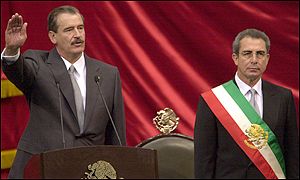 Reuters | Once praised lavishly by the United States for waging a war on drugs, Mexico's last two presidents now say legalizing them may be the best way to end the rising violence the U.S.-backed campaign has unleashed.
Ernesto Zedillo and Vicente Fox led efforts to crush drug trafficking gangs in Mexico between 1994 and 2006 but the rapid escalation of violence over the past four years under President Felipe Calderon has convinced them a change of tack is needed.
"As a country, we are going through problems due to the fact that the United States consumes too many drugs," the 68-year-old Fox told business leaders in Texas last month. "I would recommend to legalize, de-penalize all drugs."
Though public support for some legalization is growing on both sides of the border, resistance is firmly entrenched in the U.S. government and analysts say Mexico is very unlikely to liberalize its drug laws without Washington's approval.
Calderon is stuck between a rock and a hard place.
He has staked his reputation on breaking the cartels and is unlikely to press for radical change in what remains of his presidency but the death toll is surging and Zedillo, Fox and other former Latin American leaders are pressuring Mexico to consider opening up the market.
Victims' families are adding to the clamor for change.
Calderon has begun to soften the hard-line rhetoric that won him allies in Washington, stressing his readiness to discuss the merits of drug legalization.
"I'm completely open to this debate. Not just on consumption, but also on movement and production," he told a meeting with victims' families in Mexico City on Thursday.
But he added: "This issue goes beyond national borders. If there's no international agreement, it doesn't make sense."
Since he sent the army to fight the cartels in late 2006, some 40,000 people have died. If the rate of killing persists, the total will surpass U.S. combat deaths in the Vietnam War by the time a new president is elected in mid-2012.
the highs and the lows...,
 Haaretz | The electorate in the State of California voted against legalizing the cultivation and consumption of marijuana by a majority of 53% against 47% on November 2, 2010, a decision that, in my opinion, is wrong. Legalization would have constituted an important step in the search for an effective solution to the problem of crime linked to drug trafficking that, as it was recently officially announced, has caused a chilling total of 12,000 deaths in Mexico in 2010.
This solution lies in the decriminalization of drugs, an idea which until relatively recently was unacceptable to the bulk of public opinion convinced that police repression of producers, sellers and users of narcotics was the only legitimate method for ending such a plague. The reality has been revealing what is illusory in this idea. Research has shown that, despite the astronomical sums invested, and the huge movement of funds to combat it, the market for drugs has continued to grow. It has extended across the world, creating cartels that are immensely powerful, both in military and economic terms. As we have seen in Mexico ever since President Calderón decided to take on the drug bosses and their bands of mercenaries with the army as his weapon, the cartels are able to fight state governments as equals thanks to their power, while they infiltrate state governments through corruption and terror.
The millions of Californian voters who did vote to legalize marijuana are an auspicious indicator that there are a growing number of us who think that it is time to change policies regarding drugs. The time has come to reorient efforts, from repression to prevention, cure and information, in order to end the enormous levels of crime that prohibition creates, and the havoc that drug-trafficking wreaks on democratic institutions, especially in developing countries. The cartels can pay better salaries than the state, and in this way they can neutralize members of parliament, police, ministers, bureaucrats, or even have them at their service. They can finance political campaigns and acquire media outlets that defend their interests.
In this way, they provide employment and sustenance to many professional working in legitimate industry, business and companies through which they launder their vast profits. This dependency of such a large number of people on the drug industry creates a tolerant or indifferent mood in the face of everything that the industry brings with it. That is, degradation and the collapse of the law. This is a path that leads, sooner or later, to the suicide of democracy.
Subscribe to:
Comments (Atom)
Chipocalypse Now - I Love The Smell Of Deportations In The Morning
sky | Donald Trump has signalled his intention to send troops to Chicago to ramp up the deportation of illegal immigrants - by posting a...

-
theatlantic | The Ku Klux Klan, Ronald Reagan, and, for most of its history, the NRA all worked to control guns. The Founding Fathers...
-
 NYTimes | The United States attorney in Manhattan is merging the two units in his office that prosecute terrorism and international narcot...
 -
Wired Magazine sez - Biologists on the Verge of Creating New Form of Life ; What most researchers agree on is that the very first functionin...
