Wednesday, June 08, 2011

any sufficiently advanced technology is indistinguishable from magic


Video - Impressive 3-D lightshow on administration building Kharkiv, Ukraine

simple harmonic (and non-harmonic) motion


Video - Fifteen uncoupled simple pendulums of monotonically increasing lengths dance together to produce visual traveling waves, standing waves, beating, and (seemingly) random motion.

Harvard | What it shows: Fifteen uncoupled simple pendulums of monotonically increasing lengths dance together to produce visual traveling waves, standing waves, beating, and random motion. One might call this kinetic art and the choreography of the dance of the pendulums is stunning! Aliasing and quantum revival can also be shown.

How it works: The period of one complete cycle of the dance is 60 seconds. The length of the longest pendulum has been adjusted so that it executes 51 oscillations in this 60 second period. The length of each successive shorter pendulum is carefully adjusted so that it executes one additional oscillation in this period. Thus, the 15th pendulum (shortest) undergoes 65 oscillations. When all 15 pendulums are started together, they quickly fall out of sync—their relative phases continuously change because of their different periods of oscillation. However, after 60 seconds they will all have executed an integral number of oscillations and be back in sync again at that instant, ready to repeat the dance.

Setting it up: The pendulum waves are best viewed from above or down the length of the apparatus. Video projection is a must for a large lecture hall audience. You can play the video below to see the apparatus in action. One instance of interest to note is at 30 seconds (halfway through the cycle), when half of the pendulums are at one amplitude maximum and the other half are at the opposite amplitude maximum.

Comments: Our apparatus was built from a design published by Richard Berg 1 at the University of Maryland. He claims their version is copied from one at Moscow State University and they claim to have seen it first in the US, so we don't know who made one first. The apparatus we have was designed and built by Nils Sorensen.

James Flaten and Kevin Parendo2 have mathematically modeled the collective motions of the pendula with a continuous function. The function does not cycle in time and they show that the various patterns arise from aliasing of this function—the patterns are a manifestation of spatial aliasing (as opposed to temporal). Indeed, if you've ever used a digital scope to observe a sinusoidal signal, you have probably seen some of these patterns on the screen when the time scale was not set appropriately.

Here at Harvard, Prof Eric Heller has suggested that the demonstration could be used to simulate quantum revival. So here you have quantum revival versus classical periodicity!

Tuesday, June 07, 2011

have you discovered the beginning that you seek after the end?

Wikipedia | The tree of life (Heb. עץ החיים Etz haChayim) in the Book of Genesis is a tree planted by God in midst of the Garden of Eden (Paradise), whose fruit gives everlasting life, i.e. immortality. Together with the tree of life, God planted the tree of the knowledge of good and evil (Genesis 2:9). According to some scholars, however, these are in fact two names for the same tree.[1] According to the Encyclopædia Britannica, both are forms of the world tree.[2]

The Biblical account states that Adam and Eve were exiled from the Garden of Eden after eating from the tree of the knowledge of good and evil to prevent them from eating from the tree of life:
“ And the Lord God said, "The man has now become like one of us, knowing good and evil. He must not be allowed to reach out his hand and take also from the tree of life and eat, and live forever." (Genesis 3:22)[3] ”

By questioning God's word and authority, the serpent, who is regarded as Satan in Christianity but not in Judaism, initially tempted Eve into eating fruit from the tree of the knowledge of good and evil, an act explicitly forbidden by God. The serpent tempted Eve by suggesting that eating the fruit would cause her to become as wise as God, having knowledge of good and evil. Eve ate the fruit, against God's command to Adam and later so did Adam, despite God's warning that "in the day that you eat from it you shall surely die" (Genesis 2:17). As a consequence of their transgression, the land, the Serpent, Adam, and Eve were each cursed by God. To prevent them access to the tree of life God separated them from the tree of life, casting them out of the Garden. The banishment from the Garden of Eden is balanced in the New Testament by the planting of the tree of life on mankind's side of the divide.[citation needed]

In the Book of Revelation, a Koine Greek phrase xylon zoës (ξύλον ζωής) is mentioned 3 times. This phrase, which literally means "wood of life" is translated in nearly every English Bible version as "tree of life", see Revelation 2:7, 22:2, and 22:19.

The Eadwine Psalter, Circa 1150 AD

Alfonso Vel Magnanimo and Ancient Crown of Aragon


Basilica de Nossa Senhora da Conceicao da Praia

St. Michael's Church, Hildesheim Germany 1192 AD

Monday, June 06, 2011

america (TM)


Video - Behold the birth of the first Avenger.

EnergyBulletin | “Though shaken, the United States remains the world’s sole superpower and its largest consumer and polluter. For global civilization to get through peak oil and fight climate change, the US must stop obstructing international efforts to power down from fossil fuels and to cut greenhouse pollution.

But our nation will never abandon its suicidal consumerism and profligate use of energy until citizens overthrow what Adbusters’ Kalle Lasn has called America(TM).

Less a country than an ad campaign, America(TM) is a lifestyle where “cool” as defined by Nike, Apple and Calvin Klein is the ultimate value. You become cool by buying stuff you don’t need and replacing it as soon as you can with the new and improved model.
Standing as it does for conspicuous consumption and criminal excess, America(TM) is destroying our ecology while it poisons its own people with toxins physical and mental.
The spread of America(TM) around the world means that China builds a new coal plant every day and that Indians can buy a $3,000 car.

If America(TM) is not stopped, global ecological overshoot and resource depletion will soon reach catastrophic tipping points.

We need a Second American Revolution to take the (TM) out of America. And not from today’s travesty Tea Party, which is nothing more than a front group for corporate welfare. The original Tea Party was the opposite, as much a revolt against the oligarchy of the East India Company and other corporations of the day as against British rule. In this spirit, today’s revolutionaries must revolt against the capture of the organs of the state by plutocrats from Big Oil to Wall Street, who will never forgo their profits even it means the end of our nation.

To recognize the oligarchs, citizens must free themselves from the consumerism that has become the true opiate of the masses.

We must take back our minds and our wallets from corporate cool. Only then can we take back our country and help our humanity to have a future.”

anti-branding - subverting advertising


CIFS | The struggle to win the attention and sympathy of the consumers is tougher than ever before. But where management gurus and marketing chiefs speak in pleasant terms about "conquering mind space" through the use of branding, the Canadian activist Kalle Lasn is more brutally frank: "I call it mindfucking".

Kalle Lasn speaks in headlines and images like an advertising executive. That is no coincidence. The Estonian born Canadian worked as the director of a Japanese advertising agency during the sixties, but he got fed up with the trade's ethical neutrality and switched sides. Kalle Lasn is no longer creating ad campaigns for the business community. Today he - along with other so-called Culture Jammers - is creating campaigns against the big companies and their brands.

He is primarily known as the author of the book Culture Jam and the editor of Adbusters Magazine. See also the box below. These are publications that, along with Naomi Klein's widely renowned book, No Logo, have contributed to giving voice to a new generation of anti-business activists.

The movement really achieved visibility towards the end of the nineties. It happened, among other things, in connection with critical media campaigns against multinational companies that were accused of a lack of ethics, and with the violent demonstrations in 1999 in the streets of Seattle during the World Trade Organisation's summit meeting.

According to Kalle Lasn, this was just a foretaste of the cultural struggle of a new age, a struggle that will play out on the market between activists and the business community. The Culture Jammers' goal is to reduce the great symbolic power that the companies have in today's society - partly due to their massive marketing programs and use of branding aimed at the consumers.

subvertising

Subvertise | Subvertising is the Art of Cultural resistance. It is the "writing on the wall," the sticker on the lamppost, the corrected rewording of billboards, the spoof T-shirt; but it is also the mass act of defiance of a street party. The key process involves redefining or even reclaiming our environment from the corporate beast.

Does Subvertising Really Work?

While the motivation behind subvertising is clear, the impact this advertising (of sorts) has on the consumer is a little less obvious. While a consumer may see the ways in which they have been duped, what does this bring into the conversation about consumerism? It seems that just the presence of subvertising is enough to create a stir and to begin a conversation about capitalism and its effects on the world.

It’s true that many may see subvertising as an anarchistic way of attacking marketing and advertising, but in another way, it does bring up some good points. Why are consumers so drawn to the idea of images and to an emotional connection with the things we buy? Why can’t we simply buy things because we need them, rather than buying things because we feel we should, because we feel like they will make us better people?

Advertising plays on the most basic emotion of wanting to feel like a part of a group. But once we begin to dismiss this idea, we can begin to see that advertising today is nothing more than a trick. While slick marketing campaigns may not go away, they can certainly be questioned, mocked, and presented as pieces to be criticized instead of immediately accepted.

Ways to Create a Subvertising Campaign

Many people find that creating their own subvertising campaign will not only get them noticed, but it can begin to create a conversation about marketing and consumerism. There are a number of ways in which to start a campaign to subvertise: banners, cheap signs, license plates, political signs, real estate signs, and other street signs. Find a marketing campaign that is already popular in the market, then change it slightly to promote the message you want to promote.

You don’t have to be an artist to accomplish a strong subvertising campaign. With computer picture manipulation tools, you can adjust any image to create a new form of an old design.

By creating a sign that emulates a popular advertisement, it will not only get noticed, but it will begin to create the realization that maybe we are too dependent on marketing to tell us what to think. Try adding a few yard signs and vinyl banners to your community in order to see what happens. While subvertising may be subtle in its design, its impact is not.

Sunday, June 05, 2011

silk road

Wired | Making small talk with your pot dealer sucks. Buying cocaine can get you shot. What if you could buy and sell drugs online like books or light bulbs? Now you can: Welcome to Silk Road.

About three weeks ago, the U.S. Postal Service delivered an ordinary envelope to Mark’s door. Inside was a tiny plastic bag containing 10 tabs of LSD. “If you had opened it, unless you were looking for it, you wouldn’t have even noticed,” Mark told us in a phone interview.

Mark, a software developer, had ordered the 100 micrograms of acid through a listing on the online marketplace Silk Road. He found a seller with lots of good feedback who seemed to know what they were talking about, added the acid to his digital shopping cart and hit “check out.” He entered his address and paid the seller 50 Bitcoins — untraceable digital currency — worth around $150. Four days later, the drugs (sent from Canada) arrived at his house.

“It kind of felt like I was in the future,” Mark said.

Silk Road, a digital black market that sits just below most internet users’ purview, does resemble something from a cyberpunk novel. Through a combination of anonymity technology and a sophisticated user-feedback system, Silk Road makes buying and selling illegal drugs as easy as buying used electronics — and seemingly as safe. It’s Amazon — if Amazon sold mind-altering chemicals.

Here is just a small selection of the 340 items available for purchase on Silk Road by anyone, right now: a gram of Afghani hash; 1/8 ounce of “sour 13″ weed; 14 grams of ecstasy; .1 gram tar heroin. A listing for “Avatar” LSD includes a picture of blotter paper with big blue faces from the James Cameron movie on it.

The sellers are located all over the world, a large portion from the United States and Canada.

But even Silk Road has limits: You won’t find any weapons-grade plutonium, for example. Its terms of service ban the sale of “anything who’s purpose is to harm or defraud, such as stolen credit cards, assassinations, and weapons of mass destruction.”

faith in self-regulating systems has a sinister history


Video - Adam Curtis All Watched Over by Machines of Loving Grace - How the idea of the ecosystem was invented.

Guardian | At the end of March this year there was a wonderful moment of television interviewing on Newsnight. It was just after student protesters had invaded Fortnums and other shops in Oxford Street during the TUC march against the cuts. Emily Maitlis asked Lucy Annson from UK Uncut whether, as a spokesperson for the direct-action group, she condemned the violence.

Annson swiftly opened the door that leads to the nightmare interview, saying: "We are a network of people who self-organise. We don't have a position on things. It's about empowering the individual to go out there and be creative."

"But is it wrong for individuals to attack buildings?" asked Maitlis.

"You'd have to ask that particular individual," replied Annson.

"But you are a spokesperson for UK Uncut," insisted Maitlis. And Annson came out with a wonderful line: "No. I'm a spokesperson for myself."

What you were seeing in that interchange was the expression of a very powerful ideology of our time. It is the idea of the "self-organising network". It says that human beings can organise themselves into systems where they are linked, but where there is no hierarchy, no leaders and no control. It is not the old form of collective action that the left once believed in, where people subsumed themselves into the greater force of the movement. Instead all the individuals in the self-organising network can do whatever they want as creative, autonomous, self-expressive entities, yet somehow, through feedback between all the individuals in the system, a kind of order emerges.

At its heart it says that you can organise human beings without the exercise of power by leaders.

As a political position it is obviously very irritating for TV interviewers, which may or may not be a good thing. And it doesn't necessarily mean it isn't a valid way for organising protests – and possibly even human society. But I thought I would tell the brief and rather peculiar history of the rise of the idea of the "self-organising network".

Of course some of the ideas come out of anarchist thought. But the idea is also deeply rooted in a strange fantasy vision of nature that emerged in the 1920s and 30s as the British Empire began to decline. It was a vision of nature and – ultimately – the whole world as a giant system that could stabilise itself. And it rose up to grip the imagination of those in power – and is still central in our culture.

But we have long forgotten where it came from. To discover this you have to go back to a ferocious battle between two driven men in the 1920s. One was a botanist and Fabian socialist called Arthur Tansley. The other was one of the most powerful and ruthless rulers of the British Empire, Field Marshal Jan Smuts.

Saturday, June 04, 2011

man vs machine


Video - a terracotta army equipped with modern weapons.

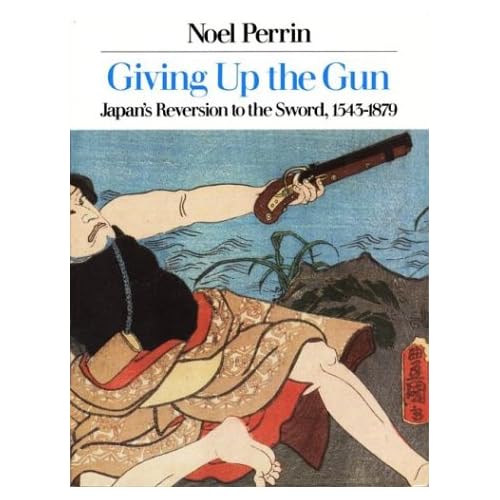
giving up the gun. japan's reversion to the sword, 1543-1879

SensibleOpenSource | This book takes a look at the society and the values this culture had to revert a technology that was unhealthy for the whole, the whole of society, environment and respect for life. The contrasts drawn in other societies throughout Europe also consider this technology an issue. However, the controlling of guns from these countries was from stance of oppression. Further, the control was not for the good of society with respect for life and the environment as a whole. It was simply, a control of power, in most cases government. The lack of focus on the proper control and Western Modernity propagates this unbalance. Even today, the majority of countries, Japan, inclusive, creates weapons that endanger human, environment and life with such intense focus the loss of their import is diminished by the weapon technology's shadow.

The author brings you through the Japanese history as well as accounts for other countries throughout the correposnding times. The few pictures present the reader with the reality of the nature in which the Japanese viewed the world of war and guns. Much like the art of swordsmanship for the Samurai. The greatest of all waste was tht a simple peasent, from a safe distance, could take the life of a highly Skilled, inteligent Samurai with very little practice. Not that dying by the sword in warfare was any better than with artillary. The rate in which killing could occur was staggering and to these people the first glimpse of WMD's were more destrcutive then any could imagine, at their time.

The greatest thought is that the 1.2M High Sumari and the 500,000 Low Samurai consumed the destruction, understood the cause and came to the conclusion that removal of this technology was far better for the whole. The reversioning to an older technology for the good of society. Could we do that today? Ever? With Nukes? It's a very interesting thought and one our leaders should contemplate with no disregard.

What would the Sumari think of carpet bombing, bunker busters or nukes?

Con
Pubmed | This delightful essay by Dartmouth English professor Noel Perrin indirectly challenges the relentless advance of science and technology by recounting a unique historical period in which one emergent technology was eschewed by a society favoring maintenance of the status quo ante. The author, without resort to allegory or polemic, gently cajoles his reader with an exemplary story-the story of firearms, or the lack of them, in Tokugawa Japan. This appealing episode ought to be evaluated, as the author insists, not solely by scholars of Japan, but by the rank-and-file of the scientific establishment. The thrust of Mr. Perrin's argument is to rebut by historical deposition the notion favored by many scientists that scientific revelation can never be ignored nor can its application for good or evil be held in abeyance. Indeed, our belief in the "manifest destiny" of scientific discovery has gained the weight of a law of thermodynamics.

Yet for over two centuries, from about 1637 to 1867, nearly the entire period in which feudal Japan was ruled from Edo (Tokyo) by the Tokugawa shoguns, the feudal lords (daimyo) and warrior class (bushi) ignored or disparaged the gun (matchlock) as a combat weapon. In Japan the sword was preeminent from the Shimabara Rebellion of 1637 to the Satsuma Rebellion of 1877-twenty-five years after Perry reintroduced Western firearms. This was a conscious choice not dictated by natural resources or skills in their manufacture or use. Mr. Perrin's thesis is that this period in the history of Japan, in which she was involved not at all with the outside world and banned Western Christianity, provides de facto evidence that mankind can turn his back on technological advance-if only he wishes.

Despite the charm and sincerity of this essay, its usefulness as an object lesson would necessitate a utopian vision that the author himself suggests in a postscript. Tokugawa Japan was the antithesis of utopian. Japan's turning away from guns was both aesthetic and pragmatic-the ruling class did not like them or need them-in fact, they were subversive. Japan "gave up the gun" shortly after its abortive occupation of Korea (1592-1598) and Shimabara Rebellion (1637), the "Alamo" of Christianity in Japan. It eagerly rearmed during its renewal of contact with the West (1852-1877) just before and during the Meiji Restoration. Nevertheless, it was precisely the same internal forces that determined both events. The sword and the dagger were endowed with ritual that marked the power of the bushi class, the samurai warrior, and noblesse oblige. Japan's first large-scale use of the gun in Korea was by the enlisted peasant-class soldiers (ui-samurai), not the samurai warriors. Soon after the Tokugawa shogun recognized that such "egalitarian" warfare was a dangerous, internal threat. In the great "Sword Hunt of 1597" Tokugawa Hideyoshi had the peasant class turn in all its weapons to be melted down to construct a statue to Buddha-a clever Machiavellian ploy.

Friday, June 03, 2011

eight families to rule them all - is this true?

GlobalResearch | The Four Horsemen of Banking (Bank of America, JP Morgan Chase, Citigroup and Wells Fargo) own the Four Horsemen of Oil (Exxon Mobil, Royal Dutch/Shell, BP and Chevron Texaco); in tandem with Deutsche Bank, BNP, Barclays and other European old money behemoths. But their monopoly over the global economy does not end at the edge of the oil patch.

According to company 10K filings to the SEC, the Four Horsemen of Banking are among the top ten stock holders of virtually every Fortune 5http://www.blogger.com/img/blank.gif00 corporation.[1]

So who then are the stockholders in these money center banks?

This information is guarded much more closely. My queries to bank regulatory agencies regarding stock ownership in the top 25 US bank holding companies were given Freedom of Information Act status, before being denied on “national security” grounds. This is rather ironic, since many of the bank’s stockholders reside in Europe.

One important repository for the wealth of the global oligarchy that owns these bank holding companies is US Trust Corporation - founded in 1853 and now owned by Bank of America. A recent US Trust Corporate Director and Honorary Trustee was Walter Rothschild. Other directors included Daniel Davison of JP Morgan Chase, Richard Tucker of Exxon Mobil, Daniel Roberts of Citigroup and Marshall Schwartz of Morgan Stanley. [2]

J. W. McCallister, an oil industry insider with House of Saud connections, wrote in The Grim Reaper that information he acquired from Saudi bankers cited 80% ownership of the New York Federal Reserve Bank- by far the most powerful Fed branch- by just eight families, four of which reside in the US. They are the Goldman Sachs, Rockefellers, Lehmans and Kuhn Loebs of New York; the Rothschilds of Paris and London; the Warburgs of Hamburg; the Lazards of Paris; and the Israel Moses Seifs of Rome.

CPA Thomas D. Schauf corroborates McCallister’s claims, adding that ten banks control all twelve Federal Reserve Bank branches. He names N.M. Rothschild of London, Rothschild Bank of Berlin, Warburg Bank of Hamburg, Warburg Bank of Amsterdam, Lehman Brothers of New York, Lazard Brothers of Paris, Kuhn Loeb Bank of New York, Israel Moses Seif Bank of Italy, Goldman Sachs of New York and JP Morgan Chase Bank of New York. Schauf lists William Rockefeller, Paul Warburg, Jacob Schiff and James Stillman as individuals who own large shares of the Fed. [3] The Schiffs are insiders at Kuhn Loeb. The Stillmans are Citigroup insiders, who married into the Rockefeller clan at the turn of the century.

Eustace Mullins came to the same conclusions in his book The Secrets of the Federal Reserve, in which he displays charts connecting the Fed and its member banks to the families of Rothschild, Warburg, Rockefeller and the others. [4]

The control that these banking families exert over the global economy cannot be overstated and is quite intentionally shrouded in secrecy. Their corporate media arm is quick to discredit any information exposing this private central banking cartel as “conspiracy theory”. Yet the facts remain.

welcome to post-legal america

TomDispatch | Is the Libyan war legal? Was Bin Laden’s killing legal? Is it legal for the president of the United States to target an American citizen for assassination? Were those “enhanced interrogation techniques” legal? These are all questions raised in recent weeks. Each seems to call out for debate, for answers. Or does it?

Now, you couldn’t call me a legal scholar. I’ve never set foot inside a law school, and in 66 years only made it onto a single jury (dismissed before trial when the civil suit was settled out of court). Still, I feel at least as capable as any constitutional law professor of answering such questions.

My answer is this: they are irrelevant. Think of them as twentieth-century questions that don't begin to come to grips with twenty-first century American realities. In fact, think of them, and the very idea of a nation based on the rule of law, as a reflection of nostalgia for, or sentimentality about, a long-lost republic. At least in terms of what used to be called “foreign policy,” and more recently “national security,” the United States is now a post-legal society. (And you could certainly include in this mix the too-big-to-jail financial and corporate elite.)

It’s easy enough to explain what I mean. If, in a country theoretically organized under the rule of law, wrongdoers are never brought to justice and nobody is held accountable for possibly serious crimes, then you don’t have to be a constitutional law professor to know that its citizens actually exist in a post-legal state. If so, “Is it legal?” is the wrong question to be asking, even if we have yet to discover the right one.

rep. roscoe bartlett says "hide'ya kids, hide'ya wife"


Video - Rep. Roscoe Bartlett says you should get you and your family out of major cities.

Thursday, June 02, 2011

bitcoin vs. central bankers


Video - Jon Matonis talks about BitCoin. A method of paying each other which does not rely on your currency being smashed by the devaluations and printing of central banks and politicians.

BitcoinNews | Max interviews guest Jon Matonis who introduces Bitcoin to the RT audience.

“Overall though, I do think the exchangers are the weakest link in the chain”.

“On the government level I think what this is going to actually lead to is a move and a shift away from the model of taxing income and I think you’re going to start to see governments move towards some type of consumption-based tax or headcount-type tax and the reason is because the income levels of individuals are going to become more and more difficult to ascertain”

“I believe digital cash will do to legal tender what BitTorrents did to copyrights”. Fist tap Dale.

punk...,

paulchefurka | Once I understood and accepted that the disintegration of our civilization is already underway, I spent a number of years trying to get people to change their beliefs and their behaviour. I felt that if they made the changes I was proposing they could make a "good" outcome more likely. I was disappointed when my exhortations and hectoring fell on mostly deaf ears - whenever I wasn't just preaching to the choir, that is. It was Cassandra's dilemma too.

The more I tried to promote change, however, the more I suffered. But the suffering didn't spring simply from the pain of disappointment. It went much deeper than that, and eventually precipitated my Dark Night of the Soul. The Buddha was right when he taught that all suffering springs from attachment. In my case the attachment was to a particular outcome - my vision of a sustainable, just, ecologically conscious society that made room for all living things on the planet, not just our relatives and friends. When that outcome was thwarted through public indifference and even hostility, I suffered mightily.

Fortunately, I went through a transformation about three years ago. The shift was complete enough that it enabled me to detach from outcomes while still remaining committed to the awareness of what's going on. At the same time I adopted the position that this reality is co-created by all its participants, and that at some level the nature of reality and our individual roles in it have been consciously chosen by us all. At that point, I realized that I had been working at cross purposes to the reality that was unfolding. The ongoing transformation, even if it becomes a collapse of civilization, is not meant to be stopped. Rather, it is the vessel within which our conscious awareness is being nurtured, developed and annealed. This leads to the rather uncomfortable conclusion that the collapse is not to be lamented or prevented, but rather to be celebrated and engaged. It will come as no surprise to those on similar journeys that when I surrendered to this understanding, my suffering ceased.

From that perspective, I decided that the most useful thing I can do - something that is aligned with the point of the exercise rather than in opposition to it - is simply to contribute my little bits of awareness to the field. I try to do it without expectation or attachment, without trying to elicit a particular response or outcome. Just put the awareness out there. Those who aren't ready for it yet will ignore or reject it, those who don't yet see it but are ready may awaken a bit more, those who are already aware may find some fresh nuance to play with. Whatever role my observations and discussions play in the unfoldment is the part they are meant to play. This is what I call "vocal witnessing".

I still care very deeply about what's happening, but I now remain relatively unattached to how it might unfold in the future. As a result I avoid talking about solutions as much as possible, largely because I don't think there are any - at least at the level most people think of "solutions" (like new policies or new technologies) The point of all this apparently catastrophic unfoldment is not for us to "solve the problem", but for for us to wake up.

I agree completely with the writer Charles Eisenstein ("The Ascent of Humanity") and other observers - we do not have a soluble problem, we have an insoluble predicament. Because of that, our most useful response will be at right angles to the problem space. That means that the door out of this mess isn't going to be opened by a new version of our old ways (new legislation, clean energy and more recycling) although that will play a role. The real doorway out will be found by shifting into a completely new way of being - the revolution of consciousness that so many of us know in our bones is just around the corner.

These days I'm putting all my chips on abetting that r/evolution of human consciousness, by acting as a vocal witness to the unfolding collapse.

fighting a system designed to never put nature first

Alternet | It takes thousands of years for individual drops of rain to maneuver through silent passages and gently accumulate into underground aquifers. Purified and enriched over the millennia by mineral deposits deep in the earth, groundwater is the sacred lifeblood of local watersheds upon which all life -- including human communities -- depend. Yet it takes no time at all to destroy this delicate balance. In fact, all it takes is a simple piece of paper.

Steeped in colonial history, Nottingham, New Hampshire, could be a picture postcard of quaint village life in New England. Yet in 2001, this tiny rural village of 4,000 residents became the poster child for too familiar "site-fights" between small towns seeking to protect local water and large multinational corporations seeking to extract it. It was then that the USA Springs Corporation applied to the state for a permit to extract more than 400,000 gallons of water a day from Nottingham's local aquifer to bottle and sell overseas.

Corporate water withdrawals -- siphoning off hundreds of thousands of gallons a day from local aquifers -- impact both surface and groundwater resources. They deplete drinking water and can contaminate aquifers and wells. In addition, withdrawals dry up streams, wetlands, and rivers, as well as reduce lake levels, damaging habitat and harming wildlife.

For seven years the community of Nottingham came together to stop their water from being mined. Upon discovering that our own laws forbid communities from saying "no" to the wide array of dirty, destructive and unwanted practices allowed by law, they attempted to protect their local groundwater using all the tools available under the law. They did everything "right" by traditional, conventional environmental activism. They lobbied their state legislature, petitioned their government, testified at hearings, protested, rallied, educated and organized their neighbors and filed lawsuits. But as is so often the case, it just wasn't enough.

When the people of Nottingham beseeched their state environmental agency, the New Hampshire Department of Environmental Services, to take effective action and protect the aquifer, their requests went unmet. Instead of helping them protect their water, the agency was in fact responsible for issuing permits to the corporation to take it.

Is the system broken or working perfectly?

The experience of Nottingham is shared by thousands of communities across the United States and around the world that discover that their government officials and agencies -- ostensibly in place to protect them -- are, in practice, serving other interests.

The question that the people of Nottingham were forced to ask is, "why?" Why are corporations allowed to override community concerns and put destructive projects in our midst? Why do our environmental laws and regulations, rather than put in place protections for the environment, instead seem to be written to exploit it? And why is our government helping a corporation to extract water from a community and sell it for profit, when the impacts from such projects are so significant?

These are the questions that people and communities find themselves asking when they face the threat of water extraction, mining, drilling, or a range of other activities. Based on the assumption that environmental legislation was in earnest set up to protect Nature, much of our environmental activism has logically been spent trying to "fix" what appears broken; seeking to improve the types of laws and regulations that Nottingham ran into.

Chipocalypse Now - I Love The Smell Of Deportations In The Morning

sky |   Donald Trump has signalled his intention to send troops to Chicago to ramp up the deportation of illegal immigrants - by posting a...