Friday, February 11, 2011

the miracle of tahrir square

Guardian | One cannot but note the "miraculous" nature of the events in Egypt: something has happened that few predicted, violating the experts' opinions, as if the uprising was not simply the result of social causes but the intervention of a mysterious agency that we can call, in a Platonic way, the eternal idea of freedom, justice and dignity.

The uprising was universal: it was immediately possible for all of us around the world to identify with it, to recognise what it was about, without any need for cultural analysis of the features of Egyptian society. In contrast to Iran's Khomeini revolution (where leftists had to smuggle their message into the predominantly Islamist frame), here the frame is clearly that of a universal secular call for freedom and justice, so that the Muslim Brotherhood had to adopt the language of secular demands.

The most sublime moment occurred when Muslims and Coptic Christians engaged in common prayer on Cairo's Tahrir Square, chanting "We are one!" – providing the best answer to the sectarian religious violence. Those neocons who criticise multiculturalism on behalf of the universal values of freedom and democracy are now confronting their moment of truth: you want universal freedom and democracy? This is what people demand in Egypt, so why are the neocons uneasy? Is it because the protesters in Egypt mention freedom and dignity in the same breath as social and economic justice?

From the start, the violence of the protesters has been purely symbolic, an act of radical and collective civil disobedience. They suspended the authority of the state – it was not just an inner liberation, but a social act of breaking chains of servitude. The physical violence was done by the hired Mubarak thugs entering Tahrir Square on horses and camels and beating people; the most protesters did was defend themselves.

Although combative, the message of the protesters has not been one of killing. The demand was for Mubarak to go, and thus open up the space for freedom in Egypt, a freedom from which no one is excluded – the protesters' call to the army, and even the hated police, was not "Death to you!", but "We are brothers! Join us!". This feature clearly distinguishes an emancipatory demonstration from a rightwing populist one: although the right's mobilisation proclaims the organic unity of the people, it is a unity sustained by a call to annihilate the designated enemy

hypocrisy is exposed by the wind of change


Video - Protestors angry after Mubarak says "dyin-time's here"


Independent | So when the Arabs cry out for the very future that Obama outlined, we show them disrespect.

There is nothing like an Arab revolution to show up the hypocrisy of your friends. Especially if that revolution is one of civility and humanism and powered by an overwhelming demand for the kind of democracy that we enjoy in Europe and America. The pussyfooting nonsense uttered by Obama and La Clinton these past two weeks is only part of the problem. From "stability" to "perfect storm" – Gone With the Wind might have recommended itself to the State Department if they really must pilfer Hollywood for their failure to adopt moral values in the Middle East – we've ended up with the presidential "now-means-yesterday", and "orderly transition", which translates: no violence while ex-air force General Mubarak is put out to graze so that ex-intelligence General Suleiman can take over the regime on behalf of America and Israel.

Fox News has already told its viewers in America that the Muslim Brotherhood – about the "softest" of Islamist groups in the Middle East – is behind the brave men and women who have dared to resist the state security police, while the mass of French "intellectuals" (the quotation marks are essential for poseurs like Bernard-Henri Lévy have turned, in Le Monde's imperishable headline, into "the intelligentsia of silence".

And we all know why. Alain Finkelstein talks about his "admiration" for the democrats but also the need for "vigilance" - and this is surely a low point for any 'philosophe' – "because today we know above all that we don't know how everything is going to turn out." This almost Rumsfeldian quotation is gilded by Lévy's own preposterous line that "it is essential to take into account the complexity of the situation". Oddly enough that is exactly what the Israelis always say when some misguided Westerner suggests that Israel should stop stealing Arab land in the West Bank for its colonists.

Indeed Israel's own reaction to the momentous events in Egypt – that this might not be the time for democracy in Egypt (thus allowing it to keep the title of "the only democracy in the Middle East") – has been as implausible as it has been self-defeating. Israel will be much safer surrounded by real democracies than by vicious dictators and autocratic kings. To his enormous credit, the French historian Daniel Lindenberg told the truth this week. "We must, alas, admit the reality: many intellectuals believe, deep down, that the Arab people are congenitally backward."

There is nothing new in this. It applies to our subterranean feelings about the whole Muslim world. Chancellor Merkel of Germany announces that multiculturalism doesn't work, and a pretender to the Bavarian royal family told me not so long ago that there were too many Turks in Germany because "they didn't want to be part of German society". Yet when Turkey itself – as near a perfect blend of Islam and democracy as you can find in the Middle East right now – asks to join the European Union and share our Western civilisation, we search desperately for any remedy, however racist, to prevent her membership.

cia director spoke too soon...,


Video - James David Manning calls for Panetta's firing.

WaPo | CIA Director Leon Panetta helped touch off an avalanche of erroneous expectations Thursday when he testified that there was a "strong likelihood" that Egyptian President Hosni Mubarak would step down by the end of the day.

Within minutes, senior aides to Panetta sought to tamp down the impact, saying he was merely referring to media reports. But by then, the comments had ricocheted around the Internet, underscoring U.S. confusion about events unfolding in Egypt, as well as the perils of publicly weighing in on such developments while serving as director of CIA.

The agency has been under pressure to help President Obama and other policymakers navigate the crisis in Egypt, even though its outcome is largely contingent on the internal deliberations of one man.

Panetta acknowledged the daunting aspect of that assignment in testimony before the House intelligence committee, saying that for spy services, "our biggest problem is always: How do we get into the head of somebody?"

Even within Egypt's government, there has been confusion about Mubarak's intentions. His defiant speech Thursday evening, in which he vowed to stay in office until elections are held in September, when his term ends, came after Egyptian military officials had signaled Mubarak's imminent departure earlier in the day.

Panetta, who had little intelligence experience before taking the CIA job two years ago, has been praised for his skill in leading a notoriously temperamental agency, and for handling public controversies with a deft touch.

His testimony Thursday as part of an annual hearing on national security threats, which coincided with new chaos in Cairo, seemed to mark a rare misstep.

Unlike other senior intelligence officials who were more circumspect in their comments on Egypt, Panetta did not hesitate in offering assessments of the rapidly shifting events.

police struggle to adapt to uk's agile protest movement

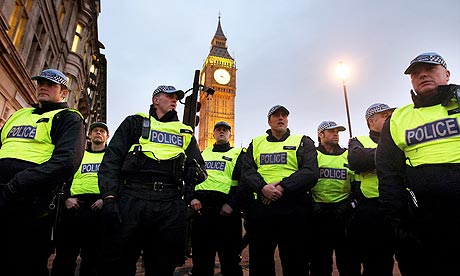
Guardian | Senior police officers are struggling to keep up with the UK's increasingly fast-paced and agile protest movement, according to a report by an official watchdog.

The review points to groups such as UK Uncut, the Twitter-based campaign against tax avoidance, and the recent spate of student protests as evidence of a fast-evolving movement.

However, it reveals that by far the largest public order burden facing police forces, in terms of boots required on the ground, is demonstrations organised by the far-right English Defence League (EDL) campaign group.

Produced by Her Majesty's Inspectorate of Constabulary (HMIC), the report seeks to assess the extent to which police forces have changed their tactics in the aftermath of the Metropolitan police's controversial handling of the G20 protests in London. The HMIC called for wide-scale reform after the protests, which resulted in the death of a bystander, Ian Tomlinson.

While some forces have learned lessons, and the Association of Chief Police Officers has produced a new manual for public order policing, reforms are yet to filter down to training rank and file officers, the report says. "The pace of these changes can be measured in months, if not years. These timeframes may not, even then, include the additional time needed to train officers performing the key roles on the frontline, or in command," it states.

A "relatively quiet" era of protest is giving way to one that is "faster moving and more unpredictable", the report states. Reforms include the significant curtailment of police Forward Intelligence Teams (FITs), which photograph and film protesters, and more limited use of stop and search powers. But training has not been fully rolled out across the country and less than a third of commanders have learned the revised guidelines.

The chief inspector of constabulary, Sir Denis O'Connor, said there were signs of reform, but the "fast-changing character" of protest meant a need for renewed urgency. "We found lots of evidence of [police forces] changing things. They have changed the training, they have changed the guidance, they have done a lot of work on human rights," he said. He said police were looking at how they can use social media, including Twitter, and adapt British "toe to toe" public order policing.

"The world is changing, and it is requiring pretty rapid changes in policing, in the way we balance things in this democracy. The police are doing things – the question is can they do it quickly enough to keep up with the fast world we're all in."

Thursday, February 10, 2011

hosni mubarak's promise


Video - Hosni Mubarak making a promise to "his people" about what's next.

captive nation: egypt and the west

MediaLens | In 1886, Tolstoy wrote:

‘Slavery has long been abolished. It was abolished in Rome, and in America, and in Russia, but what was abolished was the word and not the thing in itself.’ (Tolstoy, What Then Must We Do?, Green Classics, 1991, p.104)
In 2011, ‘the thing in itself’ is alive and well in Egypt. What an extraordinary spectacle it is - a dictatorship behaving as though an entire people were its personal property. Henchmen aside, the people have spoken, almost as one, and their demands are very clear. The blunt government response, in effect: We react as we want. If we don’t want to, we don’t have to. Why? Because we have a monopoly of violence.

A government thus stands exposed for what it is, a parasite feeding off the people it claims to represent.

And what of the West? Obama - Washington's bargain basement bodhisattva - said:
‘We pray that the violence in Egypt will end and that the rights and aspirations of the Egyptian people will be realised and that a better day will dawn over Egypt and throughout the world.’
Tolstoy, again, had the perfect retort:
‘I came to the simple and natural conclusion that if I pity a tired horse on which I am riding, the first thing I must do if I am really sorry for it, is to get off and walk on my own feet.’ (Tolstoy, op. cit., p.111)
But this the US elites pulling Obama’s strings will never do of their own volition – they have been riding the tired horse far too long. Thus, Hillary Clinton said of the Egyptian dictator on March 10, 2009:
‘I really consider President and Mrs. Mubarak to be friends of my family. So I hope to see him often here in Egypt and in the United States.’


Thus, Middle East Envoy, Tony Blair, said of Mubarak on February 1, 2011:
‘Well, where you stand on him depends on whether you've worked with him from the outside or on the inside. And for those of us who worked with him over the - particularly now I worked with him on the Middle East peace process between the Israelis and the Palestinians, so this is somebody I'm constantly in contact with and working with. And on that issue, I have to say, he's been immensely courageous and a force for good.’
As ever, Blair knows: he is ‘on the inside’ and has ‘worked with him’. As ever, Blair is sincere: ‘I have to say’ - truth compels him. As ever, Blair’s ‘force for good’ is enforcing somebody’s hell.

On January 30, 2011, Human Rights Watch (HRW) published a report, ‘“Work on Him Until He Confesses” - Impunity for Torture in Egypt.’

The report observes:
According to Egyptian lawyers and domestic and international human rights groups… law enforcement officials have used torture and ill-treatment on a widespread, deliberate, and systematic basis over the past two decades to glean confessions and information, or to punish detainees. The United Nations Committee Against Torture has confirmed the systematic nature of torture in Egypt.’

Abuses include ‘beatings, electric shocks, suspension in painful positions, forced standing for long periods, waterboarding, as well as rape and threatening to rape victims and their family’.

The horrors constitute ‘an epidemic of habitual, widespread, and deliberate torture perpetrated on a regular basis by security forces against political dissidents, Islamists allegedly engaged in terrorist activity, and ordinary citizens suspected of links to criminal activity or who simply look suspicious’.
Our search of the LexisNexis database found that HRW’s report has so far received three mentions in the national UK press.

who are the egyptian protestors and what do they want?

Foreign Affairs | Americans have proven remarkably sympathetic to Egypt’s protests, which are now entering their third week. But in trying to make sense of a complex situation, most commentators have glossed over the varying demands of the opposition’s different elements.

Egypt’s reform factions share a belief in an orderly transition to representative government but reflect wildly divergent political ideologies. At the head of the movement stands Mohamed El Baradei, the former director general of the International Atomic Energy Agency, and his National Association for Change. The NAC is not a legal political party but rather an umbrella group organized around El Baradei’s demands for an end to Egypt’s decades-long state of emergency and for the introduction of democratic and constitutional reforms. Although it is relatively small and not well organized it has recently gained popularity among Egyptians everywhere.

Groups that have rallied around the NAC include the April 6 Movement and Kefaya (Enough). For the last two years the April 6 Movement has organized demonstrations in support of workers’ rights and is now calling for increasing Egypt’s minimum wage. In 2008, it supported Egypt’s first major labor strikes in decades, in the industrial town of Mahalla, on the Nile Delta.

Kefaya -- founded in 2004 to protest Egyptian President Hosni Mubarak’s candidacy for yet another term -- wants the government to amend the constitution to liberalize the political system. Led by the leftist activist George Ishak, the former head of the country’s union of Catholic schools, it has blossomed into a coalition that includes leftists, liberals, and Islamists. It serves as an umbrella movement for protests against Mubarak’s continued rule and in favor of an independent judiciary.

These have been joined by the Khaled Said Group (named for a young blogger beaten to death by the Egyptian police), which advocates an end to police brutality across the country, and the March 9 Movement, which strives to make universities independent from state interference. The liberal El-Ghad party (led by Ayman Nour), the liberal Democratic Front (led by Osama Ghazali Harb), and the Nasserite Arab nationalist Karama party (led by Hamden El-Sabahi), have all called for a more democratic system. None of these groups is more than eight years old, and El Baradei’s NAC was formed only last year.

Meanwhile, the traditional parties and movements that have existed for most of the Mubarak era -- such as the liberal Wafd Party, the socialist National Progressive Union, and the Muslim Brotherhood -- continue to call for political reforms as they have for almost three decades. The Brotherhood is the best organized and funded of the three, and its status as an illegal but tolerated organization gives it more autonomy in its finances and internal structure. None of these groups instigated the protests in Egypt, but all have helped sustain them.

The most immediate disagreement among the protest groups is whether they should negotiate with the current regime or demand its ouster. Indeed, the protest movement began to splinter on February 1, when Mubarak announced that he would not run for office in September and would enter dialogue with opposition parties.

Over the past several days, the newly installed vice president and a former intelligence chief, Omar Suleiman, has been meeting with opposition leaders to persuade them to allow Mubarak to remain in office and carry out political reforms. The opposition groups disagree about whether they can compel the government to implement reform, given that country’s cabinet, parliament, and security forces are all still controlled by Mubarak. So some key elements of the opposition -- including El Baradei, Nour, Harb, and the protesters in Tahrir Square -- have refused the government’s plan of allowing the Mubarak regime to enact reforms at its own pace.

What will happen next is difficult to predict.

oil tankers in the wake of the egyptian crisis

Peak Oil News | Gail Tverberg’s analysis of some of the underlying causes of the current Egyptian crisis is cogent, but one of the other consequences caught my attention today. For, as was noted in Forbes
While most equity-related assets got battered, a select group of stocks, oil shippers, were corking champagne bottles. Apart from Overseas Shipholding, Frontline Ltd. had a killer day, gaining 7.8% or $1.96 to $27.10.

An analyst for a shipping hedge fund explained that the spike is connected to fears surrounding the continued operations of the Suez Canal, amidst social unrest caused by massive riots against President Hosni Mubarak’s 30 year rule. “While Suez closure is not much of a threat, shippers are refusing to load in the Red Sea and transit the Canal,” explained the trader. “What’s probably going to happen is that they re-rout ships to the Cape [of Good Hope],” he noted.

“[Re-routing] makes voyages longer, which ties up ships and in turn diminishes supply,” said the analyst, “[this] is positive for the tanker market."
The change involved is not just giving a tanker captain a different map and saying “get on with it.” Because of the relative size of the Suez Canal, there are different sizes of tankers involved, and so I thought it useful to talk about the different sizes of tankers, how fast and where they go, (and what the cost of that re-routing might be) in the post today.

To begin with let’s look at the traffic along the Suez Canal itself. Note that there is no immediate port of access into the Mediterranean, and thus to Europe, from Saudi Arabia or the nations of the Gulf. Fist tap Big Don

american warships headed to egypt

Washington's Blog | Connecticut's newspaper The Day noted on January 24th:
Connecticut National Guard Detachment 2, Company I, 185th Aviation Regiment of Groton has mobilized and will deploy to the Sinai Peninsula, Egypt, to support the Multinational Force and Observers.

The unit left Connecticut Jan. 15 for Fort Benning, Ga., for further training and validation. The unit operates C-23C Sherpa aircraft and has deployed three times in the last seven years in support of the conflicts in Iraq and Afghanistan.

The unit will provide an on-demand aviation asset to the Multinational Force and Observers commander to support its mission of supervising the security provisions of the Egypt/ Israel Peace Treaty.
Yesterday, the Los Angeles Times reported:
The Pentagon is moving U.S. warships and other military assets to make sure it is prepared in case evacuation of U.S. citizens from Egypt becomes necessary, officials said Friday.

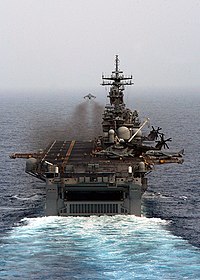
The Kearsarge, an amphibious assault ship carrying 700 to 800 troops from the 26th Marine Expeditionary Unit, and the Ponce have arrived in the Red Sea, putting them off Egypt’s shores in case the situation worsens.

Pentagon officials emphasized that military intervention in Egypt was not being contemplated and that the warships were being moved only for contingency purposes in case evacuations became necessary.

In addition to the Marines, the Kearsarge normally carries around four dozen helicopters and harrier jets that would permit evacuations and other humanitarian operations, the officials said. More than 1,000 Marines from the Kearsarge were sent to Afghanistan last month on a temporary deployment, leaving roughly one-third still aboard, officials said.
The Kearsarge is an attack vessel.

Wednesday, February 09, 2011

wikileaks cables: saudi oil reserves vastly overstated

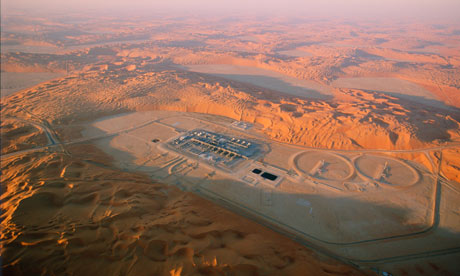
Guardian | The US fears that Saudi Arabia, the world's largest crude oil exporter, may not have enough reserves to prevent oil prices escalating, confidential cables from its embassy in Riyadh show.

The cables, released by WikiLeaks, urge Washington to take seriously a warning from a senior Saudi government oil executive that the kingdom's crude oil reserves may have been overstated by as much as 300bn barrels – nearly 40%.

The revelation comes as the oil price has soared in recent weeks to more than $100 a barrel on global demand and tensions in the Middle East. Many analysts expect that the Saudis and their Opec cartel partners would pump more oil if rising prices threatened to choke off demand.

However, Sadad al-Husseini, a geologist and former head of exploration at the Saudi oil monopoly Aramco, met the US consul general in Riyadh in November 2007 and told the US diplomat that Aramco's 12.5m barrel-a-day capacity needed to keep a lid on prices could not be reached.

According to the cables, which date between 2007-09, Husseini said Saudi Arabia might reach an output of 12m barrels a day in 10 years but before then – possibly as early as 2012 – global oil production would have hit its highest point. This crunch point is known as "peak oil".

Husseini said that at that point Aramco would not be able to stop the rise of global oil prices because the Saudi energy industry had overstated its recoverable reserves to spur foreign investment. He argued that Aramco had badly underestimated the time needed to bring new oil on tap.

One cable said: "According to al-Husseini, the crux of the issue is twofold. First, it is possible that Saudi reserves are not as bountiful as sometimes described, and the timeline for their production not as unrestrained as Aramco and energy optimists would like to portray."

It went on: "In a presentation, Abdallah al-Saif, current Aramco senior vice-president for exploration, reported that Aramco has 716bn barrels of total reserves, of which 51% are recoverable, and that in 20 years Aramco will have 900bn barrels of reserves.

"Al-Husseini disagrees with this analysis, believing Aramco's reserves are overstated by as much as 300bn barrels. In his view once 50% of original proven reserves has been reached … a steady output in decline will ensue and no amount of effort will be able to stop it. He believes that what will result is a plateau in total output that will last approximately 15 years followed by decreasing output."

The US consul then told Washington: "While al-Husseini fundamentally contradicts the Aramco company line, he is no doomsday theorist. His pedigree, experience and outlook demand that his predictions be thoughtfully considered."

the spice must flow...,


Video - Call for Suez Canal workers to strike

zerohedge | And here we go:
Suez Canal Company workers from the cities of Suez, Port Said, and Ismailia began an open-ended sit in today. Disruptions to shipping movements, as well as disasterous econmic losses, are expected if the strike continues. Over 6000 protesters have agreed that they will not go home today once their shift is over and will continue their in front of the company's headquarters until their demands are met. They are protesting against poor wages and deteriorating health and working conditions.
And just to make sure that there is complete confusion, here's Bloomberg with an earlier comment:
Egypt’s Suez Canal shipping traffic is operating normally, Mohamed Motair, director of companies at the Suez Canal Authority, said by telephone today
Update from Reuters:
According to a senior canal official, Egypt's Suez Canal operating normally, strikes by companies owned by Suez Authority are not involved in Canal operations
Keep an eye on oil, which jumped on the news

recognizing the language of tyranny


Video - Andrew Napolitano and Marc Lamont Hill discussing political language in a free society.

Commondreams | The narratives we hear are those fabricated for us by the state, Hollywood and the press. These narratives are taught in our schools, preached in our pulpits and celebrated in war documentaries such as “Restrepo.” These narratives humanize and ennoble the enforcers of empire. The government, the military, the police and our intelligence agents are lionized. These control groups, we are assured, are the guardians of our virtues and our protectors. They produce our heroes. And those who challenge this narrative—who denounce the lies—become the enemy.

Those who administer empire—elected officials, corporate managers, generals and the celebrity courtiers who disseminate the propaganda—become very wealthy. They make immense fortunes whether they deliver the nightly news, sit on the boards of corporations, or rise, lavished with corporate endorsements, within the vast industry of spectacle and entertainment. They all pay homage, even in moments defined as criticism, to the essential goodness of corporate power. They shut out all real debate. They ignore flagrant injustices and abuse. They peddle the illusions that keep us passive and amused. But as our society is reconfigured into an oligarchic system, with a permanent and vast underclass, along with a shrinking and unstable middle class, these illusions lose their power. The language of pleasant deception must be replaced with the overt language of force. It is hard to continue to live in a state of self-delusion once unemployment benefits run out, once the only job available comes without benefits or a living wage, once the future no longer conforms to the happy talk that saturates our airwaves. At this point rage becomes the engine of response, and whoever can channel that rage inherits power. The manipulation of that rage has become the newest task of the corporate propagandists, and the failure of the liberal class to defend core liberal values has left its members with nothing to contribute to the debate.

The Belgian King Leopold, promising to abolish slavery and usher the Congolese into the “modern” era, was permitted by his European allies to form the Congo Free State in 1885. It was touted as a humanitarian gesture, as was the Spanish conquest of the Americas, as was our own occupation of Iraq. Leopold organized a ruthless force of native and foreign overseers—not unlike our own mercenary armies—to loot the Congo of ivory and rubber. By the time the Belgian monarch was done, some 5 million to 8 million Congolese had been slaughtered. It was the largest act of genocide in the modern era until the Nazi Holocaust. Leopold, even in the midst of his rampage, was lionized in Europe for his virtue. He was loathed in the periphery—as we are in Iraq and Afghanistan—where the Congolese and others understood what he was about. But these voices, like the voices of those we oppress, were almost never heard.

The Nazis, for whom the Holocaust was as much a campaign of plunder as it was a campaign to rid Europe of Jews, had two methods for greeting arrivals at their four extermination camps. If the transports came from Western Europe, the savage Ukrainian and Lithuanian guards, with their whips, dogs and clubs, were kept out of sight. The wealthier European Jews were politely ushered into an elaborate ruse, including fake railway stations complete with flower beds, until once stripped naked they became incapable of resistance and could be herded in rows of five under whips into the gas chambers. The Nazis knew that those who had not been broken, those who possessed a belief in their own personal empowerment, would fight back. When the transports came from the east, where Jews had long lived in fear, tremendous poverty and terror, there was no need for such theatrics. Mothers, fathers, the elderly and children, accustomed to overt repression and the language of command and retribution, were brutally driven from the transports by sadistic guards. The object was to create mass hysteria. The fate of the two groups was the same. It was the tactic that differed.

All centralized power, once restraints and regulations are abolished, once it is no longer accountable to citizens, knows no limit to internal and external plunder. The corporate state, which has emasculated our government, is creating a new form of feudalism, a world of masters and serfs. It speaks to those who remain in a state of self-delusion in the comforting and familiar language of liberty, freedom, prosperity and electoral democracy. It speaks to the poor and the oppressed in the language of naked coercion. But, here too, all will end up in the same place.

Those trapped in the blighted inner cities that are our internal colonies or brutalized in our prison system, especially African-Americans, see what awaits us all. So do the inhabitants in southern West Virginia, where coal companies have turned hundreds of thousands of acres into uninhabitable and poisoned wastelands. Poverty, repression and despair in these peripheral parts of empire are as common as drug addiction and cancer. Iraqis, Afghans, Pakistanis and Palestinians can also tell us who we are. They know that once self-delusion no longer works it is the iron fist that speaks. The solitary and courageous voices that rise up from these internal and external colonies of devastation are silenced or discredited by the courtiers who serve corporate power. And even those who do hear these voices of dissent often cannot handle the truth. They prefer the Potemkin facade. They recoil at the “negativity.” Reality, especially when you grasp what corporations are doing in the name of profit to the planet’s ecosystem, is terrifying.

it's not radical Islam that worries the US – it's independence

Guardian | The nature of any regime it backs in the Arab world is secondary to control. Subjects are ignored until they break their chains. 'The Arab world is on fire," al-Jazeera reported last week, while throughout the region, western allies "are quickly losing their influence". The shock wave was set in motion by the dramatic uprising in Tunisia that drove out a western-backed dictator, with reverberations especially in Egypt, where demonstrators overwhelmed a dictator's brutal police.

Observers compared it to the toppling of Russian domains in 1989, but there are important differences. Crucially, no Mikhail Gorbachev exists among the great powers that support the Arab dictators. Rather, Washington and its allies keep to the well-established principle that democracy is acceptable only insofar as it conforms to strategic and economic objectives: fine in enemy territory (up to a point), but not in our backyard, please, unless properly tamed.

One 1989 comparison has some validity: Romania, where Washington maintained its support for Nicolae Ceausescu, the most vicious of the east European dictators, until the allegiance became untenable. Then Washington hailed his overthrow while the past was erased. That is a standard pattern: Ferdinand Marcos, Jean-Claude Duvalier, Chun Doo-hwan, Suharto and many other useful gangsters. It may be under way in the case of Hosni Mubarak, along with routine efforts to try to ensure a successor regime will not veer far from the approved path. The current hope appears to be Mubarak loyalist General Omar Suleiman, just named Egypt's vice-president. Suleiman, the longtime head of the intelligence services, is despised by the rebelling public almost as much as the dictator himself.

A common refrain among pundits is that fear of radical Islam requires (reluctant) opposition to democracy on pragmatic grounds. While not without some merit, the formulation is misleading. The general threat has always been independence. The US and its allies have regularly supported radical Islamists, sometimes to prevent the threat of secular nationalism.

A familiar example is Saudi Arabia, the ideological centre of radical Islam (and of Islamic terror). Another in a long list is Zia ul-Haq, the most brutal of Pakistan's dictators and President Reagan's favorite, who carried out a programme of radical Islamisation (with Saudi funding).

house rejects extension of patriot act provisions


Video - Dennis Kucinich opens debate on Patriot Act Renewal

Warisacrime | Kucinich, of whom Congressman John Conyers said “no one has worked on this issue more closely,” cited our Constitutional experience and our need for Constitutional protections.

“We are all patriots here and we all want America to be protected but we have to remember our Constitutional experience … We didn’t hear ‘give me liberty or give me a wiretap.’ We didn’t hear ‘don’t tread on me… but its okay to spy.’ What we heard was a ringing declaration for freedom. And it was enshrined in our Constitution,” declared Kucinich.

Kucinich continued by criticizing abuses of the intent of the PATRIOT Act, saying that government can “reach into financial records, medical records and our reading materials. What is happening to our country? Why are we giving up our basic liberties? We need to take a stand here and this is as good a day as any to take a stand.

“Many Members of Congress, including those supported by my friends in the Tea Party, maintain their goal is to get rid of big government, to get the government out of their lives. … Some want to get government out of health care, some want to get government out of retirement security. How about getting government out of people’s bedrooms? Out of people’s financial records and people’s medical records? Vote no,” said Kucinich.

Provisions which had been set to expire include Section 206, known as the “John Doe Wiretap.” It allows the Federal Bureau of Investigation (FBI) to obtain an order from the Foreign Intelligence Surveillance Court (FISC) to wiretap a target without having to specify the target or the device.

The second provision, Section 215 of the PATRIOT Act, known as the “Business Records” provision allows the FBI to order any person or business to turn over “any tangible things” as long as it specifies it is for “an authorized investigation.” Orders executed under Section 215 constitute a serious violation of Fourth and First Amendment rights by allowing the government to demand access to records often associated with the exercise of First Amendment rights, such as library records or medical records.

The third provision, Section 6001, known as the “Lone Wolf” surveillance provision is contained in the Intelligence Reform and Terrorism Prevention Act of 2004 authorizes the government to conduct investigations of non-U.S. individuals not connected to a foreign power or terrorist group. It effectively allows the government to circumvent the standards that are required to obtain electronic surveillance orders from criminal courts.
Video - House rejects extension of Patriot Act provisions.

john pilger: wikileaks changing the face of reportage

abc.net | How Wikileaks is changing news gathering, news reporting, sources and disclosures.

A London court is considering whether Wikileaks founder, Julian Assange, should be extradited to Sweden to face sexual assault allegations.

Lawyers for the 39-year-old Australian have told the court that their client would be denied justice if he is extradited and tried for rape in Sweden.

They also fear he could be sent to Guantanamo Bay and face the death penalty if he is then extradited from Sweden to the US on charges of illegally obtaining secret US diplomatic cables.

Julian Assange gained international notoriety last November when his whisleblowing website released hundreds of thousands of sensitive and secret cables to the world's most respected newspapers.

One member of the Norwegian Parliament has already nominated Wikileaks for the 2011 Nobel Peace Prize although the Sydney Peace foundation has already announced it's honouring Julian Assange with a gold medal.

Yet despite the accolades there's no doubt that whistleblowing has taken a somewhat negative turn.

Daniel Domscheit-Berg, who had a falling out with Julian Assange, says the bad press is because whistleblowers don't have control over the secrets they want to spill.

So he's announced Open Leaks, a new online platform that will allow sources to choose who they want to submit documents to anonymously.

Its aim he says is to make whistleblowing safer and more widespread through transparency and decentralisation.

So are we in the midst of a revolution in journalism? And what are the implications for journalists in the wake of Wikileaks and now Open Leaks?

Tuesday, February 08, 2011

damn straight they fear retaliation - they're fusterclucked in facebook!!!

NPR | The popular uprising in Egypt found its online voice on a Facebook page that protested the alleged torture and murder of a 20-something professional, at the hands of the security services, in June this year.

The protesters in Cairo and elsewhere say the world has largely turned a blind eye to the brutality of the Mubarak regime over the years.

The fear of many in Egypt is that despite the uprising, nothing has really changed. Many say the government has orchestrated attacks on human-rights groups and protest leaders over the past few weeks.

Facebook Impact

Tariq al-Alfi stands in Tahrir Square with a sign that reads, "Facebook: The Egyptian Social Network."

He's a 28-years-old entrepreneur and one of the founders of a Facebook page that started this popular uprising.

"We needed change, we needed a new leader, we needed to have more freedom more rights, so it all started from us," says al-Alfi. "It happened six months ago, a young guy from the middle class called Khaled Said was killed by the police. We all started fighting the corruption [by] making social networks."

If this movement has a unifying figure, it is Khaled Said. Last summer, he uploaded pictures to the Internet that purportedly showed two policemen sharing the spoils of a drug bust. Shortly thereafter, he was dragged out of a cafe in Alexandria by police. Hours later, he turned up dead.

The government at the time said he had died from a drug overdose. But, again, the Internet played a key role in telling what activists say was the real story: Images of his beaten body went viral, sparking a social media campaign.
An Egyptian woman in Cairo in June previews a Facebook Web page showing a picture of Khaled Said, an Egyptian allegedly tortured to death by police in Alexandria.

An Egyptian woman in Cairo in June previews a Facebook Web page showing a picture of Khaled Said, an Egyptian allegedly tortured to death by police in Alexandria.

Reem Saad, director of Middle East studies at the American University in Cairo, says the movement started as a protest against police brutality and torture.

"The movement that started after the murder of Khaled Said was primarily a youth movement, or at least it was led by the youth and it started with the Facebook groups," Saad says. "[These are] very new ways of resistances that are totally unconventional and the authorities didn't know how to deal with it."

They don't seem to know how to deal with it now either.

Over the weekend, the government promised to address people's concerns after a meeting with some pro-democracy forces.

But at the same time, arrests were being carried out — among the most recent two reporters from Al-Jazeera. A Google executive, who is the suspected founder of the Khaled Said web page, was also nabbed by the authorities.

orchestrated storms across the MENA?


Video - Russia Today interviews William Engdahl about the middle-east north africa crisis.

interactive map and diagram of tahrir square protests

A Century of War: Anglo-American Oil Politics and the New World Order

Archive | This book is a gripping account of the murky world of the international oil industry and its role in world politics. Scandals about oil are familiar to most of us. From George W. Bush's election victory to the wars in Iraq and Afghanistan, US politics and oil enjoy a controversially close relationship. The US economy relies upon the cheap and unlimited supply of this single fuel. William Engdahl takes the reader through a history of the oil industry's grip on the world economy. His revelations are startling.

Monday, February 07, 2011

academically adrift: limited learning on college campuses


Video - Richard Arum Academically Adrift interview Wall Street Journal

Salon | Americans are more anxious about education than we have been in decades. Documentaries like 2010's "Waiting For Superman" grapple with a public education system in crisis: overcrowding in classrooms, unmotivated students and the rising cost of a college education. Studies like the PISA (Program for International Student Assessment) rank American students much lower academically than their Korean or Finnish peers, so much so that Secretary of Education Arne Duncan felt compelled to tell the New York Times: "We have to see this as a wake-up call -- The United States came in 23rd or 24th in most subjects. We can quibble, or we can face the brutal truth that we're being out-educated."

So far, the debate about U.S. education has focused on primary and secondary schools. But what if the downward trend in learning extends into the echelons of higher education? That's what Richard Arum argues in "Academically Adrift: Limited Learning on College Campuses." Arum, a sociology and education professor at New York University, wrote the book with University of Virginia sociology professor Josipa Roksa, and they say an increasing number of undergraduates are moving through college without working particularly hard, and without learning key skills like complex reasoning and critical thinking. Using the Collegiate Learning Assessment, a standardized test, as well as transcripts and self-reports from students, Arum and Roksa assembled disturbing data that reflects declining academic rigor across the board: at state universities, research institutions, liberal arts colleges, even highly selective schools.

Salon sat down with Richard Arum at his NYU office to find out if higher education is really in trouble.

Chipocalypse Now - I Love The Smell Of Deportations In The Morning

sky |   Donald Trump has signalled his intention to send troops to Chicago to ramp up the deportation of illegal immigrants - by posting a...