Saturday, December 18, 2010

case against assange impossible without manning

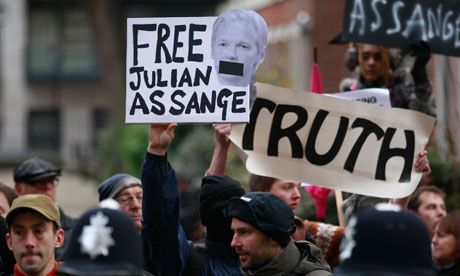
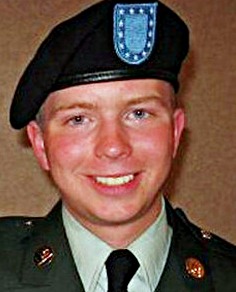
Antiwar | The Obama Administration is reportedly offering a possible plea bargain to the detained Pfc Bradley Manning, if he agrees to testify against WikiLeaks founder Julian Assange that Assange pressured him to release the various classified documents.

Manning is facing several decades in a military prison over his alleged role in the releases, but as an active duty member of the military he is being charged under the military’s legal code, not the civilian one.

Which makes charging Julian Assange, who seems to be the administration’s primary target, considerably more difficult, as he is neither an American citizen nor a member of the American military, nor indeed were any of his alleged misdeeds committed on American soil.

This makes the Justice Department’s hopes of prosecuting him extremely difficult, but right now those efforts seem to be centering on claims Assange could be charged with conspiracy for “encouraging” Manning. The only evidence to that effect is a chatlog, and would almost certainly be dismissed as hearsay unless they can convince Manning to testify as well.

Sources say that the administration has yet to determine exactly what sort of plea bargain it is planning to offer Manning for incriminating Assange, but the bidding may well begin with a pillow and sheets, both of which Manning has been barred from having in detention. Amid reports of his deteriorating health, it remains to be seen how the administration may be able to coerce him into cutting a deal.

reigning in a superpower not following the rule of law...,

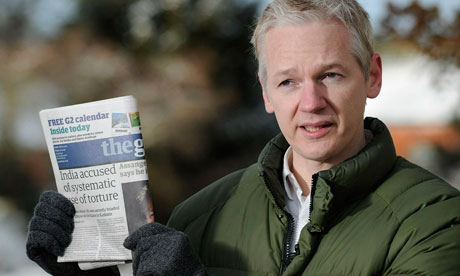
Guardian | Speaking to reporters outside Ellingham Hall, the Norfolk house at which he is staying on bail following his release from prison, Assange said WikiLeaks faced "what appears to be an illegal investigation ... certain people who are alleged to be affiliated to us have been detained, followed around, had their computers seized and so on".

He said he believed it was "80% likely" that the US authorities were seeking to prepare an attempt to have him extradited there to face charges of espionage.

He added that he was reliant on public opinion to rein in "a superpower that does not appear to be following the rule of law".

"I would say that there is a very aggressive investigation, that a lot of face has been lost by some people, and some people have careers to make by pursuing famous cases, but that is actually something that needs monitoring," he said.

He criticised the way Swedish authorities have sought to have him extradited to Sweden to face allegations of sexual assault – the reason he was held in jail for 10 days.

"That is something that actually needs monitoring, it needs scrutiny," he said. "We have seen this with the Swedish prosecutor in representations to the British government here, and the British courts say that it did not need to provide a shred of evidence – said this three times – and in fact has provided nothing, not a single shred of evidence in its extradition hearings, in the hearings that ended up putting me in solitary confinement for 10 days.

"Similarly, in the United States, what appears to be a secret grand jury investigation against me, or our organisation – not a single comment about what is actually going on."

The bulk of WikiLeaks' efforts were currently devoted to fending off various attacks, including technical assaults on its website, Assange said.

"Over 85% of our economic resources are spent dealing with attacks – dealing with technical attacks, dealing with political attacks, dealing with legal attacks, not doing journalism," he said. "And that, if you like, is attack upon investigative journalism."

Assange said he was worried about the prospect of being sent to the US, adding: "There have been many calls by senior political figures in the United States, including elected ones in the Senate, for my execution, the kidnapping of my staff, the execution of the young soldier Bradley Manning ... that's a very, very serious business.

"The United States has shown recently that its institutions seem to be failing to follow the rule of law. And dealing with a superpower that does not appear to be following the rule of law is a serious business."

US efforts to prosecute Assange appear to rely on connecting him to Manning, the presumed source of the leaked cables.

Friday, December 17, 2010

earth 2100 the final century of civilization


Watch Earth 2100 the Final Century of Civilization ABC Special in Educational & How-To | View More Free Videos Online at Veoh.com

Wikipedia | Earth 2100 is a television program that was presented by the American Broadcasting Company (ABC) network on June 2, 2009 and was aired on the History channel in January 2010 and will continue to be shown through 2010. Hosted by ABC journalist Bob Woodruff, the two-hour special explored what a worst-case future might look like if humans do not take action on current or impending problems that could threaten civilization. The problems addressed in the program include climate change, overpopulation, and misuse of energy resources.

The events parallel the life of a fictitious storyteller, "Lucy" (told through the use of motion comics, or limited animation), as she describes how the events affect her life. The program included predictions of a dystopian Earth in the years 2015, 2030, 2050, 2085, and 2100 by scientists, historians, social anthropologists, and economists, including Jared Diamond, Thomas Homer-Dixon, Peter Gleick, James Howard Kunstler, Heidi Cullen, Alex Steffen and Joseph Tainter. It ended with a quote from writer Alex Steffen, saying "Kids born today will see us navigate past the first greatest test of humanity, which is: can we actually be smart enough to live on a planet without destroying it?"

According to Executive Producer Michael Bicks, "this program was developed to show the worst-case scenario for human civilization. Again, we are not saying that these events will happen — rather, that if we fail to seriously address the complex problems of climate change, resource depletion and overpopulation, they are much more likely to happen."

Hyperinflation Special Report (Update 2010)

Shadowstats | The U.S. has no way of avoiding a financial Armageddon. Bankrupt sovereign states most commonly use the currency printing press as a solution to not having enough money to cover obligations. The alternative would be for the U.S. to renege on its existing debt and obligations, a solution for modern sovereign states rarely seen outside of governments overthrown in revolution, and a solution with no happier ending than simply printing the needed money. With the creation of massive amounts of new fiat dollars (not backed by gold or silver) will come the eventual destruction of the value of the U.S. dollar and related dollar-denominated paper assets.

What lies ahead will be extremely difficult, painful and unhappy times for many in the United States. The functioning and adaptation of the U.S. economy and financial markets to a hyperinflation likely would be particularly disruptive. Trouble could range from turmoil in the food distribution chain to electronic cash and credit systems unable to handle rapidly changing circumstances. The situation quickly would devolve from a deepening depression, to an intensifying hyperinflationary great depression.

While the economic difficulties would have global impact, the initial hyperinflation should be largely a U.S. problem, albeit with major implications for the global currency system. For those living in the United States, long-range strategies should look to assure safety and survival, which from a financial standpoint means preserving wealth and assets. Also directly impacted, of course, are those holding or dependent upon U.S. dollars or dollar-denominated assets, and those living in "dollarized" countries.

The balance of this special report is broken into the following sections:

* Defining the Components of a Hyperinflationary Great Depression
* Two Examples of Hyperinflation
* Current Economic and Inflation Conditions in the United States
* Historical U.S. Inflation: Why Hyperinflation Instead of Deflation
* U.S. Government Cannot Cover Existing Obligations
* Hyperinflationary Great Depression
* Closing Comments

duck and cover

NYTimes | Suppose the unthinkable happened, and terrorists struck New York or another big city with an atom bomb. What should people there do? The government has a surprising new message: Do not flee. Get inside any stable building and don’t come out till officials say it’s safe.

The advice is based on recent scientific analyses showing that a nuclear attack is much more survivable if you immediately shield yourself from the lethal radiation that follows a blast, a simple tactic seen as saving hundreds of thousands of lives. Even staying in a car, the studies show, would reduce casualties by more than 50 percent; hunkering down in a basement would be better by far.

But a problem for the Obama administration is how to spread the word without seeming alarmist about a subject that few politicians care to consider, let alone discuss. So officials are proceeding gingerly in a campaign to educate the public.

“We have to get past the mental block that says it’s too terrible to think about,” W. Craig Fugate, administrator of the Federal Emergency Management Agency, said in an interview. “We have to be ready to deal with it” and help people learn how to “best protect themselves.”

Officials say they are moving aggressively to conduct drills, prepare communication guides and raise awareness among emergency planners of how to educate the public.

extraordinary rendition requires secrecy...,


Video - ITN Julian Assange free on bail.

Telegraph | The 39-year-old Wikileaks founder was let out of prison on Thursday after a judge ruled he should be released ahead of Swedish extradition proceedings in the new year.

He vowed to ''continue his work and protest his innocence'' after emerging from the High Court to face the world press after nine days behind bars.

But in a series of interviews, Assange suggested that his first 24 hours of freedom would be largely taken up with other legal battles.

Speaking at the East Anglian mansion at which he has been ordered to stay, the Australian indicated that the US is preparing to indict him on espionage charges.

''We have heard from one of my US lawyers, yet to be confirmed, but a serious matter, that there may be a US indictment for espionage for me, coming from a secret US grand jury investigation,'' he said.

''Obviously it is extremely serious, and one of the concerns that we have had since I have been in the UK is whether the extradition proceeding to Sweden is actually an attempt to get me into a jurisdiction which will then make it easier to extradite me to the United States.''

A spokeswoman from the US Department of Justice would only confirm that there is ''an ongoing investigation into the WikiLeaks matter''.

Thursday, December 16, 2010

global rebellion against u.s. militarism and secrecy


2194 mirrors and rising...,

wikileaks.ch | In order to make it impossible to ever fully remove Wikileaks from the Internet, we need your help.

if you have a unix-based server which is hosting a website on the Internet and you want to give wikileaks some of your hosting resources, you can help!

Please follow the following instructions:

* Setup an account where we can upload files using RSYNC+SSH (preferred) or FTP
* Put our SSH key in this server or create an FTP account
* Create a virtual host in your web server, which, for example, can be wikileaks.yourdomain.com
* send the IP address of your server to us, and the path where we should upload the content. (just fill the form below)

We will take care of all the rest: Sending pages to your server, updating them each time data is released, maintaining a list of such mirrors. If your server is down or if the account don't work anymore, we will automatically remove your server from the list.

Our content is only html/css/javascript/png static files, so we don't require much resource to host it.

The complete website should not take more than a couple of GB at the moment (with base website and cablegate data)

In order to make it impossible to ever fully remove Wikileaks from the Internet, you will find below a list of mirrors of Wikileaks website and CableGate pages.

If you want to add your mirror to the list, see our Mass Mirroring Wikileaks page
Mirror List

Wikileaks is currently mirrored on 2194 sites (updated 2010-12-15 15:56 GMT)

extraordinary rendition

Guardian | The decision to have Julian Assange sent to a London jail and kept there was taken by the British authorities and not by prosecutors in Sweden, as previously thought, the Guardian has learned.

The Crown Prosecution Service will go to the high court tomorrow to seek the reversal of a decision to free the WikiLeaks founder on bail, made yesterday by a judge at City of Westminster magistrates court.

It had been widely thought Sweden had made the decision to oppose bail, with the CPS acting merely as its representative. But today the Swedish prosecutor's office told the Guardian it had "not got a view at all on bail" and that Britain had made the decision to oppose bail.

Lawyers for Assange reacted to the news with shock and said CPS officials had told them this week it was Sweden which had asked them to ensure he was kept in prison.

Karin Rosander, director of communications for Sweden's prosecutor's office, told the Guardian: "The decision was made by the British prosecutor. I got it confirmed by the CPS this morning that the decision to appeal the granting of bail was entirely a matter for the CPS. The Swedish prosecutors are not entitled to make decisions within Britain. It is entirely up to the British authorities to handle it."

As a result, she said, Sweden will not be submitting any new evidence or arguments to the high court hearing tomorrow morning. "The Swedish authorities are not involved in these proceedings. We have not got a view at all on bail."

After the Swedish statement was put to the CPS, it confirmed that all decisions concerning the opposing of bail being granted to Assange had been taken by its lawyers. It said: "In all extradition cases, decisions on bail issues are always taken by the domestic prosecuting authority. It would not be practical for prosecutors in a foreign jurisdiction … to make such decisions."

Wednesday, December 15, 2010

the first twelve hours of a u.s. dollar collapse?


Video - The first twelve hours of a U.S. dollar collapse?

truthfully clowned in four minutes

The Big Bank Theory
The Daily Show With Jon StewartMon - Thurs 11p / 10c
www.thedailyshow.com
Daily Show Full EpisodesPolitical Humor & Satire Blog</a>The Daily Show on Facebook

Video - Jon Stewart destroys Ben Bernanke in four minutes.

why facebook is pure digital evil....,

Generate animated click-able maps of the relationships between Facebook users.

This product is only available to the law enforcement community. Constructs networks based on Facebook user's public profiles and can even detect public links to private profiles.

Features include profile summaries, export of networks to csv files, fast search utility and storage of complete html code and download time Free to download and try, a license can be purchased for £25.00(approx. $39.64) to unlock all the features.

Tuesday, December 14, 2010

wolfram 2010 - using computers is the silver bullet for making math education work


Video - Conrad Wolfram TED Talk on Math Instruction using computers.

"I think we should be assuming computers for doing the calculating and only doing hand calculation where it really makes sense to teach people that. And I think there are some cases. For example: mental arithmetic. I still do a lot of that, mainly for estimating. People say, is such and such true, and I'll say, hmm, not sure. I'll think about it roughly. It's still quicker to do that and more practical. So I think practicality is one case where it's worth teaching people by hand."

"I think we should be assuming computers for doing the calculating and only doing hand calculation where it really makes sense to teach people that. And I think there are some cases. For example: mental arithmetic. I still do a lot of that, mainly for estimating. People say, is such and such true, and I'll say, hmm, not sure. I'll think about it roughly. It's still quicker to do that and more practical. So I think practicality is one case where it's worth teaching people by hand."

how do we fix math education?

computerbasedmath | Whether it's bored students, dissatisfied employers, bewildered governments, or frustrated teachers, almost everyone thinks there's a problem with math (and STEM) education today.

There is a solution, but it needs a fundamental change to the school subject we call math. It needs to be clearly articulated and decisively acted upon. That's why Conrad Wolfram has founded computerbasedmath.org. He and many others see a growing chasm between math in education and math outside, between the increasingly irrelevant school math curriculum that contrasts with the critical and growing importance of math and its uses in the real world. They've observed how many of those involved in school math fail to appreciate the total transformation and fundamental change that computers have brought to this ancient subject in recent decades.

computerbasedmath.org is initially supported by Wolfram Research. For over 20 years Wolfram Research has had a unique position at the epicenter of math and its uses: using high-powered math to develop the latest algorithms for Mathematica and Wolfram|Alpha software, mathematicians, and other STEM specialists, supplying technology to the world's community of math users, and interacting with leading experts from all technical fields. That's not to mention its involvement with thousands of universities, schools, and courses worldwide. Wolfram Research really is the "Math Company".

Key ideas behind this computer-based math approach have been forming for more than a decade, but computerbasedmath.org is only just starting. Over the coming months, we will be looking for think-tank members from among the many enthusiastic, leading supporters who have voiced interest in the project.

If you see the great opportunity and empowerment for the future of computer-based math and are interested in joining computerbasedmath.org in any capacity—from sponsoring organization to board member—please contact us.

physics counterpart to the benezet-berman 1930's math teaching experiment?


arXiv | Should teachers concentrate on critical thinking, estimation, measurement, and graphing rather than college-clone algorithmic physics in grades K--12? Thus far physics education research offers little substantive guidance. Mathematics education research addressed the mathematics analogue of this question in the 1930's. Students in Manchester, New Hampshire were not subjected to arithmetic algorithms until grade 6. In earlier grades they read, invented, and discussed stories and problems; estimated lengths, heights, and areas; and enjoyed finding and interpreting numbers relevant to their lives. In grade 6, with 4 months of formal training, they caught up to the regular students in algorithmic ability, and were far ahead in general numeracy and in the verbal, semantic, and problem solving skills they had practiced for the five years before. Assessment was both qualitative -- e.g., asking 8th grade students to relate in their own words why it is `that if you have two fractions with the same numerator, the one with the smaller denominator is the larger'; and quantitative -- e.g., administration of standardized arithmetic examinations to test and control groups in the 6th grade. Is it time for a science counterpart of the Benezet/Berman Manchester experiment of the 1930's?

benezet's 1930 math instruction experiment

Inference | In the fall of 1929 I made up my mind to try the experiment of abandoning all formal instruction in arithmetic below the seventh grade and concentrating on teaching the children to read, to reason, and to recite - my new Three R's. And by reciting I did not mean giving back, verbatim, the words of the teacher or of the textbook. I meant speaking the English language. I picked out five rooms - three third grades, one combining the third and fourth grades, and one fifth grade. I asked the teachers if they would be willing to try the experiment. They were young teachers with perhaps an average of four years' experience. I picked them carefully, but more carefully than I picked the teachers, I selected the schools. Three of the four schoolhouses involved [two of the rooms were in the same building] were located in districts where not one parent in ten spoke English as his mother tongue. I sent home a notice to the parents and told them about the experiment that we were going to try, and asked any of them who objected to it to speak to me about it. I had no protests. Of course, I was fairly sure of this when I sent the notice out. Had I gone into other schools in the city where the parents were high school and college graduates, I would have had a storm of protest and the experiment would never have been tried. I had several talks with the teachers and they entered into the new scheme with enthusiasm.

The children in these rooms were encouraged to do a great deal of oral composition. They reported on books that they had read, on incidents which they had seen, on visits that they had made. They told the stories of movies that they had attended and they made up romances on the spur of the moment. It was refreshing to go into one of these rooms. A happy and joyous spirit pervaded them. The children were no longer under the restraint of learning multiplication tables or struggling with long division. They were thoroughly enjoying their hours in school.

At the end of eight months I took a stenographer and went into every fourth-grade room in the city. As we have semi-annual promotions, the children who had been in the advanced third grade at the time of the beginning of the experiment, were now in the first half of the fourth grade. The contrast was remarkable. In the traditional fourth grades when I asked children to tell me what they had been reading, they were hesitant, embarrassed, and diffident. In one fourth grade I could not find a single child who would admit that he had committed the sin of reading. I did not have a single volunteer, and when I tried to draft them, the children stood up, shook their heads, and sat down again. In the four experimental fourth grades the children fairly fought for a chance to tell me what they had been reading. The hour closed, in each case, with a dozen hands waving in the air and little faces crestfallen, because we had not gotten around to hear what they had to tell.

For some years I had noted that the effect of the early introduction of arithmetic had been to dull and almost chloroform the child's reasoning faculties. There was a certain problem which I tried out, not once but a hundred times, in grades six, seven, and eight. Here is the problem: "If I can walk a hundred yards in a minute [and I can], how many miles can I walk in an hour, keeping up the same rate of speed?"

In nineteen cases out of twenty the answer given me would be six thousand, and if I beamed approval and smiled, the class settled back, well satisfied. But if I should happen to say, "I see. That means that I could walk from here to San Francisco and back in an hour" there would invariably be a laugh and the children would look foolish.

Monday, December 13, 2010

self-organized learning environments

solesandsomes | We know that: Groups of children (6-12 yeards old in groups of 4 or so), given unrestricted and unsupervised access to the Internet can learn almost anything on their own. It doesn't matter who or where they are. We know this from 20 years of research, standing on the shoulders of Aurobindo, Piaget, Vygotsky and Montessori.

This kind of learning is activated by questions, not answers.

There will always be children in the world who, for some reason or the other, cannot pay for education. There will always be children in the world who, for some reason of the other, will not have an adequate education.

Hypothesis:
There will always be people in the world who are willing to mediate in children's learning for, say, one hour a week, with no remuneration.

Speculation:
If we create 'clouds' of mediators and children on the Internet and an arrangement by which they can interact, we would have an alternative schooling.

Action:
In the last three years, we have created 12 Self Organised Learning Environments (SOLEs) in addition to the several hundred 'hole in the wall' computers that exist in India, Cambodia and several African countries.

There exists a cloud of mediators that have begun to interact with these SOLEs. The cloud is self organised and called a Self Organised Mediation Environment (SOME). The mediators interact with the children over Skype.

Next:
We need a Self- Organized Assessment Method (SOAM) by which children can assess their learning accurately.

We need a curriculum that is driven by questions. Self-organized and self- populating.

We need computing environments for children that are powered by free energy and bandwidth.

Schools in clouds, integrated with the fabric of information space and time....Fist tap Dale.

turning kids from slums into autodidacts

WSJ | Everybody knows that the Internet will transform education, but nobody yet knows how. Most of the models sound like dull attempts to reproduce, at a distance, the medieval habit of schooling—one teacher telling a bunch of children what to think. Now, though, I think I have glimpsed a better idea: the self-organized learning environment (SOLE).

The credit for this approach belongs to Sugata Mitra, an Indian physicist who, a decade ago, began to install public "hole in the wall" computers in the streets of Indian slums. He then sat back and watched how quickly the impoverished kids learned to use the technology. The experiment, which has now gone global, inspired the book that inspired the film "Slumdog Millionaire," in which a boy from the slums improbably learns enough to win a TV quiz show.

Dr. Mitra's next brainchild, SOLE, takes this dynamic into the classroom. He is convinced that, with the Internet, kids can learn by themselves, so long as they are in small groups and have well-posed questions to answer. He now goes into schools and asks a hard question that he thinks the students will not be able to answer, such as: "How do you stop something moving?" or "Was World War II good or bad?"

He gives them no clue where to start, but—crucially—he insists that the school restrict the number of Internet portals in the class to one for every four students. One child in front of a computer learns little; four discussing and debating learn a lot. What happens next is entirely up to the students. All they know is that Dr. Mitra is coming back to be told what they have found.

He arrives with a second question that links the learning more closely to the curriculum, such as: "Who was Isaac Newton?" and then "What's the connection between Newton and stopping things moving?" The kids teach themselves the laws of motion. Of course, the Internet is fallible as a source, but so are teachers and textbooks. For the noncontroversial topics that make up the curriculum, even Wikipedia is pretty good. Fist tap Dale.

macrowikinomics


Video - Don Tapscott expounds on his theory of macrowikinomics.

HuffPo | The global economic crisis should be a wakeup call to the world. We need to rethink and rebuild many of the organizations and institutions that have served us well for decades, but now have come to the end of their life cycle. This is more than a recession or the aftermath of a financial crisis. We are at a turning point in history.

Let's face it. The world is broken and the industrial economy and many of its industries and organizations have finally run out of gas, from newspapers and old models of financial services to our energy grid, transportation systems and institutions for global cooperation and problem solving.

At the same time the contours of a new kind of civilization are becoming clear as millions of connected citizens begin to forge alternative institutions using the Web as a platform for innovation and value creation. From education and science and to new approaches to citizen engagement and democracy, powerful new initiatives are underway, embracing a new set of principles for the 21st century -- collaboration, openness, sharing, interdependence and integrity. Indeed, with the proliferation of social media and social networks, we believe society has at its disposal the most powerful platform ever for bringing together the people, skills and knowledge we need to ensure growth, social development and a just and sustainable world.

Of course, the sparkling possibilities described above contrast sharply with the stagnation and inertia that grips so many contemporary institutions. The harsh reality is that it will take years and probably decades to undo some the damage done by misguided policies and approaches. When the economy crashed in 2008, for example, it cost American taxpayers trillions of dollars. Faced with a historic market meltdown, the worst recession in three generations, plus government guarantees that exceed the cost of every war the U.S. has ever fought, American taxpayers are understandably still furious.

It is pretty much the same story around the world. Many people are reviving calls for updated regulations, more government intervention and even the breakup or nationalization of the big banks. In the meantime, the lingering effects of the financial meltdown threaten to engulf not just companies but entire countries in a sovereign debt crisis. Greece, Spain, and Portugal may have rocked the financial markets, but the U.S. arguably looms largest, with Congress contemplating a budget that by 2020 would nearly double America's national debt, to $22 trillion -- twice the size of the U.S. economy. Clearly we need to rethink the old approaches to governing the global economy. But rebuilding public finances and restoring long-term confidence in the financial services industry will require more than government intervention and new rules; it's becoming clearer that what's needed is a new modus operandi based on new principles like transparency, integrity and collaboration.

Video - Don Tapscott expounds on his neologistic theory of wikinomics.

Sunday, December 12, 2010

wikileaks and the internet's long war

WaPo | Some historians like to talk about the "Long War" of the 20th century, a conflict spanning both world wars and the wars in Korea and Vietnam. They stress that this Long War was a single struggle over what kind of political system would rule the world - democracy, communism or fascism - and that what a war is fought over is often more important than the specifics of individual armies and nations.

The Internet, too, is embroiled in a Long War.

The latest fighters on one side are Julian Assange, founder of WikiLeaks, and the media-dubbed "hacker army" that has risen in his defense in the past week, staging coordinated attacks on government and corporate institutions that have stood in his way. They come from a long tradition of Internet expansionists, who hold that the Web should remake the rest of the world in its own image. They believe that decentralized, transparent and radically open networks should be the organizing principle for all things in society, big and small.

On the other side are those who believe fundamentally that the world should remake the Web in its own image. This side believes that the Internet at its heart is simply a tool, something that should be shaped to serve the demands of existing institutions. Each side seeks to mold the technology and standards of the Web to suit its particular vision.

In this current conflict, the loose confederation of "hacktivists" who rallied in support of Assange in what they called Operation Payback, targeted MasterCard, PayPal, Visa and other companies with a denial-of-service attack, effectively preventing Web sites from operating. It's a global effort of often surprising scope; Dutch police said they arrested a 16-year-old last week suspected to be involved.

Their cause, from which Assange has publicly distanced himself, follows the simple logic of independence. One self-declared spokesperson for the "Anonymous" group doing battle for WikiLeaks explained its philosophy to the Guardian newspaper. "We're against corporations and government interfering on the Internet," said the 22-year-old, identified only as Coldblood. "We believe it should be open and free for everyone."

The battle between "Anonymous" and the establishment isn't the first in the Long War between media-dubbed "hackers" and institutions, and considering the conflict's progression is key to understanding where it will lead.

Chipocalypse Now - I Love The Smell Of Deportations In The Morning

sky |   Donald Trump has signalled his intention to send troops to Chicago to ramp up the deportation of illegal immigrants - by posting a...