Tuesday, June 01, 2010

bacteria control weather....,

NYTimes | Walking across the campus of Montana State University here, David Sands, a plant pathologist, says the blanket of snow draped over the mountains around town contains a surprise.

The cause of most of it, he said, is a living organism, a bacterium, called pseudomonas syringae.

In the last few years, Dr. Sands and other researchers have accumulated evidence that the well-known group of bacteria, long known to live on agricultural crops, are far more widespread and may be part of a little-studied weather ecosystem. The principle is well accepted, but how widespread the phenomenon is remains a matter of debate.

The accepted precipitation model is that soot, dust and other inert things form the nuclei for raindrops and snowflakes. Scientists have found these bacteria in abundance on the leaves of a wide range of wild and domestic plants, including trees and grasses, everywhere they have looked, including Montana, Morocco, France, the Yukon and in the long buried ice of Antarctica. The bacteria have been found in clouds and in streams and irrigation ditches. In one study of several mountaintops here, 70 percent of the snow crystals examined had formed around a bacterial nucleus.

Some of the bacteria promote freezing as a means of attacking plants. They make proteins that will trigger freezing at higher temperatures than usual and the resulting water ice damages the plant, giving the bacteria access to the nutrients they need.

This ability to promote freezing of water at higher-than-normal freezing temperatures has led Dr. Sands and other scientists to believe the bacteria are part of an unstudied system. After the bacteria infect plants and multiply, he says, they may be swept as aerosols into the sky, where it seems they prompt the formation of ice crystals (which melt as they fall to earth, causing rain) at higher temperatures than do dust or mineral particles that also function as the nuclei of ice crystals. Fist tap Nana.

Monday, May 31, 2010

alligator mouth, hummingbird backside....,

NYTimes | The Obama administration scrambled to respond on Sunday after the failure of the latest effort to kill the gushing oil well in the Gulf of Mexico. But administration officials acknowledged the possibility that tens of thousands of gallons of oil might continue pouring out until August, when two relief wells are scheduled to be completed.

“We are prepared for the worst,” said Carol M. Browner, President Obama’s climate change and energy policy adviser. “We have been prepared from the beginning.”

Even as the White House sought to demonstrate that it was taking a more direct hand in trying to solve the problem, senior officials acknowledged that the new technique BP will use to try to cap the leak — severing the riser pipe and placing a containment dome over the cut riser — could temporarily result in as much as 20 percent more oil flowing into the water during the three days to a week before the new device could be in place.

“This is obviously a difficult situation,” Ms. Browner said on NBC’s “Meet the Press” on Sunday, “but it’s important for people to understand that from the beginning, the government has been in charge.”

“We have been directing BP to take important steps,” including the drilling of a second relief well, she added.

The White House said that Interior Secretary Ken Salazar would make his eighth trip to the region and that the number of government and contract employees sent to work in areas affected by the spill would be tripled.

But despite the White House efforts, the criticism also intensified. Colin L. Powell, who served as secretary of state and chairman of the Joint Chiefs of Staff, told ABC’s “This Week” that the administration must move in quickly with “decisive force and demonstrate that it’s doing everything that it can do.”

Gov. Bobby Jindal of Louisiana, appearing on “Meet the Press,” again criticized the administration’s efforts, saying: “We need our federal government exactly for this kind of crisis. I think there could have been a greater sense of urgency.”

The administration has left to BP most decisions about how to move forward with efforts to contain the leak. But Ms. Browner made a point of saying that the administration, led by Secretary of Energy Steven Chu, had told BP that the company should stop the top kill. Government officials thought it was too dangerous to keep pumping drilling mud into the well because they worried it was putting too much pressure on it. BP announced Saturday evening that it was ending that effort.

oil disaster shows our disconnect from physical world


Video - Spill Here Spill Now Ad. Fist tap Bro. Makheru.

AP | Obama touched on the disconnect between those of the grounded physical world and everyone else during his news conference. He showed that he knows what he can't really feel.

"When I hear folks down in Louisiana expressing frustrations, I may not always think that their comments are fair," he said. "On the other hand, I probably think to myself, these are folks who grew up fishing in these wetlands and seeing this as an integral part of who they are."

The land, sea and factory are less and less an integral part of Americans.

If Aristotle were blogging about all of this, he would probably have little patience with the armchair experts and the pontificators who think the solution should be as easy as Malia Obama suggested when she asked her father, "Did you plug the hole yet, Daddy?"

The Greek philosopher said "those who dwell in intimate association with nature" are apt to understand the big picture. "Lack of experience diminishes our power of taking a comprehensive view."

His way of saying, you have to be there to get it. Americans, these days, are not.

a most unnatural disaster


Video - Who is liable for this catastrophe?

NYTimes | President Obama spoke critically a couple of weeks ago about the “cozy relationship” between the oil companies and the federal government. It’s not just a cozy relationship. It’s an unholy alliance. And that alliance includes not just the oil companies but the entire spectrum of giant corporations that have used vast wealth to turn democratically elected officials into handmaidens, thus undermining not just the day-to-day interests of the people but the very essence of democracy itself.

Forget BP for a moment. When is the United States going to get its act together? Will we learn anything from this disaster or will we simply express our collective dismay, ignore the inevitable commission reports (no one pays attention to study commissions), and bury our heads back in the oily sand?

President Obama said on Thursday that his administration was “moving quickly on steps to ensure that a catastrophe like this never happens again.” Well, he can’t ensure anything of the kind. And, in fact, his corporate-friendly policy of opening up new regions for offshore drilling (that policy is only temporarily halted) will all but guarantee future disastrous spills.

The U.S. will never get its act together until we develop the courage and the will to crack down hard on these giant corporations. They need to be tamed, closely monitored and regulated, and constrained in ways that no longer allow them to trample the best interests of the American people.

Mr. Hayward of BP was on television on Friday referring to the Deepwater Horizon explosion and subsequent fouling of the Gulf of Mexico as a “natural disaster.” He was wrong, as usual. Like the unholy alliance of government and big business, this tragedy set in motion by Mr. Hayward’s corporation is a grotesquely harmful and wholly unnatural disaster.

Sunday, May 30, 2010

matt simmons: theres another leak, much bigger, 5 to 6 miles away


BP shipped in workers for president's visit


CNN | A Gulf Coast official accused BP of shipping workers into Grand Isle, Louisiana, for President Barack Obama's visit to the oil-stricken area Friday and sending them away once the president left the region.

Early Friday morning, "a number of buses brought in approximately 300 to 400 workers that had been recruited all week," Jefferson Parish Councilman Chris Roberts told CNN's "Situation Room."

Roberts said the workers were offered $12 an hour to come out to the scene at Grand Isle and work in what he called a "dog and pony show."

But, when Obama departed, so did the workers, he said, adding that he's never seen more than 20 workers at the Grand Isle cleanup site since the effort started.

BP Chief Operating Officer Doug Suttles downplayed the claim Friday evening, telling CNN it is not unusual to see people wrapping up work in the afternoon.

"These individuals are working out in the heat of the sun. These are long days. They start early in the morning and they stop early in the evening," he said. "So the fact that they were leaving the location late in the afternoon was not unusual. It's not associated with the president arriving."

Suttles added that the workers would be back Saturday morning to continue working.

12 investment opportunities before the 'Collapse of Eaarth'


Video - SurvivalAcres Collapse of Civilization.

MarketWatch | Bill McKibben, an environmental economist, recently published "Eaarth: Making a Life on a Tough New Planet." Tough? Worse. Earth is dead.

McKibben's vision for the new Eaarth we created is bleak. No upbeat high-tech hope for a "green revolution" as in Tom Friedman's "Hot, Flat & Crowded." Remember, two decades ago McKibben's "The End of Nature" was one of the first books warning of global warming, climate change, a dying planet. His new Eaarth is a funeral dirge. In Foreign Policy magazine last year, McKibben summarized his relentless message:

"Act now, we're told, if we want to save the planet from a climate catastrophe. Trouble is, it might be too late. The science is settled, and the damage has already begun. The only question now is whether we will stop playing political games and embrace the few imperfect options we have left."

Stop the political games? Never. Remember Kyoto and Copenhagen defeats? Recent coal mine disasters? The BP-Gulf oil catastrophe? And when the long-awaited 1,000-page Kerry-Lieberman climate bill finally surfaced last week, it was quickly blasted as D.O.A., a "gift to polluters." Politicians love games.

In the end, 'Eaarth itself will force us to bend to new rules'

The truth is politicians will never stop in time. The planet really is dying, Eaarth is on an irreversible self-destruct path. Washington will not "stop playing political games." They cannot: There are too many "special interests" fighting for their "fair" share of the federal government's $1.7 trillion budget jackpot ... too many stockholders in publicly-traded corporations demanding bull-market returns and perpetual economic growth ... and too many lobbyists who make enormous short-term payoffs by ignoring the long-term warnings of McKibben and others.

After quoting a 2003 Pentagon report -- "as the planet's carrying capacity shrinks, an ancient pattern of desperate, all-out wars over food, water, and energy supplies would emerge" -- McKibben offers three sane solutions: Cut carbon emissions, reduce our obsession with economic growth and return to sustainable local farming. But while agreeing in his New York Times review, even advocate Paul Greenberg sees little chance of McKibben's ideas changing opinions or reversing the destiny of Eaarth:

"In the absence of some overarching authority, a kind of ecologically minded Lenin," McKibben's solutions "will remain hipster lifestyle choices rather than global game changers." But eventually, says Greenberg, "Eaarth itself will be that ecological Lenin, a harsh environmental dictator that will force us to bend to new rules."

Yes, the new rules will be forced on self-interested politicians ... forced on Wall Street's bonus-obsessed CEOs and short-term high-frequency traders ... forced on Main Street's 95 million investors. Fist tap Arnach.

the perfect storm: six trends converging on collapse


Video - Message to Anonymous Subgenius.

HuffPo | There are dark clouds gathering on the horizon. They are the clouds of six hugely troubling global trends, climate change being just one of the six. Individually, each of these trends is a potential civilization buster. Collectively, they are converging to form the perfect storm--a storm of such magnitude that it will dwarf anything that mankind has ever seen. If we are unsuccessful in our attempts to calm this storm, without a doubt it will destroy life as we know it on Planet Earth!

There is a popular saying that "the definition of insanity is doing the same thing over and over again, and expecting a different result." If we keep doing business in the same way as we have for the past century, each of these six trends will continue their steep rates of decline, collapsing the natural systems that form the foundation for our civilization and the lifeblood of the global economy. Perhaps the current Gulf oil spill is the wake up call that mankind needs to snap us out of our complacency, realize that we are soiling our nest and that continuation of "business as usual" will destroy the world as we know it? Time will tell whether we heed this warning, go back sleep once the oil spill is contained, or simply tire of the endless media coverage, numb ourselves, and set these critical issues to the side.

We already have the technology and the means to turn this dark tide, but we lack the commitment to make the hard choices and sweeping changes that are necessary for shifting the future of our world from its current course of collapse to a new course of sustainability.

The following six trends are converging to form the perfect storm for global destruction, each of which is a potential civilization buster in its own right, if left unchecked:

Saturday, May 29, 2010

the web shatters focus, rewires brain...,

Wired | During the winter of 2007, a UCLA professor of psychiatry named Gary Small recruited six volunteers—three experienced Web surfers and three novices—for a study on brain activity. He gave each a pair of goggles onto which Web pages could be projected. Then he slid his subjects, one by one, into the cylinder of a whole-brain magnetic resonance imager and told them to start searching the Internet. As they used a handheld keypad to Google various preselected topics—the nutritional benefits of chocolate, vacationing in the Galapagos Islands, buying a new car—the MRI scanned their brains for areas of high activation, indicated by increases in blood flow.

The two groups showed marked differences. Brain activity of the experienced surfers was far more extensive than that of the newbies, particularly in areas of the prefrontal cortex associated with problem-solving and decisionmaking. Small then had his subjects read normal blocks of text projected onto their goggles; in this case, scans revealed no significant difference in areas of brain activation between the two groups. The evidence suggested, then, that the distinctive neural pathways of experienced Web users had developed because of their Internet use.

The most remarkable result of the experiment emerged when Small repeated the tests six days later. In the interim, the novices had agreed to spend an hour a day online, searching the Internet. The new scans revealed that their brain activity had changed dramatically; it now resembled that of the veteran surfers. “Five hours on the Internet and the naive subjects had already rewired their brains,” Small wrote. He later repeated all the tests with 18 more volunteers and got the same results.

When first publicized, the findings were greeted with cheers. By keeping lots of brain cells buzzing, Google seemed to be making people smarter. But as Small was careful to point out, more brain activity is not necessarily better brain activity. The real revelation was how quickly and extensively Internet use reroutes people’s neural pathways. “The current explosion of digital technology not only is changing the way we live and communicate,” Small concluded, “but is rapidly and profoundly altering our brains.”

What kind of brain is the Web giving us? That question will no doubt be the subject of a great deal of research in the years ahead. Already, though, there is much we know or can surmise—and the news is quite disturbing. Dozens of studies by psychologists, neurobiologists, and educators point to the same conclusion: When we go online, we enter an environment that promotes cursory reading, hurried and distracted thinking, and superficial learning. Even as the Internet grants us easy access to vast amounts of information, it is turning us into shallower thinkers, literally changing the structure of our brain.

Back in the 1980s, when schools began investing heavily in computers, there was much enthusiasm about the apparent advantages of digital documents over paper ones. Many educators were convinced that introducing hyperlinks into text displayed on monitors would be a boon to learning. Hypertext would strengthen critical thinking, the argument went, by enabling students to switch easily between different viewpoints. Freed from the lockstep reading demanded by printed pages, readers would make all sorts of new intellectual connections between diverse works. The hyperlink would be a technology of liberation.

By the end of the decade, the enthusiasm was turning to skepticism. Research was painting a fuller, very different picture of the cognitive effects of hypertext. Navigating linked documents, it turned out, entails a lot of mental calisthenics—evaluating hyperlinks, deciding whether to click, adjusting to different formats—that are extraneous to the process of reading. Because it disrupts concentration, such activity weakens comprehension. A 1989 study showed that readers tended just to click around aimlessly when reading something that included hypertext links to other selected pieces of information. A 1990 experiment revealed that some “could not remember what they had and had not read.” Fist tap Dale.

the earth's secrets, hidden in the skies

NYTimes | ONE of the greatest advances in space technology has been the military’s Global Positioning System satellites, which provide remarkably accurate navigation information for everything from smart phones and cars to pet collars.

But the navigational data is only one part of the program’s mission. The Nuclear Detonation Detection System, an array of sensors also on board the satellites, watches the world for nuclear explosions. In the process, it collects mounds of environmental data which, in the hands of climate scientists, could add greatly to our understanding of global warming.

Unlike the G.P.S. information, however, much of the detection system data is hidden behind bureaucratic walls by national security agencies, which treat it as classified, even though it isn’t, and even though there’s no compelling national security reason to do so.

The history of the G.P.S. system shows the impact satellite data can have on commercial and scientific progress. Since it was first made publicly available in the 1980s, G.P.S. has revolutionized industries from telecommunications to agriculture. Estimates place its economic value in the tens to hundreds of billions of dollars each year. And that’s not counting its impact on everyday activities like hiking, boating and golf.

Then there’s the science: using the G.P.S. radio waves that travel through the earth’s atmosphere, researchers can better understand its temperature, density, water content and other properties, data that is critical to work on climate change and pollution.

Meanwhile, in the process of watching for a nuclear detonation, the detection system’s sensors — designed to observe visible light, high-frequency radio waves, X-rays, gamma rays and other data that might point to a nuclear explosion — stream an amazing array of data on powerful lightning strikes, space hazards like meteoroids and man-made debris and severe solar and space weather events.

It’s a daily trove of scientifically useful data that is not duplicated by any other sensor systems, military or civilian. True, other agencies collect similar data; sadly, it’s not nearly as comprehensive or global as the detection system’s information.

Unless a nuclear explosion takes place, the data has no immediate relevance to national security. Yet bureaucratic inertia has kept in place the presumption that because some of the data might be sensitive, all of it has to be protected; as a result, a thicket of paperwork and procedures deters all but the most resourceful and patient scientists from gaining access to it.

Friday, May 28, 2010

tracking the ancestory of corn back 9000 years....,

NYTimes | It is now growing season across the Corn Belt of the United States. Seeds that have just been sown will, with the right mixture of sunshine and rain, be knee-high plants by the Fourth of July and tall stalks with ears ripe for picking by late August.

Corn is much more than great summer picnic food, however. Civilization owes much to this plant, and to the early people who first cultivated it.

For most of human history, our ancestors relied entirely on hunting animals and gathering seeds, fruits, nuts, tubers and other plant parts from the wild for food. It was only about 10,000 years ago that humans in many parts of the world began raising livestock and growing food through deliberate planting. These advances provided more reliable sources of food and allowed for larger, more permanent settlements. Native Americans alone domesticated nine of the most important food crops in the world, including corn, more properly called maize (Zea mays), which now provides about 21 percent of human nutrition across the globe.

But despite its abundance and importance, the biological origin of maize has been a long-running mystery. The bright yellow, mouth-watering treat we know so well does not grow in the wild anywhere on the planet, so its ancestry was not at all obvious. Recently, however, the combined detective work of botanists, geneticists and archeologists has been able to identify the wild ancestor of maize, to pinpoint where the plant originated, and to determine when early people were cultivating it and using it in their diets.

The greatest surprise, and the source of much past controversy in corn archeology, was the identification of the ancestor of maize. Many botanists did not see any connection between maize and other living plants. Some concluded that the crop plant arose through the domestication by early agriculturalists of a wild maize that was now extinct, or at least undiscovered.

the secret life of plants


Video - The Secret Life of Plants 10 minute excerpt.


plummeting marijuana prices create a panic in california

NPR | For decades, illegal marijuana cultivation has been an economic lifeblood for three counties in northern California known as the Emerald Triangle.

The war on drugs and frequent raids by federal drug agents have helped support the local economy — keeping prices for street sales of pot high and keeping profits rich.

But high times are changing. Legal pot, under the guise of the California's medical marijuana laws, has spurred a rush of new competition. As a result, the wholesale price of pot grown in these areas is plunging.

Demand Not Meeting Supply
In 1983, the Reagan administration launched a massive air and ground campaign to eradicate pot and lock up growers in northern California. Charley Custer, a writer and community activist, had just arrived to Humboldt County from Chicago. With the Reagan crackdown, Custer recalls, wholesale prices shot up — to as high as $5,000 a pound. That sudden and ironic windfall for those growers willing to risk prison time transformed the community.

What's happening is the people that don't have quality product aren't selling it. So they're the ones that are creating this panic. So it really comes back down to that, just like in every other agricultural industry. When you get too many vineyards and too many people growing vines out there, then only the good ones make it.

- Tim Blake, former underground grower who now cultivates medical marijuana

"A lot of people were living on welfare and peanut butter and banana sandwiches for a long time before pot made it possible to be part of the middle class," Custer says.

Nearly 30 years later, Custer says that boom may be over.

"Outdoor growers are having a hard time unloading their fall harvest," Custer says. "And this is six months later and when some people do move it, they don't get nearly the price they were hoping for."

That goes for both legal growers who cultivate limited quantities of pot under the medical marijuana laws and illegal operators who often grow larger amounts.

Prices are now much less than $2,000 a pound, according to interviews with more than a dozen growers and dealers. Mendocino County Sheriff Tom Allman says some growers can't get rid of their processed pot at any price.

"We arrested a man who had … 800 pounds of processed," Allman says. "Eight hundred pounds of processed. And we asked him: 'What are you going to do with 800 pounds of processed?' And he said, 'I don't know.'" Fist tap Dale.

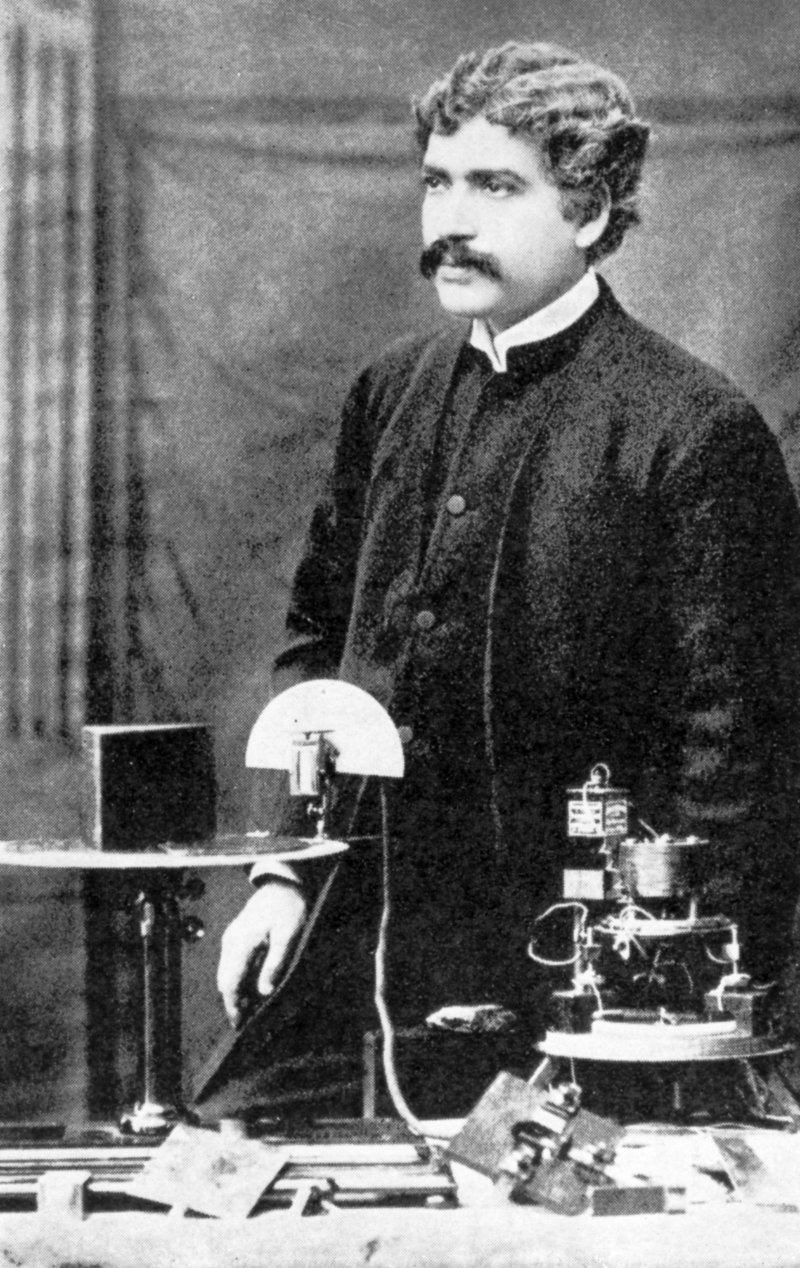
jagadish chandra bose

Wikipedia | Sir Jagadish Chandra Bose CSI CIE FRS (Bengali: জগদীশ চন্দ্র বসু Jôgodish Chôndro Boshu) (November 30, 1858 – November 23, 1937) born in a Bengali Hindu Kayasth family was a polymath: a physicist, biologist, botanist, archaeologist, and writer of science fiction.[1] He pioneered the investigation of radio and microwave optics, made very significant contributions to plant science, and laid the foundations of experimental science in the Indian subcontinent.[2] He is considered one of the fathers of radio science,[3] and is also considered the father of Bengali science fiction. He was the first person from the Indian subcontinent to get a US patent, in 1904.

Born during the British Raj, Bose graduated from St. Xavier's College, Calcutta. He then went to the University of London to study medicine, but could not complete his studies due to health problems. He returned to India and joined the Presidency College of University of Calcutta as a Professor of Physics. There, despite racial discrimination and a lack of funding and equipment, Bose carried on his scientific research. He made remarkable progress in his research of remote wireless signaling and was the first to use semiconductor junctions to detect radio signals. However, instead of trying to gain commercial benefit from this invention Bose made his inventions public in order to allow others to develop on his research. Subsequently, he made some pioneering discoveries in plant physiology. He used his own invention, the crescograph, to measure plant response to various stimuli, and thereby scientifically proved parallelism between animal and plant tissues. Although Bose filed for a patent for one of his inventions due to peer pressure, his reluctance to any form of patenting was well known. He is being recognised for many of his contributions to modern science.

He forwarded a theory for the ascent of sap in plants in 1927, his theory contributed to the vital theory of ascent of sap. According to his theory, electromechanical pulsations of living cells were responsible for the ascent of sap in plants.

He was skeptical about the then, and still now, most popular theory for the ascent of sap, the tension-cohesion theory of Dixon and Joly, first proposed in 1894. The 'CP theory', proposed by Canny in 1995,[18] validates this skepticism. Canny experimentally demonstrated pumping in the living cells in the junction of the endodermis.

In his research in plant stimuli, he showed with the help of his newly invented crescograph that plants responded to various stimuli as if they had nervous systems like that of animals. He therefore found a parallelism between animal and plant tissues. His experiments showed that plants grow faster in pleasant music and their growth is retarded in noise or harsh sound. This was experimentally verified later on[citation needed].

His major contribution in the field of biophysics was the demonstration of the electrical nature of the conduction of various stimuli (wounds, chemical agents) in plants, which were earlier thought to be of a chemical nature. These claims were experimentally proved by Wildon et al. (Nature, 1992, 360, 62–65). He also studied for the first time action of microwaves in plant tissues and corresponding changes in the cell membrane potential, mechanism of effect of seasons in plants, effect of chemical inhibitor on plant stimuli, effect of temperature etc. He claimed that plants can "feel pain, understand affection etc.," from the analysis of the nature of variation of the cell membrane potential of plants, under different circumstances. Fist tap Dale.

Thursday, May 27, 2010

carl jung and the holy grail of the unconscious

NYTimes | Carl Jung founded the field of analytical psychology and, along with Sigmund Freud, was responsible for popularizing the idea that a person’s interior life merited not just attention but dedicated exploration — a notion that has since propelled tens of millions of people into psychotherapy. Freud, who started as Jung’s mentor and later became his rival, generally viewed the unconscious mind as a warehouse for repressed desires, which could then be codified and pathologized and treated. Jung, over time, came to see the psyche as an inherently more spiritual and fluid place, an ocean that could be fished for enlightenment and healing.

Whether or not he would have wanted it this way, Jung — who regarded himself as a scientist — is today remembered more as a countercultural icon, a proponent of spirituality outside religion and the ultimate champion of dreamers and seekers everywhere, which has earned him both posthumous respect and posthumous ridicule. Jung’s ideas laid the foundation for the widely used Myers-Briggs personality test and influenced the creation of Alcoholics Anonymous. His central tenets — the existence of a collective unconscious and the power of archetypes — have seeped into the larger domain of New Age thinking while remaining more at the fringes of mainstream psychology.

A big man with wire-rimmed glasses, a booming laugh and a penchant for the experimental, Jung was interested in the psychological aspects of séances, of astrology, of witchcraft. He could be jocular and also impatient. He was a dynamic speaker, an empathic listener. He had a famously magnetic appeal with women. Working at Zurich’s Burghölzli psychiatric hospital, Jung listened intently to the ravings of schizophrenics, believing they held clues to both personal and universal truths. At home, in his spare time, he pored over Dante, Goethe, Swedenborg and Nietzsche. He began to study mythology and world cultures, applying what he learned to the live feed from the unconscious — claiming that dreams offered a rich and symbolic narrative coming from the depths of the psyche. Somewhere along the way, he started to view the human soul — not just the mind and the body — as requiring specific care and development, an idea that pushed him into a province long occupied by poets and priests but not so much by medical doctors and empirical scientists.

the most influential unpublished work in the history of psychology


Video - The process of digitally capturing the book.

The Red Book of C. G. Jung: Creation of a New Cosmology

Video - Sonu Shamdisani discusses The Red Book

Wednesday, May 26, 2010

rubbing, rubbing, rubbing.....,

organelle | What transforms the relatively benign grasshopper into the apocalyptic swarms of soldiers we call locusts is a simple thing: proximity to other grasshoppers initiated by feeding behavior.
From Wikipedia (locust):

“Research at Oxford University has identified that swarming behaviour is a response to overcrowding. Increased tactile stimulation of the hind legs causes an increase in levels of serotonin. This causes the locust to change color, eat much more, and breed much more easily. The transformation of the locust to the swarming variety is induced by several contacts per minute over a four-hour period. It is estimated that the largest swarms have covered hundreds of square miles and consisted of many billions of locusts.” (italics added)

From WIkipedia (Desert Locust):


“When vegetation is distributed in such a way that the nymphs, usually called hoppers, have to congregate to feed, and there has been sufficient rain for a lot of eggs to hatch, the close physical contact causes the insects’ hind legs to bump up against one another. This stimulus triggers a cascade of metabolic and behavioral changes that cause the insects to transform from the solitary form to the gregarious form.”
From Arundhati Roy:
“It is not a coincidence that the political party that a carried out the Armenian genocide in the Ottoman Empire was called the Committee for Union and Progress. “Union” (racial/ethnic/religious/national) and “Progress” (economic determinism) have long been the twin coordinates of genocide.

Armed with this reading of history, is it reasonable to worry about whether a country that is poised on the threshold of “progress” is also poised on the threshold of genocide? Could the India being celebrated all over the world as a miracle of progress and democracy possibly be poised on the verge of committing genocide?

The mere suggestion might sound outlandish and at this point in time, the use of the word genocide surely unwarranted. However, if we look to the future, and if the Tsars of Development believe in their own publicity, if they believe that There is No Alternative to their chosen model for Progress, then they will inevitably have to kill, and kill in large numbers, in order to get their way.

In bits and pieces, as the news trickles in, it seems clear that the killing and dying has already begun.”

— Field notes on Democracy
Listening to Grasshoppers
Arundhati Roy, Haymarket Books, 2009, pp 153

koreans rubbing their hind legs..,


Video - North Korean leg rubbing.

BBCNews | Tuesday's KCNA reports announcing the severing of all ties - including communications - said the North was also banning South Korean ships and planes from its territorial waters and airspace.

"The Committee for the Peaceful Reunification of Korea... formally declares that from now on it will put into force the resolute measures to totally freeze the inter-Korean relations, totally abrogate the agreement on non-aggression between the North and the South and completely halt the inter-Korean cooperation," KCNA reported.

Pyongyang has also accused South Korea of trespassing in its waters.

In a warning to South Korea's navy, a newsreader on North Korean state television (KRT) said: "South Korean puppet army gangs have been recently trespassing our territorial waters without restraint.

"They have conducted provocative acts which severely irritate us, by making dozens of warships intrude upon our waters from 14 to 24 May."

The newsreader said that if this "deliberate provocation" continued, the North would "put into force practical military measures to defend its waters".

North and South Korea are technically still at war after the Korean conflict ended without an armistice in 1953.

While there were hopes of a reconciliation a few years ago, relations have been deteriorating since then and now appear to be at their lowest point in a decade, correspondents say. Fist tap Nana.

average insects and men...,


Video - cricket singing.
The average insect can easily generate a communications burst of less than 1 second which contains more information than the entire internet. Humans, it turns out, are made to receive these transmissions. The problem is that humans think that -representations- like text and video are interesting. They can no longer understand -the living media-. In point of fact, most of them cannot and (in order for their adopted creeds to retain authority) must not believe in it.

Chipocalypse Now - I Love The Smell Of Deportations In The Morning

sky |   Donald Trump has signalled his intention to send troops to Chicago to ramp up the deportation of illegal immigrants - by posting a...