Monday, November 16, 2009

searching for a miracle

Post Carbon Institute | THIS REPORT IS INTENDED as a non-technical examination of a basic question: Can any combination of known energy sources successfully supply society’s energy needs at least up to the year 2100? In the end, we are left with the disturbing conclusion that all known energy sources are subject to strict limits of one kind or another. Conventional energy sources such as oil, gas, coal, and nuclear are either at or nearing the limits of their ability to grow in annual supply, and will dwindle as the decades proceed—but in any case they are unacceptably hazardous to the environment. And contrary to the hopes of many, there is no clear practical scenario by which we can replace the energy from today’s conventional sources with sufficient energy from alternative sources to sustain industrial society at its present scale of operations. To achieve such a transition would require (1) a vast financial investment beyond society’s practical abilities, (2) a very long time—too long in practical terms—for build-out, and (3) significant sacrifices in terms of energy quality and reliability.

Perhaps the most significant limit to future energy supplies is the “net energy” factor—the requirement that energy systems yield more energy than is invested in their construction and operation. There is a strong likelihood that future energy systems, both conventional and alternative, will have higher energy input costs than those that powered industrial societies during the last century.We will come back to this point repeatedly.

The report explores some of the presently proposed energy transition scenarios, showing why, up to this time, most are overly optimistic, as they do not address all of the relevant limiting factors to the expansion of alternative energy sources. Finally, it shows why energy conservation (using less energy, and also less resource materials) combined with humane, gradual population decline must become primary strategies for achieving sustainability.

Sunday, November 15, 2009

los alamos pandemic flu simulation


Simulation of a pandemic flu outbreak in the continental United States, initially introduced by the arrival of 10 infected individuals in Los Angeles.

The spatiotemporal dynamics of the prevalence (number of symptomatic cases at any point in time), is shown on a logarithmic color scale, from 50 or fewer (green) to 100 or more (red) cases per 1,000 persons. Without vaccination, antiviral drugs, or other mitigation strategies, the entire nation becomes infected within a few months. Depending on the reproductive number R0, effective intervention strategies including vaccination and targeted antiviral prophylaxis can be successful without resorting to economically damaging measures like school closure, quarantine, and work or travel restrictions. This large-scale agent-based simulation involves 280 million people, and uses demographic and worker flow data at the Census tract level, as well as long-range travel statistics, to describe the geographic movement of people. In this simulation, long-range travel is assumed to occur at a lower-than-normal rate (10 percent) due to travel advisories, but with no other mitigation strategies the pandemic quickly spreads nationwide, peaking about 90 days after the initial introduction.

WHO to report on ukraine next week


Tymoshenko | The World Health Organisation (WHO) will make a public report about Ukraine ’s epidemic situation next week.

"Our experts have developed certain recommendations, and on the basis of working together with government departments, we are happy to pass them on for implementation… Our epidemiological team has completed the data collection phase in the Lviv region and other western Ukrainian oblasts, and we are now analyzing the results. These will be published in our report next week, at the time where our mission will have complete its work here," stated Yukka Pukkile, head of the WHO mission, which is researching the current epidemic situation in Ukraine .

He also emphasized: "The epidemic has spread all over the world, and is impossible to stop. In Ukraine, people should try to understand that the pandemic has affected all countries, and Ukraine is no exemption. We shouldn’t blame anyone. We should instead, combine all of our energy, to do our best to control the situation to minimize the resultant harm… The committee has come to its conclusions, which can be summarized in that there is not a serious difference of the morbidity patterns of H1N1 in Ukraine with that of other countries.”

Simultaneously, WHO’s clinical expert Dr. Simon Mardel, highly commended the organization of the work of the government in its fight against the epidemic. "Our clinical group of specialists conducted their research in Western Ukraine…And we noticed that medical staff were prepared to give us their total cooperation on the spot… I was also struck by how accommodating Ukrainian professionals were, and the Ukrainian example was indeed a positive experience for all of us … And we are convinced that this extends to all organizational levels of Ukraine," he stated.

the nytimes gets around to it....,


NYTimes | When patients began arriving in Vyacheslav Bonder’s intensive care unit two weeks ago, their lungs so saturated with blood that they could barely gasp, the only thing he could compare it to was a field hospital in wartime. As soon as he hooked one patient up to a ventilator, a second and third would appear in the doorway.

By that time, hospitals were clearing wards to make room for a wave of pneumonia cases, and people were crowding into drugstores to buy whatever they could get their hands on. Rumors were circulating that the government had ordered the city aerially sprayed with chemicals, to cure Lviv (pronounced luh-VEEVE) of disease or, in a grimmer version, to exterminate its carriers.

The panic lifted almost as quickly as it had arrived, and the World Health Organization announced Friday that the swine flu illnesses and deaths so far in Ukraine — 265 fatalities nationwide, with 87 in the Lviv region — were statistically no worse than those in other countries. But what happened here has drawn rapt attention from experts bracing for the epidemic to hit Europe, and especially the fragile health care systems of countries of the former Soviet Union.

Early findings are that serious cases mounted because the sick avoided hospitalization until their illness was dangerously advanced, stockpiles of Tamiflu were locked in centralized locations and the supply of ventilators fell short, said David Mercer, of the World Health Organization’s European regional office.

“It’s not like this caught us by surprise; we’ve known for months that this was coming,” said Dr. Mercer, who heads the office’s communicable disease unit. “We’ve been working very hard on plans, but sometimes the battle plan doesn’t survive the first contact with the enemy. We’ve had to change a lot of things on the fly.”

Saturday, November 14, 2009

russian doctors learn why ukrainians are dying..,

MigNews | All victims of the virus in Bukovyna (22 people at the age of 20-40) died not from bilateral pneumonia, as was previously thought, but as a result of viral distress syndrome, i.e the total destruction of the lungs.

At first the cardio-pulmonary insufficiency comes, and consequently cardiogenic shock is developed, which causes cardiac standstill and death, told the chief of bureau of the Chernivtsi regional forensic examination, doctor of science, Professor Viktor Bachynsky, UNIAN reports.

"During a bilateral pneumonia some morphological picture is observed. As of data of deaths, there is no such morphological picture. The virus, which causes death, is very aggressive, it does not strike the trachea, but immediately gets into the lungs and causes heavy swelling and solid hemorrhage. Mixed types of parainfluenza and influenza A/N1N1 lead to this state. This is a very toxic strain, which has not yet answered to the treatment of the Ministry of Health", - said Viktor Bachinsky.

According to him, there is a need to change the treatment standards, because those which were used earlier, resulted in nothing – doctors failed to save all people infected with the virus in the reanimation. The belt ventilators did not help also.

For this reason a group of professors of Chernivtsi Medical University appealed to the Ministry of Health and National Security and Defense Council with a demand to review the standards of treatment of patients in Bukovyna. Scientists-morphologists sent to Kyiv reports, studies and analysis of critically ill patients and people who died of virus.

Viktor Bachinsky noted that the virus is extremely toxic, it is able to penetrate not only through respiratory apparatus but also through the eyes. Chernovtsy scientists recommend in any case use masks and even wear protective spectacles. An important condition to prevent deterioration of the situation is also the observance of quarantine regime.

pathological changes associated with 2009 "h1n1" virus

NEJM | Between April 23, 2009, and May 15, 2009, we performed 15 autopsies on deceased patients in whom probable influenza had been diagnosed either clinically or macroscopically. Small samples of lung tissue were obtained and taken for analysis to the Institute of Epidemiological Diagnosis and Reference in Mexico City. Five infections with the 2009 pandemic influenza A (H1N1) virus were confirmed with the use of a real-time reverse-transcriptase–polymerase-chain-reaction assay, after it was determined that these patients were seronegative for influenza B virus, respiratory syncytial virus, parainfluenza virus (types 1, 2, and 3), and adenovirus.1 From these five patients, organ samples were collected, fixed in 10% formalin, embedded in paraffin, and stained with hematoxylin and eosin. In the remaining 10 patients in whom the 2009 H1N1 virus was not detected, histopathological analyses identified bacterial pneumonia.

All five patients with diagnosed 2009 H1N1 influenza had been residents of Mexico City. Four of them were young adults (ages 22, 26, 28, and 37 years) who were hospitalized with the presumptive diagnosis of influenza. These patients were initially treated with antibiotics for bacterial pneumonia. The fifth patient was an 83-year-old woman with a diagnosis of cerebral hemorrhage, who had no clinical signs of influenza but showed characteristics of hemorrhagic pneumonia on macroscopic evaluation. The patients had died 7 to 13 days after the onset of influenza symptoms.

On autopsy for all five patients, the right and left lungs had increased in weight (650 to 1200 g for each lung; normal, 450 g) and had a solid consistency (see Fig. 1 in the Supplementary Appendix, available with the full text of this letter at NEJM.org). In four patients, zones of edema, hemorrhage, or necrosis were observed in the upper respiratory tract on the internal surface of the larynx and trachea, as reported in previous cases of seasonal influenza.2,3 All five patients showed evidence of pulmonary damage and signs of acute interstitial lesions, as noted in patients with avian influenza A (H5N1) virus infection.3,4

afghanistan in its greater context

SAQ | The situation in Afghanistan reveals two matters that must be recognized for what they are:

Firstly, the idea of democracy, that is a central government with parliamentary representation, cannot be established in the Greater Central Asia. Not one of the countries in the region has any track record to show the contrary. Even Kyrgyzstan’s ‘Tulip’ Revolution has resulted in a clan-based regime.

Secondly, this is due to the ethnic nature of the nation states into which the region has been divided. The ‘Stans’ were founded by Soviet Russia that built on Imperial Russia’s wanton use of cultivating Cossacks and clan-based political structures in order to consolidate its hold on the region. The Durand Line that separates Pakistan and Afghanistan was formalized as a strategic boundary from which nineteenth century Imperial Britain could ensure an advantageous defensive position against a not-so-probable Russian offensive.

Therefore, the cause for what is termed ‘terrorism’ is nationalism and the root cause of nationalism in the region is the manner in which the region is divided. Nigel J. R. Allen, in his brilliant 2001 article on the region ‘Defining Place and People in Afghanistan’ stated that; ‘The absurdity of a Eurocentric world also extends to the concept of a nation-state’. It is little wonder then that the US-ISAF forces are in the process of dismantling that truly absurd suggestion of the Durand Line that remains the Pakistan-Afghan border.

To Make All Things New:
The current political dialectic can only lead to further destabilization without offering any prospects of a logical and peaceful balance of powers. If US-ISAF forces begin to place pressure on the Afghanistan-Tajikistan border, the ramifications would be disastrous. According to Nicklas Norling of CACI, Russia is moving towards the militarisation of the ‘Stans’ through the use of Islamic militants whose activities would provide the provocation and justification for it. One Russian analyst has stated that ‘preservation of Russia’s wholeness begins in the Ferghana Valley’. A similar caveat was used by the FSB in order to provide the justification for the second Chechen War in 1999.

With the geopolitical tensions growing between Russia and the US and the geo-strategic interests of China and Europe at stake, the use of the terrorist dialectic is wholly problematic as it fails to make a clear distinction between players and reflect the greater reality on the ground. P. J. Taj, a Pakistani political analyst interviewed on al Jazeera on the 8th of August stressed the fact that we are reduced to sophomoric speculation when determining who funds the Taliban; the lines are blurred. But there is one reality that must be taken into consideration by think tanks and leaders alike; the entire region is a Sea of Islam; it is Muslim.

The situation in Greater Central Asia will necessitate the reworking of the current political dialectic. Muslims of the region have two options; they either allow themselves to be herded into the next phase of bloodshed or they consolidate politically, using their intellects, and shape the future of what Sir Halford Mackinder called the ‘Heartland’ of the greater globe.

is china headed toward collapse?

Politico | The conventional wisdom in Washington and in most of the rest of the world is that the roaring Chinese economy is going to pull the global economy out of recession and back into growth. It’s China’s turn, the theory goes, as American consumers — who propelled the last global boom with their borrowing and spending ways — have begun to tighten their belts and increase savings rates.

The Chinese, with their unbridled capitalistic expansion propelled by a system they still refer to as “socialism with Chinese characteristics,” are still thriving, though, with annual gross domestic product growth of 8.9 percent in the third quarter and a domestic consumer market just starting to flex its enormous muscles.

That’s prompted some cheerleading from U.S. officials, who want to see those Chinese consumers begin to pick up the slack in the global economy — a theme President Barack Obama and his delegation are certain to bring up during next week’s visit to China.

“Purchases of U.S. consumers cannot be as dominant a driver of growth as they have been in the past,” Treasury Secretary Timothy Geithner said during a trip to Beijing this spring. “In China, ... growth that is sustainable will require a very substantial shift from external to domestic demand, from an investment and export-intensive growth to growth led by consumption.”

That’s one vision of the future.

But there’s a growing group of market professionals who see a different picture altogether. These self-styled China bears take the less popular view: that the much-vaunted Chinese economic miracle is nothing but a paper dragon. In fact, they argue that the Chinese have dangerously overheated their economy, building malls, luxury stores and infrastructure for which there is almost no demand, and that the entire system is teetering toward collapse.

Friday, November 13, 2009

ukraine dead increase to 239 - still no sequences

Recombinomics Commentary November 12, 2009

1,253,558 Influenza/ARI

65.615 Hospitalizations

239 Deaths

The above numbers are from the latest update from the Ukraine Ministry of Health. The number of deaths increased 26 to 239, so 50 new deaths have been reported in the past 2 days. Although the virus continues to spread (only 5 of the 27 reporting areas have not topped the epidemic threshold) many of the deaths are still being reported from the hard hit areas in western Ukraine(see map). However, the biggest jump in cases was 6.096 in Kiev to 89,339.

The steady increase in the high level of deaths continues to raise concerns about genetic changes in the H1N1. In this morning's press conference the WHO discussed the need for prompt treatment with Tamiflu, but did not address genetic changes in Ukraine. Only general statements on the stability of the H1N1 were made in response to questions on genetic changes in Ukraine. Today's conference is a week after the last comments on the Ukraine H1N1 sequences which indicated that there were no large changes, but an update would be forthcoming in a "few days". It has now been over a week and no updates on genetic changes have been forthcoming.

The release of the sequences from Ukraine is long overdue.

90,000 casualties - but who's counting?


Antiwar | Usually, there is nothing more powerful than a personal story to pound home the cost of eight years of war overseas, but I think today there is something even more disturbing to bear.

It’s the number 89,457 [.doc].

As of Nov. 9, that’s how many American casualties there were in Iraq and Afghanistan since Oct. 7, 2001, when the Afghan war officially began. That includes a tire-screeching 75,134 dead, wounded-in-action, and medically evacuated due to illness, disease, or injury in Operation Iraqi Freedom (OIF), and 14,323 and counting in Afghanistan, or Operation Enduring Freedom (OEF).

That it may sound incredible – even unreal – is understandable. Early attempts to effectively count casualties (outside of battlefield fatalities) had been in earnest, then erratic, but finally dead-ended, frustrated by the Department of Defense, which has always been loath to break down and publicize the data on a regular basis.

One stalwart has always been Veterans for Common Sense (VCS), a nonprofit advocacy group dedicated to advancing the health and readjustment of returning soldiers and veterans. They’ve been diligently aggregating the statistics over time, and thanks to their diligent Freedom of Information Act (FOIA) requests, they can provide casualty reports at a level of detail not currently seen on the DOD’s publicly accessible Web site, DefenseLink.mil.

If we could access the data more easily, more people would know that 196 servicemembers took their own lives while serving in Iraq between March 2003 and Oct. 31, 2009, and there were 35 such suicides in Afghanistan. (These figures, of course, do not include the skyrocketing cases of suicides among all active-duty soldiers and veterans and cases of self-inflicted injury outside both war zones.)

n.y. drinking water and the marcellus shale


Democracy Now | The New York-based Toxics Targeting went through the Department of Environmental Conservation’s own database of hazardous substances spills over the past thirty years. They found 270 cases documenting fires, explosions, wastewater spills, well contamination and ecological damage related to gas drilling. Many of the cases remain unresolved. The findings are contrary to repeated government assurances that existing natural gas well regulations are sufficient to safeguard the environment and public health. The state is considering allowing for gas drilling in the Marcellus Shale watershed, the source of drinking water for 15 million people, including nine million New Yorkers. [includes rush transcript]

Thursday, November 12, 2009

national experimental subject recruitment registry

nih.gov | Nationwide Registry to "Match" Volunteers with Researchers. Individuals who want to participate in research studies now can connect online with researchers nationwide through the first disease-neutral, volunteer recruitment registry.

ResearchMatch.org is a not-for-profit secure Web site, designed to provide people who are interested in participating in research the opportunity to be matched with studies that may be the right fit for them.

ResearchMatch offers an easy-to-use, free and safe way for volunteers to connect with thousands of researchers who are conducting research on a wide range of diseases.

The site is a collaborative effort of the national network of medical research institutions affiliated with the Clinical and Translational Science Awards (CTSAs). The CTSA program, which is led by the National Center for Research Resources (NCRR), a part of the National Institutes of Health, is focused on enhancing local and national efforts to enhance the translation of laboratory discoveries into treatments for patients.

"Participant recruitment continues to be a significant barrier to the completion of research studies nationwide — recent NIH data indicates that just 4 percent of the U.S. population has participated in clinical trials," said NCRR Director Barbara Alving, M.D. "ResearchMatch is a tool that can improve the connection and communication between potential participants and researchers providing opportunities for the public to contribute to advancing new treatments."

The convenient and user-friendly registry employs a familiar research matching model that is complementary to Clinicaltrials.gov. One key difference is that ResearchMatch places the burden of connecting the right volunteers with the right study on the researchers, whereas Clinicaltrials.gov asks volunteers to identify the trials that could work for them.

"ResearchMatch offers a convenient solution to the complex, competitive and often costly participant recruitment system," said Gordon Bernard, M.D., principal investigator of the Vanderbilt CTSA, which hosts the national registry. "NIH data indicates that 85 percent of trials don’t finish on time due to low patient participation, and 30 percent of trial sites fail to enroll even a single patient. We aim to help combat these challenges with ResearchMatch."

usda human pandemic information

usda.gov | Every year in the United States, on average: 5% to 20% of the population gets the flu

A human pandemic is a global disease outbreak. A flu pandemic occurs when a new influenza (flu) virus emerges for which people have little or no immunity and for which there is no vaccine. The disease spreads easily person-to-person, causes serious illness, and can sweep across the country and around the world in very short time.

In a human pandemic, employee safety and health and business continuity are USDA's primary concerns.

It is difficult to predict when the next influenza pandemic will occur or how severe it will be.

h1n1 genetics: nature, accident, or genocide?


fluscam | The following historic and urgent “debate” between two world leading “experts”, Recombinomics pioneer Dr. Henry Niman, and Medical Genocide Investigator, Dr. Leonard Horowitz, occurred Oct. 1-5, 2009 on the Rhiza Labs FluTracker Forum. Dr. Niman argued the 2009 H1N1 pandemic occurred “naturally.” Dr. Horowitz explains this is “wishful thinking.” Read this and draw your own conclusions. . . .

horowitz on the history of bioterrorism

is china an aggressive "foe" in cyberspace?

Washington Post | One day in late summer 2008, FBI and Secret Service agents flew to Chicago to inform Barack Obama's campaign team that its computer system had been hacked. "You've got a problem. Somebody's trying to get inside your systems," an FBI agent told the team, according to a source familiar with the incident.

The McCain campaign was hit with a similar attack.

The trail in both cases led to computers in China, said several sources inside and outside government with knowledge of the incidents. In the McCain case, Chinese officials later approached staff members about information that had appeared only in restricted e-mails, according to a person close to the campaign.

American presidential campaigns are not the only targets. China is significantly boosting its capabilities in cyberspace as a way to gather intelligence and, in the event of war, hit the U.S. government in a weak spot, U.S. officials and experts say. Outgunned and outspent in terms of traditional military hardware, China apparently hopes that by concentrating on holes in the U.S. security architecture -- its communications and spy satellites and its vast computer networks -- it will collect intelligence that could help it counter the imbalance.

President Obama, who is scheduled to visit China next week, has vowed to improve ties with the Asian giant, especially its military. But according to current and former U.S. officials, China's aggressive hacking has sowed doubts about its intentions.

"This is the way they plan to thwart U.S. supremacy in any potential conflict we get into with them," said Robert K. Knake, a Council on Foreign Relations fellow. "They believe they can deter us through cyber warfare."

Chinese officials deny that and dismiss American concern as a Cold War relic.

Wednesday, November 11, 2009

189 deaths reported in ukraine - belarus to 223K cases

  • 1,122,188 Influenza/ARI
  • 57,286 Hospitalized
  • 189 Deaths
The above numbers are from the latest report from Ukraine. Numbers in all categories continue to rise, The two locations with the biggest increases were Kiev (8062 to 76,285) and Kiev Oblast (6,522 to 56,688). These increases indicate the H1N1 is spreading east and the high numbers in the Kiev region may be associated with the jump of cases in the Gomel region in Belarus, with 48,754 cases in influenza/ARI (see map). Belarus also reported 8 fatal pneumonia cases fro the region, and larger numbers of fatalities had been reported earlier for Minsk. For the entire country, Belarus reported 223,349 cases, further supporting the H1N1 spread in the region.

Although the number of fatalities in Belarus is increasing, and may rival Ukraine, samples were sent to Mill Hill from Ukraine at the beginning of the month, and an announcement of sequencing data has been delayed.

The steady increases of H1N1 cases and hemorrhagic pneumonia deaths in Ukraine, as well as similar numbers reported for Belarus, increase concerns about the sequencing delays.

The sequences should be made public immediately.

anatomy of a bogus subpoena

EFF | How the Government Secretly Demanded the IP Address of Every Visitor to Political News Site Indymedia.us

1. Introduction: Lifting the Fog of Secrecy Surrounding Law Enforcement Surveillance

Secrecy surrounds law enforcement's communications surveillance practices like a dense fog. Particularly shrouded in secrecy are government demands issued under 18 U.S.C. § 2703 of the Stored Communications Act or "SCA" that seek subscriber information or other user records from communications service providers. When the government wants such data from a phone company or online service provider, it can obtain a court order under the SCA demanding the information from the provider, along with a gag order preventing the provider from disclosing the existence of the government's demand. More often, companies are simply served with subpoenas issued directly by prosecutors without any court involvement; these demands, too, are rarely made public. (For more background on how the SCA works, see this section of EFF's Surveillance Self-Defense manual.)


We at EFF, like the public at large, are often left in the dark about what the government's practices in this area look like. However, sometimes — just sometimes — the fog will clear and we'll get a worrisome picture of what the government gets up to behind closed doors. Sometimes this happens when an independent-minded judge publishes an opinion revealing the government's practices, like the judge that first revealed that the government was tracking cell phones without warrants. Other times, someone served with an SCA demand such as a National Security Letter comes to us for legal assistance.

Recently, one such recipient of an SCA demand did come to us, and we're glad she did. The story of that subpoena — to the administrator of www.indymedia.us, an independent activist news site aggregating stories from Indymedia web sites across the country — provides yet another example of how government abuses breed in secrecy. Hopefully this analysis will be helpful to other online service providers who receive such bogus requests masquerading as valid legal process. Fist tap Arnach.

key oil figures distorted by u.s. pressure


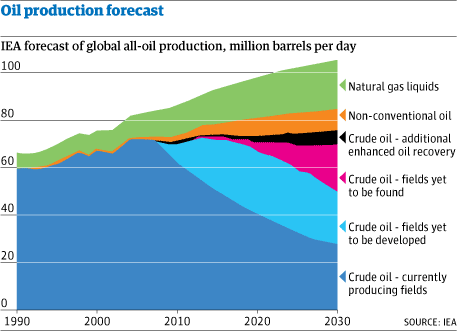
Guardian | The world is much closer to running out of oil than official estimates admit, according to a whistleblower at the International Energy Agency who claims it has been deliberately underplaying a looming shortage for fear of triggering panic buying.

The senior official claims the US has played an influential role in encouraging the watchdog to underplay the rate of decline from existing oil fields while overplaying the chances of finding new reserves.

The allegations raise serious questions about the accuracy of the organisation's latest World Energy Outlook on oil demand and supply to be published tomorrow – which is used by the British and many other governments to help guide their wider energy and climate change policies.

dr. henry niman (recombinomics) on the ukraine outbreak

KBOO | Theresa Mitchell interviews Dr. Henry Niman, Ph.D., internationally known viral researcher, on the progress of Swine Flu and the outbreak in Ukraine. Media hoopla or not, it's a dangerous pandemic and is about to grow more so; the numbers from the Ukraine have been spun.
Length: 27:20 minutes (25.03 MB)
Format: MP3 Mono 44kHz 128Kbps (CBR)

Chipocalypse Now - I Love The Smell Of Deportations In The Morning

sky |   Donald Trump has signalled his intention to send troops to Chicago to ramp up the deportation of illegal immigrants - by posting a...