Wednesday, November 04, 2009

buffett buys bnsf...,

Washington Post | The biggest name in investing is making what he calls an "all-in wager" on the U.S. economy - $34 billion to own a railroad that hauls everything from corn to cars across the country.

The acquisition of Burlington Northern Santa Fe, the nation's second-largest railroad, would be the biggest ever for Warren Buffett's Berkshire Hathaway investment company.

It's a natural fit for the Oracle of Omaha, a city with a special place in railroad history. It was the starting point for the westward push of the transcontinental railroad. Today, Omaha is the headquarters of Union Pacific, and BNSF trains rumble through every day.

In a statement, Buffett, whose investing decisions are carefully scrutinized by the world of finance, voiced confidence in the railroad industry.

"Most important of all, however, it's an all-in wager on the economic future of the United States. I love these bets," he said Tuesday.

Tuesday, November 03, 2009

inside lsd - tonight


National Geographic | LSDs inventor Albert Hofmann called it "medicine for the soul." The Beatles wrote songs about it. Secret military mind control experiments exploited its hallucinogenic powers. Outlawed in 1966, LSD became a street drug and developed a reputation as the dangerous toy of the counterculture, capable of inspiring either moments of genius, or a descent into madness. Now science is taking a fresh look at LSD, including the first human trials in over 35 years. Using enhanced brain imaging, non-hallucinogenic versions of the drug and information from an underground network of test subjects who suffer from an agonizing condition for which there is no cure, researchers are finding that this "trippy" drug could become the pharmaceutical of the future. Can it enhance our brain power, expand our creativity and cure disease? To find out, Explorer puts LSD under the microscope.

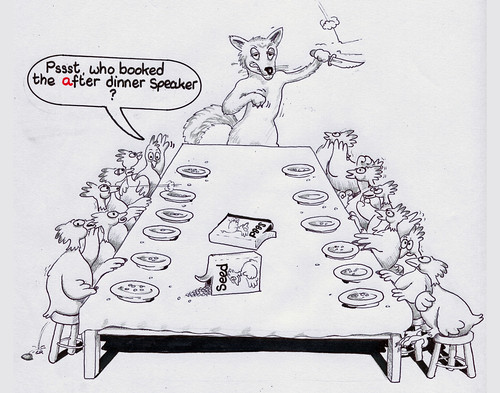
foxes and chicken coops

HuffPo | There have been a few financial insiders who've raised an eyebrow over Storch's hire. Zero Hedge pointed to a big flaw in Storch's background "...at least the SEC could have hired someone with actual market/broker experience. Based on his record, Mr. Storch is not even a licensed (Series 7/63) broker."

The Atlantic points to some real concerns about his level of experience: "I'm not sure what's scarier, that this guy worked at an investment bank that many believe has questionable ethics and too cozy a Washington connection, or that he's just 29. His 'great deal of background' must be those seven long years since college ended."

For those who've lamented the various links between Goldman Sachs and the financial regulatory system, this certainly isn't good news.

Bloomberg reports that the Securities Exchange Commission has named Adam Storch, a former Goldman exec, as its enforcement division's first chief operating officer. Storch is actually just 29 years old and previously worked in Goldman's business intelligence unit.

Here's Bloomberg:
"The COO, who started Oct. 13, has "a great deal of background" in technology and managing processes and the pace of work, Robert Khuzami, head of enforcement, said yesterday in Washington. Storch, who worked since 2004 in a unit at Goldman Sachs that reviewed contracts and transactions for signs of fraud, will be charged with making the unit more efficient. Storch, reached by telephone at the SEC, declined to comment."
According to what appears to be his LinkedIn profile, Storch spent his undergraduate years at the State University Of New York At Buffalo, and earned an MBA from New York University's Stern School Of Business. Other experience -- besides Goldman -- includes working as a Senior Analyst at Deloitte and Touche.

smooth criminals

Neurological Correlates | New journal volume on “Biosocial Criminality” and two reports selected: One, because psychopaths use murder more as an instrumentality than as an expression of emotion, they don’t tell anyone about their crimes, and, moreover, therefore, are brought up on lesser offenses and get out earlier (my interpretation). Two, psychopaths can see vulnerability in others by the way they walk. Fist tap Dale.

Monday, November 02, 2009

militarism and extremism

teach your teachers well....,

NYTimes | ARNE DUNCAN, the secretary of education, recently called for sweeping changes to the way we select and train teachers. He’s right. If we really want good schools, we need to create a critical mass of great teachers. And if we want smart, passionate people to become these great educators, we have to attract them with excellent programs and train them properly in the substance and practice of teaching.

Our best universities have, paradoxically, typically looked down their noses at education, as if it were intellectually inferior. The result is that the strongest students are often in colleges that have no interest in education, while the most inspiring professors aren’t working with students who want to teach. This means that comparatively weaker students in less intellectually rigorous programs are the ones preparing to become teachers.

So the first step is to get the best colleges to throw themselves into the fray. If education was a good enough topic for Plato, John Dewey and William James, it should be good enough for 21st-century college professors.

These new teacher programs should be selective, requiring a 3.5 undergraduate grade point average and an intensive application process. But they should also be free of charge, and admission should include a stipend for the first three years of teaching in a public school.

schools are where stimulus saved jobs

NYTimes | The best symbol of the $787 billion federal stimulus program turns out not to be a construction worker in a hard hat, but rather a classroom teacher saved from a layoff.

On Friday, the Obama administration released the most detailed information yet on the jobs created by the stimulus. Of the 640,239 jobs recipients claimed to have created or saved so far, officials said, more than half — 325,000 — were in education. Most were teachers’ jobs that states said were saved when stimulus money averted a need for layoffs.

Although the stimulus was initially sold in large part as a public works program, only about 80,000 of the jobs that were claimed Friday were in construction.

Of course, counting jobs that were saved can be a squishier proposition than counting jobs that were created. Teachers have been laid off in some areas — and budget officials say that there would have been more layoffs without the stimulus money — but it is difficult to say with certainty how many teachers would have been laid off without that money.

Indiana, for example, reported saving or creating 13,232 education jobs with its stimulus money, but Cris Johnston, the director of the government efficiency division of the state budget office, said that it was difficult to say whether the state would have actually lost those jobs without the money.

homelessness rises, redefining living conditions for schoolchildren

Chicago Tribune | Maria Maior's son is a football-playing, skateboard-riding, Xbox-loving kid whose home reveals all the trappings of domesticity: a cushy sofa, big-screen TV, a framed poster of Brian Urlacher -- one of the 12-year-old's favorite football players. On most evenings, two big dogs curl up on the carpeting.

The scene could be lifted from any suburban subdivision -- except that it's located not in a den, but in a storage unit.

The boy moved into the 10-foot-by-25-foot bunker about two months ago with his mom and her fiance, after a long run of bad luck and the loss of both of their jobs. His mother didn't not want his name used for this article. "As long as I have my parents, I'm fine with this," Maior's son said of the accommodations. "It's really not that bad."

School district officials said the boy is one of a record number of area students living in motels, campgrounds, shelters, cars and, yes, storage facilities.

According to recently released data, McHenry County's homeless enrollment increased by 125 percent from the 2007-08 school year to the 2008-09 school year -- the biggest hike in the six-county metropolitan area. Schools in Kane (85 percent), Will (61 percent), DuPage (53 percent), Lake (44 percent) and suburban Cook (24 percent) counties also posted their largest increases, reflecting the surge in foreclosures and unemployment. Early reports indicate that the trend has continued this fall, with numbers spiraling even higher

Sunday, November 01, 2009

appeasement not.....,


NYTimes | I continued to be conflicted — believing that when it comes to salutes (and one or two other matters), presidents deserved to be cut some slack, but also feeling a little uneasy about the whole thing.

My ambivalence came to an end last week, when I saw a videotape of the president’s midnight trip to Dover Air Force Base in Delaware, where he had participated, very early that morning, in the “dignified transfer” of 15 Army soldiers and three Drug Enforcement Administration agents killed that week in Afghanistan. Mr. Obama stood ramrod straight and saluted as six soldiers carried the coffin bearing the body of Sgt. Dale Griffin of Indiana off a C-17 transport aircraft and into a waiting van. His salute, it struck me, was impeccable in every way.

warsocialism's full spectrum redux...,

Seems like it may be time to do a memory refresh on the institutional expanse and behemoth totality of what Pres. Obama and SecDef Gates are wrestling with. It took me longer than I thought it would to find instances of the Joint Vision 2020 Report and its predecessor Joint Vision 2010. Though getting a sweeping strategic interpretation of what these doctrinal realignments portend was fairly easy to do.

Saturday, October 31, 2009

commander in chief bidnis....,

Fist tap Submariner

in congress, a call to review internal cybersecurity policies


Washington Post | House leaders on Friday called for an "immediate and comprehensive assessment" of congressional cybersecurity policies, a day after an embarrassing data breach that led to the disclosure of details of confidential ethics investigations.

Speaker Nancy Pelosi (D-Calif.) and Minority Leader John A. Boehner (R-Ohio) said they had asked the chief administrative officer of the House to report back to them on the policies and procedures for handling sensitive data as a result of the breach. The inadvertent disclosure of a House ethics committee document, obtained by The Washington Post, summarized the status of investigations into lawmakers' activities on subjects such as influence peddling and defense lobbying.

"We are working diligently to provide the highest level of data security for the House in order to ensure that the operations of House offices are secure from unauthorized access," Pelosi and Boehner said in a statement.

The breach angered lawmakers who were the subject of the previously undisclosed investigations, and it raised questions about the security of other sensitive documents.

cracking the whip...,


Washington Post | House ethics investigators have been scrutinizing the activities of more than 30 lawmakers and several aides in inquiries about issues including defense lobbying and corporate influence peddling, according to a confidential House ethics committee report prepared in July.

7 on defense panel scrutinized

Sanchez sisters eyed by House ethics panel for alleged collusion

Rep. Shuler's land swap deal eyed by ethics committee

The report appears to have been inadvertently placed on a publicly accessible computer network, and it was provided to The Washington Post by a source not connected to the congressional investigations. The committee said Thursday night that the document was released by a low-level staffer.

The ethics committee is one of the most secretive panels in Congress, and its members and staff members sign oaths not to disclose any activities related to its past or present investigations. Watchdog groups have accused the committee of not actively pursuing inquiries; the newly disclosed document indicates the panel is conducting far more investigations than it had revealed.

Shortly after 6 p.m. Thursday, the committee chairman, Zoe Lofgren (D-Calif.), interrupted a series of House votes to alert lawmakers about the breach. She cautioned that some of the panel's activities are preliminary and not a conclusive sign of inappropriate behavior.

the big don bottleneck...,

once again on the upswing...,

Washington Post | A worldwide upsurge in a crime that officials say could stop trains, flood basements and darken homes has come to the Washington area, where this week's examples include the theft of a bus shelter roof.

The crime involves stealing copper, whether pipes, fittings or wiring. Authorities said the incidence of the thefts often rises with copper's price per pound, which has rebounded sharply in the past year to nearly $3.

In Fairfax City three major copper thefts were reported this week. On Thursday, police were told that a thief had filched the copper roof of a bus shelter at Jermantown Road and Carol Street. The same day, they said, "a large quantity" of wire was reported stolen from a Dominion Virginia Power storage yard in the 11100 block of Fairfax Boulevard. A similar theft was reported at the utility's substation in the 10500 block of Main Street.

In June 2008, with copper prices close to $4 per pound, theft soared around the world, and the consequences rippled through daily life.

As prices fell to about $1.30 in late December, pilferage appeared to decline. Now, in accounts from Australia to Atlanta and Canada to Cape Town, South Africa, officials say copper thieves appear increasingly active.

Friday, October 30, 2009

the victory of the commons


Yesmagazine | The biggest roadblock standing in the way of many people’s recognition of the importance of the commons came tumbling down when Indiana University professor Elinor Ostrom won the Nobel Prize for Economics.

Over many decades, Ostrom has documented how various communities manage common resources – grazing lands, forests, irrigation waters, fisheries— equitably and sustainably over the long term. The Nobel Committee’s recognition of her work effectively debunks popular theories about the Tragedy of the Commons, which hold that private property is the only effective method to prevent finite resources from being ruined or depleted.

Awarding the world’s most prestigious economics prize to a scholar who champions cooperative behavior greatly boosts the legitimacy of the commons as a framework for solving our social and environmental problems. Ostrom’s work also challenges the current economic orthodoxy that there are few, if any, alternatives to privatization and markets in generating wealth and human well being.

The Tragedy of the Commons refers to a scenario in which commonly held land is inevitably degraded because everyone in a community is allowed to graze livestock there. This parable was popularized by wildlife biologist Garrett Hardin in the late 1960s, and was embraced as a principle by the emerging environmental movement. But Ostrom’s research refutes this abstract concept with the real life experience from places like Nepal, Kenya and Guatemala.

“When local users of a forest have a long-term perspective, they are more likely to monitor each other’s use of the land, developing rules for behavior,” she cites as an example. “It is an area that standard market theory does not touch.”

Garrett Hardin himself later revised his own view, noting that what he described was actually the Tragedy of the Unmanaged Commons. Columbia University economist Joseph Stiglitz, also a Nobel winner, commented, “Conservatives used the Tragedy of the Commons to argue for property rights, and that efficiency was achieved as people were thrown off the commons…What Ostrom has demonstrated is the existence of social control mechanisms that regulate the use of the commons without having to resort to property rights.”

culture of "we" buffers genetic tendency toward depression

Physorg | A genetic tendency to depression is much less likely to be realized in a culture centered on collectivistic rather than individualistic values, according to a new Northwestern University study.

In other words, a genetic vulnerability to depression is much more likely to be realized in a Western culture than an East Asian culture that is more about we than me-me-me.

The study coming out of the growing field of cultural neuroscience takes a global look at mental health across social groups and nations.

Depression, research overwhelmingly shows, results from genes, environment and the interplay between the two. One of the most profound ways that people across cultural groups differ markedly, cultural psychology demonstrates, is in how they think of themselves.

"People from highly individualistic cultures like the United States and Western Europe are more likely to value uniqueness over harmony, expression over agreement, and to define themselves as unique or different from the group," said Joan Chiao, the lead author of the study and assistant professor of psychology in the Weinberg College of Arts and Sciences at Northwestern.

In contrast, people from collectivist cultures are more likely to value social harmony over individuality. "Relative to people in an individualistic culture, they are more likely to endorse behaviors that increase group cohesion and interdependence," Chiao said.

Collectivist cultures may give individuals who are genetically susceptible to depression a tacit or explicit expectation of social support. "Such support seems to buffer vulnerable individuals from the environmental risks or stressors that serve as triggers to depressive episodes," Chiao said.

The study by Chiao and Northwestern graduate student Katherine Blizinsky, "Culture-gene coevolution of individualism-collectivism and the serotonin transporter gene," will be published online in the journal Proceedings of the Royal Society B: Biological Sciences.

The study compared genetic frequency information and cultural value data across 29 countries (major European countries as well as South Africa, Eastern Europe, South Asia, East Asia and South America). The serotonin transporter gene (STG) that the researchers studied has two variants - a short allele and a long allele. In Western populations, the short allele leads to a phenotype of major depressive episodes when people who carry it experience multiple life stressors.

long-term anti-depressant drug use

Science Daily | A dramatic rise in antidepressant prescriptions issued by GPs has been caused by a year on year increase in the number of people taking antidepressant drugs on a long-term basis, according to researchers from the University of Southampton.

In a paper, published in the printed edition of British Medical Journal (BMJ), scientists found that despite a drop in the number of new patients diagnosed with depression over 11 years, the number of prescriptions doubled.

"We estimate that more than 2 million people are now taking antidepressants long-term over several years, in particular women aged between 18 and 30," comments Tony Kendrick, a professor in Primary Medical Care of the University's School of Medicine, who led the study.

The number of prescriptions issued per patient rose from 2.8 in 1993 to 5.6 in 2004.

Prescription Pricing Authority data shows that more than 30 million prescriptions for SSRIs (selective serotonin reuptake inhibitors) such as Prozac and Seroxat, are now issued per year, twice as many as the early 1990s. Researchers at the University of Southampton found 90 per cent of people diagnosed with depression are now taking SSRIs either continuously or as repeated courses over several years.

Thursday, October 29, 2009

skewering warsocialist stupidity

the case for legalization

AlterNet | By any objective standard, marijuana prohibition is an abject failure.

Nationwide, U.S. law enforcement have arrested over 20 million American citizens for marijuana offenses since 1965, yet today marijuana is more prevalent than ever before, adolescents have easier access to marijuana than ever before, the drug is more potent than ever before, and there is more violence associated with the illegal marijuana trade than ever before.

Over 100 million Americans nationally have used marijuana despite prohibition, and 1 in 10 -- according to current government survey data -- use it regularly.

The criminal prohibition of marijuana has not dissuaded anyone from using marijuana or reduced its availability; however, the strict enforcement of this policy has adversely impacted the lives and careers of millions of people who simply elected to use a substance to relax that is objectively safer than alcohol.

NORML believes that the state of California ought to amend criminal prohibition and replace it with a system of legalization, taxation, regulation and education.

Chipocalypse Now - I Love The Smell Of Deportations In The Morning

sky |   Donald Trump has signalled his intention to send troops to Chicago to ramp up the deportation of illegal immigrants - by posting a...