Sunday, October 25, 2009

growing restless....,

Bloomberg | An Exxon Mobil Corp. executive overseeing the company’s $15 billion liquefied-natural-gas project in Papua New Guinea was beaten and stomped by a mob of 50 people in a dispute over landowner contracts.

Noel Wright, Exxon Mobil’s development officer overseeing plans to build a gas-export complex in the South Pacific nation, has returned to “normal duties” after the Oct. 20 attack outside his hotel in the capital, Port Moresby, said Margaret Ross, a spokeswoman for the Irving, Texas-based company.

Ross declined to provide details on Wright’s injuries, which the Post-Courier newspaper in Port Moresby said were severe enough to require hospitalization. Wright was “severely punched” in the face, knocked to the pavement, kicked and stepped on during the incident, the newspaper reported on Oct. 21. The attackers’ attempt to haul Wright away in a waiting vehicle failed when police intervened, the Post-Courier said.

“The reported assault is under police investigation,” Ross said today in an e-mailed statement. “The PNG LNG project places a high priority on the safety and security of its personnel and facilities and has programs and measures in place to provide security and safeguards to protect its people and operations.”

The attack won’t deter Exxon Mobil, the world’s largest company by market value, from proceeding with the LNG project, Ross said. Exxon Mobil will adhere to plans to make a final investment decision by the end of December, she said.

Saturday, October 24, 2009

continuously less and less....,

click the image to enlarge its details

Continuously Less and Less
The fundamental enabler of our industrialized American way of life is continuous access to enormous quantities of inexpensive nonrenewable natural resources (NNRs)—energy resources, metals, and minerals. Unfortunately, future NNR supplies will be insufficient to perpetuate our American way of life, for both geological reasons and geopolitical reasons.

Geologically, an ever-increasing number of NNRs are near, at, or past their peak production levels; NNR supplies available to the US are or will soon be in terminal decline.

Geopolitically, our foreign NNR suppliers, who are also our competitors for remaining global NNR supplies, are becoming less willing to export their increasingly scarce NNRs to the US in exchange for our continuously devaluing US dollars and our unrepayable US debt.

Since our continuously declining domestic NNR supplies are woefully inadequate to enable our American way of life, and our imported NNR supplies will decline continuously going forward, we will experience permanent NNR supply shortfalls in the not-too-distant future that will cause American society to collapse. The following paper presents quantified evidence to support this contention.

The paper provides a comprehensive analysis of 58 nonrenewable natural resources for which the US Geological Survey and US Energy Information Administration keep current and historic production, pricing, and utilization data. Specifically, the paper assesses the extent to which nonrenewable natural resource (NNR) supplies available to America are becoming increasingly scarce, and the extent to which America is vulnerable to an imminent and permanent NNR supply shortfall associated with each of the 58 analyzed NNRs.

Finally, the paper discusses the implications associated with NNR scarcity and NNR supply shortfalls on our American way of life and American society.

Supporting data tables, NNR myths, and possible sources of error associated with the paper’s analyses and findings are provided in the appendixes.

art of the samurai


MMOA | This will be the first comprehensive exhibition devoted to the arts of the samurai. Arms and armor will be the principal focus, bringing together the finest examples of armor, swords and sword mountings, archery equipment and firearms, equestrian equipment, banners, surcoats, and related accessories of rank such as fans and batons. Drawn entirely from public and private collections in Japan, the majority of objects date from the rise of the samurai in the late Heian period, ca. 1156, through the early modern Edo period, ending in 1868, when samurai culture was abolished. The martial skills and daily life of the samurai, their governing lords, the daimyo, and the ruling shoguns will also be evoked through the presence of painted scrolls and screens depicting battles and martial sports, castles, and portraits of individual warriors. The exhibition will conclude with a related exhibition documenting the recent restoration in Japan of a selection of arms and armor from the Metropolitan Museum’s permanent collection. This will be the first exhibition ever devoted to the subject of Japanese arms and armor conservation.
Accompanied by a catalogue.

The exhibition is made possible by the Yomiuri Shimbun.

Friday, October 23, 2009

the speech obama needs to (but will not) give...,


The Oil Drum | As I’m sure all of you are painfully aware, the United States, along with the rest of the world, is in the midst of some of the most profound economic, environmental, and energy troubles ever experienced by modern civilization.

I understand the deep pain, anger, and confusion many of you are feeling at this moment, and I sympathize. My goal tonight is to try to clarify our situation a bit, and in doing so, perhaps channel some of those feelings towards more constructive ends.

The economic, environmental, and energy problems we are currently experiencing are not ultimately the fault of any one person, political group, ethnic group, religious group, country, or region. They go much deeper than that. They are, instead, manifestations of the ongoing conflict -- a war really -- between a finite planet and a human species with infinite aspirations.

In such a war -- a war we are waging against our very life-support systems -- we have no hope of winning. Our best hope is to, as quickly as possible, call off the war, regroup, and fundamentally restructure our society around the acceptance of our planet’s finite nature – around limits.

My words here are, no doubt, striking to you. These are not ideas commonly expressed in “polite” circles -- in the national print media, on television, in board rooms, in Congress, in addresses from the President. They are revolutionary. But they are true and they are necessary.

Let me use an analogy from my experience as a father. As children grow towards adulthood, one of the most painful experiences – for both the child and the parent – is the child’s slow realization and eventual acceptance of limits. Such an embrace of limits is, in fact, one of the hallmarks of “growing up.” My fellow Americans, we need to grow up.

Limits
We, as a species, are now bumping up against -- slamming into, really -- some very immutable biophysical limits on a global scale. These limits and the mounting consequences for their continued violation have been predicted and well documented by our best scientists for many decades -- complete with dire warnings for the consequences of failing to change our course.

We have not heeded these warnings and we are now suffering the predicted consequences. It is our own fault.

We have reached limits in two very real and dangerous senses. Firstly, our voracious material wants have outstripped the Earth’s physical limits -- hard limits on how much and how rapidly the Earth can provide us with material and energy resources to run our industrial lifestyles. A partial list of these increasingly scarce resources includes fossil and nuclear energy sources, freshwater for drinking and irrigation, phosphate fertilizer, and various key metal ores. Even theoretically renewable resources such as our ocean fisheries, fertile soil, and forest products are being destroyed by persistent abuse.

In short, we cannot have infinite wants on a finite planet. These were childish wishes.

Secondly, the almost-unimaginable volumes of waste arising from our industrial activities have overwhelmed the Earth’s waste-disposal systems. The list of accumulating toxins is long and growing: greenhouse gases, PCBs, mercury and other heavy metals, radioactive waste, various endocrine disruptors, silt from eroded forests and farmland, excessive fertilizer, pesticides, and antibiotics from industrial factory farms in our estuaries and drinking water, as well as many others I could list. Most notable among this shameful list are the greenhouse gases arising from our civilization’s terminal addiction to fossil fuels. These have accumulated in our atmosphere to such an extent that a potentially disastrous suite of climatic changes has already been initiated – changes that may ultimately endanger our very survival as a species.

We have fouled our nest. Again, we are guilty of childish behavior – mindless, reckless, and irresponsible.

The End of Growth
Having recognized these limits, we are immediately challenged to renounce one of our most cherished beliefs as a civilization -- the idea of continuous material growth.

u.s. joins ranks of failed states?

ICH | According to reports, the US Marines in Afghanistan use 800,000 gallons of gasoline per day. At $400 per gallon, that comes to a $320,000,000 daily fuel bill for the Marines alone. Only a country totally out of control would squander resources in this way.

While the US government squanders $400 per gallon of gasoline in order to kill women and children in Afghanistan, many millions of Americans have lost their jobs and their homes and are experiencing the kind of misery that is the daily life of poor third world peoples. Americans are living in their cars and in public parks. America’s cities, towns, and states are suffering from the costs of economic dislocations and the reduction in tax revenues from the economy’s decline. Yet, Obama has sent more troops to Afghanistan, a country half way around the world that is not a threat to America.

It costs $750,000 per year for each soldier we have in Afghanistan. The soldiers, who are at risk of life and limb, are paid a pittance, but all of the privatized services to the military are rolling in excess profits. One of the great frauds perpetuated on the American people was the privatization of services that the US military traditionally performed for itself. “Our” elected leaders could not resist any opportunity to create at taxpayers’ expense private wealth that could be recycled to politicians in campaign contributions.

Republicans and Democrats on the take from the private insurance companies maintain that the US cannot afford to provide Americans with health care and that cuts must be made even in Social Security and Medicare. So how can the US afford bankrupting wars, much less totally pointless wars that serve no American interest?

The enormous scale of foreign borrowing and money creation necessary to finance Washington’s wars are sending the dollar to historic lows. The dollar has even experienced large declines relative to currencies of third world countries such as Botswana and Brazil. The decline in the dollar’s value reduces the purchasing power of Americans’ already declining incomes.

An unmistakable sign of third world despotism is a police force that sees the pubic as the enemy. Thanks to the federal government, our local police forces are now militarized and imbued with hostile attitudes toward the public. SWAT teams have proliferated, and even small towns now have police forces with the firepower of US Special Forces. Summons are increasingly delivered by SWAT teams that tyrannize citizens with broken down doors, a $400 or $500 repair born by the tyrannized resident. Recently a mayor and his family were the recipients of incompetence by the town’s local SWAT team, which mistakenly wrecked the mayor’s home, terrorized his family, and killed the family’s two friendly Labrador dogs.

If a town’s mayor can be treated in this way, what do you think is the fate of the poor white or black? Or the idealistic student who protests his government’s inhumanity?

In any failed state, the greatest threat to the population comes from the government and the police. That is certainly the situation today in the USA. Americans have no greater enemy than their own government. Washington is controlled by interest groups that enrich themselves at the expense of the American people.

The one percent that comprise the superrich are laughing as they say, “let them eat cake.”

$400.00/gallon gas drives debate over afghan war

TheHill | The Pentagon pays an average of $400 to put a gallon of fuel into a combat vehicle or aircraft in Afghanistan.

The statistic is likely to play into the escalating debate in Congress over the cost of a war that entered its ninth year last week.

Pentagon officials have told the House Appropriations Defense Subcommittee a gallon of fuel costs the military about $400 by the time it arrives in the remote locations in Afghanistan where U.S. troops operate.

“It is a number that we were not aware of and it is worrisome,” Rep. John Murtha (D-Pa.), the chairman of the House Appropriations Defense panel, said in an interview with The Hill. “When I heard that figure from the Defense Department, we started looking into it.”

The Pentagon comptroller’s office provided the fuel statistic to the committee staff when it was asked for a breakdown of why every 1,000 troops deployed to Afghanistan costs $1 billion. The Obama administration uses this estimate in calculating the cost of sending more troops to Afghanistan.

The Obama administration is engaged in an internal debate over its future strategy in Afghanistan. Part of this debate concerns whether to increase the number of U.S. troops in that country.

The top U.S. general in Afghanistan, Stanley McChrystal, reportedly has requested that about 40,000 additional troops be sent.
Democrats in Congress are divided over whether to send more combat troops to stabilize Afghanistan in the face of waning public support for the war.

Any additional troops and operations likely will have to be paid for through a supplemental spending bill next year, something Murtha has said he already anticipates.

Afghanistan — with its lack of infrastructure, challenging geography and increased roadside bomb attacks — is a logistical nightmare for the U.S. military, according to congressional sources, and it is expensive to transport fuel and other supplies.

t. boone speaks his mind...,

Reuters | Oil tycoon T. Boone Pickens told Congress on Wednesday that U.S. energy companies are "entitled" to some of Iraq's crude because of the large number of American troops that lost their lives fighting in the country and the U.S. taxpayer money spent in Iraq.

Boone, speaking to the newly formed Congressional Natural Gas Caucus, complained that the Iraqi government has awarded contracts to foreign companies, particularly Chinese firms, to develop Iraq's vast reserves while American companies have mostly been shut out.

"They're opening them (oil fields) up to other companies all over the world ... We're entitled to it," Pickens said of Iraq's oil. "Heck, we even lost 5,000 of our people, 65,000 injured and a trillion, five hundred billion dollars."

President Barack Obama has pledged to withdraw U.S. troops in Iraq.

"We leave there with the Chinese getting the oil," Pickens said.

Thursday, October 22, 2009

drop in foreclosures called "very scary"

DaytonDailyNews | Nobody is sure exactly how many bank walkaways are occurring. For various reasons, they can’t be identified in searches of public real estate and court data without individually pulling case files, experts say.

But nobody questions that they are on the increase.

David Rothstein, a researcher with Policy Matters Ohio, summarized the way they occur like this:

• The lender files a foreclosure, gets the foreclosure judgment in court, takes the property to sheriff’s auction but doesn’t bid on it if no one else does.

• The lender files as above, gets the judgment, sets the sheriff’s auction, then cancels the sale at the last minute.

• The lender files as above but then never requests a sheriff’s auction.

• The lender doesn’t even bother to file foreclosure.

All of these actions leave the foreclosed property in the hands of the original owner who, in many cases, has moved out and is unaware the lender hasn’t taken it.

One indicator of the trend in walkaways is the gap between the number of foreclosure filings by lenders and the number of properties actually sold at sheriff’s auction.

A Dayton Daily News analysis of Montgomery County records found that, through September, foreclosure filings are on a pace this year to decrease by 8 percent. Meanwhile, foreclosed properties sold at sheriff’s sale will be down more than 21 percent. Over the three years an average of 2,500 foreclosure filings have not made it to sale at auction.

A foreclosure filing may not make it to auction for a number of reasons, including owners coming up with the money or lenders working out deals with them. But, Rothstein said, the growing difference between filings and sales suggests walkaways are playing an increasing role.

“When we look at the numbers, it’s not like thousands of people are getting loan modifications that would lift them out of the foreclosure process,” he said. “So what’s happening to those other properties?”

american poverty higher than ever now

NYDailyNews | The level of poverty in America is even worse than first believed.

A revised formula for calculating medical costs and geographic variations show that approximately 47.4 million Americans last year lived in poverty, 7 million more than the government's official figure.

The disparity occurs because of differing formulas the Census Bureau and the National Academy of Science use for calculating the poverty rate. The NAS formula shows the poverty rate to be at 15.8 percent, or nearly 1 in 6 Americans, according to calculations released this week. That's higher than the 13.2 percent, or 39.8 million, figure made available recently under the original government formula.

That measure, created in 1955, does not factor in rising medical care, transportation, child care or geographical variations in living costs. Nor does it consider non-cash government aid when calculating income. As a result, official figures released last month by Census may have overlooked millions of poor people, many of them 65 and older.

foreclosures force ex-homeowners into shelters

NYTimes | The first night after she surrendered her house to foreclosure, Sheri West endured the darkness in her Hyundai sedan. She parked in her old driveway, with her flower-print dresses and hats piled in boxes on the back seat, and three cherished houseplants on the floor. She used her backyard as a restroom.

The second night, she stayed with a friend, and so it continued for more than a year: Ms. West — mother of three grown children, grandmother to six and great-grandmother to one — passed months on the couches of friends and relatives, and in the front seat of her car.

But this fall, she exhausted all options. She had once owned and overseen a group home for homeless people. Now, she succumbed to that status herself, checking in to a shelter.

“No one could have told me that in a million years: I’d wake up in a homeless shelter,” she said. “I had a house for homeless people. Now, I’m homeless.”

Growing numbers of Americans who have lost houses to foreclosure are landing in homeless shelters, according to social service groups and a recent report by a coalition of housing advocates.

Only three years ago, foreclosure was rarely a factor in how people became homeless. But among the homeless people that social service agencies have helped over the last year, an average of 10 percent lost homes to foreclosure, according to “Foreclosure to Homelessness 2009,” a survey produced by the National Coalition for the Homeless and six other advocacy groups.

In the Midwest, foreclosure played a role for 15 percent of newly homeless people, according to the survey, reflecting soaring rates of unemployment — Ohio’s reached 10.8 percent in August — and aggressive lending to people with damaged credit.

foreclosures - worst three months of all time...,

CNN | Despite signs of broader economic recovery, number of foreclosure filings hit a record high in the third quarter - a sign the plague is still spreading. Despite concerted government-led and lender-supported efforts to prevent foreclosures, the number of filings hit a record high in the third quarter, according to a report issued Thursday.

"They were the worst three months of all time," said Rick Sharga, spokesman for RealtyTrac, an online marketer of foreclosed homes.

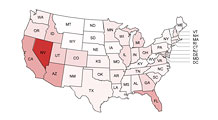
During that time, 937,840 homes received a foreclosure letter -- whether a default notice, auction notice or bank repossession, the RealtyTrac report said. That means one in every 136 U.S. homes were in foreclosure, which is a 5% increase from the second quarter and a 23% jump over the third quarter of 2008.

Nevada continued to be the worst-hit state with one filing for every 23 households. But even tranquil Vermont, where the foreclosure crisis has barely brushed the housing market, saw foreclosure filings jump nearly 170% compared with the third quarter of 2008. Still, that resulted in just one filing for every 5,023 households in the state -- the best record in the country.

u.s. launches aid for state and local housing agencies

Reuters | The Obama administration on Monday launched a program to help the depressed U.S. housing market by effectively allowing state and local housing finance agencies to borrow from the U.S. Treasury.

The initiative, announced as new data showed a downturn in homebuilder sentiment, aims to restart a source of mortgage financing for first-time and low-income buyers that has Justify Fullbeen largely shut down by credit market gridlock.

Described as temporary by the U.S. Treasury, the Department of Housing and Urban Development and the Federal Housing Finance Agency, the program will allow state and local agencies to issue bonds through government-sponsored mortgage finance giants Fannie Mae and Freddie Mac. Those bonds would then be purchased by the Treasury.

"Through this initiative, the administration aims to help ... jump start new lending to borrowers who might not otherwise be served and to better support the financing costs of their current programs," U.S. Treasury Secretary Timothy Geithner said in a statement.

The U.S. housing market, which was at the epicenter of the global credit crisis, has shown signs of stabilizing, but it has been bolstered by an $8,000 tax credit for first-time buyers that is set to expire at the end of November.

Wednesday, October 21, 2009

a very lucky universe?

Guardian | In a desperate attempt to explain why Cern's Large Hadron Collider has suffered a series of mishaps preventing it from commencing its search for the elusive Higgs Boson particle, respectable physicists have suggested (apparently in all seriousness) that nature abhors the Higgs so much that ripples from the future are travelling back in time to stop the Switzerland-based particle accelerator working.

Reports of the emergence of these theories have prompted renewed contemplation of the "granny paradox", which some think debunks the very idea of time travel. In this scenario, a time traveller goes into the past and inadvertently causes the death of his/her granny, before the traveller's parents are born. So the traveller never goes back in time, so granny doesn't die – and, well, so on. I have a much simpler explanation for the collider's plight. Its failure is related to the existence of other universes, the "parallel worlds" beloved of science-fiction writers.

This theory suggests there are many – perhaps infinitely many – universes, some more or less like our own, some very different. This is not an idea confined to science fiction; it is respectable scientific speculation. Such universes are thought to exist in their own sets of space and time dimensions, and include worlds where key turning points in history, such as the Battle of Hastings, turned out differently from the way things happened in our world. The physicist Hugh Everett proved half a century ago that this "many worlds" idea is completely compatible with everything we know about the way the world works, and is a natural feature of quantum physics.

u.s. state tax revenue drops most since 1963

Bloomberg | Bloomberg is reporting State Revenue Falls Most Since 1963 on Incomes, Sales. U.S. state tax collections tumbled the most in almost half a century in the second quarter as the economic recession curbed levies on incomes and sales.

The 16.6 percent plunge was the biggest since at least 1963, the Nelson A. Rockefeller Institute of Government said today. For the 12 months to June 30, the fiscal year for most states, revenue declined 8.2 percent, or $63 billion, about twice what states got from the $787 billion U.S. economic stimulus package, the institute said.

State revenue has dwindled for two straight quarters and continued to decline in July and August, the Albany-based research organization said. Budgets for the year that began July 1 already face $26 billion of deficits, the Washington, D.C.- based Center on Budget and Policy Priorities said Aug. 12, forcing state lawmakers to confront additional spending cuts.

“We’re looking at a multiyear problem hitting essentially every state,” Robert Ward, the institute’s deputy director, told reporters. “It has happened during recessions before, but the depth of this decline is unprecedented in modern times.”

Collections dropped in 49 states in the second quarter as sales and personal-income taxes slid for the third consecutive period, the institute said. Income tax was down 27.5 percent and sales tax fell down 9.5 percent, its study said. Both categories fell by the most in 45 years.

“Many economists believe that the national recession has ended and that a tepid recovery is now underway,” Rockefeller analysts Lucy Dadayan and Donald J. Boyd wrote. “Unfortunately for states, an emerging economic recovery does not spell instant budget relief.”

america's soul is lost - collapse inevitable

MarketWatch | Jack Bogle published "The Battle for the Soul of Capitalism" four years ago. The battle's over. The sequel should be titled: "Capitalism Died a Lost Soul." Worse, we've lost "America's Soul." And worldwide the consequences will be catastrophic. That's why a man like Hong Kong's contrarian economist Marc Faber warns in his Doom, Boom & Gloom Report: "The future will be a total disaster, with a collapse of our capitalistic system as we know it today."

No, not just another meltdown, another bear market recession like the one recently triggered by Wall Street's "too-greedy-to-fail" banks. Faber is warning that the entire system of capitalism will collapse. Get it? The engine driving the great "American Economic Empire" for 233 years will collapse, a total disaster, a destiny we created.

OK, deny it. But I'll bet you have a nagging feeling maybe he's right, the end may be near. I have for a long time: I wrote a column back in 1997: "Battling for the Soul of Wall Street." My interest in "The Soul" -- what Jung called the "collective unconscious" -- dates back to my Ph.D. dissertation: "Modern Man in Search of His Soul," a title borrowed from Jung's 1933 book, "Modern Man in Search of a Soul." This battle has been on my mind since my days at Morgan Stanley 30 years ago, witnessing the decline.

Has capitalism lost its soul? Guys like Bogle and Faber sense it. Read more about the soul in physicist Gary Zukav's "The Seat of the Soul," Thomas Moore's "Care of the Soul" and sacred texts.

But for Wall Street and American capitalism, use your gut. You know something's very wrong: A year ago "too-greedy-to-fail" banks were insolvent, in a near-death experience. Now, magically they're back to business as usual, arrogant, pocketing outrageous bonuses while Main Street sacrifices, and unemployment and foreclosures continue rising as tight credit, inflation and skyrocketing Federal debt are killing taxpayers.

Yes, Wall Street has lost its moral compass. They created the mess, now, like vultures, they're capitalizing on the carcass. They have lost all sense of fiduciary duty, ethical responsibility and public obligation.

Here are the Top 20 reasons American capitalism has lost its soul:

Tuesday, October 20, 2009

frustration builds within the ranks

NYTimes | Only nine months ago, the Pentagon pronounced itself reassured by the early steps of a new commander in chief. President Obama was moving slowly on an American withdrawal from Iraq, had retained former President George W. Bush’s defense secretary and, in a gesture much noticed, had executed his first military salute with crisp precision.

But now, after nearly a month of deliberations by Mr. Obama over whether to send more American troops to Afghanistan, frustrations and anxiety are on the rise within the military.

A number of active duty and retired senior officers say there is concern that the president is moving too slowly, is revisiting a war strategy he announced in March and is unduly influenced by political advisers in the Situation Room.

“The thunderstorm is there and it’s kind of brewing and it’s unstable and the lightning hasn’t struck, and hopefully it won’t,” said Nathaniel C. Fick, a former Marine Corps infantry officer who briefed Mr. Obama during the 2008 presidential campaign and is now the chief executive of the Center for a New American Security, a military research institution in Washington. “I think it can probably be contained and avoided, but people are aware of the volatile brew.”

marching toward zombieland

JHKunstler | When sober-minded individuals begin to regard an enterprise within a nation as "an enemy of the people" you can bet that some serious blood is going to flow. This is now essentially the situation for the Goldman Sachs company, which last week announced third-quarter earnings of over $3 billion largely derived from converting zero percent loans from taxpayers into zero risk profits off of anything paying more than zero percent in interest, revenue, or dividends.

The "people" across this big country may not have a clue how any of this is done, and there may be much to fault them on from the care-and-feeding of their own bodies to the content of their dreams, but you can't argue with the fact that they are heavily armed to an extreme. And although it may be hard to measure with precision, one might venture to state that they are increasingly pissed off. How else explain popular entertainments like "Zombieland?"

The political part of what has to date appeared to be an economic problem is resolving into a crisis of authority and legitimacy. When those in charge of a nation's livelihood prove to be comprehensively false and dishonest, the economic automatically turns political. Nobody believes the bankers anymore, of course, and nobody believes the interlocutors of the bankers - the Federal Reserve chairman, the Secretary of the Treasury, the heads of the SEC and a dozen other regulatory bodies - and increasingly the charming figure in the White House cannot be believed on these issues of the nation's livelihood.

The questions lately revolve around whether the nation is destroying itself by inflation or deflation - by the willful destruction of the value of our currency to evade the repayment of debt, or by the hapless destruction of households, companies, and governments by default and bankruptcy. It's a fire-or-ice debate. Either way the nation is going down as a viable enterprise. The fiction that we can return to a Crate-and-Barrel credit card orgy has sustained the false of heart and mind for some months now, but even that pleasant reverie will come to an end as the foreclosures mount. Only remember, men living in their cars who have lost nearly everything else will still have guns.

All these tensions beat a path into the holiday season when emotions run high, when blessings are counted and sorrows taste most bitter. So the big question now floating above the sheer data of Goldman Sachs profit announcement is: what kind of year-end bonuses will they dare to pay their executives and minions, and how will the "people" react? It seems to me that conditions are ripening for a bloodbath. The kind of heinous acts that we have feared emanating from foreign "evildoers" since the awful stunt of 9/11/01 are now most likely to come from among our own "people" - a few pounds of Semtex in the lobby of Goldman Sachs's New York headquarters... a few men with market-grade small arms converted to full-automatic outside on the Wall Street sidewalk one evening at holiday time when the suits are leaving work for the day.... It won't take much.

Monday, October 19, 2009

u.s. military's battle to wean itself off oil

Grist | In the summer of 2006, Marine Corps Major General Richard Zilmer sent the Pentagon an unusual “Priority 1” request for emergency battlefield supplies. Stationed at a temporary base in Fallujah, Zilmer was commanding a force of 30,000 troops responsible for protecting Al Anbar, the vast territory in western Iraq bordering Saudi Arabia, Jordan, and Syria. Heavily armed insurgents were hammering the region, and Al Qaeda was quickly gathering recruits. Zilmer’s beleaguered soldiers were running low on fuel for the diesel generators powering their barracks—fuel that cooled their tents in the 135-degree weather, refrigerated and cooked their food, and kept the communication lines open. The general, however, was wary of trucking in backup supplies during a time of so much turmoil. The U.S. fuel convoys that chugged along the back roads of Iraq every day—long lines of 18-wheelers hauling armored vats of gas—were among the insurgents’ prime targets.

Zilmer’s memo presented the Pentagon with an unprecedented request: “a self-sustainable energy solution,” including “solar panels and wind turbines.” This was the first time a frontline commander had formally requested renewable energy backup in battle. Without alternative power sources, the memo continued, U.S. forces “will remain unnecessarily exposed” and will “continue to accrue preventable ... serious and grave casualties.” Put in civilian-speak: Too many of Zilmer’s troops were dying in fuel convoys, and the relentless gasoline demands of the diesel generators were partly to blame.

Renewable energy was not an environmental consideration for Zilmer, it was a tactical necessity—a matter of life and death, of victory or defeat. The Pentagon is the largest consumer of petroleum in the United States. In recent years it has used between 130 million and 145 million barrels of oil annually—2 percent of America’s total petroleum demand. That translates to nearly 400,000 barrels per day, roughly the total daily energy consumption of the United Arab Emirates. Over the last century, no institution has done more to propel America’s rise to power than our military—or consumed more oil in the process. We have petroleum to thank for building the Department of Defense into an as-yet-unmatched fighting machine—but our troops are only as powerful as the flow of fuel that sustains them.

I was both baffled and hopeful when I read about Zilmer’s memo. Here was a no-nonsense Marine Corps general who has served more than 30 years in the U.S. military (not your typical tree-hugger) stationed in a country that’s virtually floating on an ocean of oil (Iraq has the world’s third-largest oil reserves, after Iran and Saudi Arabia) demanding clean energy solutions that only a few years earlier had been regarded as rinky-dink hippie technology suitable only for yurts and Earthships. Zilmer’s plea struck me as a clear harbinger of change in America’s attitudes about energy. If there was ever an opportunity to “man up” the effete image and role of solar panels, wind power, and other fossil-fuel alternatives, this was it. Just think of what the Pentagon could do to fast-track alternative-energy innovations going forward—after all, it was military R&D that led to the invention of jet airplanes, helicopters, radar, remote-control mechanisms, cell phones, global positioning systems (GPS), microchips, and the internet.

But for all the promise it augured, Zilmer’s memo also carried overtones of despair that spoke to the massive challenges that come with fueling the military—one more oil-dependent today than ever before in history.

How did the American military get so hooked on petroleum? How much does it really cost—in both blood and treasure—to fuel war? What would it take to transform the world’s biggest and strongest military into a petroleum-free enterprise? And how did this become the primary concern of a man leading 30,000 troops? To get answers, I went straight to the heart of the U.S. military establishment.

shale gas estimates optimistic?

The Oil Drum | Unfortunately I have had to miss the ASPO Meeting in Denver this week, and so cannot provide the daily reports that I have written in the past. But I notice that at least one of the talks has already caught a significant amount of press, and that is the one by Arthur Berman on the gas production from shale deposits such as the Barnett, Haynesville and Marcellus.

There has been a considerable hype in the press about the value of the gas from these shales, and the ability that they provide to bring in an “Age of Natural Gas”. This picture of a large supply of natural gas has been strengthened by the increase in production from a number of the gas shale fields, at the same time that the recession hit, and as a result there has been more gas available than needed, and the price has dropped considerably as a result. This, in turn, has led to a considerable reduction in the number of rigs that have been drilling new wells.

Natural gas has been steadily increasing its share of electricity generation, rising to over 20% of the market, on its way to 25%. Natural gas is favored because of its reduced carbon footprint over coal, and it has historically been used since it is somewhat easier to start and stop gas turbines than it is coal-fired power. Thus natural gas is seen as a favored backup to the installation of wind farms, where the vagaries of the wind are backed by the ability to use natural gas when needed.

There are, however, considerable concerns about the ability of wells in the gas shale to produce to the targets that are being set up. I first noted Arthur Berman’s concern about this back in 2007 when I drew attention to a piece he had written in World Oil, where he noted the short life of most of the gas-producing wells; the very high costs for the wells and technology required to create them and, as a result, that only 28% of them return a reasonable profit. (Unfortunately the article itself is now behind a paywall).

Since then I returned to the topic at Bit Tooth showing, among other data, the very high decline rate (now 60%) of many of the gas wells in Texas (where the Barnett shale is) that Swindell has reported.

energy crisis postponed as new gas rescues the world?

ODAC | It is hard to know where to begin regarding Ambrose Evans-Pritchard's article entitled "Energy crisis is postponed as new gas rescues the world." But since the speculative world he invokes has more to with Alice In Wonderland than the hard reality of engineering and science, let us begin - at the end.

Evans-Pritchard caps his evangelistic encomium with this: "I am not qualified to judge where gas excitement crosses into hyperbole. I pass on the story because the claims of BP and Statoil are so extraordinary that we may need to rewrite the geo-strategy textbooks for the next half century."

He admits his lack of gas qualifications but surely he is enough of a journalist - and an economist - to ask some basic fact-checking questions. What none of the boosters want to talk about is the reality of shale gas. It is true that there is most likely a lot of shale gas around, especially in the United States, but after this, the story goes down a rabbit hole. Shale gas is not like the conventional gas finds that gave the US vast supplies of cheap methane. Shale gas is locked in until the rocks holding it are fractured in a process known as hydro-fracing. This requires a lot of work, a lot of wells, a lot of water (2 - 5 million gallons per well), and some rather unpleasant chemicals. Having made all this effort, the production decline rates look like the cliffs at Beachy Head. Within two years production has typcally dropped by 80%.

Not surprisingly therefore, these expensive wells have an average commercial life of less than eight years. Worse still, in August of this year, World Oil pointed out that total production of many wells was only a third of what operators had predicted. Furthermore, of the two dozen or so shale plays in the US, Barnett appears to have the best geological profile and is responsible for 80% of current shale gas. Many of the other plays have much lower gas content density, which would likely mean yet more wells and more fracing for less gas.

Chipocalypse Now - I Love The Smell Of Deportations In The Morning

sky |   Donald Trump has signalled his intention to send troops to Chicago to ramp up the deportation of illegal immigrants - by posting a...