Thursday, January 29, 2009

Putin, Energy, the Russian Agenda

NYTimes | The titans of Russia’s energy industry gathered around an enormous map showing the route of a proposed new pipeline in Siberia. It would cost billions and had been years in the planning. After listening to their presentation, President Vladimir V. Putin frowned, got up from his chair, whipped out a felt pen and redrew the map right in front of the embarrassed executives, who quickly agreed to his alternative.

The performance, which was carried on state television in 2006, was obviously stage managed, but there was nothing artificial about its point. It was a typical performance for a leader who has shown an uncanny mastery of the economics, politics and even technical details of the energy business that goes well beyond a politician taking an interest in an important national industry.

“I would describe it as very much his personal project,” said Clifford G. Gaddy, a senior fellow at the Brookings Institution in Washington and an expert in Russia’s energy policy. “It is the heart of what he has done from the very beginning.”

Indeed, from his earliest days in power in 2000, Mr. Putin, who left the presidency in 2008 and became prime minister, decided natural resource exports and energy in particular would not only finance the country’s economic rebirth but also help restore Russia’s lost greatness after the collapse of the Soviet Union.

Just this month, Mr. Putin’s personal immersion in the topic was on full display as he ordered natural gas shut off to Ukraine, in the process cutting supplies to Europe. It was portrayed by the Kremlin as a protracted commercial dispute with Ukraine. But the hundreds of thousands of shivering gas customers in the Balkans and Eastern Europe sent an unmistakable message about the Continent’s reliance on Russian supplies — and Mr. Putin’s willingness to wield energy as a political weapon.

no more bogeyman....,

NYTimes | In his first White House televised interview, with the Al Arabiya news network based in Dubai, United Arab Emirates, President Obama buried the lead: The war on terror is over.

Yes, the with-us-or-against-us global struggle — the so-called Long War — in which a freedom-loving West confronts the undifferentiated forces of darkness comprising everything from Al Qaeda to elements of the Palestinian national struggle under the banner of “Islamofascism” has been terminated.

What’s left is what matters: defeating terrorist organizations. That’s not a war. It’s a strategic challenge.

The new president’s abandonment of post-9/11 Bush doctrine is a critical breakthrough. It resolves nothing but opens the way for a rapprochement with a Muslim world long cast into the “against-us” camp. Nothing good in Israel-Palestine, Afghanistan or Iran could happen with that Manichean chasm.
Now that the GOP has lost its domestic moorings as the party of anti-Black backlash, comes the double-whammy of having its favorite external bogeyman snatched from the domain of the consensus hallucination. With no more islamo-fascist bogeymen to scare innocent tow-headed children at night - who will the base turn its attentions to in order to feed and satisfy its primal fear and loathing addiction?

gop - who are we?

Washington Post | "We're in this rebuilding time," Monica Notzon, a Washington-based Republican fundraiser, helpfully explained this month. "Trying to figure out who we are."

It is into this new world order, this Washington version of an existential whorl, that a steadfastly loyal group of Republicans descend this week, skidding into an iced-over landscape and holing up at the Capital Hilton beginning yesterday for a four-day winter meeting of the Republican National Committee. (Not to be missed on the restorative agenda: a "Reboot the RNC" open house.) They've themed the whole get-together "Republican for a Reason," and left it at that.

"Republican for a reason?" says Stephen Scheffler, a committeeman from Iowa, pausing before a banner carrying the slogan. "I don't know what that means."

This is not an occasion for high-fives. The committee is getting together to choose a new chairman, settling an unusually intense competition that includes former Maryland lieutenant governor and current omnipresent talking head Michael Steele. It will also consider whether to issue a call to put the kibosh on President Obama's stimulus plan and any future industry bailouts. A few young women in blue T-shirts hand out stickers promoting a candidate for chairman, Saul Anuzis, of Michigan. None of the other candidates seem to bother.
ad_icon

The members linger over soup in the hotel restaurant and chat quietly in the hallway. Ron Kaufman -- a committeeman who was tight with Daddy Bush -- tries to sell a couple of fellow members on the virtues of Ayn Rand's "The Fountainhead." Eventually the group files behind closed doors to commiserate in secret. Beginning today it will open things up for publicly consumable speechifying.

Wednesday, January 28, 2009

The Trials of J. Robert Oppenheimer

PBS | Robert Oppenheimer's life and legacy are inextricably linked to America's most famous top-secret initiative -- the Manhattan Project. But after World War II, this brilliant and intense scientist, tasked with the development of the atomic bomb and widely considered one of the most important minds of the twentieth century, fell from the innermost circles of American scientific policy. At the height of the Red Scare, the veil of suspicion fell over J. Robert Oppenheimer. He was accused of having communist sympathies and was pressed to explain his relationships with known communists.

This biography will present a complex and revealing portrait of one of the most influential American scientists. Interweaving interviews with family members, scholars and colleagues with dramatic recreations featuring Academy Award-nominated actor David Strathairn (Good Night, and Good Luck, and The Bourne Ultimatum), this film follows J. Robert Oppenheimer on a fascinating arc from the heady world of international physics to the top-secret Manhattan Project, and finally to the dark days of the Red Scare and McCarthyism.

agenda for U.S.-Russian relations in 2009

Brookings | As President Barack Obama takes charge of the Oval Office, he confronts a wary and assertive Russia among the many foreign policy challenges in his inbox. Moscow desires to reclaim “great power” status, an ambition fueled over the past five years by hundreds of billions of dollars in energy revenues. Its desires are colored by a bitter perception that the West took advantage of Russian weakness in the 1990s and that Washington has failed to take serious account of Moscow’s interests. Building a more sustainable relationship with Russia will not prove easy.

Securing Russian help in controlling nuclear materials, pressuring Iran not to acquire nuclear arms, and countering international terrorism is very much in the U.S. interest. Getting Russia right, however, will require a carefully considered, focused and sustained Russia policy, not just treating Russia as a function of the U.S. approach to other issues. Washington should seek to put U.S.-Russian relations on a more solid footing.

Building areas of cooperation not only can advance specific U.S. goals, it can reduce frictions on other issues. Further, the more there is to the bilateral relationship, the greater the interest it will hold for Russia, and the greater the leverage Washington will have with Moscow. The thin state of U.S.-Russian relations in August gave the Kremlin little reason for pause before answering the Georgian military incursion into South Ossetia with a large and disproportionate response. Washington should strive to build a relationship so that, should a similar crisis arise in the future, Russian concern about damaging relations with the United States would exercise a restraining influence.

nations barter to secure food...,

Financial Times | In a striking example of how the global financial crisis and high food prices have strained the finances of poor and middle-income nations, countries including Russia, Malaysia, Vietnam and Morocco say they have signed or are discussing inter-government and barter deals to import commodities from rice to vegetable oil.

The revival of these trade practices, used rarely in the last 20 years and usually by nations subject to international embargoes and the old communist bloc, is a result of the countries’ failure to secure trade financing as bank lending has dried up.

The countries have not disclosed the value of any deals, and some have refused even to confirm their existence. Officials estimated that they ranged from $5m for smaller contracts to more than $500m for the biggest.

Josette Sheeran, head of the United Nations’ World Food Programme, said senior government officials, including heads of state, had told the WFP they were facing “difficulties” obtaining credit to purchase food. “This could be a big problem,” she told the Financial Times.
Countries struggling to secure credit have resorted to barter and secretive government-to-government deals to buy food, with some contracts worth hundreds of millions of dollars.
"The true nature of the international system under which we were living was not realized until it failed. Hardly anyone understood the political function of the international monetary system; the awful suddenness of the transformation thus took the world completely by surprise... To liberal economists the gold standard was purely an economic institution; they refused even to consider it as a part of a social mechanism. Thus it happened that the democratic countries were the last to realize the true nature of the catastrophe and the slowest to counter its effects. Not even when the cataclysm was already upon them did their leaders see that behind the collapse of the international system there stood a long development within the most advanced countries which made that system anachronistic; in other words, the failure of market economy itself still escaped them." [p. 20]

"The transformation came on even more abruptly than is usually realized. World War I and the postwar revolutions still formed part of the nineteenth century. The conflict of 1914-18 merely precipitated and immeasurably aggravated a crisis that it did not create. But the roots of the dilemma could not be discerned at the time…The dissolution of the system of world economy which had been in progress since 1900 was responsible for the political tension that exploded in
1914." [p. 21]

THE GREAT TRANSFORMATION, by Karl Polanyi; Beacon, 1957

Tuesday, January 27, 2009

lsd and dying

Digital Seance | Modern pharmacology’s ability to synthesize psychoactive drugs has made the psychedelic experience-one that can encourage memories to arise as well as induce and mimic an ecstatic, mystical state-a common and widespread phenomenon for many Americans, and especially for the baby boom generation. Now, some are beginning to regard these drug experiences as a way to prepare for the shift in consciousness that may occur in dying.

For many, the first glimpses of the transcendent power of dreams or controlled images arose with psychedelic drugs. And so, many therapists and physicians are now beginning to consider using these drugs as a means for helping patients prepare for death. In a way, it is utilizing what many baby boomers have already learned about merging with dream images or using controlled hallucinations, taking that to a next step for use in a far more disciplined and traditionally organized way.

Such preparatory, visionary experiences were once practiced only by Native American or Aborigine shamans or medicine men, within sacred ceremonies, and by non-Western cultures that incorporated as part of their social milieu the nonordinary states of mind that psychotropic plants can create.

The modern synthesis of plant medicines into psilocybin or LSD (lysergic acid diethylamide), however, removed the religious moorings from these experiences, opening them to potential abuse as party drugs. At the same time, it introduced vast numbers of people to altered states of mind that previously had been known only through religious rites and visions.

real magic...,

New Dimensions | Mushrooms are our ancestors. Mycelium fields have a consciousness. Most importantly, they create the soil on which all of life on earth depends. And yet, we have identified less than ten percent of all species of mushrooms, and we're rapidly destroying the habitat they-and we-need to survive. As Paul Stamets says, "We are Neanderthals with nuclear weapons. I sense that our descendents are screaming back from the future saying, 'Wake up. Don't you see?' We have all this ability with Google, and the internet, and the ability to do DNA coding, and yet we don't have the most elementary understanding of the very organisms that generate the soil that gives us life." Mr. Stamets has made it his life's work to change that, and with this interview you can join him in that endeavor. You'll hear fascinating stories of the healing power of mushrooms, and how they may play a key role in reversing the destructive impact our modern technology and industry have had on our planet. His passion for his work is clear, and he's likely to inoculate you with a fascination for these organisms who have so very much to teach us. Listen free till February 4th.

second snow in recorded history

National | Snow covered the Jebel Jais area for only the second time in recorded history yesterday.

So rare was the event that one lifelong resident said the local dialect had no word for it.

According to the RAK Government, temperatures on Jebel Jais dropped to -3°C on Friday night. On Saturday, the area had reached 1°C.

Major Saeed Rashid al Yamahi, a helicopter pilot and the manager of the Air Wing of RAK Police, said the snow covered an area of five kilometres and was 10cm deep.

“The sight up there this morning was totally unbelievable, with the snow-capped mountain and the entire area covered with fresh, dazzling white snow,” Major al Yamahi said.

“The snowfall started at 3pm Friday, and heavy snowing began at 8pm and continued till midnight, covering the entire area in a thick blanket of snow. Much of the snow was still there even when we flew back from the mountain this afternoon. It is still freezing cold up there and there are chances that it might snow again tonight.”

Aisha al Hebsy, a woman in her 50s who has lived in the mountains near Jebel Jais all her life, said snowfall in the area was so unheard of the local dialect does not even have a word for it. Hail is known as bared, which literally translates as cold. “Twenty years ago we had lots of hail,” said Ms al Hebsy. “Last night was like this. At four in the morning we came out and the ground was white.”

unintended irony...,

DNI | "Global Trends 2025: A Transformed World" is the fourth unclassified report prepared by the National Intelligence Council (NIC) in recent years that takes a long-term view of the future. It offers a fresh look at how key global trends might develop over the next 15 years to influence world events. Our report is not meant to be an exercise in prediction or crystal ball-gazing. Mindful that there are many possible "futures," we offer a range of possibilities and potential discontinuities, as a way of opening our minds to developments we might otherwise miss.

Some of our preliminary assessments are highlighted below:

* The whole international system—as constructed following WWII—will be revolutionized. Not only will new players—Brazil, Russia, India and China— have a seat at the international high table, they will bring new stakes and rules of the game.
* The unprecedented transfer of wealth roughly from West to East now under way will continue for the foreseeable future.
* Unprecedented economic growth, coupled with 1.5 billion more people, will put pressure on resources—particularly energy, food, and water—raising the specter of scarcities emerging as demand outstrips supply.
* The potential for conflict will increase owing partly to political turbulence in parts of the greater Middle East.

As with the earlier NIC efforts—such as Mapping The Global Future 2020—the project's primary goal is to provide US policymakers with a view of how world developments could evolve, identifying opportunities and potentially negative developments that might warrant policy action. We also hope this paper stimulates a broader discussion of value to educational and policy institutions at home and abroad.

Monday, January 26, 2009

Deus ex Machina

IEEE Spectrum | Across cultures, classes, and aeons, people have yearned to transcend death.

Bear that history in mind as you consider the creed of the singularitarians. Many of them fervently believe that in the next several decades we’ll have computers into which you’ll be able to upload your consciousness—the mysterious thing that makes you you. Then, with your consciousness able to go from mechanical body to mechanical body, or virtual paradise to virtual paradise, you’ll never need to face death, illness, bad food, or poor cellphone reception.

Now you know why the singularity has also been called the rapture of the geeks.

The singularity is supposed to begin shortly after engineers build the first computer with greater-than-human intelligence. That achievement will trigger a series of cycles in which superintelligent machines beget even smarter machine progeny, going from generation to generation in weeks or days rather than decades or years. The availability of all that cheap, mass-­produced brilliance will spark explosive economic growth, an unending, hypersonic, tech­no­industrial rampage that by comparison will make the Industrial Revolution look like a bingo game.

At that point, we will have been sucked well beyond the event horizon of the singularity. It might be nice there, on the other side—by definition, you can’t know for sure. Sci-fi writers, though, have served up lots of scenarios in which humankind becomes the prey, rather than the privileged beneficiaries, of synthetic savants.

Deus

BBC Two | Smoking babies, naked festivals, cargo cults, cow-mud slinging and serpent-handling, are just a few religious rituals explored in a new eight-part series for BBC Two, Around The World In 80 Faiths.

The series follows Anglican vicar Peter Owen Jones (last seen in BBC Two's Extreme Pilgrim) on a year long journey across six continents in a quest to explore and understand 80 very different expressions of humankind's fascination with the divine.

Braving deserts, mountains and jungles, his travels take him from Voodoo Masses in West Africa to Taoism in the mountains of China, from spiritualism in the Bible belt to Islam in Syria, and from Shamen in Lapland to a polygamous sect in America.

The big six world religions (Christianity, Islam, Buddhism, Hinduism, Judaism and Sikhism) are only part of the story. The enormous range of beliefs in the world is expressed in a rich diversity of rituals, in big and small religions, in denominations, in sects and in cults, in tribal faiths and in new religious movements.

If you want to see the episodes, unless you're in the UK, check them out at this youtube channel.

Sunday, January 25, 2009

circling the drain....,

Washington Post | The world economy is deteriorating more quickly than leading economists predicted only weeks ago, with Britain yesterday becoming the latest nation to surprise analysts with the depth of its economic pain.

Britain posted its worst quarterly contraction since 1980 on the heels of sharper than expected slowdowns reported from Germany to China to South Korea. The grim data, analysts said, underscores how the burst of the biggest credit bubble in history is seeping into the real economies around the world, silencing construction cranes, bankrupting businesses and throwing millions of people out of work.

"In just the past few days, we've had a big downward revision, we're seeing that an even bigger deceleration is on the way than we thought," said Simon Johnson, former chief economist at the International Monetary Fund and a senior fellow at the Peterson Institute for International Economics.

The depth of the troubles, analysts say, indicates that nations may need to spend more than the billions of dollars already planned on stimulus packages to jump-start their economies, and that a global recovery could take longer, perhaps pushing into 2010.

governance struggles in the UK

Guardian | Privately, something close to desperation is starting to develop inside government. After watching the slide in bank shares on Friday, one cabinet minister did not altogether joke when he said: "The banks are fucked, we're fucked, the country's fucked."

Speaking at a Fabian Society gathering at the weekend, Lord Mandelson was typically and disarmingly frank. "I'm not going to say to you I think we've now at least reached a set of measures and actions that almost for sure are going to work."

Referring to the banks, he said: "What they've got themselves into is so complex technically, so challenging that nobody responsible would say that this is all that needs to be done in order to put right what has gone wrong. "It's going to take more time, it's going to take more ingenuity."

As a Briton I can say that may well be an understatement. There are so many things deeply wrong with this country in so many areas that I believe we will be the first Western country to see a new Hitler emerge, so great will be the strife coming. I see it as only a matter of time. I get the feeling there's a very uneasy and hostile undercurrent in my country waiting to explode, and it seems to be building by the year - far right political parties have been rapidly gaining support for some time and it should explode as we're now heading into economic depression.
quoth Bro. Makheru;
I’m sure that there will be a xenophobic content of this unrest, but otherwise internecine conflict in Europe is just what the doctor ordered.

However, with Barack on the throne in America, once the dissidents on the left are carted away, there figures to be a rather smooth transition into martial law, except for the heavily armed right-wing patriots. I assume the 1st Brigade Combat Team, 3rd Infantry Division, which has been set up to quell civil unrest and do crowd control would handle them.
Every single place I've been questioned about my support of and vote for Obama Bro. Makheru, I've had one simple, consistent, and unwavering answer to offer - namely - that on his watch, certain definite backward social tendencies will not be permitted to return to fruition. The narrative die have been cast with regard to how the U.S. is going to role domestically. Agree or disagree with the policies, programs, and procedures as you see fit, but acknowledge the one definite upside fact of our political life, in the forseeable next stages of the clampdown i.e., our ability to continue to do so without concern for a dire impending need to emigrate elsewhere for the safety of kith and kin.

redrawing the european energy map

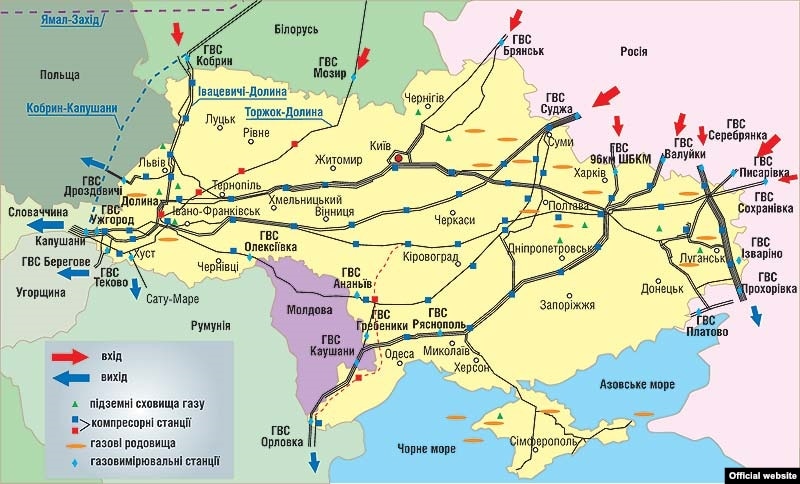
Radio Free Europe | There is no quick way for the European Union to penalize Russia and Ukraine for the gas dispute that led to a frosty two-week cutoff in natural-gas supplies this month. So, for the time being, the EU continues to receive one-quarter of its gas supplies from Russia -- and four-fifths of that via pipelines in Ukraine -- just as it did before the feud began.

But the 27-member bloc has already signaled that it will neither forgive nor forget, with EU officials exploring new energy alternatives that circumvent Ukraine, or Russia altogether.

In that sense, says Federico Bordonaro, an energy-security analyst with the Italian-based group equilibre.net, both Moscow and Kyiv lost something in the dispute. Moreover, with other transit countries like Belarus at the ready, one party's loss could well prove another's gain.

He says officials in Minsk are eager to "enhance the role" of the Yamal-Europe pipeline, a major route that stretches from western Siberia to Europe through Belarus, and adds that a second leg "could be carried out in a year or 18 months from now."

"It remains to be seen if everyone agrees with that," Bordonaro says, "but it's important to note that Belarus is trying to get some benefit from the Ukraine-Russia row in order to try and enhance its role as a key transit country, which could actually put it in competition with Ukraine."

Belarus has proven to be a difficult transit partner in its own right. During a pricing dispute in January 2007, Russia briefly suspended oil shipments through Belarus's Druzhba pipeline amid claims that Minsk was siphoning off shipments destined for Europe.

That row was quickly resolved, but for Russia, the ultimate goal remains a pipeline that runs directly to Europe uninterrupted by potentially quarrelsome post-Soviet neighbors.

it's a thin line.....,

Reuters | Russian President Dmitry Medvedev will try to persuade gas producer Uzbekistan that it should ignore the overtures of European suitors hunting for alternatives to Russian energy supplies.

Two weeks of fuel shortages caused by a row between Russia and Ukraine have galvanized European efforts to tap into non-Russian energy and Central Asian states are being courted.

Both Uzbekistan and its gas producing neighbor Turkmenistan pump all their exported gas via Russia, but are showing signs that they are open to new alliances -- a change that could threaten Russia's control over the region's energy.

"Uzbekistan, like its neighbors, is trying to diversify its relations," said Azhdar Kurtov of Russia's Strategic Research Institute. "That is noticeable ... in the gas sector."

Medvedev will meet Uzbek President Islam Karimov on Thursday at the start of a two-day visit, his first to the former Soviet republic since he was elected president last year.

Europe depends on Russia for a quarter of its gas and anxiety over the reliability of those supplies was increased by the Russia-Ukraine dispute, which disrupted flows to about 20 states in the European Union.

"It is unwise for one member state to rely on one country for its energy supplies. This was not secure," European Commission President Jose Manuel Barroso said this week.

"We have to stop simply talking about energy security in Europe, and start doing something about it,"

Peak Water?

Times Online | A swelling global population, changing diets and mankind's expanding “water footprint” could be bringing an end to the era of cheap water.

The warnings, in an annual report by the Pacific Institute in California, come as ecologists have begun adopting the term “peak ecological water” — the point where, like the concept of “peak oil”, the world has to confront a natural limit on something once considered virtually infinite.

The world is in danger of running out of “sustainably managed water”, according to Peter Gleick, the president of the Pacific Institute and a leading authority on global freshwater resources. Humans — via agriculture, industry and other demands - use about half of the world's renewable and accessible fresh water. But even at those levels, billions of people live without the most basic water services, Dr Gleick said.

A key element to tackling the crisis, say experts, is to increase the public understanding of the individual water content of everyday items.

A glass of orange juice, for example, needs 850 litres of fresh water to produce, according to the Pacific Institute and the Water Footprint Network, while the manufacture of a kilogram of microchips — requiring constant cleaning to remove chemicals — needs about 16,000 litres. A hamburger comes in at 2,400 litres of fresh water, depending on the origin and type of meat used.

The water will be returned in various forms to the system, although not necessarily in a location or at a quality that can be effectively reused.

There are concerns that water will increasingly be the cause of violence and even war.

Saturday, January 24, 2009

european leaders fear civil unrest

Ottowa Citizen | The latest spate of grim economic news here Thursday included a plunge in consumer spending in France, tumbling factory orders in the United Kingdom, predictions of an even deeper recession this year in Germany, and continued concern about the impact of billion-dollar bailouts of the continent's troubled banking system.

Politicians are warily eyeing the public mood that led earlier this week to riot police being forced to rescue Iceland Prime Minister Geir Haarde, whose limousine was pelted by eggs and drink cans hurled by protesters.

Iceland's government will almost certainly fall in coming days, London School of Economics professor Robert Wade told Canwest News Service Thursday.

"The situation is very tense and very unstable," said Wade, who has just returned from a visit to Iceland where he spoke to about 1,000 people about the crisis.

Thousands of protesters have participated in sometimes-violent street demonstrations in Bulgaria, Hungary, Latvia, Lithuania and Greece in recent weeks.

French President Nicolas Sarkozy has warned that Europe could face the kind of demonstrations that paralyzed several capitals in the spring of 1968.


But one analyst said Thursday that the comparison could be an understatement.

"I think fears have moved beyond chic academic protests a la May 1968 in Paris," said Fredrik Erixon of the Brussels-based European Centre for International Political Economy.

A more apt comparison for Iceland and some of the Baltic countries could be the French Revolution of 1789, he warned.

fist tap to RC

Friday, January 23, 2009

lovelock - last chance...,

New Scientist | Your work on atmospheric chlorofluorocarbons led eventually to a global CFC ban that saved us from ozone-layer depletion. Do we have time to do a similar thing with carbon emissions to save ourselves from climate change?

Not a hope in hell. Most of the "green" stuff is verging on a gigantic scam. Carbon trading, with its huge government subsidies, is just what finance and industry wanted. It's not going to do a damn thing about climate change, but it'll make a lot of money for a lot of people and postpone the moment of reckoning. I am not against renewable energy, but to spoil all the decent countryside in the UK with wind farms is driving me mad. It's absolutely unnecessary, and it takes 2500 square kilometres to produce a gigawatt - that's an awful lot of countryside.

So are we doomed?

There is one way we could save ourselves and that is through the massive burial of charcoal. It would mean farmers turning all their agricultural waste - which contains carbon that the plants have spent the summer sequestering - into non-biodegradable charcoal, and burying it in the soil. Then you can start shifting really hefty quantities of carbon out of the system and pull the CO2 down quite fast.

Would it make enough of a difference?

Yes. The biosphere pumps out 550 gigatonnes of carbon yearly; we put in only 30 gigatonnes. Ninety-nine per cent of the carbon that is fixed by plants is released back into the atmosphere within a year or so by consumers like bacteria, nematodes and worms. What we can do is cheat those consumers by getting farmers to burn their crop waste at very low oxygen levels to turn it into charcoal, which the farmer then ploughs into the field. A little CO2 is released but the bulk of it gets converted to carbon. You get a few per cent of biofuel as a by-product of the combustion process, which the farmer can sell. This scheme would need no subsidy: the farmer would make a profit. This is the one thing we can do that will make a difference, but I bet they won't do it.

holographic space-time

New Scientist | DRIVING through the countryside south of Hanover, it would be easy to miss the GEO600 experiment. From the outside, it doesn't look much: in the corner of a field stands an assortment of boxy temporary buildings, from which two long trenches emerge, at a right angle to each other, covered with corrugated iron. Underneath the metal sheets, however, lies a detector that stretches for 600 metres.

For the past seven years, this German set-up has been looking for gravitational waves - ripples in space-time thrown off by super-dense astronomical objects such as neutron stars and black holes. GEO600 has not detected any gravitational waves so far, but it might inadvertently have made the most important discovery in physics for half a century.

For many months, the GEO600 team-members had been scratching their heads over inexplicable noise that is plaguing their giant detector. Then, out of the blue, a researcher approached them with an explanation. In fact, he had even predicted the noise before he knew they were detecting it. According to Craig Hogan, a physicist at the Fermilab particle physics lab in Batavia, Illinois, GEO600 has stumbled upon the fundamental limit of space-time - the point where space-time stops behaving like the smooth continuum Einstein described and instead dissolves into "grains", just as a newspaper photograph dissolves into dots as you zoom in. "It looks like GEO600 is being buffeted by the microscopic quantum convulsions of space-time," says Hogan.

If this doesn't blow your socks off, then Hogan, who has just been appointed director of Fermilab's Center for Particle Astrophysics, has an even bigger shock in store: "If the GEO600 result is what I suspect it is, then we are all living in a giant cosmic hologram."

Chipocalypse Now - I Love The Smell Of Deportations In The Morning

sky |   Donald Trump has signalled his intention to send troops to Chicago to ramp up the deportation of illegal immigrants - by posting a...