Google Trends result for the search terms "apply food stamps"
And here is a Trends result for the search terms "buy seeds"
Saturday, September 17, 2011
FRANK depicts the collective food mood...,
By
CNu
at
September 17, 2011
0
comments
Labels: food supply , quorum sensing? , weather report
leisurely deterioration has left masses in a mess
culturechange | Greetings from Oklahoma City, where I came to speak at the University of Oklahoma on "Natural Gas: a Bridge to Nowhere?" More on that in a later post.My reflection this evening is on the transformation of USAmericans into a leisure society of individuals. It began in the 1950s and flowered in the '60s and early '70s. It developed into guitar playing rebels, surfers -- "Baw dip da dip dip" -- and, above all, television watchers, as prominent types among the new affluent generation. Institutions such as school and church weren't offering much cohesion. So the new generation of young people were distinguished sharply from their parents who had experienced the Great Depression, worked rather hard, endured World War II, and had witnessed their own parents' having more skills and tradition than they did.
The importance of this change between generations was ultimately not so much the luminescence of the Counterculture, but instead a weakening of the population. The direction of the population was not toward liberation and enlightenment or a return to more natural living (except for some hippies). Instead, as has become clear over the decades since, the population was becoming less healthy, more alienated, possessing fewer skills, controlled by the top of the pyramid, and losing knowledge of elders' traditions and sense of community.
I believe the above explains how a modern middle aged person in the U.S. today is little more than a graying replica of previous generations' resilient, wiry-strong citizens. While a factory job of yesteryear may not make more sense or be more healthful than a service-job today at a corporate chain store, the factory worker nevertheless used his hands and made something, and knew intimately of his parents' or grandparents' rural roots and simple values. One can deride the ignorance or lack of imagination of the generation of the 1920s, '30s and '40s, but minimizing the strength of that generation -- because it may not have been as technologically sophisticated or able to stop the corporatization of the nation -- as we applaud women's liberation and the slackening of church going, misses the overall change for the worse in the population during the last several decades. (Growth in population did not help anyone but the few profiting off growth, nor did reliance on ever-more-expensive, dwindling petroleum give us more than a short-term jolt of energy.)
For it is the mass denial today of our ecological plight and the increasingly obvious domination by unworthy, greedy masters that raises the question, "What accounts for the current generation's putting up with the imbalanced economy and total lack of connection to the life-giving land?" As I have a look at Oklahoma this week, I see the cloned, exacerbated sprawl development, automobile dependence, and acquiescence to ever more costly, senseless militarism. Simultaneously there is little acknowledgment of climate change when the state is experiencing the hottest summer in history. The people, as with almost USAmericans, are more dependent than ever on technology and being dictated to by government in more and more areas of daily living. Perhaps, though, the kindness and directness of the people of Oklahoma will be the biggest local resource -- beyond the vaunted petroleum industries and cattle ranching. And the famous Oklahoma Food Coop is the envy of the nation.
Where is this societal trend -- six decades of leisurely deterioration for the U.S. masses -- going? Times are tougher and tougher for more people, as the system shows itself to be failing. Eventually the number of people that the system is rewarding will be so small that they will be dealt with harshly by a hungry, landless mass of frustrated, mostly confused people who also had led soft, often empty lives. One can hope for a good outcome when things settle down, but we are running out of Mother Nature's patience.
By
CNu
at
September 17, 2011
16
comments
Labels: Collapse Casualties , de-evolution
wall st. drives world hunger
By
CNu
at
September 17, 2011
0
comments
Labels: Farmer Brown , food supply
Friday, September 16, 2011
the political economy of black music
HWP | Black music exists in a neo-colonial relationship with the $12 billion music industry, which consist of six record companies: Warner Elektra Atlantic (WEA), Polygram, MCA Music Entertainment, BMG Distribution, Sony Music Entertainment, and CEMA/UNI Distribution. These firms, according to New York's Daily News, "supply retailers with 90% of the music" that the public purchases (rap accounts for 8.9% of the total, over $1 billion in 1996; these firms are currently being investigated by the Federal Trade Commission for price-fixing CDs ). While there are black- owned production companies like Uptown Records, Bad Boy Entertainment, La Face Records, Def Jam, and Death Row, which make millions, these black-owned companies do not control a key component of the music making nexus, namely distribution, and they respond to the major labels' demand for a marketable product. In turn, the major labels respond to a young white audience that purchases 66% of rap music, according to the Recording Industry Association of America (RIAA), as reported by the Daily News. But the music industry's dependence on alternative music has led to flat sales and the only growth has been, once again, black music in the cultural form of rap. Rap is still on the move. For example, Lil' Kim, a protege of the late Christopher Wallace, has sold 500,000 units of her raunchy Hardcore. While Scarface has sold over 160,000 of his The Untouchable - without radio airplay.The relationship between black music and the "Big Six" is a post-modern form of colonialism. In classic colonialism (or neo-colonialism) products were produced in a "raw periphery" and sent back to the imperial "motherland" to be finished into commodities, sold in the metropolitan centers or back to the colonies, with the result being that the colony's economic growth was stunted because it was denied its ability to engage in manufacturing products for it own needs and for export. Blacks in the inner cities, if not as an aggregate, share some of the classic characteristics of a colony: lower per capita income; high birth rate; high infant mortality rate; a small or weak middle class; low rate of capital formation and domestic savings; economic dependence on external markets; labor as a major export; a tremendous demand for commodities produced by the colony but consumed by wealthier nations; most of the land and business are owned by foreigners. With rap, the inner cities have become the raw sites of "cultural production" and the music then sold to the suburbs, to white youths who claim they can "relate" to those of the urban bantustans. If there is indeed a struggle for the control of rap, it is merely a battle between black gnats, for the war for the control of black music had been won many years ago by corporate America, aided and abetted by black leadership that has never understood the cultural and economic significance of its own culture.
Kevin K. Gaines, the author of Uplifting the Race, argues that most black leaders (spokesmen and women and intellectuals) have had a condescending attitude toward the black lower classes, urban and rural; the black elite's world view has been built on a white, bourgeois Victorian model of comportment that internalized white beliefs about blacks and race. Gaines noted that although the black elite was outraged at whites' lucrative expropriations of black culture...," they "extolled Victorian and European cultural ideals and looked with disapproval, if not covert and guilty pleasure, upon such emergent black cultural forms as ragtime, blues [and] jazz..." Black leaders' ideas about "racial uplift," notwithstanding, were based on differentiating themselves from the black lower classes who were seen as "bringing down the race." Even today's so-called black public intellectuals use various codes to dissociate the "good black middle class" - themselves - from the "bad black under-class," which can be translated to hip hop. (Randall Kennedy's featured article in the May issue of The Atlantic Monthly is a spin on racial uplift; now it's about racial extrication based upon class positioning.) Such elitist attitudes have prevented middle-class blacks and black leadership from seeing the worth of their "own" folk culture that spawned the blues and other music forms from the lower classes, and it, black music, forms the base, the very foundation of the $12 billion music industry in the United States.
But there is a problem with black music: it is created by black people, particularly the rural and urban lower classes, and the black middle has always disdained those of their own race who are considered too Negroid, too black and too ignorant. Black musical forms have been "the juice" that has driven American musical expressions and whites have grown rich off of it. The problem has been that the black middle class has been too incompetent to champion and exploit (in the best sense of the word) its own folk culture and develop the geniuses that has produced black music. Instead, black music has never had an enlightened middle class leadership to give it a proper business footing. There has been no A. Philip Randolph or Thurgood Marshall in black music. The contempt for black artists is so palpable that even blacks have resorted to the same kind of rank exploitation that whites engage in.
Unfortunately, the history of black music has been a continuous one of whites' lucrative expropriation of black cultural forms. Black music has become a part of a structure of stealing that ranges from the minstrels shows of pre- Civil War America to white composers copying black jazz styles to white rockers covering original black R&B performer songs to segregating music by black performers as "race music" thus limiting their audience appeal to publishers stealing publishing credits to the nonpayment of royalties by record companies, etc. To be clear, black music forms are perhaps the single most critical foundation of American music which is a Creole hybrid of African and European influences, but the producers of such forms, blacks them- selves, brought over to the New World as black bodies to work for whites, have been viewed as either having no culture worthy of respect or having one that's worthy of rank exploitation and domination. This is the basis of the structure of stealing that other national groups - principally Anglo Saxons (slavery), Irish (minstrelsy), Jews (Hollywood, record industry) Italians (mob influence) - have participated in regard to black music forms. American individualism not withstanding, American society is made up of economic classes and ethnic blocs, of which a black individual can only achieve so much because he or she is a member of a weak group. "Hence, the individual Negro has," argued Harold Cruse in The Crisis of the Negro Intellectual, "proportionately, very few rights indeed because his ethnic group (whether or not he actually identifies with it) has very little political, economic or social power (beyond moral grounds) to wield."
The theft of black music has been so blatant and pervasive that a Rhythm and Blues Foundation was set up in 1994, with $1 million contributed by the Atlantic Foundation of Atlantic Records, Time-Warner and other music industry organizations. The foundation was set up to assist R&B artists of the 1940s, 50s, and 60s, who have been "victims of poor business practices, bad management and unscrupulous record companies," wrote The New York Times. The money contributed by those record firms (which have been gobbled up by larger concerns) is a fraction of the amount of money that white-controlled record firms have made off of black artists, directly or indirectly by holding on to some of these artists' back catalogues.
Because black leaders have ignored the early years of black music development, others have come into the black community and have established a foothold before them. Even during slavery whites were dissing black folks by the back-handed compliment of minstrelsy, they just couldn't ignore the creativeness of blacks but knew "how to grow rich off of black fun," as one minstrel poseur put it. Motown was that rare exception of black control but didn't come into existence until the late fifties (and even today it is basically a shell; a mere label of Polygram, a foreign company; an expensive footnote in music history when it recently sold a 50% interests in its catalogue to EMI for $132 million). The sniping about Jews "controlling" the music business clouds over the fact that blacks have often ignored the "cultural capital" potential of blues, jazz, and R&B until it was too late. The same can be said about hip hop; it was the independents labels not Motown that produced the initial acts and the major labels rushed in when they saw the staying power of the music and that young whites were buying it. During the twenties, according to Amiri Baraka in Blues People, when Harry Pace, the owner of Black Swan Records, began selling blues, he was castigated by the black middle class for not selling music that was more racially uplifting. When jazz began circulating through the speakeasies of America during the 20s and via the new communication technology of the day, the radio, "the big brain" denizens of the Harlem Renaissance couldn't figure it out. As cited by Nathan Huggins in his Harlem Renaissance:
"Harlem intellectuals promoted Negro art, but one thing is very curious, except for Langston Hughes, none of them took jazz - the new music - seriously. Of course, they all mentioned it as background, as descriptive of Harlem life. All said it was important in the definition of the New Negro. But none thought enough about it to try and figure out what was happening. They tend to view it as a folk art - like the spirituals and the dance - the unrefined source for the new art. Men like James Weldon Johnson and Alain Locke expected some race genius to appear who would transform that source into high culture...[T]he promoters of the Harlem Renaissance were so fixed on a vision of high culture that they did not look very hard or well at jazz."
The black intelligentsia of that era could no more accept the folk reality of its own folk culture than the white intelligentsia could accept the black basis of American culture, that American society is a creolized one, pre- dating multiculturalism. Jazz and blues were urban and rural expressions of working class blacks, but the black intelli- gentsia, trained in the aesthetics of the dominant society and unable to produce a cultural philosophy its own, neglected a very vital music in hopes of it becoming something else. There was a market there, for blacks were buying five to six million discs yearly in 1925 and in 1926 the record business reached $128 million dollars in sales, and did not reach that high point again until after the Second World War.
By
CNu
at
September 16, 2011
7
comments
Labels: cognitive infiltration
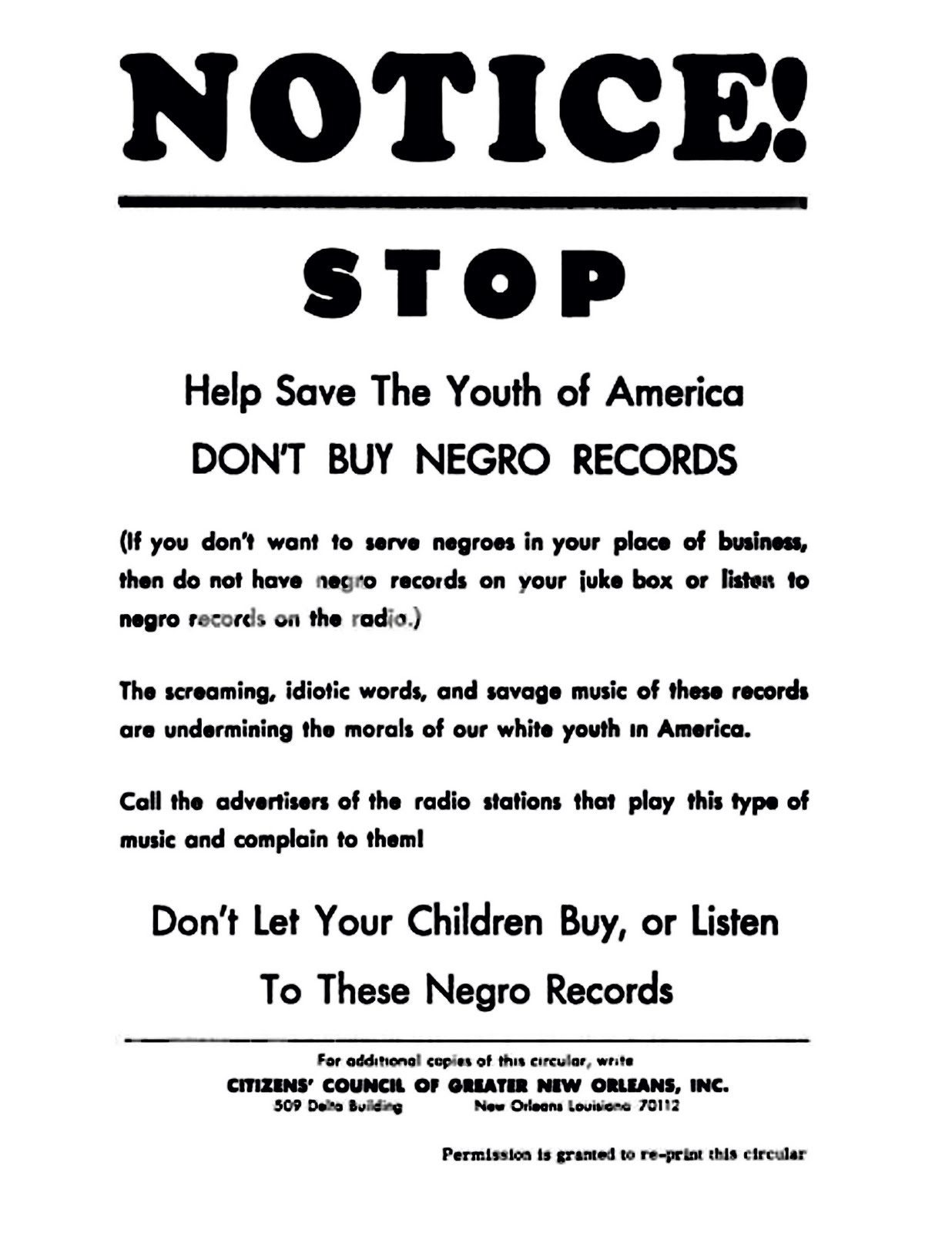
negro records
livebluesworld | Already in the antebellum period, plantation owners would use some slaves not (only) for field work or household services, but would also let them perform as musicians (Marshall Wyatt). The leading white class controlled the way that some blacks could perform their music as entertainment, not only for themselves; they were also encouraged to play for the dancing of their fellow slaves as well. Their music integrated African and European influences. Their instrumentation combined the European violin and the African banjo (banja), and the performance included polkas, marches, jigs and reels of European origin. The percussion and drums, so typical for the African music, were banned because of their potential for social upheaval. Drums and fifes could only be found, played by blacks as well as by whites, in the appropriate context of the colonial military organisations where marches were supposed to contribute to the patriotic feelings and military energy.In later decades and during the Reconstruction Period, the minstrelsy was the way that the white population dealt with the black music. One can see minstrelsy and black faces as a covert way in which the whites expressed their latent recognition for the richness of the black musical culture. On the outside however, it came down to a comedian presentation of ridiculous and denigrating black stereotypes which was based on black music, but never represented the true spirit of it. The strength of the minstrelsy shows was such that even when black artists joined the shows they put black cork paint on their faces, just as the whites did ! It was the way that the blacks were accepted on stage. The popularity of the shows also within the black population testified of the efficiency by which the white population had succeed in having their control over the existing social order internalised with the people it oppressed (see also Scott Wilkinson – A Reassessment of the blues revival in America, 1951-1970, 1998, quoting Eric Lott : “The phenomenon of minstrelsy itself was an admission of fascination with blacks and black culture”. However, it did not represent the African-American culture at the time since the singing, dancing, and comedy performed at minstrel shows were, in reality, unique demonstrations of Americana in all of its multicultural glory” (pp. 11-12).
Once the African-Americans were freed as slave, the Reconstruction Period witnessed the popularity of the jubilee companies, groups of a Capella black singers who mostly had their social roots in the middle-class and black colleges. Some of them did some intensive touring, bringing them even on the international scene. The most famous are the Fisk Jubilee Singers that considerable contributed to funds raising for the Fisk University. Their repertoire was mainly spirituals, but also songs by the ‘Father of American Music’, Stephen Foster. Even though the aim of the jubilee groups was to offer a counterweight for the negative stereotypes that were promoted by the minstrelsy, they failed to build upon the culture that had grown on the fields and in the shacks. Their popularity was derived from a firm grounding of their style in the vocal harmonies of the European culture: university Jubilee groups presented folk material in a Western clas.... There was no indication of the promotion of the richness of the musical culture that had grown on the plantations.
The same can be said of Polk Miller, who is the first white person who aimed at reviving the older black music forms in an authentic manner. As the son of a plantation owner, he learned how to play the banjo from his father’s slaves. His career started out as a pharmacist, but turned to music in 1892, billing himself (without a black face !) as the “The Old Virginia Plantation Negro” . He toured with “The Old South Quartette”, a changing group of black vocalists. Their repertoire was black and white spirituals, coon songs, confederate war anthems (a capella or with banjo accompaniment). (Scott Wilkinson, 1998). His popularity however didn’t go without concessions to the constraints imposed upon him by the white population: it is said that he stopped from performing because he feared for the safety of his black musicians, who were sometimes even forced to perform behind a curtain, leaving Miller alone visible on stage.
In total respect for the achievements of Polk Miller, one cannot ignore the nostalgic perfume that surrounds his work and music. ” The show aimed at pure nostalgia, as seen in a 1910 brochure emphasizing that the Old South Quartette were “genuine” Negroes: “Their singing is not the kind that has been heard by the students from ‘colored universities,’ who dress in pigeon-tailed coats, patent leather shoes, white shirt fronds, and who are advertised to sing plantation melodies but do not. They do not try to let you see how nearly a Negro can act the white man while parading in a dark skin, but they dress, act, and sing like the real Southern darkey in his ‘workin’’ clothes. As to their voices, they are the sweet, though uncultivated, result of nature, producing a harmony unequalled by the professionals, and because it is natural, goes straight to the hearts of the people. To the old Southerner, it will be ‘Sounds from the old home of long ago’. . . . To hear them is to live again your boyhood days down on the farm.” (program brochHide allure quoted on http://jasobrecht.com/polk-miller-and-his-old-south-quartette-1910/) . The premise of his show was that he was the judge of the real African American Culture. It is hard to put the suspicion aside that pure nostalgia about the old, ante-bellum social order, was not far away.
By
CNu
at
September 16, 2011
1 comments
Labels: History's Mysteries
jimi hendrix and the animals...,
Video - The Jimi Hendrix Experience - Hey Joe Original Dutch telecast
Impressed with Hendrix's version, Chandler brought him to London and signed him to a management and production contract with himself and ex-Animals manager Michael Jeffery. It was Chandler who came up with the spelling change of "Jimmy" to "Jimi".[75] Chandler then helped Hendrix form a new band, The Jimi Hendrix Experience, with guitarist-turned-bassist Noel Redding and drummer Mitch Mitchell, both English musicians.[76] Shortly before the Experience was formed, Chandler introduced Hendrix to Pete Townshend and to Eric Clapton, who had only recently helped put together Cream. At Chandler's request, Cream let Hendrix join them on stage for a jam on the song "Killing Floor". Hendrix and Clapton remained friends up until Hendrix's death. The first night he arrived in London, he began a relationship with Kathy Etchingham that lasted until February 1969. She later wrote an autobiographical book about their relationship and the sixties London scene in general.
By
CNu
at
September 16, 2011
1 comments
Labels: History's Mysteries , truth
spilling the wine...,
Video - Rolling Stones - Beast of Burden
Harold Brown, who was drummer and founding member of War, told us that record executive Steve Gold arranged for War and Eric Burdon to record together. Says Brown: "Steve wanted first to see what we could do. So for about a year we just kept going in and out of studios. And then one day we were up in San Francisco, just playing and stuff. Lonnie (Jordan, War keyboard player) came in acting all drunk and stuff and out. They had a bottle of wine, and some of that wine got spilled in the console. Lee (Oskar, War harmonica player) says he felt that the song didn't have anything to do with the wine going into the console, but all I know is after that they moved out of the A studio, they moved us into the B studio, and then we were playing a Latin thing, and even if Eric had been writing 'Spill The Wine' all along, and writing the concepts, that's when it all came together. I think that Eric was already working on an idea about leaking gnomes waking up in a grassy field, and then when the wine inadvertently got knocked over, whether it was part of the song or not, it all just came together right at that moment."
This is widely believed to be about, or at least heavily influenced by drugs. According to Brown, this song celebrates women: "All ladies are beautiful. You've got to look at them. God, I believe, put all of us here and made us all different so we could be like the flowers, you know. Like women. I look at them as beautiful flowers. Even when they get older, the flowers and so on, and that's what it really boils down to, they can be skinny, big, fat, I've seen some fine voluptuous women. And then I've seen some that are skinny, and if you look at them, they could be beautiful, depending on personality and stuff."
The lady speaking Spanish in the background was Eric Burdon's girlfriend. Says Brown: "We went back there and we put up a little tent, candlelight, and some wine back there. They were behind there, and Eric was doing things to her and making her talk."
The chorus is often misheard, but the proper lyrics are "Spill the wine, take that girl, spill the wine, take that pearl." The "Pearl" is a sexual reference, meaning the clitoris.
Due to contractual intricacies, Burdon was not credited as a songwriter on this or any of the other songs he worked on with War.
Jimi Hendrix' former girlfriend sang backup. Hendrix was managed by Animal's bass player Chas Chandler.
This song features a harmonica, flute, and conga drums.
War went on to a long and successful career after Burdon left the band. The death of Jimi Hendrix, who played with War the night he died, weighed heavily on Burdon, as did other personal problems. Says Brown: "We got back in the studio, we started recording with Eric. We came up with a couple of more songs, couple of albums. Love Is All Around, Black Man's Burden, which was on MGM. Now, Black Man's Burden, Mike Curb was the president at the time, and he wanted to be a lieutenant governor for California at one point. But he had it in for Eric and Steve Gold and different companies, because he thought he was getting us, too. And by some kind of hook or crook, Black Man's Burden never really got distributed in the United States. It was put up on the shelf to get back at some of the guys against the business deal. We go forward, and finally we were in Europe touring with Eric. Now see, Eric and I know exactly what happened, why he left the group. He and I had an unusual kind of relationship. Years before that we were out somewhere, and I'm walking around and I come back in and Eric is all mad at the band, I guess because of a bad show or something. He started poking me in my chest and I pushed him back and I said, 'No. I don't work for you, I work with you.' After that he started giving me Porsches and stuff. He'd come by New Orleans and see me. So he came to the room, he was burned out. He'd been traveling all that time, he'd just gotten married... he was just burned out. I looked at him and I said, 'Eric, you know what? We can handle the show. If you want to go back, I say go back.' So that's when he left us there in Northern England. That's when we became our own. We started playing songs that we had on our first album War that went vinyl. That's our joke - it never made platinum or gold, it went vinyl. We had enough of our own new material, and old songs that we'd been playing before we met Eric, so we just started playing them." (Thanks to Harold Brown for speaking with us about this song. Along with original members B.B. Dickerson, Lee Oskar and Howard Scott, he plays in the Lowrider Band.)
By
CNu
at
September 16, 2011
0
comments
Labels: History's Mysteries , The Hardline
Thursday, September 15, 2011
slipping...,
Video - The Animals - Please Don't Let Me Be Misunderstood
By
CNu
at
September 15, 2011
2
comments
Labels: waaay back machine
Wednesday, September 14, 2011
acupuncture and the heart-mind split
Video - Superb and world-rocking drive-in teaser trailer for a true classic
Medicalacupuncture | ABSTRACT - The Oriental medical concept of a Heart-Mind split has no obvious counterpart in Western medicine. Patients with such a split are often labelled as anxious or depressed and treated pharmacologically. The author contends that the omission occurs because the split is a fundamental feature of collective consciousness, and an expression of both medicine and scientific rationalism. Conventional treatment regimens may inadvertently exacerbate the split while, in contrast, acupuncture's holistic philosophy may offer a way to successful reintegration.
KEY WORDS
Acupuncture, Heart-Mind Split, Existential Split, Mind-Body Split, Depression, Anxiety
The heart has its reasons of which reason knows nothing:
We know this in countless ways.
— Blaise Pascal (1623-1662)
INTRODUCTION
I discussed the primary energetic splits in Western consciousness in a previous article in Medical Acupuncture.2 To summarize, they have been classified as (1) Existential (primary dualism), (2) Life-Death (secondary dualism), (3) Mind-Body (tertiary dualism), and (4) Persona-Shadow (quaternary dualism).3 This article will explore one specific split, the Heart-Mind split, that has particular relevance to acupuncture because energetically, the Heart is said to carry the "Shen" or spirit. In terms of the primary splits, the Heart-Mind schism relates most closely to the tertiary dualism, in which the ego dissociates from the body, disregards the Heart, and continues as if it were an autonomous entity. The process of reawakening the Shen, and of reintegrating the Heart and Mind, is a task uniquely suited to the practice of acupuncture.
In his book Memories, Dreams, and Reflections, Carl Jung discusses how he acquired an insight into Western man's denial of the Heart when he recounts a conversation he had in 1932 with the Native American Chief Ochwiay Biano (meaning "Mountain Lake") of the Tao Pueblos Indians of New Mexico.4 The chief was quite candid in his perception of the white man's Heart-Mind split:
"See.... how cruel the whites look. Their lips are thin, their noses sharp, their faces furrowed and distorted by folds. Their eyes have a staring expression; they are always seeking something. What are they seeking? The whites always want something; they are always uneasy and restless. We do not know what they want. We do not understand them. We think they are mad."Jung's experience speaks directly to an imbalance in the psyche of Western man, which might be called the Heart-Mind split. In that short but remarkable encounter, Jung had a flash of insight, a realization that the split had fallen so far into the unconscious that even he was taken by surprise when someone pointed it out.
When Jung asks why he thinks they are all mad, the Chief replies, "They say they think with their heads."
Jung answers, "Why, of course. What do you think with?"
The Chief, indicating his heart, said, "We think here."
Definitions of Mind/Mind and Heart/Heart
The English language is peculiarly bereft of terms to describe various inner states. Thus, in an attempt to avoid inevitable confusion, I will differentiate between "mind" with a lowercase "m," "Mind" with a capital "M," heart with a lowercase "h," and Heart with a capital "H." In defining these terms, I ask for acceptance of these definitions for the purposes of this article.
The term "mind" refers to the ego-mind, the thinking personal mind located in the head and separated from the body by a Mind-Body split; "Mind" refers to a larger subjective embrace that transcends the Mind-Body split. This differentiation is useful because it allows us to envision personal mind as it now exists in the collective, separated from the body, and a more integrated Mind as it might be experienced without such a split. The word "heart" is a reference to the physical heart, while "Heart" refers to the metaphysical or energetic Heart. The term "Heart-Mind" is used in reference to an integrated Heart-Mind, and roughly corresponds to the Oriental term "Xin."
The term Xin is particularly confusing. This integrated concept is translated variously as Heart, Mind, and/or Heart-Mind, any one of which is misleading. The difficulty lies in there being no English word accurately translating the concept of Xin, given that the Heart-Mind split is structured in the language itself. I use the word Xin and the concepts Heart Yin and Heart Yang in a similar way to that suggested by Leon Hammer:5
* Xin and Heart-Mind will be used interchangeably
* The Heart of Heart-Mind will be used interchangeably with Heart Yin
* The Mind of Heart-Mind will be used interchangeably with Heart Yang
* The "mind" with a lowercase "m" will be used interchangeably with ego-mind
* The "head" will be assumed to be the location of ego-mind
By
CNu
at
September 14, 2011
1 comments
Labels: ancient , essence , What IT DO Shawty...
german military peak oil analysis ignored by msm
EnergyBulletin | Last week the Bundeswehr posted an English version (112 pgs) of their extraordinary analysis of peak oil. The original German document (125 pgs) was approved for public release last November, yet neither the complete German version nor the partial English translation has attracted interest from mainstream media.Now that a complete translation is available, it is hoped that media throughout the English-speaking world will see the Bundeswehr study for what it is: a comprehensive, realistic analysis of one of the most formidable challenges of this century, the (potentially imminent) peaking of global oil production.
The tone of the Bundeswehr document is consistent with written warnings issued by other military analysts and stands in stark contrast to the disinterest of elected officials, bureaucrats and industry officials. The latter sectors have routinely dismissed the concerns of peak oil analysts, but this thoroughly sourced examination (which was conducted by a team of highly credible military analysts from a leading Western nation and approved by their top brass) gives credence to the view that the peaking of global oil production constitutes a threat which appears to be as serious as it is inevitable.
It is hoped that mainstream media, government officials and civic leaders will now examine this unique study, noting especially the credibility of its authors and the gravity of their warnings. The fact that the Bundeswehr has made the effort to provide an English translation is the latest indication that rather than concealing this worrisome information, the German military continues to make every effort to provide it to a world which urgently needs to consider it.
As the Bundeswehr analysts politely point out, there seems to be an instinctive refusal to acknowledge our unprecedented dilemma (which perhaps explains why their study remains so ignored):
Thanks to the Bundeswehr Future Analysis team for their thorough & insightful study. Credit also to their superior officers for releasing such a potentially controversial document and for now providing a complete translation.Gaining an illustrative picture of a subject is very much a matter of habit. When considering the consequences of peak oil, no everyday experiences and only few historical parallels are at hand. It is therefore difficult to imagine how significant the effects of being gradually deprived of one of our civilisation’s most important energy sources will be. Psychological barriers cause indisputable facts to be blanked out and lead to almost instinctively refusing to look into this difficult subject in detail.
Peak oil, however, is unavoidable (p. 91).
Finally, thanks to researcher Johan Landgren in Sweden for alerting us to the new translation of this unprecedented document.
Download the English version of the report here.
By
CNu
at
September 14, 2011
7
comments
Labels: Irreplaceable Natural Material Resources , propaganda
fast and furious arming of narcotrafficantes...,
LATimes | In the fall of 2009, ATF agents installed a secret phone line and hidden cameras in a ceiling panel and wall at Andre Howard's Lone Wolf gun store. They gave him one basic instruction: Sell guns to every illegal purchaser who walks through the door.For 15 months, Howard did as he was told. To customers with phony IDs or wads of cash he normally would have turned away, he sold pistols, rifles and semiautomatics. He was assured by the ATF that they would follow the guns, and that the surveillance would lead the agents to the violent Mexican drug cartels on the Southwest border.
When Howard heard nothing about any arrests, he questioned the agents. Keep selling, they told him. So hundreds of thousands of dollars more in weapons, including .50-caliber sniper rifles, walked out of the front door of his store in a Glendale, Ariz., strip mall.
He was making a lot of money. But he also feared somebody was going to get hurt.
"Every passing week, I worried about something like that," he said. "I felt horrible and sick."
Late in the night on Dec. 14, in a canyon west of Rio Rico, Ariz., Border Patrol agents came across Mexican bandits preying on illegal immigrants.
According to a Border Patrol "Shooting Incident" report, the agents fired two rounds of bean bags from a shotgun. The Mexicans returned fire. One agent fired from his sidearm, another with his M-4 rifle.
One of the alleged bandits, Manuel Osorio-Arellanes, a 33-year-old Mexican from Sinaloa, was wounded in the abdomen and legs. Agent Brian Terry — 40, single, a former Marine — also went down. "I'm hit!" he cried.
A fellow agent cradled his friend. "I can't feel my legs," Terry said. "I think I'm paralyzed." A bullet had pierced his aorta. Tall and nearly 240 pounds, Terry was too heavy to carry. They radioed for a helicopter. But Terry was bleeding badly, and he died in his colleague's arms.
The bandits left Osorio-Arellanes behind and escaped across the desert, tossing away two AK-47 semiautomatics from Howard's store.
Some 2,000 firearms from the Lone Wolf Trading Company store and others in southern Arizona were illegally sold under an ATF program called Fast and Furious that allowed "straw purchasers" to walk away with the weapons and turn them over to criminal traffickers. But the agency's plan to trace the guns to the cartels never worked. As the case of the two Lone Wolf AK-47s tragically illustrates, the ATF, with a limited force of agents, did not keep track of them.
The Department of Justice in Washington said last week that one other Fast and Furious firearm turned up at a violent crime scene in this country. They have yet to provide any more details. They said another 28 Fast and Furious weapons were recovered at violent crimes in Mexico. They have not identified those cases either. The Mexican government maintains that an undisclosed number of Fast and Furious weapons have been found at some 170 crime scenes in their country.
By
CNu
at
September 14, 2011
0
comments
Labels: Collapse Crime , unintended consequences
Tuesday, September 13, 2011
addiction is not a disease of the brain?
NPR | Addiction has been moralized, medicalized, politicized, and criminalized. And, of course, many of us are addicts, have been addicts or have been close to addicts. Addiction runs very hot as a theme.Part of what makes addiction so compelling is that it forms a kind of conceptual/political crossroads for thinking about human nature. After all, to make sense of addiction we need to make sense of what it is to be an agent who acts, with values, in the face of consequences, under pressure, with compulsion, out of need and desire. One needs a whole philosophy to understand addiction.
Today I want to respond to readers who were outraged by my willingness even to question whether addiction is a disease of the brain.
Let us first ask: what makes something — a substance or an activity — addictive? Is there a property shared by all the things to which we can get addicted?
Unlikely. Addictive substances such as alcohol, heroin and nicotine are chemically distinct. Moreover, activities such as gambling, eating, sex — activities that are widely believed to be addictive — have no ingredients.
And yet it is remarkable — as Gene Heyman notes in his excellent book on addiction — that there are only 20 or so distinct activities and substances that produce addiction. There must be something in virtue of which these things, and these things alone, give rise to the distinctive pattern of use and abuse in the face of the medical, personal and legal perils that we know can stem from addiction.
What do gambling, sex, heroin and cocaine — and the other things that can addict us — have in common?
One strategy is to look not to the substances and activities themselves, but to the effects that they produce in addicts. And here neuroscience has delivered important insights.
If you feed an electrical wire through a rat's skull and onto to a short dopamine release circuit that connects the VTA (ventral tegmental area) and the nucleus accumbens, and if you attach that wire to a lever-press, the rat will self-stimulate — press the lever to produce the increase in dopamine — and it will do so basically foreover, forgoing food, sex, water and exercise. Addiction, it would seem, is produced by direct action on the brain!
(See here for a useful Wikipedia review of this literature.)
And indeed, there is now a substantial body of evidence supporting the claim that all drugs or activities of abuse (as we can call them), have precisely this kind of effect on this dopamine neurochemical circuit.
When the American Society of Addiction Medicine recently declared addiction to be a brain disease their conclusion was based on findings like this. Addiction is an effect brought about in a neurochemical circuit in the brain. If true, this is important, for it means that if you want to treat addiction, you need to find ways to act on this neural substrate.
By
CNu
at
September 13, 2011
0
comments
september 11, ten years later....,
By
CNu
at
September 13, 2011
2
comments
Labels: contraction , Peak Capitalism
Monday, September 12, 2011
american identity
By
CNu
at
September 12, 2011
2
comments
Labels: dopamine , hegemony , What IT DO Shawty...
1/3rd of u.s. middle-class slips into poverty
Video - War - Slippin into Darkness - Live 1972 Chicago version
Downward mobility is most common among middle-class people who are divorced or separated from their spouses, did not attend college, scored poorly on standardized tests, or used hard drugs, the report says.
"A middle-class upbringing does not guarantee the same status over the course of a lifetime," the report says.
The study focused on people who were middle-class teenagers in 1979 and who were between 39 and 44 years old in 2004 and 2006. It defines people as middle-class if they fall between the 30th and 70th percentiles in income distribution, which for a family of four is between $32,900 and $64,000 a year in 2010 dollars.
People were deemed downwardly mobile if they fell below the 30th percentile in income, if their income rank was 20 or more percentiles below their parents' or if, in absolute terms, they earn at least 20 percent less than their parents. The findings do not cover the difficult times that the nation has endured since 2007.
Pew researchers said the study's structure did not permit an analysis of whether upward mobility has become more difficult through the years. Nonetheless, some economists point to growing income inequality and widely stagnating wages as evidence that the American Dream is slipping out of reach for many people.
By
CNu
at
September 12, 2011
11
comments
Labels: Collapse Casualties , contraction
restaurants want a slice of that food stamp pie
USAToday | The number of businesses approved to accept food stamps grew by a third from 2005 to 2010, U.S. Department of Agriculture records show, as vendors from convenience and dollar discount stores to gas stations and pharmacies increasingly joined the growing entitlement program.Now, restaurants, which typically have not participated in the program, are lobbying for a piece of the action.
Louisville-based Yum! Brands, whose restaurants include Taco Bell, KFC, Long John Silver's and Pizza Hut, is trying to get restaurants more involved, federal lobbying records show.
That's a prospect that anti-hunger advocates welcome, but one that worries some current food stamp vendors and public health advocates.
Federal rules generally prohibit food stamp benefits, which are distributed under the USDA's Supplemental Nutrition Assistance Program (SNAP), from being exchanged for prepared foods. Yet a provision dating to the 1970s allows states to allow restaurants to serve disabled, elderly and homeless people, USDA spokeswoman Jean Daniel said.
Between 2005 and 2010, the number of businesses certified in the SNAP program went from about 156,000 to nearly 209,000, according to USDA data.
There is big money at stake. USDA records show food stamp benefits swelled from $28.5 billion to $64.7billion in that period.
Four states accept restaurants, with Florida the most recent to begin a program.
"It makes perfect sense to expand a program that's working well in California, Arizona and Michigan, enabling the homeless, elderly and disabled to purchase prepared meals with SNAP benefits in a restaurant environment," Yum! spokesman Jonathan Blum said.
The National Restaurant Association supports Yum!, said spokeswoman Katie Laning Niebaum, but the National Association of Convenience Stores does not.
By
CNu
at
September 12, 2011
0
comments
Labels: contraction , corporatism
Sunday, September 11, 2011
the shock doctrine comes to your neighborhood classroom
Salon | "Let's hope the fiscal crisis doesn't get better too soon. It'll slow down reform." -- Tom Watkins, a consultant, summarizes the corporate education reform movement's current strategy to the Sunday New York Times.The Shock Doctrine, as articulated by journalist Naomi Klein, describes the process by which corporate interests use catastrophes as instruments to maximize their profit. Sometimes the events they use are natural (earthquakes), sometimes they are human-created (the 9/11 attacks) and sometimes they are a bit of both (hurricanes made stronger by human-intensified global climate change). Regardless of the particular cataclysm, though, the Shock Doctrine suggests that in the aftermath of a calamity, there is always corporate method in the smoldering madness - a method based in Disaster Capitalism.
Though Klein's book provides much evidence of the Shock Doctrine, the Disaster Capitalists rarely come out and acknowledge their strategy. That's why Watkins' outburst of candor, buried in this front-page New York Times article yesterday, is so important: It shows that the recession and its corresponding shock to school budgets is being used by corporations to maximize revenues, all under the gauzy banner of "reform."
Some background: The Times piece follows a recent Education Week report showing that as U.S. school systems are laying off teachers, letting schoolhouses crumble, and increasing class sizes, high-tech firms are hitting the public-subsidy jackpot thanks to corporate "reformers'" successful push for more "data-driven" standardized tests (more on that in a second) and more technology in the classrooms. Essentially, as the overall spending pie for public schools is shrinking, the piece of the pie for high-tech companies -- who make big campaign contributions to education policymakers -- is getting much bigger, while the piece of the pie for traditional education (teachers, school infrastructure, text books, etc.) is getting smaller.
The Times on Sunday added some key -- and somehow, largely overlooked -- context to this reportage: namely, that the spending shift isn't producing better achievement results on the very standardized tests the high-tech industry celebrates and makes money off of. "In a nutshell," reports the Times, "schools are spending billions on technology, even as they cut budgets and lay off teachers, with little proof that this approach is improving basic learning."
The paper adds that the successful "pressure to push technology into the classroom without proof of its value has deep roots" going back more than a decade, which raises the fundamental question: Why? Why would this push be so successful in changing education policy if there is little hard evidence that it is the right move to improve student achievement?
The answer goes back -- as it so often does -- to corporate power and the Shock Doctrine.
Tech companies give the politicians who set education policy lots of campaign contributions, and in exchange, those politicians have returned the favor by citing tough economic times over the last decade as a rationale to wage an aggressive attack on traditional public education. That attack has included everything from demonizing teachers; to siphoning public money to privately administered schools; to funneling more of the money still left in public schools to private high-tech companies.
This trend is no accidental convergence of economic disaster and high-minded policy. On the contrary, it is a deliberate strategy by corporate executives and their political puppets, a strategy that uses the disaster of recession-era budget cuts as a means of justifying radical policies, knowing that the disaster will have shellshocked observers asking far fewer questions about data and actual results. As the Times sums it up, the recession's "resource squeeze presents an opportunity" for corporate interests.
Or as Watkins explains, social pain is an opportunity: "Let's hope the fiscal crisis doesn't get better too soon. It'll slow down reform."
For sheer weapons-grade assholishness, Watkins' publicly wishing for a crushing recession to continue ranks up there with such gems as "bring them on" and "let them eat cake."
However, the real news here is that a Disaster Capitalist has spoken the unspoken and clearly articulated the Shock Doctrine in all its hideous glory. In this case, he has told us what the "reform" movement to demonize teachers, undermine public education, and generate private profits from public schools is really all about: It is about using the shock of a fiscal crisis to enact a radical, unproven but highly profitable agenda that corporate forces fully know they cannot pass under non-emergency circumstances, when objective scrutiny would be much more intense. Indeed, corporate "reformers"are so reliant on the Shock Doctrine to glaze over uncomfortable questions about their agenda, that they are now praying that the shock of recession continues.
By
CNu
at
September 11, 2011
2
comments
Labels: agenda , elite , establishment , Peak Capitalism
technology in schools faces questions on value?
NYTimes | Amy Furman, a seventh-grade English teacher here, roams among 31 students sitting at their desks or in clumps on the floor. They’re studying Shakespeare’s “As You Like It” — but not in any traditional way.In this technology-centric classroom, students are bent over laptops, some blogging or building Facebook pages from the perspective of Shakespeare’s characters. One student compiles a song list from the Internet, picking a tune by the rapper Kanye West to express the emotions of Shakespeare’s lovelorn Silvius.
The class, and the Kyrene School District as a whole, offer what some see as a utopian vision of education’s future. Classrooms are decked out with laptops, big interactive screens and software that drills students on every basic subject. Under a ballot initiative approved in 2005, the district has invested roughly $33 million in such technologies.
The digital push here aims to go far beyond gadgets to transform the very nature of the classroom, turning the teacher into a guide instead of a lecturer, wandering among students who learn at their own pace on Internet-connected devices.
“This is such a dynamic class,” Ms. Furman says of her 21st-century classroom. “I really hope it works.”
Hope and enthusiasm are soaring here. But not test scores.
Since 2005, scores in reading and math have stagnated in Kyrene, even as statewide scores have risen.
To be sure, test scores can go up or down for many reasons. But to many education experts, something is not adding up — here and across the country. In a nutshell: schools are spending billions on technology, even as they cut budgets and lay off teachers, with little proof that this approach is improving basic learning.
This conundrum calls into question one of the most significant contemporary educational movements. Advocates for giving schools a major technological upgrade — which include powerful educators, Silicon Valley titans and White House appointees — say digital devices let students learn at their own pace, teach skills needed in a modern economy and hold the attention of a generation weaned on gadgets.
Some backers of this idea say standardized tests, the most widely used measure of student performance, don’t capture the breadth of skills that computers can help develop. But they also concede that for now there is no better way to gauge the educational value of expensive technology investments.
“The data is pretty weak. It’s very difficult when we’re pressed to come up with convincing data,” said Tom Vander Ark, the former executive director for education at the Bill and Melinda Gates Foundation and an investor in educational technology companies. When it comes to showing results, he said, “We better put up or shut up.”
And yet, in virtually the same breath, he said change of a historic magnitude is inevitably coming to classrooms this decade: “It’s one of the three or four biggest things happening in the world today.”
Critics counter that, absent clear proof, schools are being motivated by a blind faith in technology and an overemphasis on digital skills — like using PowerPoint and multimedia tools — at the expense of math, reading and writing fundamentals. They say the technology advocates have it backward when they press to upgrade first and ask questions later.
The spending push comes as schools face tough financial choices. In Kyrene, for example, even as technology spending has grown, the rest of the district’s budget has shrunk, leading to bigger classes and fewer periods of music, art and physical education.
At the same time, the district’s use of technology has earned it widespread praise. It is upheld as a model of success by the National School Boards Association, which in 2008 organized a visit by 100 educators from 17 states who came to see how the district was innovating.
And the district has banked its future and reputation on technology. Kyrene, which serves 18,000 kindergarten to eighth-grade students, mostly from the cities of Tempe, Phoenix and Chandler, uses its computer-centric classes as a way to attract children from around the region, shoring up enrollment as its local student population shrinks. More students mean more state dollars.
The issue of tech investment will reach a critical point in November. The district plans to go back to local voters for approval of $46.3 million more in taxes over seven years to allow it to keep investing in technology. That represents around 3.5 percent of the district’s annual spending, five times what it spends on textbooks.
The district leaders’ position is that technology has inspired students and helped them grow, but that there is no good way to quantify those achievements — putting them in a tough spot with voters deciding whether to bankroll this approach again.
“My gut is telling me we’ve had growth,” said David K. Schauer, the superintendent here. “But we have to have some measure that is valid, and we don’t have that.”
It gives him pause.
“We’ve jumped on bandwagons for different eras without knowing fully what we’re doing. This might just be the new bandwagon,” he said. “I hope not.”
By
CNu
at
September 11, 2011
4
comments
Labels: institutional deconstruction , What Now?
ATL education gap hurts employment prospects...,
AJC | Employment in metro Atlanta has been hurt in recent years by the area's dependence on troubled job sectors, including administrative and support services, and specialty trade contracting. One thing that's helped the employment rate has been a relatively strong supply of educated workers.But a new report from the Brookings Institution says the area's "education gap" is growing and could become a problem if the trend is not reversed. The education gap refers to the difference between local employer demand for educated workers and a community's ability to provide enough of them.
Metro Atlanta had the nation's fifth-largest increase in education gap from 2005-2009, the study found. No market of comparable size was in the top 10.
"People aren't getting educated fast enough to keep up with what industries are requiring. If that gap continues to grow, Atlanta could really be hurt by it," said Jonathan Rothwell, a Brookings senior research analyst and one of the authors of the report.
Rothwell said Atlanta has benefited from the presence of top-quality major universities and that its education gap "currently is not a huge problem. The average worker still has more education than is required for the average job. That's a good thing. It's helped Atlanta's unemployment rate stay lower than it otherwise would be."
Metro areas with larger education gaps had consistently higher unemployment rates than those with smaller gaps, the report said.
Atlanta ranked 41st among 100 metro areas in education gap in 2009. It ranked 74th in industry composition, the other factor Brookings used in examining unemployment rates in individual metro markets.
By
CNu
at
September 11, 2011
0
comments
Labels: FAIL
campus is one big commercial
NYTimes | IT’S move-in day here at the University of North Carolina, and Leila Ismail, stuffed animals in tow, is feeling some freshman angst.A few friendly upperclassmen spring into action.
But wait: there is something odd, or at least oddly corporate, about this welcome wagon. These U.N.C. students are all wearing identical T-shirts from American Eagle Outfitters.
Turns out three of them are working for that youth clothing chain on this late August morning, as what are known in the trade as “brand ambassadors” or “campus evangelists” — and they have recruited several dozen friends as a volunteer move-in crew. Even before Ms. Ismail can find her dorm or meet her roommate, they cheerily unload her family’s car. Then they lug her belongings to her dorm. Along the way, they dole out American Eagle coupons, American Eagle water canisters and American Eagle pens.
Ms. Ismail, 18, of Charlotte, welcomes the help. “I’ll probably always remember it,” she says.
American Eagle Outfitters certainly hopes so, as do a growing number of companies that are hiring college students to represent brands on campuses across the nation.
This fall, an estimated 10,000 American college students will be working on hundreds of campuses — for cash, swag, job experience or all three — marketing everything from Red Bull to Hewlett-Packard PCs. For the companies hiring them, the motivation is clear: college students spent about $36 billion on things like clothing, computers and cellphones during the 2010-11 school year alone, according to projections from Re:Fuel, a media and promotions firm specializing in the youth market. And who knows the students at, say, U.N.C., better than the students at U.N.C.?
Corporations have been pitching college students for decades on products from cars to credit cards. But what is happening on campuses today is without rival, in terms of commercializing everyday college life.
Companies from Microsoft on down are increasingly seeking out the big men and women on campus to influence their peers. The students most in demand are those who are popular — ones involved in athletics, music, fraternities or sororities. Thousands of Facebook friends help, too. What companies want are students with inside knowledge of school traditions and campus hotspots. In short, they want students with the cred to make brands seem cool, in ways that a TV or magazine ad never could.
By
CNu
at
September 11, 2011
1 comments
Labels: corporatism , facebook IS evil , propaganda
Saturday, September 10, 2011
oil and gas under the clash...,
Video - Sundry pretexts for tension between the mediterranean powers
Thursday night, Sept. 8, he announced that Turkish warships will escort any Turkish aid vessels for Palestinians in the Gaza Strip. In his remarks to Al Jazeera television, the Turkish prime minister also said he had taken steps "to stop Israel from unilaterally exploiting natural resources from the eastern Mediterranean."
He did not say what steps he had taken. However, for some time now, he has moved mountains to isolate Israel by drawing a double diplomatic noose around it.
If Turkish ships breach the Israeli naval blockade of Gaza, which a UN report last week pronounced legitimate under international law, Erdogan will become the first Muslim leader to embark on military action in the Palestinian cause. The Arab nations which fought Israel time after time in the past will be made to look ineffectual and the Turkish leader the regional big shot. Even Iran would be put in the shade for never daring to provoke Israel the way Turkey has.
The Turkish prime minister clings to the belief that the foremost Arab powers, Egypt and Saudi Arabia, which have been watching his maneuvers with deep suspicion, will have no choice but to play ball with him now that he has confronted Israel. The first crack in the Arab ice came about Thursday, Sept. 8, in the form of Egyptian consent to join the Turkish Navy in sea maneuvers in the eastern Mediterranean.
Erdogan plans to send his warships into this water for two missions:
1. To split the Israel's small Navy into two heads – one for sustaining the blockade against Gaza and one for safeguarding the gas and oil rigs opposite its shores.
2. To scare Israel into the full or partial stoppage of its offshore oil and gas operations, thereby robbing it of energy power status and substantial economic gains. Erdogan is determined never to let Israel overshadow Turkey in the regional stakes and will put a stop to the Jewish state's progress – even if military aggression is called for.
By
CNu
at
September 10, 2011
0
comments
Labels: resource war
better think twice
Gilad | I will make myself as simple, short and clear just to make sure that the Israelis and their allies around the world understand how futile their agenda is.Islam is unbeatable and indestructible. The Israelis should remember their latest military blunders. In 2006 its army was humiliated by the Hezbula, a small Lebanese paramilitary organisation. In just a few weeks the heroic Hezbollah managed to bring Israel to its knees. In 2008-9 Israeli Army mounted a massive attack on Gaza, the initial objective was to dismantle the democratically elected Hamas. Israel murdered more than 1400 Palestinians but it achieved none of its military objectives. Hamas and Hezbollah won these battles without air force, navy or tanks. In fact resilience was enough to defeat the IDF.
But Israel is not alone, The English speaking Empire is also heavily beaten in Iraq and Afghanistan. Similarily, Iraqi insurgency and Taliban do not posses tanks, F 16s or submarines. In the age of Islamic resistance, tables of contents with numbers of tanks, vessels, and airplanes are obsolete. It is the spirit and the will rather than the tank that wins the battle. This spirit better be called The Islam Spring, and it is unbeatable indeed.
The message for Israelis is plainly clear. Israel and its supporting lobbies had better learn how to contain their inherent violent tendencies. Israel cannot win this battle. The sooner the Israelis encompass this obvious fact, the better it is for Israel and for world peace.
By
CNu
at
September 10, 2011
0
comments
Labels: common sense , truth
freedoms I wish the military was defending,,,
We have heard it repeated loudly and continuously since 9/11 – the troops are defending our freedoms. This claim is made so often and by so many different segments of society that it has become another meaningless national dictum – like "God Bless America" or "In God We Trust."
This cliché is actually quite insidious. It is used as a mantra to justify or excuse anything the U.S. military does.
U.S. troops are engaged in unconstitutional, undeclared wars – but the troops are defending our freedoms. U.S. drone strikes killed civilians in Pakistan – but the troops are defending our freedoms. U.S. bombs landed on a wedding party in Afghanistan – but the troops are defending our freedoms. U.S. soldiers murdered Afghan civilians and kept some of their body parts – but the troops are defending our freedoms. U.S. helicopter pilots gunned down Iraqi civilians – but the troops are defending our freedoms. U.S. soldiers killed civilians for sport – but the troops are defending our freedoms. U.S. troops carelessly killed civilians and then covered it up – but the troops are defending our freedoms.
But as I have pointed out many times in my articles on the military, and others like Jacob Hornberger of the Future of Freedom Foundation have been arguing for years (see here and here), the troops are doing everything but defending our freedoms. In fact, the more the troops defend our freedoms by bombing, invading, and occupying other countries, the more enemies they make of the United States and the more our freedoms get taken away in the name of "fighting terrorism" or "national security."
Not in any particular order, and in varying degrees of significance, here are some freedoms I wish the military were defending:
By
CNu
at
September 10, 2011
0
comments
Labels: common sense , unspeakable
Friday, September 09, 2011
are jobs obsolete?
CNN | Jobs, as such, are a relatively new concept. People may have always worked, but until the advent of the corporation in the early Renaissance, most people just worked for themselves. They made shoes, plucked chickens, or created value in some way for other people, who then traded or paid for those goods and services. By the late Middle Ages, most of Europe was thriving under this arrangement.The only ones losing wealth were the aristocracy, who depended on their titles to extract money from those who worked. And so they invented the chartered monopoly. By law, small businesses in most major industries were shut down and people had to work for officially sanctioned corporations instead. From then on, for most of us, working came to mean getting a "job."
The Industrial Age was largely about making those jobs as menial and unskilled as possible. Technologies such as the assembly line were less important for making production faster than for making it cheaper, and laborers more replaceable. Now that we're in the digital age, we're using technology the same way: to increase efficiency, lay off more people, and increase corporate profits.
While this is certainly bad for workers and unions, I have to wonder just how truly bad is it for people. Isn't this what all this technology was for in the first place? The question we have to begin to ask ourselves is not how do we employ all the people who are rendered obsolete by technology, but how can we organize a society around something other than employment? Might the spirit of enterprise we currently associate with "career" be shifted to something entirely more collaborative, purposeful, and even meaningful?
Instead, we are attempting to use the logic of a scarce marketplace to negotiate things that are actually in abundance. What we lack is not employment, but a way of fairly distributing the bounty we have generated through our technologies, and a way of creating meaning in a world that has already produced far too much stuff.
The communist answer to this question was just to distribute everything evenly. But that sapped motivation and never quite worked as advertised. The opposite, libertarian answer (and the way we seem to be going right now) would be to let those who can't capitalize on the bounty simply suffer. Cut social services along with their jobs, and hope they fade into the distance.
But there might still be another possibility -- something we couldn't really imagine for ourselves until the digital era. As a pioneer of virtual reality, Jaron Lanier, recently pointed out, we no longer need to make stuff in order to make money. We can instead exchange information-based products.
We start by accepting that food and shelter are basic human rights. The work we do -- the value we create -- is for the rest of what we want: the stuff that makes life fun, meaningful, and purposeful.
This sort of work isn't so much employment as it is creative activity. Unlike Industrial Age employment, digital production can be done from the home, independently, and even in a peer-to-peer fashion without going through big corporations. We can make games for each other, write books, solve problems, educate and inspire one another -- all through bits instead of stuff. And we can pay one another using the same money we use to buy real stuff.
For the time being, as we contend with what appears to be a global economic slowdown by destroying food and demolishing homes, we might want to stop thinking about jobs as the main aspect of our lives that we want to save. They may be a means, but they are not the ends.
By
CNu
at
September 09, 2011
6
comments
Labels: change , paradigm , Possibilities
privatizing profit and socializing externalities will be our doom...,
NYTimes | Why bother recycling or riding your bike to the store? Because we all want to do something, anything. Call it “action bias.” But, sadly, individual action does not work. It distracts us from the need for collective action, and it doesn’t add up to enough. Self-interest, not self-sacrifice, is what induces noticeable change. Only the right economic policies will enable us as individuals to be guided by self-interest and still do the right thing for the planet.Every ton of carbon dioxide pollution causes around $20 of damage to economies, ecosystems and human health. That sum times 20 implies $400 worth of damage per American per year. That’s not damage you’re going to do in the distant future; that’s damage each of us is doing right now. Who pays for it?
We pay as a society. My cross-country flight adds fractions of a penny to everyone else’s cost. That knowledge leads some of us to voluntarily chip in a few bucks to “offset” our emissions. But none of these payments motivate anyone to fly less. It doesn’t lead airlines to switch to more fuel-efficient planes or routes. If anything, airlines by now use voluntary offsets as a marketing ploy to make green-conscious passengers feel better. The result is planetary socialism at its worst: we all pay the price because individuals don’t.
It won’t change until a regulatory system compels us to pay our fair share to limit pollution accordingly. Limit, of course, is code for “cap and trade,” the system that helped phase out lead in gasoline in the 1980s, slashed acid rain pollution in the 1990s and is now bringing entire fisheries back from the brink. “Cap and trade” for carbon is beginning to decrease carbon pollution in Europe, and similar models are slated to do the same from California to China.
Alas, this approach has been declared dead in Washington, ironically by self-styled free-marketers. Another solution, a carbon tax, is also off the table because, well, it’s a tax.
Never mind that markets are truly free only when everyone pays the full price for his or her actions. Anything else is socialism. The reality is that we cannot overcome the global threats posed by greenhouse gases without speaking the ultimate inconvenient truth: getting people excited about making individual environmental sacrifices is doomed to fail.
High school science tells us that global warming is real. And economics teaches us that humanity must have the right incentives if it is to stop this terrible trend.
Don’t stop recycling. Don’t stop buying local. But add mastering some basic economics to your to-do list. Our future will be largely determined by our ability to admit the need to end planetary socialism. That’s the most fundamental of economics lessons and one any serious environmentalist ought to heed.
By
CNu
at
September 09, 2011
2
comments
Labels: Great Filters
bout to take that second dip into the greatest depression...,
By
CNu
at
September 09, 2011
0
comments
Labels: contraction , What Now?
families feel the sharp edge of state budget cuts
By
CNu
at
September 09, 2011
0
comments
Labels: Collapse Casualties , The Hardline
Chipocalypse Now - I Love The Smell Of Deportations In The Morning
sky | Donald Trump has signalled his intention to send troops to Chicago to ramp up the deportation of illegal immigrants - by posting a...
-
theatlantic | The Ku Klux Klan, Ronald Reagan, and, for most of its history, the NRA all worked to control guns. The Founding Fathers...
-
NYTimes | The United States attorney in Manhattan is merging the two units in his office that prosecute terrorism and international narcot...
-
Wired Magazine sez - Biologists on the Verge of Creating New Form of Life ; What most researchers agree on is that the very first functionin...