Sunday, January 09, 2011

of course not....,

WaPo | When asked by The New York Post on Saturday if his daughter had any enemies, Giffords's father, Spencer Giffords responded, "Yeah...The whole tea party."

Trent Humphries was headed to the local Safeway for some milk when he was stopped by a police barricade. It wasn't until later that he would find out that a congresswoman with whom he had often clashed politically had been shot there, along with more than a dozen others. A neighbor was among the dead.

"We were sickened," recalled Humphries, an organizer with the Tucson Tea Party. "Obviously, we do not condone violence. We've had dozens and dozens of events and we've never had violence. Whoever did this, they're not grounded in political thought. I would be very surprised if it was someone who had ever come to our meetings."

After the suspected shooter's name was released, Humphries said he checked the 4,000-person Tucson Tea Party contact list and found no one by the name of Jared Loughner.

Across Arizona, conservative and tea party activists expressed shock and dismay at the events that unfolded in the grocery store parking lot in Tucson. Though little was known about the alleged shooter Saturday afternoon, questions inevitably arose about his politics.

Some Arizona tea party activists, like Humphries, said it was unfair to connect the politics of a large and mostly peaceful movement to the actions of a single criminal. The day's events led others to question the environment fostered by some of the more confrontational members of their movement.

"You have to be very careful what you say. We live in a very polarized environment here in the United States, and while I do believe in the second amendment, no one should be referring to second amendment solutions," said Patrick Beck, president of the Mohave County Tea Party in the northern part of the state.

"I've given many speeches to my group and at different events in my area, and in doing so I'm very conscious of who's listening," he said. "When I look out at the crowd, 99 percent of the people I see are just like me -- average every day Americans who want constitutional government, fiscal responsibility, things of that nature. Every once in a while, though, I see someone -- how should I put it? -- who is getting too excited, who seems a little farther on the fringe...I realized I had to tone down my comments a little bit, less yelling and screaming and more educational."

When asked about the Palin target map, Beck said: "I don't know. It's really easy in the context of what happened this morning to look back and say, I don't know if this was such a bright idea. At the same time, there are other politicians from the other side of the political spectrum who have said similar military-style sayings. Do I really believe they are intending harm on people? No."

Saturday, January 08, 2011

getting the narrative ready

The Atlantic | There are plenty of reasons to be optimistic about the U.S. economy. Workers are earning more, consumers are spending more, banks are lending more, and companies are ready to hire more. But if there's one number that could derail the recovery, it's the price of a barrel of oil.

Economists and watchdog groups are nervously monitoring the rising price of crude, now hovering around $90 -- down from a 2008 high of nearly $150. "Oil prices are entering a dangerous zone for the global economy," warns Fatih Birol, chief economist of the International Energy Agency. "High oil prices threaten to derail the fragile economic recovery," echoes Sylvia Pfeiffer at the Financial Times. Meanwhile, other economists say there's very little reason to think oil should spook the fragile recovery.

Who should we believe, and why should we care in the first place?

WHY SHOULD YOU CARE?
The short answer is that expensive oil is poisonous to an oil-driven economy. Every severe oil spike in the last 50 years has been followed by a deep recession.

Here's the more complicated answer. The United States imported $400 billion of oil in 2008, nearly 3 percent of GDP -- or more than half the total cost of Social Security. Unlike Social Security, those hundreds of billions of dollars leave the country and don't get recycled into our economy. They're empty calories.

"If oil prices went back to the $140 dollar range, it would be a disaster"

When gas prices rise, American consumers can buy the same amount of gas for more money, which makes us poorer; or they can buy less gas, which makes the economy weaker. In the last decade, the price of crude increased from $1.50 to $3.50, and Americans kept filling up their SUVs. Only at $4.00 did Americans recoil, reducing their total miles driven fell for the first time in 30 years by 100 billion miles.

Some economists say the oil spike helped cause the Great Recession. By making it more expensive to commute, they argue, high oil prices both made Americans poorer and reduced the demand for suburban homes, thus hastening the housing collapse. A less dramatic interpretation would say that the Great Recession was caused by the credit crunch on Wall Street, but exacerbated by the historic rise in oil prices.

global oil demand.pngIn the Great Recession, the price of a barrel of oil fell by almost 70 percent. But now oil prices are climbing, for at least three reasons. First, higher global demand raises the price of oil if global supply cannot keep up. Second, as capital becomes more available throughout the world, investors might return to bidding up the price of oil. In 2008, experts estimate that up to a third of the $150 price of a barrel of oil was pure speculation rather than natural supply and demand factors. Third, in the U.S., a weak dollar makes oil, like most imports, more expensive for consumers. So what happens now?

THE CASE FOR FEAR
If you thought $4 gasoline was bad, wait a year. Americans will pay $5 for a gallon of gasoline by 2012 as global demand grows faster than oil producers' supply, predicted John Hofmeister, the former president of Shell Oil and current head of Citizens for Affordable Energy. Without a significant investment in alternative energy sources, we're on a collision course with "blackouts, brownouts, gas lines, [and] rationing."

Hofmeister's math can be summed up in one graph, from the Center for American Progress, which shows projected oil consumption for the U.S., China and India. As China and India join the global middle class, global demand for oil will skyrocket past its 2008 levels, when a barrel cost $147.

peak oilers on the history channel via ron paul


Video - History Channel Prophets of Doom on Ron Paul's youtube channel

Thursday, January 06, 2011

indignez vous! (cry out!)

Independent | Take a book of just 13 pages, written by a relatively obscure 93-year-old man, which contains no sex, no jokes, no fine writing and no startlingly original message. A publishing disaster? No, a publishing phenomenon.

Indignez vous! (Cry out!), a slim pamphlet by a wartime French resistance hero, Stéphane Hessel, is smashing all publishing records in France. The book urges the French, and everyone else, to recapture the wartime spirit of resistance to the Nazis by rejecting the "insolent, selfish" power of money and markets and by defending the social "values of modern democracy".

The book, which costs €3, has sold 600,000 copies in three months and another 200,000 have just been printed. Its original print run was 8,000. In the run-up to Christmas, Mr Hessel's call for a "peaceful insurrection" not only topped the French bestsellers list, it sold eight times more copies than the second most popular book, a Goncourt prize-winning novel by Michel Houellebecq.

The extraordinary success of the book can be interpreted in several ways. Its low price and slender size – 29 pages including blurbs and notes but just 13 pages of text – has made it a popular stocking-filler among left-wing members of the French chattering classes. Bookshops report many instances of people buying a dozen copies for family and friends.

But Mr Hessel and his small left-wing publisher (which is used to print runs in the hundreds) say that he has evidently struck a national, and international nerve, at a time of market tyranny, bankers' bonuses and budget threats to the survival of the post-war welfare state. They also suggest that the success of the book could be an important straw in the wind as France enters a political cycle leading to the presidential elections of May 2012.

In a New Year message Mr Hessel, who survived Nazi concentration camps to become a French diplomat, said he was "profoundly touched" by the success of his book. Just as he "cried out" against Nazism in the 1940s, he said, young people today should "cry out against the complicity between politicians and economic and financial powers" and "defend our democratic rights acquired over two centuries".

In a party-political aside which might or might not undermine his new status as political prophet, Mr Hessel went on to imply that "resistance" should begin with a rejection of President Nicolas Sarkozy and a vote for the Parti Socialiste.

The book has not pleased everyone. It also contains a lengthy denunciation of Israeli government policies, especially in the Gaza Strip. Although the final chapter calls vaguely for a "non-violent" solution to the world's problems, the book also suggests that "non-violence" is not "sufficient" in the Middle East. Mr Hessel, whose father was a German jew who emigrated to France, has been accused by French jewish organisations of "anti-semitism".

Mr Hessel was born in Berlin in 1917. He emigrated to France with his family when he was seven. He joined General Charles de Gaulle in London in 1941 and was sent back to France to help organise the resistance. He was captured, tortured and sent to concentration camps in Germany. After the war, he helped to draft the UN's Universal Declaration of Human Rights in 1948.

Jean-Pierre Barou, the joint head of the small Montpellier-based publishing house Indigène, which commissioned the book, said Mr Hessel had revealed a "deep sense of indignation in France".

As a political tract, the book contains no especially original analysis of the world's problems.

"They dare to tell us that the State can no longer afford policies to support its citizens," Mr Hessel says. "But how can money be lacking ... when the production of wealth has enormously increased since the Liberation (of France), at a time when Europe was ruined? The only explanation is that the power of money ... has never been so great or so insolent or so selfish and that its servants are placed in the highest reaches of the State."

The originality of the book is the suggestion that an organised "Resistance" is now called for, just like in 1940. "We, veterans of the resistance ... call on young people to revive and pass on the heritage and ideals of the Resistance," the book says.

How people should resist the power of money and the markets – by peaceful means, the book insists – is not made entirely clear.

A message of resistance

* "I would like everyone – everyone of us – to find his or her own reason to cry out. That is a precious gift. When something makes you want to cry out, as I cried out against Nazism, you become a militant, tough and committed. You become part of the great stream of history ... and this stream leads us towards more justice and more freedom but not the uncontrolled freedom of the fox in the hen-house."

* "It's true that reasons to cry out can seem less obvious today. The world appears too complex. But in this world, there are things we should not tolerate... I say to the young, look around you a little and you will find them. The worst of all attitudes is indifference..."

* "The productivist obsession of the West has plunged the world into a crisis which can only be resolved by a radical shift away from the 'ever more', in the world of finance but also in science and technology. It is high time that ethics, justice and a sustainable balance prevailed..."

them what's got, shall lose...,


Video - Billie Holiday God Bless the Child

NYTimes | The paper, published in October by the Association for Psychological Science, recounts three experiments conducted among students and employees of a large (unidentified) public university, some of whom had graduated from college and others who had not. In American social science, the definition of class is generally based on measures like income, occupational prestige and material wealth. In these experiments, class was determined either by educational level or by self-reported perceptions of family socioeconomic status.

In the first experiment, participants were asked to look at pictures of faces and indicate which emotions were being expressed. The more upper class the judges, the less able they were to accurately identify emotions in others.

In another experiment, upper-class participants had a harder time reading the emotions of strangers during simulated job interviews.

In the third one — an interesting twist of an experiment — people of greater socioeconomic status were asked to compare themselves to the wealthiest, most powerful Americans, thus diminishing their own relative stature. When asked to identify emotions by looking at 36 sets of emoting eyes, they did markedly better than their upper-class peers.

Here’s why: Earlier studies have suggested that those in the lower classes, unable to simply hire others, rely more on neighbors or relatives for things like a ride to work or child care. As a result, the authors propose, they have to develop more effective social skills — ones that will engender good will.

“Upper-class people, in spite of all their advantages, suffer empathy deficits,” Dr. Keltner said. “And there are enormous consequences.” In other words, a high-powered lawyer or chief executive, ill equipped to pick up on more-subtle emotions, doesn’t make for a sympathetic boss.

In an apocryphal but oft-cited exchange, Hemingway supposed the rich to be different only because they had more money. But, as Fitzgerald rather presciently wrote in his story “Rich Boy,” because the wealthy “possess and enjoy early, it does something to them,” surmising, “They are different from you and me.” Score one for Scott.

extrasensory perception of digital erotica...,


Video - 2 Live Crew - Me So Horny (Uncensored)

NYTimes | In an interview, Dr. Bem, the author of the original paper and one of the most prominent research psychologists of his generation, said he intended each experiment to mimic a well-known classic study, “only time-reversed.”

In one classic memory experiment, for example, participants study 48 words and then divide a subset of 24 of them into categories, like food or animal. The act of categorizing reinforces memory, and on subsequent tests people are more likely to remember the words they practiced than those they did not.

In his version, Dr. Bem gave 100 college students a memory test before they did the categorizing — and found they were significantly more likely to remember words that they practiced later. “The results show that practicing a set of words after the recall test does, in fact, reach back in time to facilitate the recall of those words,” the paper concludes.

In another experiment, Dr. Bem had subjects choose which of two curtains on a computer screen hid a photograph; the other curtain hid nothing but a blank screen.

A software program randomly posted a picture behind one curtain or the other — but only after the participant made a choice. Still, the participants beat chance, by 53 percent to 50 percent, at least when the photos being posted were erotic ones. They did not do better than chance on negative or neutral photos.

“What I showed was that unselected subjects could sense the erotic photos,” Dr. Bem said, “but my guess is that if you use more talented people, who are better at this, they could find any of the photos.”

why these humans are absolutely doomed...,


Video - Mercedes SLS AMG Electric Sports Car

Because its best trained, best educated minds go to the absurd effort required to engineer and manufacture a one ton machine capable of going 62 mph from zero in just 4 seconds - placing 525 horseholes of power under the command of a single, smug self-transportable 170lb. asshole. All this so said asshole can stop and go quickly - over and over again - in "style" through a series of traffic lights to buy two heads of lettuce in a mall 15 miles from his/her home. This is why your evolutionarily-arrested species is on an inevitable collision course with extinction.

Mercedes-Benz SLS AMG E-Cell
Power for the E-Cell will be provided by four electric motors – all located at the rear of the vehicle – that are capable of revving to 12,000rpm. Power for the setup totals 525 horsepower and 649 lb-ft of torque, good enough for a zero-to-62 time of just 4 seconds. For comparison, the gas-powered SLS can hit 62 from a standstill in 3.8 seconds. The car’s electric power will be provided by a set of lithium-ion batteries, located behind the cockpit and down the center tunnel. Made up of 324 lithium-ion polymer cells, the E-Cell’s batteries are capable of a 480 kW max load.

In addition to mechanical changes, the SLS E-Cell also features a number of styling tweaks to improve aerodynamics. The E-Cell’s front apron has been moved forward and features an extendable front splitter that moves downward by as much as 7 centimeters at speeds over 75mph, improving under body air flow. As no exhaust system was needed for the E-Cell, engineers added a new rear diffusor with a steeper angle, increasing the car’s overall downforce.

just like california but without the media coverage...,


Video - Missile seen off Texas coast - 1-2-2011.

Wednesday, January 05, 2011

wikileaks confirm black gold foreign policy motive


Video - Fox News interview with Maj. Gen. Tim Hake on the oil-seeking motive.

Alternet | Among the batch of classified diplomatic cables recently released by the controversial whistle-blowing website WikiLeaks, several have highlighted the vast extent of the financial infrastructure of Islamist terrorism sponsored by key U.S. allies in the ongoing "War on Terror."

One cable by U.S. Secretary of State Hillary Clinton in December 2009 notes that “donors in Saudi Arabia constitute the most significant source of funding to Sunni terrorist groups worldwide.” Despite this, “Riyadh has taken only limited action to disrupt fundraising for the UN 1267-listed Taliban and LeT [Lashkar e-Tayyiba] groups that are also aligned with al-Qaeda.”

Clinton raises similar concerns about other states in the Gulf and Central Asia. Kuwait remains reluctant “to take action against Kuwait-based financiers and facilitators plotting attacks outside of Kuwait.” The United Arab Emirates is “vulnerable to abuse by terrorist financiers and facilitation networks” due to lack of regulatory oversight. Qatar’s cooperation with U.S. counter-terrorism is the “worst in the region,” and authorities are “hesitant to act against known terrorists.” Pakistani military intelligence officials “continue to maintain ties with a wide array of extremist organizations, in particular the Taliban [and the] LeT.”

Despite such extensive knowledge of these terrorism financing activities, successive U.S. administrations have not only failed to exert military or economic pressure on these countries, but in fact have actively protected them, funneling billions of dollars of military and economic assistance. The reason is oil.

It's the Hydrocarbons, Stupid

Oil has always been an overwhelming Western interest in the region, beginning with Britain’s discovery of it in Persia in 1908. Britain controlled most Middle East oil until the end of World War II, after which the United States secured its sphere of influence in Saudi Arabia. After some pushback, Britain eventually accepted the United States as the lead player in the region. “US-UK agreement upon the broad, forward-looking pattern for the development and utilization of petroleum resources under the control of nationals of the two countries is of the highest strategic and commercial importance”, reads a 1945 memo from the chief of the State Department’s Petroleum Division.

Anglo-U.S. geo-strategy exerted this control through alliances with the region’s most authoritarian regimes to ensure a cheap and stable supply of petroleum to Western markets. Recently declassified secret British Foreign Office files from the 1940s and 1950s confirm that the Gulf sheikhdoms were largely created to retain British influence in the Middle East. Britain pledged to protect them from external attack and to “counter hostile influence and propaganda within the countries themselves.” Police and military training would help in “maintaining internal security.” Similarly, in 1958 a U.S. State Department official noted that the Gulf sheikhdoms should be modernized without undermining “the fundamental authority of the ruling groups.”

The protection of some of the world’s most virulent authoritarian regimes thus became integral to maintaining Anglo-U.S. geopolitical control of the world’s strategic hydrocarbon energy reserves. Our governments have willingly paid a high price for this access – the price of national security.

wikileaks most terrifying revelation


Video - Predator patrols the border

Alternet | "Try as I may I can not escape the sound of suffering. Perhaps as an old man I will accept suffering with insouciance. But not now; men in their prime, if they have convictions are tasked to act on them."

-- Julian Assange, 2007 blog entry

Do you believe that it is in Americans' interest to allow a small group of U.S. leaders to unilaterally murder, maim, imprison and/or torture anyone they choose anywhere in the world, without the knowledge let alone oversight of their citizens or the international community? And, despite their proven record of failure to protect America -- from Indochina to Iran to Iraq -- do you believe they should be permitted to clandestinely expand their war-making without informed public debate? If so, you are betraying the principles upon which America was founded, endangering your nation, and displaying a distinctly "unamerican" subservience to unaccountable authority. But if you oppose autocratic power, you are called to support Wikileaks and others trying to limit U.S. Executive Branch mass murder abroad and failure to protect Americans at home.

These two issues became officially linked for the first time when former U.S. Afghan commander General Stanley McChrystal explicitly stated that the murder of civilians increases rather than decreases the numbers of those committed to killing Americans, and actually implemented policies -- since reversed by General Petraeus -- to reduce U.S. murder of civilians. McChrystal said that “for every innocent person you kill, you create 10 new enemies." By so doing he made it clear that killing civilians is not only a moral and war crimes issue, but -- in today's interdependent world -- also threatens U.S. national security.

As important as is the issue of free speech, it is the question of whether the U.S. Executive is in fact protecting the American people through its mass murder abroad that really lies at the heart of the Wikileaks controversy. Executive Branch officials justify persecuting and threatening to murder Assange on the grounds that he has damaged U.S. "national security." If McChrystal is right, however, it is the past decade of U.S. Executive mass murder in Iraq, Afghanistan and Pakistan, now revealed beyond any doubt by Wikileaks, that is the real threat to U.S. national security.

The chilling fact is this: whether you believe that September 11, 2001 was due to incomprehensible fanaticism or genuine grievances, it seems likely that U.S. leaders’ murder of countless Muslims since 2001 will cause the next 9/11 should, God forbid, it occur, The recent suicide-bomber in Sweden who came perilously close to succeeding taped a message saying "so will your children, daughters, brothers, and sisters die, like our brothers, sisters, and children die." Similar sentiments were voiced by the Times Square bomber, and it is likely that those responsible for future American deaths will also be motivated by revenge for the hundreds of thousands of Muslims for whose deaths U.S. leaders are responsible since 2001.

has the u.s. become devil's island?


Video - Steve McQueen welcomed to Devil's Island in Papillon.

Countercurrents | And through it all, the good, hard-working, righteous people of America have believed mightily that their country always means well; some even believe to this day that we never started a war, certainly nothing deserving of the appellation "war of aggression".

On that same snowy day last month Julian Assange of Wikileaks was freed from prison in London and told reporters that he was more concerned that the United States might try to extradite him than he was about being extradited to Sweden, where he presumably faces "sexual" charges. 1

That's a fear many political and drug prisoners in various countries have expressed in recent years. The United States is the new Devil's Island of the Western world. From the mid-19th century to the mid-20th, political prisoners were shipped to that god-forsaken strip of French land off the eastern coast of South America. One of the current residents of the new Devil's Island is Bradley Manning, the former US intelligence analyst suspected of leaking diplomatic cables to Wikileaks. Manning has been imprisoned for seven months, first in Kuwait, then at a military base in Virginia, and faces virtual life in prison if found guilty, of something. Without being tried or convicted of anything, he is allowed only very minimal contact with the outside world; or with people, daylight, or news; among the things he is denied are a pillow, sheets, and exercise; his sleep is restricted and frequently interrupted. See Glenn Greenwald's discussion of how Manning's treatment constitutes torture. 2

A friend of the young soldier says that many people are reluctant to talk about Manning's deteriorating physical and mental condition because of government harassment, including surveillance, seizure of their computer without a warrant, and even attempted bribes. "This has had such an intimidating effect that many are afraid to speak out on his behalf." 3 A developer of the transparency software used by Wikileaks was detained for several hours last summer by federal agents at a Newark, New Jersey airport, where he was questioned about his connection to Wikileaks and Assange as well as his opinions about the wars in Afghanistan and Iraq. 4

This is but a tiny incident from the near-century buildup of the American police state, from the Red Scare of the 1920s to the McCarthyism of the 1950s to the crackdown against Central American protesters in the 1980s ... elevated by the War on Drugs ... now multiplied by the War on Terror. It's not the worst police state in history; not even the worst police state in the world today; but nonetheless a police state, and certainly the most pervasive police state ever — a Washington Post study has just revealed that there are 4,058 separate federal, state and local "counterterrorism" organizations spread across the United States, each with its own responsibilities and jurisdictions. 5 The police of America, of many types, generally get what and who they want. If the United States gets its hands on Julian Assange, under any legal pretext, fear for him; it might be the end of his life as a free person; the actual facts of what he's done or the actual wording of US laws will not matter; hell hath no fury like an empire scorned.

John Burns, chief foreign correspondent for The New York Times, after interviewing Assange, stated: "He is profoundly of the conviction that the United States is a force for evil in the world, that it's destructive of democracy." 6 Can anyone who believes that be entitled to a full measure of human rights on Devil's Island?

The Wikileaks documents may not produce any world-changing revelations, but every day they are adding to the steady, gradual erosion of people's belief in the US government's good intentions, which is necessary to overcome a lifetime of indoctrination. Many more individuals over the years would have been standing in front of the White House if they had had access to the plethora of information that floods people today; which is not to say that we would have succeeded in stopping any of the wars; that's a question of to what extent the United States is a democracy.

solitary confinement is punishment plain and simple


Video - Virgil Hilts the real Cooler King.

TheRawStory | A psychologists' group has sent a letter to Defense Secretary Robert Gates asking him to "rectify the inhumane, harmful, and counterproductive treatment" of the Army private accused of being WikiLeaks' source for the US State Department cables.

In a letter dated Monday, Psychologists for Social Responsibility (PsySR) argued that PFC Bradley Manning, who has been held in solitary confinement at the Marine Corps brig in Quantico for the past five months, may be the victim of political retribution. The group also suggested that the psychological damage Manning may be suffering from spending 23 hours a day alone may ruin his bid for a fair trial.

"History suggests that solitary confinement, rather than being a rational response to a risk, is more often used as a punishment for someone who is considered to be a member of a despised or 'dangerous' group," the letter stated. "In any case, PFC Manning has not been convicted of a crime and, under our system of justice, is at this point presumed to be innocent."

Manning is alleged to have been the source of the 250,000 US State Department cables that WikiLeaks began publishing in late November. He is also alleged to have been the source of the "collateral murder" video that showed civilians and two Reuters reporters being killed in a 2007 US air raid in Baghdad.

Manning's treatment came to light in an article by Salon's Glenn Greenwald last month, prompting many activist groups to speak out in favor of the Army private who has become a folk hero to some and an enemy of the state to others.

According to his lawyer, Manning is not allowed to have personal items in his cell, has no contact with other prisoners, has no access to sheets or a pillow, and is allowed to "exercise" one hour a day, meaning he is allowed to go for a walk. It's all part of a "prevention of injury" order placed on Manning that his defenders say is unnecessary, as he has shown no signs of violent behavior or suicidal tendencies.

While brig officials have defended Manning's treatment as necessary because he is seen as a national security risk, PsySR argued in its letter than "no such putative risk can justify keeping someone not convicted of a crime in conditions likely to cause serious harm to his mental health."

The group cited a long history of research showing that prolonged exposure to solitary confinement can lead to mental breakdown and even suicide.

PsySR also subtly hinted at an ulterior motive for Manning's detention, suggesting that the solitary confinement may be meant to break Manning's spirit so that he agrees to give "false testimony."

royal hunt of julian assange


Video - highlights from the lincolnshire show..,

IsraelShamir | The "Swedish media" to which Brown refers is the notorious Expressen, the Swedish version of British Sun, and it just happens to be the newspaper that triggered the Assange witch-hunt. Normally you'd look for a more legitimate news source, but when the game is afoot perhaps passion overrides prudence. Thus begins The Guardian's Royal Hunt of Julian Assange.

I have never seen simple facts more twisted and distorted than in the article published by The Guardian on December 18th - and I've seen some beauties. This is trial by media in the best tradition of Pravda 1937. The article's author Nick Davies wrote years ago in his Flat Earth News that the practice of journalism in the UK is "bent"; now he has proven it beyond a doubt by his own writing.

His bias is as subtle as a blow to the head. There is no room for doubt: Assange never committed rape. The day after the alleged rape, the alleged victim boasted to her friends in a twitter that she had a wonderful time with the alleged rapist. The complete story has all been published and is available with a simple Internet search. Nick Davies clearly performed a cruel hatchet job. But was publishing the article a simple case of bad judgement by The Guardian, or the beginning of a smear campaign?

Two days later, we noted The Guardian's second attack. So, Mr Assange, why won't you go back to Sweden now? The answer is not so very hard to find. As Ms. Bennett surmises, Julian has nothing to fear from Sweden. Here is a question for Ms. Bennett. If Swedish authorities were primarily concerned about prosecuting Julian for rape, why have they attached a special condition to their demands of extradition, specifically reserving the right to pass him on to US authorities? You see Ms. Bennett, the US has invented a special treat called Extraordinary Rendition, and this is not something I would wish upon even Andrew Brown.

I'll count the Brown attempt to smear Julian by association with me as a third attack. "Once is happenstance, twice is coincidence, three times is enemy action", as James Bond in Goldfinger put it neatly.

Has American patriotism infected the trenches of The Guardian, or are these reporters simply following orders? The answer can found be on amazon.co.uk. It seems that The Guardian has decided to destroy Wikileaks once it is has been squeezed dry. The Moor has done his work, the Moor may go. Understanding full well that the Wikileaks crew cannot be tamed or subverted, The Guardian is accepting pre-orders for a book called The Rise and Fall of Wikileaks. It's not quite released yet; they have still to arrange for the fall.

Suddenly the smear campaign acquires a rude economic logic. But it doesn't end there.

The Guardian has accepted the US State Department cables. They have agreed to analyze and publish them. Yet they have turned their Wikileaks-based reports into a source of misinformation. The headlines often declare that Wikileaks is the source of the rumour! For instance, one of the headlines, published on December 18, 2010 said:

Tuesday, January 04, 2011

you have to be asleep to believe it...,


Video - George Carlin The American Dream

why haven't we seen these headlines?


Video - Archie and Edith sing All in the Family opening theme.

DeclineoftheEmpire | The Pew Research Center for the People & the Press released their year-end survey on December 15, 2010. Their pollling revealed that for the public, a tough year ended on a down note.
Consistent with the mood of the nation all year, 2010 is closing on a down note. Fully 72% are dissatisfied with national conditions, 89% rate national economic conditions as only fair or poor, and majorities or pluralities think the country is losing ground on nine of 12 major issues.
Pew's survey results are not surprising, and I would cover them in depth if it weren't for some rather important information that was buried in the next to last paragraph.
The survey finds that a majority of the public (57%) says it is very difficult or difficult to afford things they really want. About the same percentage said this two years ago (55%). And for many Americans, affording basic necessities remains a struggle – 51% say it is difficult to afford health care, 48% say the same about their home heating and electric bills, and 29% say it is difficult to afford food.
I just quoted Pew, and you read the quote, but I want to make sure all of us truly absorbed what it says. So let me repeat the information as a series of bullet points.
  • Affording basic necessities remains a struggle.

  • 51% say it is difficult to afford health care.

  • 48% say the same about their home heating and electric bills.

  • 29% say it is difficult to afford food.
Why isn't this information Front Page News? Can you see the headline? I can see it, splashed across the top of the front page of the New York Times
29% of Americans Say It's Difficult To Afford Food
Why haven't we seen this headline? Or this one?
48% of Americans Say It's Hard to Pay Their Heating And Electric Bills

just like in the "good old days"

NYTimes | In February, after being evicted from their Gainesville apartment, Holly, James, Madison and their good-natured pit bull, Caley, moved into a cramped bedroom in the house where Holly grew up. Neither of Madison’s parents had been able to find work for more than a year.

Of the myriad ways the Great Recession has altered the country’s social fabric, the surge in households like the Maggis’, where relatives and friends have moved in together as a last resort, is one of the most concrete, yet underexplored, demographic shifts.

Census Bureau data released in September showed that the number of multifamily households jumped 11.7 percent from 2008 to 2010, reaching 15.5 million, or 13.2 percent of all households. It is the highest proportion since at least 1968, accounting for 54 million people.

Even that figure, however, is undoubtedly an undercount of the phenomenon social service providers call “doubling up,” which has ballooned in the recession and anemic recovery. The census’ multifamily household figures, for example, do not include such situations as when a single brother and a single sister move in together, or when a childless adult goes to live with his or her parents.

For many, the arrangements represent their last best option, the only way to stave off entering a homeless shelter or sleeping in their cars. In fact, nearly half of the people in shelters in 2009 who had not previously been homeless had been staying with family members or friends, according to a recent report, making clear that the arrangements are frequently a final way station on the way to homelessness.

A New York Times analysis of census “microdata,” prepared by the University of Minnesota’s state population center, found that the average income of multifamily households in the records fell by more than 5 percent from 2009 to 2010, twice as much as households over all, suggesting that many who are living in such arrangements are under financial siege. Fist tap Nana.

Monday, January 03, 2011

america the predictable

Freedom Guerilla | The complexity of society is very simple to break. Just add a lot of snow in a short amount of time and watch people freak out.

So when McDonald’s at JFK airport announced there was no more food, people reacted poorly. When the “A” train sat on the track for 8 hours overnight at 34th St., people really didn’t know what to do. When Anne O’Daley sprained her ankle in Brooklyn, she waited 30 hours for an ambulance.

This is what happens for complex societies — they become just as predictably vulnerable as impoverished societies during times of extreme condition.

These stories for the most part are merely annoyances, but what happens if you add another layer of crisis like an extended grid down scenario? A severe financial crisis? A quarantine outbreak of viral disease? Because, all of these things have happened within the last few years — just not all at once.

When the predictable crisis happens, we’re still shocked because we have never experienced it personally. We become conditioned to believing “it’s somebody’s job.” We expect government to always be there, and complain when it’s not.

Here’s the thing — in 2011 your government will become completely overwhelmed and will not solve your hunger, pain, or suffering. Only you can do that, and no amount of shouting into the wind is going to change it. Perhaps 2011 is the year of awakening when we stop talking and start organizing, fixing, and putting up a larder for hard times.

It’s not possible to do it alone.

allstate goes in on BoA

Video - Allstate Haysbert Nothing to Fear commercial

LATimes | But a lawsuit filed last week provides a pointed reminder that the bubble would never have happened had it not been for irresponsible lenders and the feckless investors who kept them awash in cash.

The case pits insurer Allstate against Bank of America and Countrywide, the giant mortgage lender that Bank of America bought in 2008. The suit claims that Countrywide misrepresented the risks posed by the bundles of mortgages it sold to investors such as Allstate, which sank $700 million into the securities from 2005 to 2007. After the housing bubble burst, the mortgages in those securities started defaulting at a torrid pace, causing the value of the securities to plummet.

The complaint presents only one side of the dispute, of course. A Bank of America spokesman suggested that Allstate was "a sophisticated investor … looking for someone to blame." But Allstate's examination of a sample of the mortgages in each bundle found that Countrywide's disclosures consistently understated such important indicators as the percentage of mortgages with low down payments or with no proof of the borrower's income (so-called liar loans). And by Allstate's analysis, Countrywide's disclosures weren't off by a little bit. For example, in 11 securities that were supposedly free of "underwater" mortgages, up to 14% of the loans turned out to be larger than the value of the house.

Get the best in Southern California opinion journalism delivered to your inbox with our Opinion L.A. newsletter. Sign up »

It's true that lenders across the industry threw caution to the winds during the housing boom — how else to explain the existence of liar loans and mortgages that went belly up as soon as housing prices turned down? But that was just part of the problem. As Bank of America observed, Allstate and other buyers of mortgage-backed securities were often sophisticated investors. Yet they don't seem to have bothered with a rigorous risk analysis until after they lost their shirts.

Instead, they relied on credit rating agencies — which were paid by the sellers of the securities, not the buyers — to protect them from bad investments. Given that most of the securities Allstate bought were given pristine AAA ratings, it's clear that the rating agencies involved also failed to do the research needed to spot the discrepancies between Countrywide's claims and the actual risks.

neighbor goes in on neighbor...,

WSJ | Few things agitate Sid Schulman, who often shoots the breeze with other retirees and flirts with women friends at their condominium complex here.

But it galls him when neighbors stop paying their mortgages and maintenance fees, and leave the cost of community upkeep to others. "I am paying for these guys," said the 75-year-old sitting poolside, a diamond stud in his left ear.

Last year, he took matters into his own hands. Near the mailbox of each condo building he posted a list of residents delinquent on their maintenance fees, with the message "Pay up or move out" and the same in Spanish, Pague O Mudese. He also tried, unsuccessfully, to get the cable company to cut off service to nonpayers.

The public shaming angered some of those named. "You know where I live—come and tell me that to me face," said Lorena Garcia, 36, who lost her job and ability to pay.

The storm that struck the housing market has strewn many casualties—lenders, builders, real-estate agents, mortgage-bond investors.

Add to the list the comity of certain communities where residents live close together, some of them paying their mortgages and homeowner-association fees, and some not.

As banks slow foreclosures amid concerns about sloppy record keeping, some delinquent homeowners get to stay put even longer without paying. The delays are further inflaming some neighbors who consider that unfair.

6 "myths" about oil

FoxNews | Every American consumes an average of three gallons of oil a day. Republicans and Democrats call this reliance on oil an “addiction”—an irrational, self-destructive habit that must be broken as soon as possible. This year's BP oil spill disaster is only making the chorus to “end our addiction to oil” louder. But if we examine the most common arguments for this idea, we see that they are myths. Oil is a vital, viable, and desirable part of our energy future.

Economic freedom, not climate, is the fundamental determiner of human well-being. Left free to discover and harness energy, human beings can adapt to any change in weather. But there is no adapting to a mass, government-created drought of energy. There are already 1.5 billion people in the world who live without electricity. What they need is not a stagnant average global temperature; they need capitalism, including cheap, affordable fossil fuels.

The 6 myths about oil all count on the fact that we have not been taught to truly value or understand oil, the oil industry, and the capitalist system that have made them so prominent.

How often do we hear that oil is a source of incredible value to human life, past, present, and future? How often do we hear about of the forward-looking ingenuity of the oil industry and other energy industries to keep finding new and better ways to harness raw materials from the earth. How often do we hear about the great benefits of international trade in energy? Almost never.

It’s time to start talking about these positives and talk about liberating, not restricting, oil production. Otherwise, in the name of being “clean” and “green” we will adopt policies that will sentence ourselves and our children to energy poverty.

Sunday, January 02, 2011

gasoline fuels myth that spending is on the rise

NYPost | My question is simple: When you and your children opened presents on Christmas morning, was gasoline among the loot? Raise your hands if you got a gallon or two.

I suspect there isn't a single hand raised. Santa may give out coal to bad boys and girls, but he doesn't give out petroleum-based products. (Too heavy, I suppose, for the sleigh.)

There's a reason for this preposterous question.

Research firms attempting to track the amount of money consumers spent this Christmas don't bother to distinguish between the iPad you bought for your brother Luke and the gas that Luke purchased on Dec. 23 to fill his truck.

Both the gas and the iPad are retail sales. They are equal in most surveys of Christmas shopping. Yet, the iPad means someone intentionally increased his hoard of gadgets. It's what economists call a discretionary purchase, which people make mostly when they are feeling good.

This would be good news for the economy.

The gasoline? Not only is it a necessity of life, but any increase in the dollar amount of gasoline sales was caused by rising prices and not because a driver -- caught up in the holiday spirit -- purposely bought, say, 1.1 gallons instead of just a gallon.

Worse, the rising price of gasoline likely caused people to cut back on their holiday purchases, or go deeper into debt than they would have to buy those gifts.

So we don't know how much of Christmas sales were really wasted on the inflated prices of products that would have been purchased anyway -- gasoline but also food and especially clothing, which has been jumping in price along with the price of cotton.

But it's clear that energy costs chugged higher in December, so the impact is likely to be substantial. The Energy Department says gas prices went from a nationwide average of $2.91 a gallon in mid-November to $3.05 a gallon around Christmas time.

That's a 4.8-percent increase and indicates that a lot of this holiday's spending wasn't for the purpose of joyful gift- giving but rather went toward filling Luke's pickup.

You've probably heard that consumer spending makes up 70 percent of the US economy. So what people did during Christmas is terribly important, not only for the economy but also for the stock market and the general mood of our country.

Washington has been wildly unsuccessful in creating jobs, as the steady-as-you-go 9.8 percent unemployment rate proves. Without job growth, the experts are re ally hoping for some mira cle pickup in consumer spending -- a spontane ous combustion of the urge to own that over whelmed fear and lack of cash.

Can this miracle hap pen?

whatever became of this?


Video - World Without Oil Game Project

WWO | It was the world's first serious alternate reality game, a cooperative pre-imagining of a global oil crisis. Over 1900 players collaborated in May 2007 to chronicle the oil crisis with their own personal blog posts, videos, images and voicemails. The game ended after simulating the first 32 weeks of the oil shock, but its effects continue, as game designers analyze its unique gameplay and we all watch the continuing drama with global oil prices and supply.

food in a world without oil...,


Video - Royal Society Panel Discussion of Food in a World Without Oil

Friday, December 31, 2010

"The Flower Duet (Lakmé)" - Léo Delibes.


Audio - "The Flower Duet (Lakmé)" - Léo Delibes.

gurdjieff's mission


Video - Gurdjieff's Mission.


Video - Gurdjieff Chants Hymns and Dances.

in search of the miraculous


Video - In Search of the Miraculous Part 1.

Video - In Search of the Miraculous Part 2.

Video - In Search of the Miraculous Part 3.

Video - In Search of the Miraculous Part 4.

Video - In Search of the Miraculous Part 5.

A film directed by Zivko Nicolic, script adaptation by Milan Peters based on the 1949 book by P.D.Ouspensky. Sidney:Fairway Films in association with Znak Productions Belgrade, 1998, 42 min. black & white. Thoughtfully telescopes Ouspensky's book and glimpses of the teaching he received from Gurdjieff, interspersed with archival footage of the Russia Revolution.

glimpses of a fragment


Video - As above so below..a fusion of impressions celebrating great natures design from the sub atomic to the Galactic.

2011 will bring more decriminalization of elite financial fraud

HuffPo | The role of the criminal justice system with regard to financial fraud by elite bankers in 2011 is likely to reprise its role last decade -- de facto decriminalization. The Galleon investigation of insider trading at hedge funds will take much of the FBI's and the Department of Justice's (DOJ) focus.

The state attorneys general investigations of foreclosure fraud do focus on the major players such as the Bank of America (BoA), but they are unlikely to lead to criminal liability for any senior bank officials. It is most likely that they will lead to financial settlements that include new funding for loan modifications.

The FBI and the DOJ remain unlikely to prosecute the elite bank officers that ran the enormous "accounting control frauds" that drove the financial crisis. While over 1000 elites were convicted of felonies arising from the savings and loan (S&L) debacle, there are no convictions of controlling officers of the large nonprime lenders. The only indictment of controlling officers of a far smaller nonprime lender arose not from an investigation of the nonprime loans but rather from the lender's alleged efforts to defraud the federal government's TARP bailout program.

What has gone so catastrophically wrong with DOJ, and why has it continued so long? The fundamental flaw is that DOJ's senior leadership cannot conceive of elite bankers as criminals.

As the Huffington Post Investigative Fund's David Heath reports:
Benjamin Wagner, a U.S. Attorney who is actively prosecuting mortgage fraud cases in Sacramento, Calif., points out that banks lose money when a loan turns out to be fraudulent. An investor in loans who documents fraud can force a bank to buy the loan back. But convincing a jury that executives intended to make fraudulent loans, and thus should be held criminally responsible, may be too difficult of a hurdle for prosecutors. 'It doesn't make any sense to me that they would be deliberately defrauding themselves,' Wagner said."
Mr. Wagner is confused by his own pronouns: "It doesn't make any sense to me that they would be deliberately defrauding themselves." This direct quotation needs to be read in conjunction with the author's description of his position: "banks lose money" when loans "turn out to be fraudulent." Wagner was responding to a question about control fraud -- frauds led by the person controlling the seemingly legitimate entity who uses it as a "weapon." The relevant "they" is the person looting the bank -- the CEO. The word "themselves" refers not to the CEO, but rather to the bank. The CEO is not looting the CEO; he is looting the bank's creditors and shareholders. Two titles capture this well known fraud dynamic. The Nobel laureate in economics, George Akerlof, and Paul Romer co-authored >Looting: the Economic Underworld of Bankruptcy for Profit in 1993 and I wrote The Best Way to Rob a Bank is to Own One (2005). The CEO becomes wealthy by looting the bank. He uses accounting as his ammunition because, to quote Akerlof & Romer, it is "a sure thing." The firm fails (or in the modern era, is bailed out), but the CEO walks away wealthy.

Here is the four-part recipe for maximizing fraudulent accounting income in the short-term:

1. Grow extremely rapidly
2. By making bad loans at high yields
3. While employing extreme leverage, and
4. Providing only minimal loss reserves

A bank that follows this recipe is mathematically guaranteed to report record income in the near term. The first two ingredients in the recipe are linked. A bank in a reasonably competitive, mature market such as home mortgage lending cannot decide to grow extremely rapidly by making good loans. A bank can, however, guarantee its ability to grow rapidly -- and charge a premium yield -- if it lends to the tens of millions of people who cannot afford to own a home. Equally importantly, if many lenders follow the same recipe they will cause a financial bubble to hyper-inflate. Financial bubbles extend the lives of accounting control frauds by making it simple to refinance loans to those who cannot afford to purchase the asset. The longer that delinquencies and defaults can be delayed the more the CEO can loot the bank.

Note that the same recipe that maximizes short-term fictional income in the near term maximizes real losses in the longer term. Mr. Wagner is unable to understand that accounting control fraud represents the ultimate "agency" problem -- the unfaithful agent (the CEO) enriches himself at the expense of the principals he is supposed to serve and the firm's creditors. Agency problems are well known to white-collar criminologists, economists, lawyers that practice corporate, securities, or criminal law, and financial regulators. Yes, accounting control fraud causes the bank to suffer huge losses. The loans don't "turn out to be fraudulent" -- they are fraudulent when made. The recognition of the losses is delayed when an epidemic of accounting control fraud hyper-inflates a bubble, but the bubble will increase the ultimate losses. Sacramento, California is one of the epicenters of the mortgage fraud that drove the financial crisis, so Mr. Wagner's lack of understanding of fraud mechanisms is particularly harmful.

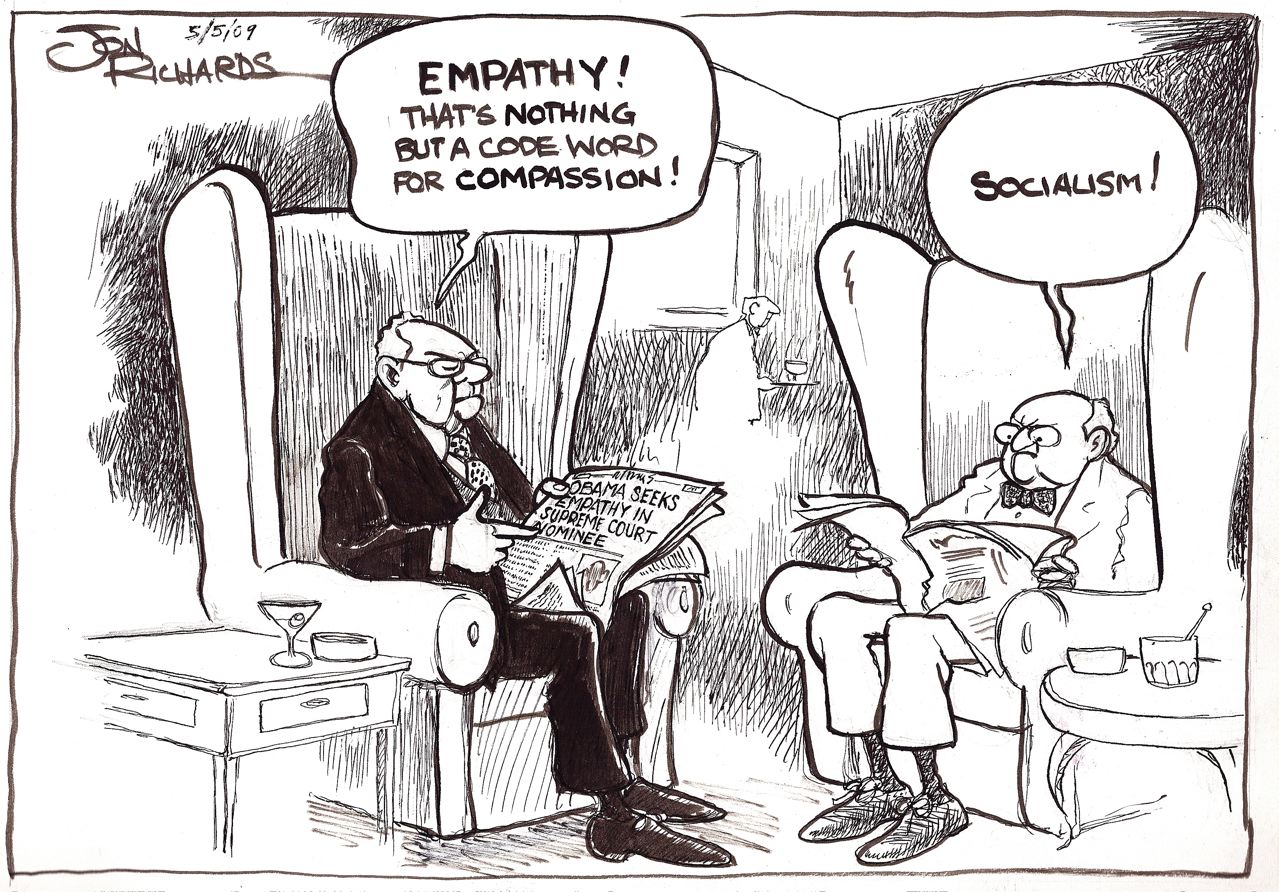
what, me care?

Scientific American | Humans are unlikely to win the animal kingdom’s prize for fastest, strongest or largest, but we are world champions at understanding one another. This interpersonal prowess is fueled, at least in part, by empathy: our tendency to care about and share other people’s emotional experiences. Empathy is a cornerstone of human behavior and has long been considered innate. A forthcoming study, however, challenges this assumption by demonstrating that empathy levels have been declining over the past 30 years.

The research, led by Sara H. Konrath of the University of Michigan at Ann Arbor and published online in August in Personality and Social Psychology Review, found that college students’ self-reported empathy has declined since 1980, with an especially steep drop in the past 10 years. To make matters worse, during this same period students’ self-reported narcissism has reached new heights, according to research by Jean M. Twenge, a psychologist at San Diego State University.

An individual’s empathy can be assessed in many ways, but one of the most popular is simply asking people what they think of themselves. The Interpersonal Reactivity Index, a well-known questionnaire, taps empathy by asking whether responders agree to statements such as “I often have tender, concerned feelings for people less fortunate than me” and “I try to look at everybody’s side of a disagreement before I make a decision.” People vary a great deal in how empathic they consider themselves. Moreover, research confirms that the people who say they are empathic actually demonstrate empathy in discernible ways, ranging from mimicking others’ postures to helping people in need (for example, offering to take notes for a sick fellow student).

Since the creation of the Interpersonal Reactivity Index in 1979, tens of thousands of students have filled out this questionnaire while participating in studies examining everything from neural responses to others’ pain to levels of social conservatism. Konrath and her colleagues took advantage of this wealth of data by collating self-reported empathy scores of nearly 14,000 students. She then used a technique known as cross-temporal meta-analysis to measure whether scores have changed over the years. The results were startling: almost 75 percent of students today rate themselves as less empathic than the average student 30 years ago. Fist tap Dale.

america in decline: why germans think we're insane

Alternet | The European Union has a larger economy and more people than America does. Though it spends less -- right around 9 percent of GNP on medical, whereas we in the U.S. spend close to between 15 to 16 percent of GNP on medical -- the EU pretty much insures 100 percent of its population.

The U.S. has 59 million people medically uninsured; 132 million without dental insurance; 60 million without paid sick leave; 40 million on food stamps. Everybody in the European Union has cradle-to-grave access to universal medical and a dental plan by law. The law also requires paid sick leave; paid annual leave; paid maternity leave. When you realize all of that, it becomes easy to understand why many Europeans think America has gone insane.

Der Spiegel has run an interesting feature called "A Superpower in Decline," which attempts to explain to a German audience such odd phenomena as the rise of the Tea Party, without the hedging or attempts at "balance" found in mainstream U.S. media. On the Tea Parties:

Full of Hatred: "The Tea Party, that group of white, older voters who claim that they want their country back, is angry. Fox News host Glenn Beck, a recovering alcoholic who likens Obama to Adolf Hitler, is angry. Beck doesn't quite know what he wants to be -- maybe a politician, maybe president, maybe a preacher -- and he doesn't know what he wants to do, either, or least he hasn't come up with any specific ideas or plans. But he is full of hatred."

The piece continues with the sobering assessment that America’s actual unemployment rate isn’t really 10 percent, but close to 20 percent when we factor in the number of people who have stopped looking for work.

Some social scientists think that making sure large-scale crime or fascism never takes root in Europe again requires a taxpayer investment in a strong social safety net. Can we learn from Europe? Isn't it better to invest in a social safety net than in a large criminal justice system? (In America over 2 million people are incarcerated.)

Jobless Benefits That Never Run Out
Unlike here, in Germany jobless benefits never run out. Not only that -- as part of their social safety net, all job seekers continue to be medically insured, as are their families.

veterans confront grim employment landscape

WaPo | During the seven months that he was stationed in Iraq, Joe Janssen served as an assaultman, a job that involved manning the turret gun in a Humvee and using shoulder-fired rockets and other explosives to support his fellow Marines.

Those skills were invaluable in war. But they are of little use now that he is back home in Hauppauge, N.Y., a Long Island hamlet. He has applied for job after job since leaving active duty well over a year ago, but his efforts have proved futile.

The Marine reservist used his veterans benefits to finish his bachelor's degree in criminal justice. Now he is scouring for a job in law enforcement while he waits for his name to rise to the top of the New York state police hiring list - which is unlikely to be anytime soon, given the state's severe budget problems.

"I have a passion to be a cop," said Janssen, 23, a fitness buff who dabbles in mixed martial arts. "But no one is hiring."

Janssen's experience is common among the 2 million veterans of the long-running wars in Iraq and Afghanistan. As they return home to the worst labor market in generations, the veterans who are publicly venerated for their patriotism and service are also having a harder time than most finding work, federal data show.

Thursday, December 30, 2010

the imminent collapse of industrial society - redux


Video - Fossil fuels have powered human growth and ingenuity for centuries.

CounterCurrents | The collapse of modern industrial society has 14 parts, each with a somewhat causal relationship to the next. (1) Fossil fuels, (2) metals, and (3) electricity are a tightly-knit group, and no industrial civilization can have one without the others. The decline in fossil-fuel production is the most critical aspect of the collapse, and most of the following text will be devoted to that topic. As those three disappear, (4) food and (5) fresh water become scarce; grain and wild fish supplies per capita have been declining for years, water tables are falling everywhere, rivers are not reaching the sea. Matters of infrastructure then follow: (6) transportation and (7) communication - no paved roads, no telephones, no computers. After that, the social structure begins to fail: (8) government, (9) education, and (10) the large-scale division of labor that makes complex technology possible.

After these 10 parts, however, there are four others that form a separate layer, in some respects more psychological or sociological. We might call these “the four Cs.” The first three are (11) crime, (12) cults, and (13) craziness - the breakdown of traditional law; the ascendance of dogmas based on superstition, ignorance, cruelty, and intolerance; the overall tendency toward anti-intellectualism; and the inability to distinguish mental health from mental illness. There is also a final and more general part that is (14) chaos, resulting in the pervasive sense that “nothing works any more.”

These are cascading dominoes; all parts of the collapse have more to do with causality than with chronology, although there is no great distinction to be made between the two. If we look at matters from a more purely chronological viewpoint, however, we can say that there is a clear division into two time periods, two phases. The first phase will be merely economic hardship, and the second will be entropy. In the first phase the major issues will be inflation, unemployment, and the stock market. The second phase will be characterized by the disappearance of money, law, and government. In more pragmatic terms, we can say that the second phase will begin when money is no longer accepted as a means of exchange. (We last took note of Peter Goodchild at the very end of 2007 writing about Dunbar's Number)

kutcher keepin it real...,


Video - Ashton Kutcher Killers trailer.

TorontoSun | Ashton Kutcher is getting toned and tough - so he can fend for himself and look after his family following an Armageddon-type crisis.

The movie star and producer, who is married to health nut Demi Moore, fears a major U.S. energy meltdown is nigh and he's trying to get superfit so he can deal with the chaos that will follow a blackout or worse.

Kutcher discovered combat training Krav Maga last year as he prepared to tone up for his role in Killers and now he's obsessed with running, Bikram yoga and Muay Thai fighting with the French national champion - and he insists he's committed to his extreme workouts, so he can dominate in desperate times.

The 32 year old tells Men's Fitness magazine, "It will not take much for people to hit the panic button. The amount of convenience that people rely on based on electricity alone. You start taking out electricity and satellites, and people are going to lose their noodle.

"And people are going to go, 'That land's not yours, prove that it's yours,' and the only thing you have to prove it's yours is on an electronic file... People's alarm systems at their homes will no longer work, Neither will our heating, our garbage disposals, hot-water heaters that run on gas but depend on electricity.

"What happens when all our modern conveniences fail? I'm going to be ready to take myself and my family to a safe place where they don't have to worry... All of my physical fitness regimen is completely tailored around the end... I stay fit for no other reason than to save the people I care about."

And he admits he tasted what life could be like after a major national or international calamity when he, Moore and her kids were left without power for 14 hours at their mountain cabin last Christmas.

He adds, "I got my guns out. We made a fire. We went to the grocery store... People were rolling in and out, clearing out all the shelves... It was like a preview."

Chipocalypse Now - I Love The Smell Of Deportations In The Morning

sky |   Donald Trump has signalled his intention to send troops to Chicago to ramp up the deportation of illegal immigrants - by posting a...