Saturday, July 03, 2010

platonic pythagoreanism - intro for scholars

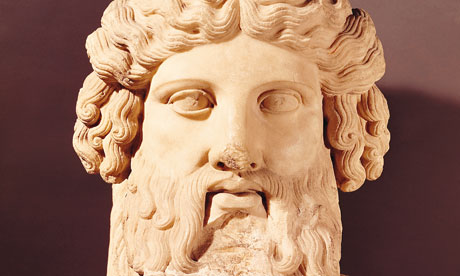
JayKennedy | Western culture is sometimes said to rest on the twin pillars of Socrates and Jesus, two poor men who wrote nothing. Plato's teacher Socrates launched philosophical and scientific research in Athens, but we know of him primarily through Plato's writings. The philosophy and science of Socrates and Plato combined with the religions of the East in the Roman period to create central strands of what became modern European culture. Now our understanding of the birth of that culture will need to be reworked. Plato is sometimes thought of as a cold fish who banished poets and pushed the West toward logic, mathematics, and science. Now we know he was a hidden romantic. The philosophy contained beneath his stories mixes science and mysticism, mathematics and God. By understanding our roots better, we understand ourselves better.

The two most surprising ideas in Plato's hidden philosophy may be explained simply. First, the musical and mathematical structures he hid in his writings show that he was committed to the radical idea that the universe is controlled not by the gods on Olympus but by mathematical and scientific law. Today we take it for granted that the book of nature is written in the language of mathematics, but it was a dangerous and heretical idea when it struggled for acceptance in the Scientific Revolution of the 1600s. Giordano Bruno was burnt at the stake and Galileo was condemned and imprisoned. After Socrates was executed for sowing doubts about Greek religion, Plato had every reason to hide his commitment to a scientific view of the cosmos. But we now know that Plato anticipated the key idea of the Scientific Revolution by some 2000 years.

Perhaps even more surprisingly, Plato's positive philosophy shows us how to combine science and religion. Today we hear much of the culture wars between believers and atheists, between those who insist our world is imbued with meaning and value and those who argue for materialism and evolution. For Plato, music was mathematical and mathematics was musical. In particular, we hear musical notes harmonising with each other when their pitches form simple ratios. For him, the perception of this beauty in music was at once the perception of a beauty inherent in mathematics. Thus mathematics and the laws governing our universe were imbued with beauty and value: they were divine. Modern scientists don't ask where their fundamental laws come from; for Plato, the beauty and order inherent in mathematical law meant its source was divine (a Pythagorean version of modern deism). Plato may light a middle way through today's culture wars.

The Central Claim. The Apeiron article and the sample chapters below concentrate on showing that Plato used a consistent scheme of symbols to embed a musical structure in each genuine dialogue.

In short, each dialogue was divided into twelve parts. At each twelfth, i.e., at 1/12, 2/12, etc., Plato inserted passages to mark the notes of a musical scale. This regular structure resembles a known Greek scale. According to Greek musical theory, some notes in such a scale are harmonious (if they form a small whole number ratio with the twelfth note) and the others are dissonant or neutral. Plato's symbolic passages are correlated with the relative values of the musical notes. At more harmonious notes, Plato has passages about virtue, the forms, beauty, etc.; at the more dissonant notes, there are passages about vice, negation, shame, etc. This correlation is one kind of strong evidence that the structure is a musical scale.

This musical structure can be studied rigorously because it is so regular. Subsequent work will show that other symbols are used to embed Pythagorean doctrines in the surface narratives. It is surprising that Plato could deploy an elaborate symbolic scheme without disturbing the surface narratives of the dialogues, but in this respect he does not differ from other allegorical writers like Dante or Spenser.

Friday, July 02, 2010

2050 - will the 2nd coming save us?

STLToday | A young woman of our acquaintance recently ran out of cigarettes. It was suggested that if she must smoke, she could walk a couple of blocks to the nearest gas station and buy a pack.

“No!” she said in horror. “It’s a BP.”

Rather than contribute some infinitesimal part of the price of a pack of cigarettes to the company that franchises a gas station within walking distance, she drove a few extra blocks to a convenience store.

That’ll teach BP to mess up the Gulf of Mexico.

We admire her idealism, but not her knowledge of international oil market or her willingness to burn more gasoline and emit more hydrocarbons into the atmosphere in the service of a destructive habit.

If we’re reading a recent spate of polls correctly, many Americans are just like her: Full of idealism and noble beliefs as long as they don’t conflict with convenience and comfort.

A New York Times/CBS News poll released last week reported that 9 in 10 Americans think U.S. energy policy needs either to be rebuilt entirely or to undergo fundamental changes. The same 9 in 10 are at least somewhat concerned that the country depends too much on foreign oil.

But only 45 percent said they’d go along with an increased tax on gasoline to support the development of alternative sources of power. Fifty-one percent said nothing doing.

Meanwhile, the Pew Research Center and Smithsonian magazine released a poll that asked Americans what they thought life in the year 2050 would look like. Nearly three-quarters of the respondents said they thought it was likely that “most of our energy will come from sources other than coal, oil and gas.”

Back at the New York Times/CBS Poll, 59 percent of Americans said it was at least “somewhat likely” that sometime in the next 25 years, the United States would develop an alternative to oil as a major energy source. Americans are counting on science to bail them out.

But some scientists are warning not to count on it. Green energy, it seems, is not remotely “scalable” to the world’s energy demands. As the consumers of 25 percent of the world’s energy, this will be a problem for the 5 percent of the world’s people who live in the United States.

Life 40 years hence may be far less comfortable and convenient than it has been for the past 40 years. If the world is, in fact, on the downward slope of peak oil, and burning fossil fuels is causing the climate to warm to problematic levels and scientists don’t bail us out, then what?

We’re left to hope that the very scientists on whom we’re counting for cheap energy are wrong about global warming. The Pew/Smithsonian survey found that two-thirds of those surveyed think the world will get warmer by 2050; 30 percent said this definitely or probably wouldn’t occur.

Another Pew survey done last October showed that 36 percent of Americans don’t believe, in the face of overwhelming scientific consensus to the contrary, that there is solid evidence that human activity contributes to global warming.

This is slightly fewer than the 41 percent of those in the latest Pew survey who said they believe that Jesus Christ definitely would, or probably would, return to earth by 2050. Global warming and energy are the least of their worries.

huge tent city takes root

StarAdvertiser | Pastor Joe Hunkin picked his way around rusted car axles, propane tanks and two-by-fours studded with bent nails to find a homeless encampment where people have been cooking and sleeping directly behind Waipahu High School, in an area that received unwanted national attention this month.

Hunkin walked past a pit bull puppy and peered over a makeshift shelter of tents and tarp hidden by koa haole and elephant grass, then pointed toward the high school's athletic complex barely a football field away.

"The school is right over there," Hunkin said last week. "This isn't right."

The strip of land is bounded by Waipahu High School on one side and the calming waters of Pearl Harbor's Middle Loch on the other, where the Navy's mothball fleet sits idle. It's the most visible portion of an enormous homeless encampment that stretches five miles over approximately 50 acres of city, Navy and state land that serpentines around Waipio Point Access Road, the Ted Makalena Golf Course and the city's Waipio Soccer Complex and back down to Pearl City in the opposite direction, said Beth Chapman, who uncharacteristically lost a suspect in the swampy brush last year after five straight days of searching the area with her husband, Duane "Dog" Chapman, and their bounty hunting family.

In an episode of "Dog The Bounty Hunter" that aired on the A&E network two weeks ago, the Chapmans mounted mo-peds and switched their SUVs into four-wheel drive to navigate the area, where they discovered about 60 different encampments, Beth Chapman said last week in a telephone interview from Canada, where "Dog" was on a publicity tour.

The Chapmans have waded into homeless encampments plenty of times before in the islands—but nothing like the area around the golf course and soccer complex where Beth got two flat tires and Duane's daughter, "Baby Lyssa," had to rock her SUV back and forth to escape a muddy patch.

"That's real jungle land back there," Beth Chapman said. "The foliage was 10, 12 feet high with paths that lead everywhere into moats with people walking around with machetes. If you're the criminal element, those are the best places to hide in. They've got that whole place mapped out. They know every nook and cranny and they know how to escape quick."

Doran J. Porter, executive director of the Affordable Housing and Homeless Alliance, believes more and more homeless encampments like the one behind Waipahu High School are springing up on Oahu as Honolulu police and city officials continue to push Oahu's homeless off of beaches and out of city parks.

"I don't know why it would surprise anyone that they've found these places," Porter said. "You get kicked out of one place, you have to find somewhere else to survive the night. ... And now their desperation is starting to show."

russian mathematician rejects $1 million prize

WaPo | Who would turn down a $1 million prize for solving a math problem?

Perhaps the smartest man in the world.

Three months ago, a famously impoverished Russian mathematician named Grigori Perelman was awarded the prestigious $1 million Clay Mathematics Institute Millennium Prize for his groundbreaking work -- having solved a problem of three-dimensional geometry that had resisted scores of brilliant mathematicians since 1904.

Thursday, the institute announced that Perelman, known equally for his brilliance and his eccentricities, formally and finally turned down the award and the money. He didn't deserve it, he told a Russian news service, because he was following a mathematical path set by another.

The president of the Clay Institute, James Carlson, said that Perelman was a mathematician of "extraordinary power and creativity" and that it was he alone who solved the intractable Poincaré's conjecture. "All mathematicians follow the work of others, but only a handful make breakthroughs of this magnitude," Carlson said.

Still, while he had been hopeful that Perelman would take the prize, he was hardly surprised that he did not. Perelman had already turned down several of the world's top awards in mathematics. And when he solved the Poincaré conjecture, he ignored the peer-review process and simply posted his three-part solution online. That was in 2003.

It took other mathematicians two years to determine that he had indeed solved the problem.

"The community knew about Perelman, and that's why they took him seriously," Carlson said. "But what he did is definitely not the way things are normally done."

Immediately after his postings, Perelman was invited to lecture at several top American universities, and did so with aplomb. Speaking in fluent English, he wowed his math colleagues and, after returning to Russia, continued to communicate via e-mail with some about his work. Within several years, however, he stopped responding and left the math world, Carlson said.

picture of dorian gray....,

the iranian threat

zspace | what exactly is the Iranian threat? An authoritative answer is provided in the April 2010 study of the International Institute of Strategic Studies, Military Balance 2010. The brutal clerical regime is doubtless a threat to its own people, though it does not rank particularly high in that respect in comparison to US allies in the region. But that is not what concerns the Institute. Rather, it is concerned with the threat Iran poses to the region and the world.

The study makes it clear that the Iranian threat is not military. Iran’s military spending is “relatively low compared to the rest of the region,” and less than 2% that of the US. Iranian military doctrine is strictly “defensive,… designed to slow an invasion and force a diplomatic solution to hostilities.” Iran has only “a limited capability to project force beyond its borders.” With regard to the nuclear option, “Iran’s nuclear program and its willingness to keep open the possibility of developing nuclear weapons is a central part of its deterrent strategy.”

Though the Iranian threat is not military, that does not mean that it might be tolerable to Washington. Iranian deterrent capacity is an illegitimate exercise of sovereignty that interferes with US global designs. Specifically, it threatens US control of Middle East energy resources, a high priority of planners since World War II, which yields “substantial control of the world,” one influential figure advised (A. A. Berle).

But Iran’s threat goes beyond deterrence. It is also seeking to expand its influence. As the Institute study formulates the threat, Iran is “destabilizing” the region. US invasion and military occupation of Iran’s neighbors is “stabilization.” Iran’s efforts to extend its influence in neighboring countries is “destabilization,” hence plainly illegitimate. It should be noted that such revealing usage is routine. Thus the prominent foreign policy analyst James Chace, former editor the main establishment journal Foreign Affairs, was properly using the term “stability” in its technical sense when he explained that in order to achieve “stability” in Chile it was necessary to “destabilize” the country (by overthrowing the elected Allende government and installing the Pinochet dictatorship).

Beyond these crimes, Iran is also supporting terrorism, the study continues: by backing Hezbollah and Hamas, the major political forces in Lebanon and in Palestine – if elections matter. The Hezbollah-based coalition handily won the popular vote in Lebanon’s latest (2009) election. Hamas won the 2006 Palestinian election, compelling the US and Israel to institute the harsh and brutal siege of Gaza to punish the miscreants for voting the wrong way in a free election. These have been the only relatively free elections in the Arab world. It is normal for elite opinion to fear the threat of democracy and to act to deter it, but this is a rather striking case, particularly alongside of strong US support for the regional dictatorships, particularly striking with Obama’s strong praise for the brutal Egyptian dictator Mubarak on the way to his famous address to the Muslim world in Cairo.

Thursday, July 01, 2010

plato's stave

Guardian | It may sound like the plot of a Dan Brown novel, but an academic at the University of Manchester claims to have cracked a mathematical and musical code in the works of Plato.

Jay Kennedy, a historian and philosopher of science, described his findings as "like opening a tomb and discovering new works by Plato."

Plato is revealed to be a Pythagorean who understood the basic structure of the universe to be mathematical, anticipating the scientific revolution of Galileo and Newton by 2,000 years.

Kennedy's breakthrough, published in the journal Apeiron this week, is based on stichometry: the measure of ancient texts by standard line lengths. Kennedy used a computer to restore the most accurate contemporary versions of Plato's manuscripts to their original form, which would consist of lines of 35 characters, with no spaces or punctuation. What he found was that within a margin of error of just one or two percent, many of Plato's dialogues had line lengths based on round multiples of twelve hundred.

The Apology has 1,200 lines; the Protagoras, Cratylus, Philebus and Symposium each have 2,400 lines; the Gorgias 3,600; the Republic 12,200; and the Laws 14,400.

Kennedy argues that this is no accident. "We know that scribes were paid by the number of lines, library catalogues had the total number of lines, so everyone was counting lines," he said. He believes that Plato was organising his texts according to a 12-note musical scale, attributed to Pythagoras, which he certainly knew about.

"My claim," says Kennedy, "is that Plato used that technology of line counting to keep track of where he was in his text and to embed symbolic passages at regular intervals." Knowing how he did so "unlocks the gate to the labyrinth of symbolic messages in Plato".

Believing that this pattern corresponds to the 12-note musical scale widely used by Pythagoreans, Kennedy divided the texts into equal 12ths and found that "significant concepts and narrative turns" within the dialogues are generally located at their junctures. Positive concepts are lodged at the harmonious third, fourth, sixth, eight and ninth "notes", which were considered to be most harmonious with the 12th; while negative concepts are found at the more dissonant fifth, seventh, 10th and 11th.

Kennedy has also found that the enigmatic "divided line" simile in the Republic, in which Plato describes a line divided by an unstated ratio, falls 61.7% of the way through the dialogue. It has been thought that the line refers to the golden mean, which expressed as a percentage is 61.8%.

Copies of the paper have been circulating among senior scholars, who believe Kennedy's argument should be taken seriously.

Professor Andrew Barker, a leading authority on ancient Greek music, said that "the results he's come up with look too neat to be accidental" and that if scholars confirm them, "he will have shown something quite startling about Plato's methods of composition".

earlier start to multicellular life

The Scientist | Newly uncovered fossils hint that multicellular life may have evolved more than 2 billion years ago -- some 200 million years earlier than previously expected, according to a study published this week in Nature.

The fossils are "not really [what] you expect to find in the rock record 2 billion years before present," said paleontologist Philip Donoghue of the University of Bristol, who was not involved in the research. "These fossils are centimeters in size" and "relatively thick" -- too large to be just a single cell, he said.

The once-biological shapes carved out of black shale formations in Africa outdate the next oldest example of what may have been multicellular life by about 200 million years. Unfortunately, "there's nothing preserved inside," said Donoghue, who wrote an accompanying perspective. "You can't demonstrate [for sure] that it was multicellular [because] you can't see component cells."

Sedimentologist Abderrazak El Albani of the University of Poitiers in France and his colleagues discovered the amorphous fossils in the black shale formations of the Francevillian Basin in Gabon, Africa. The team found more than 250 specimens at the site, all dating to approximately 2.1 billion years ago, and ranging up to 12 centimeters in length. Chemical analyses confirmed the biological origin of the fossils, which are now composed of the iron-sulfide mineral pyrite that replaced the organic tissue as the organism decomposed. And their large and complex structures, as revealed through X-ray microtomography, are indicative of cell-to-cell signaling and coordinated growth between cells, El Albani said.

Specifically, the fossils display scalloped edges with radiating slits, and many have a central structure, not unlike the overall structure of a jellyfish medusa. "This organism, in my opinion, was something very light, very gentle, very soft," El Albani speculated. Given the ubiquity of the radial structures among the highly diverse specimens, "I am sure that this radial fabric has some functionality for these specimens," he said, possibly for movement or fixation to the sediment, but "we have a lot of work [to do]" to determine what that function truly was. Still, the complexity and organization of their structure "shows clearly that [these organisms were] multicellular," he insisted.

But to call these fossils multicellular, it's important to first define multicellularity, Donoghue told The Scientist. "There are a great number of definitions, some of which are very restrictive and others which are all encompassing." Part of the difficulty in defining the term, he added, is that "much of the molecular machinery that is necessary for cell-to-cell communication is" found even in more primitive organisms, such as bacterial colonies.

Interestingly, these fossils appear just a couple million years after the Great Oxidation Event, when oxygen became more widely available in the atmosphere and in the shallow oceans. This may have facilitated the evolution of a thicker organism, where "it becomes more difficult for the cells in the middle to obtain that oxygen if it's only at trace levels in the atmosphere," Donoghue said.

ancient stupid....,

BBCNews | Several prehistoric creatures developed elaborate body traits in order to attract members of the opposite sex, according to new research.

The purpose of the exaggerated crests and sails found in many fossil animals has long been controversial.

Some scientists said sails helped to regulate body temperature and that head crests helped flying reptiles steer during flight.

Now a study say these traits became so big because of sexual competition.

The findings, by an international team of researchers, is published in the journal American Naturalist.

One of the prehistoric animals looked at by the researchers were pterosaurs - flying reptiles which became extinct at the time of the dinosaurs.

The study suggests the relative size of the head crest compared to the body of the pterosaur was too large for it to have been dedicated to controlling the animal's body temperature or its flight.

They also looked at mammal-like creatures called Eupelycosaurs, which lived before the time of the dinosaurs.

This group, which included the animals Dimetrodon and Edaphosaurus, carried large elaborate "sails" along their backs.

By using known relationships between body size and metabolic activity - the process behind heat generation - in living organisms, the scientists concluded that the features were "too exaggerated" to have played a role in the control of body temperature.

Co-author Dr Stuart Humphries, from the University of Hull said: "One of the few things that haven't changed over the last 300 million years are the laws of physics.

"So it has been good to use those laws to understand what might really be driving the evolution of these big crests and sails."
Dimetrodon (SPL) Dimetrodon's elaborate sail was designed to attract mates, says the team

His colleague, Dr Joseph Tompkins, from the University of Western Australia, commented: "The sails of the Eupelycosaurs are among the earliest known examples of exaggerated secondary sexual traits in the history of vertebrate evolution.

"Indeed, the sail of Dimetrodon is one of the largest secondary sexual traits of any animal."

Wednesday, June 30, 2010

the social cost of carbon


Video - Carbon Credits Explained.

PostAutisticEconomicsReview | The social cost of carbon may be the most important number you’ve never heard of. U.S. climate legislation may or may not make it through Congress this year, but in the meantime, the Environmental Protection Agency is moving ahead, authorized by the Supreme Court to limit greenhouse gas emissions. The Department of Energy is setting energy efficiency standards for residential appliances and commercial equipment, based in part on their contribution to climate change. Other agencies may address the same issues, when their regulations affect energy use and carbon emissions.

The social cost of carbon (SCC), defined as the estimated price of the damages caused by each additional ton of carbon dioxide (CO2) released into the atmosphere, is the volume dial on government regulations affecting greenhouse gases: The higher the SCC is set, the more stringent the regulatory standards. This white paper explains how economists estimate the social cost of carbon, why the Obama Administration’s current analyses are on a path to grossly underestimating it, and why relying on the SCC in the first place may be unproductive.

The EPA, DOE, and other agencies are deciding on values to assign to the SCC in the next few months as part of “rulemaking” processes that are couched in very technical terminology and largely invisible to the general public. In theory, it appears possible to derive the SCC from economic analysis, and the administration appears to have done so. In reality, it’s not so simple: Any estimate of the SCC rests on a number of value judgments and predictions about uncertain future events, and so far, the administration has made choices that lead to very low SCC values. In an interim and then a revised analysis, an interagency working group has presented multiple scenarios and possible values for the SCC; the interim analysis suggests, and the revised analysis explicitly endorses, a “central” estimate of $21 per ton of CO2 in 2010. This amounts to roughly 20 cents per gallon of gasoline, an extremely modest price incentive for carbon reduction. If adopted, this obscure number will have immense practical consequences: A low SCC could result in ineffectual regulations that lead to few if any reductions in U.S. emissions until Congress passes a climate bill.

Even greater harm could result if Congress interprets the $21 SCC as an endorsement of that level for a carbon tax or permit price. This could clash with the widely discussed, science-based goal of achieving an 80 percent reduction in U.S. emissions by 2050, an objective that will almost certainly require a much higher price on carbon. In the revised analysis, the central SCC estimate rises only to $45 per ton (in 2007 dollars) by 2050.2 If climate economics is (mistakenly, in our view) interpreted as supporting an SCC of only $21 today and $45 by mid-century, it could also be interpreted as advocating only the emission reductions that would result from those prices. That is, working backwards from the proposed SCC, one could infer that the appropriate cap on carbon emissions is much weaker than those found in recent legislative proposals. The resolution to this paradox is that, as we argue in this paper, the $21 SCC is based on flimsy analyses and multiple mistakes. Sound economic analysis would show that the SCC should be much higher, and thus could be consistent with the carbon prices required to achieve science-based targets for emission reduction.

Calculating the SCC is a new undertaking for the administration, and these initial estimates may represent work in progress rather than a final answer. In its first attempts, however, the administration’s interagency working group has left itself plenty of room for improvement.

fly the eco-friendly skies...,

MITNews | In what could set the stage for a fundamental shift in commercial aviation, an MIT-led team has designed a green airplane that is estimated to use 70 percent less fuel than current planes while also reducing noise and emission of nitrogen oxides (NOx).

The design was one of two that the team, led by faculty from the Department of Aeronautics and Astronautics, presented to NASA last month as part of a $2.1 million research contract to develop environmental and performance concepts that will help guide the agency’s aeronautics research over the next 25 years. Known as “N+3” to denote three generations beyond today’s commercial transport fleet, the research program is aimed at identifying key technologies, such as advanced airframe configurations and propulsion systems, that will enable greener airplanes to take flight around 2035.

MIT was the only university to lead one of the six U.S. teams that won contracts from NASA in October 2008. Four teams — led by MIT, Boeing, GE Aviation and Northrop Grumman, respectively — studied concepts for subsonic (slower than the speed of sound) commercial planes, while teams led by Boeing and Lockheed-Martin studied concepts for supersonic (faster than the speed of sound) commercial aircraft. Led by AeroAstro faculty and students, including principal investigator Ed Greitzer, the H. Nelson Slater Professor of Aeronautics and Astronautics, the MIT team members include Aurora Flight Sciences Corporation and Pratt & Whitney.

Their objective was to develop concepts for, and evaluate the potential of, quieter subsonic commercial planes that would burn 70 percent less fuel and emit 75 percent less NOx than today’s commercial planes. NASA also wanted an aircraft that could take off from shorter runways. Designing an airplane that could meet NASA’s aggressive criteria while accounting for the changes in air travel in 2035 — when air traffic is expected to double — would require “a radical change,” according to Greitzer. Although automobiles have undergone extensive design changes over the last half-century, “aircraft silhouettes have basically remained the same over the past 50 years,” he said, describing the traditional, easily recognizable “tube-and-wing” structure of an aircraft’s wings and fuselage.

president obama cannot break energy stalemate


Video - Obama on Alternative Energy

Guardian | Barack Obama's hopes of leveraging public anger at the Gulf oil spill into political support for his clean energy agenda fell flat today after he failed to rally a group of Democratic and Republican senators around broad energy and climate change law.

The standoff suggests the Senate would formally give up on climate change law, and recast energy reform as a Gulf oil spill response, that would roll in far more limited proposals such as a green investment bank, or a measure to limit greenhouse gas emissions that would apply only to electricity companies.

Such a move would come as a personal rebuff to Obama who has put energy and climate change at the top of his agenda, and who called on the 23 senators at the White House meeting to establish a cap and trade system.

"The president was very clear about putting a price on carbon and limiting greenhouse gas emissions," John Kerry, the Democratic senator leading the push for climate change proposals in the Senate said after the meeting.

"He was very strong about the need to put a price on carbon and make polluters pay," said senator Joe Lieberman.

White House officials say the spill is a wake-up call for the urgency of breaking the US economy's dependence on fossil fuels, and had hoped to build momentum behind a cap-and-trade bill now before the Senate.

Supporters of action on climate change had been pressing Obama to make a strong push for legislation.

Tuesday, June 29, 2010

bringing people together


Video - Second City Bringing People Together.

boycotted station owners want BP help...,

AP | Tension is mounting between BP and the neighborhood retailers that sell its gasoline. As more Americans shun BP gasoline as a form of protest over the Gulf oil spill, station owners are insisting BP do more to help them convince motorists that such boycotts mostly hurt independently owned businesses, not the British oil giant.

To win back customers, they'd like the company's help in reducing the price at the pump.

BP owns just a fraction of the more than 11,000 stations across the U.S. that sell its fuel under the BP, Amoco and ARCO banners. Most are owned by local businessmen whose primary connection to the oil company is the logo and a contract to buy gasoline.

In recent weeks, some station owners from Georgia to Illinois say sales have declined as much as 10 percent to 40 percent.

Station owners and BP gas distributors told BP officials last week they need a break on the cost of the gas they buy, and they want help paying for more advertising aimed at motorists, according to John Kleine, executive director of the independent BP Amoco Marketers Association. The station owners, who earn more from sales of soda and snacks than on gasoline, also want more frequent meetings with BP officials.

"They have got to be more competitive on their fuel costs to the retailers so we can be competitive on the street ... and bring back customers that we've lost," says Bob Juckniess, who has seen sales drop 20 percent at some of his 10 BP-branded stations in the Chicago area.

Owners and distributors put forth their demands at a meeting in Chicago with BP marketing officials. BP's reply could come as early as this week, says Kleine, whose group represents hundreds of distributors.

Station owners are locked into contracts that can last seven to 10 years in some cases. So, switching to a competing brand if BP refuses to help may not be an option.

BP spokesman Scott Dean declined to offer specifics about the discussions when contacted by The Associated Press.

beyond petroleum - the good times...,


Video - Beyond Petroleum - the good times back in the day...,

bp point - counterpoint


Video - Shepard Smith vs Andrew Napolitano discussing BP oil spill.

Monday, June 28, 2010

the anosognosic's dilemma

NYTimes | In one of his first e-mails, David Dunning wrote to me about the mediocre detective who is unaware of significant clues littered all around him. A thousand unnoticed purloined letters easily within reach. Cluelessness could be just another way of expressing our relationship to the unknown unknowns. We don’t know what questions to ask, let alone how to answer them. I sent an e-mail to Dunning: “If you were to make a Venn diagram of cluelessness, self-deception and denial, what would it look like?”

Shortly afterwards, Dunning responded.
I’ve attached a PDF with how I see it. Cluelessness is clearly the biggest circle, in that there is so much knowledge and expertise that lies outside everybody’s personal cognitive event horizon. People can be clueless in a million different ways, even though they are largely trying to get things right in an honest way. Deficits in knowledge, or in information the world is giving them, just leads people toward false beliefs and holes in their expertise.

That is not to dismiss or belittle self-deception. A caveat to begin: The traditional academic definition of “self-deception” is technical and a little stodgy. It requires that, to self-deceive, a person both know “X” and deceive himself or herself into believing “not-X.” But how can a person both believe and disbelieve “X” at the same time? This is for philosophers to argue about (and they have, for centuries) and for experimental nerds like me to try to figure out how to demonstrate decisively in the lab (so far, we haven’t).

But if we imbue self-deception with a looser definition, we have a lot to talk about. Psychologists over the past 50 years have demonstrated the sheer genius people have at convincing themselves of congenial conclusions while denying the truth of inconvenient ones. You can call it self-deception, but it also goes by the names rationalization, wishful thinking, defensive processing, self-delusion, and motivated reasoning. There is a robust catalogue of strategies people follow to believe what they want to, and we research psychologists are hardly done describing the shape or the size of that catalogue. All this rationalization can lead people toward false beliefs, or perhaps more commonly, to tenaciously hang on to false beliefs they should really reconsider.

Denial, to a psychologist, is a somewhat knuckle-headed technique in self-deception, and it is to merely deny the truth of something someone does not want to confront.
Clearly, Dunning believes that we are incarcerated in a prison of cluelessness. But is there any possibility of escape? I had some additional questions for Dunning, and so we arranged to speak again. Fist tap Dale.

the youth pill

The Scientist | No scientific advances inspire more media hype than ones in gerontology, the study of aging. Even the crustiest editors have been known to turn giddy when new Justify Fulllight is shed on the topic and take to blowing raspberries at the Reaper with headlines suggesting immortality elixirs are just around the corner.

Biologists aren't so easily wowed, though, and before the mid-1990s they generally saw gerontology as a dismal bog where once-promising peers sank out of sight, or worse, re-emerged clutching beakers of snake oil. Compelling logic underlay the dismissiveness: Natural selection has sculpted our genes to care about getting to the next generation, not about keeping our bodies youthful for a long time. Thus, soon after we reach reproductive age, our genes' preservative influence fades, and escalating random damage sets in. Studying the details of this inexorable, chaotic decay seemed a waste of time to most life scientists. And attempting to block or slow it seemed utterly quixotic. In 1957, evolutionary biologist George Williams encapsulated the conventional wisdom by equating the anti-aging quest to the hunt for perpetual motion.

Then in 1988 a miracle happened -- the University of Colorado's Thomas Johnson reported that a gene mutation in nematodes could more than double their life spans. Five years later, Cynthia Kenyon at the University of California, San Francisco, nailed a similar worm "gerontogene" dubbed daf-2. These flabbergasting discoveries revealed that not everything about aging is intractable chaos -- worms, at least, apparently possessed gene-encoded modules poised to oppose the ravages of advancing age when activated by a single mutation. Optimists soon speculated that similar modules exist in mammals.

But for several years after the discovery of worm gerontogenes, it wasn't at all clear that mammals possess such modules. After all, daf-2 and related genes were known to work by activating a semblance of the "dauer phase," a kind of suspended animation that enables nematode larvae to ride out food shortages, and there's a lack of evidence that we warm-blooded types similarly turn into living mummies when the larder is bare. But then two remarkably persistent scientists settled the burning issue -- and solved a murine murder mystery in the process.

lab-grown lungs

The Scientist | Two new lab-grown versions of lungs may one day serve as a way to sidestep both animal testing and organ transplantation.

One engineered rat lung, described in Science Express today (June 24), even successfully helped rats breathe for brief periods.

"This is the first ever published paper that really demonstrates that regenerative medicine can provide an alternative to clinical transplantation of the lungs," said translational medical researcher Paolo Macchiarini of Karolinska Institutet in Sweden, who was not involved in the research.

Currently, the only treatment for the lung diseases that cause some 400,000 deaths each year is to transplant a new, healthy organ -- a procedure that is hampered by organ rejection complications and a severe shortage of donors. But now, bioengineer and vascular biologist Laura Niklason of Yale University and her colleagues may have developed a way to eventually address both of these issues.

Treating adult rat lungs with detergent solutions to remove their cellular components gave the researchers their starting point -- a lung skeleton, or the extracellular matrix that gives the lungs their structure. The team then repopulated the lungs with epithelial and endothelial cells from rat lungs, which grew over the scaffolds to create brand new lungs.

The researchers then implanted the new lungs into rats for up to two hours, during which time they found evidence that the engineered lungs were successfully participating in gas exchange. However, they also started to see some blood clots form in the vasculature of the lungs, as well as small amounts of leakage of blood into the airways, which most likely stemmed from an imperfect matrix and incomplete covering of new cells, Niklason said.

"Clearly we're close, but not all the way there yet," she said. "We really view this work as laying a scientific and technological basis for regenerating lungs in the long term."

plastic antibodies?

The Scientist | Antibodies are the main ingredient in a wide range of biopharmaceuticals, but making them is no picnic. Now, chemists have good evidence there may be an easier way: plastic.

Currently, in order to manufacture antibodies, mice (or other live animals) are injected with a foreign antigen over several weeks, stimulating B cells in the bloodstream to produce antibodies. Those B cells must then be harvested from the mouse's spleen and transferred to a bioreactor where they are often fused with another cell type, like immortal tumor cells, that allows them to replicate and survive outside the animal. The cultured cells then produce the antibody. If the antibody is for human use, at some point it must be humanized -- modified through recombinant DNA technology to resemble natural human antibodies. The process is long, difficult, and expensive.

But what if a substance introduced years ago as a cheap, durable replacement for natural materials could replace yet another one of nature's materials?

In a landmark paper published earlier this month in the Journal of the American Chemical Society, synthetic chemists at the University of California, Irvine, report the first successful use of a plastic antibody in vivo. The synthetic counterpart seems to work just like a natural antibody, binding and neutralizing a toxin in the bloodstream. Such molecules could someday make a splash in the clinic as well as in pharmaceutical and biotech companies for protein purification and diagnostic applications, scientists believe.

Sunday, June 27, 2010

the lonely robot


Video - Adam Curtis BBC Documentary The Trap - The Lonely Robot
This is another brilliant Adam Curtis documentary originally produced for the BBC. It talks about the modern political realities, where the policies came from and the massive failures of those ideals and how they have ended up exactly where they did not want to be. This episode focuses on the 1990's and how the politicians decided to apply the model of a free market economy to the rest of society and consequences of these actions being felt all over the world in western democracy's.

we will force you to be free


Video - Adam Curtis BBC Documentary The Trap - We Will Force You to be Free.
This is another brilliant Adam Curtis documentary originally produced for the BBC. It talks about the modern political realities, where the policies came from and the massive failures of those ideals and how they have ended up exactly where they did not want to be. In this episode we discuss the alternative idea to freedom that currently exists and traps the western societies in which we live.

the adjustment bureau


Video - The Adjustment Bureau Trailer

Saturday, June 26, 2010

steeped in misinformation, ignorance, and denial


Video - Rick Santelli's Tea Party rant.

Monbiot | The rightwing movements thrive on their contradictions, the leftwing movements drown in them. Tea Party members who proclaim their rugged individualism will follow a bucket on a broomstick if it has the right label, and engage in the herd behaviour they claim to deplore. The left, by contrast, talks of collective action but indulges instead in possessive individualism. Instead of coming together to fight common causes, leftwing meetings today consist of dozens of people promoting their own ideas, and proposing that everyone else should adopt them.

It would be wrong to characterise the Tea Party movement as being mostly working class. The polls suggest that its followers have an income and college education rate slightly above the national mean(1). But it is the only rising political movement in the US which enjoys major working class support. It voices the resentments of those who sense that they have been shut out of American life. Yet it campaigns for policies that threaten to exclude them further. The Contract from America for which Tea Party members voted demands that the US adopt a single-rate tax system, repeal Obama’s health care legislation and sustain George W Bush’s reductions in income tax, capital gains tax and inheritance tax(2). The beneficiaries of these policies are corporations and the ultra-wealthy. Those who will be hurt by them are angrily converging on state capitals to demand that they are implemented.

The Tea Party protests began after the business journalist Rick Santelli broadcast an attack from the floor of the Chicago Mercantile Exchange on the government’s plan to help impoverished people whose mortgages had fallen into arrears(3). To cheers from the traders at the exchange, he proposed that they should hold a tea party to dump derivative securities in Lake Michigan in protest at Obama’s intention – in Santilli’s words - to “subsidise the losers”. (I urge you to watch the broadcast – it is the most alarming example of cheap demagoguery you are likely to have seen. It continues to be promoted by Santelli’s employer, CNBC(4)).

The protests which claim to defend the interests of the working class began, in other words, with a call for a bankers’ revolt against the undeserving poor. They have been promoted by Fox News, owned by that champion of the underdog Rupert Murdoch, and lavishly funded by other billionaires(5). Its corporate backers wrap themselves in the complaints of the downtrodden: they are 21st Century Marie-Antoinettes, who dress up as dairymaids and propose that the poor subsist on a diet of laissez-faire.

Before this movement had a name, its contradictions were explored in Thomas Frank’s seminal book What’s the Matter with Kansas?(6) The genius of the new conservatism, Frank argues, is its “systematic erasure of the economic”. It blames the troubles of the poor not on economic forces – corporate and class power, wage cuts, tax cuts, outsourcing – but on cultural forces. The backlashers could believe that George W Bush was a man of the people by ignoring his family’s wealth. They can believe that the media is a liberal conspiracy only by forgetting about the corporations (CNBC, Fox etc) and the conservative billionaires who run it. The movement depends on people never making the connection between, for example, “mass culture, most of which conservatives hate, and laissez-faire capitalism, which they adore” or “the small towns they profess to love and the market forces that are slowly grinding those small towns back into the red-state dust.”

The anger of the excluded is aimed instead at gay marriage, abortion, swearing on television and latte-drinking, French-speaking liberals. The working class American right votes for candidates who rail against cultural degradation, but what it gets when they take power is a transfer of wealth from the poor to the rich.

conservative incomprehension of peak oil


Video - DNC ad on how republicans would govern.

FCNP | The Barton incident, however, is instructive for it raises questions about the role of government and the force of political ideology in what soon will be an era of oil depletion and increasing economic hardship. Unlike most of the world, America has had 150 years of good times. Since the end of the Civil War, or if you prefer the War Between the States, no armies have crashed through our cities and except for the 1930s, which are remembered by only a few senior citizens, there has been relatively steady economic growth.

As generations went by, the distinction between resources that were vital for our way of life that come from nature, such as the sun, rain, moderate temperatures and breathable air, and those that were provided by our social organization and technology, such as electricity, running water, sewers, grocery stores, and gasoline, became increasingly blurred. Thus, for most, the neighborhood gas station providing unlimited cheap gas would and should always be there just as the sun will rise every day.

The degree to which government enables and facilitates the services that are vital to civilization is lost to many who have come to believe governments only collect taxes and waste money on dubious social projects. In the last few years, Washington's efforts to deal with the credit crisis, housing crisis, and the bankruptcy of the automobile industry, under both the Bush and Obama administrations, has only served to sharpen the ideological differences.

Under the "no new taxes" banner, conservatives in recent years have been content to watch the rapid erosion of state and local government services as withering revenues and inability to print or borrow money has forced unprecedented cutbacks. The ideology behind all this is that the economic growth that has been with us as long as anybody can remember will return soon and all will be well. Missing from this scenario of course is that for the last 150 years economic growth and the consumption of increasing amounts of oil have been inextricably linked. Take away steadily increasing oil supplies and the bedrock of conservative economic theory becomes a fantasy.

So far the erosion of government spending has not had a significant impact on political ideology. The problem will come when gasoline becomes unaffordable at current rates of use and many or most are forced to cut back, doing severe damage to our motorized society. At first there will be strident calls to deregulate, forget the environment and produce as much oil as possible. It may take a few years before a critical mass come to the realization amidst a stagnating economy and burgeoning social problems that more drilling is not going to work. Then the real debate can begin on how to keep civilization functioning with decreasing supplies of fossil fuels.

serial apologies, no contrition...,


Video - Rahm Emmanuel - GOP governing philosophy holds BP as the aggrieved party.

NYTimes | House Republicans had their chance to do the right thing and remove Joe Barton as the ranking Republican on the energy committee. Instead, they applauded him. Mr. Barton, you will recall, apologized to BP — saying it was a victim of a “shakedown” — after President Obama pressed the company to ante up a $20 billion compensation fund for all the people who have lost their jobs and businesses because of the oil spill.

After Mr. Barton tried apologizing again before his party’s private caucus, John Boehner, the Republican leader, said “the issue is closed.” Mr. Boehner showed his clear loyalties — protecting party hacks and the oil industry — when he decided that Mr. Barton should keep his central role in the Republican Party’s energy policy.

Mr. Boehner cited Mr. Barton’s “poor choice of words,” as if it were an oratorical gaffe and not a glimpse at deeper outrage that government dared to call Big Oil to account. Mr. Barton of Texas spoke a day after the Republican Study Committee caucus of House conservatives denounced Mr. Obama for applying “Chicago-style shakedown politics” against poor, defenseless BP.

Representative Jo Bonner, a Republican of Alabama whose Gulf Coast constituents are incensed, said it best last week when he called for Mr. Barton to lose his ranking position on the energy panel: “I believe the damage of his comments are beyond repair.” After the party caucus ended with a forgiving round of applause, Mr. Barton’s Twitter feed proclaimed: “Joe Barton Was Right.” But wait, that message was soon deleted; it was a mistake, said the latest apology from Mr. Barton’s office.

Friday, June 25, 2010

the final words on military accountability..,


Video - Secretary of Defense Robert Gates and Chairman of the Joint Chiefs of Staff ADM Mike Mullen speak with reporters at the Pentagon.

gene + virus + injury = disease?

The Scientist | One of the most detailed studies to date of how the interaction between genes and environment results in disease has demonstrated that an inflammatory bowel disease resembling human Crohn's needs a specific mutation, virus, and injury to develop in mice.

"Environmental genomic issues are tough to crack," said John Mordes, professor of endocrinology at the University of Massachusetts, who has previously characterized a gene-virus interaction in type1 diabetes. "This is a significant contribution to the evolving understanding of how the environment interacts with genomic predisposition."

The team, led by immunologist Thaddeus Stappenbeck and virologist Herbert Virgin of Washington University School of Medicine, found that the diseased state was brought about by the complex interplay among a mutation in an autophagy-related gene called ATG16L1, a specific virus, a toxic substance, microbes in the rodent's gut, and the rodent's own immune response. The findings appear in a paper that will be published tomorrow in Cell.

"It's a well-documented scientific example of how very particular environmental events and genes interact to result in disease," said Richard Blumberg, chief of gastroenterology at Brigham and Women's Hospital at Harvard Medical School, who was not involved in the study.

The researchers stumbled upon this discovery by accident. Two years ago, they had succeeded in describing how a mutation in mouse ATG16L1 wreaked havoc in a type of cell that inhabits the lining of the small intestine. These so-called Paneth cells are involved in mucosal immunity and secrete antimicrobial proteins. But in mice that carry the mutation, the cells grow abnormally and malfunction, similar to what's observed in human Crohn's patients with mutations in the same gene.

But then, in early 2009, the mutant mouse colonies with the abnormal Paneth cells were moved to a new super-sterile facility. To the researchers' surprise, the mutant mice that grew up in the new facility had normal-looking, healthy Paneth cells. It was as if the mice didn't carry the mutation at all. This led them to believe that something other than genetics was at play.

Enter the murine norovirus -- a family of small, RNA viruses discovered by Virgin in 2003. The viruses are practically found in almost all mouse facilities except the new one, which was designed expressly to keep them out.

Sure enough, when the researchers fed mutant mice different viral strains, they found that after exposure to one strain known as CR6, the Paneth cells transformed from healthy to abnormal.

This goes back to what doctors have observed for years. "It is not uncommon to find that inflammatory bowel disease follows some sort of gastric infection in a clinical setting," Stappenbeck explained. "So the connection between the disease and an infectious process has been around for a while."

"So really there were three environmental factors that were working together with the mutation: the viral infection, the composition of the microbiota (presumably induced by the viral infection), and a very specific inflammatory hit on the [intestinal lining]," Blumberg said.

old bonobos just nasty......,

Reuters | Disease risk higher for swingers than prostitutes. Scientists studying swingers -- straight couples who regularly swap sexual partners and indulge in group sex at organized meeting -- say they have higher rates of sexually transmitted infections (STIs) than prostitutes. Dutch researchers publishing their work in the British Medical Journal showed that older swingers -- those over the age of 45 -- are particularly vulnerable and yet are a group largely ignored by healthcare services.

With estimates that the swinger population could be many millions across the world, the scientists said there was a risk this untreated group could act as an STI "transmission bridge to the entire population."

"Although exact estimates are unavailable, the swingers' population is probably large," wrote Anne-Marie Niekamp, who worked on the study with colleagues from Maastricht University.

The Dutch study analyzed the numbers of patients seeking treatment in 2007 and 2008 at three sexual health clinics in South Limburg in the Netherlands.

The clinics have recorded whether a patient is a swinger since the start of 2007, in an attempt to track infection rates among this group.

During the study period, there were just under 9,000 consultations at the three clinics. One in nine of the patients was a swinger, with an average age of 43.

Overall, combined rates of Chlamydia and gonorrhea were just over 10 percent among straight people, 14 percent among gay men, just under 5 percent in female prostitutes, and 10.4 percent among swingers, they found. And female swingers had higher infection rates than male swingers.

One in 10 older swingers had Chlamydia and around one in 20 had gonorrhea.

Chlamydia is the most common sexually transmitted disease among women and in 70 percent of cases causes no symptoms. The bacterial infection can lead to pelvic inflammatory disease, ectopic pregnancy and infertility. Gonorrhea is another bacterial infection which can also lead to infertility if left untreated.

Niekamp said that while other high risk groups, such as young straight people, gay men and prostitutes, were relatively easy for healthcare service to identify and target for advice and help, swingers were generally a hidden community.

"That makes them very hard to reach," she said in a telephone interview. "Because they are so hidden and in some ways also stigmatized, it is hard for them to come forward for STI testing and treatment."

Thursday, June 24, 2010

the hunt for the god particle

Guardian | We have all heard of 'dark matter'. But what about dark galaxies, dark planets - even dark people? Particle physicists have a problem, he says. They are an anthropocentric bunch, too preoccupied with the particles and forces that impinge on humanity. They have spent so much time unravelling mysteries such as the structure of atoms and why the sun shines that they have neglected other avenues of inquiry. They need to broaden their horizons, Wells says. To think beyond the world we see and touch.

If that was the stick, next came the carrot. Our knowledge of the cosmos tells us that the stuff around us, from plants and people to stars and planets, is made from just a handful of elementary particles. On top of these, there is a small number of forces that make nature run smoothly, doing things like keeping planets in their orbits and ensuring everyday objects don't suddenly collapse into a pile of atoms. But how do we know, asks Wells, that there isn't much more going on than this? Our knowledge of nature and how it works is based on observations. What if we can't see everything? What might we be missing out on? There could be a "hidden world" out there, Wells says, where particles and forces are busily at work, all around us, but beyond the realm of our senses.

The phrase "hidden world" sounds like a science-fiction cliche, but it simply means that there may be more particles and forces at work in the world – and the cosmos at large – than those we see when we look around. They are so aloof, so hidden from our daily experience, that they go completely unnoticed.

"It would be strange if we were so special that we could feel and observe everything that is going on out there," says Wells, who is one of a growing number of physicists working on the hidden worlds idea. "We are lumps of clay swirling on a little blue marble in an overwhelming vastness of universe. We have to envision that there is more going on. There really should be additional particles and forces," he says.

the calm before?

WaPo | Sunspots come and go, but recently they have mostly gone. For centuries, astronomers have recorded when these dark blemishes on the solar surface emerge, only to fade away after a few days, weeks or months. Thanks to their efforts, we know that sunspot numbers ebb and flow in cycles lasting about 11 years.

But for the past two years, the sunspots have mostly been missing. Their absence, the most prolonged in nearly 100 years, has taken even seasoned sun watchers by surprise. "This is solar behavior we haven't seen in living memory," says David Hathaway, a physicist at NASA's Marshall Space Flight Center in Huntsville, Ala.

The sun is under scrutiny as never before, thanks to an armada of space telescopes. The results they beam back are portraying our nearest star, and its influence on Earth, in a new light. Sunspots and other clues indicate that the sun's magnetic activity is diminishing and that the sun may even be shrinking. Together, the results hint that something profound is happening inside the sun. The big question is: What?

Groups of sunspots forewarn of gigantic solar storms that can unleash a billion times more energy than an atomic bomb. Fears that these giant eruptions could create havoc on Earth and disputes over the sun's role in climate change are adding urgency to these studies. When NASA and the European Space Agency launched the Solar and Heliospheric Observatory almost 15 years ago, "understanding the solar cycle was not one of its scientific objectives," says Bernhard Fleck, the mission's project scientist. "Now it is one of the key questions."

Sunspots are windows into the sun's magnetic soul. They form where giant loops of magnetism, generated deep inside the sun, well up and burst through the surface, leading to a localized drop in temperature that we see as a dark patch. Any changes in sunspot numbers reflect changes inside the sun. "During this transition, the sun is giving us a real glimpse into its interior," says Hathaway.

When sunspot numbers drop at the end of each 11-year cycle, solar storms die down and all becomes much calmer. This "solar minimum" doesn't last long. Within a year, the spots and storms begin to build toward a new crescendo, the next solar maximum.

What's special about this latest dip is that the sun is having trouble starting the next solar cycle. The sun began to calm down in late 2007, so no one expected many sunspots in 2008. But computer models predicted that when the spots did return, they would do so in force. Hathaway was reported as thinking the next solar cycle would be a doozy: more sunspots, more solar storms and more energy blasted into space. Others predicted that it would be the most active solar cycle on record.

The trouble was, no one told the sun.

immunology 2.0: brain, gut?

The Scientist | In order to progress, should the field of immunology look to other organ systems such as the brain and gut, or should it focus its efforts on all that remains unknown about the immune system itself?

"The major advancements in any field come when branches of science collide," said Kevin Tracey, an immunologist at the Feinstein Institute for Medical Research, one of the researchers asked to write their opinion about the future of immunology for the tenth anniversary issue of Nature Immunology.

Tracey's interests lie in the intersection of neurophysiology and immunology, which took the spotlight after the discovery that action potentials of the vagus nerve regulate the release of cytokines from the spleen and other organs. "That's just the beginning. I think there is going to be a lot of nerves and a lot of circuits that control the immune system," Tracey told The Scientist. If so, future medical devices to control these circuits may act like immune-system pacemakers, Tracey predicted, and when implanted along nerves could treat inflammatory diseases including arthritis, colitis, diabetes, heart disease and arteriosclerosis.

B. Brett Finlay, in contrast, argues that the future of immunology lies in the gut. The mucosal lining of the intestines harbors special lymphoid tissues containing white blood cells, and Finlay, a microbiologist at the University of British Columbia in Vancouver, said he believes a better understanding of the interactions between the immune system, the gut and other mucosal surfaces will push the field of immunology forward.

Knowing how the gut interacts with other mucosal membranes is important because an immune reaction in one of these areas can cause changes in others. "When you realize that [the mucosal surfaces] talk to each other, it has quite significant impacts on how we interpret their actions and reactions to infection," Finlay said.

Indeed, differences in intestinal microbes can have substantial effects on the immune system. Even which company a lab buys their mice from can influence the mice's gut microbiota, which in turn influences their immune system and immune response. "Knowing what we know now, it might explain why one lab finds one thing and another finds another," said Finlay.

the sound of the god particle

BBCNews | "When you are hearing what the sonifications do you really are hearing the data. It's true to the data, and it's telling you something about the data that you couldn't know in any other way," said Archer Endrich, a software engineer working on the project.

The aim is to give physicists at the LHC another way to analyse their data. The sonification team believes that ears are better suited than eyes to pick out the subtle changes that might indicate the detection of a new particle.

But Richard Dobson - a composer involved with the project - says he is struck at how musical the products of the collisions sound.

"We can hear clear structures in the sound, almost as if they had been composed. They seem to tell a little story all to themselves. They're so dynamic and shifting all the time, it does sound like a lot of the music that you hear in contemporary composition," he explained.

Although the project's aim is to provide particle physicists with a new analysis tool, Archer Endrich believes that it may also enable us to eavesdrop on the harmonious background sound of the Universe.

He said he hoped the particle collisions at Cern would "reveal something new and something important about the nature of the Universe".

And Mr Endrich says that those who have been involved in the project have felt something akin to a religious experience while listening to the sounds.

"You feel closer to the mystery of Nature which I think a lot of scientists do when they get deep into these matters," he said.

"Its so intriguing and there's so much mystery and so much to learn. The deeper you go, the more of a pattern you find and it's fascinating and it's uplifting." Fist tap Nana.

Wednesday, June 23, 2010

sen. whitehouse explodes - america must never be on its knees!!!


DailyKos | Prepare to be floored by a speech against Corporate power for the ages.
(T)his American Government of ours should never be on its knees before corporate power, no matter how strong. It should never be in the thrall of corporate wealth, no matter how vast.
crooksandliars.com

Speaking on the Senate Floor, Sheldon Whitehouse (D-RI) gave the speech of a lifetime on Thursday. Ironically, this was just after Republican House Representative Joe Barton (BP-TX) virtually knelt down in order to kiss the ring of the Feudal Lord/CEO of BP, a multinational fiefdom of Big Oil.

Chipocalypse Now - I Love The Smell Of Deportations In The Morning

sky |   Donald Trump has signalled his intention to send troops to Chicago to ramp up the deportation of illegal immigrants - by posting a...