Tuesday, May 25, 2010

resistance IS futile....,


Video - Ant adventures.

The Scientist | In the absence of mating flights by airborne queens, how do Argentine ants form a new society -- one with a different clannish identity? The book posits for the first time an intriguing new hypothesis: that they don't. This would mean that the Argentine ants that made their way to California are simply an extension of the ant society from whence they came and that there are no truly new colonies.

When the expanding mass of ants bud off a new nest, all its members can mix freely with residents of the nests from whence they came, even if separated by continents. The only way for another colony to appear is for a fragment of a different colony, complete with queens and workers, to arrive at that spot, probably brought on another boat or in a car. Before humans introduced these reliable means of transportation, Argentine ants could only make such long-distant moves by rafting on floating debris in Argentine rivers. This early method of "jump dispersal" yielded the intricate patchwork of colonies that exist in Argentina, but until recently confined the species there.

Argentine ants worldwide therefore identify with limited number of colonies that continue indefinitely and are strongly inbred. Each of the California supercolonies for example must have originated from a different colony in Argentina, with its own social identity. Each is able to associate only with the populations it spins off and with its mother colony and not with members of other supercolonies.

It is reasonable, then, to think of California's four supercolonies as nothing less than the very same societies that invaded the state starting 100 years back. Whereas most ant colonies go through a lifecycle similar to that of an organism -- being born when a queen rears her first brood and dying when the queen dies -- the Argentine ant societies have achieved a kind of immortality.

What's more, a supercolony's ability to span space and time forces scientists to reconsider our concept of individuality. Like the protagonist of Gogol's story "The Nose," we don't expect our body parts to wander off. But because Argentine ants move freely within each supercolony and produce offspring that identify with the colony they came from, they spread a nationality. Leapfrogging here and there, each society recreates itself in fragments. New Zealand contains a supercolony now known to be identical to Very Large Colony in California. No surprise: since Very Large Colony controls the port cities from north (Richmond, Oakland, San Francisco) to south (Long Beach, Los Angeles, and San Diego), its ants would have easily hitched a ride to New Zealand on any of a number of ships.

Supercolonies confound our notions about societies, populations and species like nothing else. An Argentine ant society is separated socially and reproductively from all other Argentine ants by an intolerance of outsiders. Their patriotism is so absolute that males are almost always killed if they enter the territory of the next supercolony. That differs from people, whose cultures, albeit often violent toward each other, have a history of interbreeding that unifies our species. Since there's almost no reproduction between supercolonies, each society effectively exists in isolation, as genetically separate as lions are from tigers.

In a very real sense, then, each Argentine ant supercolony is its own species. If the ideas in Adventures Among Ants are correct, this is a previously overlooked means of fashioning a species.

pentagon to superbugs: resistance is futile

Wired | Common antibiotics work by attaching to a specific molecule (like an enzyme) inside bacterial cells. With some minor adaptive changes, bacteria can alter their cell structure to prevent antibiotic binding, thereby becoming resistant to the drugs. Some infections even develop “persister cells,” which stop growing when the antibiotics are administered, and then turn back on once a round of meds is completed.

But Tew and his team have developed antibiotics that work from the outside to quickly destroy bacterial cells. The drugs work by poking holes in bacterial membranes, killing the cells instantly. Within a few hours, the antibiotics are able to kill off entire colonies of bacterial pathogens. And resistance is futile: Because the meds don’t enter the actual cell, it’s impossible for the bacteria to fight back through structural adaptation.

The method has already proven effective in clinical trials for treating staph infections, and the Pentagon is betting it’ll be effective in combating Iraqibacter too. In 2009 alone, they doled out nearly $8 million to UMass and PolyMedix, to “study its antibiotic compounds for other biodefense applications and bacterial infections.”

Right now, the group is starting animal studies of Iraqibacter antibiotics, though Tew anticipates that human application is several years off. The scientists are also involved in preliminary research on using the membrane-puncture method to address other strains of bacteria.

But a means of mitigating antibiotic-resistant bacteria can’t come a moment too soon. Just last month, federal health officials warned that if resistance keeps growing, Americans could soon be living in “a post antibiotic era.”

Monday, May 24, 2010

gut intelligence


Video - humorous probiotic propaganda.

organelle | Just as the diversity of commensal microbiota and other conditions of intra-cellular, organ and metabolic health dramatically affect both our mental function and our immune system, our planet has similar features and capacities which until very recently depended upon extant biodiversity for their robust protective, relational, nutritive and prophylactic activity.

The shocking and incredibly sudden damage we have inflicted upon biospheric diversity (primarily at the scale of animals and ecosystems) has severely impacted planetary health and healing, creating in effect a exploding crisis in which protections which have long been active have suddenly and egregiously disappeared. The biodiversity we’ve erased previously acted as shock-absorbers, communications and intelligence assets, and an immunity system.

We should pause to note that Earth’s experience of time differs dramatically from our own, and to her only some few heartbeats have passed, while for us it has been 500 years. Effectively, she is in shock, and her temperature will fluctuate wildly, her inner clock has gone haywire, and she shall certainly shiver, shake and bleed. Her heartbeat, metabolic status and ‘blood pressure’ are also fluctuating wildly.

The results of these events are feeding back into every species on the planet — since we are not ‘part’ of Earth, but instead living instances of Earth. This then feeds back into the planet, and the resultant reflexive cycle creates a recursively expanding nightmare with terrifying consequences including but not limited to ‘auto-immune’ disorder on a planetary scale. This means simply ‘the elements of her body will attack each other, failing to recognize itself as self’ —just as we have done to the other species of the world.

The biodiversity which required millenia to establish cannot be ‘healed’ — it is gone and there is no ‘pill’ or ‘therapy’ that can replace it. In fact, if history is any measure, what will happen once the various nations realize what they are up against is the wholesale erasure of the remaining resources in the hope of stockpiling survival assets for specific groups of people and nations. A part of this activity is sure to include another infamous facet of human capacity: the wartime ‘denial of assets to the enemy’ move which stipulates that assets one cannot acquire for themselves or allies be destroyed or poisoned so that others cannot use them against you. This is not the future I am speaking of, but the present.

Could it be that as we annihilated the anciently conserved commensal bacterial symbionts in our own guts with antibiotics and other toxins, we set ourselves up to become omnicidal maniacs who could no longer recognize ourselves in the eyes and bodies of the creatures and ecosystems that comprise our most ancient and treasured symbionts?

Unfortunately, we shall now we shall see firsthand what ‘multiple sudden opportunistic infections’ look like at the scale of a world, rather than that of a person, or a people.

Sunday, May 23, 2010

gut instinct


Video - hookworm lifecycle papermation.

Guardian | The research that so excited Lawrence was a development of the so-called "hygiene hypothesis". This theory, first developed by David P Strachan in the British Medical Journal in 1989, suggests that many of the "modern" illnesses that have grown exponentially in industrialised western countries – allergies, asthma, type 1 diabetes, Crohn's disease, irritable bowel syndrome, multiple sclerosis and possibly rheumatoid arthritis and autism, and others – are the result of inappropriate autoimmune responses. The development of chlorinated drinking water, vaccines, antibiotics, and the sterile environment of early childhood have, the argument goes, as well as preventing infection also upset the balance of the body's internal ecology. Inflammatory responses that evolved through millions of years in the certain presence of "old friends" – parasites and bacteria – have been thrown wildly out of kilter in their absence, causing autoimmune illnesses, in which the body's immune system turns on itself, and oversensitivity to harmless antigens such as pollen, or dust, or cats, or particular food groups.

The story that most interested Lawrence was the ongoing research of Professor David Pritchard, an immunologist at Nottingham University. While in the field in Papua New Guinea in the late 1980s, Pritchard noted that patients infected with the Necator americanus hookworm were rarely subject to the whole range of autoimmune-related illnesses, including hay fever and asthma. In the years since, Pritchard had developed a thesis to support this observation through painstaking clinical trials (which began after he infected himself with 50 hookworm). The thesis proved that hookworm, in small numbers, seemed able to regulate inflammatory immune responses in their hosts. (Dr Rick Maizels, at Edinburgh University, has subsequently identified the process – involving the white T-cells in the blood that regulate immunity – that allowed this to happen.)

"When I read that stuff," Lawrence recalls, "everything immediately made sense to me. In our obsession with cleansing and sterility, with the eradication of parasites, we had thrown the baby out with the bath water. The central idea is that our bodies have an internal ecosystem. One of the ironies of this, to me, is that everyone is concerned about biodiversity in the outside world, and saving the rainforest, but we've also screwed up the biodiversity inside us."

And so Jasper Lawrence set out on what became a compulsive and somewhat desperate quest. Despite the fact that perhaps one billion people in the world still live with hookworm, getting infected in the developed western world is not an easy thing. The drift of our culture has long been to eradicate parasites – or "symbions", as Lawrence prefers. To begin with, he tried to get accepted as a participant on one of the various studies investigating the phenomenon. But when that proved fruitless he determined to go to Africa and become infected.

Prior to this trip, he recalls, he contacted "all the clever people I knew who worked in medicine. I sent them all the research and asked them their opinion. They all said the same thing: 'Yes, it appears safe, but I would not advise you to do this; you need to wait 20 or 30 years for all the studies to come in. For a molecule to be identified and a drug to be tested…'"

You don't have to talk to Lawrence for long to realise he is not a man who might be prepared to wait 20 or 30 years for anything. Instead, he took a plane to Cameroon.

The life cycle of Necator americanus is not an attractive one. Hookworm infiltrate a new human host when larvae, hatched in human excrement, penetrate the soles of the feet, enter the bloodstream, travel through the heart and lungs and are swallowed when they are coughed up from the pharynx. Only in the small intestine do they mature into adults (just under 1cm long), where they can live an average of five years latching on to the intestinal wall, siphoning off tiny amounts of blood, and – this is the crucial part – "regulating the volume" of immune responses. They mate inside the host, with females laying up to 30,000 eggs per day, up to 50m eggs during a lifetime, which pass out in faeces. In the tropics, in places where there is an absence of both toilets and shoes, extreme cases of hookworm kill 70,000 people a year, and afflict many others with anaemia; they exacerbate malnutrition and stunted growth in children. There are crucial caveats to these scare stories, however. Hookworm cannot and do not replicate in the gut. They are not infectious. In small numbers they are considered harmless, and very easily eradicated. And their life cycle is fatally interrupted by the introduction of either shoes or plumbing.

not chemisty, but computer power


Video - positives and negatives of the breakthrough.

Guardian | Freeman Dyson, the physicist, captured the full range of academic sentiment in this dry appraisal: "This experiment is clumsy, tedious, unoriginal. From the point of view of aesthetic and intellectual elegance, it is a bad experiment. But it is nevertheless a big discovery… the ability to design and create new forms of life marks a turning point in the history of our species and our planet."

Venter's ego and his preference to turn to corporations rather than research foundations as funding partners (Exxon Mobil is a $600m sponsor of his energy experiments) do not tend to endear him to the academic establishment. Steve Jones, professor of genetics at University College London, and a perennial voice of reason, offered me this verdict on the biologist's latest headlines.

"It's very easy to mock Venter," Jones suggests. "When he first appeared, people just kind of sneered at him. But they stopped sneering when they saw his brilliance in realising that the genome was not a problem of chemistry but a problem of computer power. I don't think anybody can deny that that was a monumental achievement and he has been doing fantastically interesting things subsequently with marine life. Having said that, though, the man is clearly a bit of a prick and one with a serial addiction to publicity."

Jones is sceptical about the hyperbole of breathless headlines. "The idea that this is 'playing God' is just daft. What he has done in genetic terms would be analogous to taking an Apple Mac programme and making it work on a PC – and then saying you have created a computer. It's not trivial, but it is utterly absurd the claims that are being made about it."

Stewart Brand, the ecological visionary and creator of the Whole Earth Catalog, is more persuaded. Brand has got to know Venter over the last couple of years through John Brockman's Edge initiative which brings together the world's pioneering minds. What differentiates Venter from many of his peers, Brand believes, is that he is not only a brilliant biologist, but also a brilliant organisational activist. "A lot of people can think big but Craig also has the ability to fund big: he doesn't wait for grants, he just gets on and finds a way to do these things. His great contribution will be to impress on people that we live in this vast biotic of microbes. What he has shown is that microbial ecology is now where everything is at."

Brand once suggested that "we are as gods and we might as well get good at it". That statement has gained greater urgency with climate change, he suggests. "Craig is one of those who is rising to the occasion, showing us how good we can be."

Saturday, May 22, 2010

a short course on synthetic genomics

Edge | On July 24, 2009, a small group of scientists, entrepreneurs, cultural impresarios and journalists that included architects of the some of the leading transformative companies of our time (Microsoft, Google, Facebook, PayPal), arrived at the Andaz Hotel on Sunset Boulevard in West Hollywood, to be offered a glimpse, guided by George Church and Craig Venter, of a future far stranger than Mr. Huxley had been able to imagine in 1948.

In this future — whose underpinnings, as Drs. Church and Venter demonstrated, are here already — life as we know it is transformed not by the error catastrophe of radiation damage to our genetic processes, but by the far greater upheaval caused by discovering how to read genetic sequences directly into computers, where the code can be replicated exactly, manipulated freely, and translated back into living organisms by writing the other way. "We can program these cells as if they were an extension of the computer," George Church announced, and proceeded to explain just how much progress has already been made. ... Click here to go to videos.

constructive biology

Edge | As creative as we become, and as industrious and as good as we are at designing and manufacturing living things, which we've been doing since the stone age — no matter how good we get at that, it's like calling a candle a supernova. A candle is not a super nova; it's not even in the same league. And we, as intelligent designers, are not in the same league as the "Intelligent Designer" that designed the whole shebang. We're not designing sub-atomic particles from scratch; we're not designing the Big Bang. We're really not even designing life; we're just manipulating it.

Think of the cell as operating system, and engineers taking the place of traditional biologists in retooling stripped down components of cells (bio-bricks) in much the vein as in the late 70s when electrical engineers were working their way to the first personal computer by assembling circuit boards, hard drives, monitors, etc. It's not an accident that the phrase "bio-hackers" is in the conversation, as this new crowd has a lot in common with the computer engineers who were around the homebrew computer club of the '70s leading the development of the personal computer.

Central to this move to engineer biology, to synthesize life, is Harvard researcher George Church.

"Today I am involved in a number of synthesis and sequencing endeavors," he says. "First, the BioFab group works together on 'constructive biology', which has a number of tightly overlapping parts of a Venn diagram."

"There's IGEM, 'International Genetically Engineered Machines' group, which is now in its fourth year , and has 39 universities involved. It's a very interesting social phenomenon; it involves wiki's and a lot of undergraduates, 39 teams of 10 to 20 people each. It's amazingly intense and enjoyable — kind of like the robot competitions, or the DARPA Grand Challenges. They compete to make cool things during the summer, and some go year-round working on those cool things — engineering life.

"Some of the people who started that group are also part of BioBrick Foundation, a non-profit, and a company called Codon Devices. So the founders of the field are defined by the intersection, or union, of those sets, depending how you look at it.

"BioFab group is also a subset of the Codon Devices scientific advisory board. And that's a Cambridge company that does synthetic biology. We're distinct from IGEM and the BioBrick Foundation and other synthetic biology groups that are emerging. "

Church points out that "almost every new thing is a combination of two old things. This is a kind of a union of engineering design principles that might be familiar to people in large-scale integrated circuits, combining that with genetic engineering, metabolic engineering, both of which are older — decades old, not ancient — and systems biology, which itself is a combination of feedback concepts, differential equations and so forth — those could be incorporated as well. There's also some bringing together of the chemistry and automation to make DNA — large highly accurate pieces of DNA — combining in concepts of laboratory evolution, which is relatively new. These things all meet together — kind of all these streams flowing together suddenly, all at once, into synthetic biology. Enough old things brought together into a new package that it consitutes an invention, a new field."

Unlike typical labs, a BioFab "Lab" can make a copy of itself. "Once you have a really great engineered biology system, you can make as many copies of it as you want: you could scale it up… (it does it itself; it's self-assembling). It's a dream of mechanical, electrical, and chemical Fab Labs — if they ever made, say, a milling machine that could make a copy of itself. That would be great. Then they'd have a self-replicating machine; that would be a milestone."

There are inevitable questions surrounding Church and his colleagues about "playing God" and there are also concerns about the kinds of bio-terror, lab accidents, and Frankenstein-like creations that have informed the writings of such thinkers as Bill Joy and Lord (Martin) Rees. These concerns were addressed by researchers in the field last month at SythenticBiology2.0, the second annual conference in this new field, which was convened at US-Berkeley. According to their Web site, "the SB2.0 community is developing a written statement describing some principles for advancing this new field in a safe and effective way, based on the third day of discussions and here."

Friday, May 21, 2010

there it is BAMM!!!!!


The Journal Science Interviews J. Craig Venter About the first "Synthetic Cell"

artificial life breakthrough

BBCNews | Scientists in the US have succeeded in developing the first synthetic living cell.

The researchers constructed a bacterium's "genetic software" and transplanted it into a host cell.

The resulting microbe then looked and behaved like the species "dictated" by the synthetic DNA.

The advance, published in Science, has been hailed as a scientific landmark, but critics say there are dangers posed by synthetic organisms.

The researchers hope eventually to design bacterial cells that will produce medicines and fuels and even absorb greenhouse gases.

Craig Venter defends the synthetic living cell

The team was led by Dr Craig Venter of the J Craig Venter Institute (JCVI) in Maryland and California.

He and his colleagues had previously made a synthetic bacterial genome, and transplanted the genome of one bacterium into another.

Now, the scientists have put both methods together, to create what they call a "synthetic cell", although only its genome is truly synthetic.

Dr Venter likened the advance to making new software for the cell. Fist tap Nana.

will the great recession lead to ww-IV?


Video - World War IV

Salon | Human beings cannot commit suicide twice, but political movements can. At the same time that former parties of the left in Europe and the U.S. were abandoning social democratic statism for celebrations of free-market globalization, progressivism was redefined on both sides of the Atlantic to mean celebration of immigration-increased diversity and the stigmatization of national patriotism as such, and not merely its perverted forms, as racist and fascist. Inasmuch as social democracy in Europe and New Deal liberalism in the U.S. were inherently left-nationalist projects, progressive anti-nationalism marked the final rejection of the mid-century center-left by the progressive champions of the global market of the 1990s and 2000s. But there was a certain logic to the neoliberal position, which is increasingly difficult to distinguish from pure libertarianism: If finance should be deregulated, and trade deregulated, why not deregulate the flow of labor across borders as well? If people are mere factors of production, not members of a cultural nation or citizens of a republic, then patriotism is pointless.

The right has not hesitated to pick up national flags that post-national progressives have tossed aside. In Italy, Silvio Berlusconi's party is "Sforza Italia" -- "Go, Italy!" The new generation of Germans, for whom World War II is history, is increasingly confident in appealing to national interest, as are young Japanese. In China, nationalism has replaced Marxism as the legitimating principle of the authoritarian regime.

Law enforcement is another theme that benefits the right. In Britain, Cameron played on concerns about social decline, emulating Richard Nixon's appeal to the "silent majority" when high crime rates and dread of black militancy helped create Republican presidential hegemony in the U.S. for a generation. Prolonged economic stagnation may lead to a higher crime rate, to the benefit of tough-on-crime conservatives.

If history is any guide, an era of global economic stagnation will help the nationalist and populist right, at the expense of the neoliberal and cosmopolitan/multicultural left. During the Long Depression of the late 19th century, which some historians claim lasted from 1873 to 1896, the nations of the West adopted protectionist measures to promote their industries. Beginning with Bismarck’s Germany, many countries also adopted social reforms like government pensions and health insurance. These reforms were often favored by the nationalist right, as a way of luring the working class away from the temptations of Marxism and left-liberalism. By and large the strategy worked. When World War I broke out, the working classes and farmers in most countries rallied enthusiastically around their respective flags.

The Great Depression of the 1930s similarly led to the rise of one or another version of the authoritarian, nationalist right in Europe. Only in a few societies with deeply established liberal traditions, like the English-speaking countries and Scandinavia, did liberals or liberal conservatives hold on. And Franklin Delano Roosevelt’s New Deal Democratic Party, a coalition that included racist Southerners and traditionalist Catholic immigrants, was not particularly liberal by today’s standards.

In both eras of depression, great-power rivalry for resources and markets intensified and ultimately led to a world war. Following World War II, the U.S. sought to avert a repetition of that pattern, by creating a global market secured by a global great-power concert in the form of the Security Council. But the project of economic disarmament and security cooperation broke down almost immediately after 1945 and the split between the Soviets and the Anglo-Americans produced the Cold War. The second attempt at a global market that began after the Cold War may be breaking down now, as the most important economic powers pursue their conflicting national interests.

trigger point?

NYTimes | South Korea’s formal accusation that a North Korean torpedo sank one of its warships, killing 46 sailors, will set off a diplomatic drumbeat to punish North Korea, backed by the United States and other nations, which could end up in the United Nations Security Council.

On Thursday morning in Seoul, the South Korean government presented forensic evidence, including part of a torpedo propeller with what investigators believe is a North Korean serial number.

They said it proved that the underwater explosion that shattered the 1,200-ton corvette, the Cheonan, in March near a disputed sea border with the North was caused by the detonation of a torpedo.

On Monday, South Korea is expected to push for the case to be referred to the United Nations, and the United States plans to back Seoul “strongly and unequivocally,” according to Obama administration officials.

The investigation “points overwhelmingly to the conclusion that North Korea was responsible for this attack,” the White House said in a statement after the report was released in Seoul. “This act of aggression is one more instance of North Korea’s unacceptable behavior and defiance of international law.”

The big question, the officials said, is whether China, North Korea’s neighbor and a veto-wielding member of the Security Council, will go along with yet another international condemnation of the North. China backed sanctions against North Korea last year after the North tested a nuclear device, but it has reacted with extreme caution since the ship sank on March 26.

North Korea dismissed the findings as a fabrication and warned that it would wage “all-out war” if it were punished, North Korea’s official Korean Central News Agency reported.

Thursday, May 20, 2010

the sun is not what we think...,


Video - SDO

Organelle | One thing we might immediately notice is this: without visible Light, our species would probably never have become symbolically cognitive. What this means is that the relationship between light and our cognition is far more fundamental and charactered than our common models allow for. If we remove all the abstract ideas about light, all the science and religion and philosophy... for a moment of real exploration, we find that Light is a transport. And organismal reality arises in, and thrives due to the local consistent presence of this transport.

The very idea of a symbol was born in light.

And it is far less a ‘thing’ than it is ‘a generative momentum of sentience’. This makes it alive, and alive in a sense that transcends our ways of knowing, and their little toys of relation — entirely.

The Sun is the source of those beings who assemble knowledge from form, and the more their method of assembly is alike with their source...the faster and more miraculously they ‘work’.

We need to repair our metaphors of ‘what the Sun is’, as a species.

Not with science, or a new system or expert — with experiential contact.

versions of reality - worldview warfare


Video - Welcome to the Universe.

aeoluskephas | Back to the central question: why do we care what anyone else believes?

We are looking for allies, most of all in our illusions. Complicity in denial. The rejection of conspiracy “theory” (a telling term, since it is often as fact-based as anything in the consensus realm) perhaps stems from our unconscious awareness that we are all conspiring, all of the time, to keep ourselves in the dark about this one, all-consuming fact: that we are the authors of our own beliefs.

“We are greater artists than we know.” Nietzsche.

Friendship is opposition. When worldviews, versions of reality, go to war, the potential for breakthrough is great.

When something or someone confronts our belief systems head-on, and we cannot simply dismiss or ignore it, we either have to let go of those beliefs, or watch them collapse, taking our precious identity-armor with them. A very real kind of death ensues.

Every version of reality is equally essential, equally “real,” to us; yet at the same time, it is equally constricting and oppressive, like heavy armor that protects us from events that have already happened, and that prevents us from being able to move freely through our present environment. All belief that is invested in personally, which includes disbelief, is a form of slavery, because we are obliged to constantly distort our perceptions and actions in order to stay within the comfortable confines of that belief.

What we believe to be real becomes real. We forget that we chose to believe a version of reality because we had to. It was a necessary illusion.

To challenge another’s version of reality should not be done lightly or for the wrong reasons. At the very least, it is extremely bad manners. At worst, it is offensive action.

On the other hand, if we question or deny the assertion of another, we validate it and make it stronger. We confirm that it is sufficiently threatening to our version of reality to need refuting. The moment we do so, we betray our own uncertainty.

creatives dopamine system like schizophrenics dopamine system


Video - Mime and the box.

Science Daily | "We have studied the brain and the dopamine D2 receptors, and have shown that the dopamine system of healthy, highly creative people is similar to that found in people with schizophrenia," says associate professor Fredrik Ullén from Karolinska Institutet's Department of Women's and Children's Health, co-author of the study that appears in the journal PLoS ONE.

Just which brain mechanisms are responsible for this correlation is still something of a mystery, but Dr Ullén conjectures that the function of systems in the brain that use dopamine is significant; for example, studies have shown that dopamine receptor genes are linked to ability for divergent thought. Dr Ullén's study measured the creativity of healthy individuals using divergent psychological tests, in which the task was to find many different solutions to a problem.

"The study shows that highly creative people who did well on the divergent tests had a lower density of D2 receptors in the thalamus than less creative people," says Dr Ullén. "Schizophrenics are also known to have low D2 density in this part of the brain, suggesting a cause of the link between mental illness and creativity."

The thalamus serves as a kind of relay centre, filtering information before it reaches areas of the cortex, which is responsible, amongst other things, for cognition and reasoning.

"Fewer D2 receptors in the thalamus probably means a lower degree of signal filtering, and thus a higher flow of information from the thalamus," says Dr Ullén, and explains that this could a possible mechanism behind the ability of healthy highly creative people to see numerous uncommon connections in a problem-solving situation and the bizarre associations found in the mentally ill.

"Thinking outside the box might be facilitated by having a somewhat less intact box," says Dr Ullén about his new findings. Fist tap Dale.

yes you are....,


Video - Century of the Self There's a Policeman Inside.

Guardian | "You Are Not A Gadget", the new book by Silicon Valley luminary Jaron Lanier is, he says, fundamentally a book about spirituality. He is at pains to stress that humans are not machines, though the digital revolution has developed the habit of assuming we are. So, he advises, "We should assume supernatural specialness to people."

Supernatural? Specialness? Spirituality? It seems misplaced language for the man who coined the term "virtual reality" and is routinely included on lists of leading public intellectuals. Is it anything more than West Coast hippie-speak?

Lanier's central complaint can be stated in more humdrum terms: software design is, for the most part, dehumanising. Think of websites like this one. They routinely play host to trolls, individuals who post abuse behind veils of anonymity. Lanier believes the problem is not anonymity per se, which is sometimes necessary to protect people, but transient anonymity, which removes the personal consequences of posting. He does not mean that people should be fined for, say, threatening an airport with destruction. He means that anonymous posters collude with a web 2.0 culture that doesn't treat people as people, but as the mindless generators of fragments of stuff.

"Don't post anonymously unless you really might be in danger," he advises, because you dehumanise yourself too. And it must be a principled stance you take. Everyone has an "inner troll". No-one, given the right circumstances, can otherwise resist the pleasures of "drive-by anonymity". It's a serious issue, he believes. Two factors came together to allow the rise of Nazism in 1930s Germany: economic humiliation and adherence to a collectivist ideology. "We already have the ideology in its new digital packaging, and it's entirely possible we could face dangerously traumatic economic shocks in the coming decades."

Indeed, the new ideology is already entrenched. Web 2.0 culture is embedded in the most celebrated internet phenomena of our times: Open source, Wikipedia, Facebook. Wikipedia, for example, aims to be a single book containing all knowledge. It lacks the context that informs reader discernment, and the authorship that informs reader trust. Compare that with a lesson of history: societies that follow a single book are totalitarian. "Any singular, exclusive book, even the collective one accumulating in the cloud, will become a cruel book if it is the only one available." Our civilisation is built on libraries and authors, not portals and fragments. Web 2.0 puts both of the former under threat.

Or consider Facebook. It segments people: you're defined by your relationship status, gender, age, location and so on. More importantly still, you have no option other than to present yourself in ways the interface allows. Again, that's dehumanising. You are locked-in by the design – and this is a site used by 40% of all internet users, and counting.

At base, what Lanier believes technologists distrust are notions of quality, of meaning, of mystery. They believe the reductionist models of consciousness that sees the brain as a computer. This has two consequences. First, it interprets experience is the processing of bits, which means "you hope to become immortal by getting uploaded onto a computer." Second, it treats people as computers too, who will one day be ousted by superior computers. "The ideology has encouraged narrow philosophies that deny the mystery of the existence of experience."

Individuals like Larry Page, one of Google's founders, expect the internet to come alive quite soon, Lanier reports. (Google's website already says it was "brought … to life in September 1998.") Such personal details could be ignored as eccentricities, except that the people who hold them wield power. Their missionary preference for machinism over humanism is imposing limits on the world in which we live. "If a church or a government were doing these things, it would feel authoritarian, but when technologists are the culprits, we seem hip, fresh, and inventive."

He's no Luddite. Rather, "Enlightened designers leave open the possibility either of metaphysical specialness in humans or in the potential for unforeseen creative processes that aren't explained by ideas like evolution that we already believe we can capture in software systems." So, he prefers a mysterious view of life over a materialist one, not out of any prior metaphysical conviction, but simply because it works – works in terms of enlarging, not restricting, our humanity. It's a pragmatic advocacy of a religious attitude to life, and no doubt shaped by his Californian context. But it's a strikingly religious attitude, no less.

Wednesday, May 19, 2010

peep deity at 1:34....,


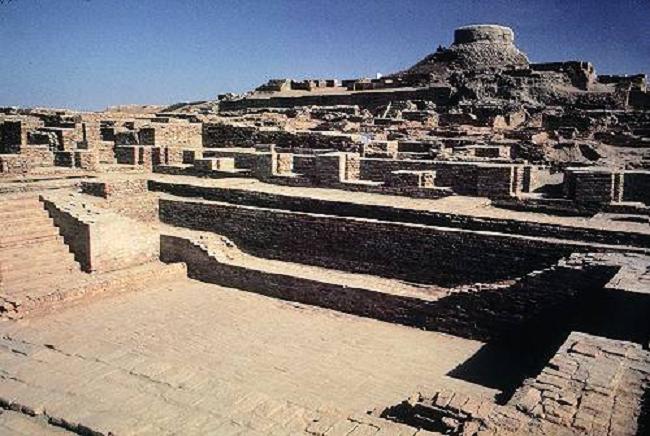
mohenjo-daro

Thunderbolt | Mesopotamia and the Fertile Crescent region are thought to be the “birthplace” of civilization and the central focus for human culture dating back to the beginning of recorded history. No one knows for sure just how old the generalized composite that we call “society” really is – both because of archeological deficiencies and because of radiometric disconformity – but one of the oldest sites is located in the Indus Valley of Pakistan and appears to date from around 3000-2500 BCE.

There are many ways to date ancient artifacts and there are just as many ways to interpret the results from those techniques. It is not the purpose of this paper to address the difficulties inherent with using carbon 14, tree-rings, stratiographic distribution, or any other methodology when attempting to place artifacts or habitations within a chronological sequence. Other articles have addressed those issues, as well as previous Picture of the Day discussions about radioactive decay rates and how external, ionizing sources can change isotope ratios.

There is one intriguing aspect to Mohenjo-Daro that sets it apart from most ancient ruins. It is the one anomaly among several at the site that has caused some researchers to suggest that there might have been forces unleashed in the past that are comparable to modern weapons. Walls, pottery and other items found in the city have been turned into a kind of ceramic glass, indicating that they were exposed to heat close to 1500 degrees Celsius. Evidence of ionizing radiation has also been found in some of the burial sites.

geologists show unprecedented warming in lake tanganyika

Physorg | Lake Tanganyika, the second oldest and the second-deepest lake in the world, could be in for some rough waters.

Geologists led by Brown University have determined the east African rift lake has experienced unprecedented warming during the last century, and its surface waters are the warmest on record. That finding is important, the scientists write in the journal Nature Geoscience, because the warm surface waters likely will affect fish stocks upon which millions of people in the region depend.

The team took core samples from the lakebed that laid out a 1,500-year history of the lake's surface temperature. The data showed the lake's surface temperature, 26 degrees Celsius (78.8°F), last measured in 2003, is the warmest the lake has been for a millennium and a half. The team also documented that Lake Tanganyika experienced its biggest temperature change in the 20th century, which has affected its unique ecosystem that relies upon the natural conveyance of nutrients from the depths to jumpstart the food chain upon which the fish survive.

"Our data show a consistent relationship between lake surface temperature and productivity (such as fish stocks)," said Jessica Tierney, a Brown graduate student who this spring earned her Ph.D. and is the paper's lead author. "As the lake gets warmer, we expect productivity to decline, and we expect that it will affect the [fishing] industry."

The research grew out of two coring expeditions sponsored by the Nyanza Project in 2001 and 2004. Cores were taken by Andrew Cohen, professor of geological sciences at the University of Arizona and director of the Nyanza project, and James Russell, professor of geological sciences at Brown, who is also Tierney's adviser.

Lake Tanganyika is bordered by Burundi, the Democratic Republic of Congo, Tanzania, and Zambia — four of the poorest countries in the world, according to the United Nations Human Development Index. An estimated 10 million people live near the lake, and they depend upon it for drinking water and for food. Fishing is a crucial component for the region's diet and livelihood: Up to 200,000 tons of sardines and four other fish species are harvested annually from Lake Tanganyika, a haul that makes up a significant portion of local residents' diets, according to a 2001 report by the Lake Tanganyika Biodiversity Project.

warming extinguishing lizards

The Scientist | The worst-case scenario of the consequences of global warming - mass extinctions - appears to be a reality for lizards, according to a new report in Science.

The authors found that 12 percent of local populations of lizards have already disappeared from hundreds of sites in Mexico. Furthermore, within the next 70 years, the authors predict that 1 in 5 lizard species will no longer exist anywhere on the planet, all the result of rising global temperatures.

Although a growing amount of data is showing the impact of climate change on species, these lizard extinctions were somewhat surprising, said Jack Sites, an evolutionary geneticist from Brigham Young University, and last author on the paper. "I had always presumed that lizards would be able to adapt to climate change by simply altering their behavior," he said. "However, this is not the case."

Rather, the changes in local temperatures are occurring too quickly for evolution to keep pace, he said. "So we have extinctions instead."

The study began when the authors returned to 200 sites in Mexico that were home to 48 species of Sceloporus lizards, which had already been sampled in 1975 and 1999. They saw that 12 percent of lizards in the Mexican study area were already locally extinct -- meaning, environmental stressors had eliminated the populations in these particular areas.

This alarming rate of extinction prompted first author Barry Sinervo, a herptologist at the University of California, Santa Cruz, and his colleagues, to dig more deeply into the impacts of climate change on lizards.

Lizards regulate their body heat by basking in the sun; too hot, and they retreat to shade. Too much time in the shade, however, and they become unable to gather enough food to grow and survive.

Tuesday, May 18, 2010

doomsday safe-haven offered under mojave desert


Video - Twilight Zone The Shelter.

CBS | A company with a doomsday plan is taking money for what it promises will be a comfortable, nuke-proof bunker under the Mojave Desert, with an atrium, gym and jail, and sloppy joes and pearl potatoes on the menu.

Robert Vicino, who runs the Del Mar-based company called Vivos, has collected deposits on half the 132 spaces planned in the 13,000-square-foot bunker in Barstow.

The facility is among several popping up across the country as fears of doomsday have been fueled recently by strong earthquakes, terrorism and predictions of the world's end in 2012 when the ancient Mayan calendar is said to end.

"I'm careful not to promote fear. But sooner or later, I believe you're going to need to seek shelter," said Vicino, a real estate salesman whose career started with advertising and moved on to timeshares.

The political climate now in some ways reflects the Cold War era, when many Americans dug backyard fallout shelters, said Jeffrey Knopf, an associate professor of national security affairs at the Naval Postgraduate School in Monterey.

"There's a lot of free-floating anxiety out there about the dangers that terrorists will get nuclear weapons and it multiplies," he said.

Facilities such as Vicino's are attracting interest in other states such as Oregon and Kansas, where one engineer is developing underground survival condos for $1.75 million.

In Barstow, $50,000 will get a bunk in a four-person room. Vicino is still taking reservations: $5,000 for adults and $2,500 for kids. Pets are free.

spain's jobless find it hard to go back to the farm

NYTimes | During Spain’s construction boom, Antonio Rivera Romero happily traded long hours and backbreaking labor in the fields for the better-regulated building trades, earning four times as much as a bricklayer. He took out a mortgage and enlarged his house on a quiet side street in this small city in southern Spain.

Now, with the construction jobs gone, Mr. Rivera is behind on his bank payments and eager to return to the farmwork he left behind.

But Spaniards have been largely shut out of those jobs. Those bent over rows of strawberries under plastic greenhouse sheeting or climbing ladders in the midday sun are now almost all foreigners: Romanians, Poles, Moroccans, many of them in Spain legally.

“The farmers here don’t want us,” Mr. Rivera said with a defeated shrug.

Local officials and union leaders say Mr. Rivera has it right. Farmers have been reluctant to take Spanish workers back — unsure whether they will work as hard as the foreigners who have been picking their crops, sometimes for a decade now.

So far, only 5 percent of the pickers this year are Spaniards, said Diego Cañamero, the head of one of Spain’s largest labor organizations, the Field Workers Union, or S.O.C. He said the union was working to keep tempers from flaring and to persuade farmers to employ local people again, but with little success.

“There is a sense of bewilderment among the Spanish workers,” he said. “They say: Why do they let people come 5,000 miles, when we need the jobs?”

The unemployment rate in the Andalusia region is now 27 percent, the highest in Spain except for the Canary Islands. Spaniards have always been resilient, helping out one another in hard economic times. But these days entire families like that of Mr. Rivera and his wife, who have five working-age children — most at home — are jobless. Unemployment benefits go only so far, and for those who have house or car payments, not nearly far enough.

Mr. Rivera, 50, gets 420 euros a month, about $530. His mortgage takes up half of that, he said. His wife, Encarnación Román Casillas, 49, started going to the local soup kitchen.

Sunday, May 16, 2010

why did truman really fire macarthur?


Video - MacArthur gets fired.

HNN | The obscure history of nuclear weapons and the Korean War provides the answer. The media claim that North Korea is trying to obtain and use weapons of mass destruction. Yet the United States, which opposes this strategy, has used or threatened to use such weapons in northeast Asia since the 1940s, when it did drop atomic bombs on Japan.

The forgotten war -- the Korean war of 1950-53 -- might better be called the unknown war. What was indelible about it was the extraordinary destructiveness of the United States' air campaigns against North Korea, from the widespread and continuous use of firebombing (mainly with napalm), to threats to use nuclear and chemical weapons (1), and the destruction of huge North Korean dams in the final stages of the war. Yet this episode is mostly unknown even to historians, let alone to the average citizen, and it has never been mentioned during the past decade of media analysis of the North Korean nuclear problem.

Korea is also assumed to have been a limited war, but its prosecution bore a strong resemblance to the air war against Imperial Japan in the second world war, and was often directed by the same US military leaders. The atomic attacks on Hiroshima and Nagasaki have been examined from many different perspectives, yet the incendiary air attacks against Japanese and Korean cities have received much less attention. The US post-Korean war air power and nuclear strategy in northeast Asia are even less well understood; yet these have dramatically shaped North Korean choices and remain a key factor in its national security strategy.

Napalm was invented at the end of the second world war. It became a major issue during the Vietnam war, brought to prominence by horrific photos of injured civilians. Yet far more napalm was dropped on Korea and with much more devastating effect, since the Democratic People's Republic of Korea (DPRK) had many more populous cities and urban industrial installations than North Vietnam. In 2003 I participated in a conference with US veterans of the Korean war. During a discussion about napalm, a survivor who lost an eye in the Changjin (in Japanese, Chosin) Reservoir battle said it was indeed a nasty weapon -- but "it fell on the right people." (Ah yes, the "right people" -- a friendly-fire drop on a dozen US soldiers.) He continued: "Men all around me were burned. They lay rolling in the snow. Men I knew, marched and fought with begged me to shoot them . . . It was terrible. Where the napalm had burned the skin to a crisp, it would be peeled back from the face, arms, legs . . . like fried potato chips." (2)

Soon after that incident, George Barrett of the New York Times had found "a macabre tribute to the totality of modern war" in a village near Anyang, in South Korea: "The inhabitants throughout the village and in the fields were caught and killed and kept the exact postures they held when the napalm struck -- a man about to get on his bicycle, 50 boys and girls playing in an orphanage, a housewife strangely unmarked, holding in her hand a page torn from a Sears-Roebuck catalogue crayoned at Mail Order No 3,811,294 for a $2.98 'bewitching bed jacket -- coral'." US Secretary of State Dean Acheson wanted censorship authorities notified about this kind of "sensationalised reporting," so it could be stopped. (3)

One of the first orders to burn towns and villages that I found in the archives was in the far southeast of Korea, during heavy fighting along the Pusan Perimeter in August 1950, when US soldiers were bedevilled by thousands of guerrillas in rear areas. On 6 August a US officer requested "to have the following towns obliterated" by the air force: Chongsong, Chinbo and Kusu-dong. B-29 strategic bombers were also called in for tactical bombing. On 16 August five groups of B-29s hit a rectangular area near the front, with many towns and villages, creating an ocean of fire with hundreds of tons of napalm. Another call went out on the 20 August. On 26 August I found in this same source the single entry: "fired 11 villages." (4) Pilots were told to bomb targets that they could see to avoid hitting civilians, but they frequently bombed major population centres by radar, or dumped huge amounts of napalm on secondary targets when the primary one was unavailable.

In a major strike on the industrial city of Hungnam on 31 July 1950, 500 tons of ordnance was delivered through clouds by radar; the flames rose 200-300 feet into the air. The air force dropped 625 tons of bombs over North Korea on 12 August, a tonnage that would have required a fleet of 250 B-17s in the second world war. By late August B-29 formations were dropping 800 tons a day on the North. (5) Much of it was pure napalm. From June to late October 1950, B-29s unloaded 866,914 gallons of napalm.

Air force sources delighted in this relatively new weapon, joking about communist protests and misleading the press about their "precision bombing." They also liked to point out that civilians were warned of the approaching bombers by leaflet, although all pilots knew that these were ineffective. (6) This was a mere prelude to the obliteration of most North Korean towns and cities after China entered the war.

Saturday, May 15, 2010

the state of metropolitan america


Video - Metropolis set to Kraftwerk.

Brookings | The State of Metropolitan America report is arranged topically, with nine chap­ters that correspond to nine of the most important subjects tracked by the Census Bureau in its annual American Community Survey:
* Population and Migration follows the popula­tion growth and decline of U.S. places over the decade, and how the movement of people—from next-door communities, from other parts of the country, and from abroad—contributed to these trends.

* Race and Ethnicity analyzes the changing racial (e.g., white, black, Asian) and ethnic (e.g., Hispanic) composition of our population, includ­ing the patterns of growth and decline in these groups in different corners of the nation.

* Immigration focuses on America’s foreign-born population, both citizens and non-citizens: their growth, where they live, their characteristics, and the growing demographic influence of their children.

* Age looks at the shifting balance between older and younger Americans across the country, especially as the baby boom generation—Ameri­ca’s largest—approaches seniorhood.

* Households and Families examines who makes up the fundamental units of our society, how their structures are changing over time, and how they relate to the different racial/ethnic and age profiles of America’s communities.

* Educational Attainment profiles the educa­tional status of adults (how much schooling they have completed, their enrollment in higher education), identifies differences by age and and relates these to the underlying economic features of regions.

* Work analyzes two sets of indicators on the sta¬tus of America’s labor force: the wages earned by differently compensated workers; and rates of unemployment, which reflect the varying degrees of economic pain experienced by different parts of the country.

* Income and Poverty portrays trends in the economic well-being of typical households, the size of the “middle class,” and the location and characteristics of America’s sizeable and growing poor population.

* Commuting details how we get to work, how those patterns have changed over time, and the factors contributing to the sizeable differences among communities in how workers undertake those daily trips.
Each chapter is authored by one or more Brookings experts, each of whom has written widely on the topic at hand. The chapters include the authors’ own analysis of the most important and compelling trends over the 2000s, accompanied by their thoughts on what these trends mean for the future of people, places, and public policy.

The State of Metropolitan America also contains an overview of the report and the policy implications of the findings.

36 hours in Kansas City

NYTimes | KANSAS CITY is known for its barbecue, bebop and easy-does-it Midwestern charm. But a decade-long effort to revitalize the city’s downtown has transformed this former jazz mecca, which straddles the Kansas-Missouri border, back into a culturally rich metropolis. The city’s standing will be further bolstered next year when the much-anticipated Kauffman Center for the Performing Arts opens, giving a sleek new home to the symphony, opera and ballet. True, Kansas City is no backwater, but don’t expect high polish. In fact, it’s the city’s unvarnished grit that may be its best asset.

Friday, May 14, 2010

slouching towards neofeudalism


Video - the elite my base.

TheEconomicPopulist | Detroit Mayor Dave Bing is struggling to save his city from fiscal calamity. Unemployment is at a record 28% and rising, while home prices have plunged 39% since 2007. The 66-year-old Bing, a former NBA all-star with the Detroit Pistons who took office 10 months ago, faces a $300 million budget deficit—and few ways to make up the difference.

Against that bleak backdrop, Wall Street is squeezing one of America's weakest cities for every penny it can. A few years ago, Detroit struck a derivatives deal with UBS (UBS) and other banks that allowed it to save more than $2 million a year in interest on $800 million worth of bonds. But the fine print carried a potentially devastating condition. If the city's credit rating dropped, the banks could opt out of the deal and demand a sizable breakup fee. That's precisely what happened in January: After years of fiscal trouble, Detroit saw its credit rating slashed to junk. Suddenly the sputtering Motor City was on the hook for a $400 million tab.

What most often happened is that Wall Street rating agencies, the same agencies implicated in corrupt business practices, downgraded the municipal bonds, thus turning the the financial deals into an albatross for broke cities, but a profitable one for Wall Street.

Detroit is hardly alone. No state in the union has been spared the backlash of a one-sided financial deal that transferred public wealth to the already wealthy. Wall Street is raking in huge amounts of money from our broke cities and states at the worst possible time. The SEIU did a study which shows the country's municipal governments losing $1.25 Billion just from these interest rate swap deals alone.

"Elected officials are simply no match for the investment banker that's selling the deal."
Yet in conservative political circles there is little blame directed at Wall Street. They would rather blame the guy picking up their garbage for his $45,000 a year wage, than they would denounce the investment banker who tricked their city government out of hundreds of millions of dollars. Can these people even do math?

The logic of this attitude reminds me of someone who drives all the way across town to "save" a couple nickles on gas, while blindly shoving thousands of dollars into their 401k that someone they've never met on Wall Street manages. Matt Taibbi wrote about this phenomenon last year.
The setup always goes the other way: when the excesses of business interests and their political proteges in Washington leave the regular guy broke and screwed, the response is always for the lower and middle classes to split down the middle and find reasons to get pissed off not at their greedy bosses but at each other. That’s why even people like Beck’s audience, who I’d wager are mostly lower-income people, can’t imagine themselves protesting against the Wall Street barons who in actuality are the ones who fucked them over.
Taibbi describes it as a "peasant mentality". I agree. However, Taibbi doesn't take the logical next step and tells us what it all means - neofeudalism.

lost on the fearless plain


Video - Bewitched Intro

joebageant | Ahhhh … Safely in the American national illusion, where all the world's a shopping expedition. Or a terrorist threat. No matter, as long as it is colorful and wiggles on the theater state's 400 million screens. Plug in and be lit up by the American Hologram.

This great loom of media images, and images of images, is so many layers deep that it has replaced reality. No one can remember the original imprint. If there was one. The hologram is a hermetic snow globe, a self-referential circuitry of images, and a Möbius loop from which there is no logical escape. Logic has zilch to do with what is going on. The smallest part holographically recapitulates the whole, and vice versa. No thinking required, we just cycle and recycle through an aural dimension. Not all that bad, I guess, if it were not generated by forces out to fuck every last pair of eyeballs and mind plugged into it.

The investing class has put thousands of billions into movies, TV and other media to keep the hologram lit up over the past six decades. Which is to say, keep the public in an entertained stupor, awed, mislead, and most importantly, distracted. But the payoff probably runs in the trillions.

For the clear-eyed citizen, there is a growing inner horror and despair in all this, with nowhere to turn but the Internet. The Net is a cyber reality, no more real than the hologram, and indeed a part of the hologram, though not quite yet absorbed and co-opted by capitalism. We take what relief we can find.

However, for the unquestioning rest, the hologram, taken in its entirety, constitutes the American collective consciousness. Awareness. It enshrouds every citizen, defining through its permeation the daily world in which we all operate. Whether we love or hate it, there is no escape. Go live in a shack in the woods. Call that escape. But everything in the outside world continues to run in accordance with the humming energy of the hologram. There is no cutting our umbilical link to the womb of this illusion, this mass hallucination. There is only getting a longer umbilical cord, closing your eyes, and pretending that what the rest of the nation does has no effect on you. We were all born and raised in that womb. We can no more divorce the neurochemistry and consciousness it shaped in us, than we can deny that we had an earthly mother and are of her tissue. Our consciousness is born of the hologram's connective neural and electrical tissue.

confessions of a doomer


Video - The Road Trailer

RidingtheRubicon | I'll concede that my personal struggles predisposed me to Doomerism. If I were a rich, happily-married screenwriter living in a mansion in the Hollywood Hills, I probably wouldn't care a tinker's cuss for Peak Oil. (Shout-out to Frank McCourt!) But I'm a 32-year-old temp living with my parents, so I'm far more receptive to apocalyptic theories. At the same time, I don't think my beliefs are any less valid than those of my successful, parallel-universe doppelganger. Just because I'm more likely to look on the dark side doesn't mean I'm more likely to be wrong. It just depends what era you're living in. Here in the U.S. of A. we've had Happy Days for almost 65 years in a row. Sure, there have been some bumps in the road, but overall our material comforts have been good and getting better (nearly) all the time. Therefore, people who look on the bright side have generally been right for the last 65 years. Now I think we've entered an epoch when the Doomers will be right most of the time.

Again, I must come clean and admit that I'm looking forward to collapse. (I'm using "collapse" in the anthropological sense, meaning only a re-simplification of society, without the catastrophic connotation the term has accumulated.) The process would be difficult, the resulting turmoil and loss of life could be horrific, but the alternative, in my opinion, would be worse. The status quo has devastated the biosphere and impoverished perhaps a billion or more people. Some would say those people were even poorer before, but whatever creature comforts the global capitalist system has given them have been more than negated by the social, emotional, spiritual and (usually) physical dislocation it has forced on them. I realize these are broad generalizations. I make them because I feel that dislocation and despoilment in myself, and I think our way of life is the cause of it.

Re-simplifying our society could improve our lives tremendously. Instead of spiritual alienation, we could again feel connected to the land, the wildlife and the seasons (and there might not be so much Seasonal Affective Disorder). Instead of social isolation, we could again live in community with our neighbors. Instead of competition, we could provide for ourselves by working cooperatively. This is the Sunny Side of Collapse. It may be (ironically) Utopian, but I think the disintegration of capitalism would strip us of many of our paranoid, competitive tendencies. This may be what truly isolates we Doomers, the fact that inside every one of us is a Utopian. We reject society as it is, yet still believe we'll embrace a society forged in the crucible of apocalypse. We're funny that way.

Thursday, May 13, 2010

Chipocalypse Now - I Love The Smell Of Deportations In The Morning

sky |   Donald Trump has signalled his intention to send troops to Chicago to ramp up the deportation of illegal immigrants - by posting a...