Showing posts sorted by relevance for query missouri. Sort by date Show all posts

Friday, July 01, 2011

mighty missouri defies the corps


Video - Arnie Gundersen on Five O'clock Shadow with Robert Knight, WBAI, June 28, 2011 at 5:00 pm EDT

CapJournal | In the nearly two-centuries-long interaction between the Missouri and the United States Army Corps of Engineers, the river has repeatedly defied the Army’s attempts at control. Today, the Army faces its greatest challenge to its regulation of the Mighty Mo.

As of June 25, Fort Peck reservoir is at 109.6 percent of capacity. The lake is so full that water is now flowing through the dam’s emergency spillway. Because the Army does not have the ability to halt the flows through the spillway without threatening the structural integrity of the dam, the dam and reservoir have lost the ability to curtail the Missouri. For all intents and purposes, the Missouri has defeated Fort Peck Dam. Water is passing through the reservoir and moving on downstream and the Army cannot stop it.

But that isn’t even the full story. The Rocky Mountain snowpack in Montana is now melting in earnest. In places, that snowpack had been at 140 percent of normal. That melt water (minus evaporation, seepage, and human withdrawals) is going to pass through Fort Peck reservoir. Then there is the issue of rainfall. The National Weather Service recently predicted above average precipitation across the northern plains for the next three months. The rains are going to come. As a matter of fact, portions of the Upper Missouri Basin may receive heavy, drenching rains in the next few days. If Montana receives additional monsoonal rains, that rainwater is going to pass through Fort Peck reservoir.

The next bulwark against the Missouri is Garrison Dam, situated 70 miles north of Bismarck. Garrison is a colossus. The dam rises 210 feet above the riverbed and stretches a little over two miles long from valley wall to valley wall. Lake Sakakawea possesses an elevation of 1854 feet above sea level when at full capacity. Today, the reservoir’s level stands at 1854.48 feet, which is equal to 103 percent of capacity. Garrison Dam can move 41,000 cfs through its five power tunnels and 98,000 cfs through its three flood tunnels (this figure is from the Omaha District’s website). Unfortunately, the dam’s tunnels have been unable to match the reservoir’s inflows. Consequently, the Missouri is now pushing 11,500 cfs through Garrison’s spillway. A second big dam athwart the Missouri can no longer stem the Great Flood.

Below Garrison, the Army built Oahe Dam. It is one of the world’s largest structures. At full capacity, Oahe’s reservoir has an elevation of 1620 feet above sea level. At present, the reservoir is at 1619.28 feet. Oahe can push a maximum of 167,000 cfs through its seven power tunnels and six flood tunnels. Oahe has only seven tenths of a foot of freeboard left before the Missouri laps against its spillway gates. The Army can increase discharges from Oahe from the present 150,300 cfs to 167,000 cfs to keep the river from the spillway — but doing so raises the flood threat to Fort Pierre and Pierre. Yet, to keep discharge levels at 150,300 cfs risks having the river enter the spillway and then discharge its uncontrolled waters downstream, where they will still inflict damage. If the Missouri goes into Oahe’s spillway, the river will have rendered it ineffective in halting the river’s greatest deluge. Big Bend Dam near Chamberlain has already had water through its spillway. It cannot stop the Missouri. Fort Randall is the last major Army bastion against the Missouri.

There is still 3.72 feet of freeboard in its reservoir (although on June 14th it had almost 12 feet of freeboard) before the Missouri enters its spillway. If the river goes through its spillway, the lower valley from Yankton south will have no protection whatsoever from the river. The Missouri will flow free and unchecked through the Army’s reservoirs and dam spillways. Gavin’s Point Dam does not have the reservoir capacity to absorb floodwaters emanating out from Fort Randall — it has to immediately release those high flows.

The Army is on the cusp of losing its already tenuous hold on the Missouri. Its military officers and civilian engineers and hydrologists know it. It is why they are feverishly attempting to drain the Dakota reservoirs as quickly as possible. The problem is that they may be too late. Great quantities of melt water have yet to enter the system.

At this writing, thunderstorms are predicted for northeastern Nebraska, northwestern Iowa, and the Dakotas. The big question is whether the Army’s controlled flood, with its 160,000 cfs out of Gavin’s Point Dam, will be sufficient to drain the reservoirs fast enough and open up additional storage capacity.

If it does, the Army will regain a semblance of control along the river. If those releases are not enough, and the river goes into the emergency spillways of every upstream dam, the lower river will face an uncontrolled flood that may surpass anything in living memory. Valley residents can only hope that the Army’s dominoes hold back the Missouri.

Robert Kelley Schneiders, Ph.D., environmental historian with Eco InTheKnow, LLC, P.O. Box 4393, Boulder, CO 80306, www.ecointheknow.com, author of “Unruly River: Two Centuries of Change Along the Missouri,” and “Big Sky Rivers: The Yellowstone and Upper Missouri.”

Monday, April 06, 2009

missouri documents withdrawn

A couple weeks ago, I posted a link to a KCStar article about official law enforcement documents detailing The Modern Militia Movement. This is an update on the status of those documents.

ALIPAC | A national scandal emerged in Missouri, after their MIAC Fusion Center issued an eight page document which made many false claims. The documents attempted to politicize police and cast suspicion on millions of Americans. The 'Missouri Documents', as they came to be called, listed over 32 characteristics police should watch for as signs or links to domestic terrorists, which could threaten police officers, court officials, and infrastructure targets.

Police were instructed to look for Americans who were concerned about unemployment, taxes, illegal immigration, gangs, border security, abortion, high costs of living, gun restrictions, FEMA, the IRS, The Federal Reserve, and the North American Union/SPP/North American Community. The 'Missouri Documents' also said potential domestic terrorists might like gun shows, short wave radios, combat movies, movies with white male heroes, Tom Clancey Novels, and Presidential Candidates Ron Paul, Bob Barr, and Chuck Baldwin!

The Southern Poverty Law Center was cited as a research source for the 'Missouri Documents'. Furthermore, the attempt of these documents to cast suspicion of violent and life threatening behavior on millions of Americans who are concerned about these issues is consistent with the regularly released political materials of both the SPLC and ADL.

Since the SPLC was listed as a source in the MIAC Missouri Documents, ALIPAC sent a letter of inquiry to the Missouri Governor Jay Nixon on March 20, 2009 asking for more specific sourcing information.

"When many of us read these Missouri Documents we felt that the false connections, pseudo research, and political attacks found in these documents could have been penned by the SPLC and ADL," said William Gheen of ALIPAC. "We were shocked to see credible law enforcement agencies disseminating the same kind of over the top political propaganda distributed by these groups."

Colonel James F. Keathley, Superintendent of the Missouri State Highway Patrol issued a letter of response to ALIPAC and other sources on March 25-26, which states that the Missouri militia documents are being withdrawn, more oversight will be applied to future releases, the Missouri Documents do not meet the high quality standards expected from the MIAC, and that "certain subsets of Missourians will not be singled out inappropriately in these reports for particular associations".

FOX Radio Network is reporting that Missouri Lieutenant Governor Peter Kinder (R-MO) has asked that Missouri Public Safety Director John Britt be placed on administrative leave. The report also says Kinder has issued a public apology to Presidential candidates Ron Paul, Bob Barr, and Chuck Baldwin.

ALIPAC would like to advise all media sources, law enforcement officers and agencies, that the ADL and SPLC are political organizations, with stated political goals and agendas which are contrary to the candidates, political parties, and millions of Americans besmirched by the MIAC documents.

While both the ADL and SPLC actively market themselves and seek roles as advisers to law enforcement and the media, both groups regularly engage in political tactics like those observed in the now withdrawn Missouri Documents. Materials from one or both organizations contributed to this scandal.

"In the past, these groups have served a helpful role in America by providing information about racist and potentially violent groups like the KKK and Neo Nazis," said William Gheen. "Unfortunately, their mission has drifted into political efforts to paint almost any American or group who opposes their broader political agendas as being associated with racist or potentially violent groups just like what we saw in these scandalous MIAC documents in Missouri."

ALIPAC hopes that future scandals can be avoided by issuing this advisory and promoting awareness of the faulty information distributed to police and media in America by the Anti Defamation League and Southern Poverty Law Center to prevent future scandals of this nature.

Saturday, June 27, 2020

In Local Democrat Politics - Q. Gillum's Swole-Up Young Protege Riding Hella Dirty


facebook |  Today, the public was made aware of the misconduct of Missouri State Representative District 36, Mark A. Sharp. After an investigation was conducted by the Texas Education Agency, Representative Mark Sharp was terminated from his teaching position by the Caddo Mills Independent School District for searching for firearms using school resources when the district asked him not to and for sharing inappropriate videos with students in 2017 (link below). Not only that, Representative Sharp exhibits homophobic, antisemitic, and sexist ideals in remarks/posts still on his social media (link below). Words cannot describe how embarrassed and insulted I am as a Kansas Citian that this individual represents the great people of District 36.

Out of respect for the office, Missouri State Representative Mark Sharp must resign and suspend his re-election campaign effective immediatley. If he fails to do so, I call on the Missouri Democratic Party, Missouri House Democrats, Missouri Senate Democrats, and the Missouri Legislative Black Caucus, Inc. to step in because this inappropriate behavior is simply not acceptable for a state representative to exhibit. I have great respect for leaders of color, but make no mistake, homophobia, sexism, antisemitism, and predatory behavior have no place in the Missouri Democratic Party. 

Not even a tempest in a teapot among grown folks, but for the ruthlessly amoral sock-puppet cancel culture, it's conceivable that this "tea" might actually sting. 

kansascity |  Sharp, who faces one challenger in the Aug. 4 primary, was nominated by local Democrats and won a special election last year to replace state Rep. Daron McGee. McGee resigned while being investigated by a bipartisan House committee for alleged sexual harassment of a former staffer.

Sharp’s past came to light Tuesday through multiple posts by an anonymous Twitter account titled “Time’s Up - Missouri,” which was created this month and has tweeted exclusively about Sharp. 

The anonymous Twitter posts were shared by several, including Rachel Gonzalez, a Kansas City activist and member of state party executive committee. 

The Facebook posts tweeted by the anonymous account still exists on Sharp’s personal page and date back to posts Sharp made in 2011 and 2012.

Two posts objectified women as “meat.”

“Question: women are you a piece of meat that any stray dog has a chance at, or are you a lady that only an established man has a shot at?” Sharp posted.

“Dogs need meat...MEN need a lady in the streets and u kno the rest,” he posted.

In talking about national news about coaches being accused of molesting young men, Sharp posted in 2011, “sports used to be a sure way to get away from that homo shyt.” 

“When I was 24-25, I said things on Facebook that were stupid, dumb, uninformed and politically incorrect,” Sharp said.

Sharp said the posts do not reflect who he is now and didn’t know the posts still existed.

Read more here: https://www.kansascity.com/news/politics-government/article243766872.html#storylink=cpy


Read more here: https://www.kansascity.com/news/politics-government/article243766872.html#storylink=cpy

Friday, October 20, 2023

Not Costco Too!!! Say It Isn't So....,

KCUR  |  You know how holiday stuff is expensive when you most want to buy it, but cheaper after the holidays?

The same dynamic will soon apply to what you pay for electricity on the Missouri side of the Kansas City area.

All of Evergy’s Missouri customers will see a steep price hike for the electricity they burn during the peak demand hours of late afternoon and early evening.

It’s called time-of-use pricing and Jim Busch, the director of industry analysis at the Missouri Public Service Commission, said it makes sense.

“When you look at the overall benefits to the consumers and the company and society as a whole,” he said, “it’s a better path to go down.”

Evergy's change to the time-sensitive model comes with particularly dramatic upticks.

Electricity costs more to generate at peak times, like summer evenings when everyone’s running their air conditioners. Companies have to fire up auxiliary generators to meet that demand.

That means burning natural gas. Cranking up those gas plants costs more to kick out the same power than coal, solar, wind and nuclear.

Time-of-use rates reflect that added cost. Customers pay something closer to the actual cost to produce power at a given time — and have an incentive to use less electricity when it costs the most to produce.

Power companies already send out bills based on time-of-use rates in much of the western U.S. Evergy has allowed customers in both Missouri and Kansas to voluntarily opt-in to variable price billing for years. And the method is catching on, Busch.

But there’s something different about the time-of-use billing schedule for Missouri that Evergy customers will see this fall.

Typically, the price of electricity varies only slightly over the course of the day. Rates may go up or down one or two cents per kilowatt hour.

Some Missouri Evergy customers, on the other hand, will see rates fluctuate dramatically. Under the default plan, customers will be charged 9 cents a kilowatt hour most of the time. But the rate vaults up to 38 cents between 4 p.m. and 8 p.m. on summer evenings. That’s a 322% spike.

“That is a huge increase,” said Daniel Zimny-Schmitt at the National Renewable Energy Laboratory. “There’s no way around that.”

He said 38 cents a kilowatt hour, the top rate under Evergy’s default plan, would mark one of the most expensive residential electricity rates in the country outside of California.

The default plan —Evergy brands it “Standard Peak Saver" — is one of four options that Missouri Evergy customers can choose from by October. If you don’t do anything to your Evergy account, that’s the billing structure you’ll have.

Saturday, October 11, 2014

nothing would please me more than for the boy to face the future close to home...,


mospace.umsystem  | The 18th meeting of the International Conference on Condensed Matter Nuclear Science (ICCF) was held at the University of MIssouri--Columbia on July 21-27, 2013.

Collections in this community

Recent Submissions

Saturday, April 01, 2023

Biden Administration Leads Massive Speech Censorship Operation

foxnews  |  EXCLUSIVE: The Biden administration has led "the largest speech censorship operation in recent history" by working with social media companies to suppress and censor information later acknowledged as truthful," former Missouri attorney general Eric Schmitt will tell the House Weaponization Committee Thursday.

Schmitt, now a Republican senator from Missouri, is expected to testify alongside Louisiana Attorney General Jeff Landry and former Missouri deputy attorney general for special litigation, D. John Sauer.

LAWSUIT FILED AGAINST BIDEN, TOP OFFICIALS FOR 'COLLUDING' WITH BIG TECH TO CENSOR SPEECH ON HUNTER, COVID

The three witnesses will discuss the findings of their federal government censorship lawsuit, Louisiana and Missouri v. Biden et al—which they filed in May 2022 and which they describe as "the most important free speech lawsuit of this generation."

The testimony comes after Missouri and Louisiana filed a lawsuit against the Biden administration, alleging that President Biden and members of his team "colluded with social media giants Meta, Twitter, and YouTube to censor free speech in the name of combating so-called ‘disinformation’ and ‘misinformation.’"

The lawsuit alleges that coordination led to the suppression and censorship of truthful information "on a scale never before seen" using examples of the COVID lab-leak theory, information about COVID vaccinations, Hunter Biden’s laptop, and more.

The lawsuit is currently in discovery, and Thursday’s hearing is expected to feature witness testimony that will detail evidence collected to show the Biden administration has "coerced social media companies to censor disfavored speech."

"Discovery obtained by Missouri and Louisiana demonstrated that the Biden administration’s coordination with social media companies and collusion with non-governmental organizations to censor speech was far more pervasive and destructive than ever known," Schmitt will testify, according to prepared testimony obtained by Fox News Digital.


Wednesday, December 15, 2021

The Show Me State Says "Let Her Rip!"

arstechnica  |  As COVID-19 cases and hospitalizations rise sharply in Missouri, local health departments are abandoning efforts to stop the spread of the pandemic disease, saying their hands have been tied by the state's attorney general and a recent court ruling.

One local agency, the Laclede County Health Department, northeast of Springfield, announced that it has ceased all COVID-19-related work, including case investigations, contact tracing, quarantine orders, and public announcements of current cases and deaths.

"While this is a huge concern for our agency, we have no other options but to follow the orders of the Missouri Attorney General at this time," the department wrote in a Facebook post on December 9.

Laclede county, which has around 35,000 residents, is averaging 17 new cases per day, a 71 percent increase over two weeks, and test positivity sits at around 9 percent. Hospitalizations have risen 48 percent in the last two weeks. Only 35 percent of the county is fully vaccinated.

Overall, Missouri is currently seeing a surge in COVID-19 cases. The state is averaging over 2,700 new COVID-19 cases per day, a 68 percent increase over the past two weeks. Daily hospitalizations are averaging over 1,700, a 45 percent increase over the past two weeks. Approximately 52 percent of the state is fully vaccinated, well below national coverage, and around a dozen of the state's 114 counties have vaccination percentages in the 20s. 

Still, health officials in Laclede and elsewhere are pulling back rather than ramping up health prevention measures, citing a December 7 letter from state Attorney General Eric Schmitt. The letter informed them of a recent court ruling that stripped state health agencies of a variety of disease-prevention powers, particularly regarding issuing isolation and quarantine orders. "You should stop enforcing and publicizing any such orders immediately," the letter read.

The ruling comes from Judge Daniel Green of the Cole County Circuit Court, who entered a judgment on November 22 in the case of Shannon Robinson, et. al., v. Missouri Department of Health and Senior Services (DHSS). Robinson and her co-plaintiffs challenged health agencies' powers to issue restrictions to prevent the spread of disease, such as ordering quarantines. Attorney General Schmitt defended DHSS in the case and has refused to appeal its outcome.

Green ruled, essentially, that it was unconstitutional for the state to delegate disease prevention powers to unelected health officials.

"The authority that the DHSS regulations purport to grant to an administrative official to implement control measures and create and enforce orders is open-ended discretion—a catch-all to permit naked lawmaking by bureaucrats throughout Missouri," Green wrote in his judgment.

Specifically, Green ruled that regulations 19 CSR 20-20.040(2) G-I, 19 CSR 20-20.040(6), and 19 CSR 20-20.050(3) all violate the state's constitution (codes found here, highlighted in yellow). Collectively, those regulations charge local health authorities with the responsibility of establishing disease-control measures, investigating clusters or outbreaks of illness, and implementing appropriate control measures when necessary. Those control measures can include isolation, quarantine, disinfection, immunization, establishment closures, notification of people potentially exposed, and communication with the public over potential risks and prevention strategies. Regulation 19 CSR 20-20.050(3) specifically deals with quarantine and isolation powers and authorizes closures of schools and other public and private gathering places.

Green wrote in his judgment that local health officials should refrain from taking actions on communicable disease prevention "that require independent discretion in a manner inconsistent with this opinion."


Thursday, July 10, 2014

taxpayers fund political propaganda training for the narcopopo

showmecannabis | Each year, hundreds of narcotics officers gather at the Lake of the Ozarks for a training conference hosted by the Missouri Narcotics Officers Association (MNOA). Most, if not all, of Missouri’s 27 multi-jurisdictional drug task forces send their officers to this conference, with some calling it the only training they receive all year. Missouri’s task forces spend tens of thousands of dollars of tax money allocated for training on this event each year, to learn such skills as “Tactical Survival During a Deadly Force Encounter” or “Risk Management and Undercover Operations” or…”Marijuana Legalization- Why NOT?”

That’s right: According to the Clay County Drug Task Force, at a taxpayer funded conference supposedly dedicated to law enforcement training, Missouri’s narcotics officers were taught the latest anti-legalization talking points. What’s more, they received training credit hours (POST Certification) for their attendance at the class — all to become well-versed in the latest drug war propaganda.

You might notice the name of the conference is redacted in the document above. This conference name was not redacted in dozens of other documents obtained via open records requests , which provide the necessary context to discern that the document above must refer to the MNOA Conference. Interestingly, the Department of Public Safety only began redacting the name of this conference from documents I requested on task force grant funding after I began asking specific questions about these conference expenditures. More on that soon.

Taxpayers should be troubled by the notion that their money, allocated for the training of our law enforcement officers, is used to fund political propaganda. Missourians should be troubled by the notion that learning the latest anti-legalization talking points counts as training hours for law enforcement. Cannabis policy reform activists should be troubled by the fact that dismantling an 80-year-old marijuana-prohibition complex, already an uphill battle, becomes even harder when we are forced to fund political training for our opposition with tax dollars.

We will soon be releasing a comprehensive report on the political activities of the taxpayer-funded Missouri Narcotics Officers Association. Keep an eye out for that study later this month.

Saturday, March 21, 2009

missouri report draws criticism

KCStar | A new document meant to help Missouri law enforcement agencies identify militia members or domestic terrorists has drawn criticism for some of the warning signs mentioned.

The Feb. 20 report called "The Modern Militia Movement" mentions such red flags as political bumper stickers for third-party candidates, such as U.S. Rep. Ron Paul, who ran for president last year; talk of conspiracy theories, such as the plan for a superhighway linking Canada to Mexico; and possession of subversive literature.

"It seems like they want to stifle political thought," said Roger Webb, president of the University of Missouri campus Libertarians. "There are a lot of third parties out there, and none of them express any violence. In fact, if you join the Libertarian Party, one of the things you sign in your membership application is that you don't support violence as a means to any ends."

But state law enforcement officials said the report is being misinterpreted.

Lt. John Hotz of the Missouri State Highway Patrol said the report comes from publicly available, trend data on militias. It was compiled by the Missouri Information Analysis Center, a "fusion center" in Jefferson City that combines resources from the federal Department of Homeland Security and other agencies. The center, which opened in 2005, was set up to collect local intelligence to better combat terrorism and other criminal activity, he said.

"All this is an educational thing," Hotz said of the report. "Troopers have been shot by members of groups, so it's our job to let law enforcement officers know what the trends are in the modern militia movement."

But Tim Neal, a military veteran and delegate to last year's state GOP convention, was shocked by the report's contents.

"I was going down the list and thinking, 'Check, that's me,'" he said. "I'm a Ron Paul supporter, check. I talk about the North American union, check. I've got the 'America: Freedom to Fascism' video loaned out to somebody right now. So that means I'm a domestic terrorist? Because I've got a video about the Federal Reserve?"

Neal, who has a Ron Paul bumper sticker on his car, said the next time he is pulled over by a police officer, he won't know whether it's because he was speeding or because of his political views.

"If a police officer is pulling me over with my family in the car and he sees a bumper sticker on my vehicle that has been specifically identified as one that an extremist would have in their vehicle, the guy is probably going to be pretty apprehensive and not thinking in a rational manner," Neal said. "And this guy's walking up to my vehicle with a gun."

But Hotz said using factors in the report to determine whether someone could be a terrorist is not profiling. He said people who display signs or bumper stickers from third-party groups are not in danger of harassment from police.

"It's giving the makeup of militia members and their political beliefs," Hotz said of the report. "It's not saying that everybody who supports these candidates is involved in a militia. It's not even saying that all militias are bad."

Wednesday, April 22, 2020

Now The Show Me State Tryna Sue China For Reparations


npr  |  The state of Missouri is suing China for that country's handling of the coronavirus outbreak. It's the first such lawsuit brought by a state, and it relies on an unusual interpretation of federal law. 

Missouri Attorney General Eric Schmitt, a Republican, blames China for letting the coronavirus spread. So he's suing China, three government ministries, two local governments, two laboratories and the Chinese Communist Party in U.S. District Court. They all "engaged in misrepresentations, concealment, and retaliation to conceal the gravity and seriousness of the COVID-19 outbreak from the rest of the world," according to Schmitt

"There's been untold suffering across the globe, including here in Missouri, and we want to hold them accountable for that," Schmitt says.

China, however, is protected by sovereign immunity.

"A sovereign is not supposed to sue a sovereign, and that's what's going on here," says Lea Brilmayer, professor of international law at Yale Law School.

Brilmayer says that the case is highly unusual and that most judges would find that they don't have jurisdiction over a matter between a U.S. state and a sovereign nation.

"This is a last-ditch effort to do something to respond to the political situation," she says.

While Missouri might have a hard time moving forward with a lawsuit against China, Schmitt says there are workarounds. For instance, Schmitt says there's an exception for commercial activity and alleges that labs and hospitals are commercial ventures. He's also counting the Chinese Communist Party as a nonstate actor, which he says fortifies his legal argument.

Brilmayer says that if the case does move forward or if it works its way up the appeals process, the U.S. State Department would normally be expected to weigh in, perhaps with a letter to the judge explaining its position on the case.

In the meantime, other Republicans also are moving to try to hold China — not U.S. officials — accountable for American coronavirus deaths and economic damage. Last week, Missouri Sen. Josh Hawley introduced legislation to strip China of its sovereign immunity.

Monday, June 20, 2011

within 18 inches of shutdown, and only 8 more rainy weeks to go..,


Video - Brownsville NE levee is breaching at Brownsville Bridge (Cooper Nuclear plant is in Brownsville)

Joplin Globe | The bloated Missouri River rose to within 18 inches of forcing the shutdown of a nuclear power plant in southeast Nebraska but stopped and ebbed slightly Monday, after several levees in northern Missouri failed to hold back the surging waterway.

The river has to hit 902 feet above sea level at Brownville before officials will shut down the Cooper Nuclear Plant, which sits at 903 feet, Nebraska Public Power District spokesman Mark Becker said.

Flooding is a concern all along the river because of the massive amounts of water that the Army Corps of Engineers has released from six dams. Any significant rain could worsen the flooding especially if it falls in Nebraska, Iowa or Missouri, which are downstream of the dams.

The river is expected to rise as much as 5 to 7 feet above flood stage in much of Nebraska and Iowa and as much as 10 feet over flood stage in parts of Missouri. The corps predicts the river will remain that high until at least August.

Becker said the river rose to 900.56 feet at Brownville on Sunday, then dropped to 900.4 feet later in the day and remained at that level Monday morning. The National Weather Service said the Missouri River set a new record Sunday at Brownville when its depth was measured at 44.4 feet. That topped the record of 44.3 feet set during the 1993 flooding.

The Cooper Nuclear Plant is operating at full capacity Monday, Becker said.

The Columbus-based utility sent a "notification of unusual event" to the Nuclear Regulatory Commission when the river rose to 899 feet early Sunday morning. The declaration is the least serious of four emergency notifications established by the federal commission.

"We knew the river was going to rise for some time," Becker said Sunday. "It was just a matter of when."

The nuclear plant has been preparing for the flooding since May 30. More than 5,000 tons of sand has been brought in to construct barricades around it and access roads, according to NPPD.

Saturday, October 14, 2017

Mizzou Mandingo Rebellion Aftermath...,


KansasCity |  The University of Missouri system is shaving $101 million from the budgets of its four campuses, resulting in the loss of 474 jobs.

At the University of Missouri-Kansas City, $15.4 million is coming out its budget and 51 positions are being eliminated. That includes the jobs of four non-tenured faculty members of the 18 instructors in UMKC’s popular theater department.

UM System President Mun Choi announced the cut Friday afternoon, speaking to faculty, staff and students on the University of Missouri campus in Columbia where the lion’s share of the job loss will occur. 

“We are facing a period of significant budget constraints that will require us to take bold actions to become a stronger academic institution in both the short and long term,” Choi said.

NYTimes |   It was a moment of triumph for the protesting students. But it has been a disaster for the university.

Freshman enrollment at the Columbia campus, the system’s flagship, has fallen by more than 35 percent in the two years since.

The university administration acknowledges that the main reason is a backlash from the events of 2015, as the campus has been shunned by students and families put off by, depending on their viewpoint, a culture of racism or one where protesters run amok.

Before the protests, the university, fondly known as Mizzou, was experiencing steady growth and building new dormitories. Now, with budget cuts due to lost tuition and a decline in state funding, the university is temporarily closing seven dormitories and cutting more than 400 positions, including those of some nontenured faculty members, through layoffs and by leaving open jobs unfilled.

Few areas have been spared: The library is even begging for books.

“The general consensus was that it was because of the aftermath of what happened in November 2015,” said Mun Choi, the new system president, referring to the climax of the demonstrations. “There were students from both in state and out of state that just did not apply, or those who did apply but decided not to attend.”

The protests inspired movements at other colleges. Since then fights over overt and subconscious racial slights, as well as battles over free speech, have broken out at Middlebury College in Vermont, the University of California, Berkeley, and The Evergreen State College in Olympia, Wash. Missouri’s experience shows how a conflict, if not deftly handled, can stain a college’s reputation long after the conflict has died down.


Read more here: http://www.kansascity.com/news/state/missouri/article154134704.html#storylink=cpy

Tuesday, November 10, 2015

first northwestern, now southeast conference mandingos better watch their red cups closely at parties...,


NYTimes |  Well, that was fast.

When was it, exactly, that the African-American football players at the University of Missouri tweeted that they were going on strike until “President Tim Wolfe resigns or is removed” from office? It was Saturday night, around 9 p.m. Eastern time.

In other words, nearly two months had gone by before the football players decided to get involved. Once they did, Wolfe lasted all of 36 hours. Later in the day, Chancellor R. Bowen Loftin said he would resign as well, effective at the end of the year.

In announcing his resignation Monday morning, Wolfe said he was motivated by his “love” for his alma mater. No doubt he was sincere. But it is hard to believe that his calculations didn’t include money as well: the $1 million that Missouri would be contractually obliged to pay Brigham Young University if the Tigers failed to play Saturday’s game; and the mess it would create for itself — and the Southeastern Conference, which it joined only four years ago — if a players’ strike lasted to the end of the season. Missouri’s final SEC game in late November, against Arkansas, is scheduled to be televised by CBS, which pays the conference $55 million a year for television rights.
As Andy Schwarz, an economist who has been deeply involved in a series of antitrust lawsuits against the N.C.A.A., put it, “the issues at Missouri are far more important than college football, but the Missouri athletes showed that the color that matters most is green.”

Saturday, May 02, 2015

imitating what worked for others without all the parts and against all competitive odds...,


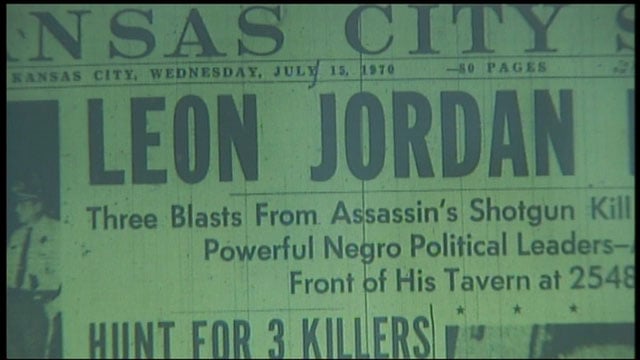
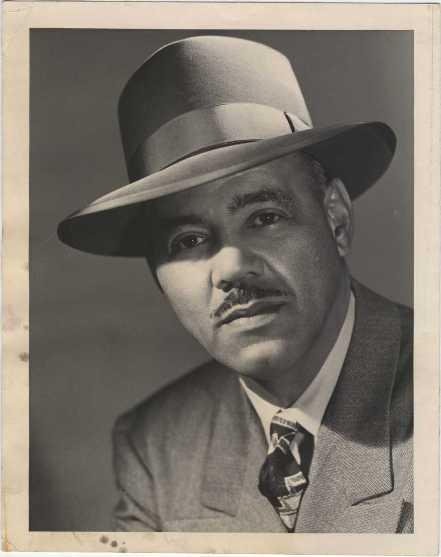
wikipedia |  Leon Mercer Jordan (May 6, 1905, Kansas City, Missouri - July 15, 1970, Kansas City, Missouri) was an American police officer, politician and civil rights leader who was assassinated on July 15, 1970.[1][2] He was "one of the most influential African Americans in Kansas City's history"[3] and, at the time of his death, the "state’s most powerful black politician".[1]

Jordan attended Lincoln High School in Kansas City, served in the U.S. Army,[3] and graduated from Wilberforce University in Wilberforce, Ohio in 1932.[4] He married fellow Wilberforce student Orchid Irene Ramsey[5][6] on August 10, 1932.[4] After graduation, he worked as a school teacher.[2]

Jordan joined the Kansas City Police Department in 1938, became a detective, and in 1952, became the first African-American police lieutenant in that department's history. He took a leave of absence in 1947, and spent eight years training the police forces of Liberia.[6] A pilot, he flew his own plane around the country.[3] In 1948, he helped coordinate the rescue of the French High Commissioner of West Africa and 16 other French officials after their plane made a forced landing. He was awarded the Chevalier of the Star of Africa by Liberian President William Tubman in 1948.[4]

In 1951, Jordan became a life member of the National Association for the Advancement of Colored People.[4] He returned to Kansas City in February, 1952, and was promoted to police lieutenant. However, he discovered that he had little power, so he resigned and went back to Liberia for three years.[3] He returned to Kansas City for good in the mid-1950s, and purchased the Green Duck Tavern.[3]

In 1958, Jordan became a Democratic Party committeeman for the 14th Ward of Kansas City.[3] In 1962, Jordan co-founded Freedom, Inc.[7] along with Bruce R. Watkins.[4] The organization advocated political awareness among African-Americans in Kansas City, organized a massive voter registration drive, and developed African-American political candidates. In 1963, Jordan and Watkins helped pass an accommodations ordinance, desegregating all public facilities in the city.[6]

In 1964, Freedom, Inc. put forward eight candidates for office, and seven of them won.[8] Among them was Jordan, who was elected to the first of three terms in the Missouri House of Representatives. He was campaigning for a fourth term at the time he was murdered. Shortly before his death, he described himself as a "radical", adding "I'm not a conformist but there are bounds of reason."[2]

At about 1:00 a.m. on July 15, 1970, he was killed just outside his Green Duck Tavern by three shotgun blasts. Eyewitnesses reported that the three killers were African-American. The shotgun had been stolen, and was abandoned immediately. When it was recovered, it was traced to a burglary five years earlier in Independence, Missouri.[9]

Three men were arrested for the murder, at least one of whom affiliated with a criminal group called the "Black Mafia". One was acquitted, and charges were dropped against the other two.[10]

In 2010, reporters with the Kansas City Star began investigating the assassination while preparing for coverage of the 40th anniversary of Jordan's death. This led to discovery of the missing murder weapon and some old fingerprint cards, and that motivated the Kansas City Police Department to re-open the official investigation of the department's oldest cold case. Civil rights leader Alvin Sykes pressed the department for a complete investigation.[11] In trying to determine who was responsible for the assassination, the newspaper reported that Jordan and his Freedom, Inc. political movement had been opposed to the "North End" faction in Kansas City politics, a group under the influence of La Cosa Nostra, and which had previously controlled black voting blocs. In 1965, Jordan had punched Frank Mazzuca, a fellow state legislator who was alleged to have supported mob interests in Jefferson City, Missouri, and death threats against Jordan were reported in the aftermath.[9]

The newspaper reported that police informants associated with the Black Mafia had described the killing as a favor to North End mob interests, and that it was organized by "Shotgun Joe" Centimano, owner of a local liquor store. The informants said that Centimano had supplied the murder weapon and recruited the killers. The newspaper reported that one informant said the assassination had elements of both a "contract killing" and a "revenge killing", and that another said it was "all about politics".[10] News coverage said that a 900-page police report finished in 2011 had concluded that mob boss Nick Civella had given his "blessing" to Jordan's assassination.[12] No one was indicted because all of the main players were dead by then.


Tuesday, June 21, 2011

corps general in jefferson city...,


Video - General John McMahon on Missouri river flooding.

OzarksFirst | The U.S. Army Corps of Engineers' commander for the Missouri River basin came to the state capital Monday and stayed on script before an audience best described as skeptical.

Brigadier General John McMahon answered questions in front of an audience of about 40 people at Jefferson City's city hall Monday for about 20 minutes, before meeting with business owners at a private lunch and finally touring the city's northern river front.

For weeks, the corps has been saying its management plan for releasing water from the upper Missouri River basin through it's series of reservoirs and dams was on schedule until heavy rains struck Montana in May.

Farmer Terry Hilgedick from nearby Hartsburg, an area prone to flooding, questioned McMahon about the corps' policy of releasing water at a relatively slow rate, despite record snowfall and snow-pack in Montana and the Dakotas.

"You knew that you had a larger snow -pack and even larger projections than even last year, which was the second highest (snow fall and snow-pack) in a year," said Hilgedick.

"We had everything in place to accommodate the snow-pack," said McMahon. "What we didn't have in place was this unprecedented amount of rain in the upper basin states that took away our flexibility."

The general's comments echo the corps' position on the reasoning behind its record releases of water over the last month or so. As of Monday, the dams along the upper Missouri, including the final dam, Gavins Point near Yankton South Dakota, continue to pump out a record volume of 150,000 cubic feet per second.

The Gavins Point Dam began pumping that full volume of water on June 14. The first of that surge is just now reaching Kansas City. McMahon said it would be at least another week before river levels came up in Jefferson City, and another three days or so beyond that before the surge reaches St. Charles and the confluence with the Mississippi River.

Already, levees are being overtopped and breached in northwest Missouri where residents of the town of Big Lake have evacuated. The river reached an all time record level at Rulo Nebraska earlier Monday, and officials in southwest Iowa continue to eye flood waters that are lapping at a new flood wall built to protect the south end of the community of Hamburg. McMahon said the corps will continue running water at Gavins Point and its other dams at their current volume until at least the middle of July, and could go longer if rain continues over the northern basin. And McMahon said the reservoirs continue to take in more water than they are pumping out.

McMahon and Kansas City corps commander, Col. Anthony Hoffmann came to Jefferson City at the request of Ninth District Congressman Blaine Luetkemeyer and Fourth District congresswoman Vicky Hartzler.

"There's a lot of questions out there about how the corps arrived at the decisions they have," said Rep. Hartzler. "This is a precarious situation."

Friday, May 01, 2015

what happens when your professional and managerial leadership covet the status but aren't up to the task


pitch |  Beginning in 2005, James served as director of the Missouri Department of Public Safety and Homeland Security. He found his way into higher education via a 2007 task force on campus security that he co-chaired with Robert Stein, commissioner of the Missouri Department of Higher Education. The two hit it off. When Stein learned that there was an opening at MCC for a vice chancellor of administrative services, in 2009, he recommended James as a candidate. The MCC board of trustees — a six-member body, elected by the public — approved. When Jackie Snyder stepped down as chancellor of MCC the next year, James was recommended for the job. Despite less than a year's experience working in higher education, he got the appointment.

One of James' first acts as chancellor was to turn MCC's campus security into an official, state-commissioned police department. Today, MCC boasts a force of 35 uniformed officers, plus another six uncertified public-safety officers. Though it patrols only five small campuses, MCC's police department numbers nearly as many cops as that of Gladstone, Missouri — an 8-square-mile suburb with a population of 28,000.

If you're measuring MCC's success in non-law-enforcement terms, however, James' tenure as chancellor has been a shaky four years. According to faculty surveys and outside studies, the district is in disarray — a condition confirmed by more than a dozen current and former staff, faculty and administrators, many of them longtime MCC loyalists, interviewed by The Pitch in recent weeks. The beefed-up police department, they say, is merely the most visible way that James has shifted resources away from educating students.

"You'd think a guy with a police background and basically zero higher-ed experience, chosen to lead a community-college district, would bend over backward to familiarize himself with academia and not focus on all the law-enforcement stuff," says a longtime faculty member who asked not to be identified for fear of reprisal. "Instead, it's been the complete opposite. He's consistently shown disdain toward the academic traditions that have been in place at these schools for 100 years."

Such criticisms might be easier to dismiss as the grumblings of change-averse academics, were it not for the growing body of data indicating that MCC is underperforming. A 2014 report, commissioned by MCC and prepared by CLARUS Corp., a community-college marketing-research firm, concluded:
"Nationally, over the last four years, the number of applicants to community colleges has been increasing. But at Metropolitan Community College, from 2010 to 2013, the number of applicants has been in decline (from 14,600 to 11,500)." The report goes on to note that the school's conversion rate — the percentage of applicants who end up enrolled at MCC — has held steady at 40 percent, though "the typical conversion goal for a community college is 60 percent."

James' tenure has also been marked by a significant exodus of high-ranking, long-serving administrators, including several vice chancellors and presidents with decades of the kind of higher-education experience that James lacks.

Shake-ups are common when new administrations take command, and unpopular moves are often necessary to ensure the long-term viability of an institution — particularly at community colleges, where state funds are ever-depleting and donations add up to a fraction of what four-year universities comfortably rely on.

But many of MCC's critical positions — vice chancellors, directors and, as of last month, a school president — remain unfilled. And several of the past administrators who spoke with The Pitch indicated that most of those who have left MCC in recent years toughed it out under James' leadership as long as they did out of a sense of duty to the students, whom they believe are getting shortchanged as a result of changes that James has made.

Kathy Walter-Mack first arrived at MCC in 2007, when she was part of a two-person consulting team hired by the school to investigate racial-discrimination complaints, brought by several black students, against two teachers and a staff member. Walter-Mack's conclusion was that the allegations were unsubstantiated but that a systemic environment of intolerance existed at MCC. One of the recommendations of the report was to establish a diversity-0x000Acoordinator position at MCC. Walter-Mack was subsequently hired for that position.

Her pedigree included a stint in the 1990s working in the Kansas City, Missouri, school district, which was then still mired in a decades-long desegregation battle. She had by then been the executive director of the Desegregation Monitoring Committee, a court-ordered governing body through which the district had to clear virtually all of its decisions. Walter-Mack later went to work for Sam's Town, where she oversaw compliance with city quotas for minority- and women-owned businesses. Later, she returned to Kansas City Public Schools and served as its general counsel.

According to a 2001 Pitch story ("Taylor Made," October 4, 2001) chronicling leadership problems in KCPS, Walter-Mack attempted to consolidate district power in her office and was subsequently fired by Superintendent Benjamin Demps.

"Really and truly, she [Walter-Mack] was running a large part of the district," Jack Goddard, chief of staff to the KCPS superintendent at the time, told The Pitch. "A lot of everyday decisions, principals were reporting up through her as much as they were through the superintendent. ... You had a really confused chain of command."

That characterization is likely familiar to staff and faculty at MCC, who now know Walter-Mack in a variety of roles.

When James became chancellor, in 2010, he created a new position — chief of staff — and installed Walter-Mack in it. In 2013, Walter-Mack took on the additional role of vice chancellor of human resources. Owing to her background as a lawyer — she's licensed to practice in Missouri and Illinois — Walter-Mack is also highly involved in all legal matters pertaining to MCC.

James has grown increasingly reliant on Walter-Mack, "abdicating daily decision making to her so he can focus on community visibility and fund raising, leaving the running of the academic institution to others," according to notes from the faculty emergency meeting.

Saturday, January 09, 2021

Sen. Josh Hawley Defunded And Disavowed For Tryna Get Off The Fist Up His Sock-Puppet Ass...,

newsweek  |  A Missouri businessman who spent millions of dollars funding Sen. Josh Hawley's political campaigns has disavowed the lawmaker in a damning statement, accusing him of inciting the riot in the U.S. Capitol and calling for his censure.

The president and CEO of Tamko Building Products, David Humphreys, had been a major donor for the Missouri Republicans, with his family giving $4.4 million of the $9.2 million that Hawley raised for his campaign to become attorney general in 2016.

His family also donated about $2 million to independent groups who backed Hawley's bid to become a senator in 2018.

But in a statement to the Missouri Independent, Humphreys expressed his disgust with Hawley for backing President Donald Trump's claims of election fraud, accusing him of fuelling the unrest on Wednesday that had fatal consequences at the heart of American democracy.

Humphreys said he publicly opposed Trump in October 2016 because "you have to look in the mirror and recognize that you cannot possibly justify support for Trump to your children."

He went on: "I need to say the same about Missouri's U.S. Sen. Josh Hawley, who has shown his true colors as an anti-democracy populist by supporting Trump's false claim of a 'stolen election.' Hawley's irresponsible, inflammatory and dangerous tactics have incited violence and further discord.

"Hawley should be censured by his Senate colleagues for his actions which have undermined a peaceful transition of power and for provoking yesterday's riots in our nation's capital.

Many are lining up to criticize Hawley—a chorus of condemnation that could hurt his presidential chances in a 2024 race in which he was positioning himself to inherit the mantle and support base of Trump.

His mentor, former Sen. Jack Danforth, told the St. Louis Post-Dispatch that supporting Hawley and trying to get him elected "was the worst mistake I ever made in my life."

Tuesday, November 10, 2015

"leaders" are trivially expendable if they fail to "keep a lid on a pot about to boil over"


theweek |  Hours after University of Missouri President Tim Wolfe resigned Monday morning, R. Bowen Loftin announced he will step down from his position as chancellor of the University of Missouri's Columbia campus.

Loftin will start in his new role as director for research facility development on Jan. 1, 2016, The Columbia Tribune reports. Hank Foley, the senior vice chancellor for research and graduate studies, has been appointed interim chancellor. Wolfe resigned from his position after students and faculty began to protest against his response to race-related issues at the school. "I take full responsibility for this frustration and I take full responsibility for the inaction that has occurred," he said. Donald Cupps, chairman of the Board of Curators, announced Monday that within the next 90 days, the University of Missouri system will appoint its first chief diversity, inclusion, and equity officer; will make extra support available for students, faculty, and staff who have been discriminated against; and will make additional efforts to hire and retain diverse faculty and staff.

The Columbia Tribune reported earlier in the day that deans from nine different University of Missouri colleges sent a letter to Wolfe and the Board of Curators, calling for Loftin's dismissal. In the letter, the deans said they met with Wolfe, Loftin, and Provost Garnett Stokes on Oct. 13 to express their concerns over "the multitude of crises on our flagship campus," and said those issues "have continued to deteriorate into a campus crisis that demands immediate and decisive action. It is the Chancellor's responsibility as the Chief Executive Officer of the campus to effectively address these campus issues." The deans went on to write that Loftin proved he was not an adequate leader by eliminating and then reinstating health insurance for graduate assistants and getting rid of the vice chancellor for health sciences position, and claimed he created a "toxic environment through threat, fear, and intimidation."

Last week, a similar letter was sent to Wolfe and the Curators from the Department of English, which stated that 26 faculty members expressed no confidence in Loftin, with two people abstaining from the vote.

Friday, June 17, 2011

sandbags and nuclear power plants don't go together...,


Video - *High Alert* - Fire -Fort Calhoun Nuclear Plant near Omaha Nebraska- Flooding Missouri River

Business Insider | A fire in Nebraska's Fort Calhoun nuclear power plant briefly knocked out the cooling process for spent nuclear fuel rods, ProPublica reports.

The fire occurred on June 7th, and knocked out cooling for approximately 90 minutes. After 88 hours, the cooling pool would boil dry and highly radioactive materials would be exposed.

On June 6th, the Federal Administration Aviation (FAA) issued a directive banning aircraft from entering the airspace within a two-mile radius of the plant.

"No pilots may operate an aircraft in the areas covered by this NOTAM," referring to the "notice to airmen," effective immediately.

Since last week, the plant has been under a "notification of unusual event" classification, becausing of the rising Missouri River. That is the lowest level of emergency alert.

The OPPD claims the FAA closed airspace over the plant because of the Missouri River flooding. But the FAA ban specifically lists the Fort Calhoun Nuclear Power Plant as the location for the flight ban.

The plant is adjacent to the now-flooding river, about 20 minutes outside downtown Omaha, and has been closed since April for refueling.

WOWT, the local NBC affiliate, reports on its website:

"The Ft. Calhoun Nuclear Facility is an island right now but it is one that authorities say is going to stay dry. They say they have a number of redundant features to protect the facility from flood waters that include the aqua dam, earthen berms and sandbags."

OPPD spokesman Jeff Hanson told Business Insider that the nuclear plant is in a "stable situation." He said the Missouri River is currently at 1005.6" above sea level, and that no radioactive fuel had yet been released or was expected to be released in the future.

Asked about the FAA flight ban, Hanson it was due to high power lines and "security reasons that we can't reveal." He said the flight ban remains in effect.

Friday, July 03, 2020

Q Gillum: "What We Gone Do Boss?!?!?!"


kmbc |  Mayor Quinton Lucas is calling on a special session of the Missouri General Assembly to address violent crime in Kansas City.

On Friday, Lucas released a letter she sent to Missouri Gov. Mike Parson calling the situation in Kansas City a ‘crisis point.’ In the letter, he asks Parson to call for a special session of the assembly to allow state senators and representatives to vote on legislation to enhance witness protection funding in Missouri.

“We need state legislative action on several items we have previously discussed to address our problem,” Lucas said in the letter. “While we will continue to pursue a broad set of social services and other tools to address violent crime now and in the future, specific action from Jefferson City can help us apprehend and incarcerate murderers currently walking the streets of Kansas City and protect witnesses in our neighborhoods who are frequently scared to speak.”

Lucas said additional help is also needed to provide more tools for law enforcement and prosecutors to “interrupt conspiracies to commit murder and other violent acts, particularly offenses committed by felons using deadly weapons.”

“Kansas City is too fine a city, and Missouri too fine a state to allow violent criminality to define our way of life,” Lucas wrote. “We will persevere through these challenges, but our children, our law enforcement community, and all Kansas Citians need change quickly."

Chipocalypse Now - I Love The Smell Of Deportations In The Morning

sky |   Donald Trump has signalled his intention to send troops to Chicago to ramp up the deportation of illegal immigrants - by posting a...